
Subject
Donkey
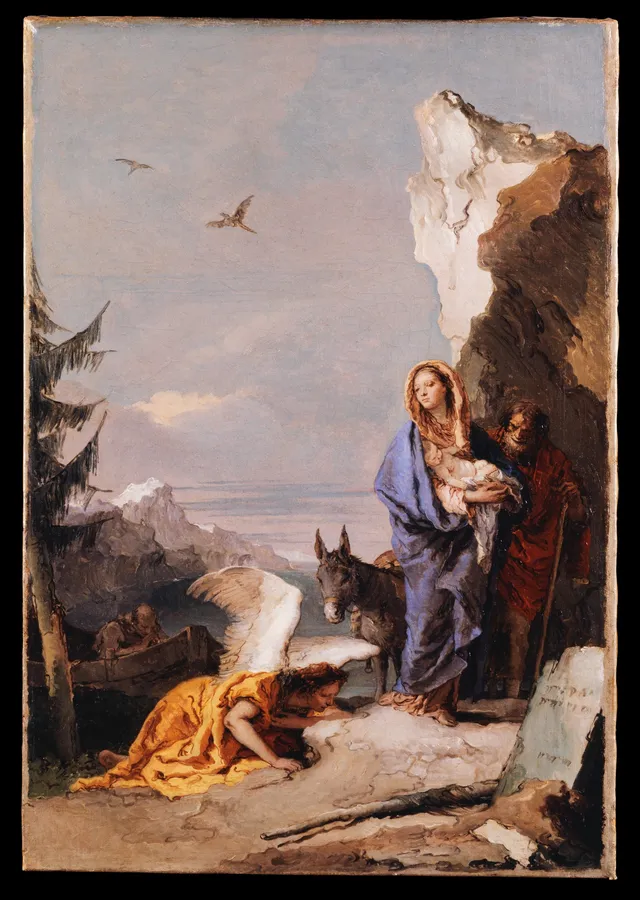
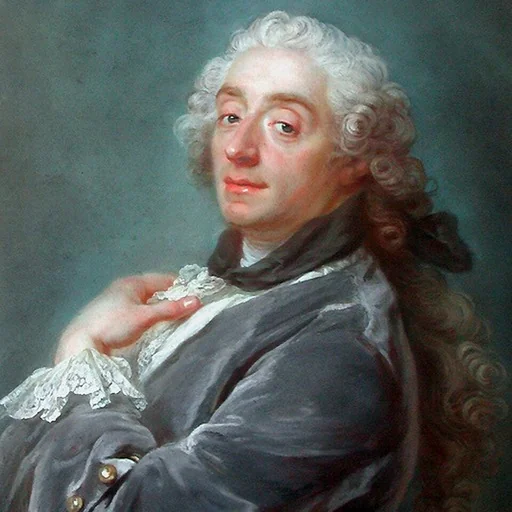
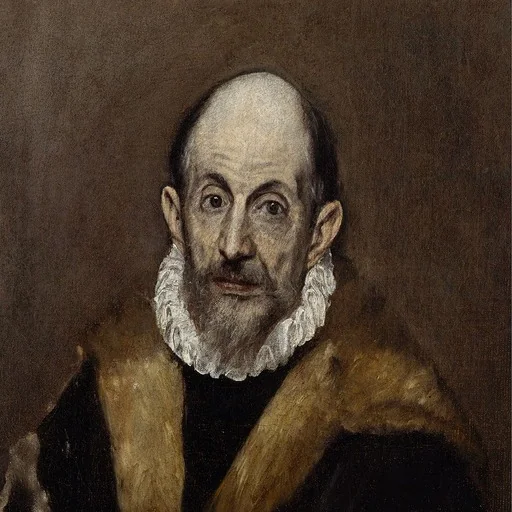
Donkey is a subject in art. The gallery holds 116 works in this subject in art, including works by Camille Pissarro, François Boucher and El Greco.
Few animals carry as much symbolic weight in Western art as the donkey, the humble equine with long ears whose meaning shifts dramatically with its context. Its iconography is rooted above all in Christian narrative. Though the canonical gospels name no animals at the manger, medieval and Renaissance painters drew on Isaiah's prophecy and apocryphal texts to install the ox and the ass beside the newborn Christ, where the patient grey beast became shorthand for humility and for the lowly setting of the Incarnation. The donkey reappears across the life of Christ: bearing Mary to Bethlehem, carrying the Holy Family on the Flight into Egypt, and, most pointedly, conveying Christ into Jerusalem on Palm Sunday—a deliberately un-regal mount that signalled a king of peace rather than conquest.
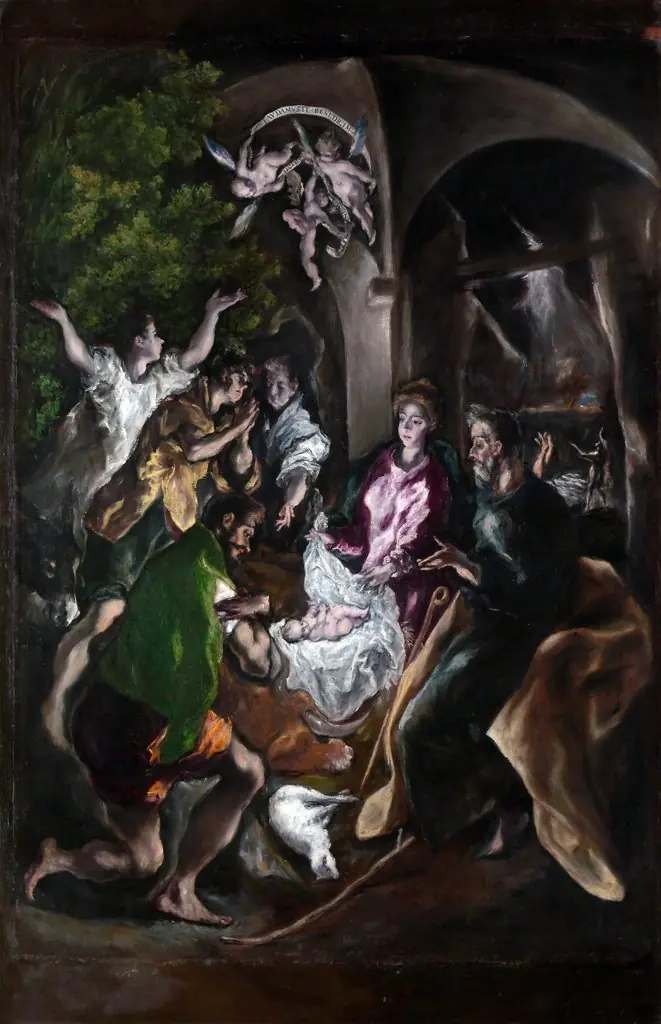
These sacred episodes furnished some of the genre's enduring images. Nativities such as Gerard David's *The Nativity with Donors and Saints Jerome and Leonard* and Zanobi Strozzi's *The Nativity* preserve the ox-and-ass convention, as does El Greco's *The Adoration of the Shepherds*, while Giovanni Battista Tiepolo's *The Flight into Egypt* places the donkey at the centre of the Holy Family's journey. Fra Bartolomeo's *Rest on the Flight into Egypt* (c. 1500) is a touchstone of the type, and Gustave Doré's nineteenth-century *Entry into Jerusalem* renews the Palm Sunday subject for a mass Victorian audience.
The donkey also belongs to the Old Testament through Balaam, the soothsayer whose ass perceives the blocking angel that he cannot. Rembrandt seized on the story's irony in *Balaam's Ass* (1626, Musée Cognacq-Jay), in which the proud diviner is humbled below the level of his speaking beast.
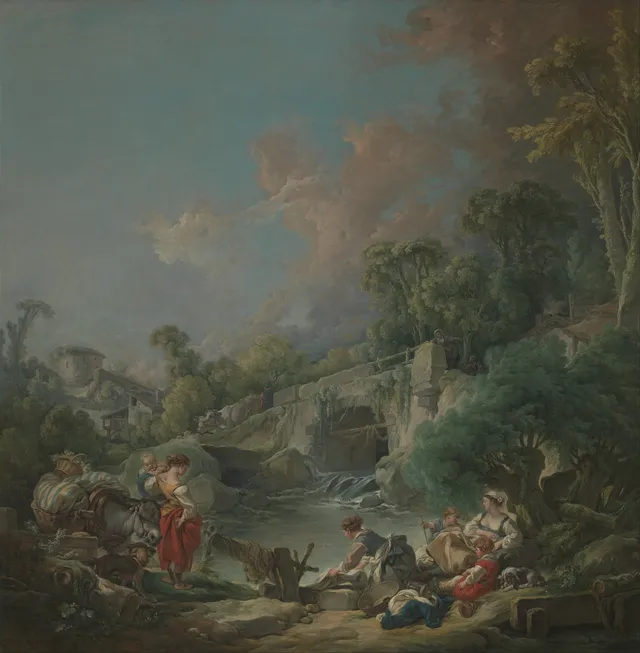
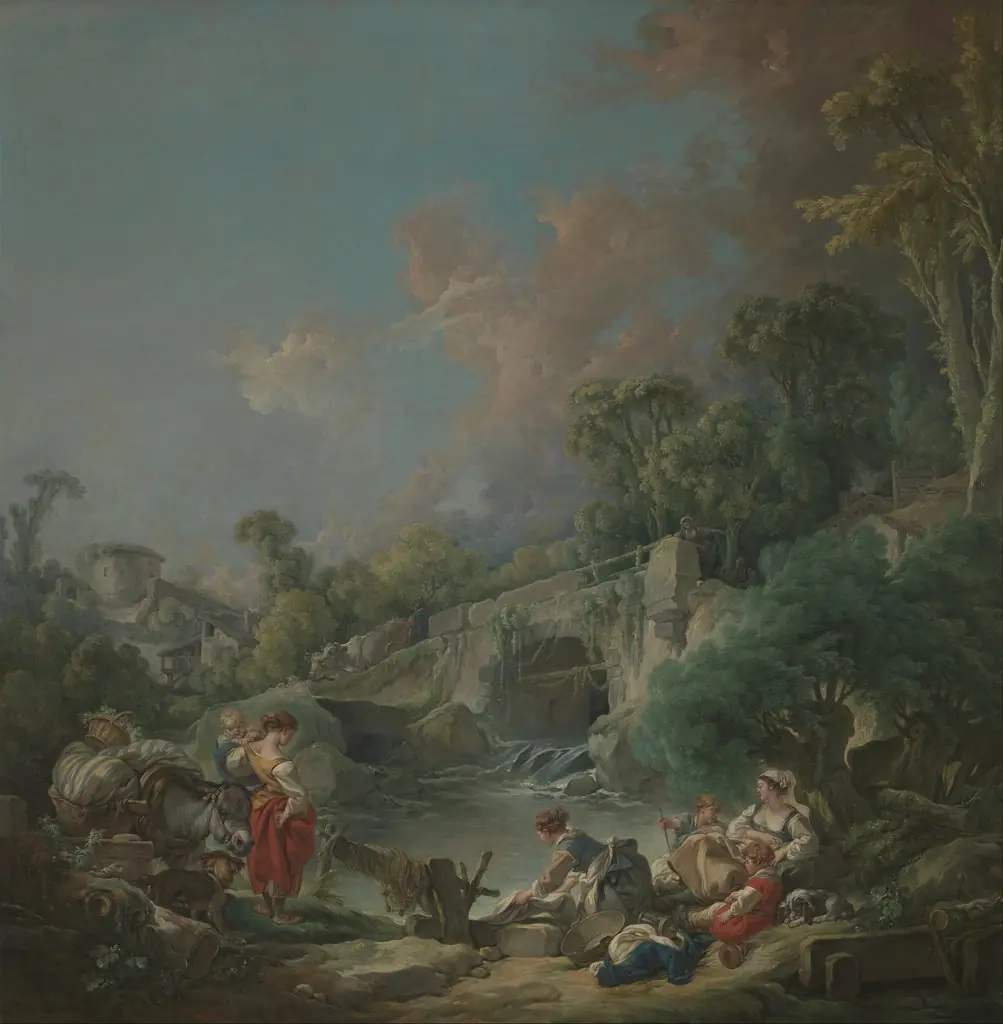
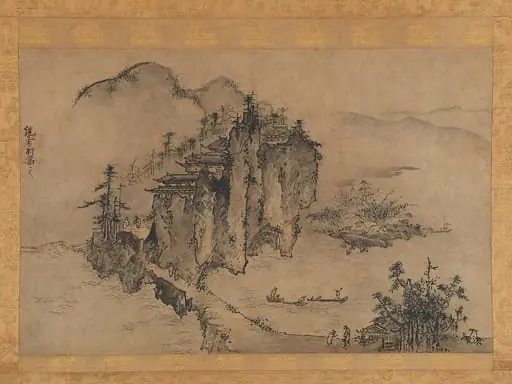
Beyond scripture, the donkey acquired a secular and satirical life. In rural and pastoral painting—from François Boucher's *Washerwomen* to the staffage of East Asian landscapes such as Sesson Shūkei's *Landscape with Rocky Precipice*—it is the unromantic working animal of peasants and travellers. Francisco Goya turned it into a weapon: across *Los Caprichos* (1799) and the late *Disparates* (c. 1816–19), braying asses masquerade as doctors, teachers and noblemen, emblems of ignorance and folly. From sacred humility to braying stupidity, the donkey remains one of art's most morally elastic creatures.
Key artists
Overview
The donkey, a domesticated equine characterized by its smaller stature, long ears, and prominent withers, descends from the African wild ass. Domesticated in Northeast Africa as early as the fourth millennium BC, the animal served as a crucial beast of burden for ancient civilizations, facilitating trade, agriculture, and transportation. In the visual arts, the donkey recurs as a motif because of its ubiquitous presence in human labor and its deep symbolic resonance in religious and literary traditions. Its physical distinctiveness and varied cultural meanings have made it a persistent subject across millennia, appearing in ancient Egyptian tomb paintings, classical mosaics, and European religious canvases.
Iconography & meaning
The donkey carries a dual and often contradictory symbolic weight. In classical antiquity and early literature, it frequently symbolized stupidity, laziness, and low social standing, a creature subjected to beatings and humiliation. Apuleius's Metamorphoses uses transformation into a donkey as a metaphor for moral stumbling and a life consumed by bodily pleasures, while Aesop's fables cast the donkey as a naive figure punished for attempting to transcend its lowly origins. Conversely, biblical narratives elevated the animal, where it appears 173 times as a symbol of humility, patience, and service. The donkey carries the pregnant Mary to Bethlehem and bears Christ during his entry into Jerusalem, signifying peaceful kingship rather than warlike power. In later literature, such as Cervantes's Don Quixote, the animal embodies loyalty and steadfastness through the servant Sancho Panza's affectionate relationship with his donkey, Dapple.
Across movements & periods
The treatment of the donkey in art traces a shift from ancient utilitarian records to complex symbolic and religious roles. In ancient Egypt, the animal appeared in paintings as early as 1298 BC, depicted primarily as a working creature integral to daily life and agriculture. By the fifth century, Byzantine floor mosaics, such as a fragment showing a child and a donkey, began to integrate the animal into more narrative and decorative contexts. During the Renaissance and Baroque periods, the donkey became a standard iconographic element in Christian art, populating the background of Adoration and Flight into Egypt scenes to emphasize the humility of the holy figures. The animal also crossed into East Asian ink wash traditions, where it appeared as a subtle element in rugged landscape paintings, reflecting different cultural appreciations of the creature's place in nature.
Notable depictions
Among canonical depictions is an Egyptian painting from approximately 1298 to 1235 BC, which provides one of the earliest known artistic representations of the animal. A fifth century Byzantine floor mosaic fragment depicting a child and a donkey stands as a significant early medieval example. In the Baroque period, Bartolome Carducho painted The Flight into Egypt between 1600 and 1603, an oil on canvas that prominently features the donkey as the bearer of the Virgin Mary. This work, currently housed in the Hermitage Museum in St. Petersburg, exemplifies the animal's central role in religious narrative art of the era. In Eastern art, Sesson Shukei's Landscape with Rocky Precipice offers a notable integration of the donkey into a monochrome natural setting.
Legacy
The donkey's cultural afterlife extends far beyond its historical role as a beast of burden, permeating modern literature, folklore, and popular culture. The animal's symbolic duality persists: it represents both the oppressed working class, as seen in George Orwell's Animal Farm through the cynical character Benjamin, and prophetic wisdom, as demonstrated by Balaam's donkey in the Book of Numbers. Folklore traditions, including the Brothers Grimm's The Bremen Town Musicians, cast the donkey as a cunning and optimistic survivor. Modern adaptations have continued to reframe the animal, from the melancholic Eeyore in A. A. Milne's Winnie the Pooh to the comedic sidekick in the animated Shrek franchise, ensuring the donkey remains a versatile and enduring cultural archetype rather than a mere historical artifact.
Works
 Washerwomen
 雪村周継筆 山水図|Landscape with Rocky Precipice
 The Adoration of the Shepherds
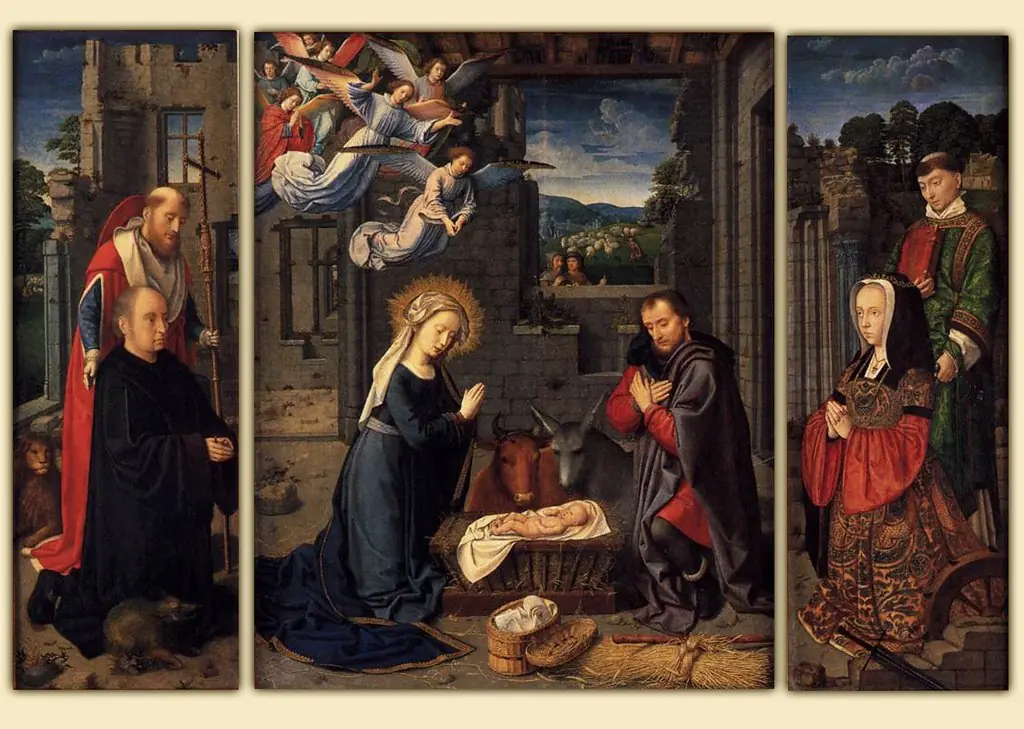 The Nativity with Donors and Saints Jerome and Leonard
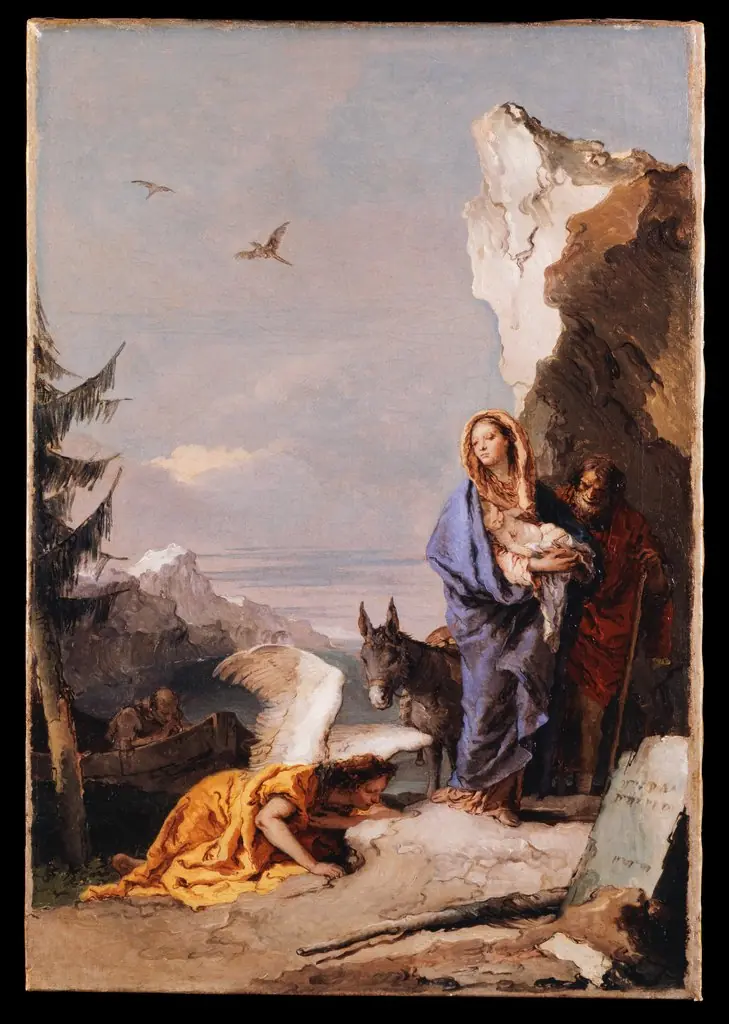 The Flight into Egypt
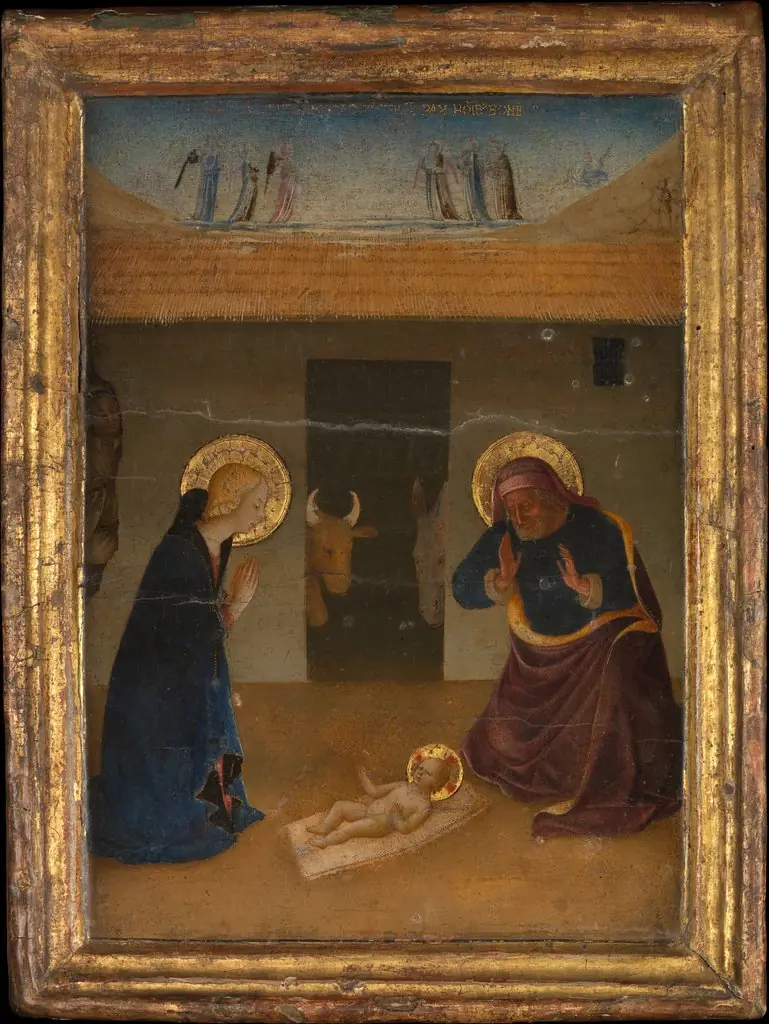 The Nativity
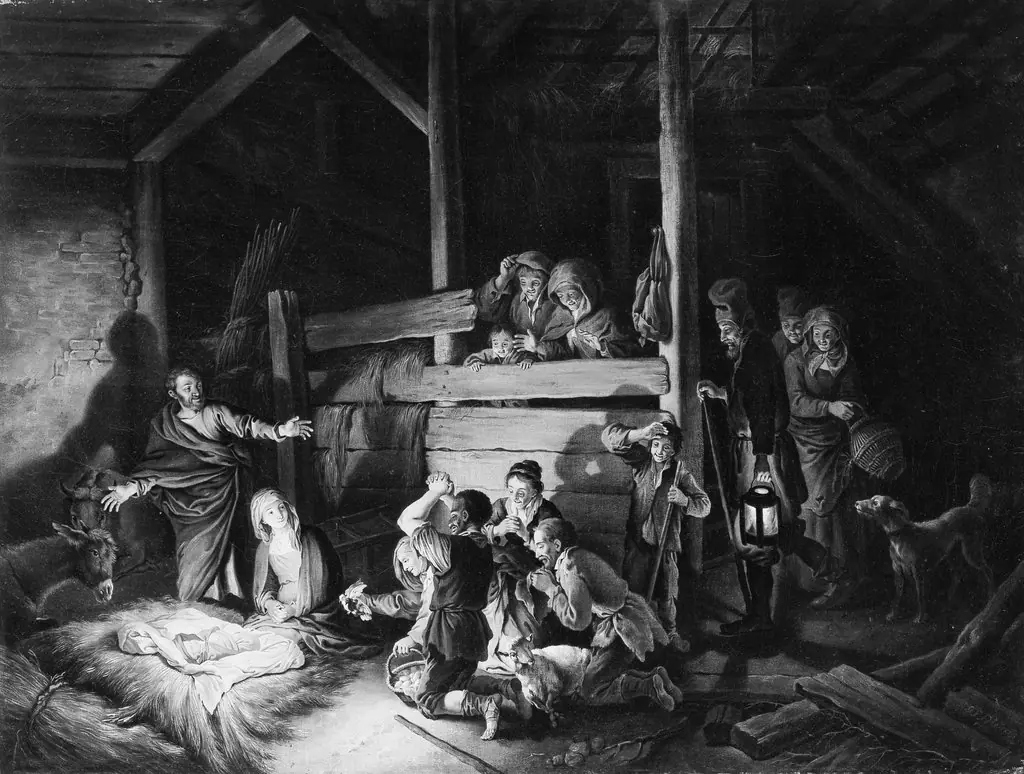 The Adoration of the Shepherds
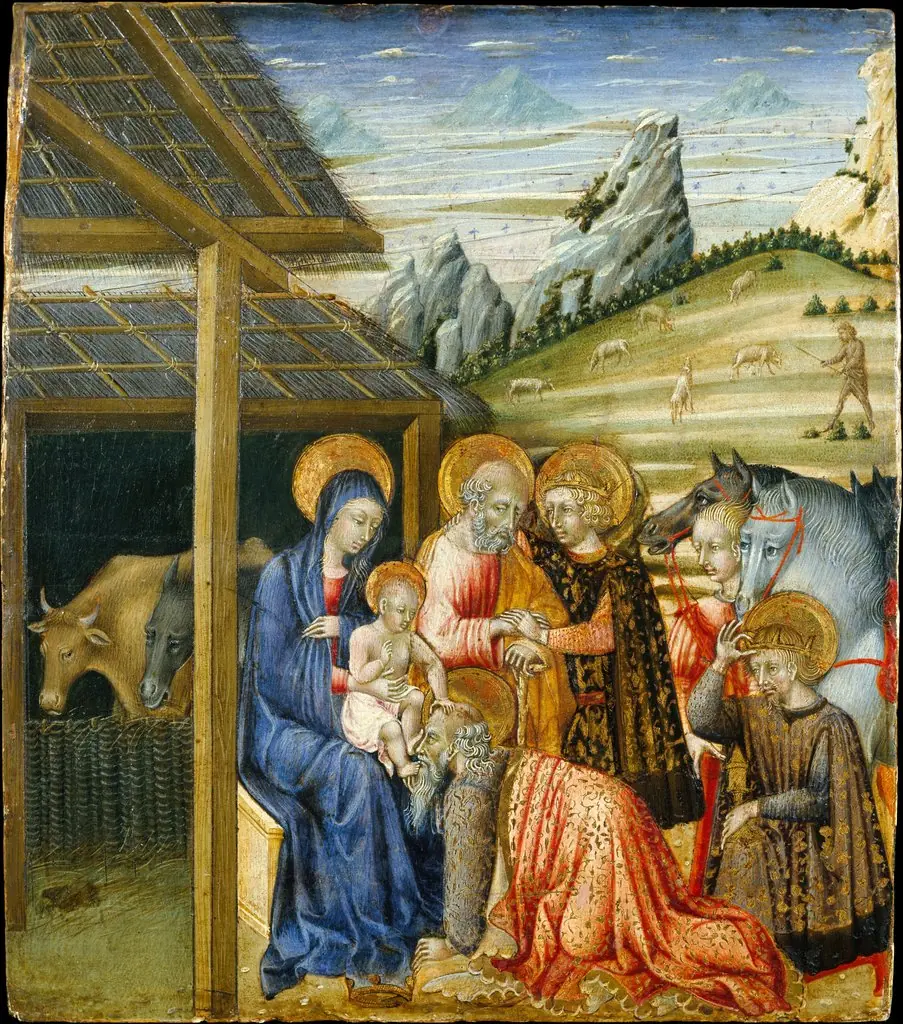 The Adoration of the Magi
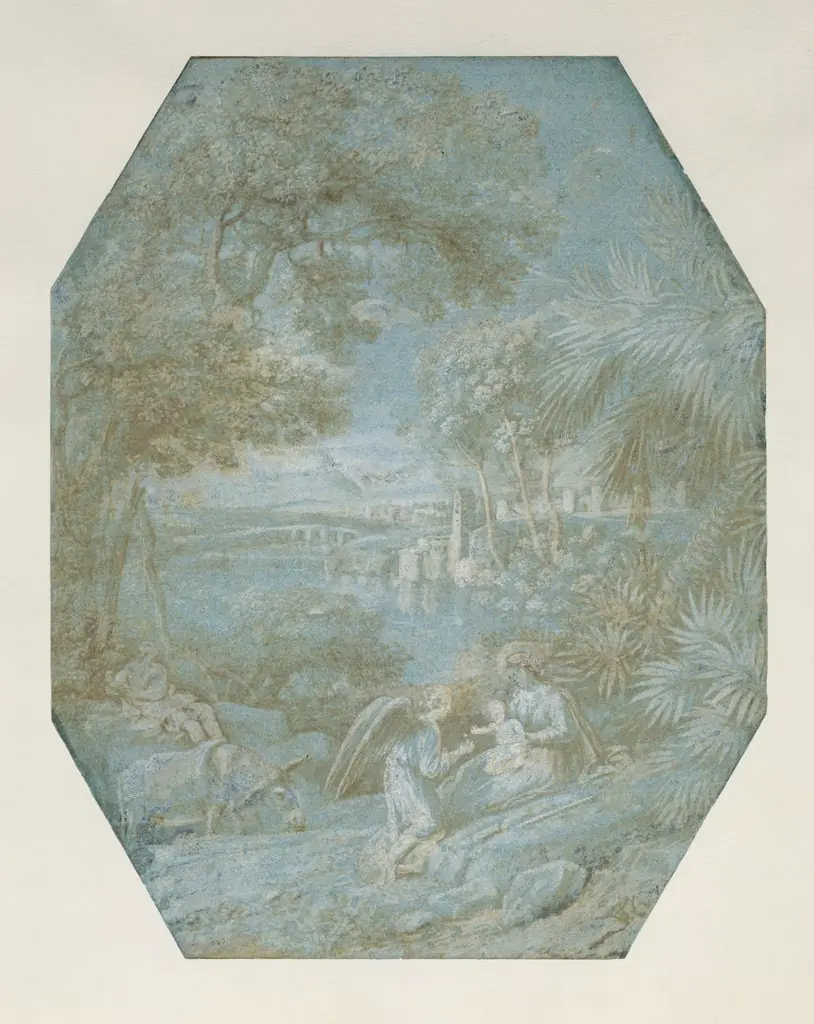 Landscape with the Rest on the Flight into Egypt
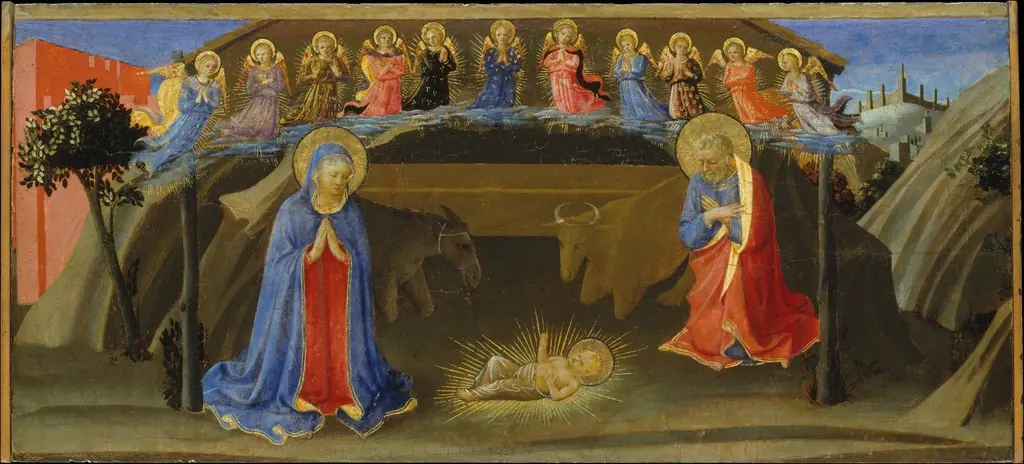 The Nativity
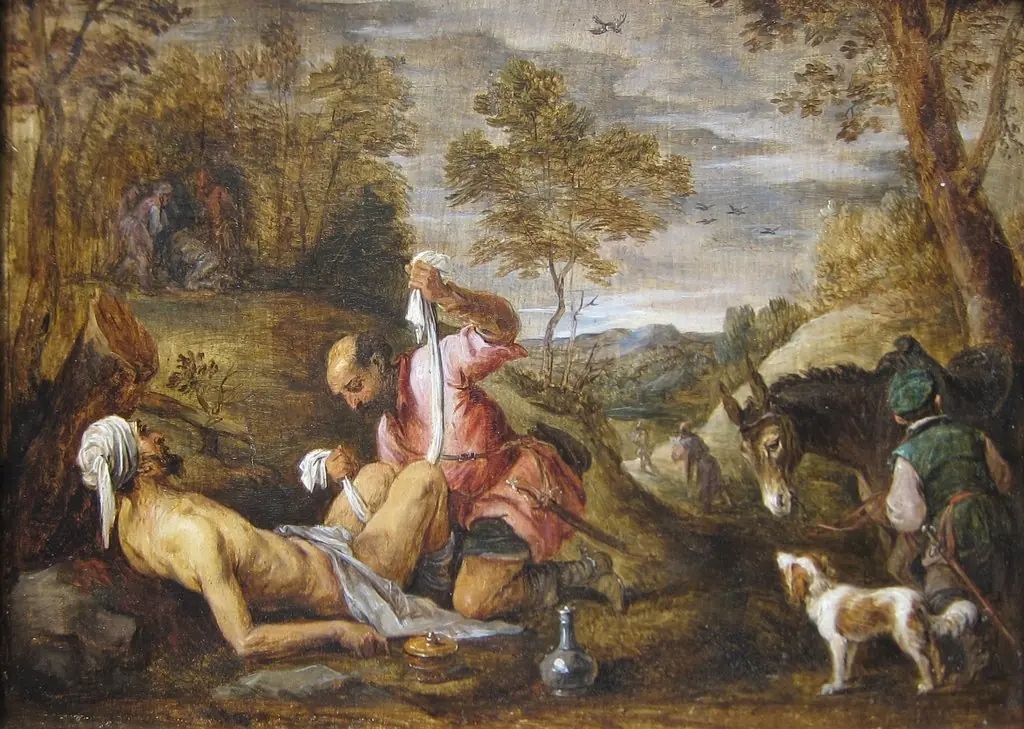 The Good Samaritan
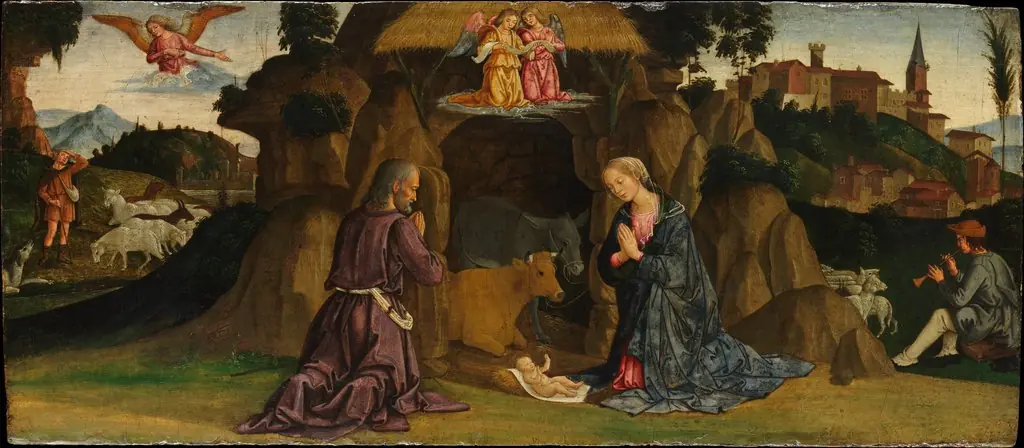 The Nativity
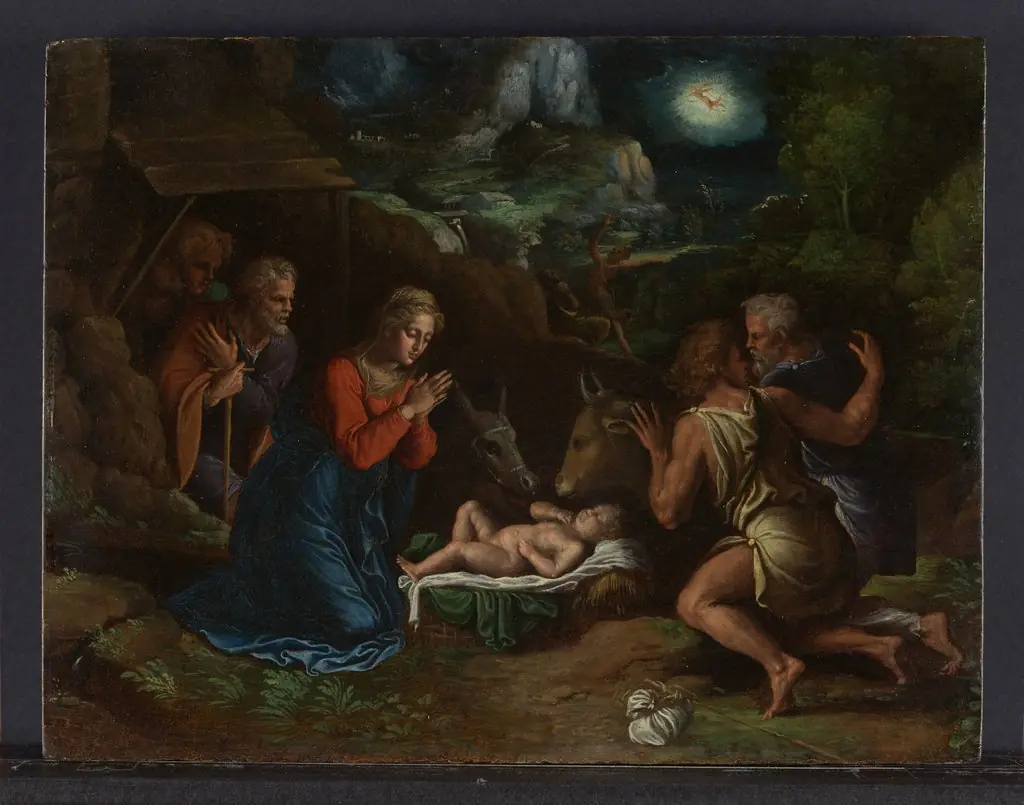 The Adoration of the Shepherds
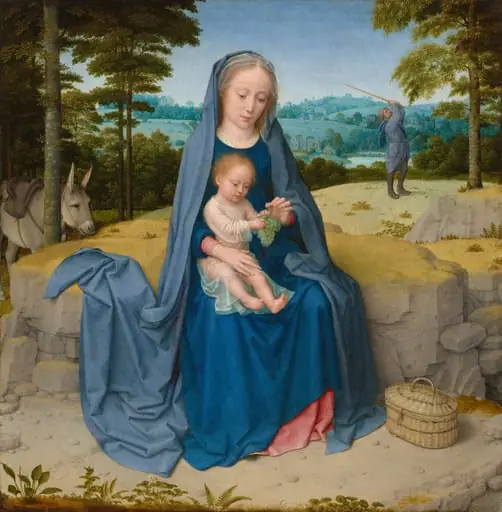 The Rest on the Flight into Egypt
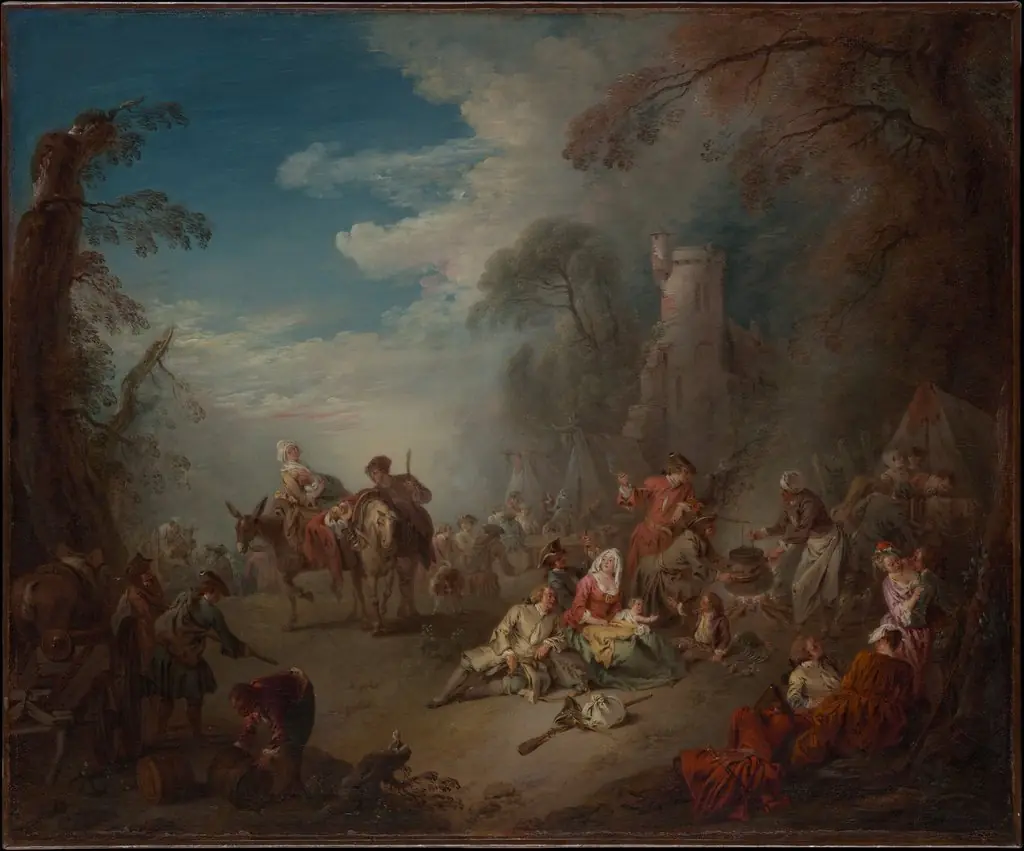 Troops at Rest
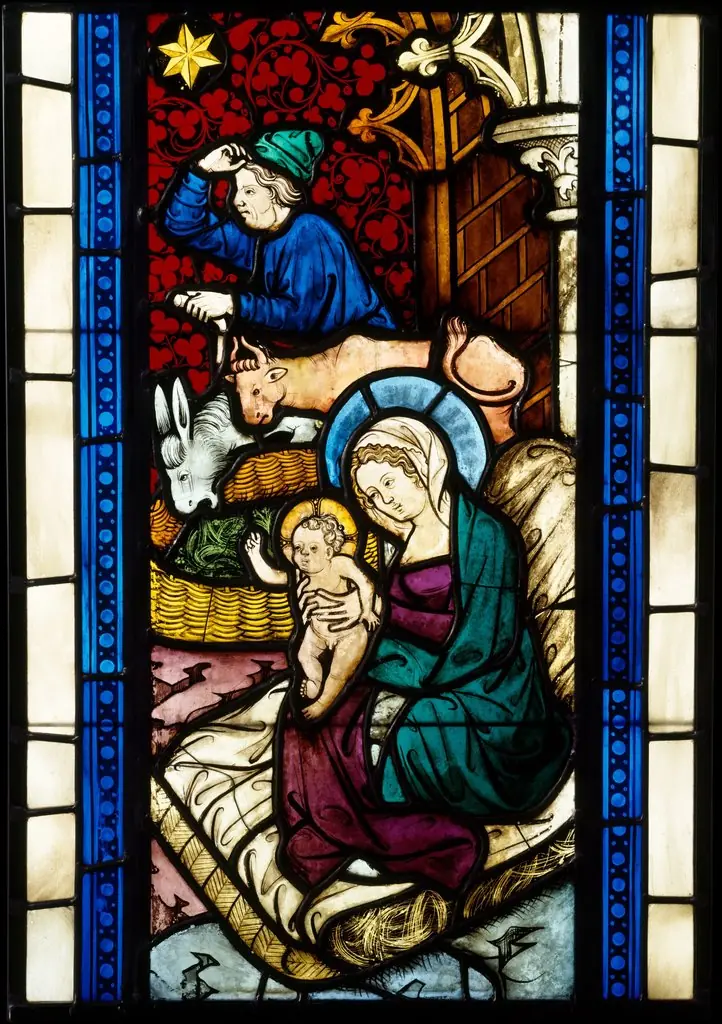 Adoration of the Magi from Seven Scenes from the Life of Christ
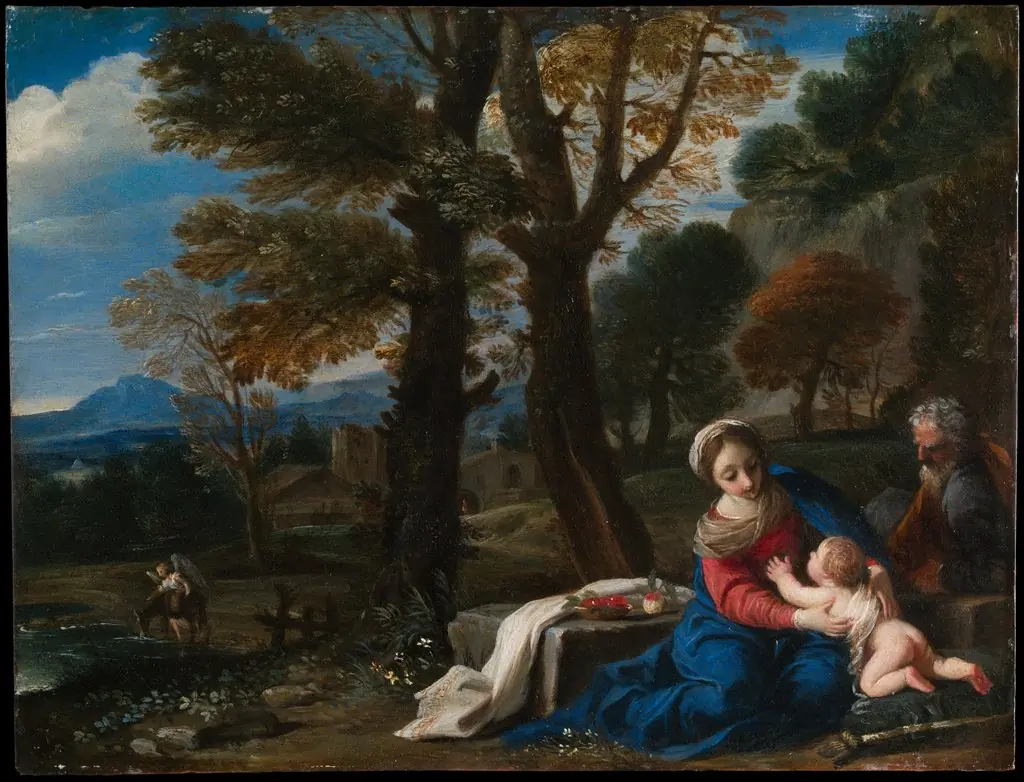 Rest on the Flight into Egypt
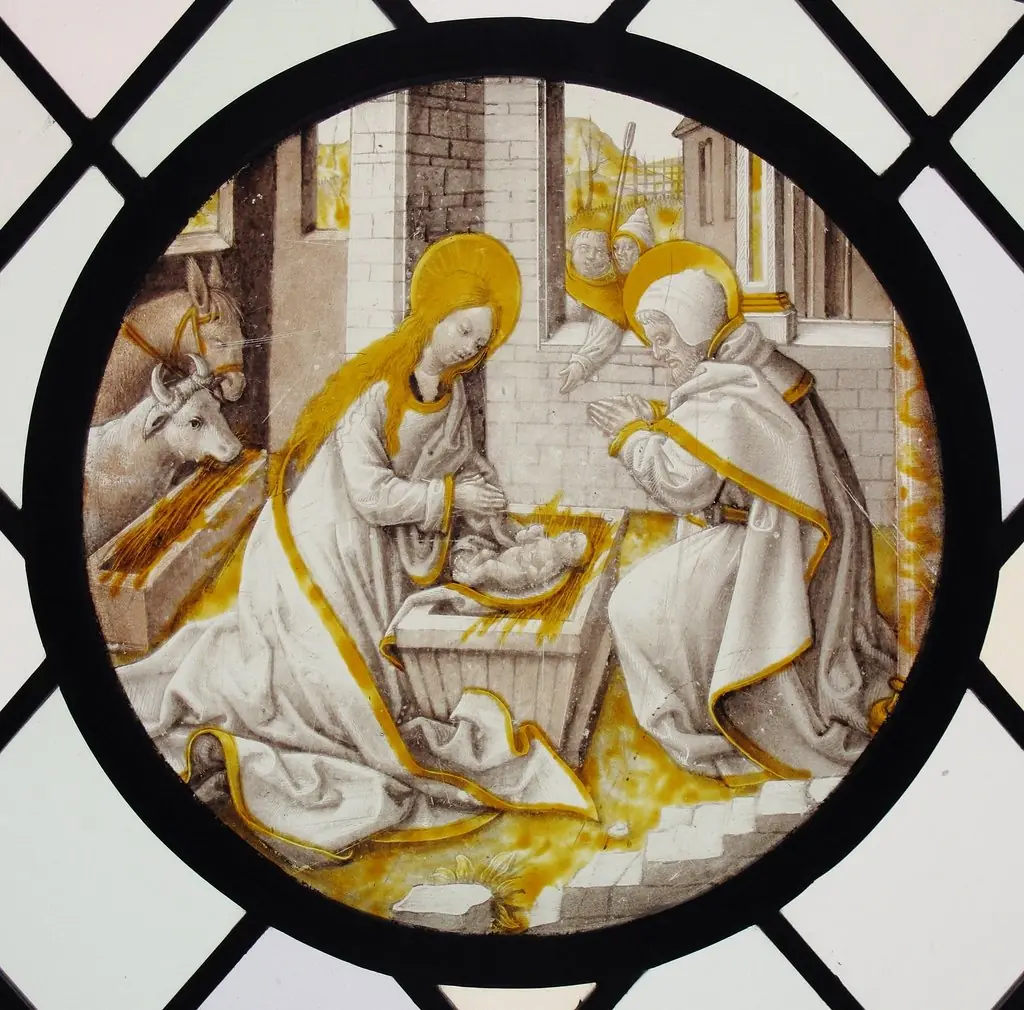 Roundel with the Nativity
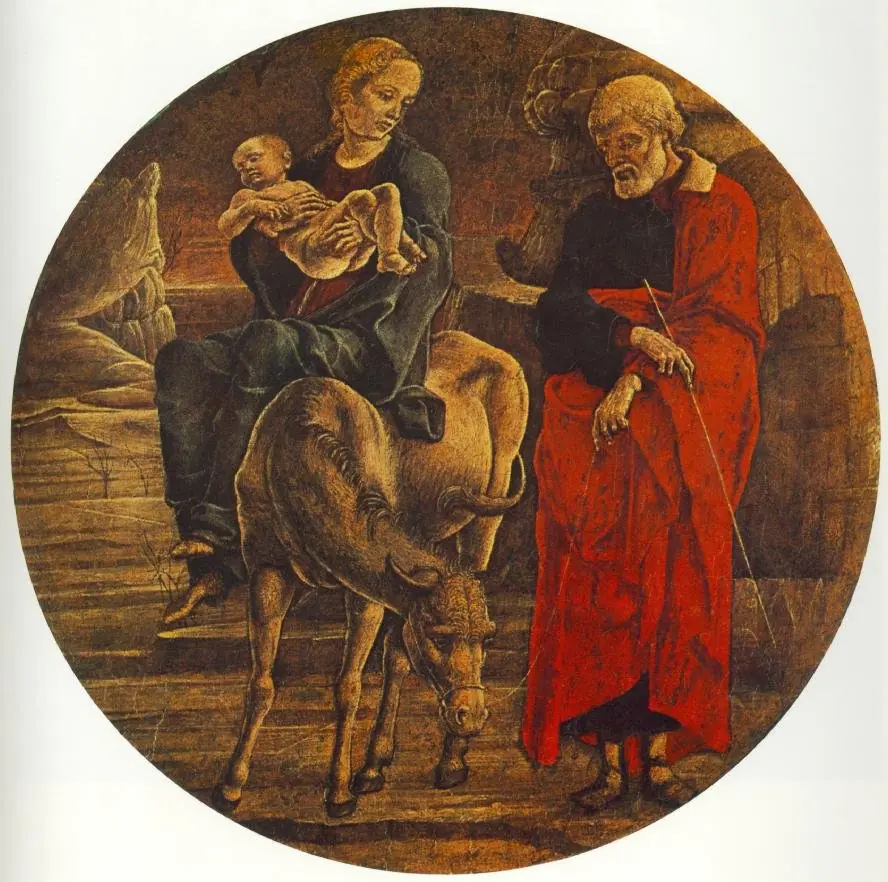 The Flight into Egypt
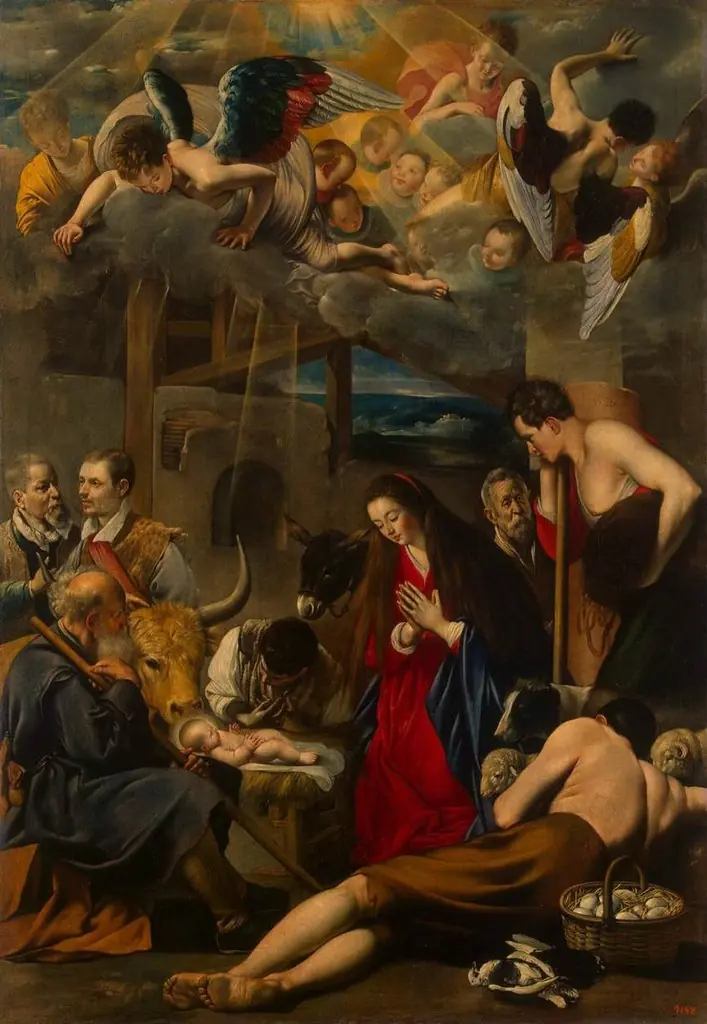 Adoration of the Shepherds
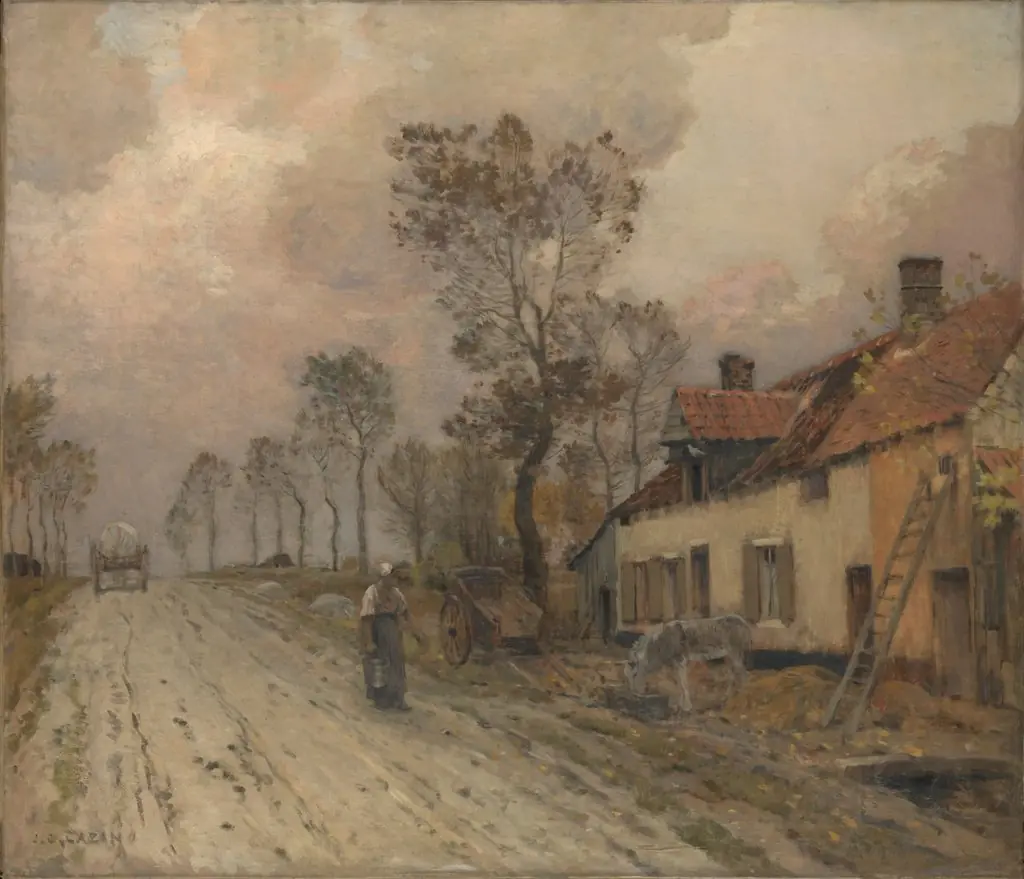 The Route Nationale at Samer
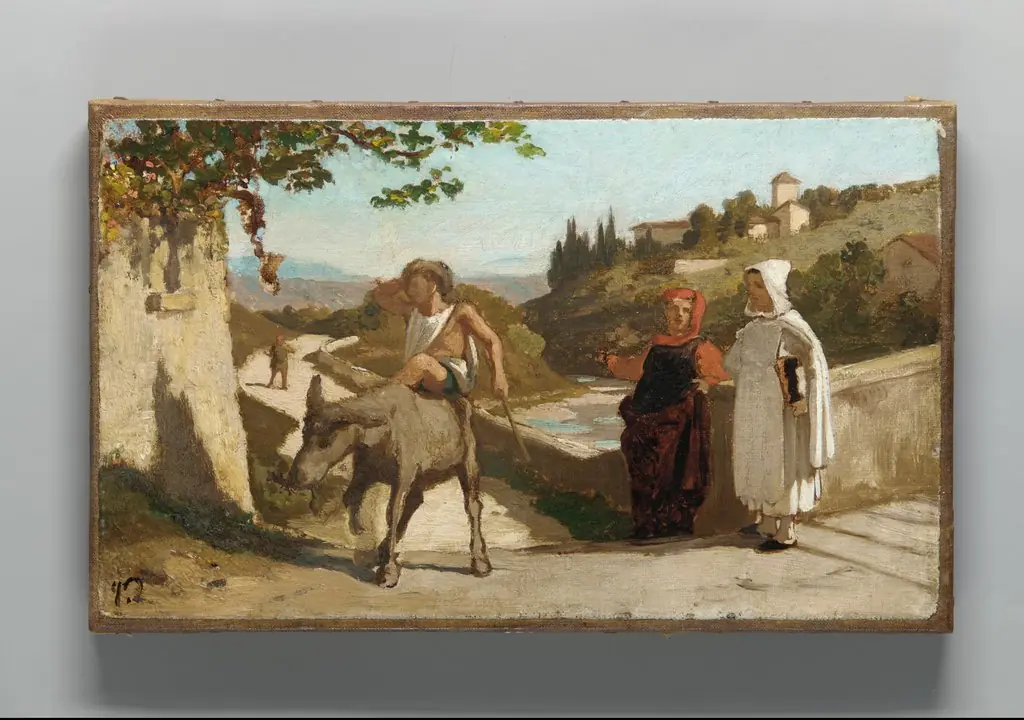 The Fable of the Miller, His Son, and the Donkey
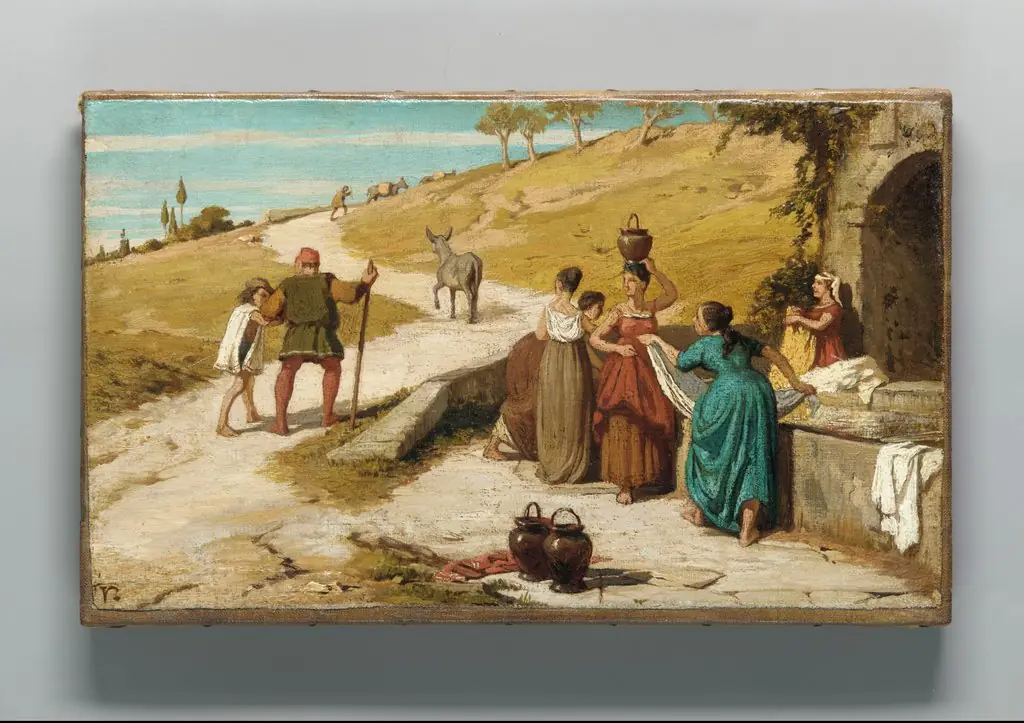 The Fable of the Miller, His Son, and the Donkey
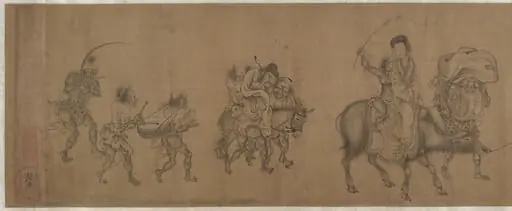 南宋/元 顏庚 鍾馗嫁妹圖 卷|The Demon Queller Zhong Kui Giving His Sister Away in Marriage
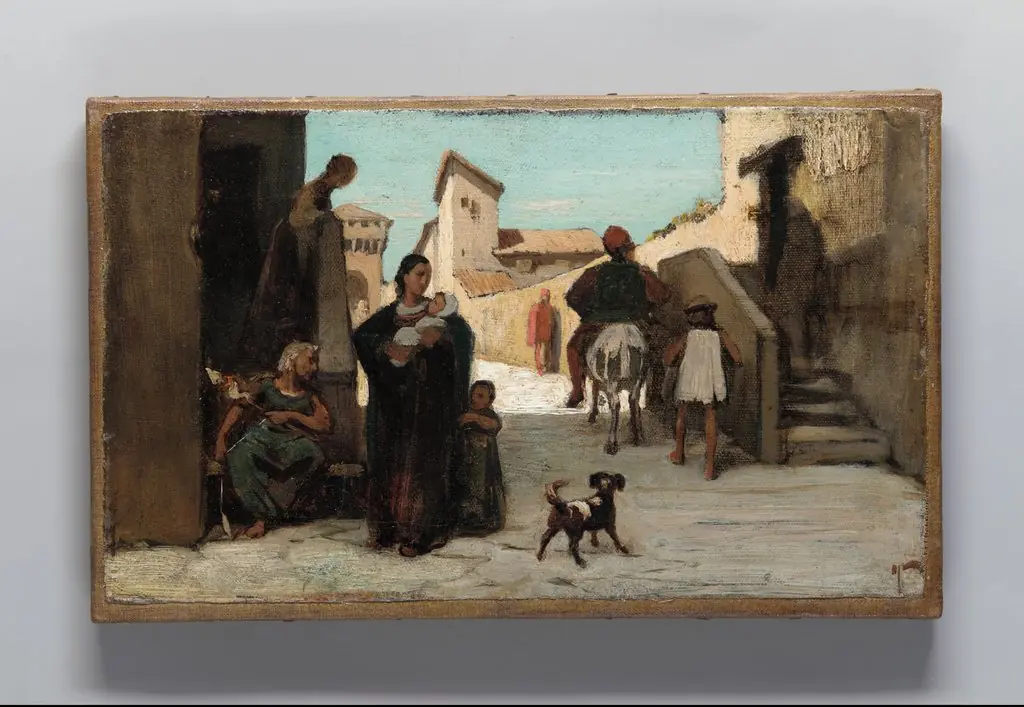 The Fable of the Miller, His Son, and the Donkey
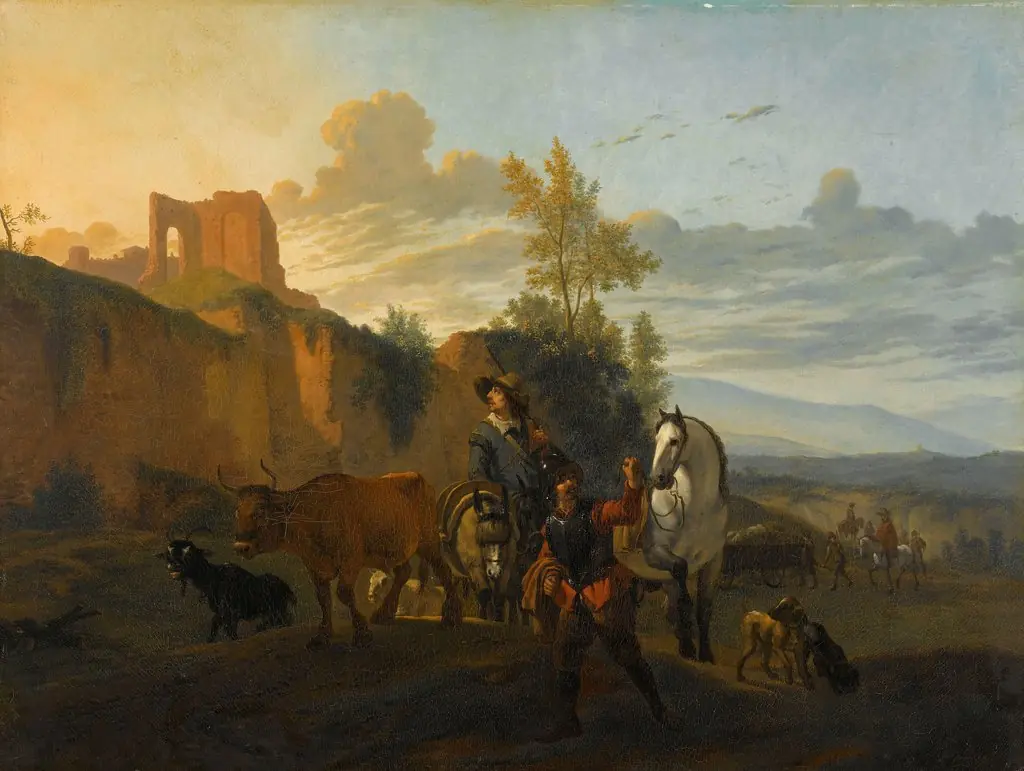 Italian landscape with soldiers
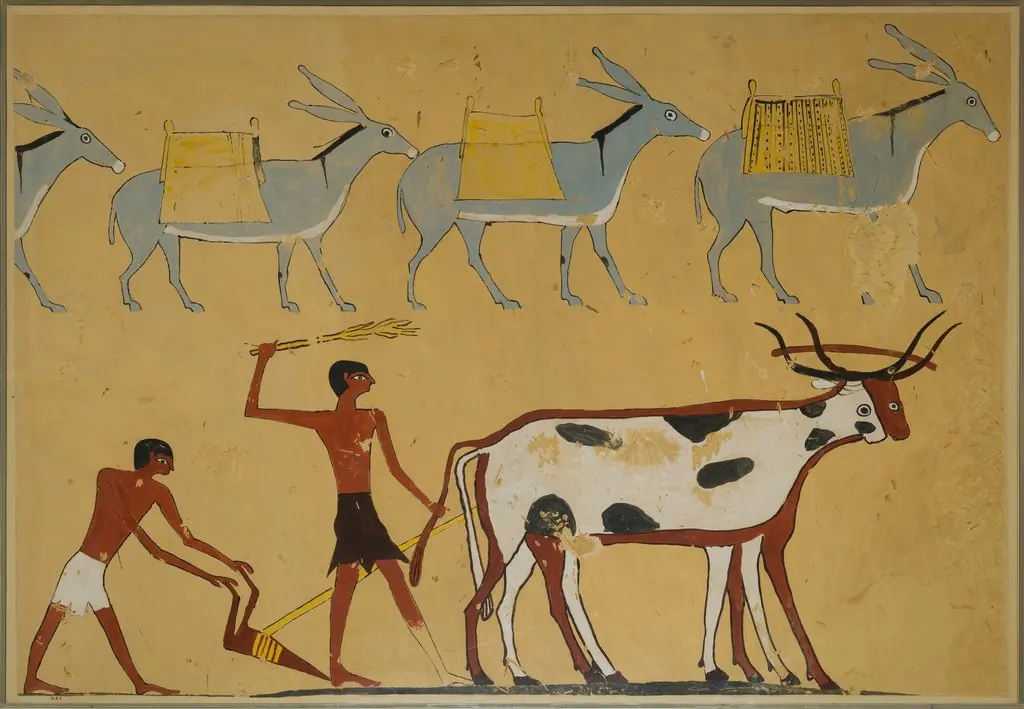 Laden Donkeys and Ploughing, Tomb of Djar
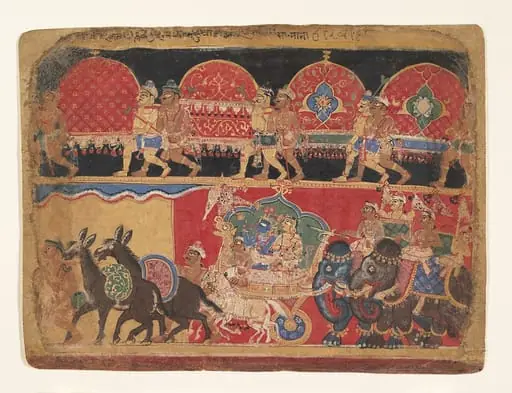 Untitled
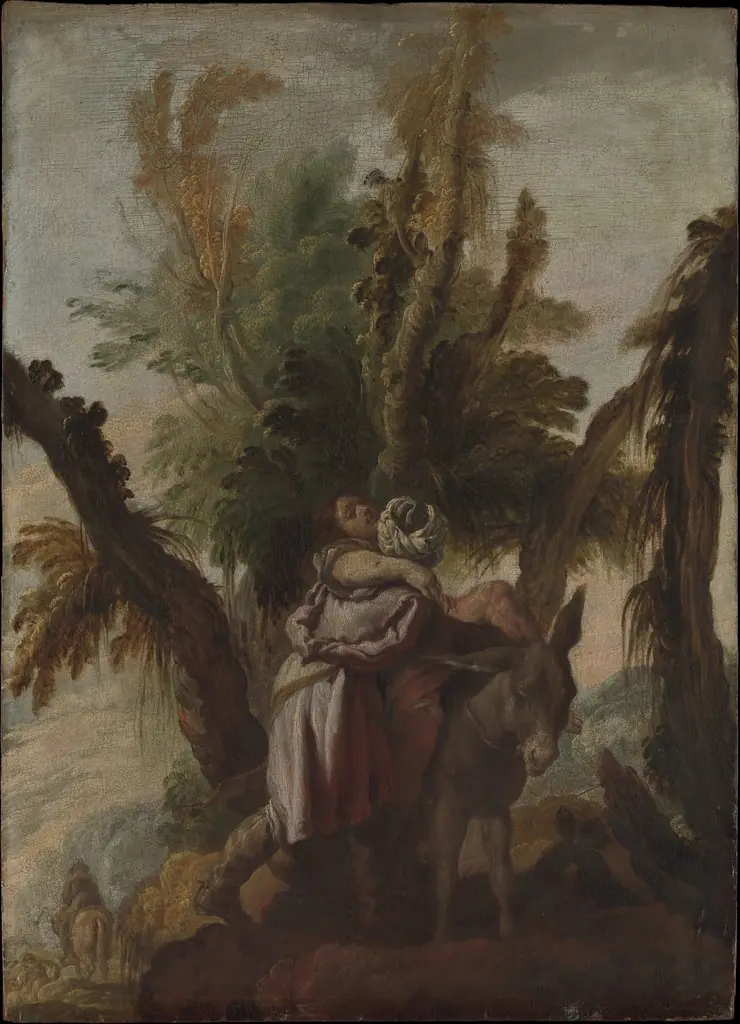 The Good Samaritan
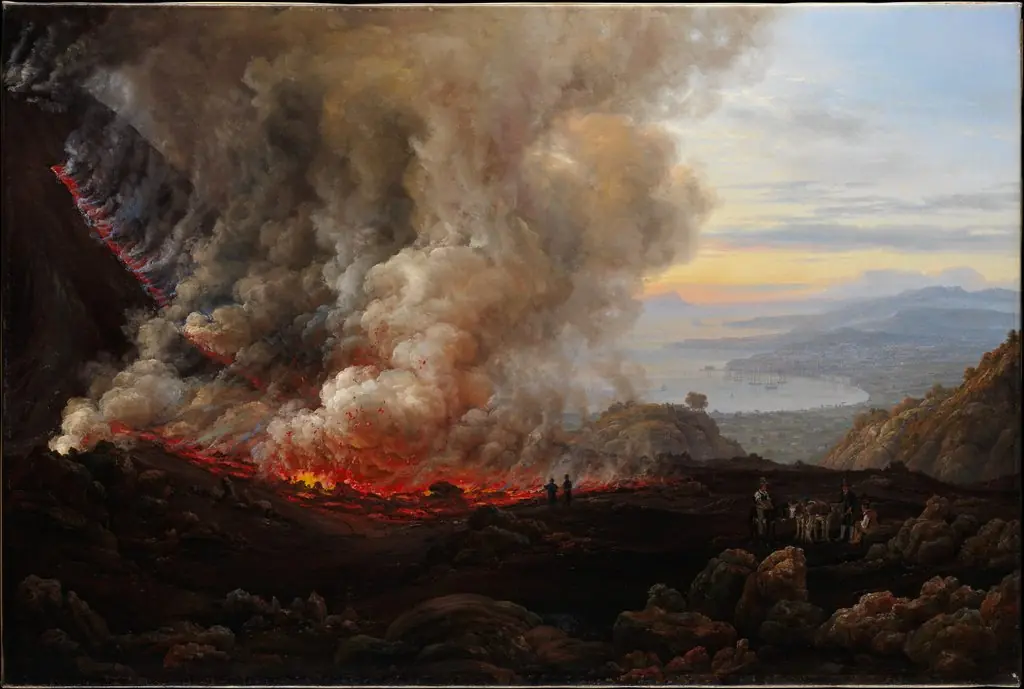 An Eruption of Vesuvius
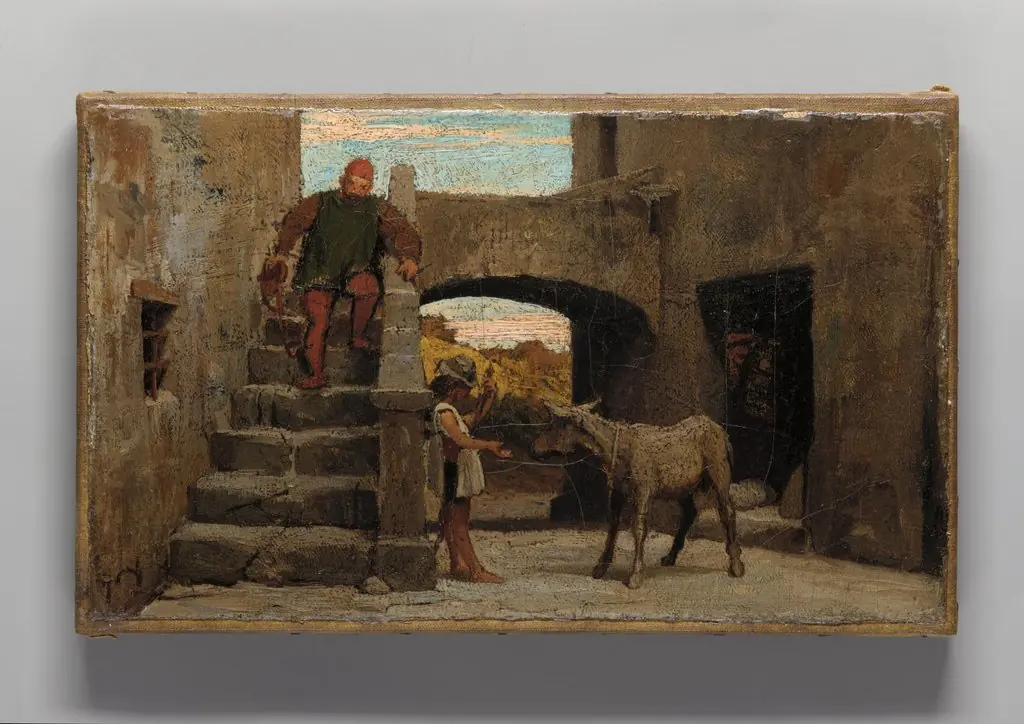 The Fable of the Miller, His Son, and the Donkey
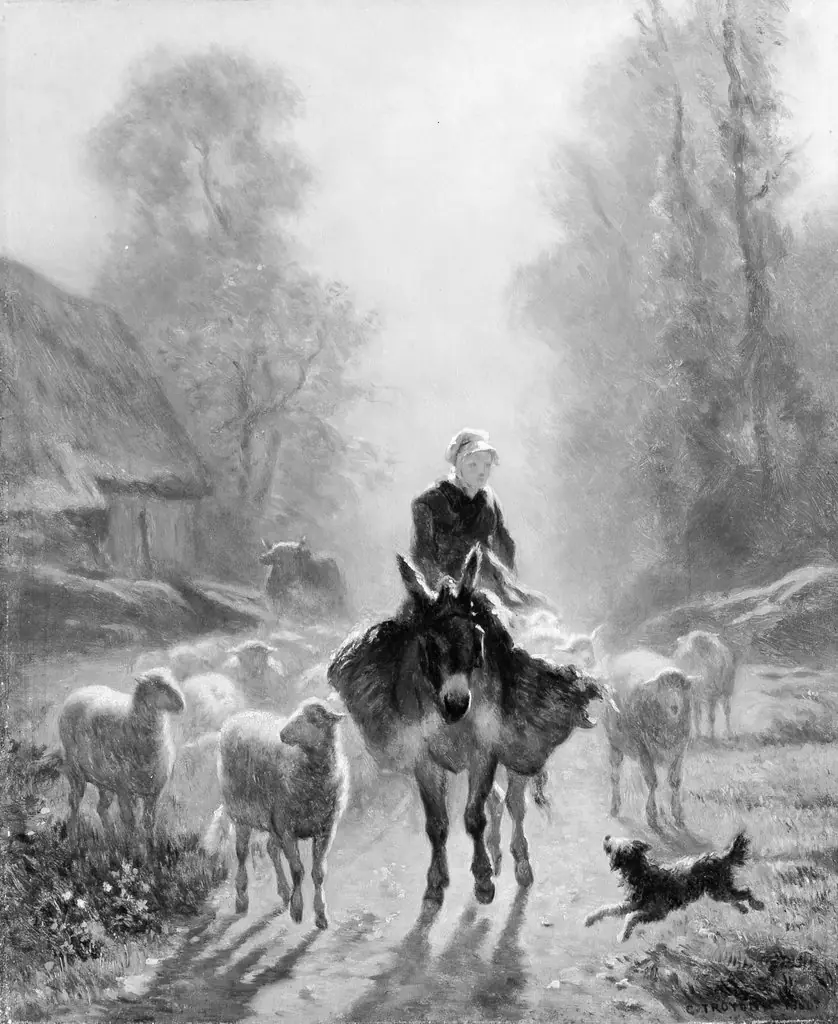 Going to Market
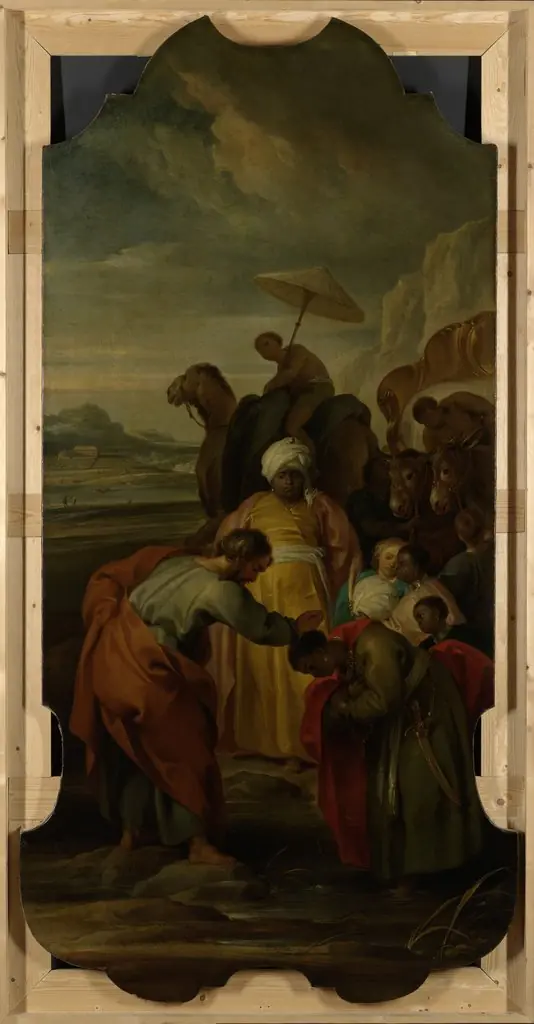 Saint Philip Baptizes the Eunuch
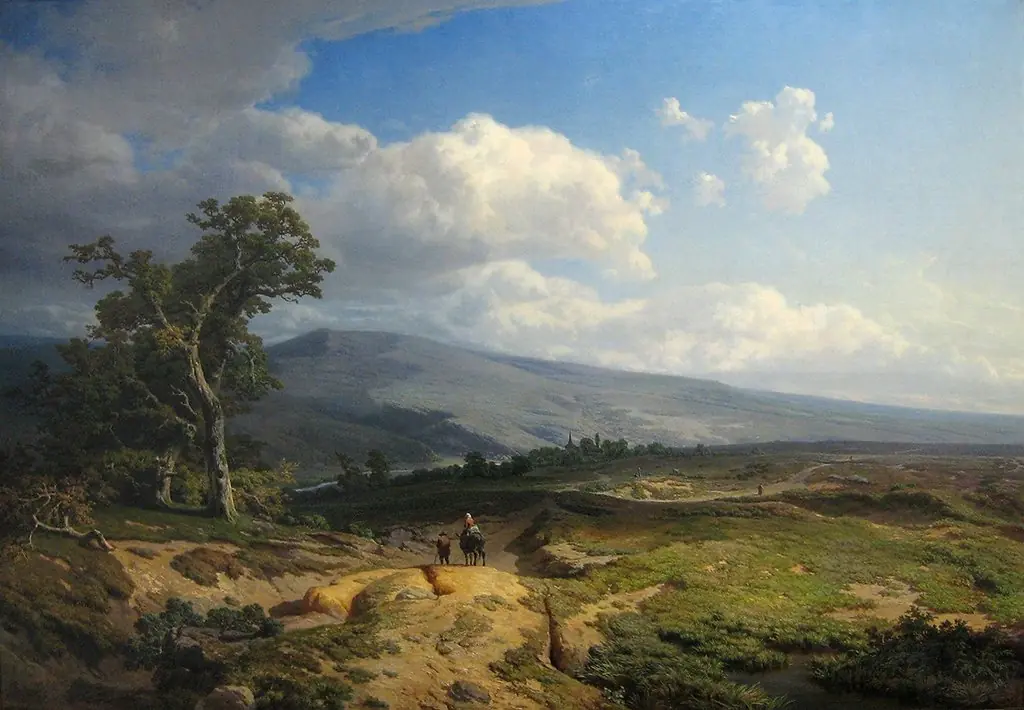 Valley of Amblève
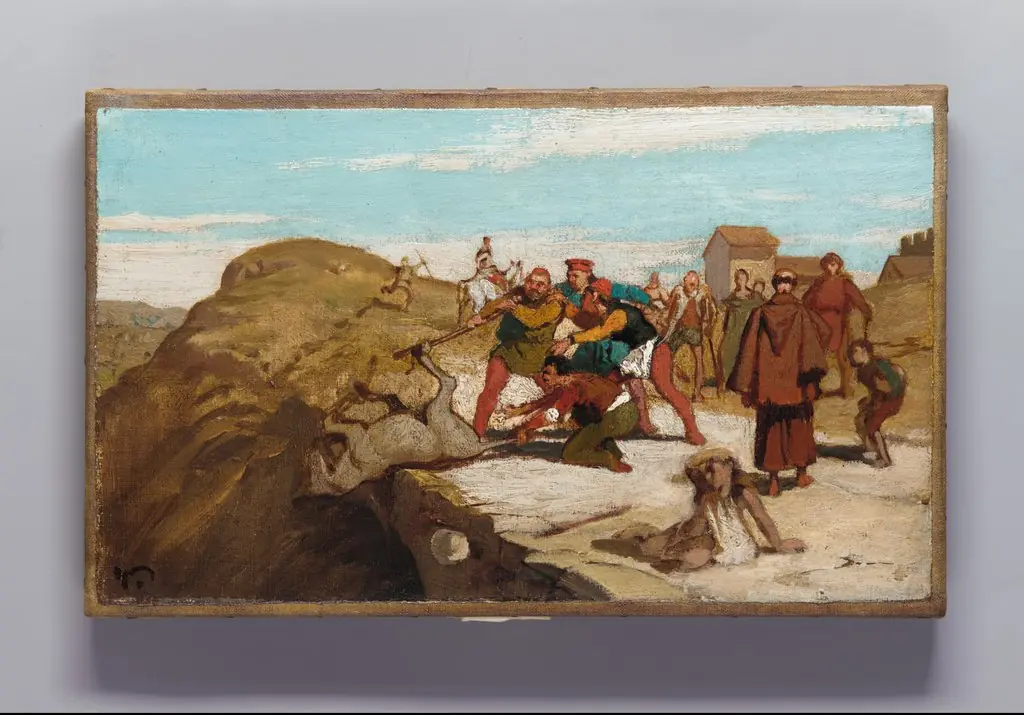 The Fable of the Miller, His Son, and the Donkey
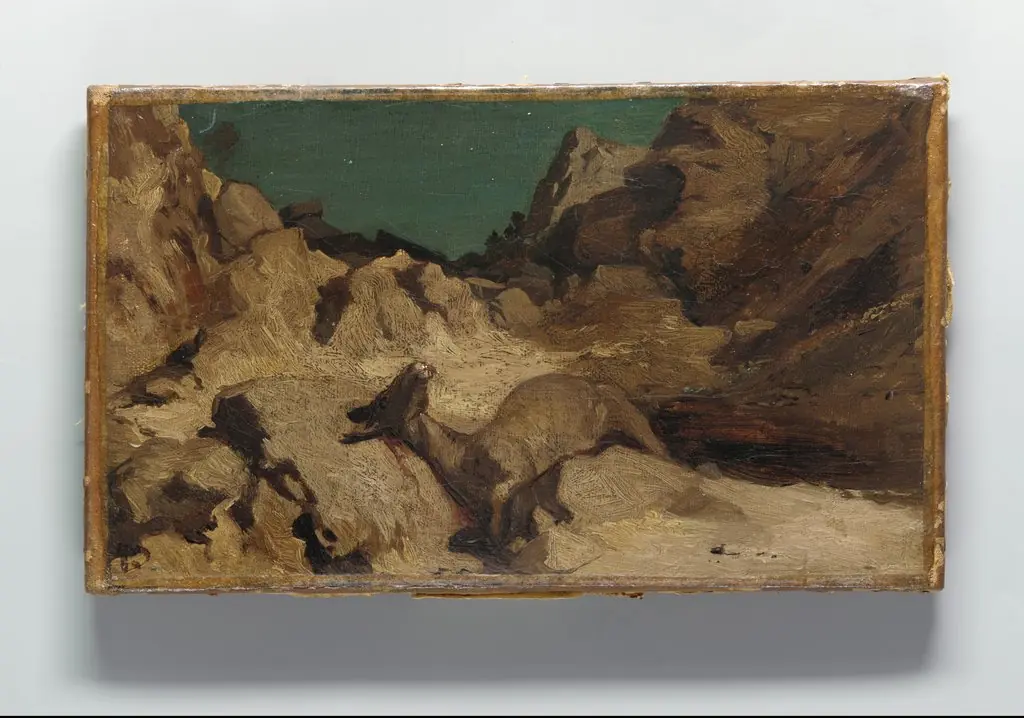 The Fable of the Miller, His Son, and the Donkey
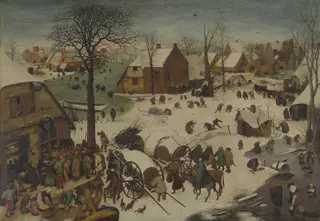 The People's Census at Bethlehem
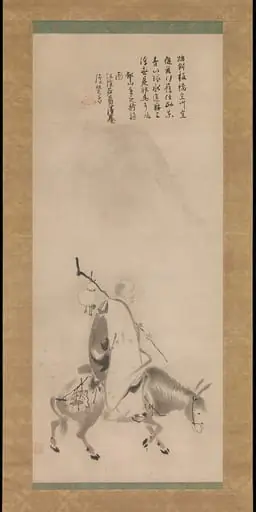 狩野内膳筆 沢庵宗彭賛 政黄牛・郁山主図|Zheng Huangniu and Yushanzhu
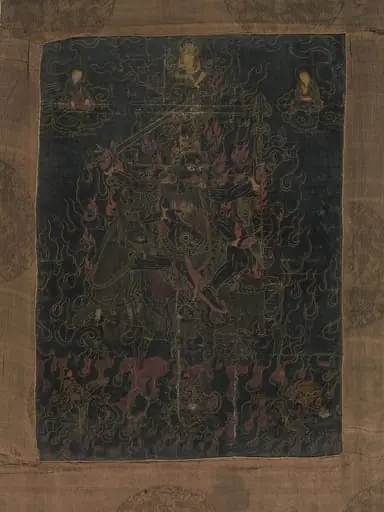 Untitled
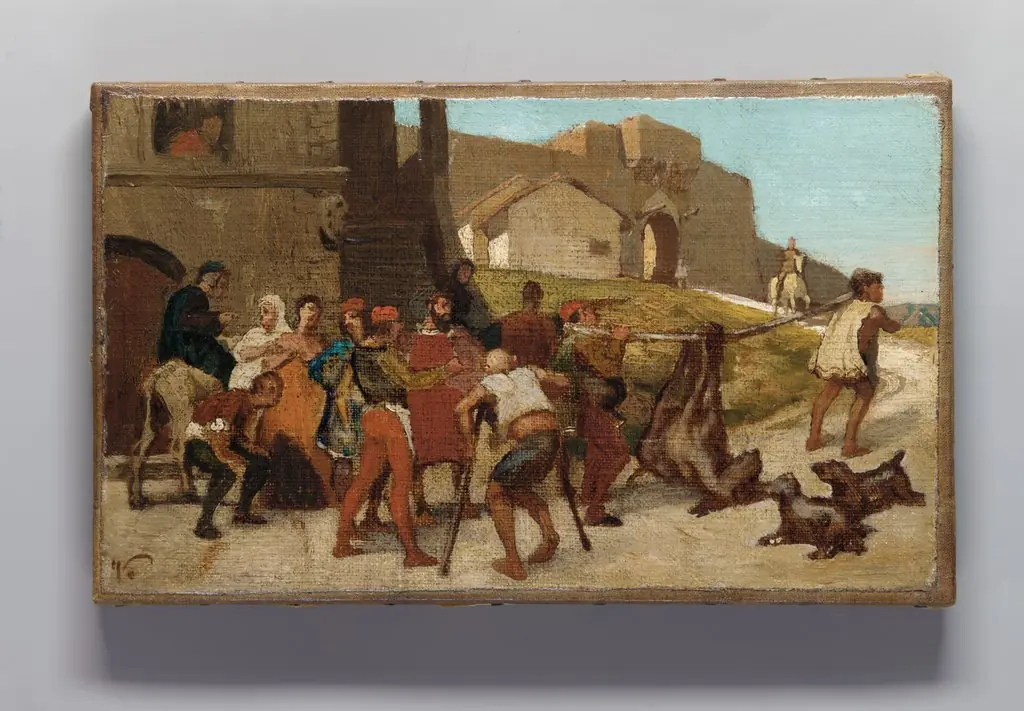 The Fable of the Miller, His Son, and the Donkey
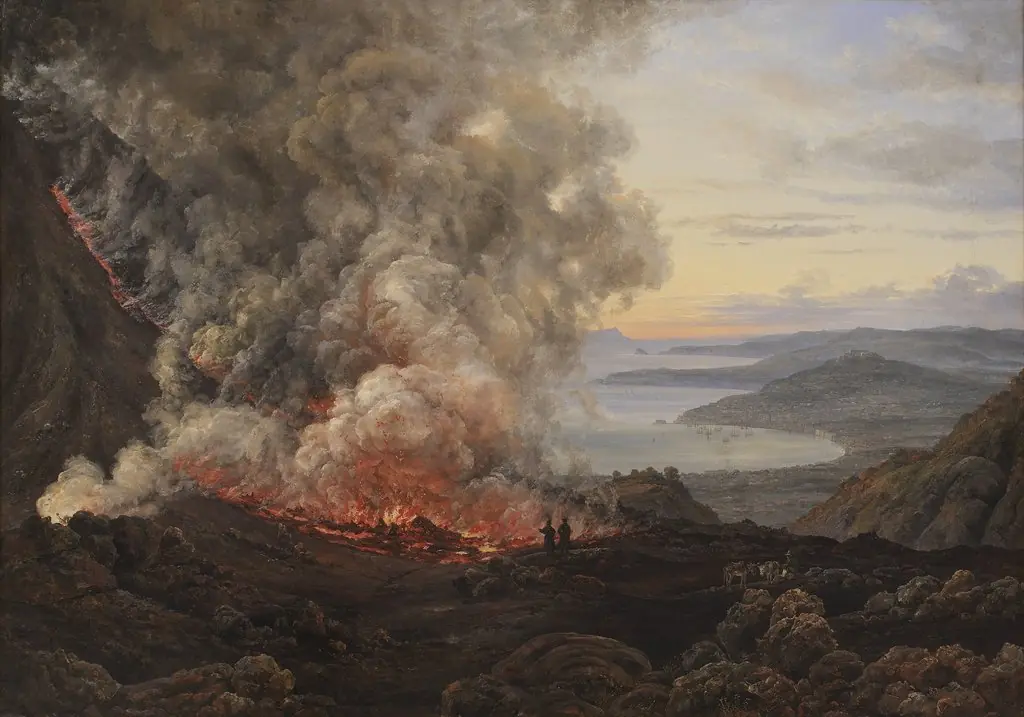 Eruption of the Volcano Vesuvius, 1820
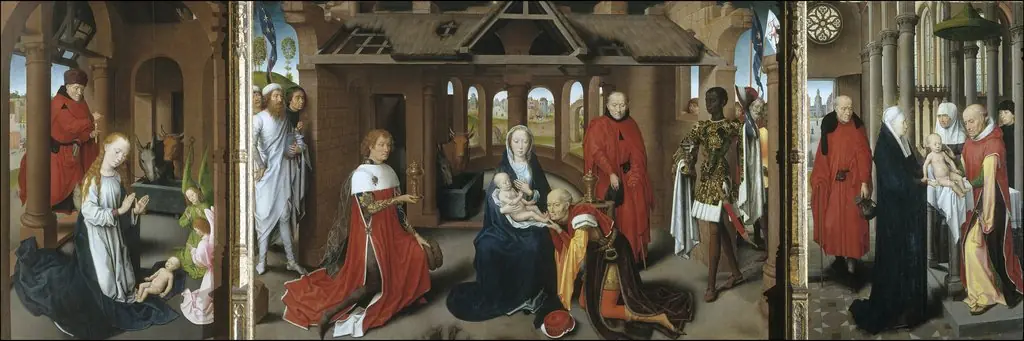 Adoration of the Magi Triptych
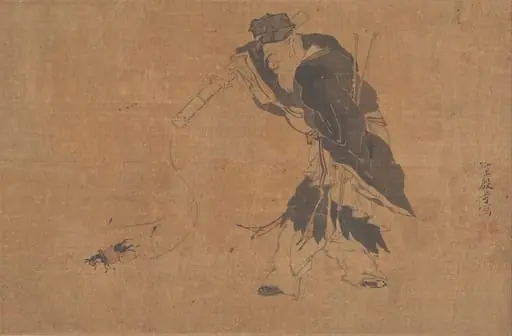 Untitled
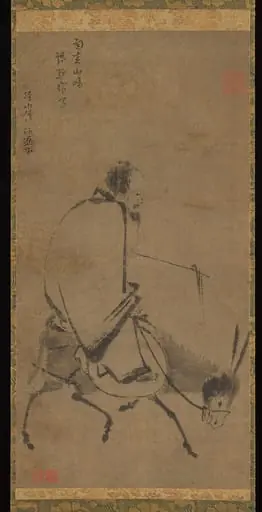 南宋 佚名 騎驢圖 軸|Chan master riding a mule
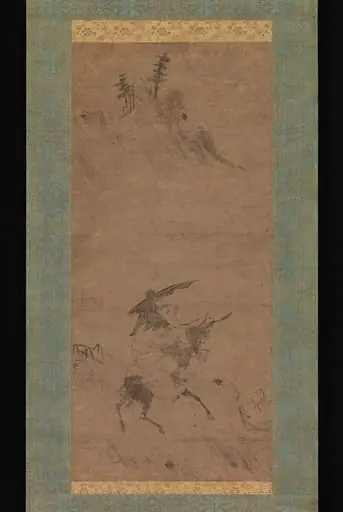 朴堂祖淳筆 蘇軾騎驢図|Su Shi Riding a Donkey
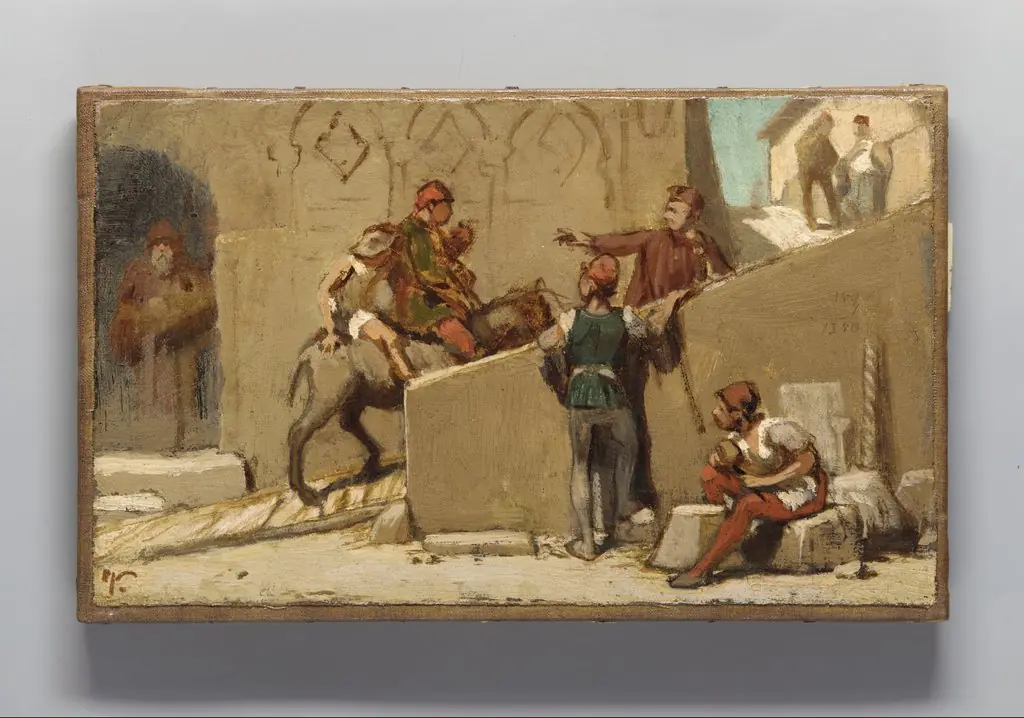 The Fable of the Miller, His Son, and the Donkey
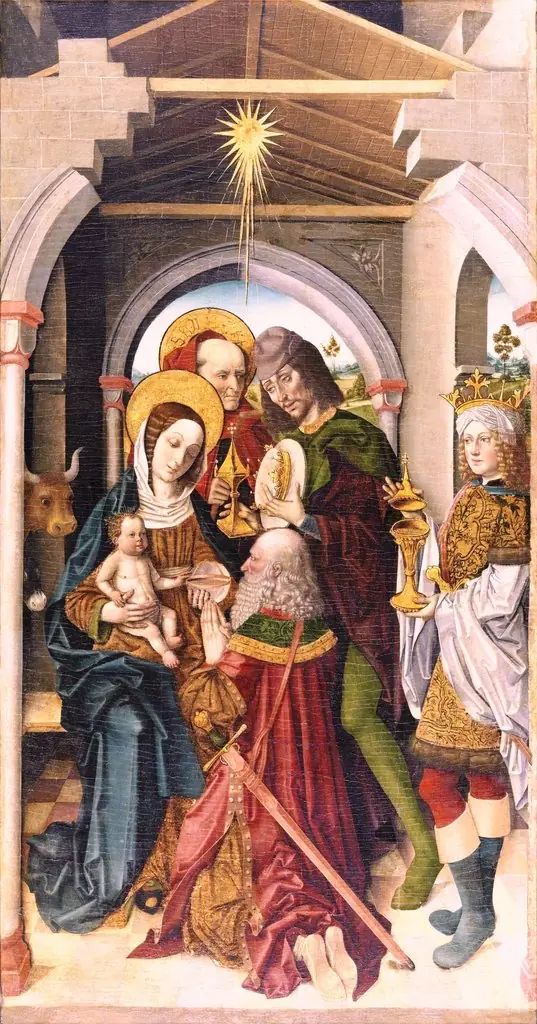 The Adoration of the Magi
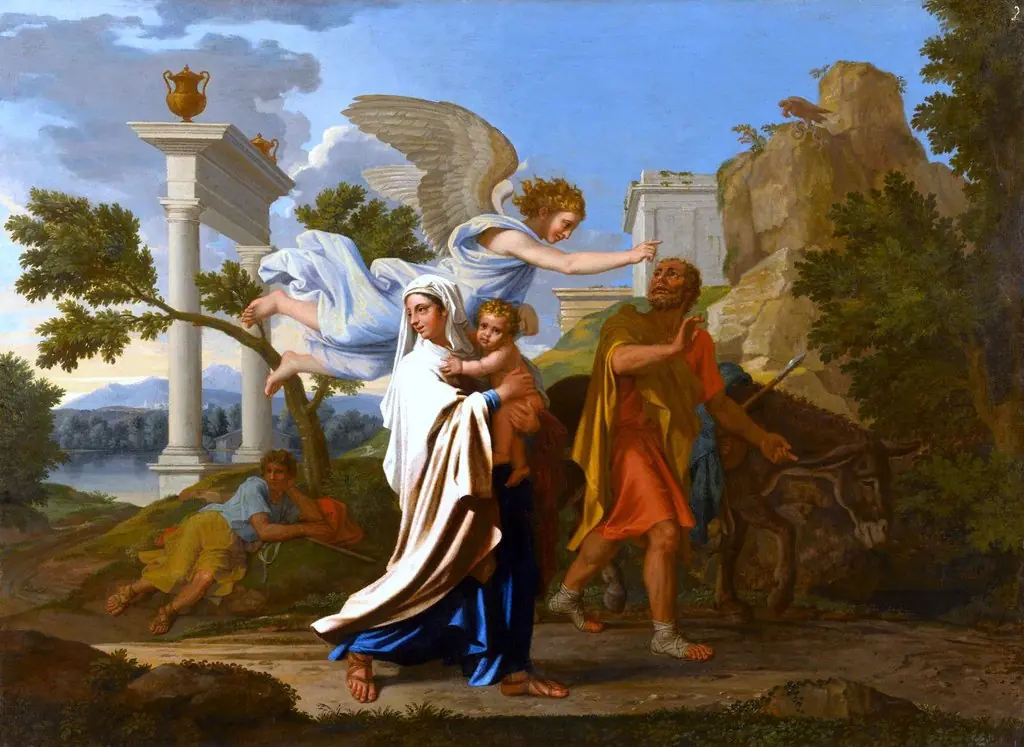 The Flight into Egypt
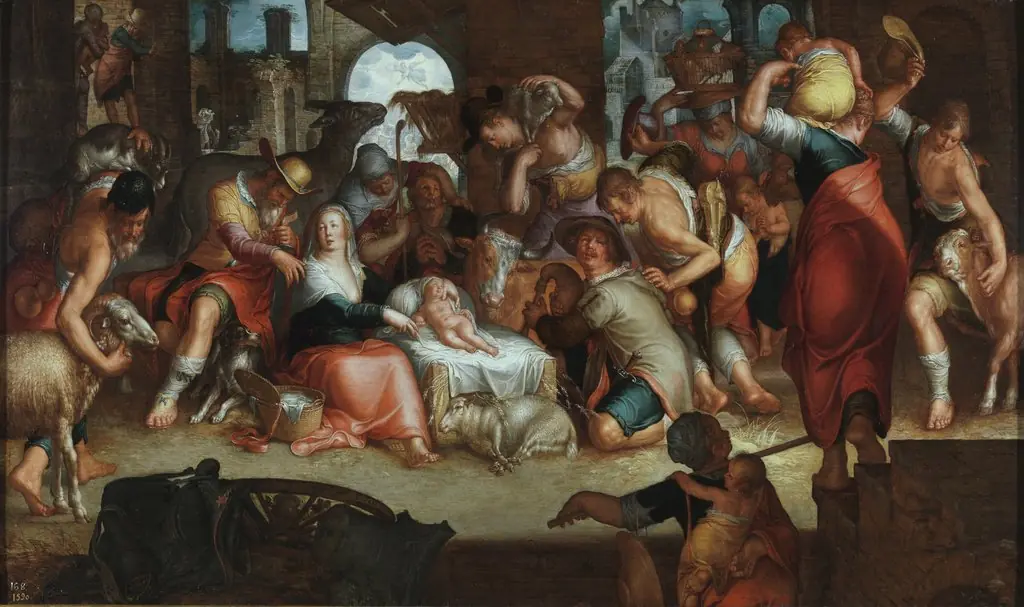 Adoration of the Shepherds
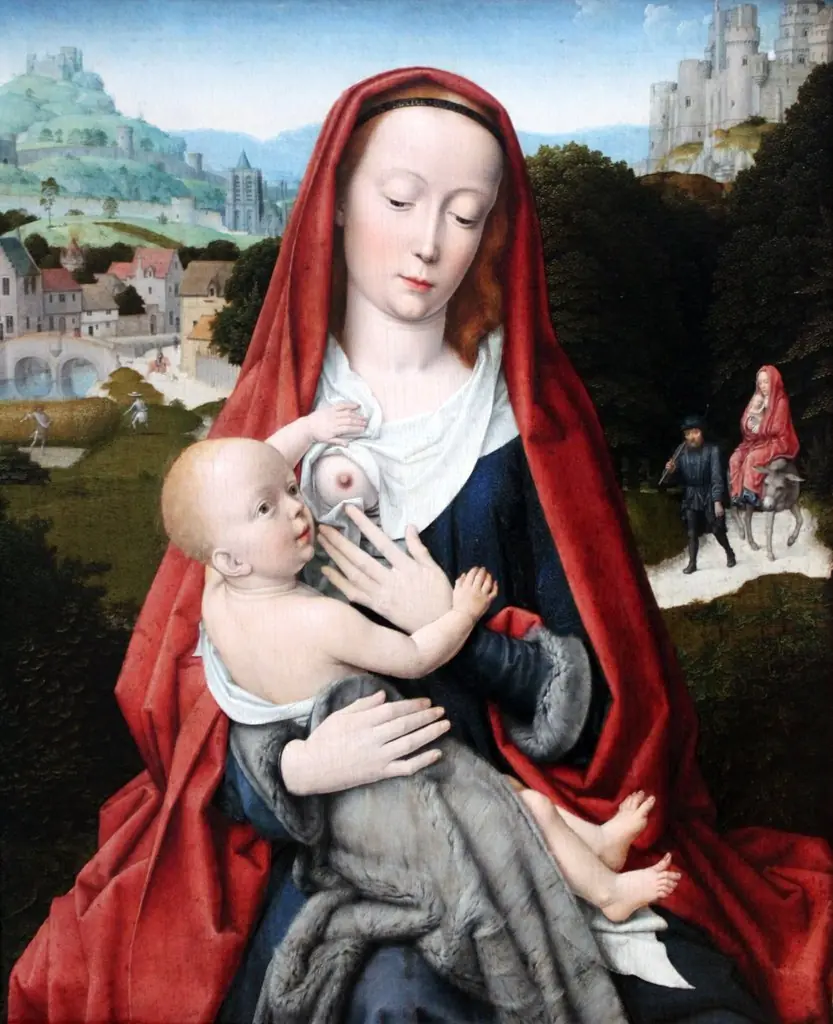 Madonna and Child
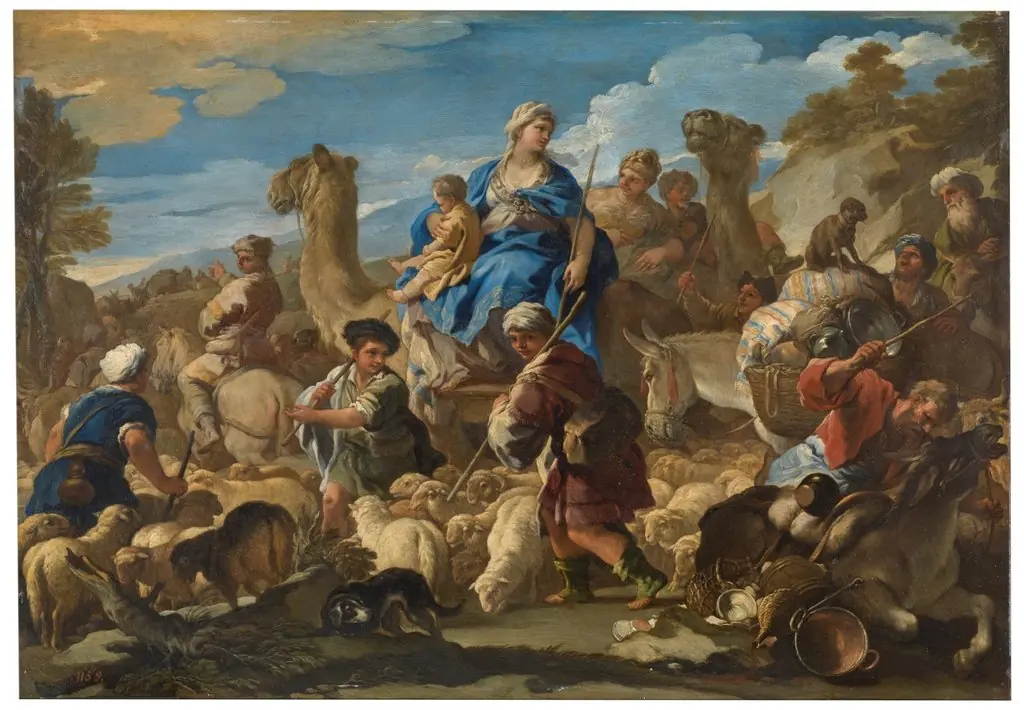 Viaje de Jacob a Caná
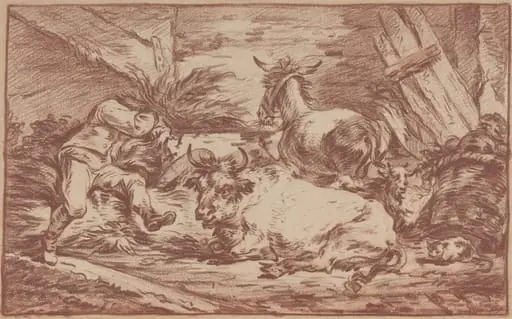 Animals in a Stable
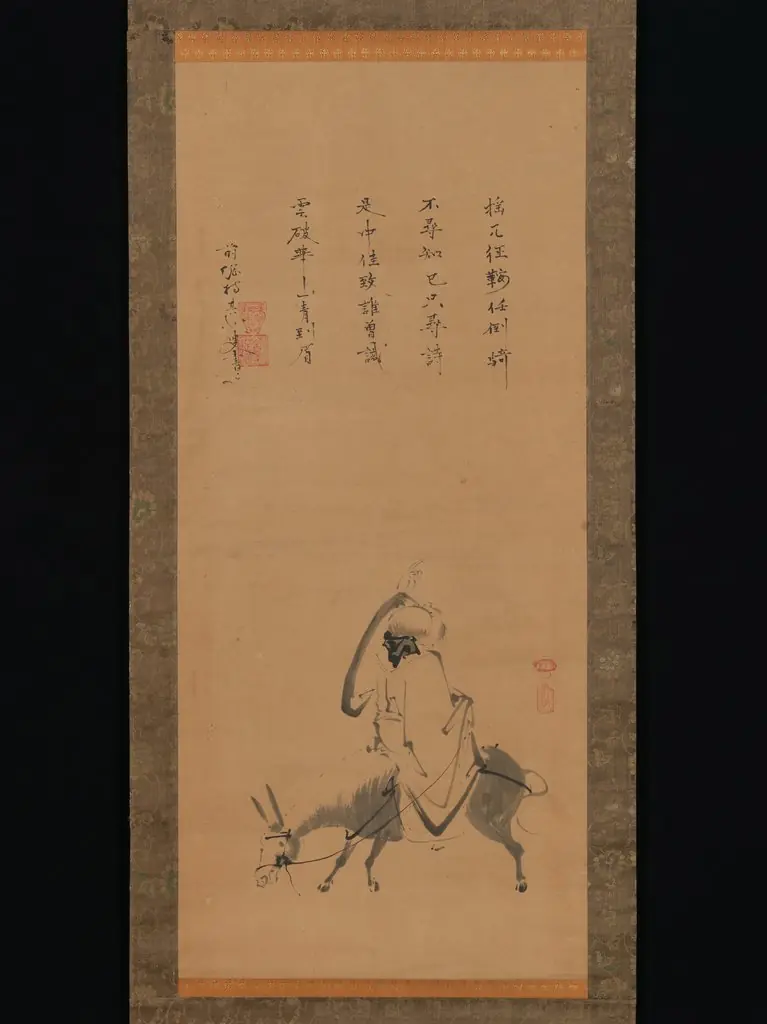 The Chinese Poet Pan Lang on a Donkey
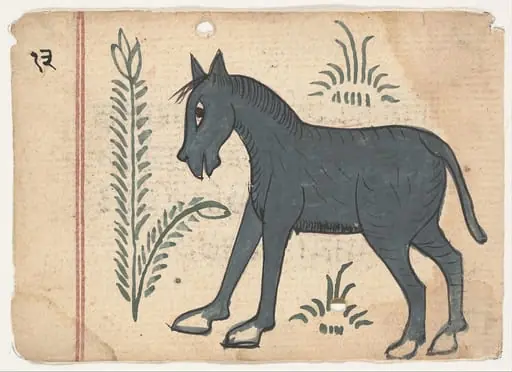 Untitled
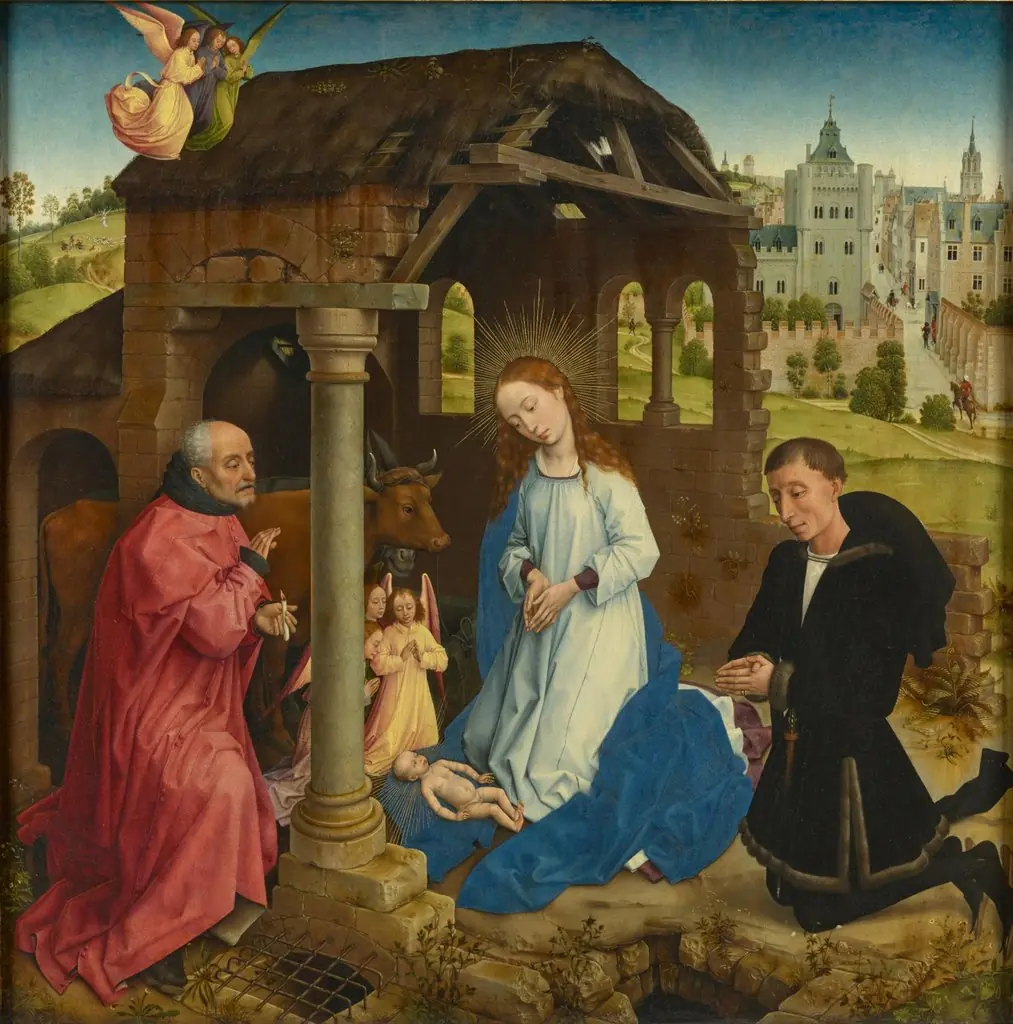 Bladelin Triptych Nativity (central panel)
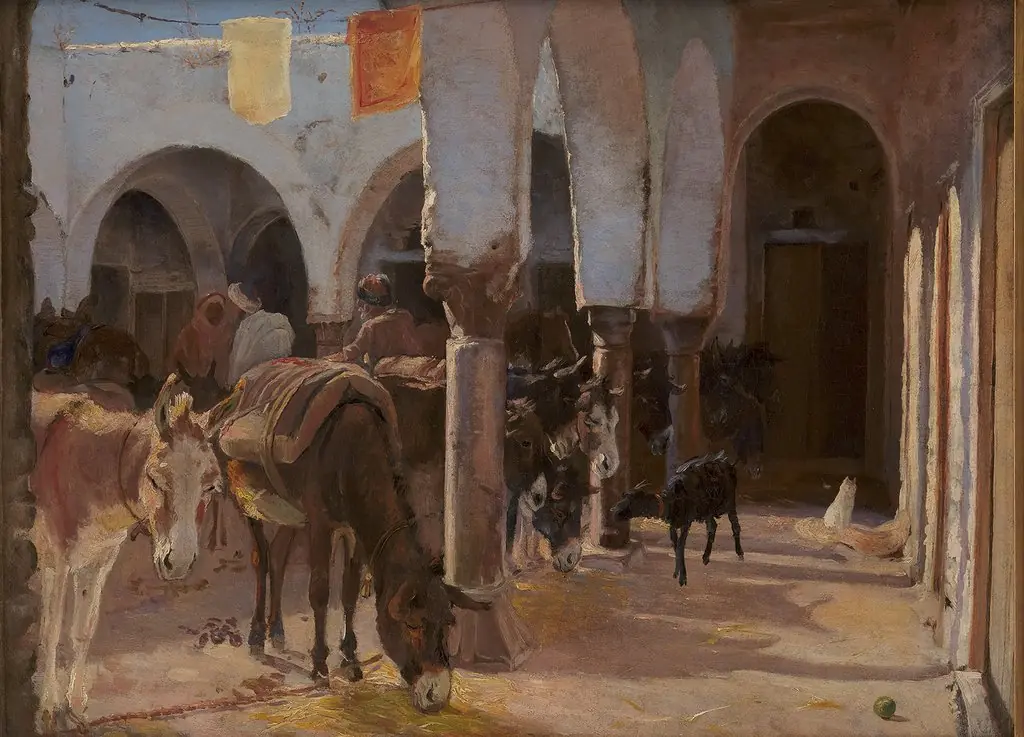 A Donkey House in Tunis
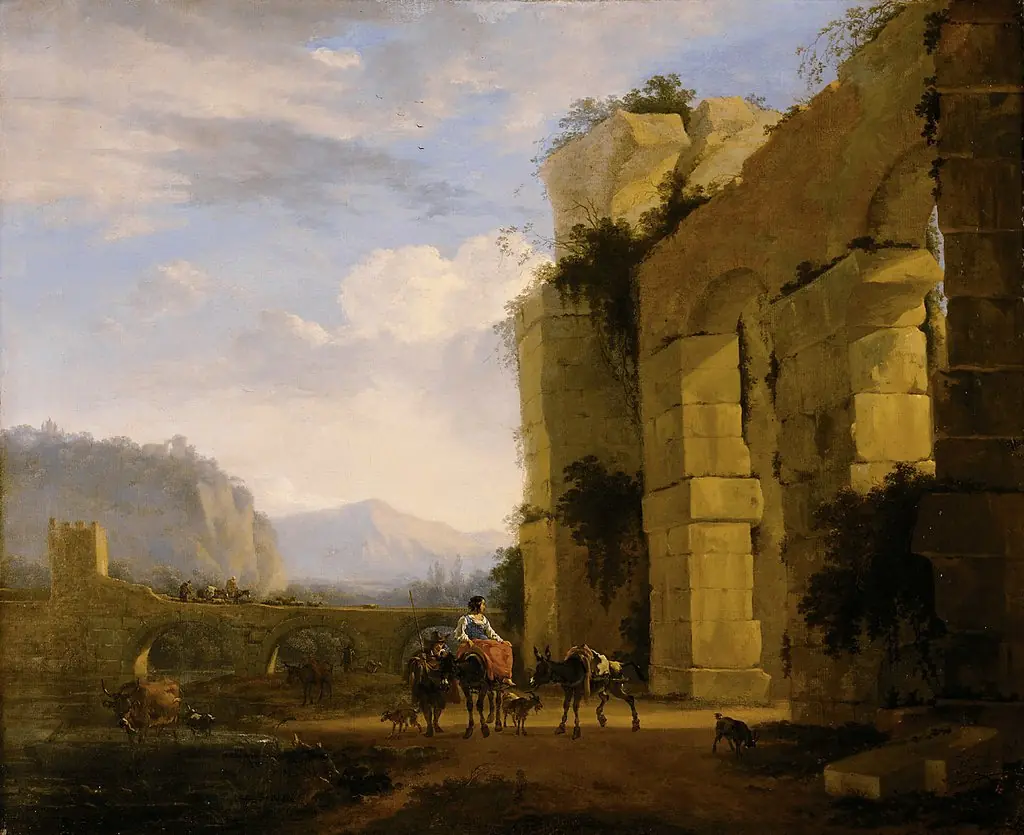 Landscape with the ruin of an aquaduct
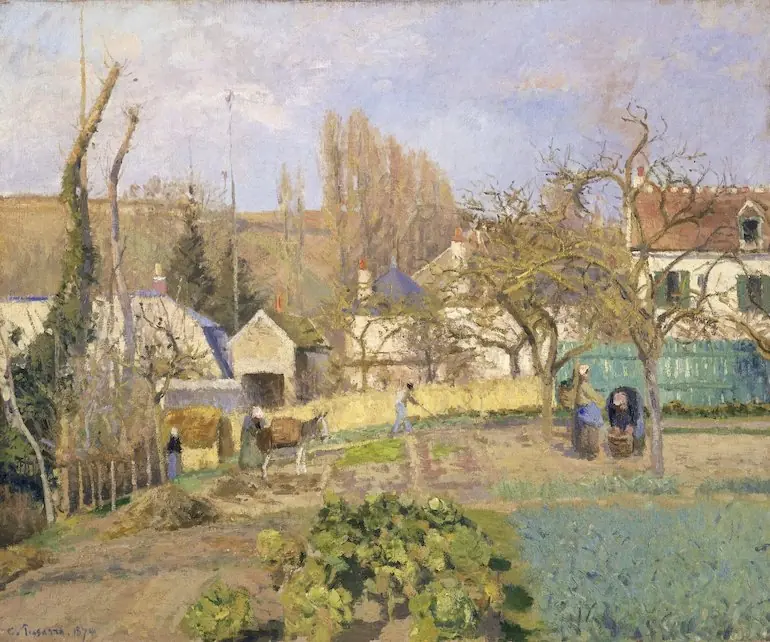 Kitchen Gardens at L'Hermitage, Pontoise
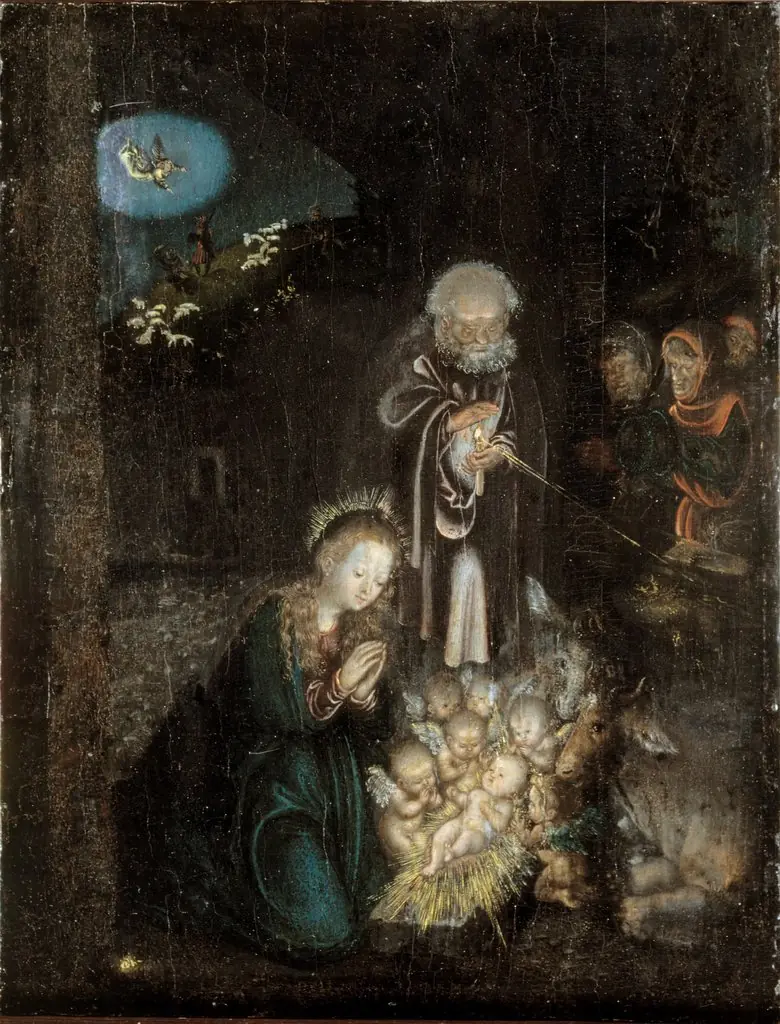 Nativity
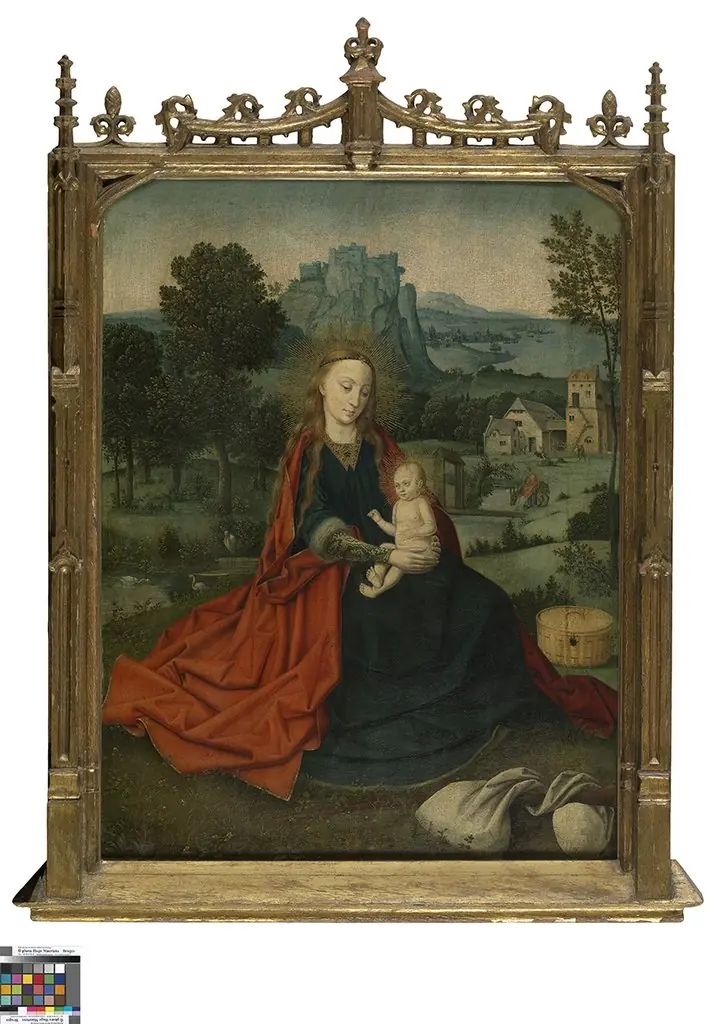 Rest on the Flight into Egypt
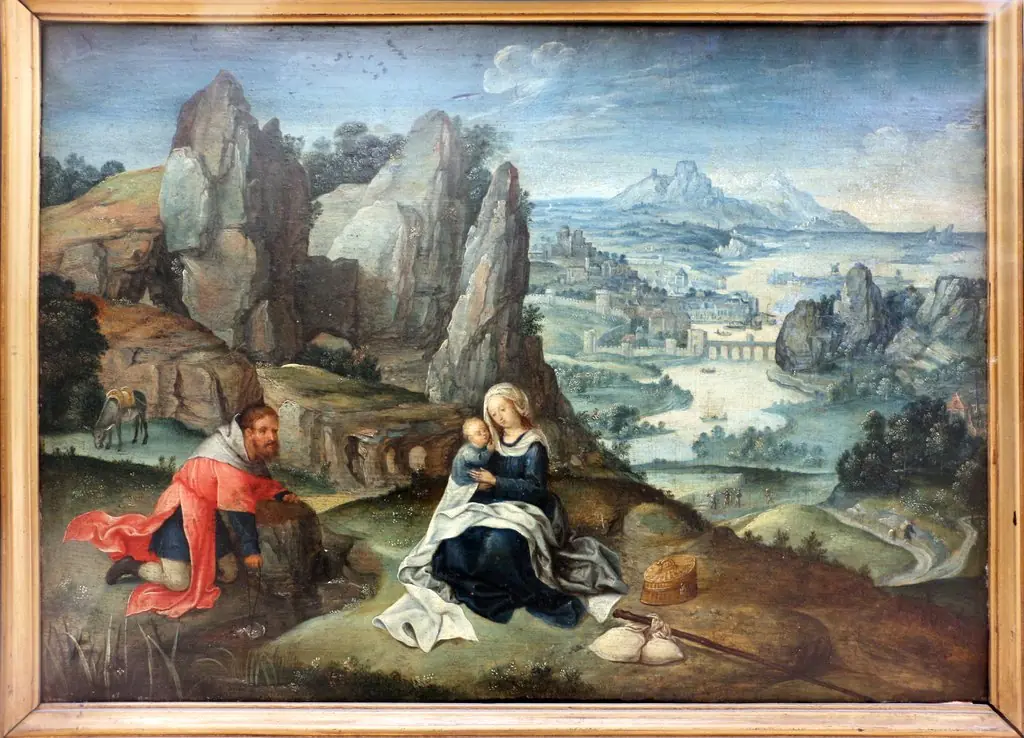 Rest on the Flight into Egypt
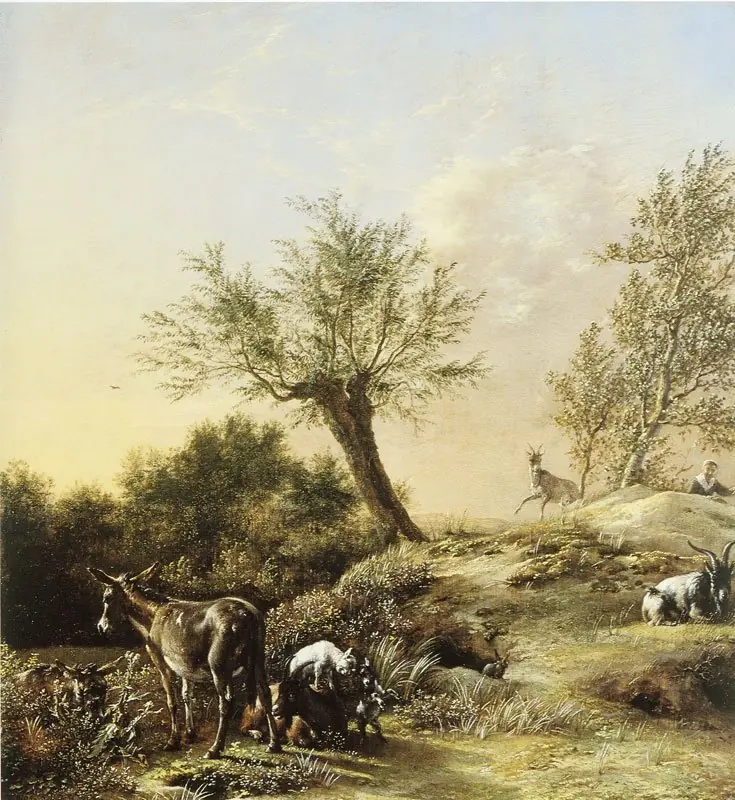 The Rabbit Warren (“Spring Landscape with Donkeys and Goats”)
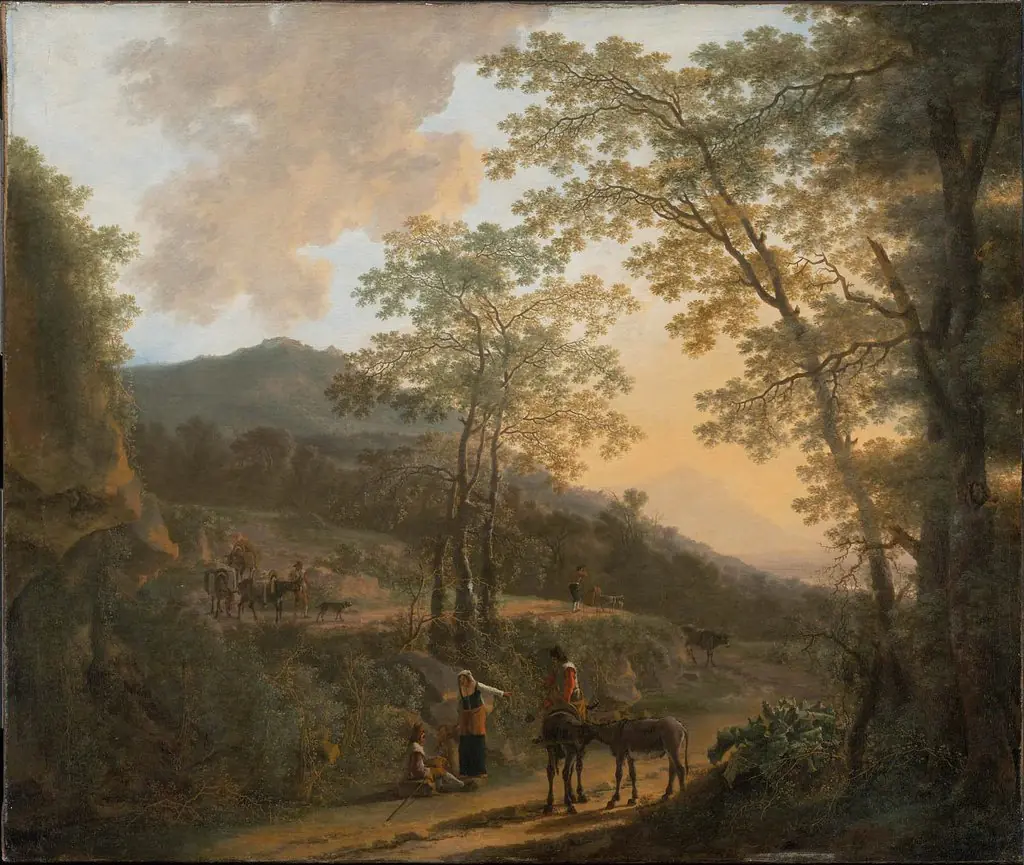 Italian Landscape with Peasants and Donkeys
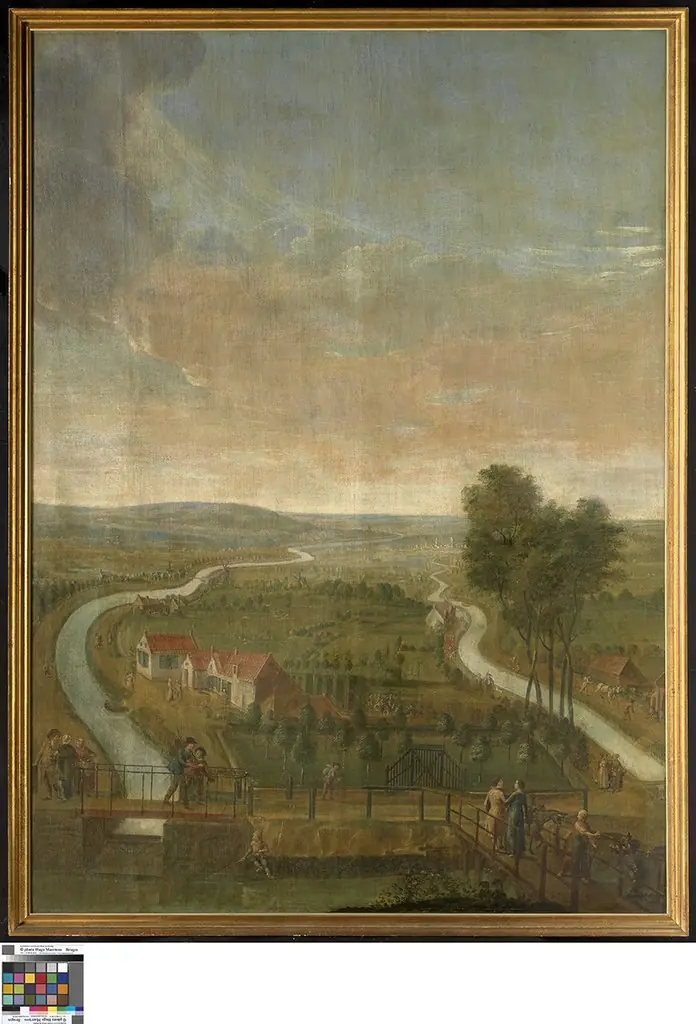 De Handelskom in Brugge
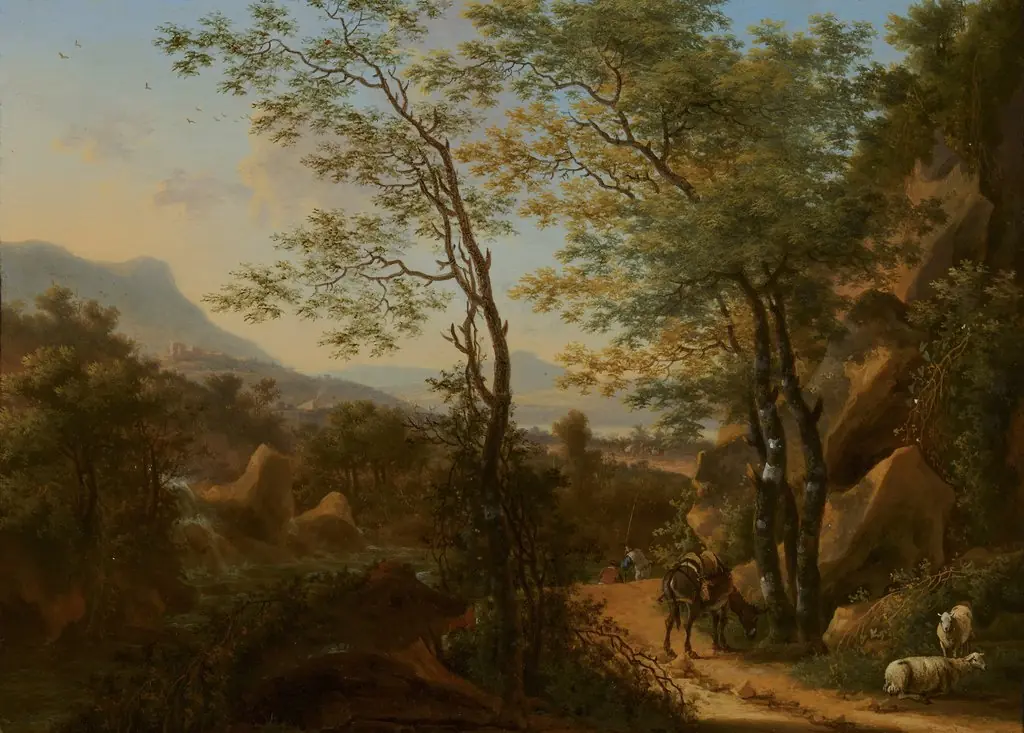 Mountainous Landscape in Italy
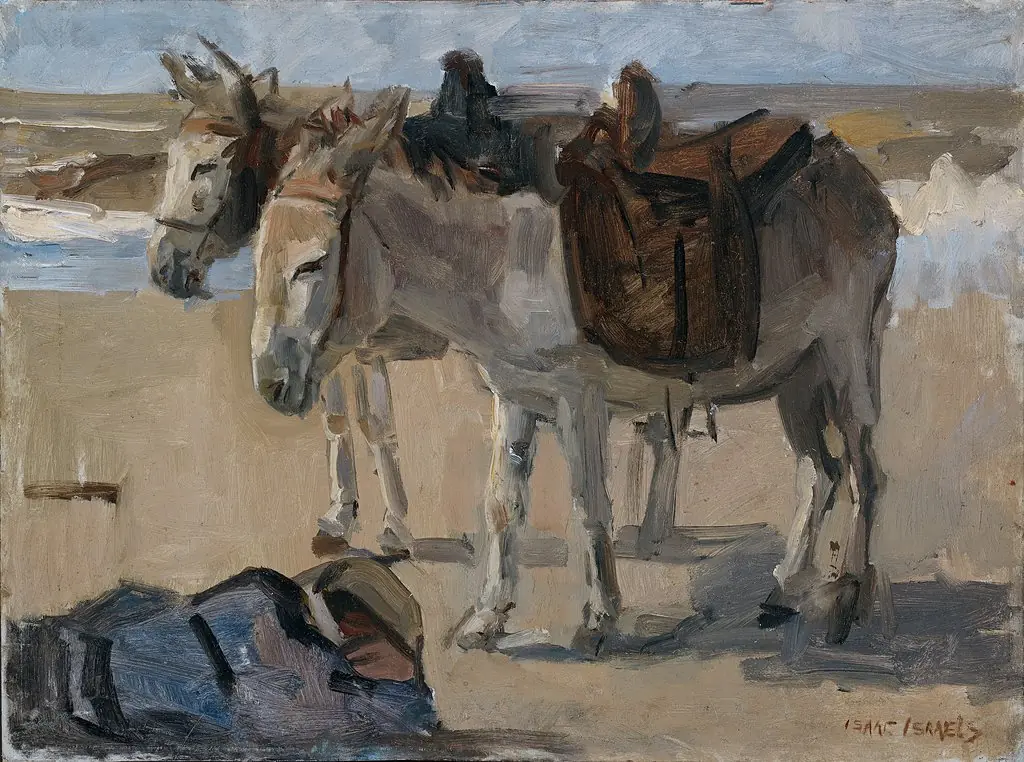 Two Donkeys
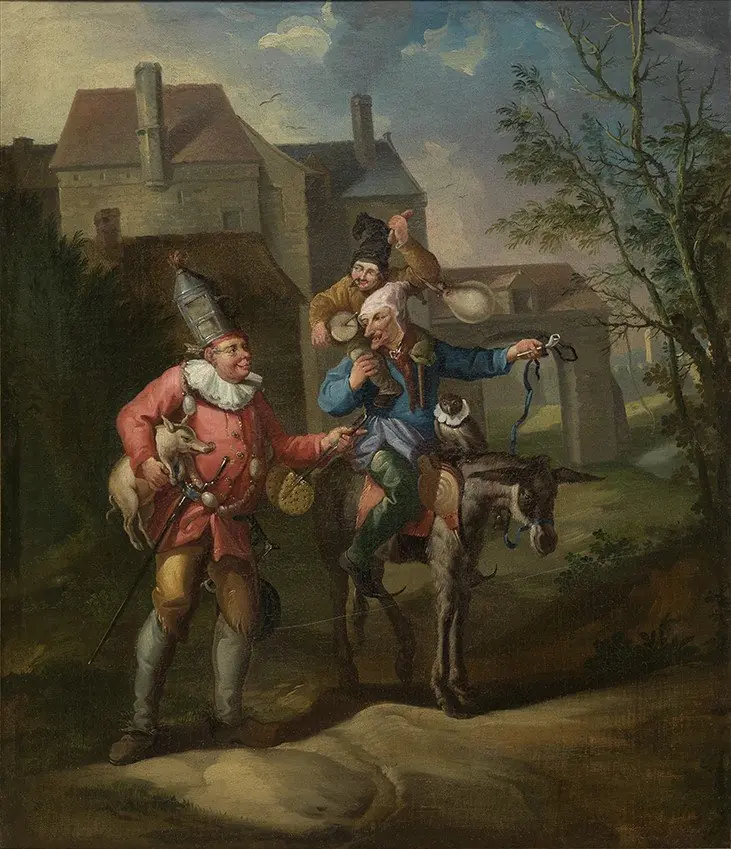 Carnavalsgasten
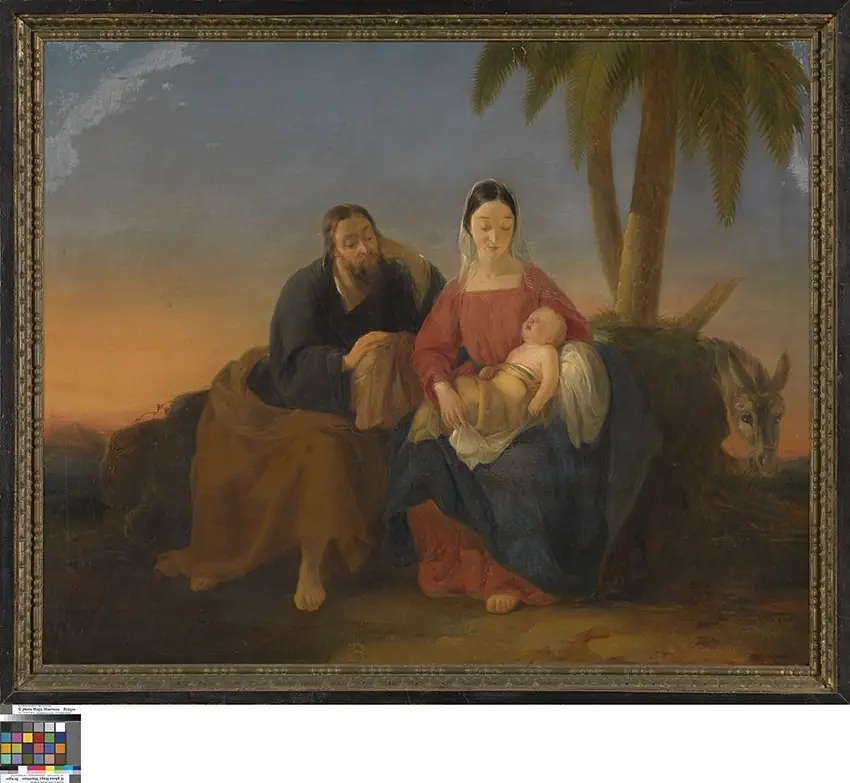 Rest on the Flight into Egypt
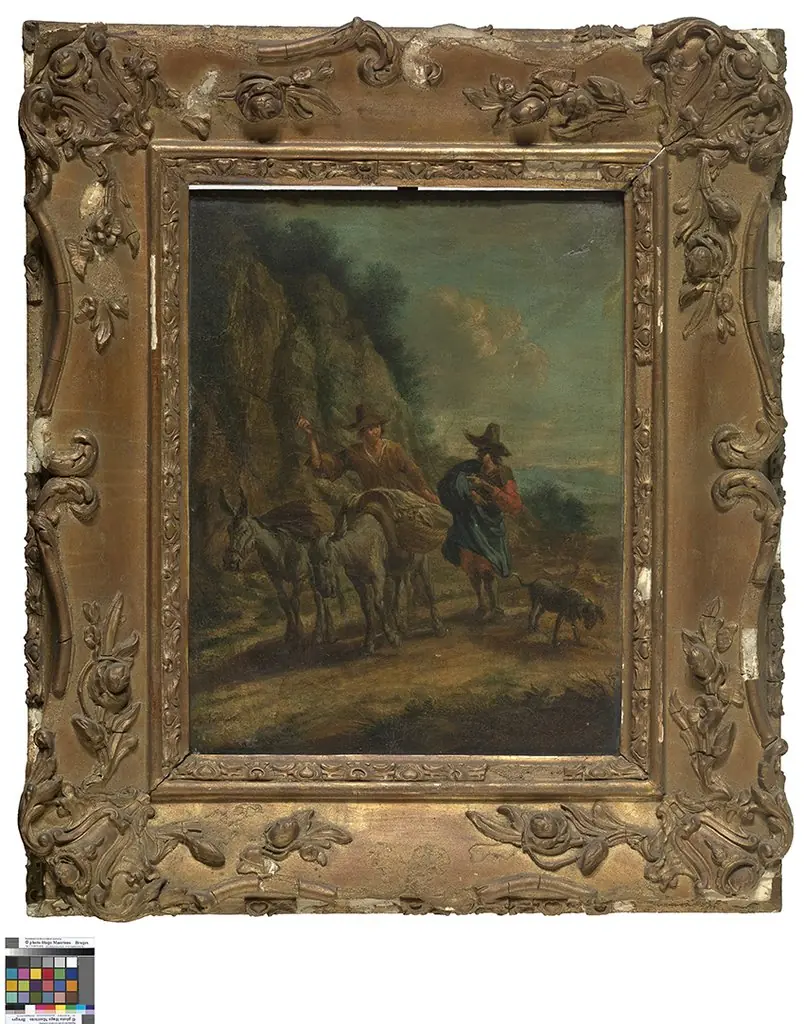 Ezeldrijvers
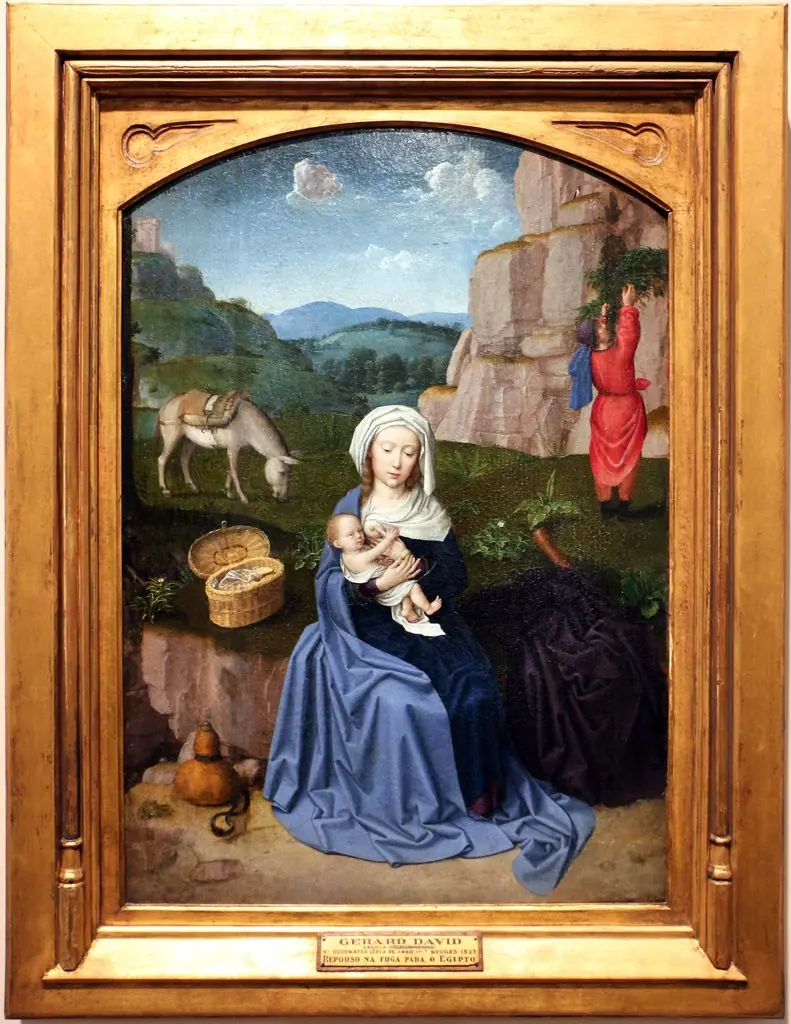 Rest on the Flight into Egypt
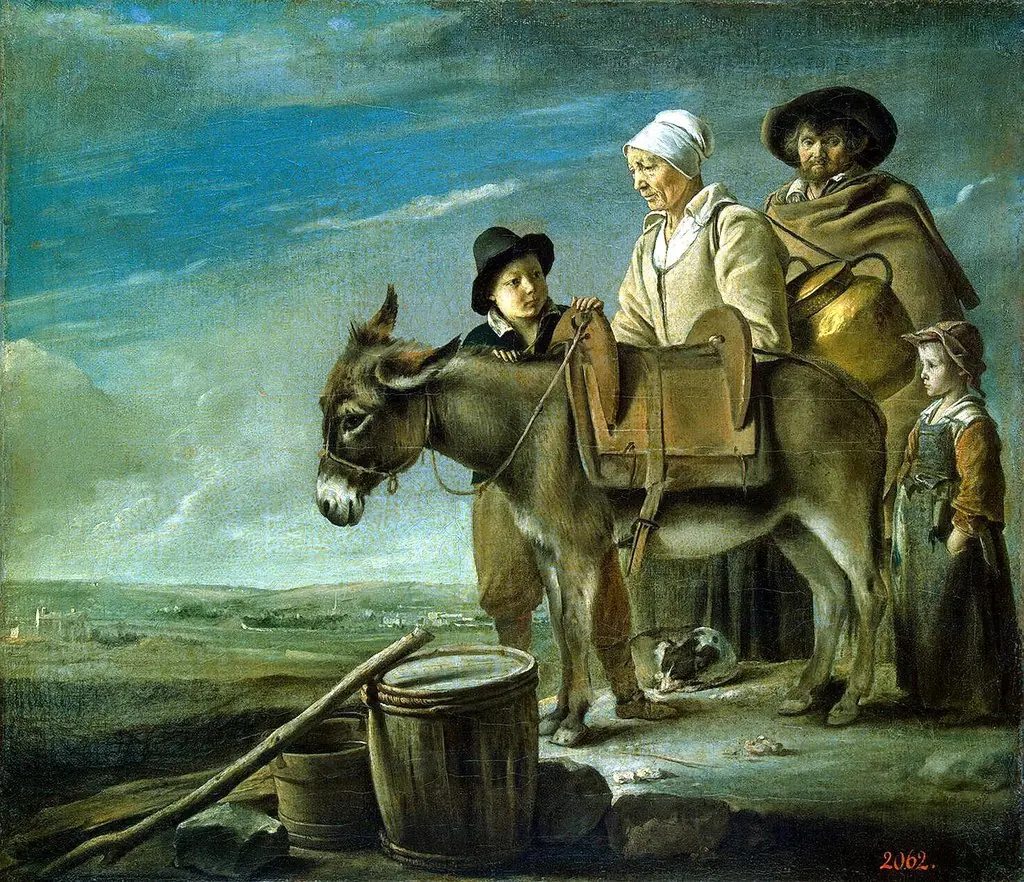 Milkmaid's Family
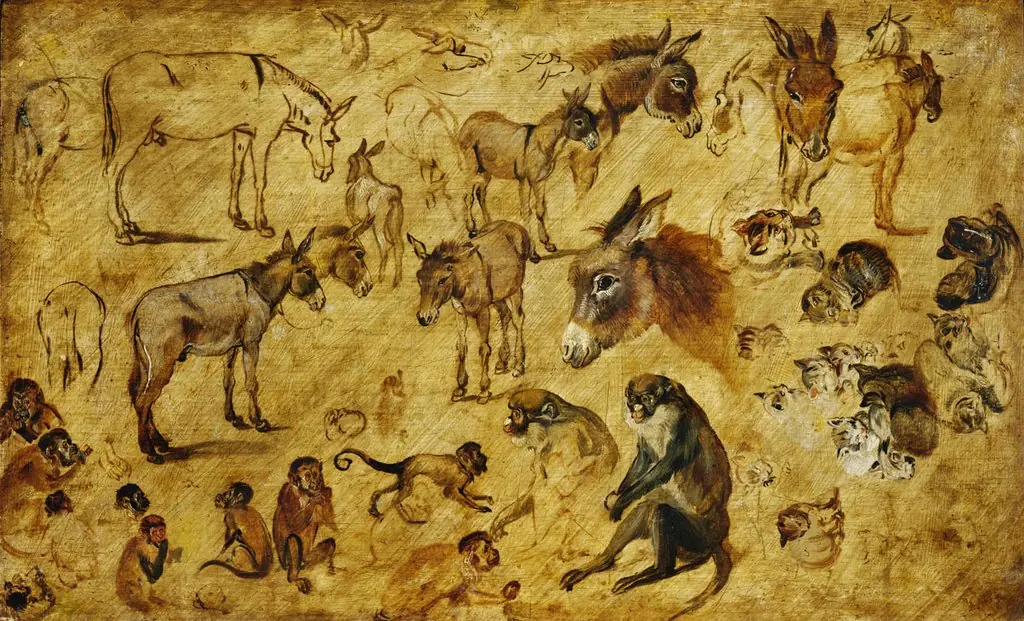 Studies of Animals (Donkeys, Cats, Monkeys)
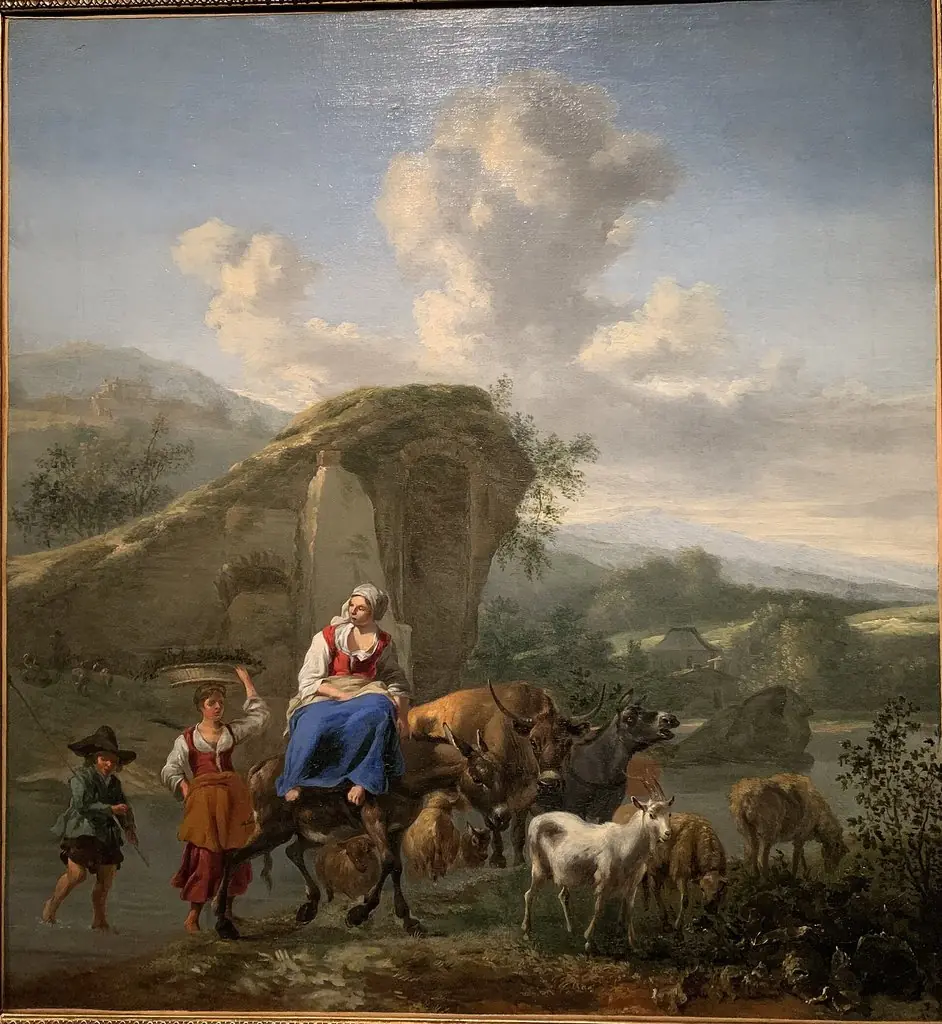 Shepherds at a Ford
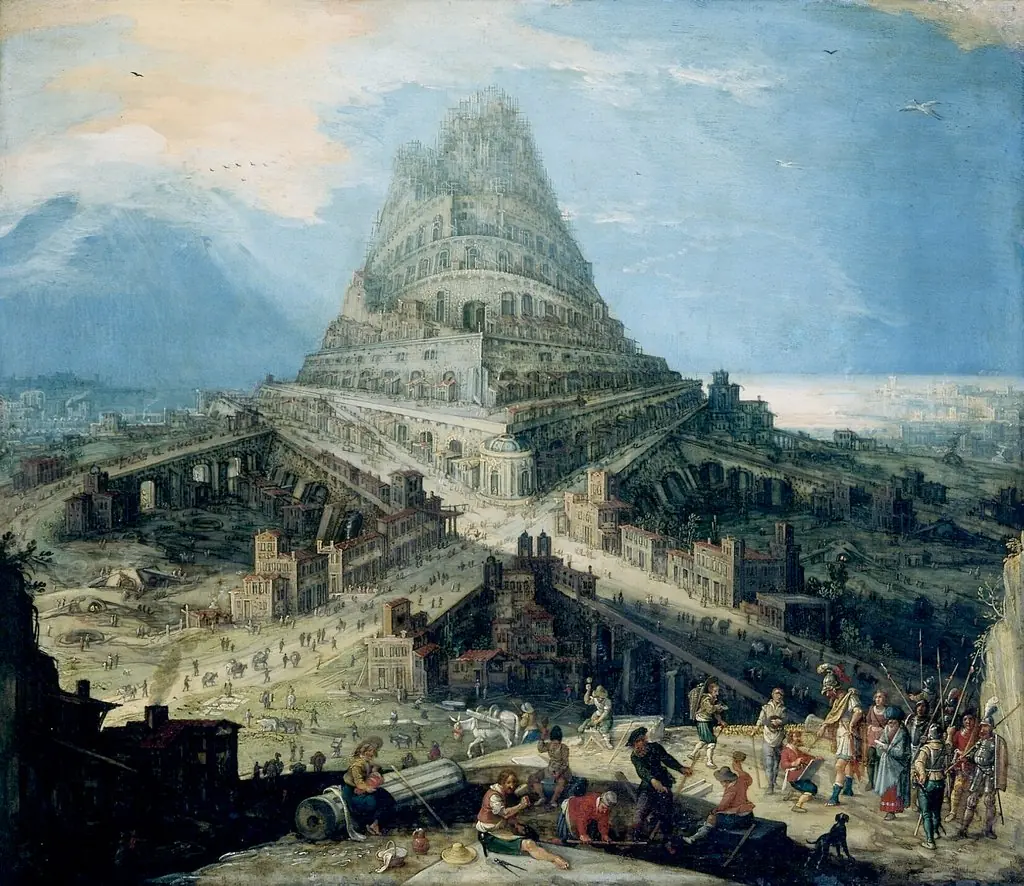 Building of the Tower of Babel
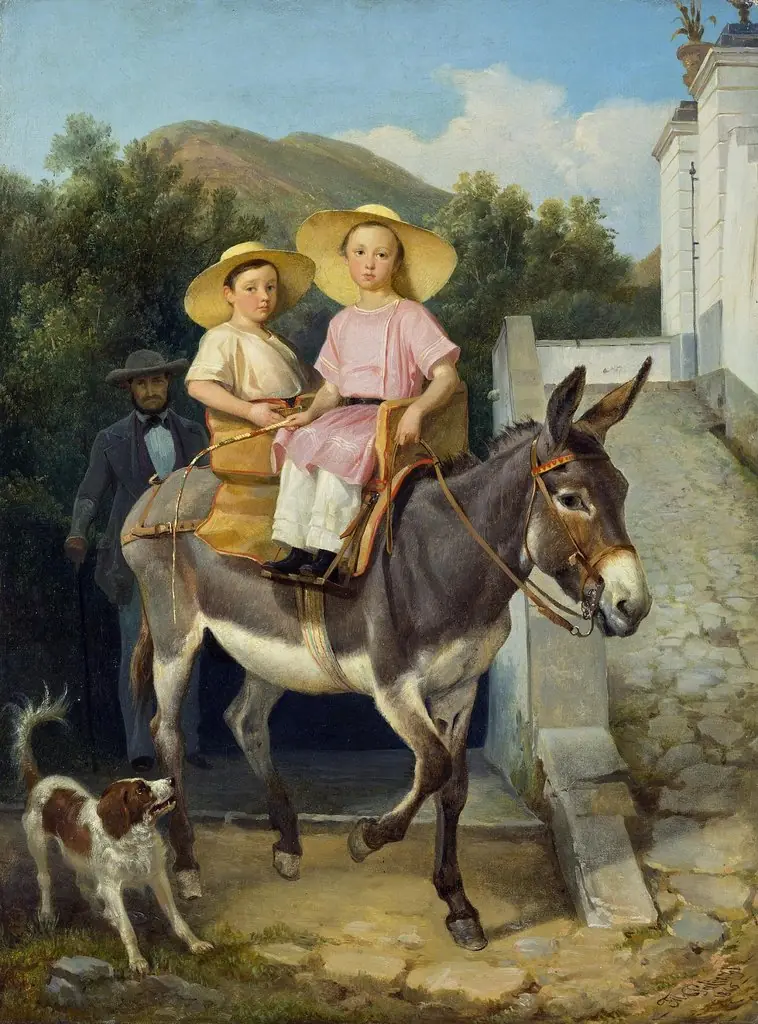 Portrait of Nicholas and Mikhail Rayevsky
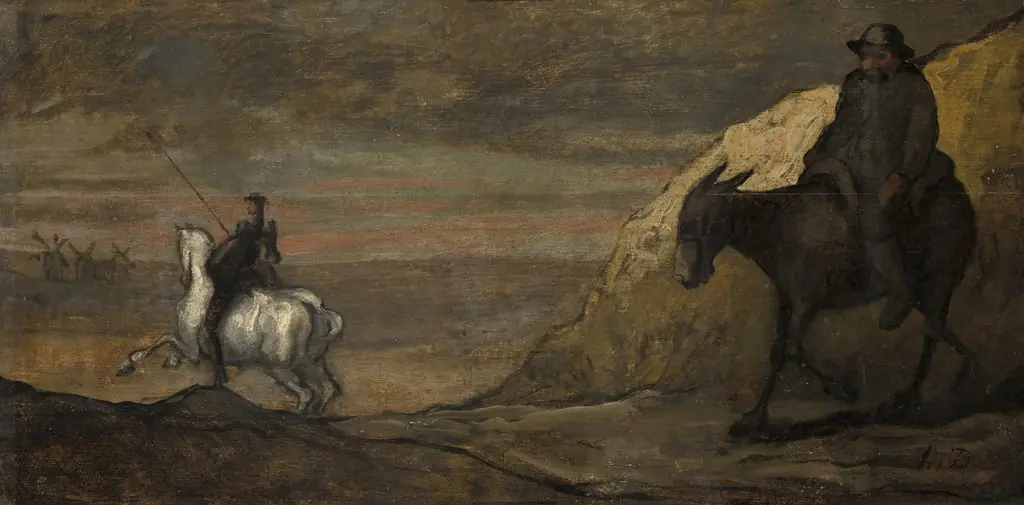 Don Quixote and the Windmills
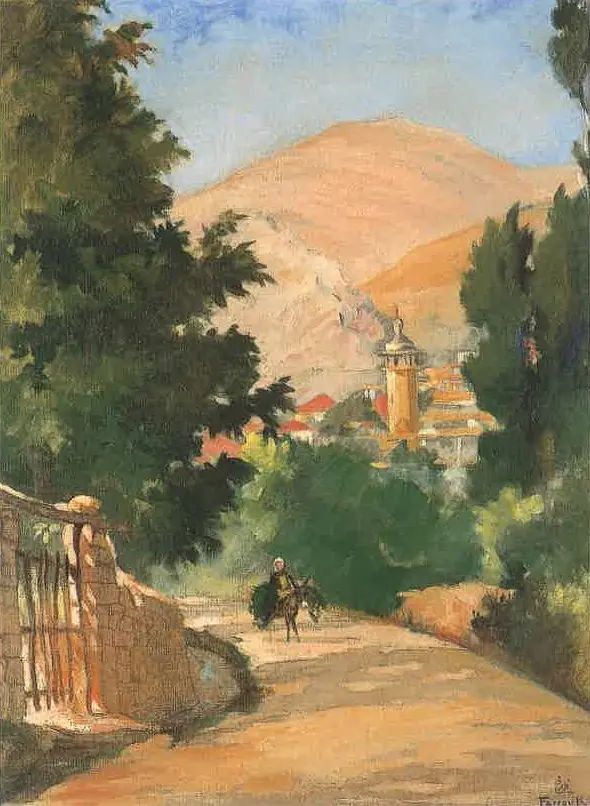 Qab Elias
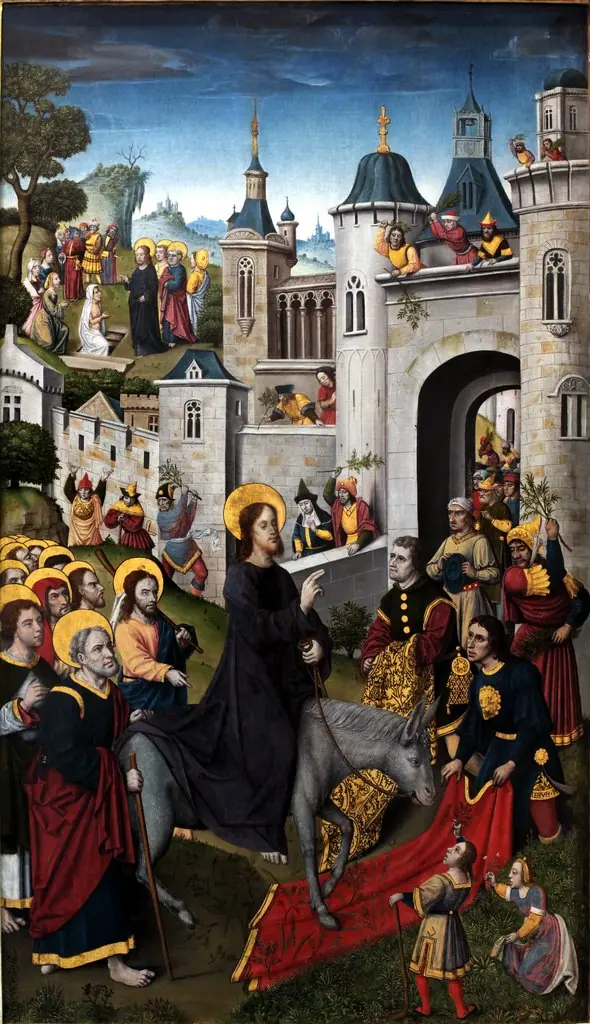 Entrance in Jerusalem
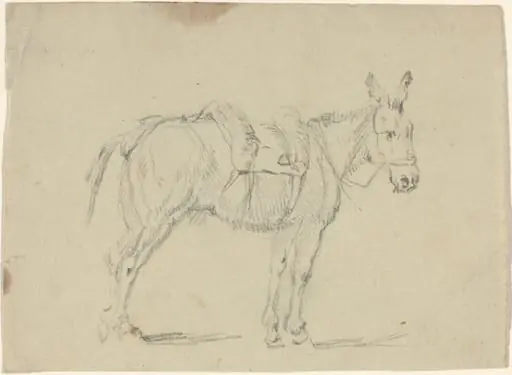 Donkey Stretching a Hind Leg
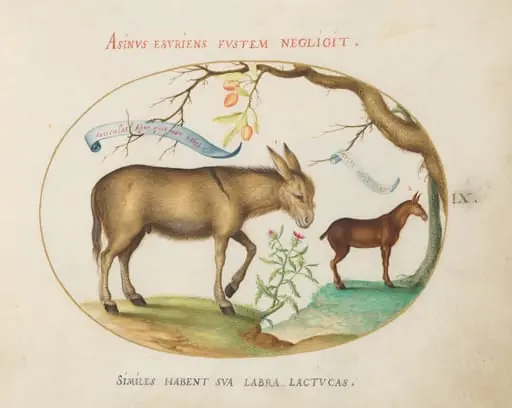 Plate 9: A Donkey and a Mule
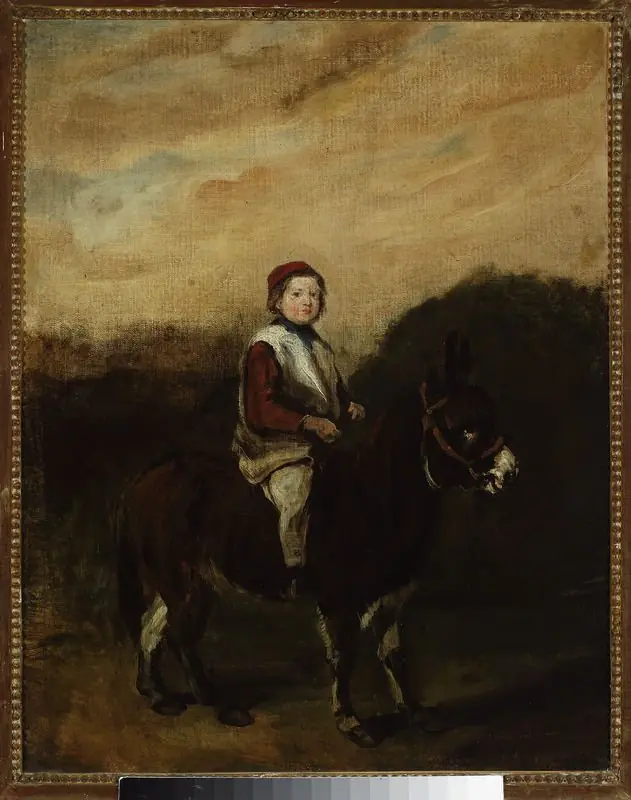 Artist’s son on a donkey
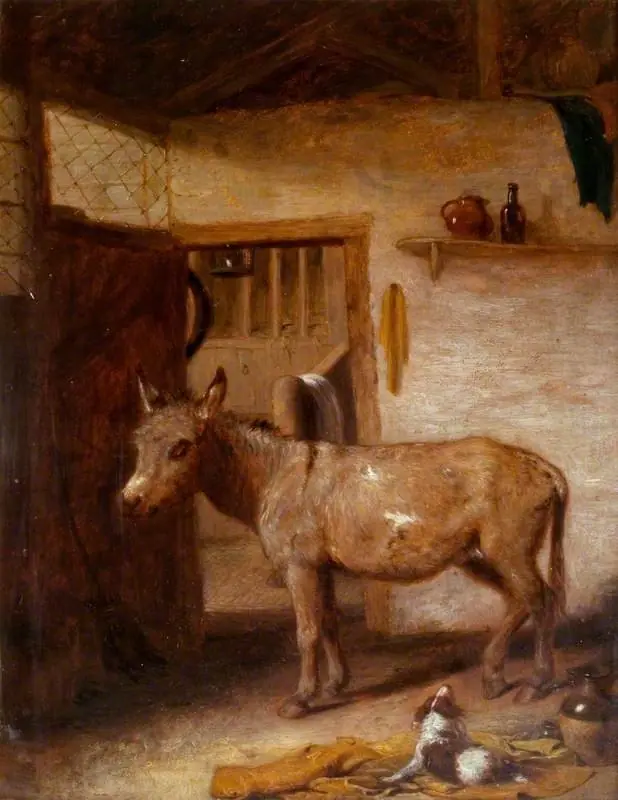 A Donkey and a Spaniel in a Stable
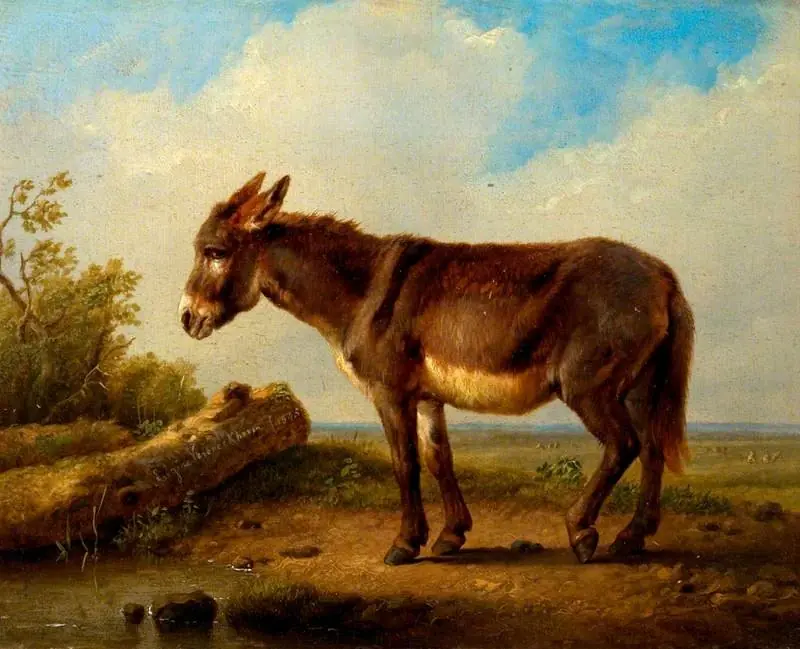 Landscape with a Donkey
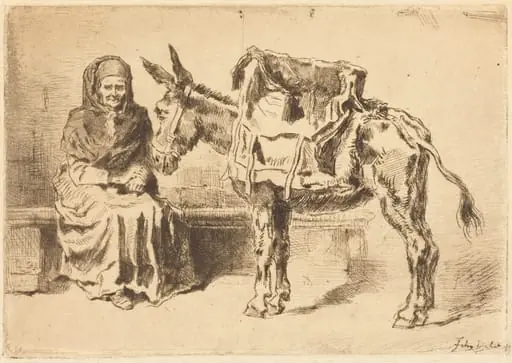 Cacoletière Assise (Seated Woman and Ass)
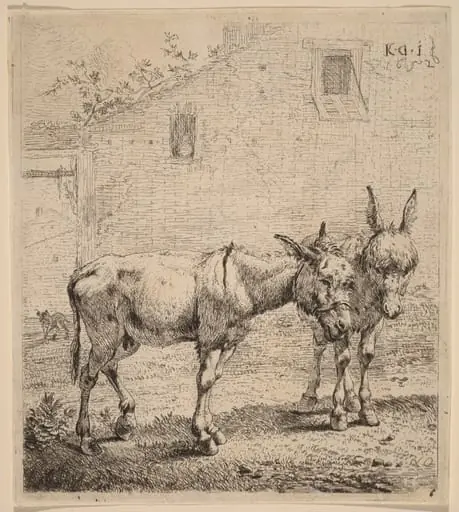 Two Asses
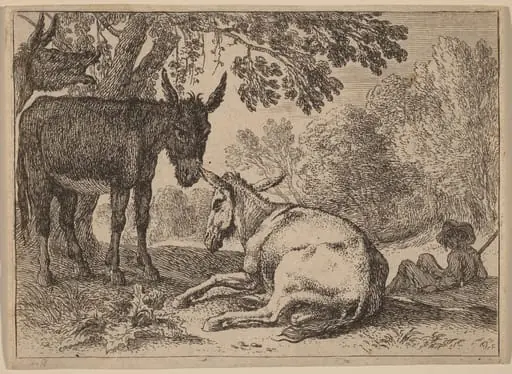 Donkeys
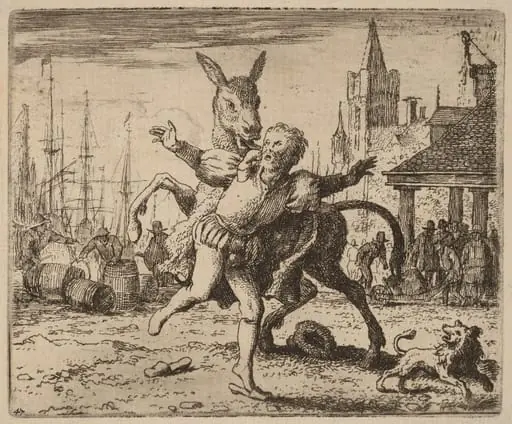 The Ass and the Hound
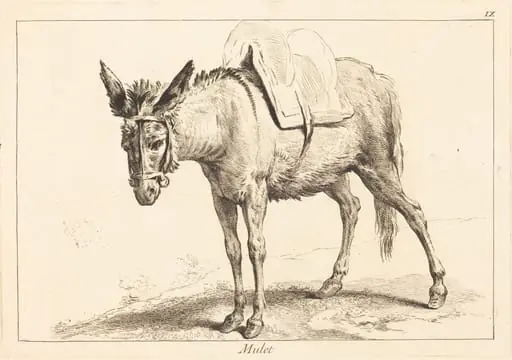 Mulet (Mule or Saddled Donkey)
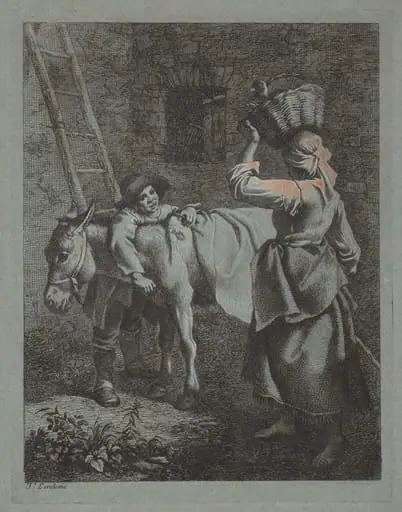 Shepherd Speaking to a Peasant Woman
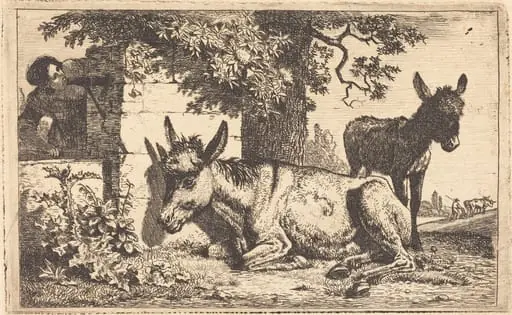 A Donkey by a Water Well
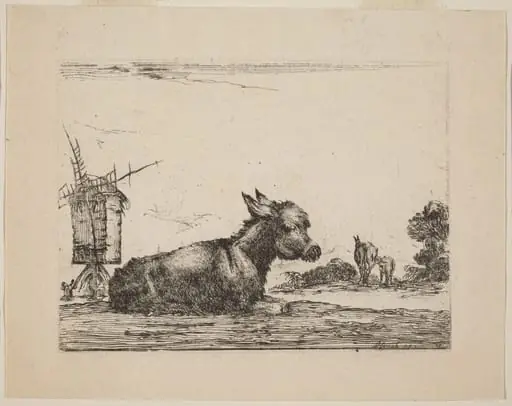 Donkey Resting
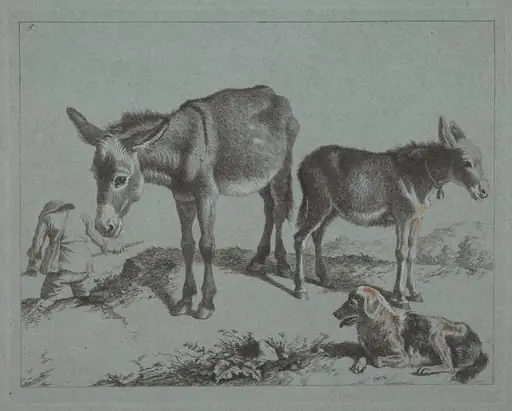 Donkey with her Foal, a Dog, and a Peasant Man
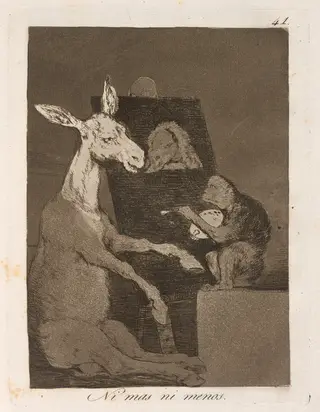 Ni mas ni menos (Neither More nor Less)
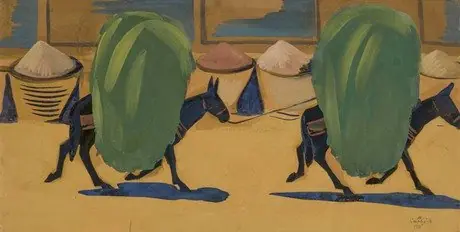 Mules carrying hay
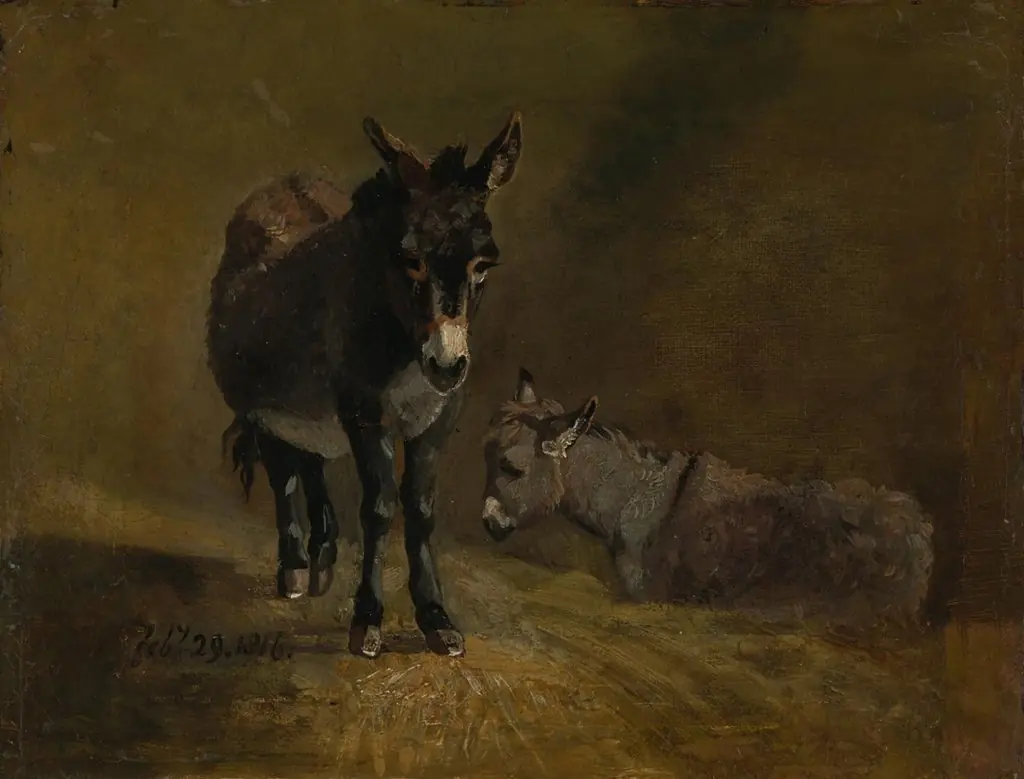 Two Donkeys
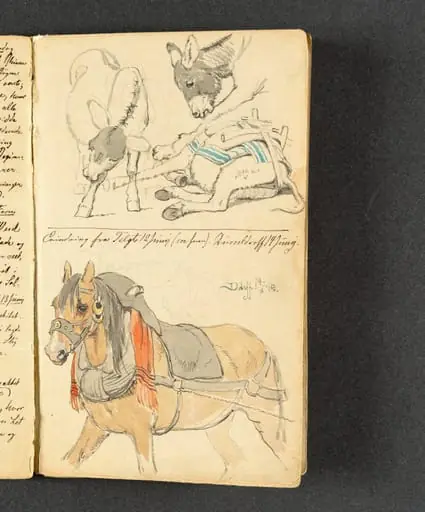 Studier af æsler og en forspændt hest
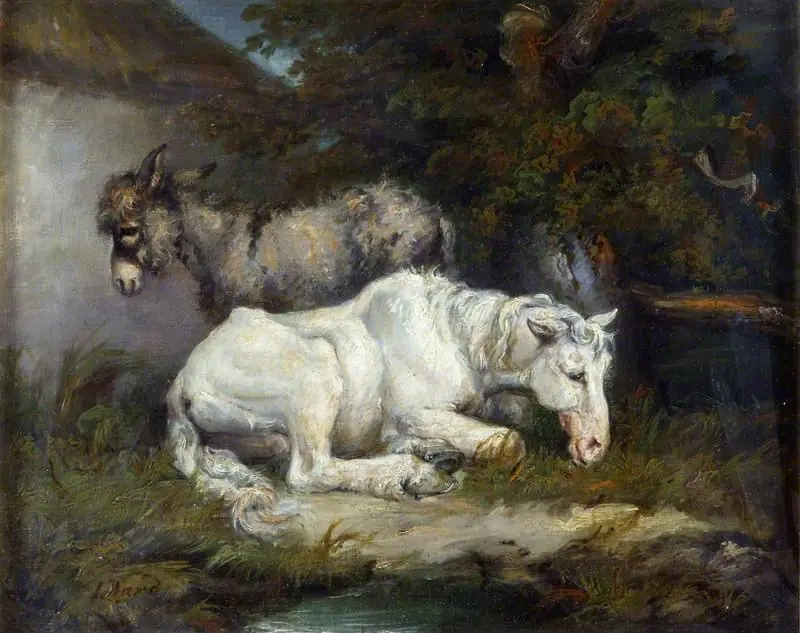 Horse and Donkey
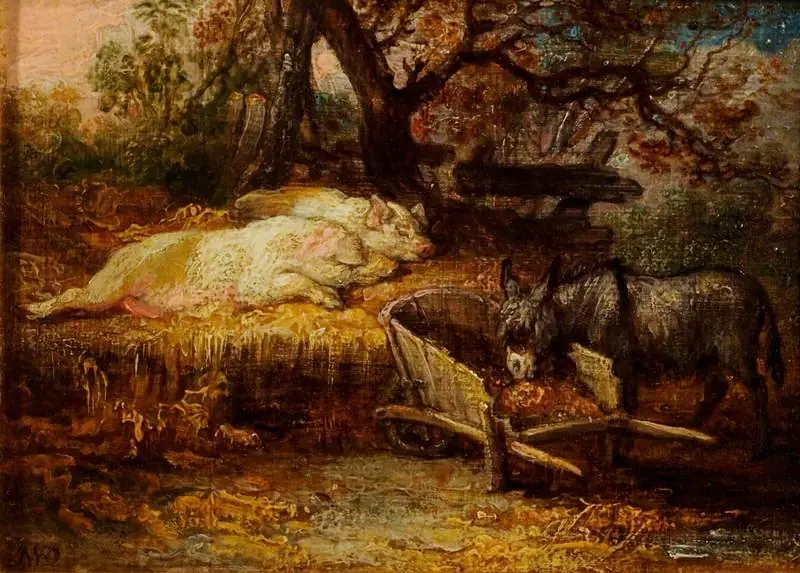 Donkey and Pigs
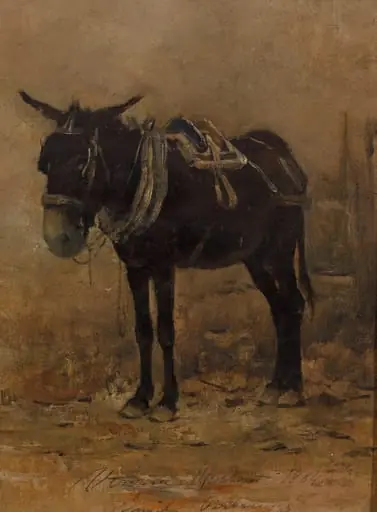 Măgăruș
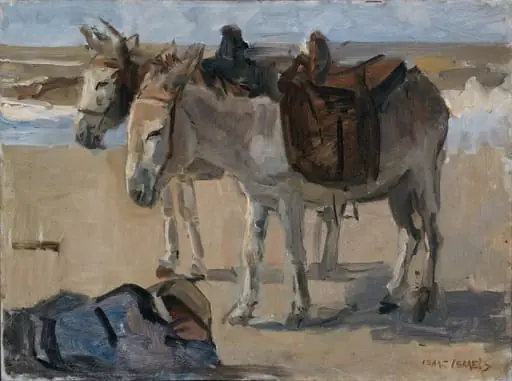 Twee ezeltjes
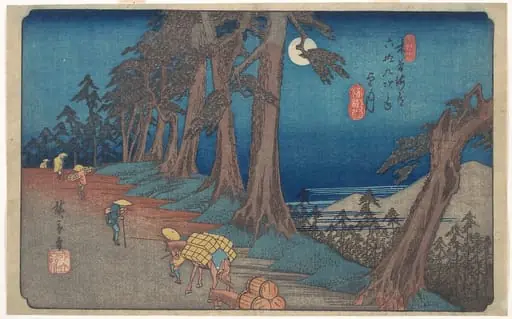 木曽海道六拾九次之内 望月|Mochizuki
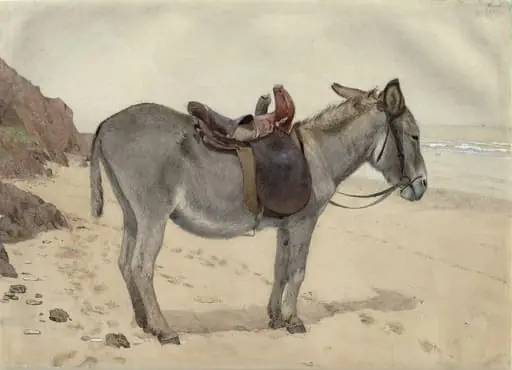 Studies of animals
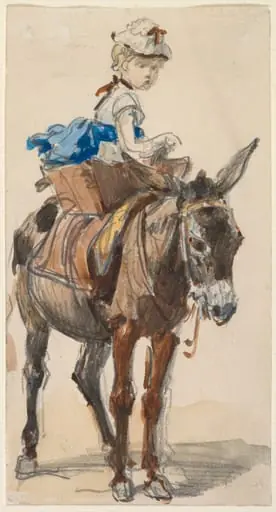 Girl on a Donkey
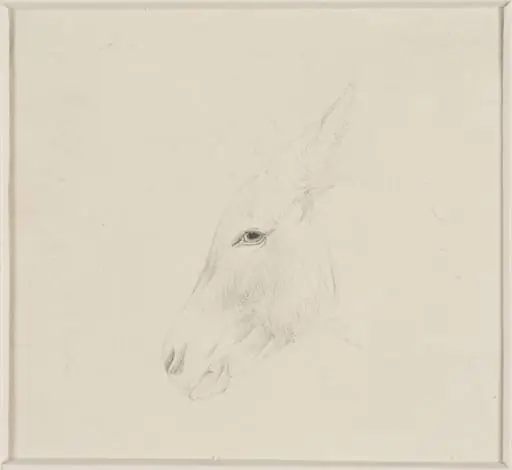 Head of a donkey
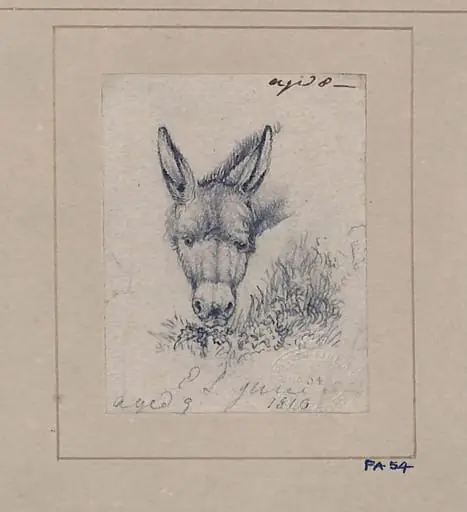 Drawing of a donkey
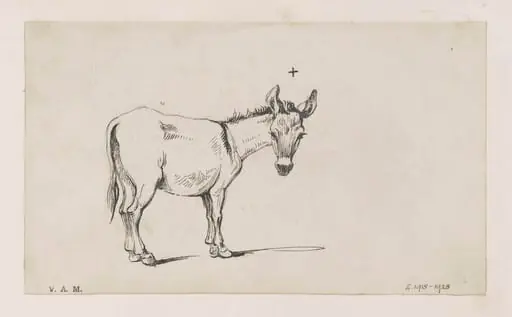 A donkey
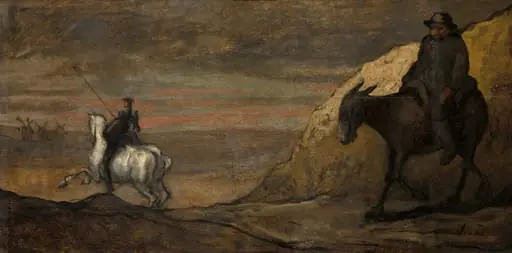 Don Quixote and the Windmills
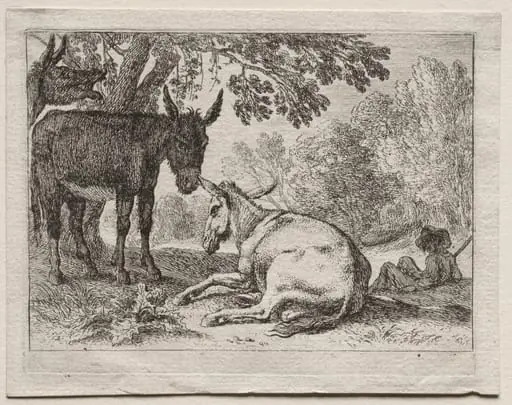 Animals in Landscapes: Donkeys
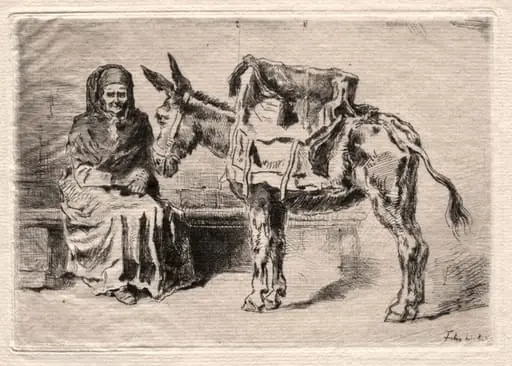 Seated woman with Mule
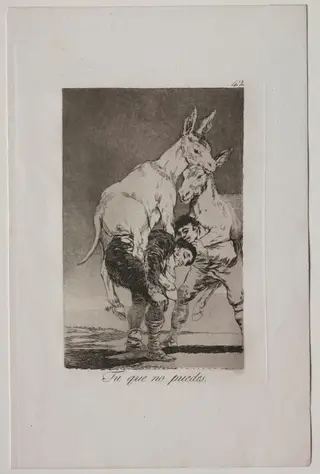 Thou Who Canst Not, Plate 42
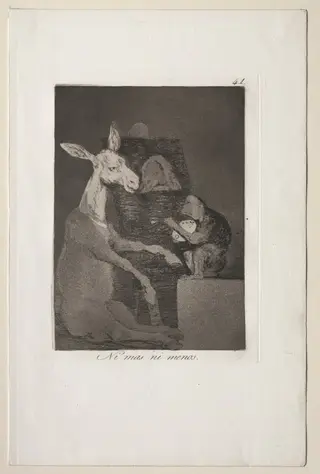 Neither More Nor Less, Plate 41
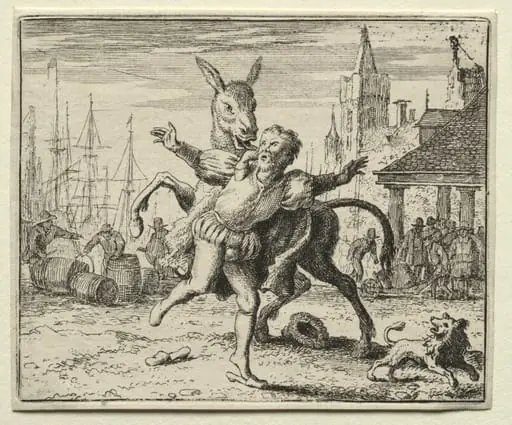 Reynard the Fox: The Jealous Ass
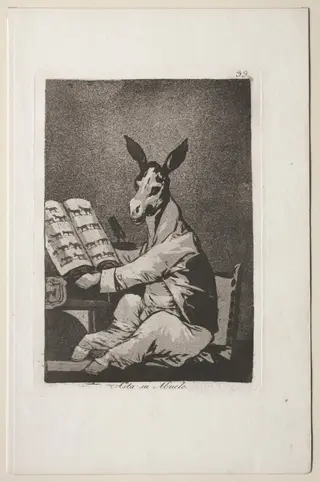 And So was His Grandfather, Plate 39
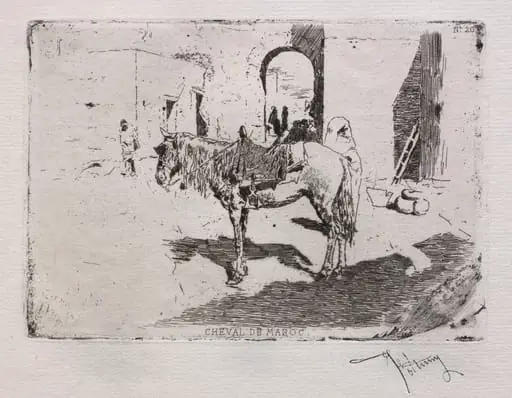 Moroccan Horse
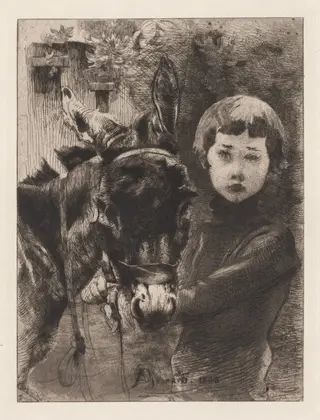 Robert Besnard and His Donkey (Robert Besnard et son âne)
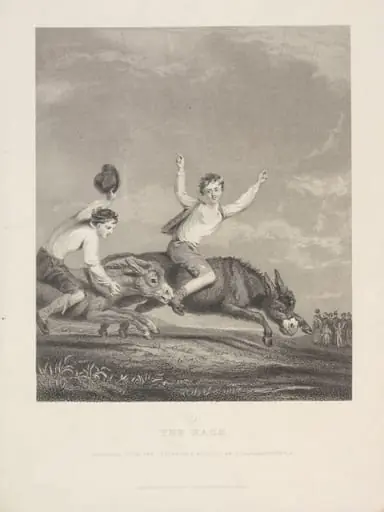 The Race
Frequently asked questions
What is Donkey?
Donkey is a subject in art. equine with long ears
How many Donkey works does Artifact World Gallery have?
Artifact World Gallery holds 116 public-domain Donkey works, all free to view and download.
Who are the key Donkey artists?
Key Donkey artists in the collection include Camille Pissarro, François Boucher and El Greco.
Where can I see Donkey works?
Donkey works in the collection are held by Metropolitan Museum of Art, National Gallery of Art and Cleveland Museum of Art.