Artwork
Polyptych of Sant'Agostino, Nicosia
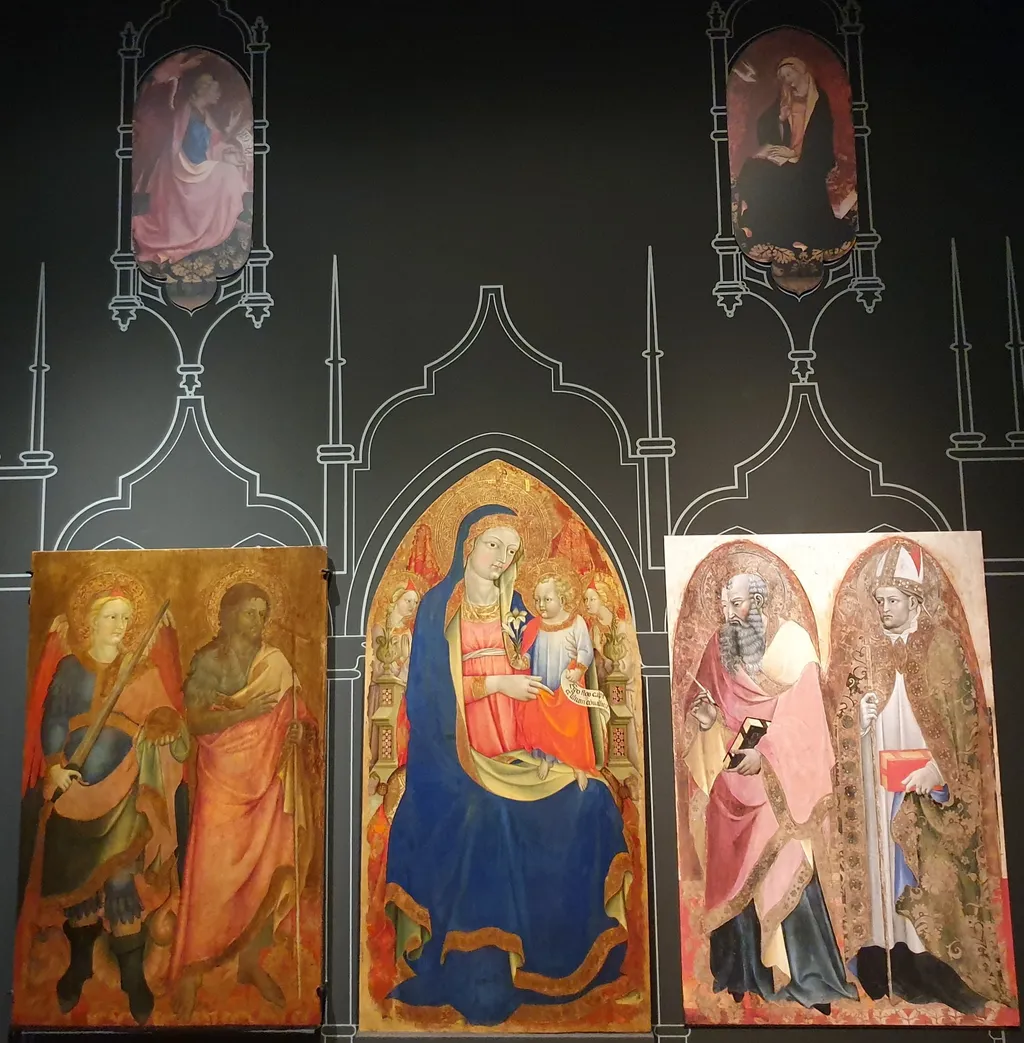
Polyptych of Sant'Agostino, Nicosia is an unspecified painting by the Italo Byzantine artist Alvaro Pirez d'Evora. It dates from 1425 and is held in the collection of the National Museum in Warsaw.
About this work
Subject & Meaning
Each figure follows the established iconography of early fifteenth‑century devotional art, with attributes that identify them to contemporary viewers.
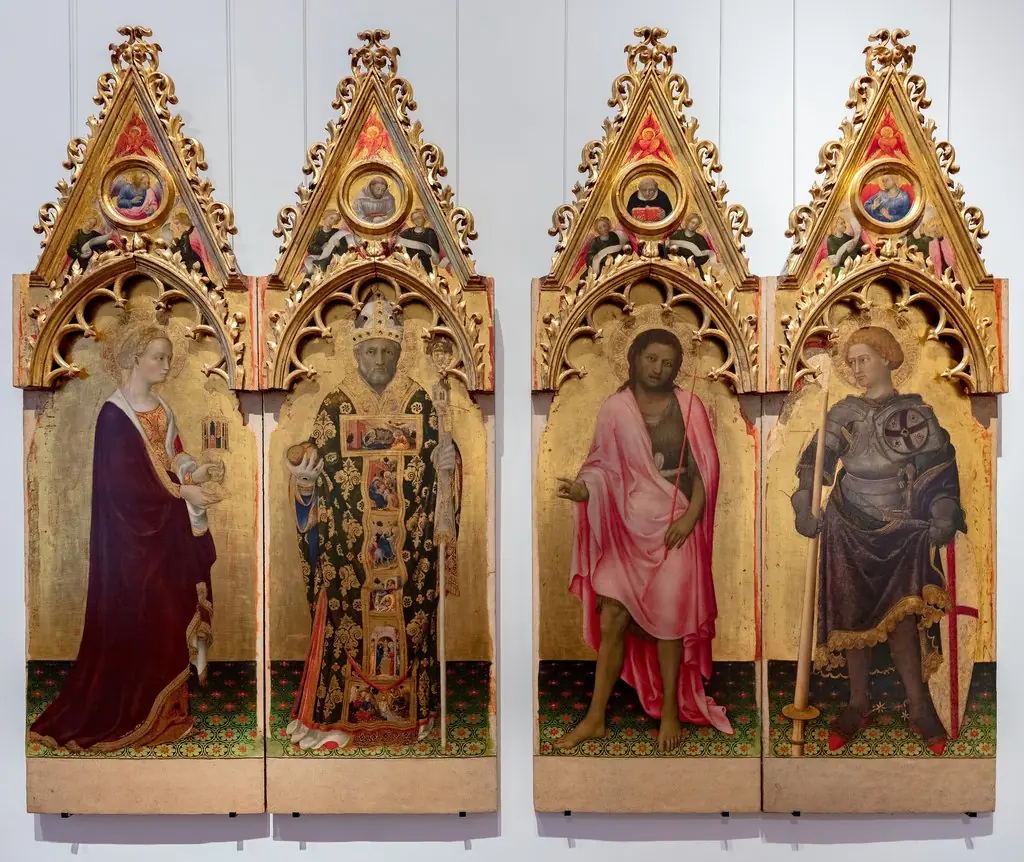
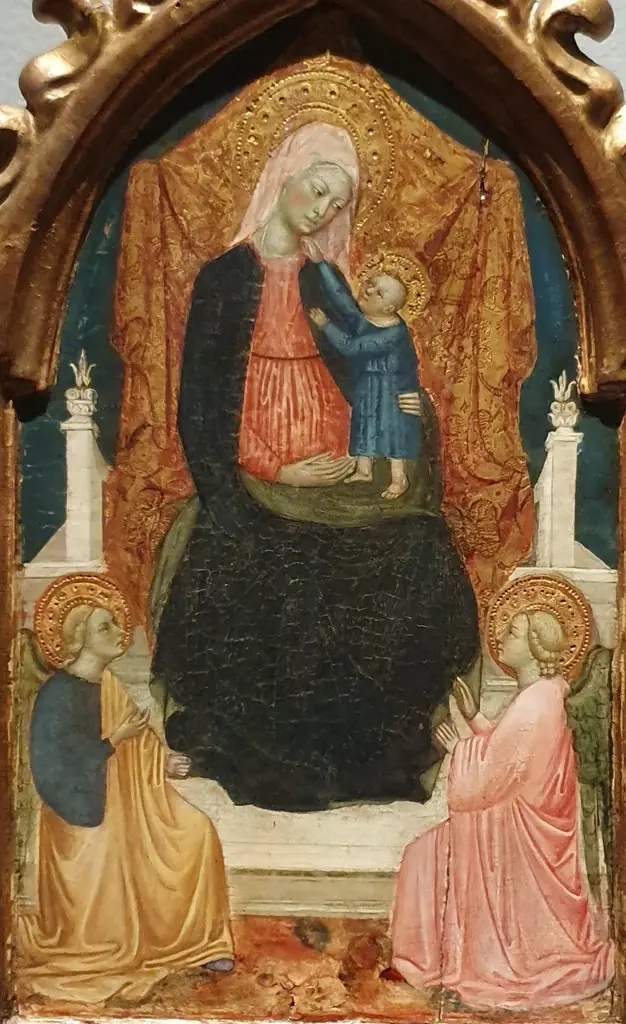
The Polyptych of Sant'Agostino, Nicosia, painted by Alvaro Pirez d'Evora in 1425, is a multi‑panel religious composition that brings together a traditional devotional program. Central to the work is the Madonna and Child, surrounded by the archangel Michael, the Baptist, Augustine of Canterbury, the Evangelist and the scene of the Annunciation. Each figure follows the established iconography of early fifteenth‑century devotional art, with attributes that identify them to contemporary viewers.
The inclusion of these saints reflects a liturgical focus on intercession and the mystery of the Incarnation, conveying theological meanings associated with protection, contemplation and divine announcement.
History & Provenance
The polyptych of Sant'Agostino, Nicosia, painted by Alvaro Pirez d'Evora in 1425, is a religious work originally executed as a devotional altarpiece. It was created in the early fifteenth century, reflecting contemporary devotional practices. The composition depicts the Madonna and Child alongside saints including Michael, John the Baptist, Augustine of Canterbury, John the Evangelist, and the Annunciation scene.
Since its creation the work has entered several museum collections, notably the National Museum of San Matteo, the John and Mable Ringling Museum of Art, and presently the National Museum in Warsaw where it is displayed. Its dating is documented as 1425 in primary records.
Context
The Polyptych of Sant'Agostino, Nicosia, painted in 1425 by Alvaro Pirez d'Evora, exemplifies early fifteenth‑century religious art in the Mediterranean and reflects the devotional emphasis of the period. As a multi‑panel work depicting biblical figures such as the Madonna and Child alongside saints, it aligns with the genre of religious painting associated with the artist. The work is part of the collection of the National Museum in Warsaw, alongside holdings at the National Museum of San Matteo and the John and Mable Ringling Museum of Art, underscoring its significance within the artist’s oeuvre and the broader circulation of devotional imagery across European museums.
Legacy
The polyptych, dated to 1425 and classified as a religious painting, features Madonna and Child with saints including Augustine, John the Baptist, and John the Evangelist, as recorded in its descriptive catalogue. Its inclusion in the holdings of the National Museum in Warsaw, alongside other major collections, reflects an institutional acknowledgment that has shaped its scholarly reputation. This recognition contributes to ongoing assessments of Alvaro Pirez d'Evora's influence within early religious art, positioning the work as a reference point for studies of Southern European devotional imagery.
Overview
Alvaro Pirez d'Evora's Polyptych of Sant'Agostino, Nicosia, completed in 1425, is a multi-panel religious painting. This work, now housed at the National Museum in Warsaw, exemplifies the devotional art prevalent in the early 15th century. Its structure and imagery were designed to inspire contemplation among its original viewers, reflecting the artistic conventions of its period as a significant altarpiece commission.
Technique & Style
Pirez d'Evora employed a distinctive visual language characterized by vibrant colors and a preference for flat, two-dimensional forms. Figures and drapery are rendered with sharp outlines, and the artist largely eschewed deep shadows, contributing to a clear, graphic quality. The extensive use of gold leaf, particularly in the central panel, enhances the luminosity of the artwork, creating a radiant effect against the rich blues and reds of the garments.
Own this work as a print
Artist & collection
Artist
Alvaro Pirez d'Évora, also recorded as Alvaro di Piero or Álvaro Pires, was born in Évora, Portugal, before 1411 and died after 1434.

- Quaratesi Polyptychon - Seitenflügel
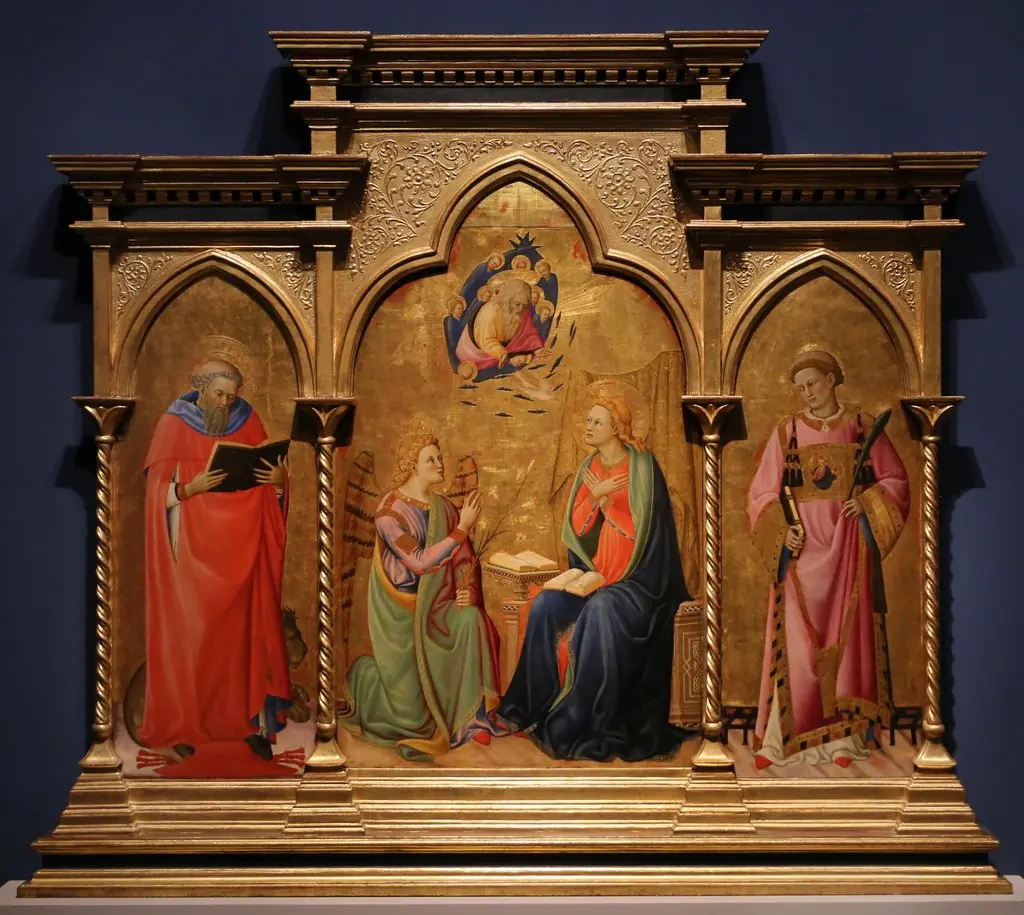 Parts of a triptych: Annunciation and saints Jerome and Lawrence
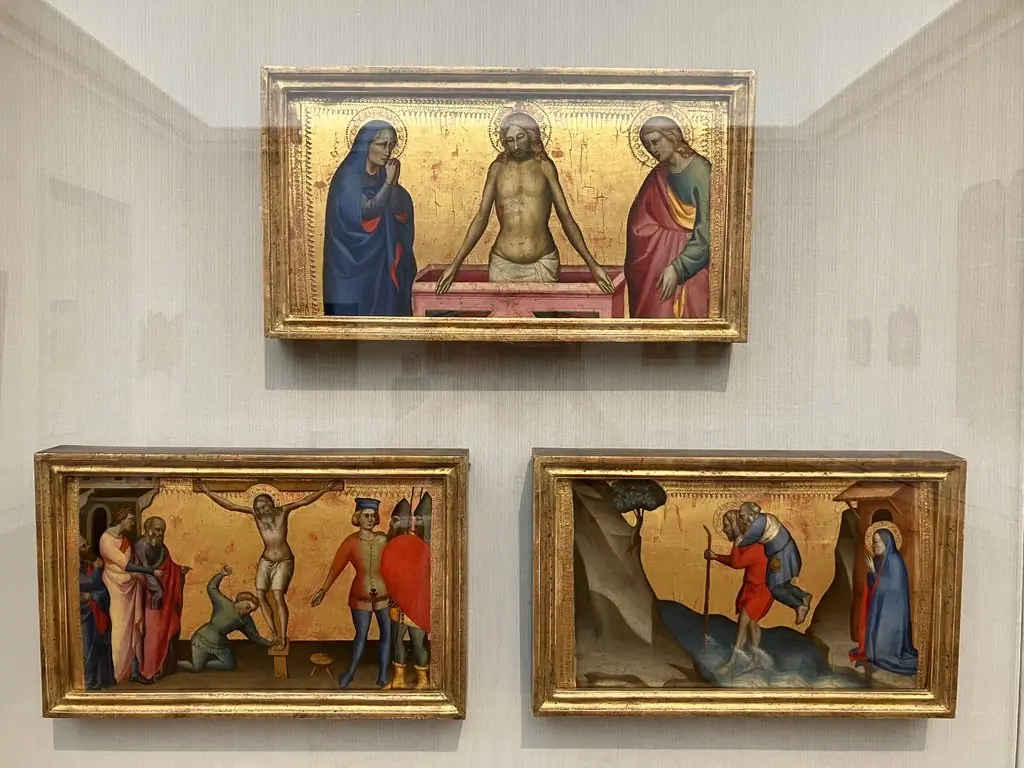 Three parts of a predella
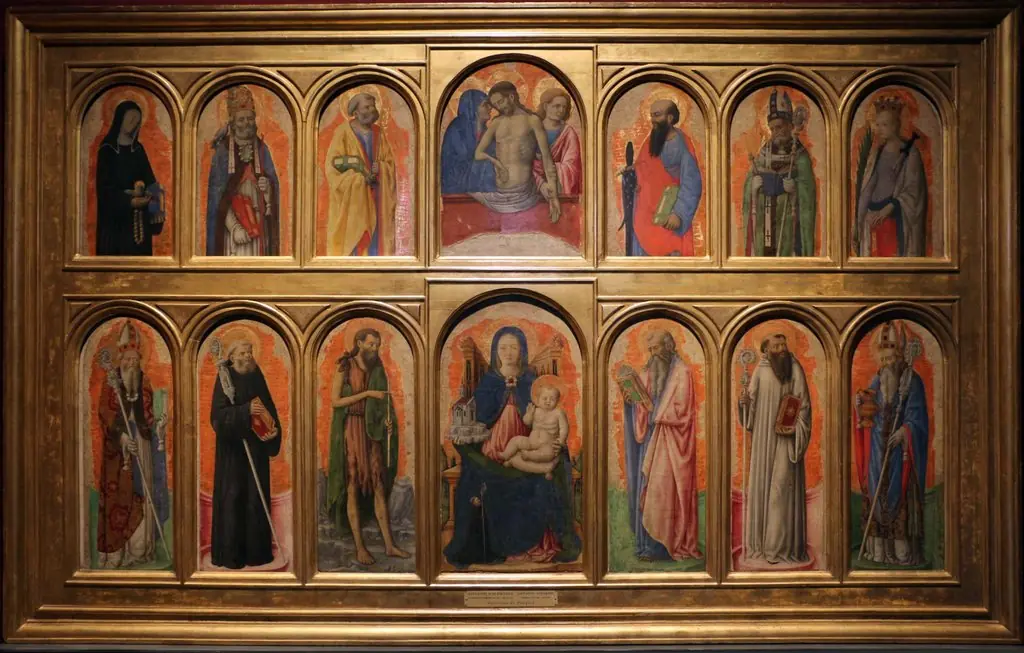 Polyptych of Praglia
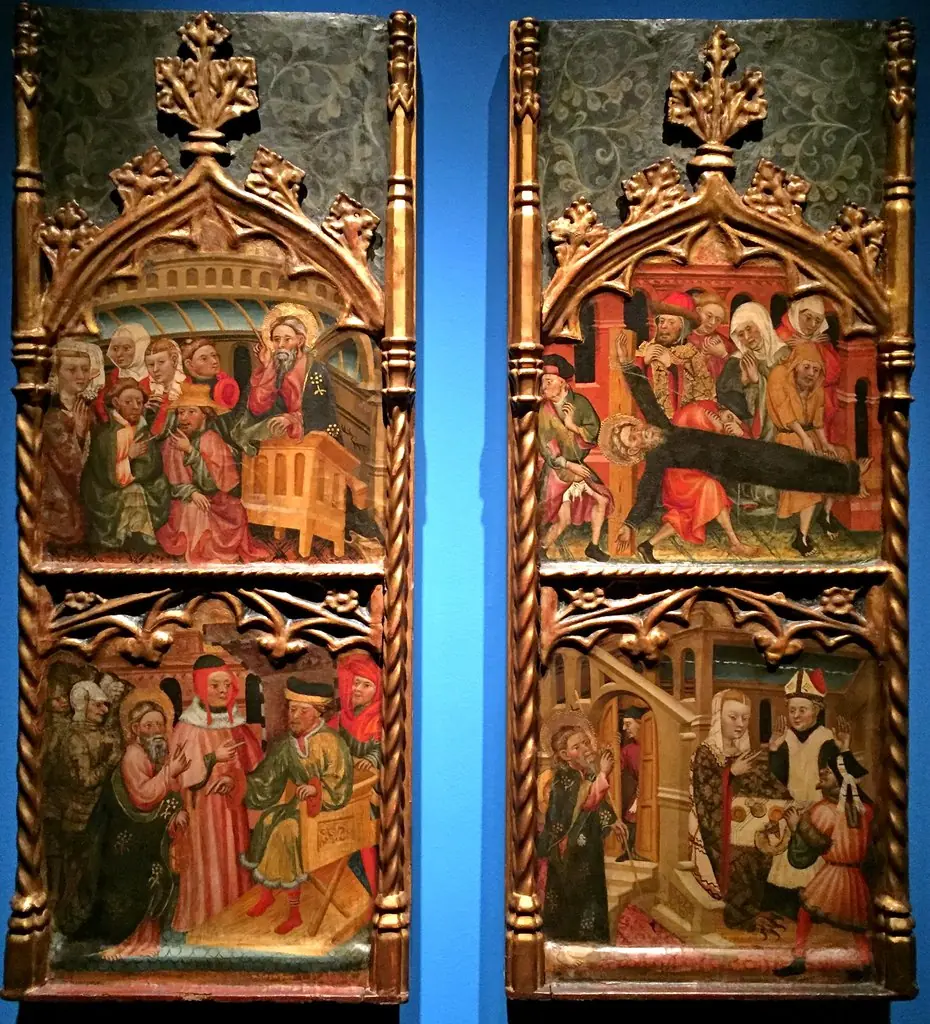 Carrers laterals del retaules de Sant Andreu de Pere Teixidor
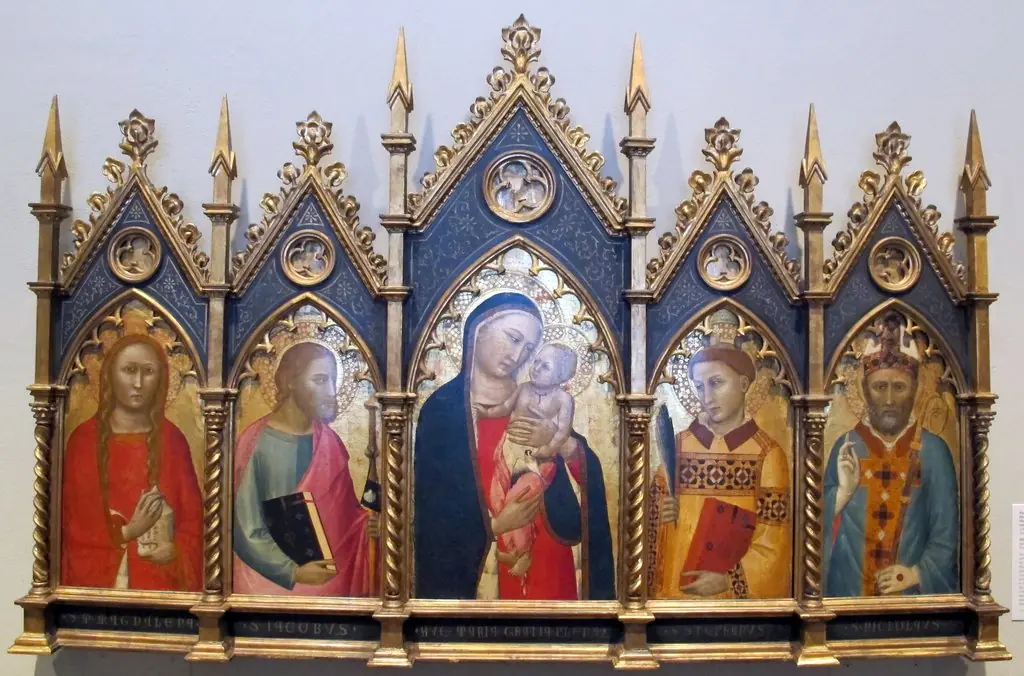 Virgin and Child, with Saints Mary Magdalene, James Major, Stephen, and a Bishop Saint
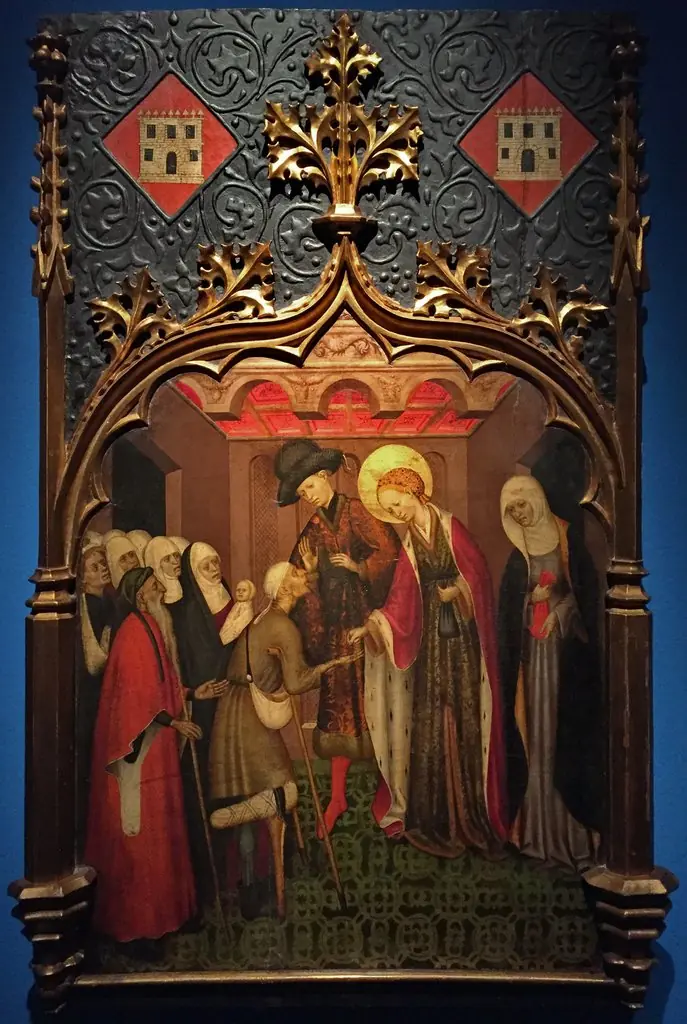 Santa Llúcia repartint almoines
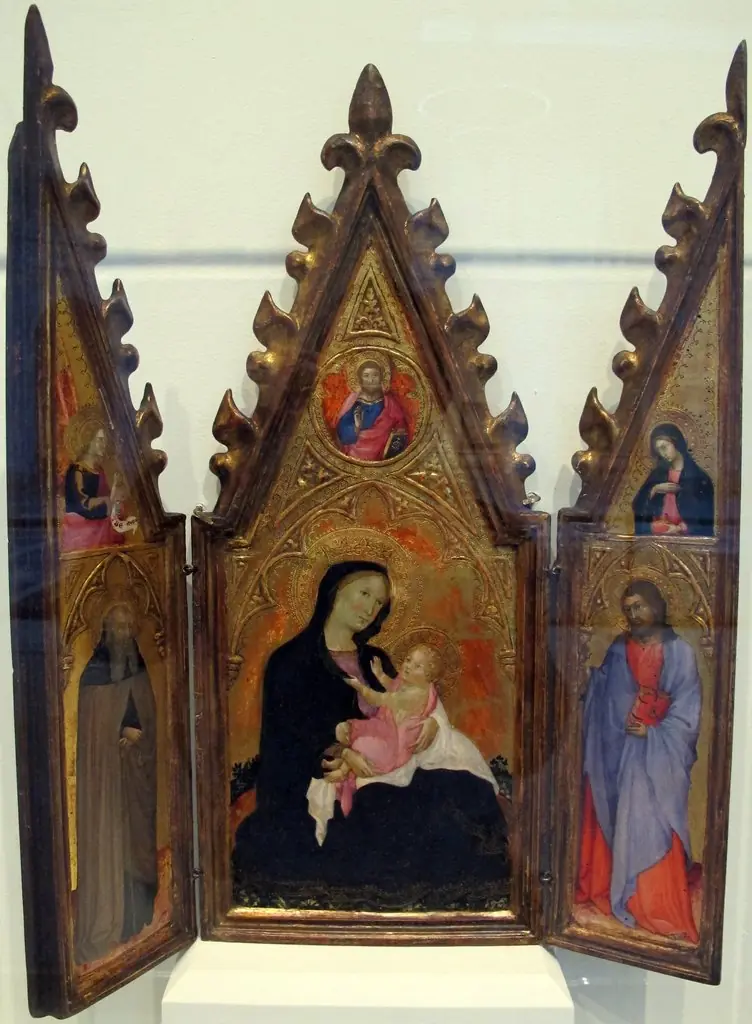 trittico con madonna dell'umiltà, ss. antonio abate jacopo
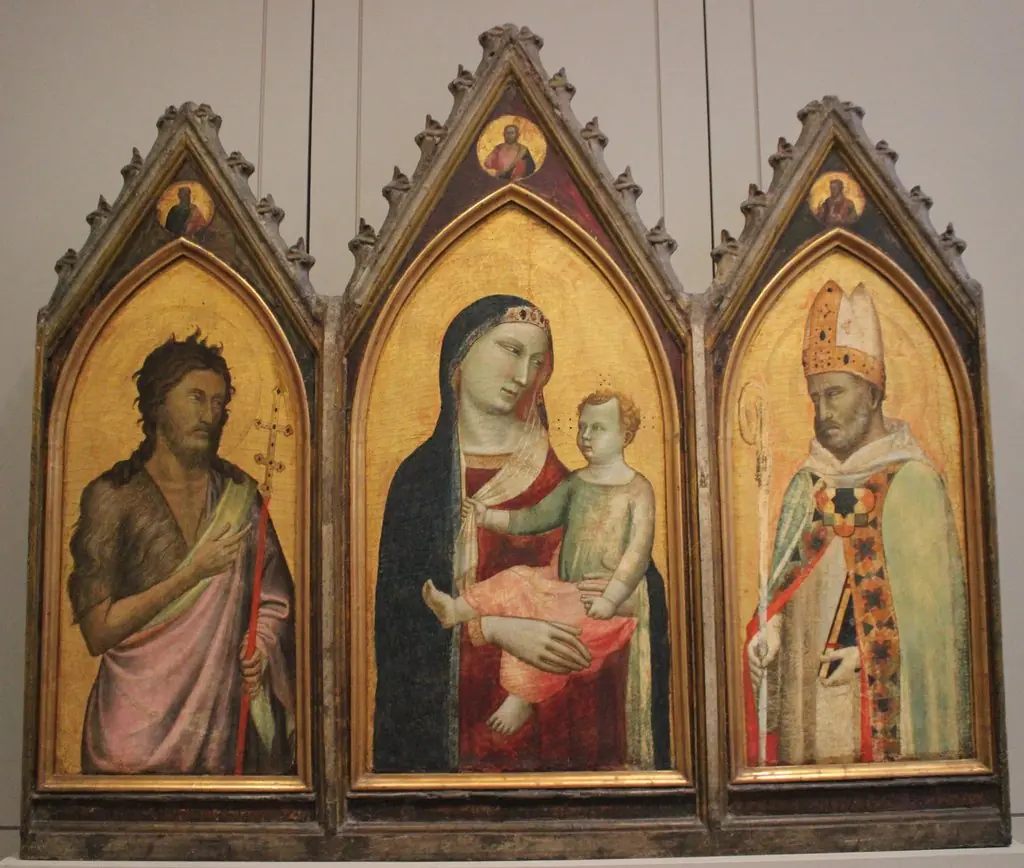 Virgin and Child with Saints John the Baptist and Giles, Two Prophets, and Christ the Redeemer
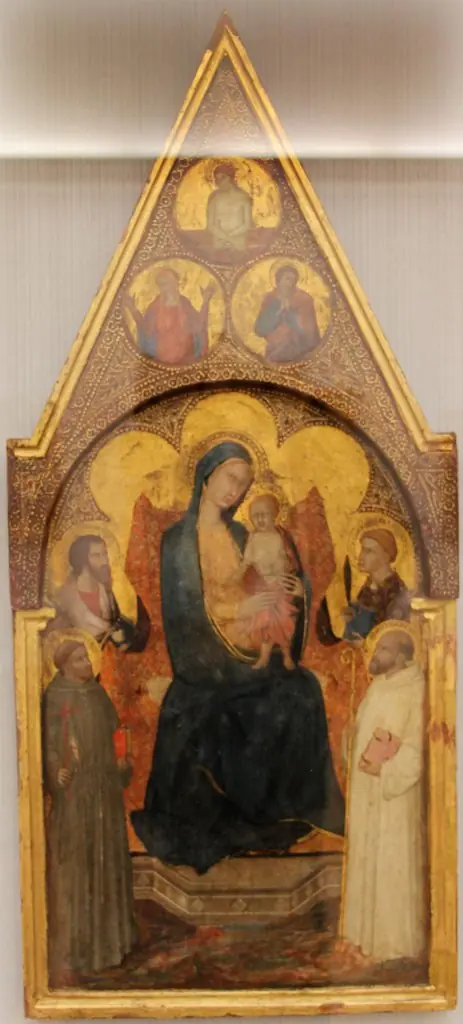 Thronende Maria mit dem Kind und vier Heiligen
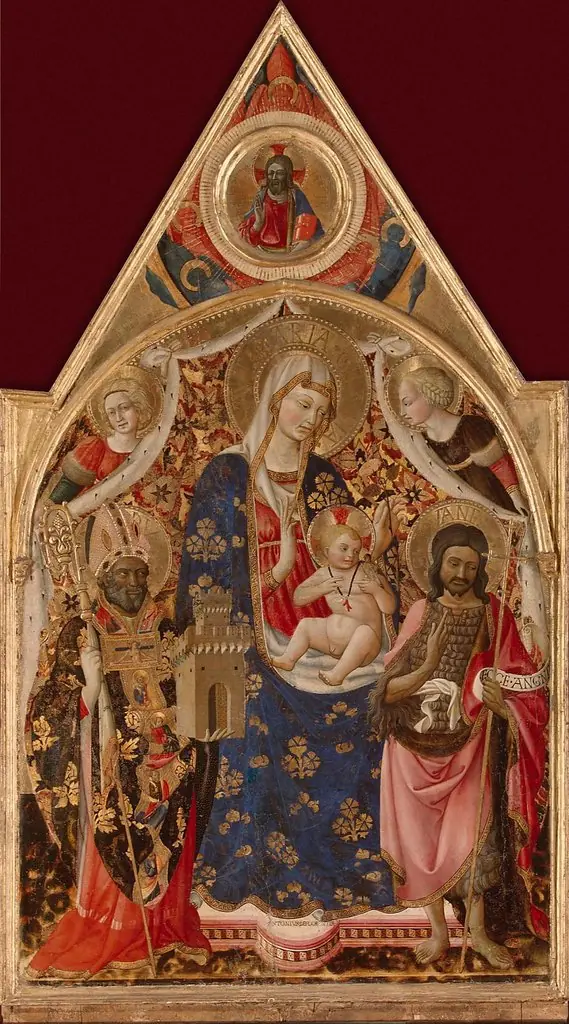 Madonna and Child, with a Bishop, St John The Baptist and Angels
 A Virgem em Majestade com o Menino e dois Anjos