Artwork
Virgin and Child with Saints John the Baptist and Giles, Two Prophets, and Christ the Redeemer
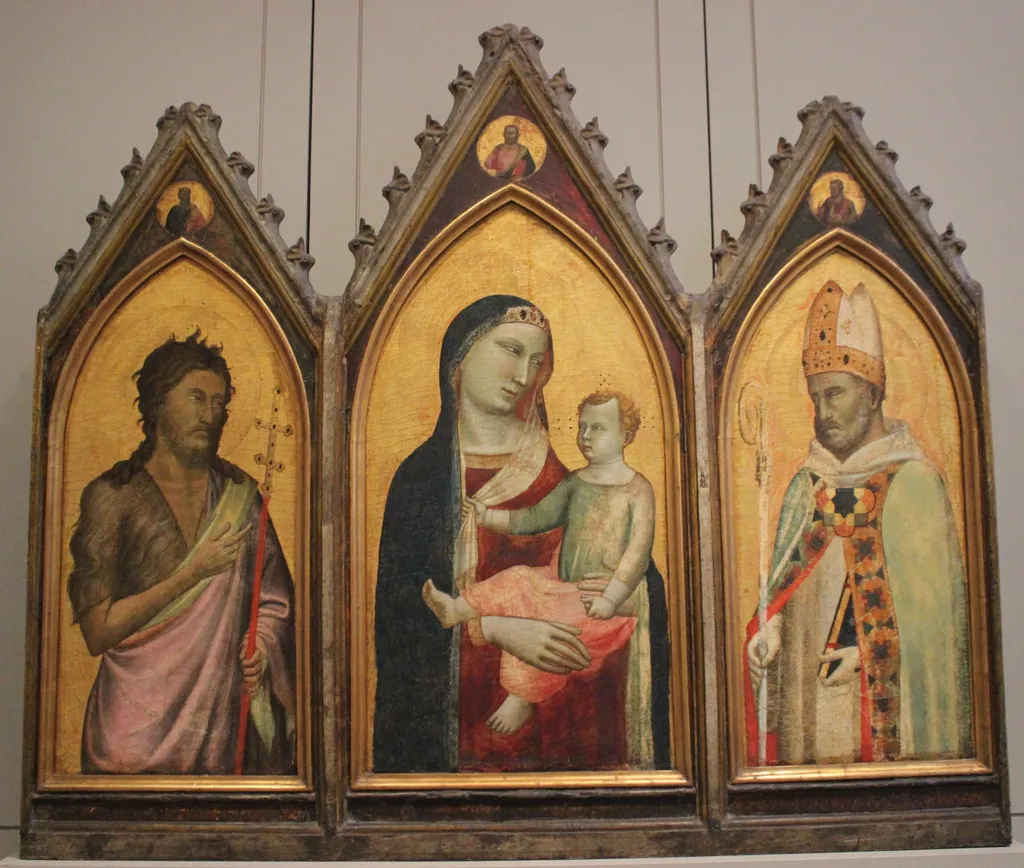
Virgin and Child with Saints John the Baptist and Giles, Two Prophets, and Christ the Redeemer is an unspecified painting by the Italo Byzantine artist Bernardo Daddi. It dates from 1334 and is held in the collection of the Philadelphia Museum of Art.
About this work
Overview
Executed in tempera, silver, and tooled gold on panel with vertical grain, the work is a significant example of early Italian Renaissance devotional art.
Virgin and Child with Saints John the Baptist and Giles, Two Prophets, and Christ the Redeemer is a three-panel altarpiece painted in 1334 by the Florentine artist Bernardo Daddi. Executed in tempera, silver, and tooled gold on panel with vertical grain, the work is a significant example of early Italian Renaissance devotional art. The altarpiece is distinguished by its pointed Gothic frames with gabled tops and a continuous molded base. It is currently held in the Philadelphia Museum of Art.
Subject & Meaning
The altarpiece presents a hieratic arrangement of sacred figures against flat gold leaf backgrounds. The central panel features the Virgin in dark blue and red robes holding the nude Christ Child, both marked by halos. The left wing depicts Saint John the Baptist, identifiable by his unkempt hair, hair shirt, pinkish drapery, and a tall cross-staff. The right wing shows an ecclesiastical saint, identified as Saint Giles, wearing a mitre and patterned cope while holding a crozier and a book. The gables above contain small roundels with haloed figures representing two prophets and Christ the Redeemer, linking the New Testament figures to Old Testament prophecy and divine salvation.
Technique & Style
Daddi executed the work using tempera combined with silver and tooled gold on a wood panel with a vertical grain. The central panel measures 33 1/4 x 17 13/16 inches (84.5 x 45.2 cm), while the left and right panels measure 30 1/8 x 14 1/4 inches (76.5 x 36.2 cm) and 30 1/4 x 14 1/16 inches (76.8 x 35.7 cm) respectively. The paint surface exhibits fine craquelure throughout. Stylistically, the figures are rendered with linear drapery folds and stylized facial modeling, set against a flat gold background devoid of landscape or architectural setting. The overall palette relies on gold, deep blue, vermilion, pink, and muted greens. While rooted in Gothic conventions, the approach reflects the Giottoesque concern for conveying the volumes of the figures, imbued with a sweetness and lyricism characteristic of Daddi's output.
History & Provenance
Created in 1334, the altarpiece is a product of Daddi's active Florentine workshop. While the specific early provenance and original commission for this exact triptych remain unrecorded in the provided sources, the work is now accessioned into the collection of the Philadelphia Museum of Art. The survival of the three panels joined by a continuous molded base indicates that the work has maintained its structural integrity as a unified object, unlike many contemporary polyptychs that were dismantled and dispersed across various collections at unknown dates.
Context
Bernardo Daddi, active in Florence from roughly 1312 to 1320 and deceased before 1349, was a pivotal figure in early Italian Renaissance painting. Initially an apprentice to Giotto, Daddi absorbed the revolutionary naturalism, expression, and sense of volume introduced by his master. Following Giotto's death, Daddi became the leading painter in Florence, running a prolific workshop that specialized in small-scale devotional tabernacles and portable altarpieces. His artistic formulas, which softened Giotto's rigidity with sweetness and lyricism, prevailed in Florentine painting until the second half of the fourteenth century. In his later phase, his style became increasingly monumental while retaining the capacity to convey human sentiments.
Legacy
Daddi's specialization in small-scale works and portable altarpieces contributed significantly to the development of private devotional art in fourteenth-century Florence. His workshop produced highly successful formulas for the Virgin and Child that were frequently repeated with numerous variants, establishing a visual vocabulary that dominated Florentine painting for decades. By breaking away from the conventions of the preceding generation of Gothic artists and synthesizing Giotto's volumetric innovations with a more intimate, lyrical sensibility, Daddi's output shaped the trajectory of early Renaissance art and defined the standard for domestic and small-scale religious objects well into the later Trecento.
Own this work as a print
Artist & collection
Artist
Bernardo Daddi (c. 1280 – 1348) was an early Italian Renaissance painter and the leading painter of Florence of his generation. He was one of the artists who contributed to the revolutionary art of the Renaissance,…

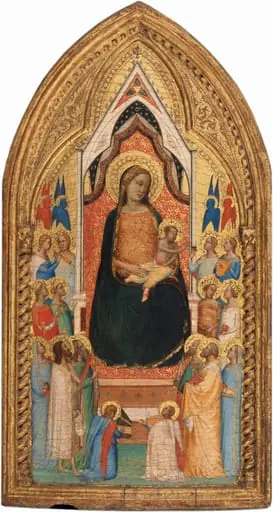
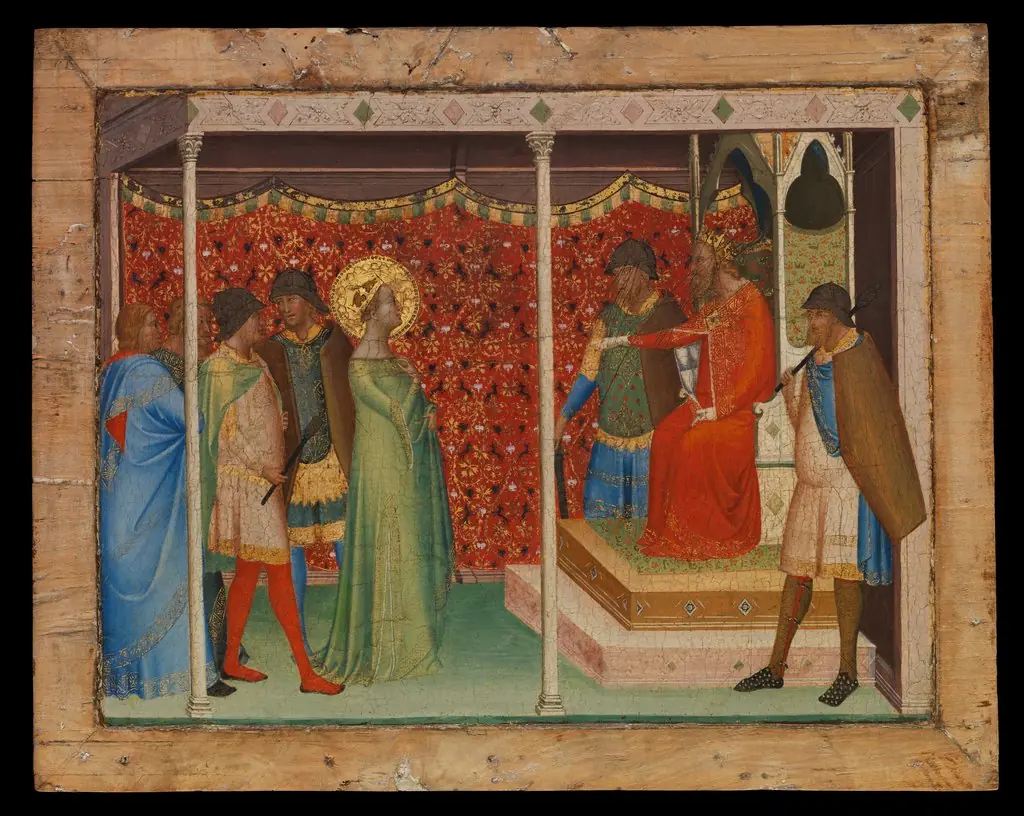
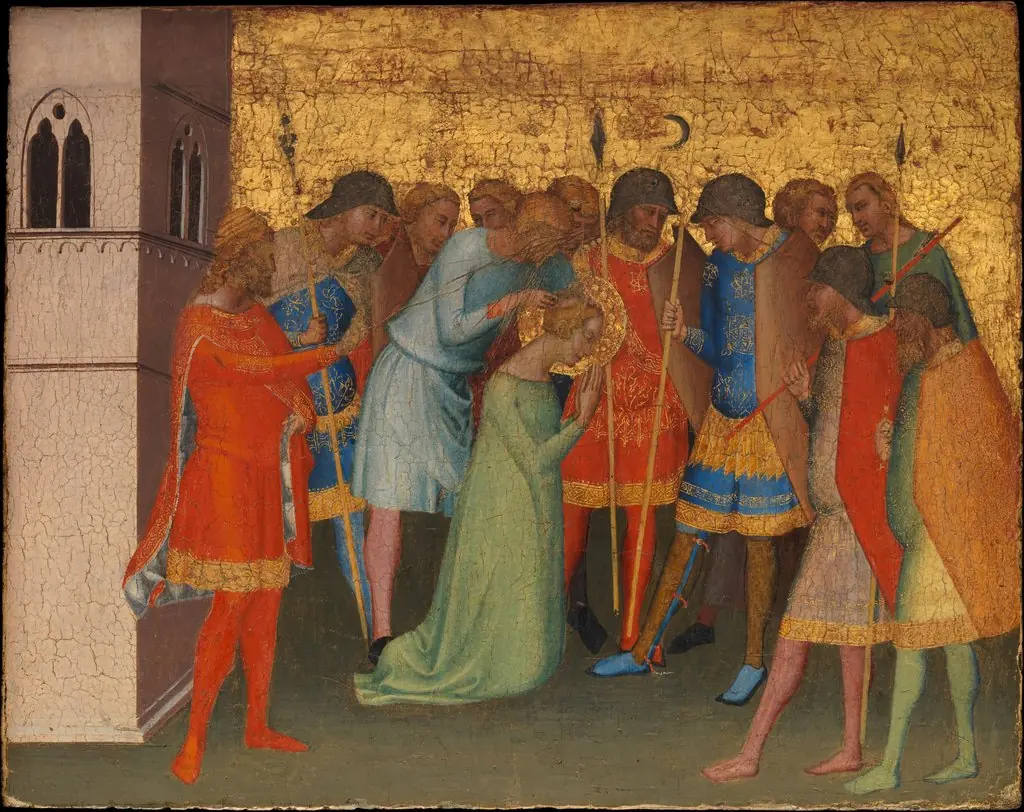
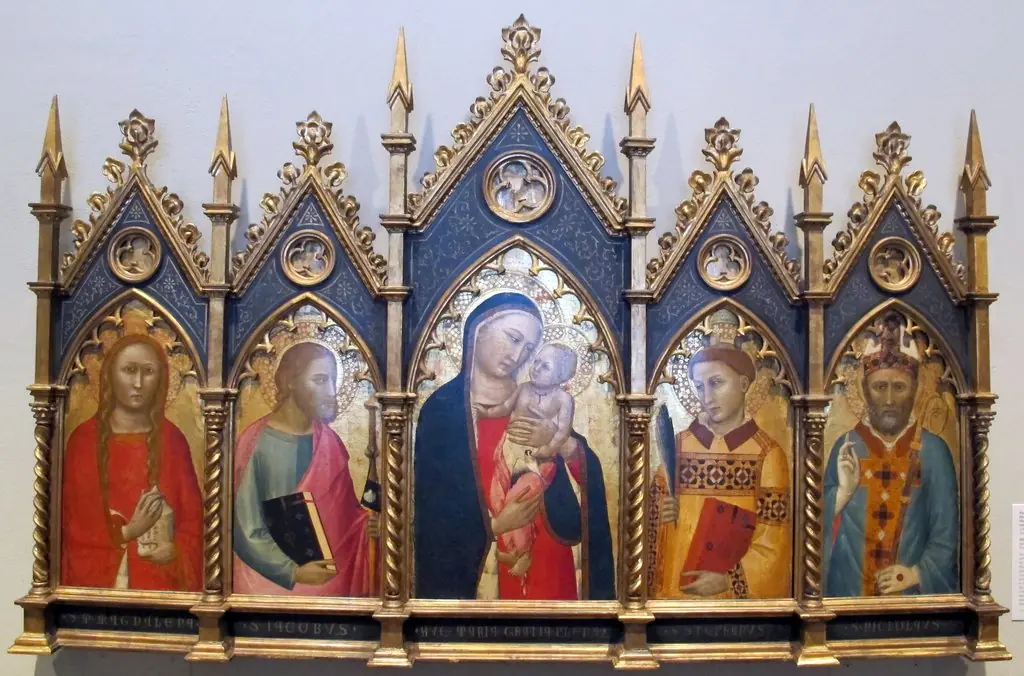
- Virgin and Child, with Saints Mary Magdalene, James Major, Stephen, and a Bishop Saint
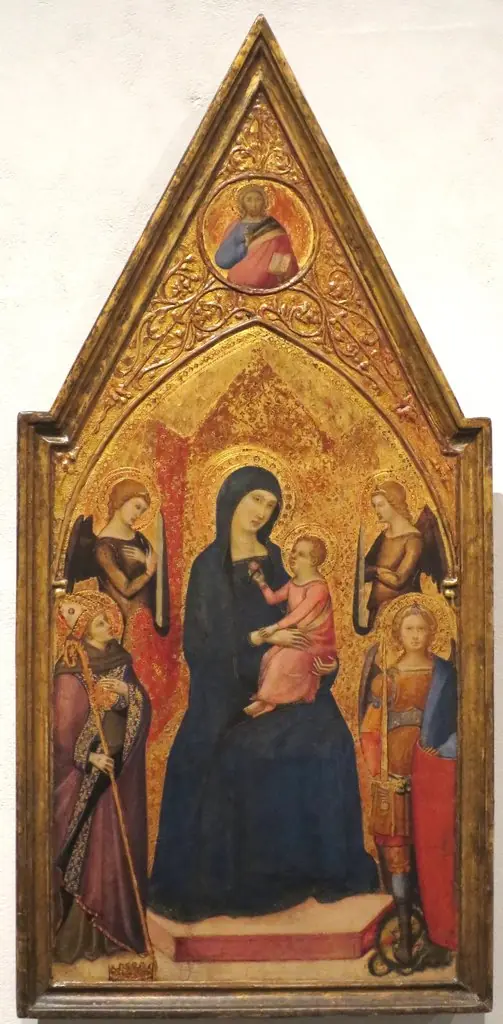 Virgin and Child with Sts. Louis of Toulouse and Michael
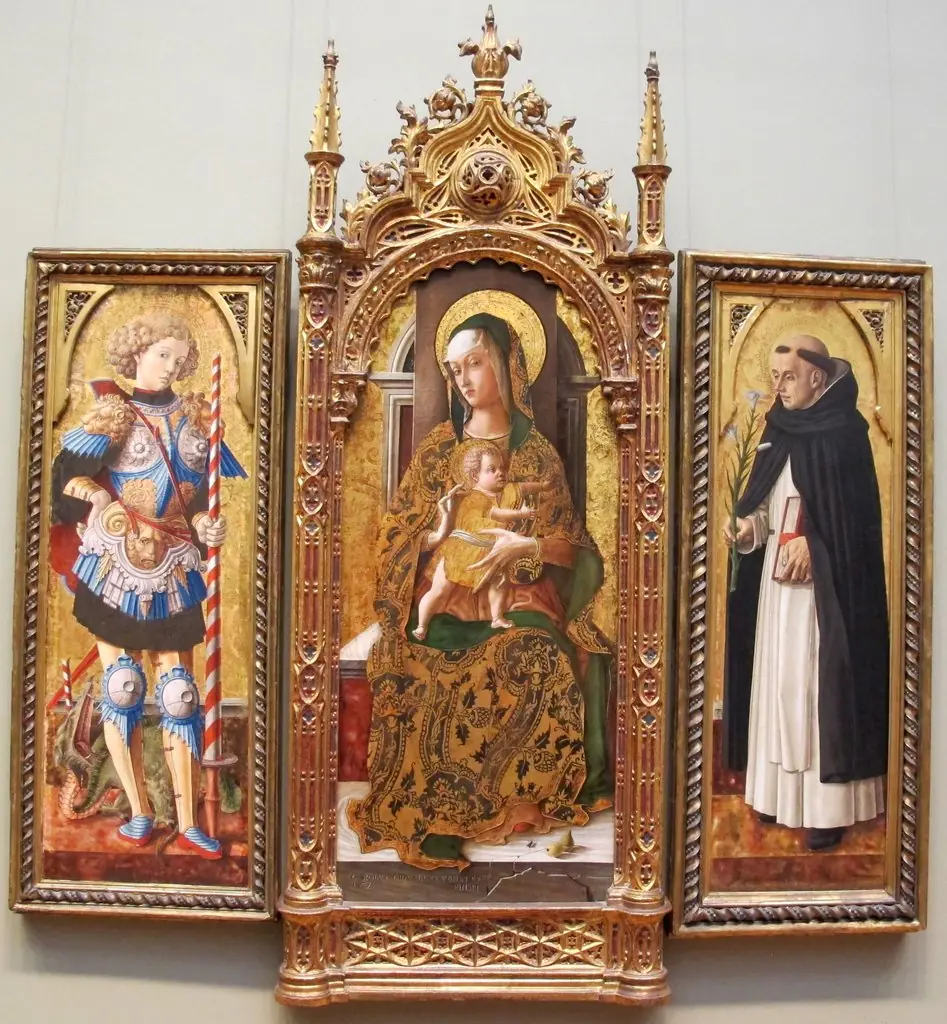 Madonna and Child Enthroned
![Madonna and Child with the Blessing Christ, and Saints Peter, James Major, Anthony Abbott, and a Deacon Saint [entire triptych], by Martino di Bartolomeo](https://artifactworldgallery.com/img/martino-di-bartolomeo--madonna-and-child-with-the-blessing-christ-and-saints-peter--2c53e26d577a363b-w320.webp) Madonna and Child with the Blessing Christ, and Saints Peter, James Major, Anthony Abbott, and a Deacon Saint [entire triptych]
Madonna and Child with the Blessing Christ, and Saints Peter, James Major, Anthony Abbott, and a Deacon Saint [entire triptych]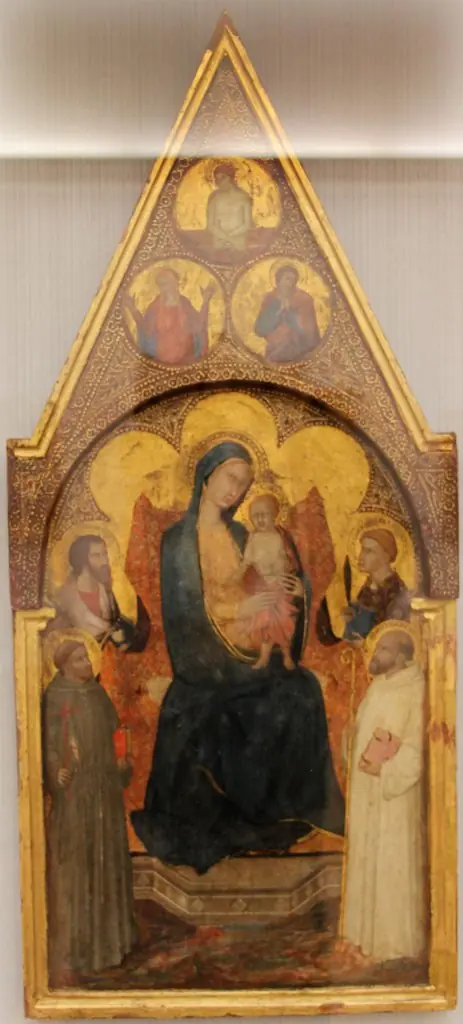 Thronende Maria mit dem Kind und vier Heiligen
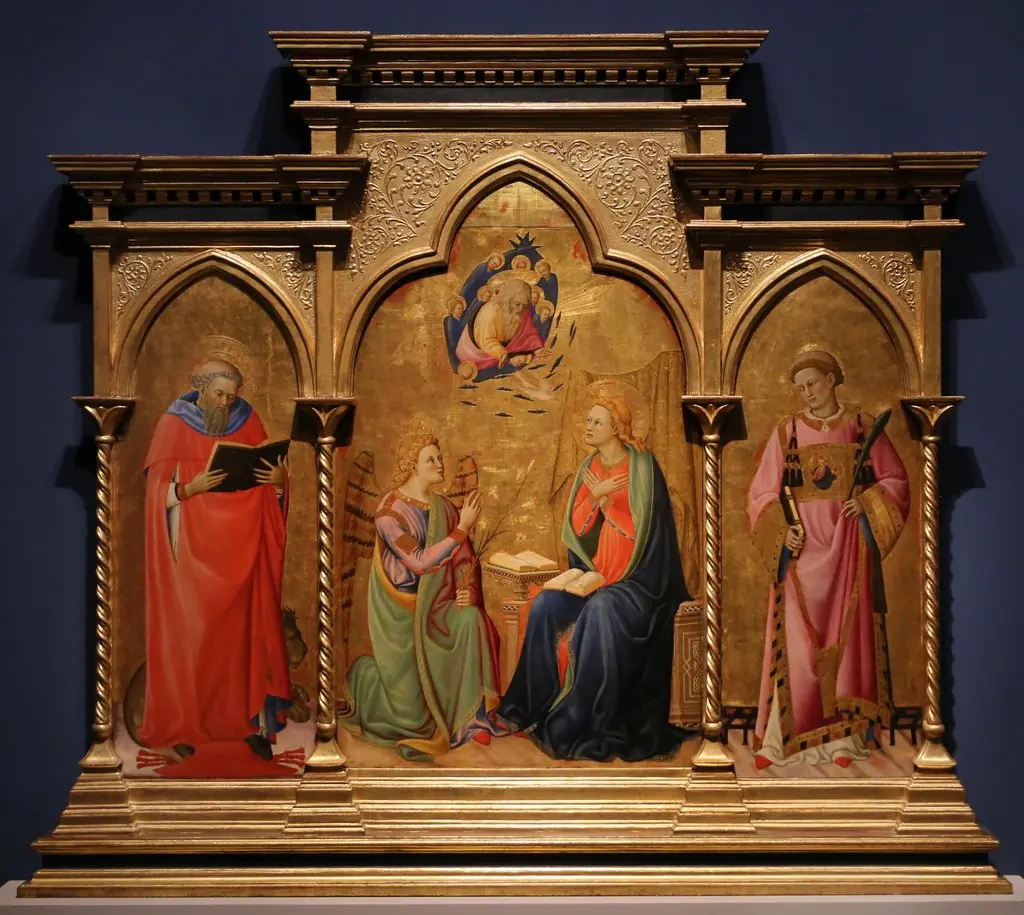 Parts of a triptych: Annunciation and saints Jerome and Lawrence
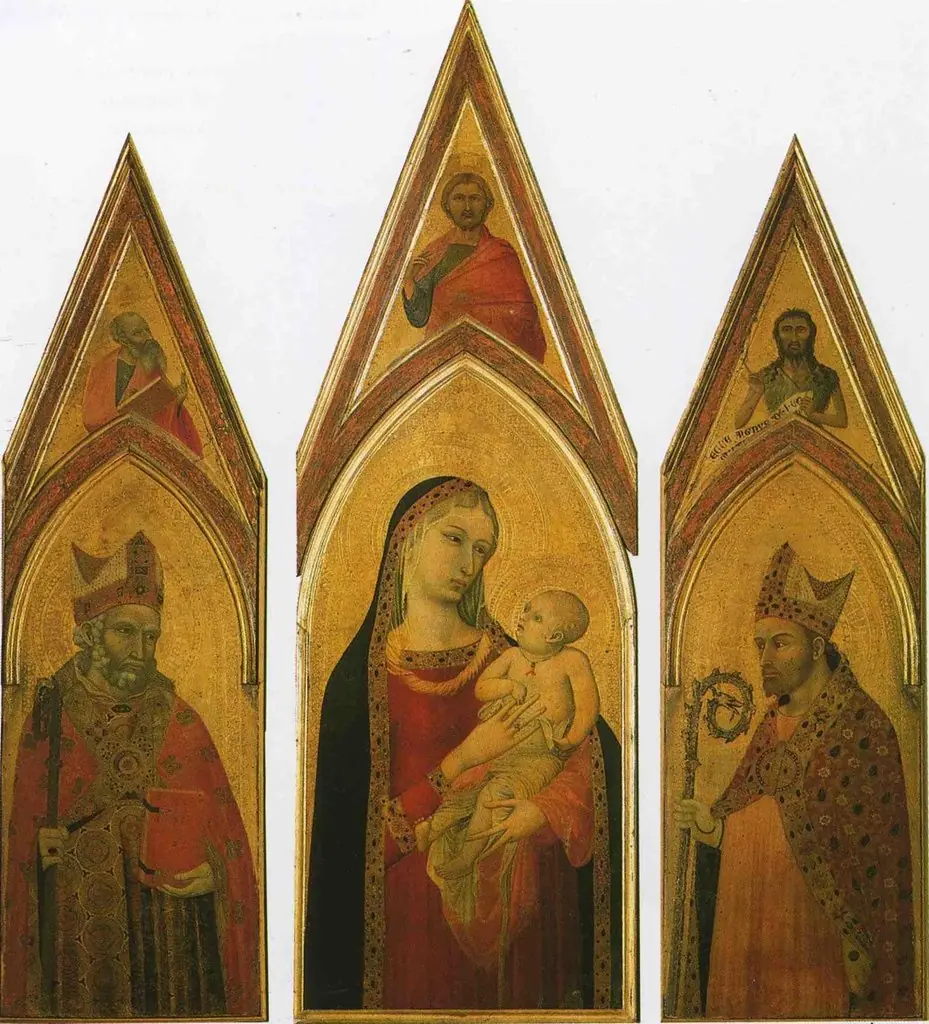 Altarpiece of St Proculus
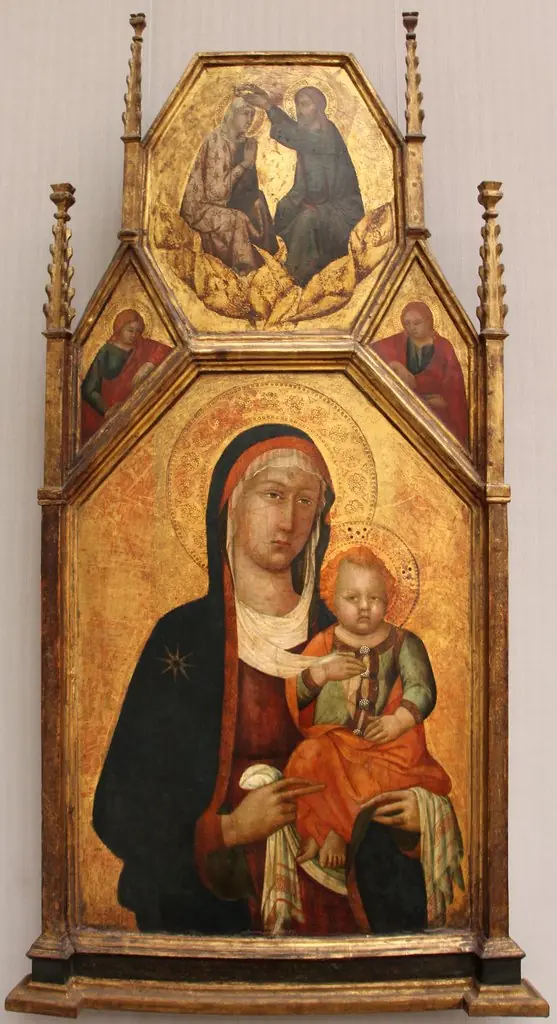 Maria mit dem Kind
 Untitled
 Triptych: The Virgin and Child with the Blessing Christ, Two Angels and a Donor
 madonna col bambino in trono
 Madonna and Child with Donors