Artwork
Basket of Fruit
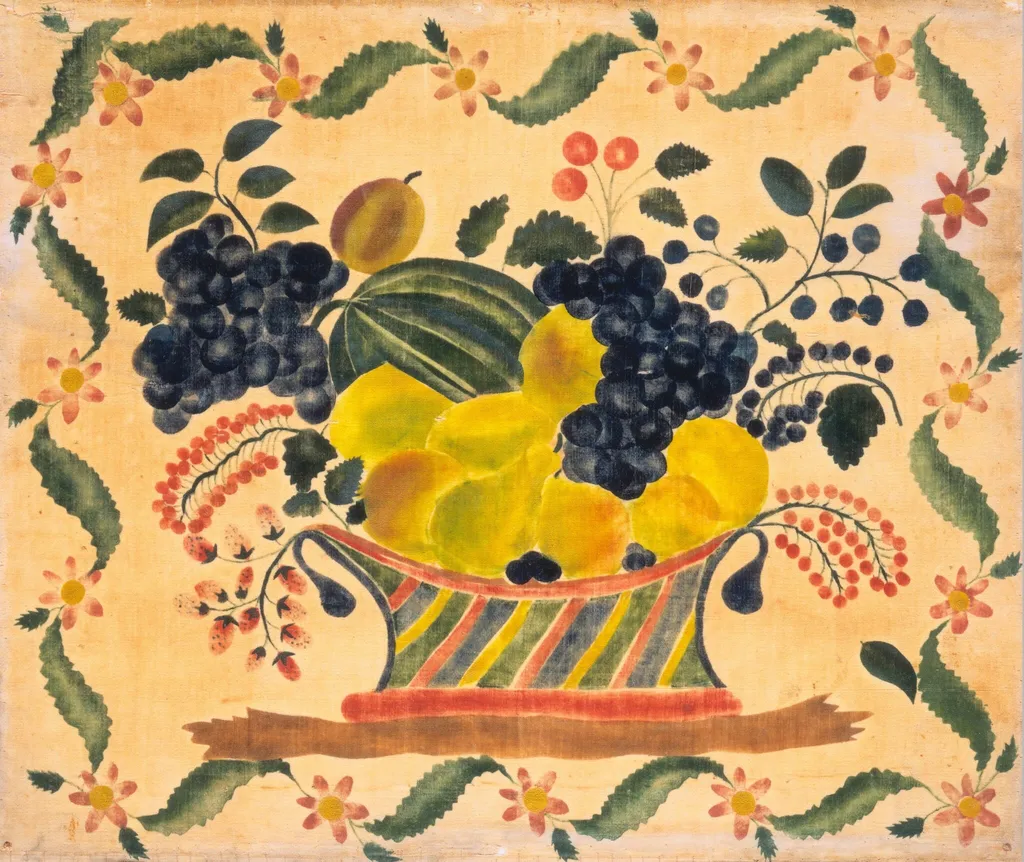
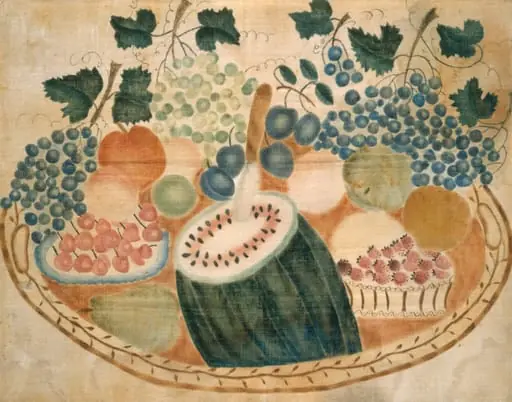
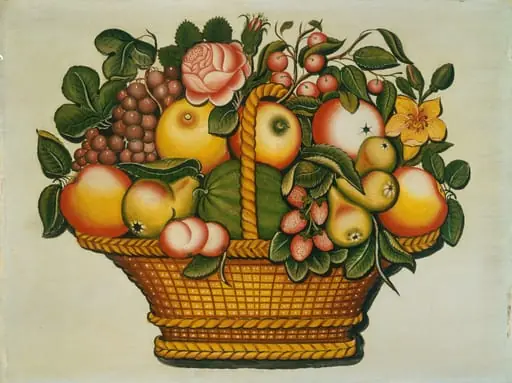
Basket of Fruit is a watercolor painting. It dates from 1830 and is held in the collection of the National Gallery of Art. The work is a watercolor executed on a velveteen surface, depicting a still‑life arrangement.
About this work
Subject & Meaning
The artwork is historically classified as a theorem painting, a technique popular in the 19th-century American domestic art scene.
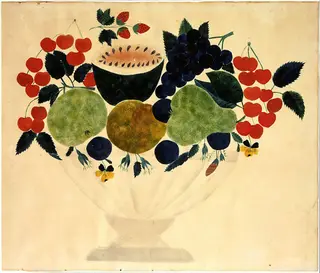
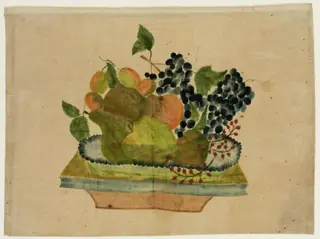
The work depicts a still life arrangement featuring a basket filled with fruit, executed as a watercolor painting on velveteen. Created in 1830 by an American artist from the 19th century, the piece belongs to the genre of still life painting. While the specific symbolic meaning of the fruit arrangement is not detailed in the available records, the composition adheres to traditional still-life conventions where such subjects often represent abundance or the transience of life.
The artwork is historically classified as a theorem painting, a technique popular in the 19th-century American domestic art scene.
Technique & Style
Basket of Fruit is a watercolor on velveteen created using theorem painting techniques, depicting a still life of assorted fruit arranged in a basket. The work measures 40.6 cm in height and 48.4 cm in width and has been part of the National Gallery of Art's collection in Washington, D.C., since its donation in 1953. Its formal composition emphasizes delicate brushwork and subtle tonal transitions characteristic of early American watercolor practice.
History & Provenance
Created in 1830, Basket of Fruit is a theorem painting in watercolor on velveteen associated with 19th‑century American still life practice. The work’s early history traces to Connecticut before it entered a private collection.
In 1948 the painting was acquired by collectors Edgar William and Bernice Chrysler Garbisch, who later donated it to the National Gallery of Art, Washington, D.C., in 1953.
The watercolor on velveteen titled Basket of Fruit is held in the collection of the National Gallery of Art in Washington, D.C. The work was acquired by the museum in 1953 as a gift from Edgar William and Bernice Chrysler Garbisch, who had purchased it in 1948. Prior to this acquisition, the piece was recorded as originating from Connecticut. The provided sources do not list a specific inventory or accession number for the artwork, nor do they document any exhibition history for the piece.
Overview
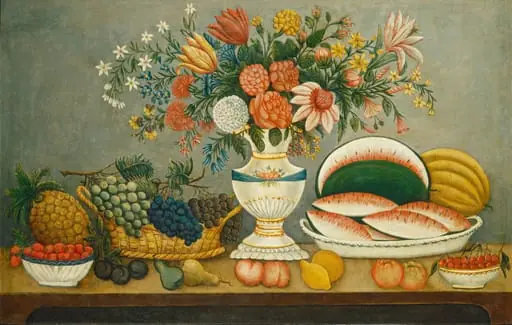
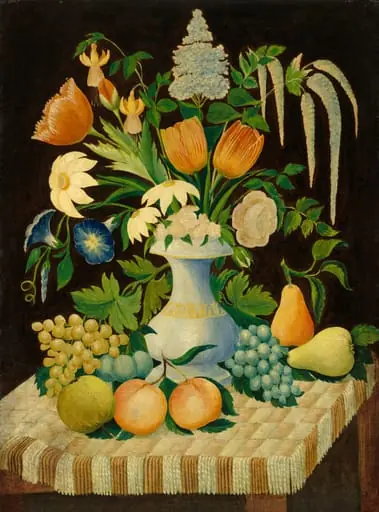
The work is a watercolor executed on a velveteen surface, depicting a still‑life arrangement. A striped bowl holds a variety of fruit, yellow pieces, clusters of purple grapes, and additional items, set against a light yellow backdrop framed by green leaves and pink blossoms. The composition rests on a brown base, creating a modestly contrasting setting.
Artist & collection