
Subject
Tablecloth
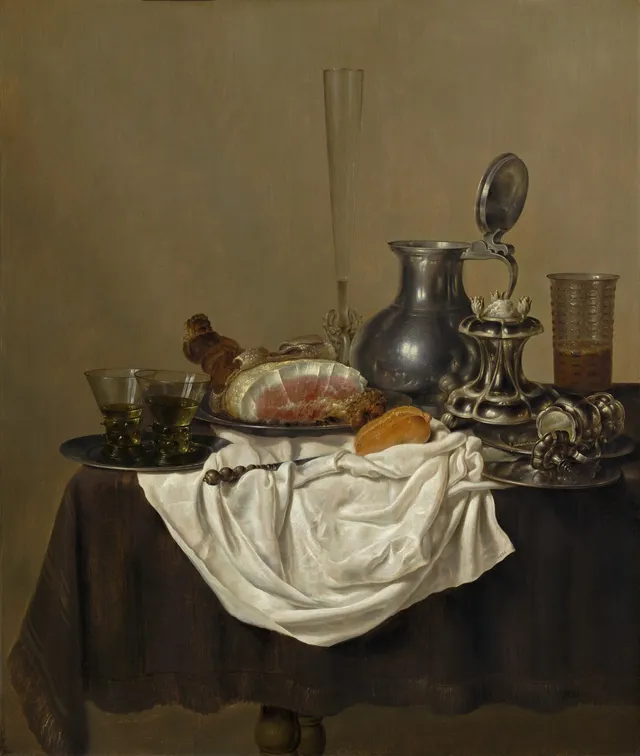
Tablecloth is a subject in art. The gallery holds 88 works in this subject in art, including works by Edgar Degas, Johannes Vermeer and Claude Monet.
The tablecloth is among the oldest furnishings to enter Western painting, valued by artists as both a domestic object and a surface on which to stage virtuosity. Fine table linen is thought to have appeared in Europe around the first century AD and had reached the north before the tenth century, where Anglo-Saxon manuscripts already show cloth-covered tables. In medieval and early Renaissance religious imagery the white cloth carried sacred weight: depictions of the Last Supper, such as Ugolino da Siena's altarpiece for Santa Croce in Florence (early 14th century), gathered the disciples around a long table draped in white linen that evoked the Eucharistic altar cloth.
During the Renaissance the table covering became a marker of wealth and worldliness. Costly knotted carpets imported from Ottoman Anatolia were laid over tables rather than floors—the Dutch tafelkleed—and they appear so often in European pictures that whole classes of carpet are now named for the painters who recorded them: "Holbein" carpets after Hans Holbein the Younger and "Lotto" carpets after Lorenzo Lotto. Popular from the fifteenth century, these patterned coverings continued to signal status in Dutch interiors until about 1660.
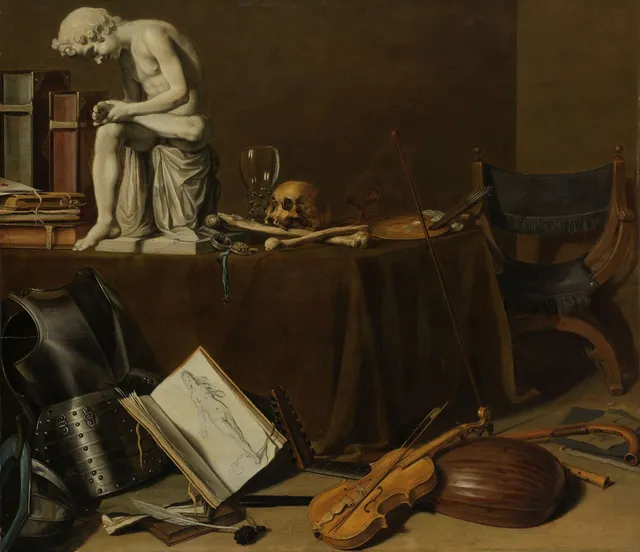
The cloth reached its expressive height in the Dutch Golden Age still life. In Haarlem, Willem Claesz. Heda and Pieter Claesz pioneered the banketje, or "banquet piece," in which a crumpled length of white damask linen tumbles across the table so that pewter, glass, oysters and pie nestle in its folds. The rumpled cloth let painters display their command of light, shadow and the cool sheen of linen, the keynote of their near-monochrome "tonal" manner. Our collection holds Heda's Banquet Piece with Mince Pie, Claesz's Still Life with Peacock Pie and his Vanitas Still Life with the Spinario, and Gerret Willemsz. Heda's Still Life with Ham.
Such disarray was rarely accidental. The toppled goblet, stacked plates and disordered cloth formed a "still life of disorder" that carried vanitas overtones—wealth, transience and the tension between indulgence and restraint—for the merchant collectors who prized these works. The motif outlived the genre, reappearing in domestic and genre painting where the laid table frames intimacy and sociability, as in Lilly Martin Spencer's Conversation Piece and Edgar Degas's A Woman Seated beside a Vase of Flowers. In every era the tablecloth remained a quiet test of a painter's eye.
Key artists

Overview
A tablecloth is a cloth used to cover a table, serving both ornamental and practical functions such as protecting the table surface from scratches and stains. Designed to be spread over a dining table before laying out tableware and food, it often forms part of a coordinated table setting alongside napkins or placemats. The oldest known reference to a tablecloth dates back to around 100 AD, mentioned by the ancient Latin Spanish poet Martial. Over centuries, it evolved from a functional barrier into a significant element of domestic and artistic visual culture, appearing frequently in Western art as a foundational element in depictions of feasts, daily meals, and domestic interiors.
Iconography & meaning
In art, the tablecloth carries dual iconographic weight, signifying both material wealth and the cultural rituals of hospitality. During the later medieval period, spreading a high quality white linen or cotton cloth was a crucial preparation for a feast in a wealthy household, making the white cloth a symbol of prosperity and social standing. At the Renaissance, tablecloths were often woven from linen and embroidered with the host's armorial bearings, reinforcing themes of lineage and status. The material itself conveyed meaning: linen was the fabric of choice for the affluent, while hemp was considered too coarse for high society. Beyond class, the cloth symbolized the act of coming together, serving as the literal and figurative foundation for communal dining.
Across movements & periods
The treatment and appearance of the tablecloth in visual and material culture shifted significantly across periods. In the medieval and Renaissance eras, high quality white linen dominated the tables of the affluent. By the nineteenth century, tastes shifted toward Victorian interiors filled with thick, fringed draperies in deep colors, including plush tablecloths that reached the floor, serving overtly representative purposes. The twentieth century brought a broader range of styles as eating habits changed, moving away from strict white traditions. Regional variations also persisted, such as the Perugia tablecloths woven with characteristic blue stripes and patterns since medieval times, a style closely associated with church linen.
Legacy
The cultural afterlife of the tablecloth extends beyond the canvas into modern design, domestic habits, and popular spectacle. While formal dinners often retain the traditional white damask cloth, the post World War II era saw the widespread adoption of paper tablecloths in restaurants, and modern dining frequently utilizes diverse colors, patterns, and materials like PVC coated fabrics. The tablecloth also became a centerpiece of a popular magic trick, the tablecloth pull or yank, which relies on inertia to remove the cloth from a fully set table while leaving the plates and tableware undisturbed. This enduring trick highlights the object's enduring association with the physics of the dining table and its place in popular imagination.
Works
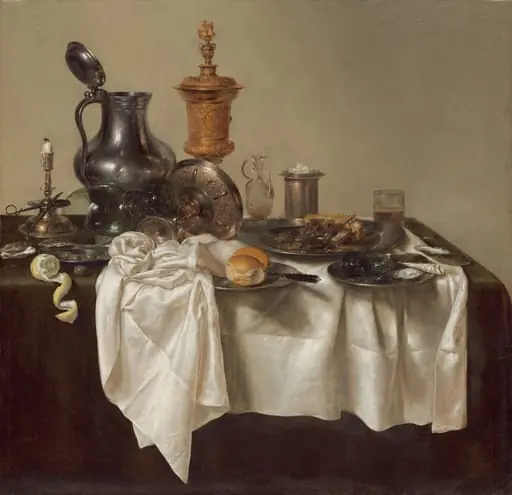 Banquet Piece with Mince Pie
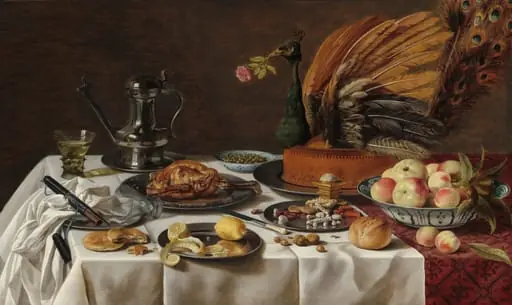 Still Life with Peacock Pie
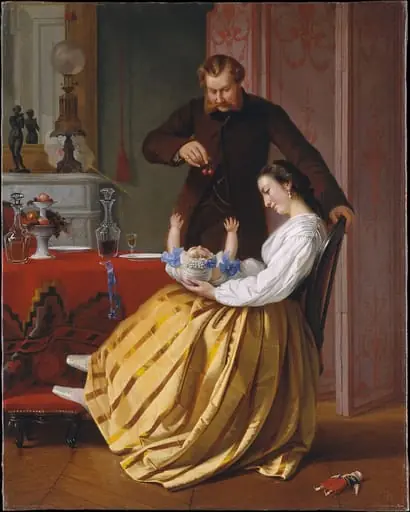 Conversation Piece
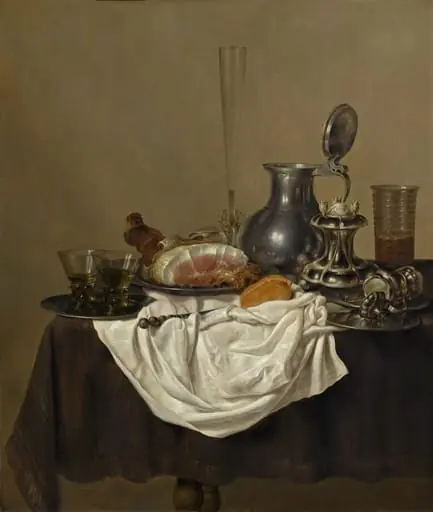 Still Life with Ham
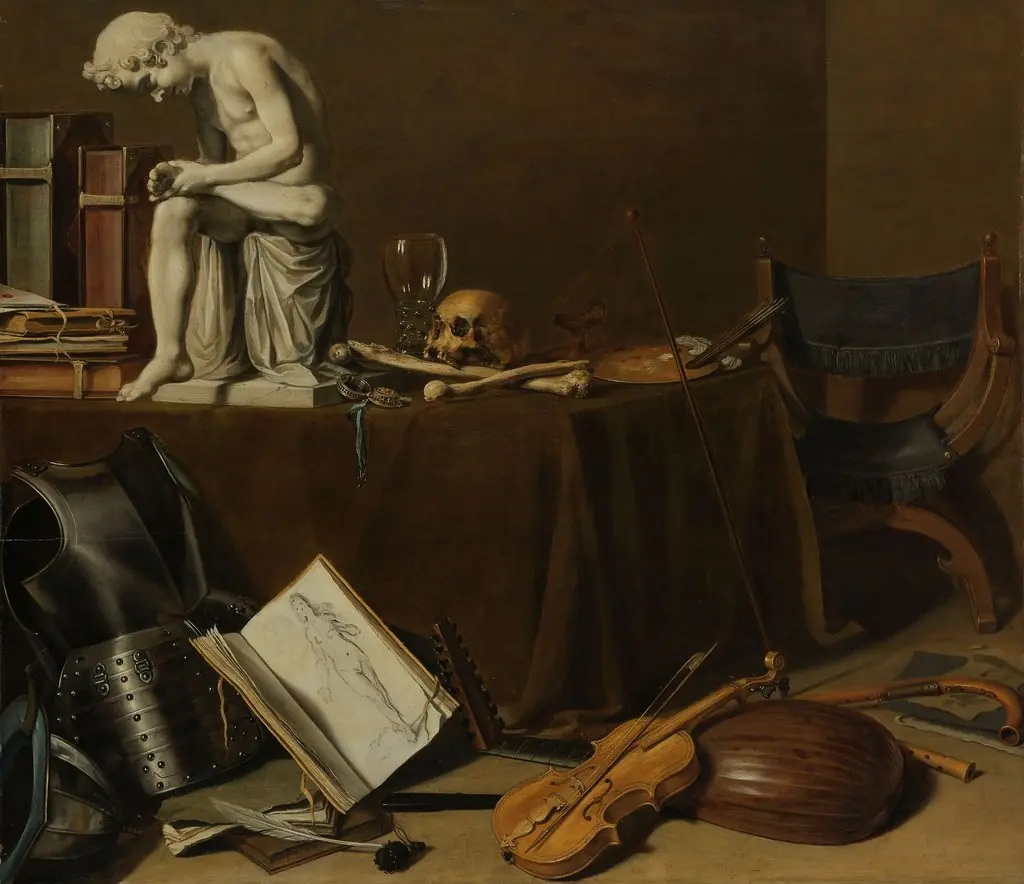 Vanitas Still Life with the Spinario
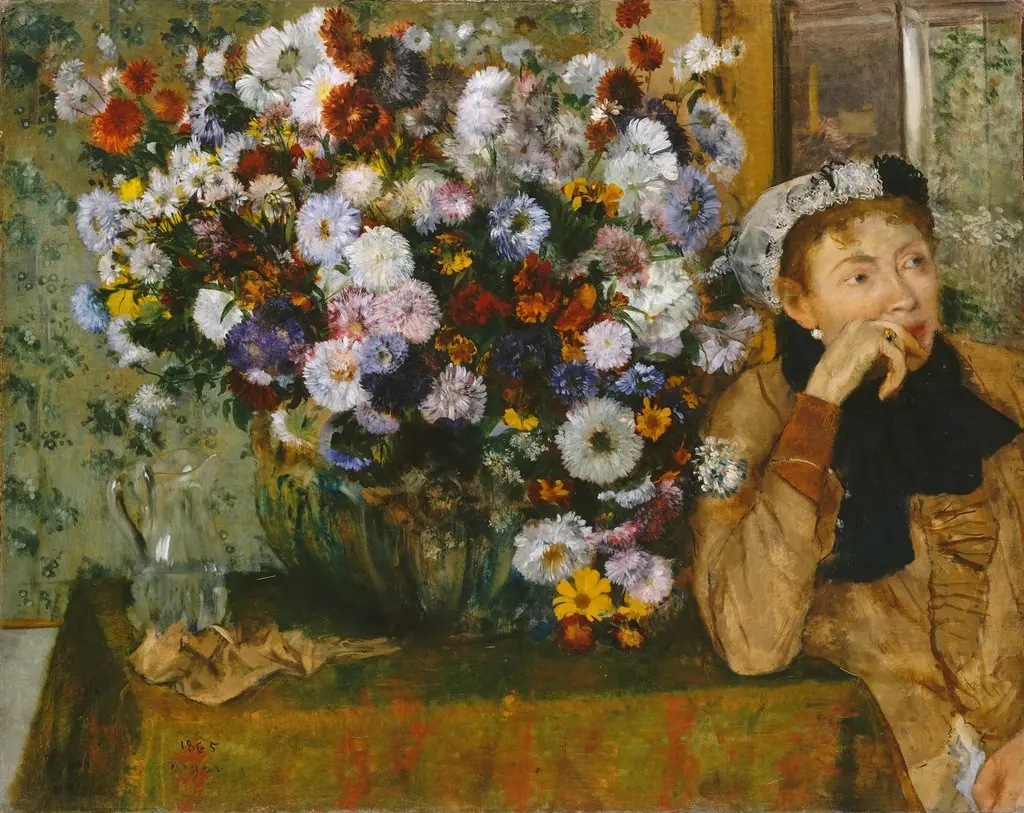 A Woman Seated beside a Vase of Flowers
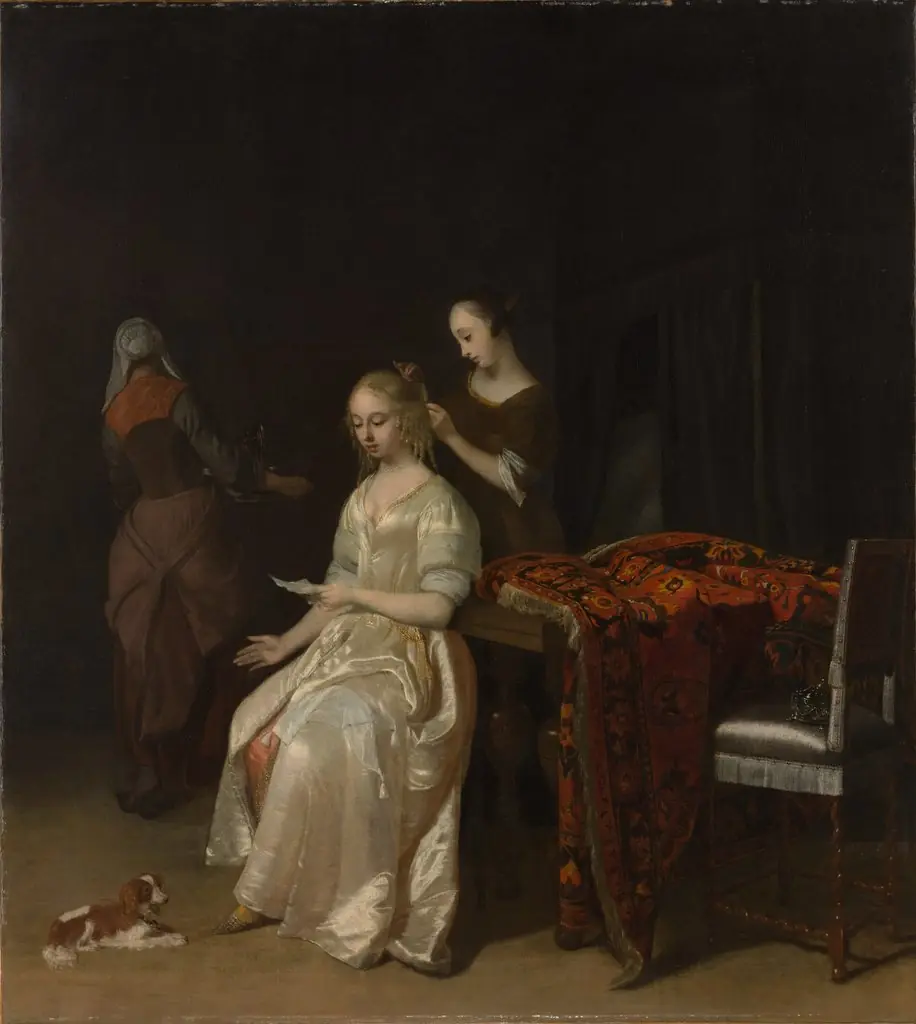 The Love Letter
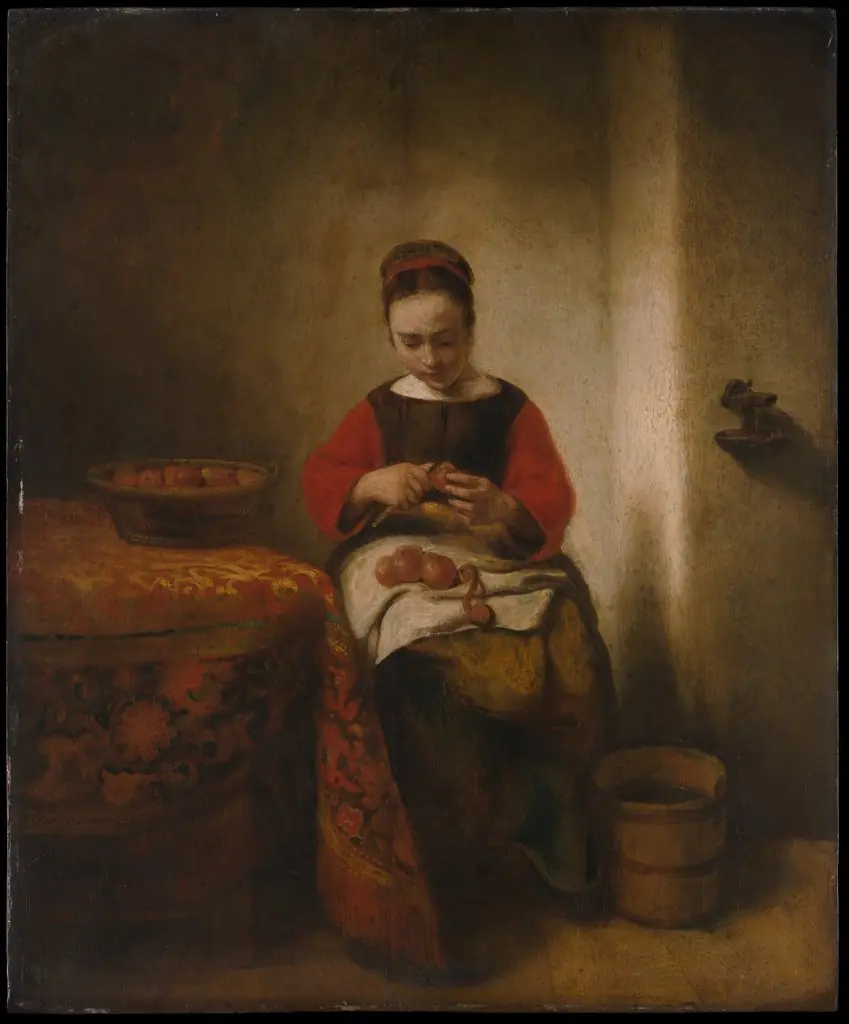 Young Woman Peeling Apples
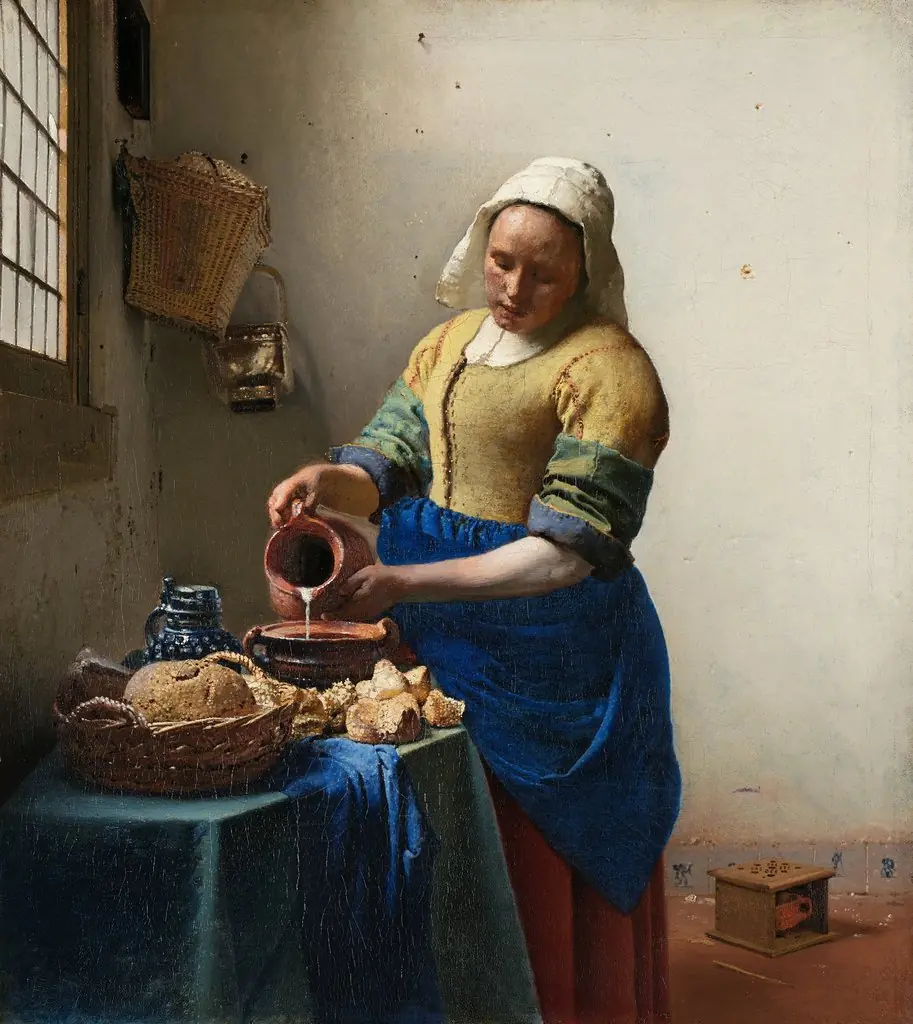 The Milkmaid
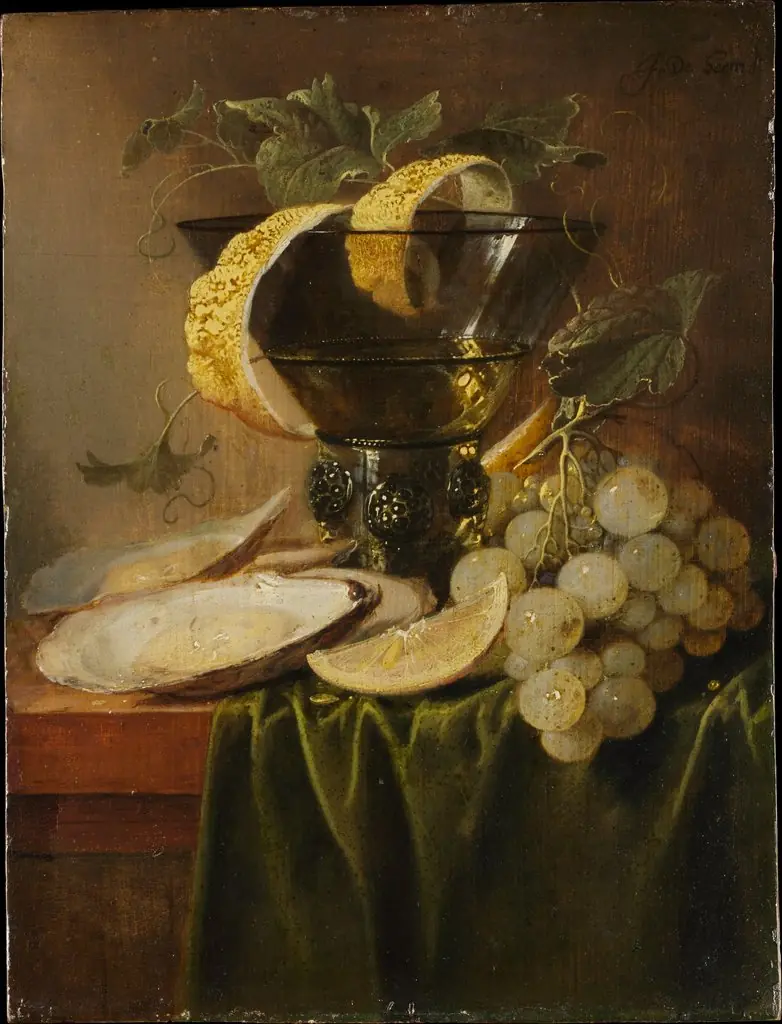 Still Life with a Glass and Oysters
 Syndics of the Drapers' Guild
 Judith at the Banquet of Holofernes
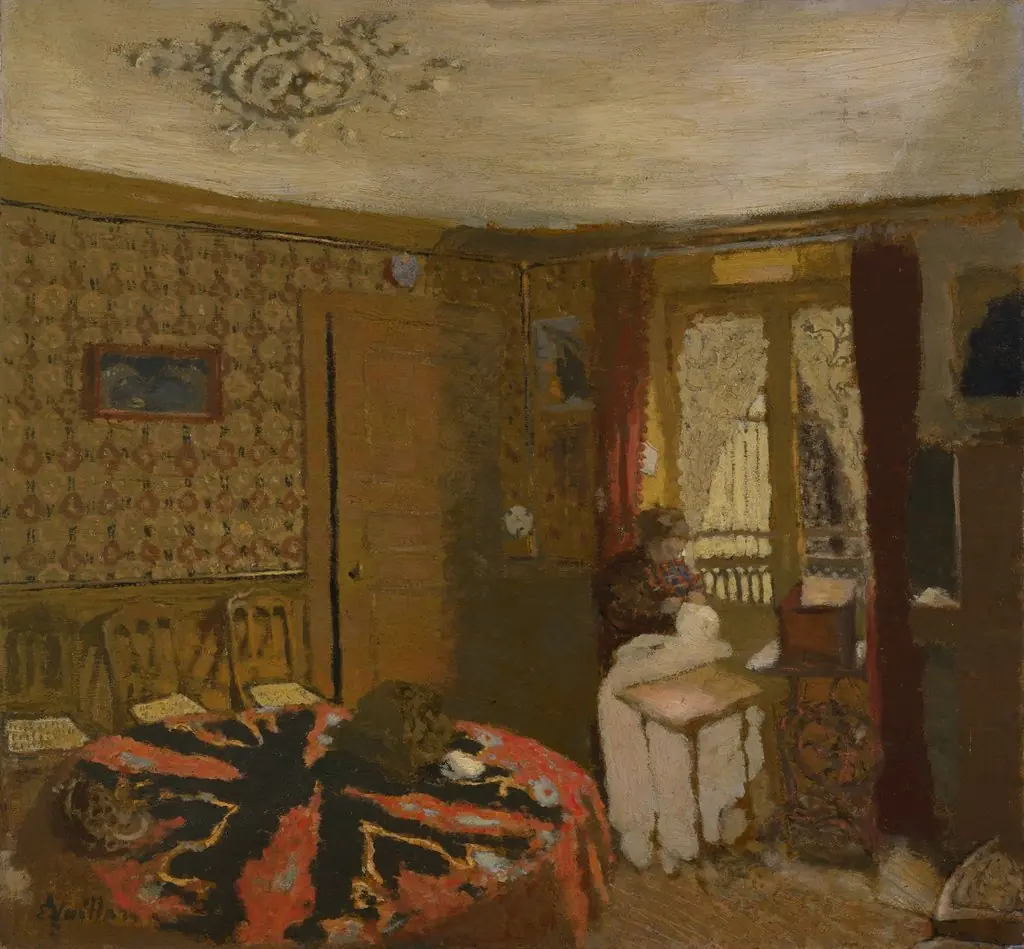 Mme Vuillard Sewing by the Window, rue Truffaut
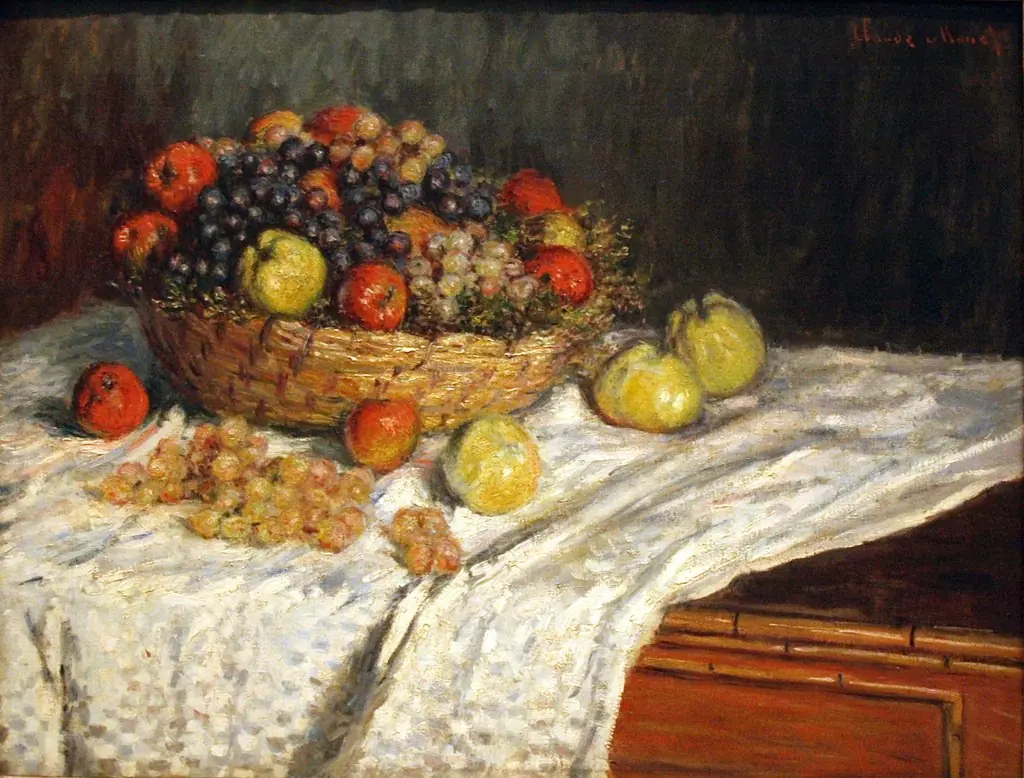 Apples and Grapes
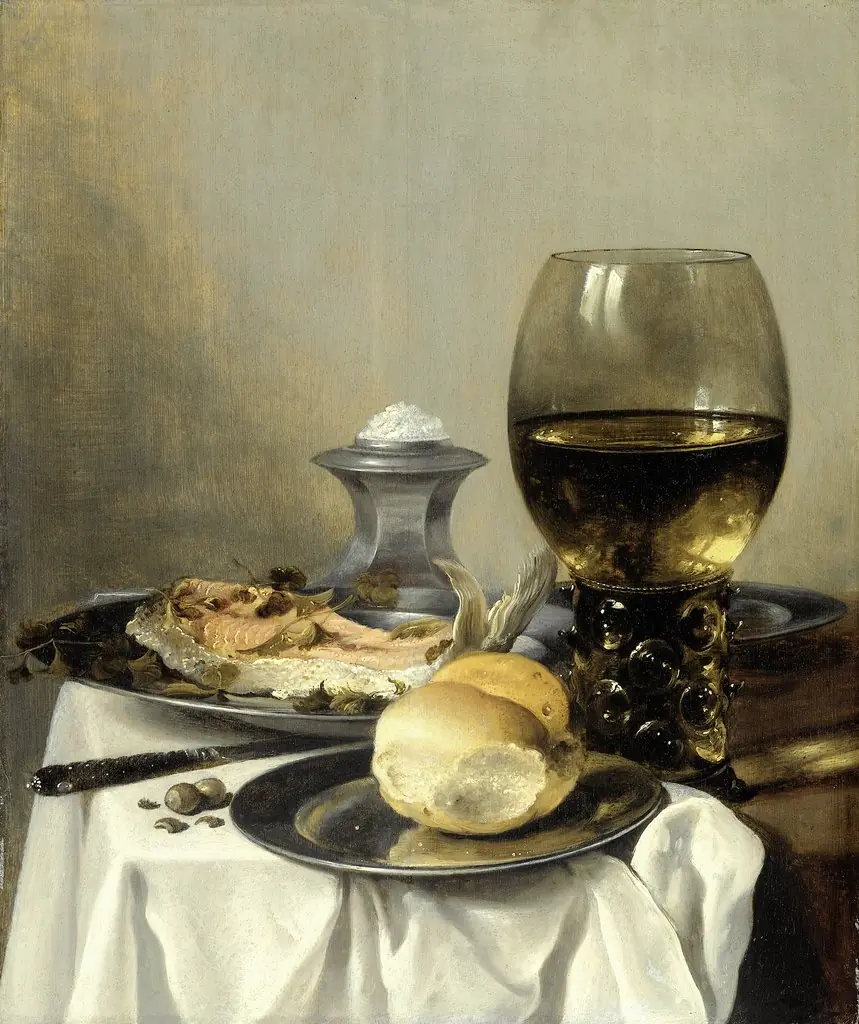 Still life with a salt cellar
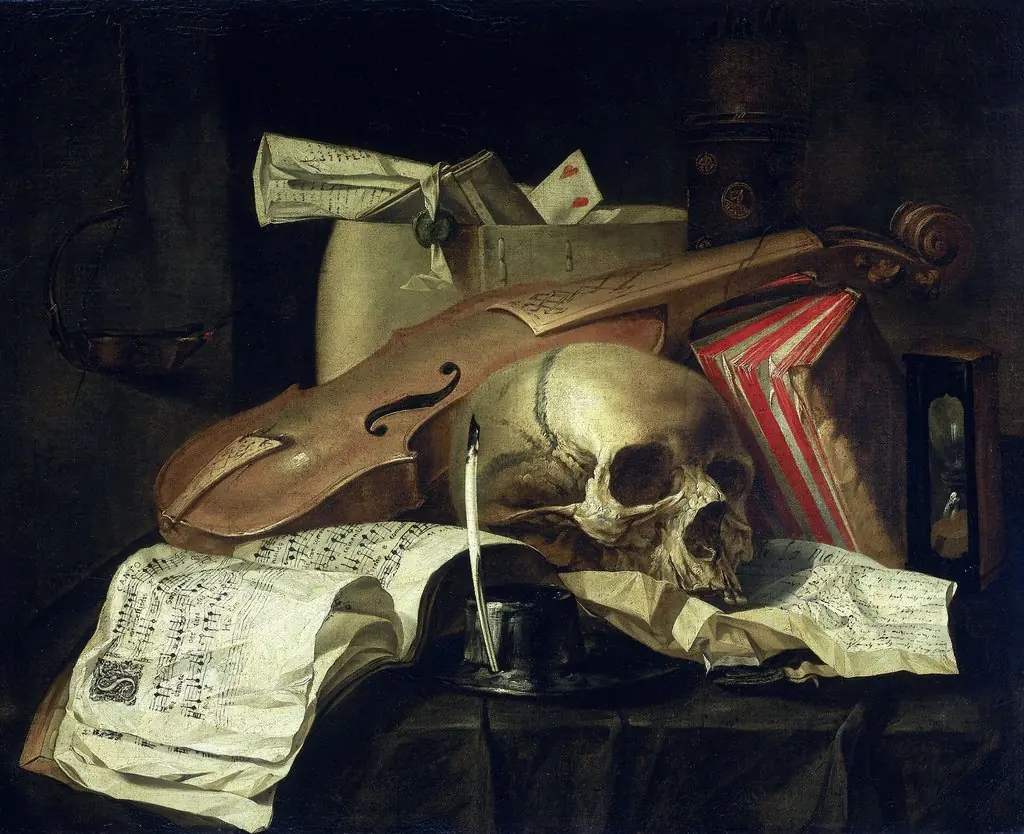 Vanitas still life
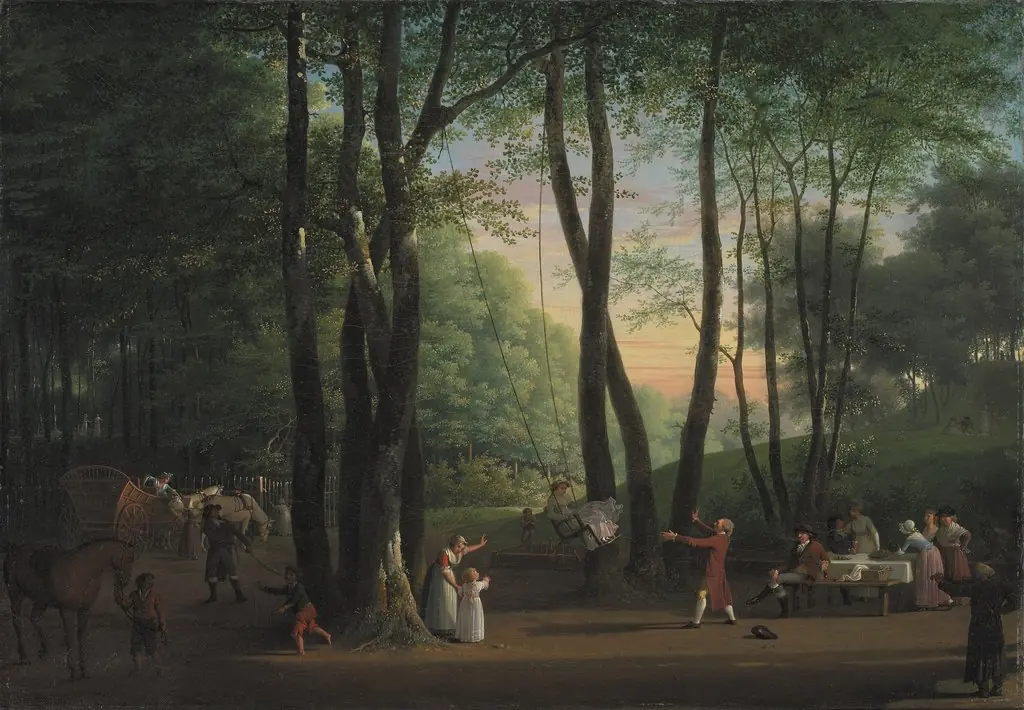 The Dancing Glade at Sorgenfri
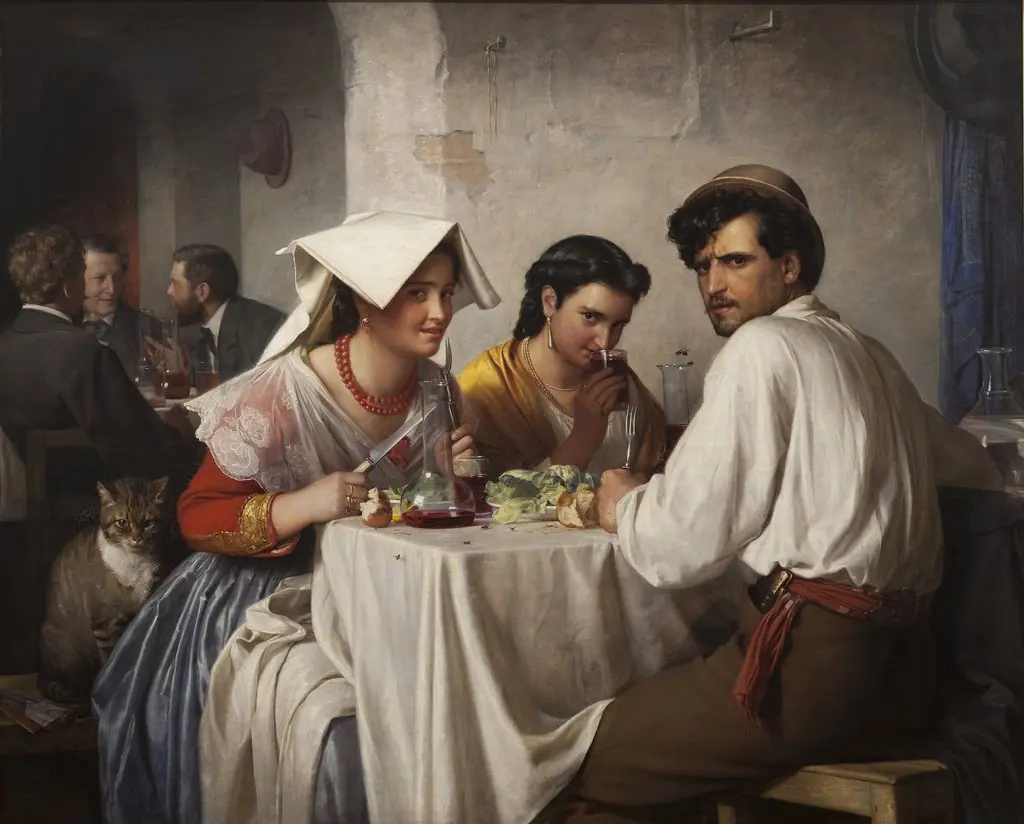 In a Roman Osteria
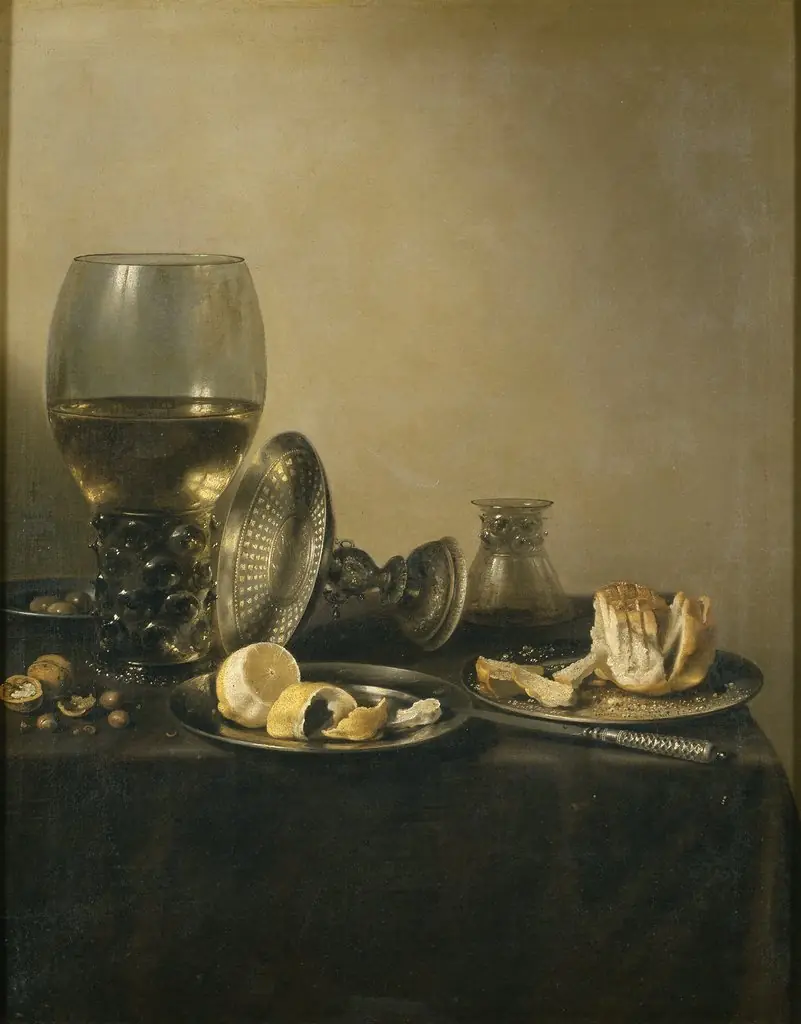 Still Life
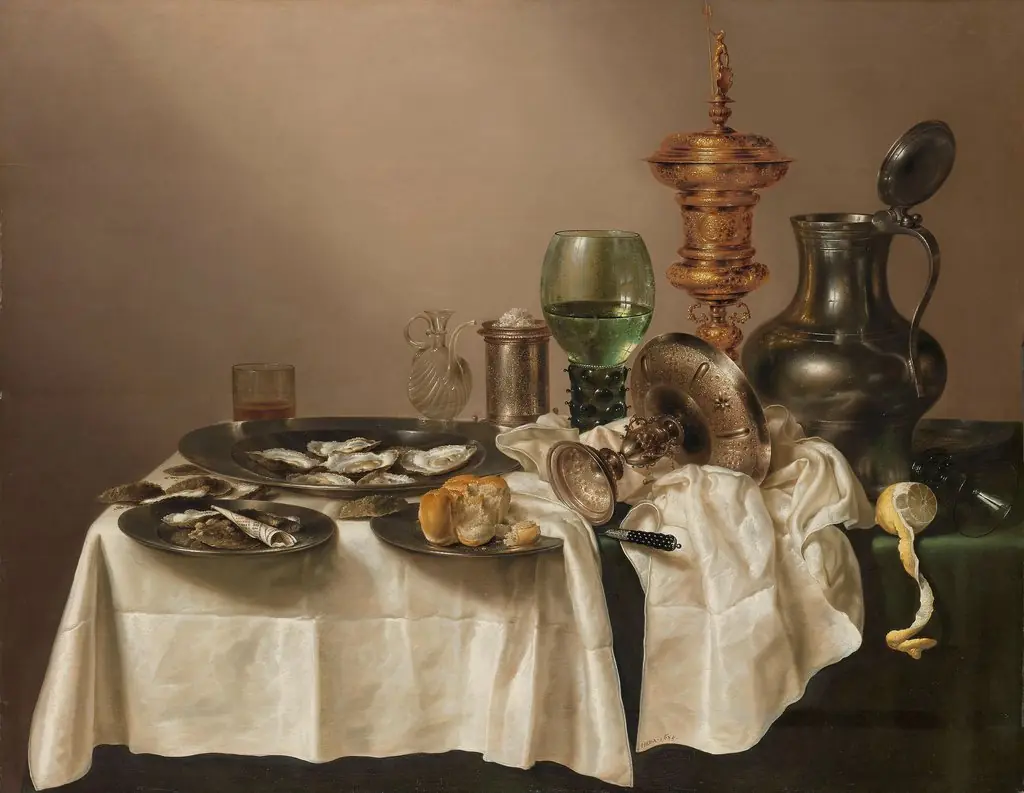 Still Life with a Gilt Cup
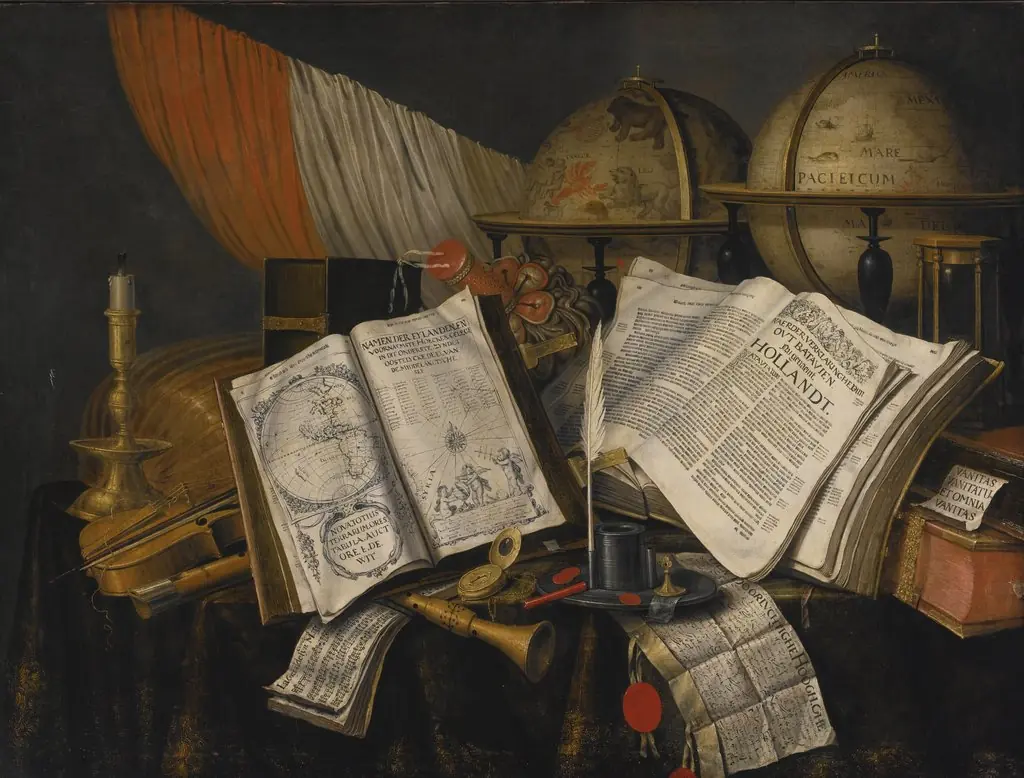 Vanitas Still Life with a Candlestick, Musical Instruments, Dutch Books, a Writing Set, an Astrological and a Terrestial Globe and an Hourglass, All on a Draped Table
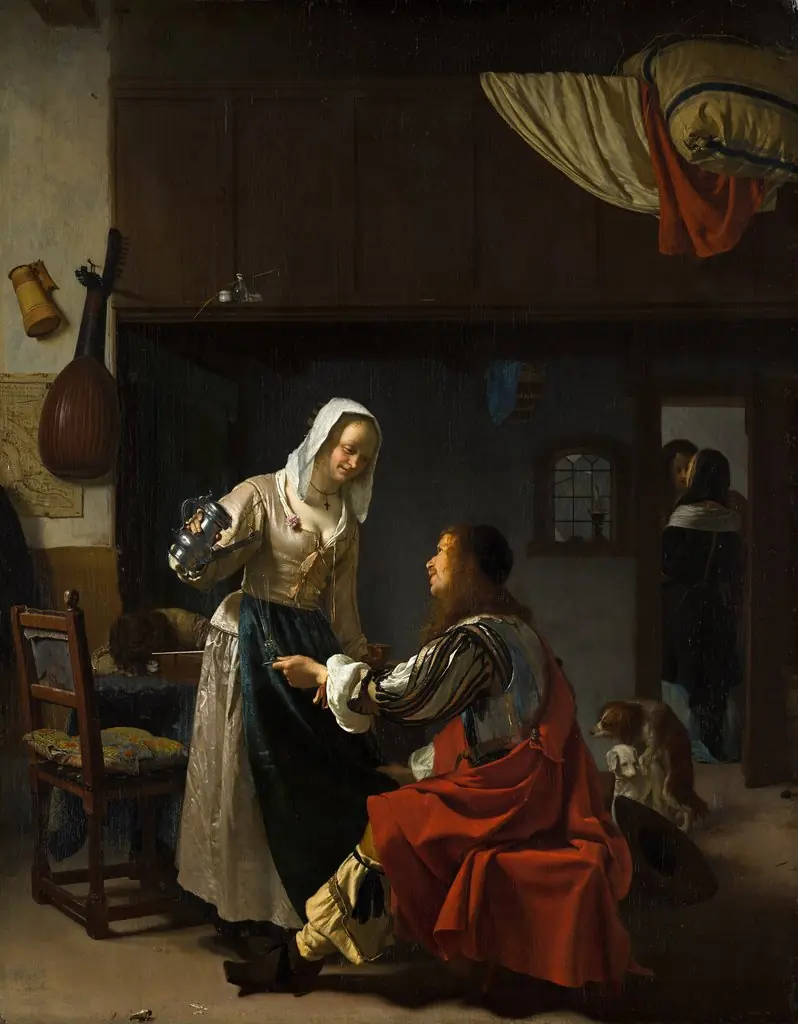 Brothel Scene
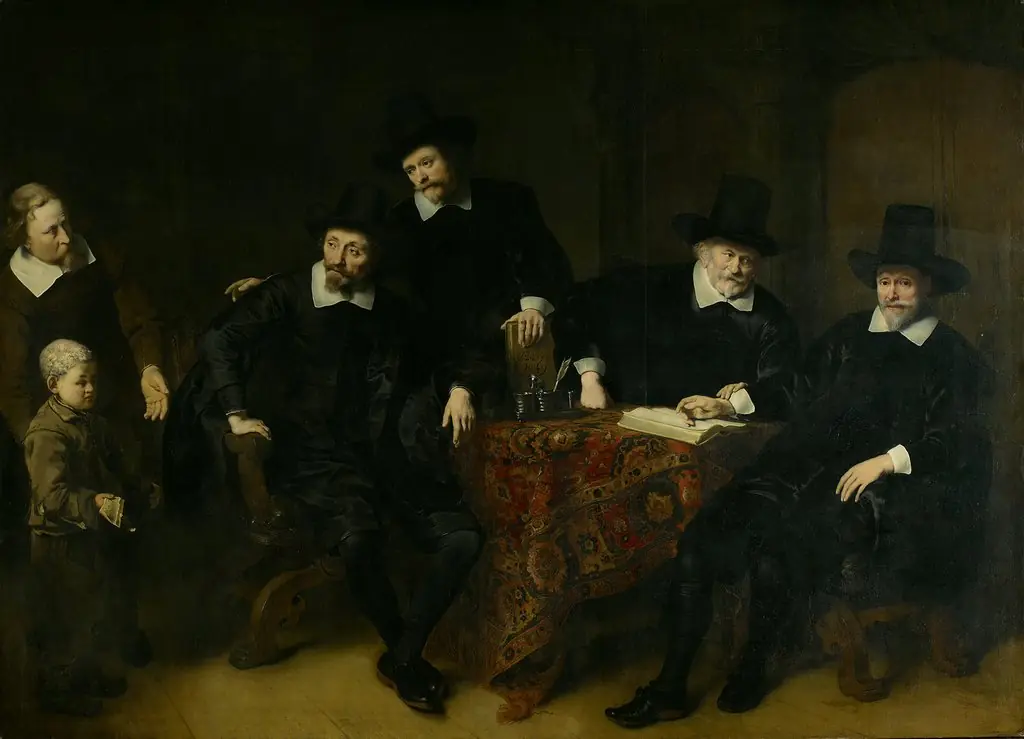 The Regents of the Leper's house in Amsterdam in 1649
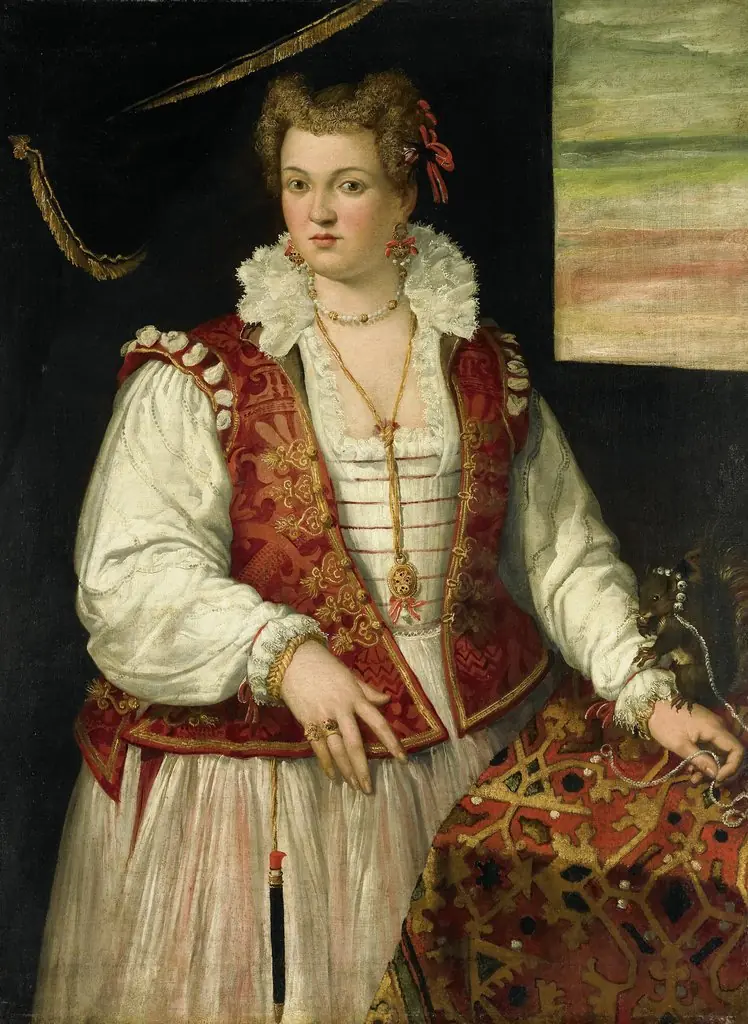 Portrait of a Woman with a Squirrel
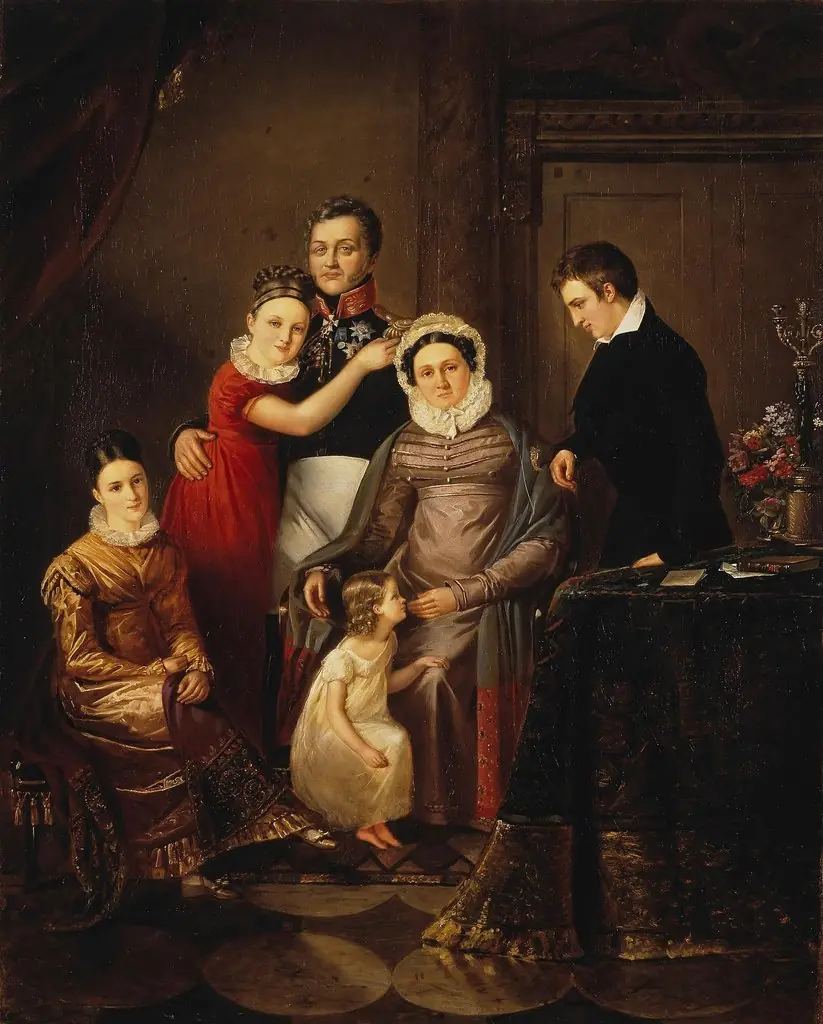 Portrait of Count Nikolai Repnin-Volkonsky with His Family
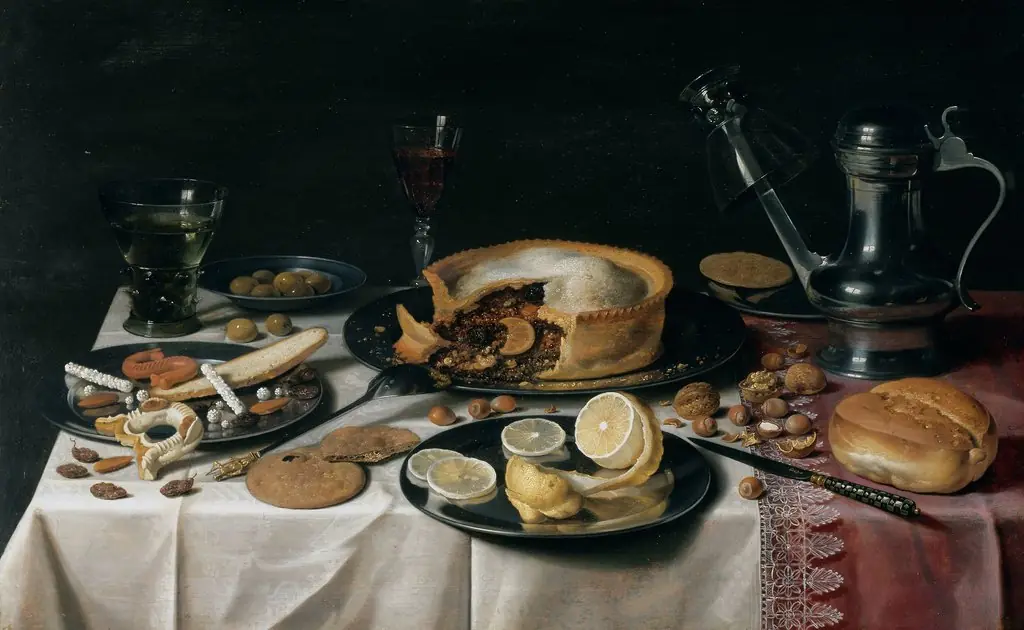 Still Life
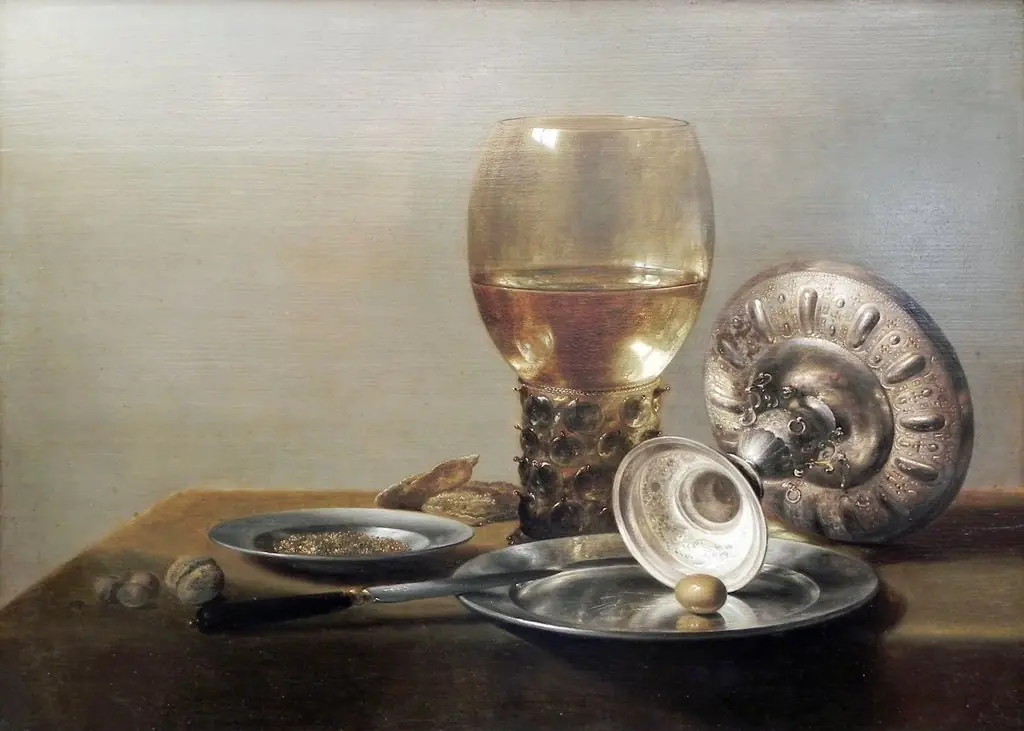 Still-life with Wine Glass and Silver Bowl
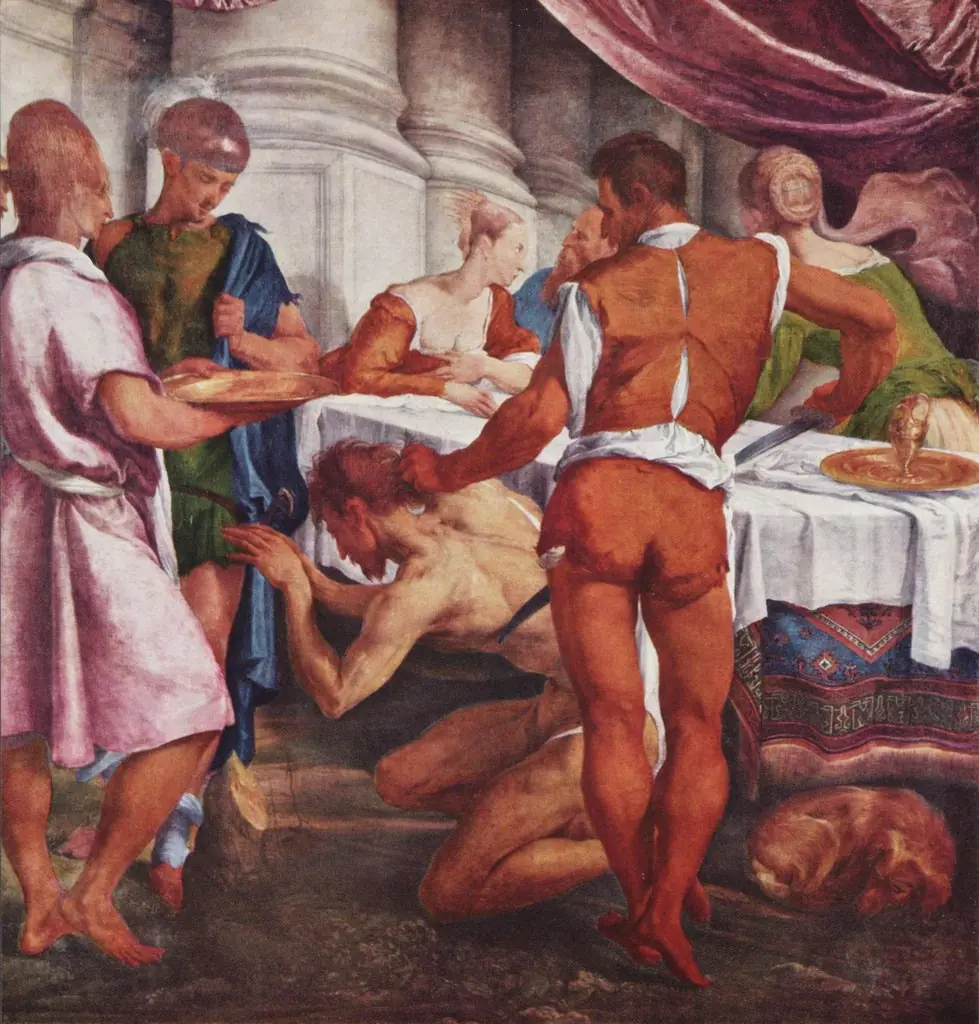 The Decapitation of St John the Baptist
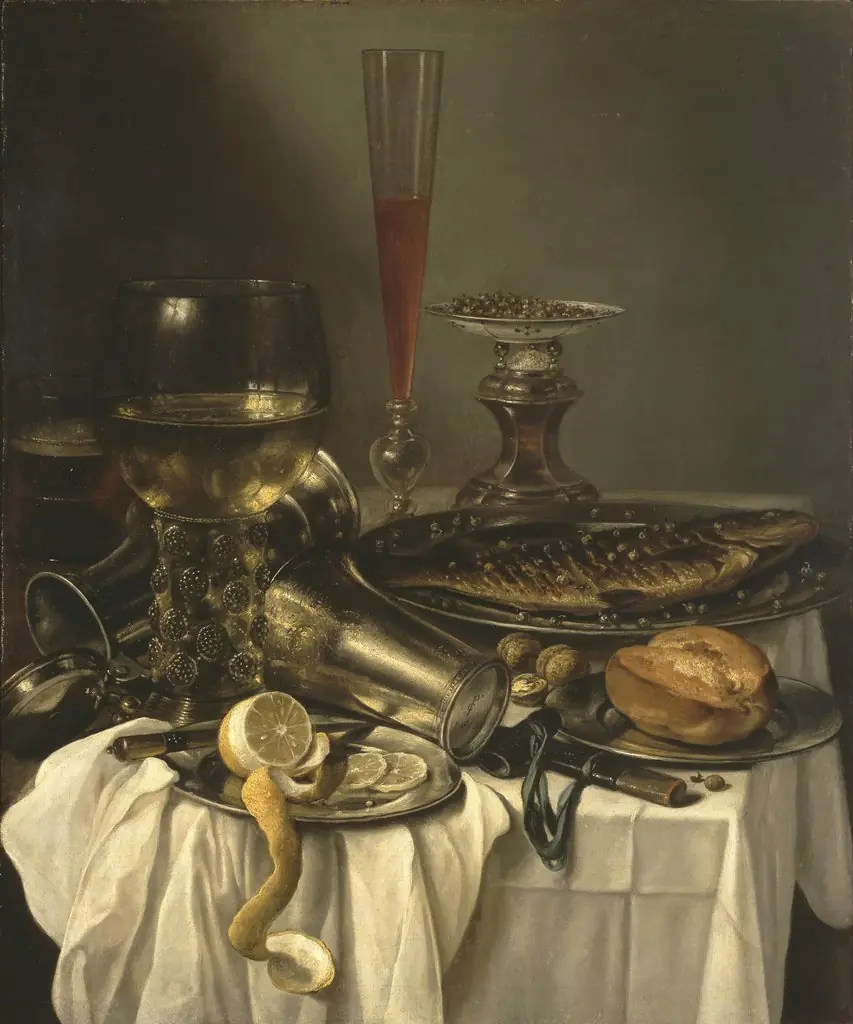 Breakfast with Fish
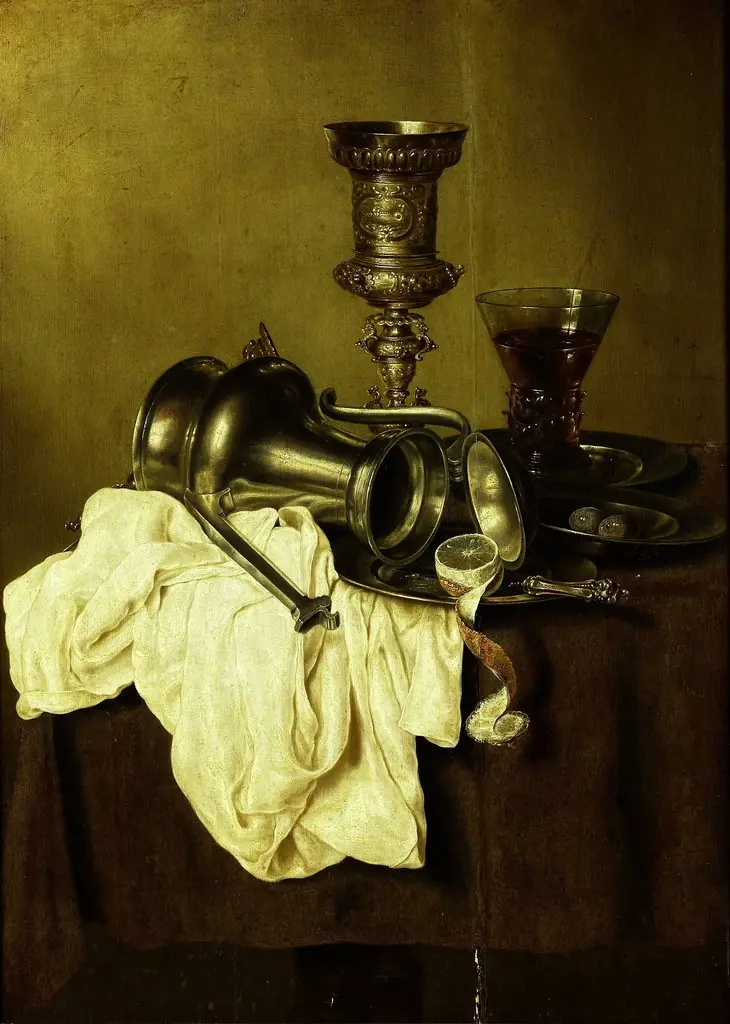 Still life
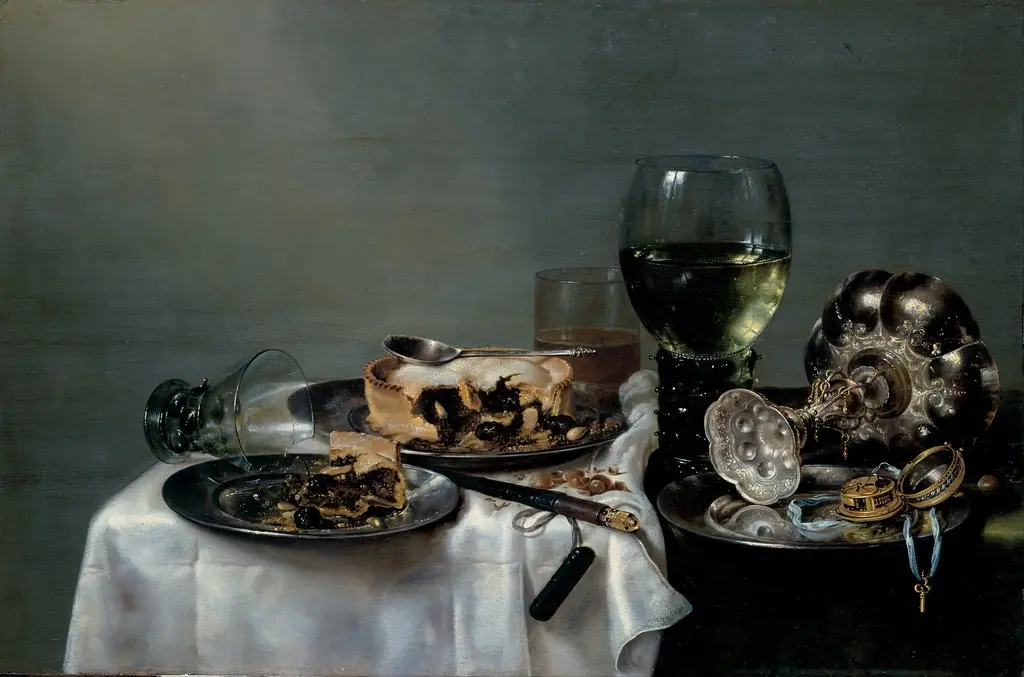 Breakfast Table with Blackberry Pie
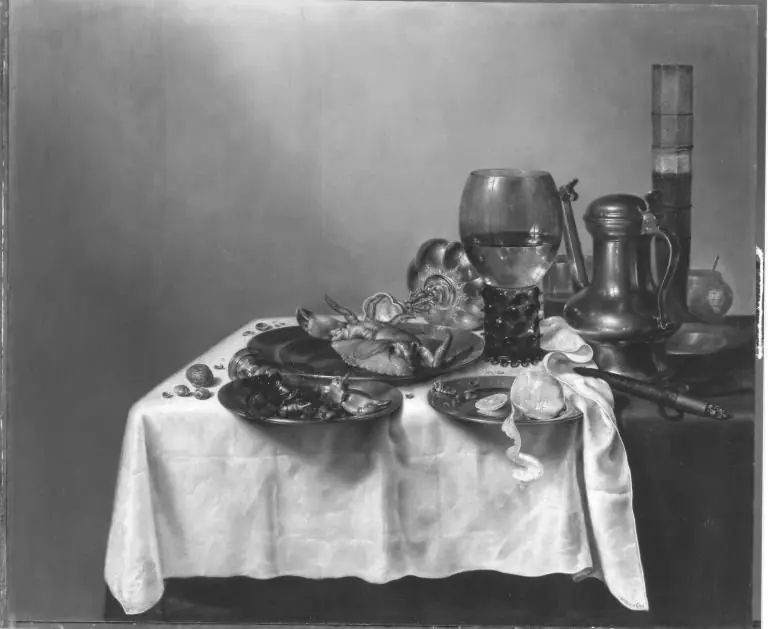 Still life with passglass, Jan Steen pitcher and roemer
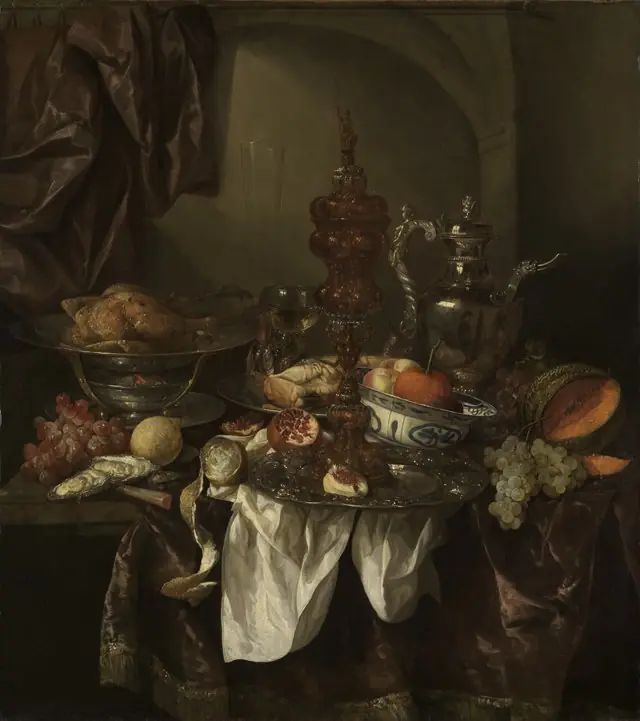 Still life with fruit, roast, silver- and glassware, porcelain and columbine cup on a dark tablecloth with white serviette
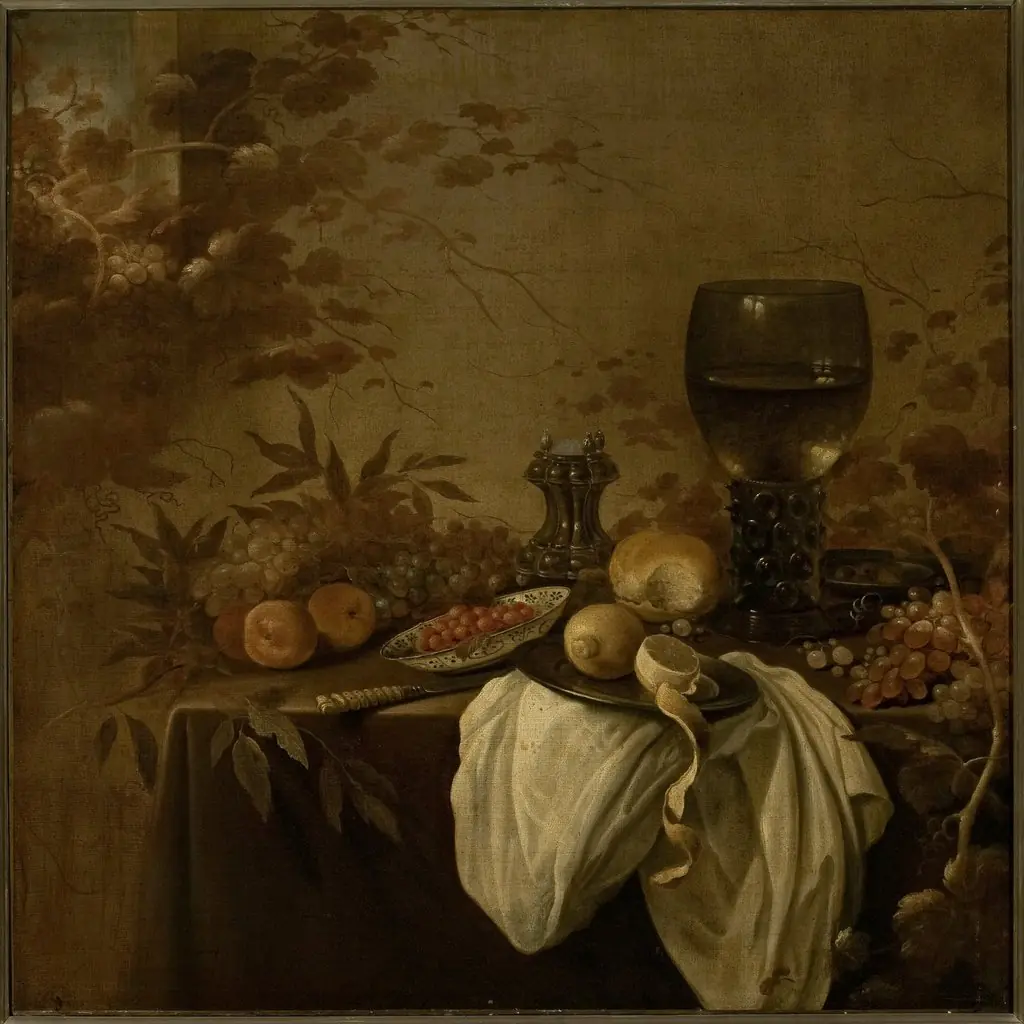 Still life
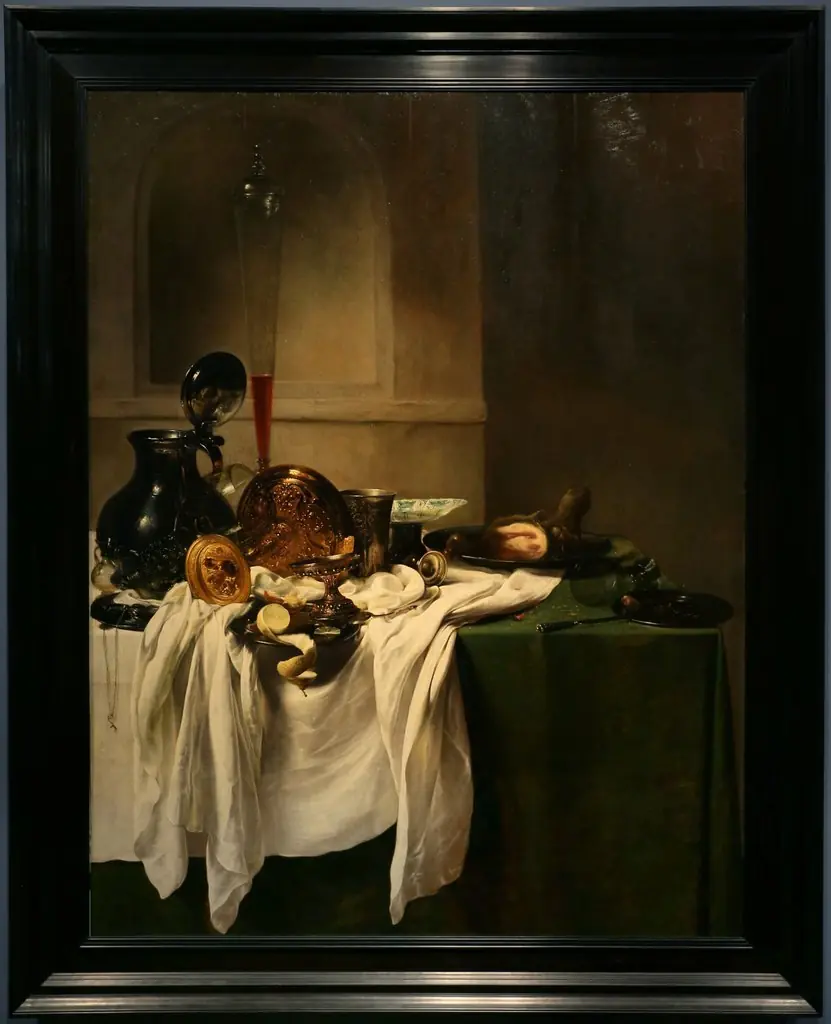 Still life of a laid table with ham and a view of a niche
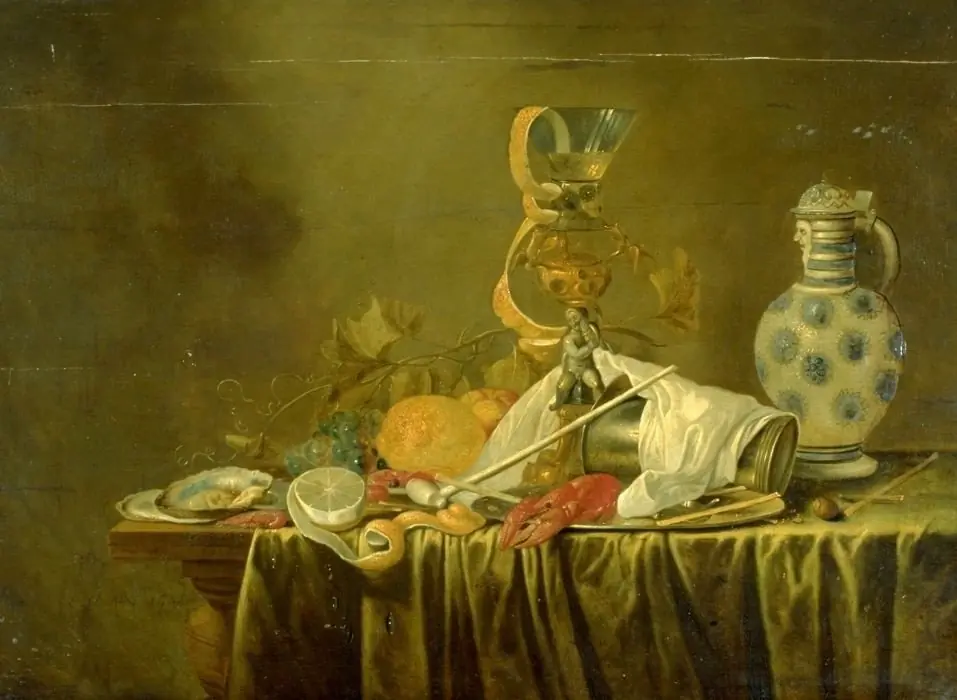 Still life with wine glass and stoneware jug
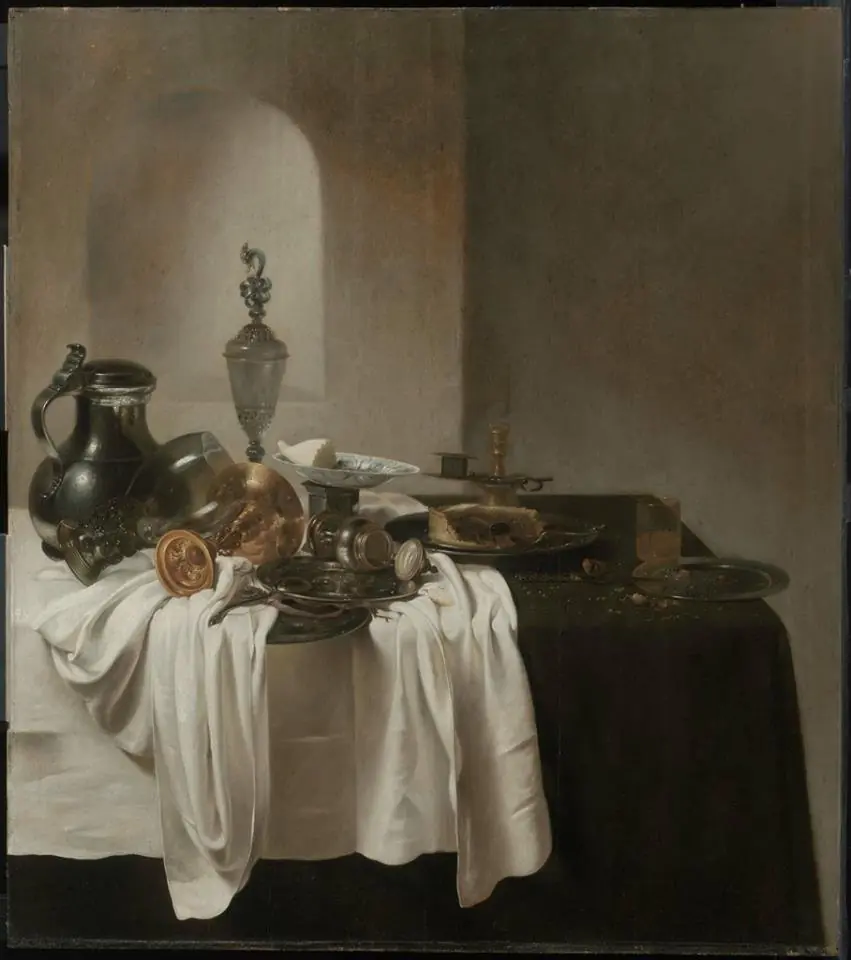 Breakfast Still Life with Glass and Metalwork
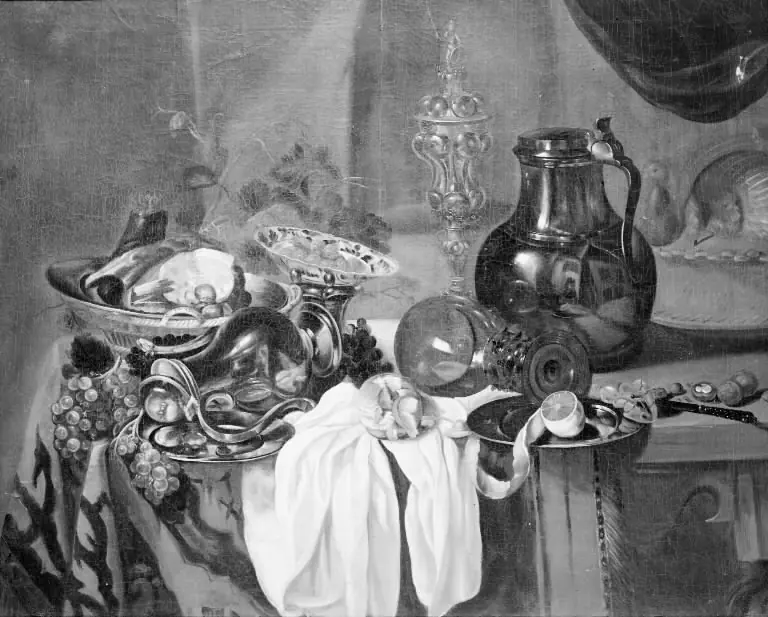 A Jug, Fruit, Food and other Things on a Table
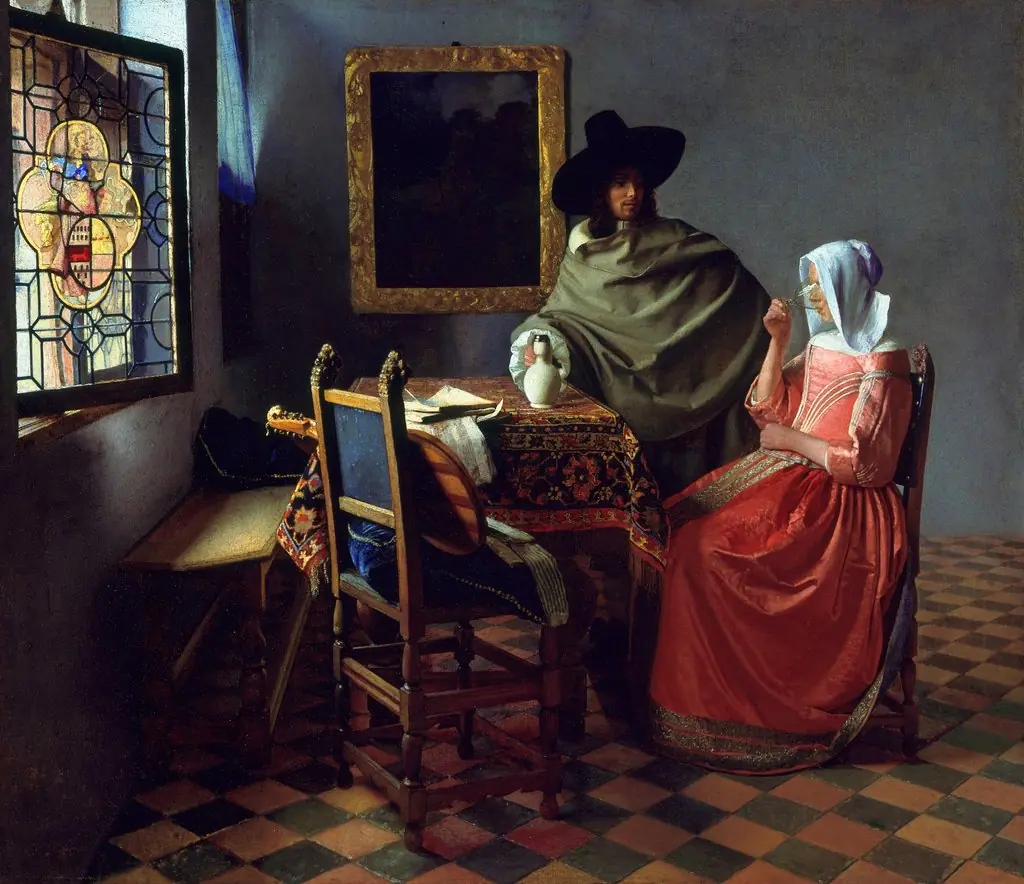 The Wine Glass
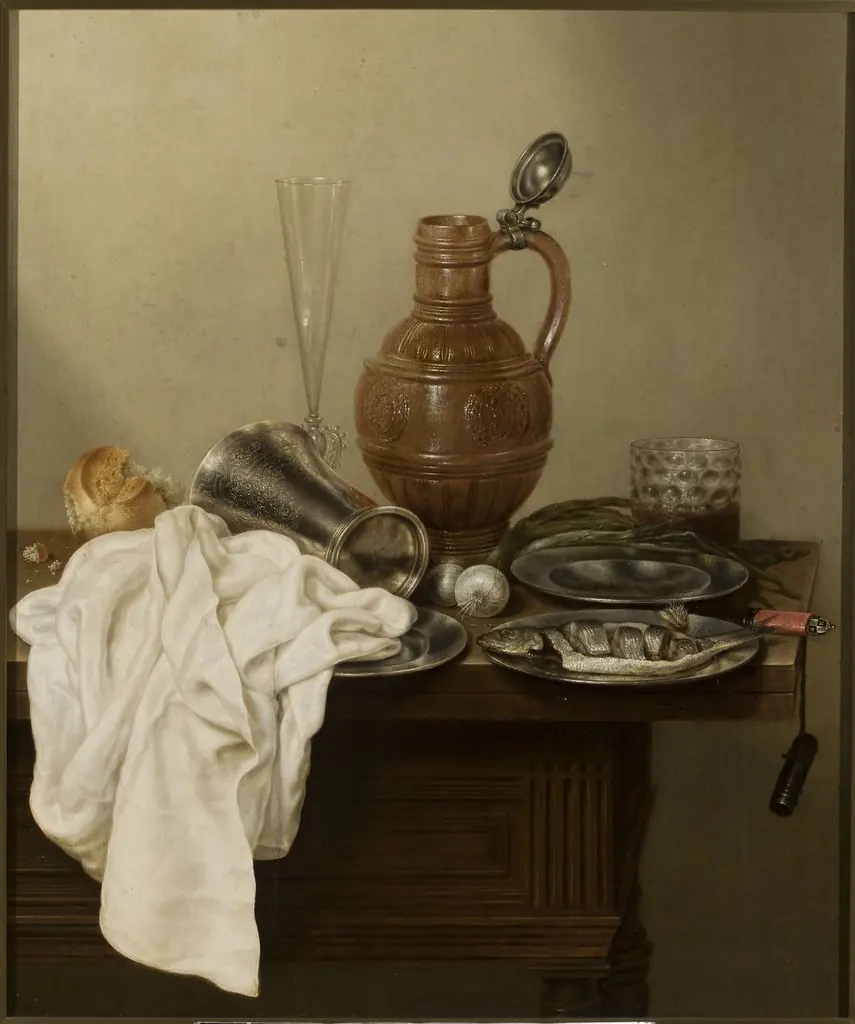 Still life with a herring
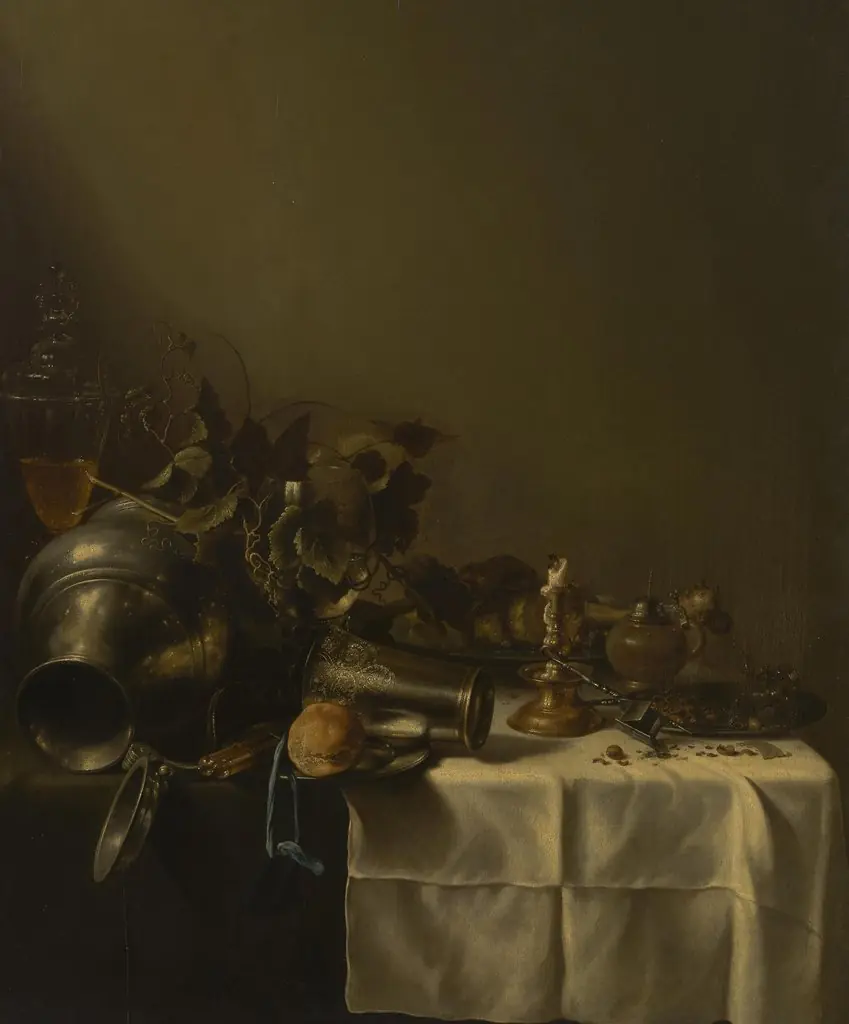 Overturned Jug and Other Items on the Tablecloth
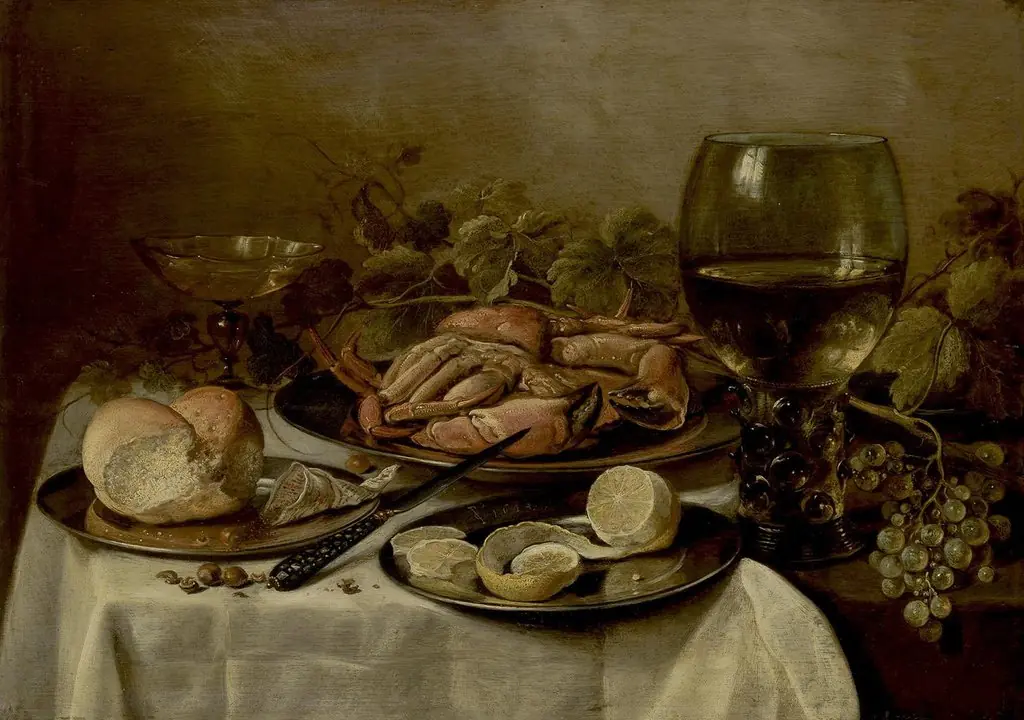 Still Life with Crab, Rummer and Grape
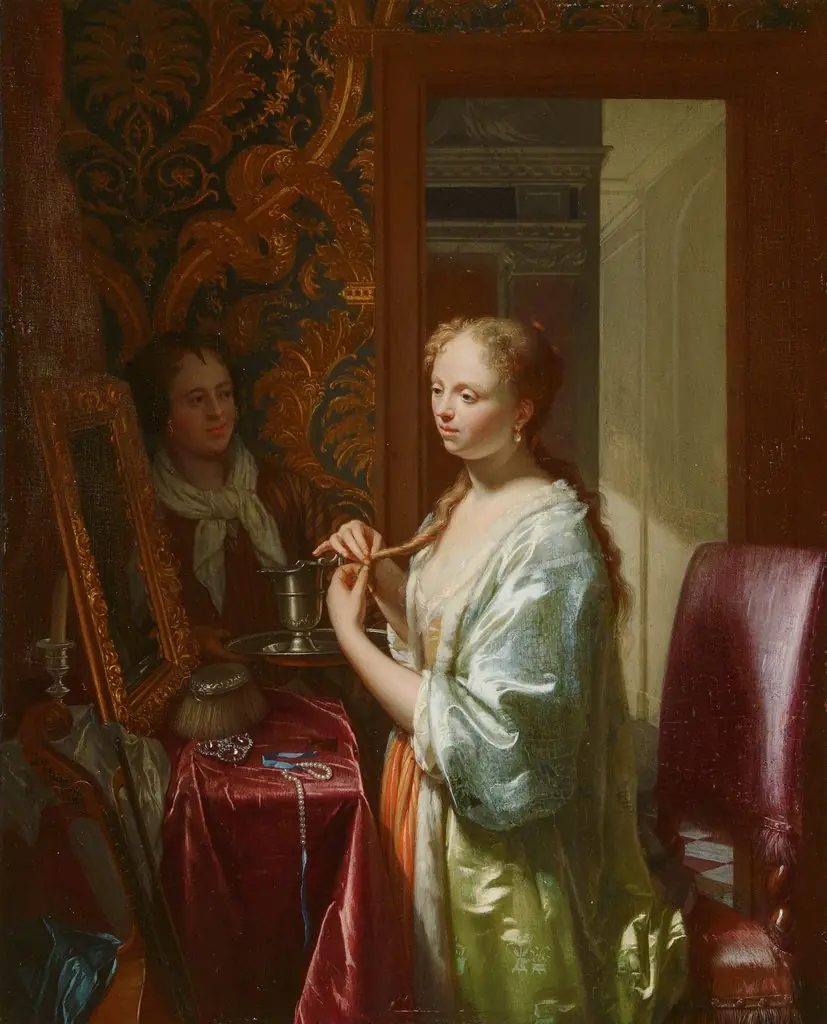 Lady attending to her toilet
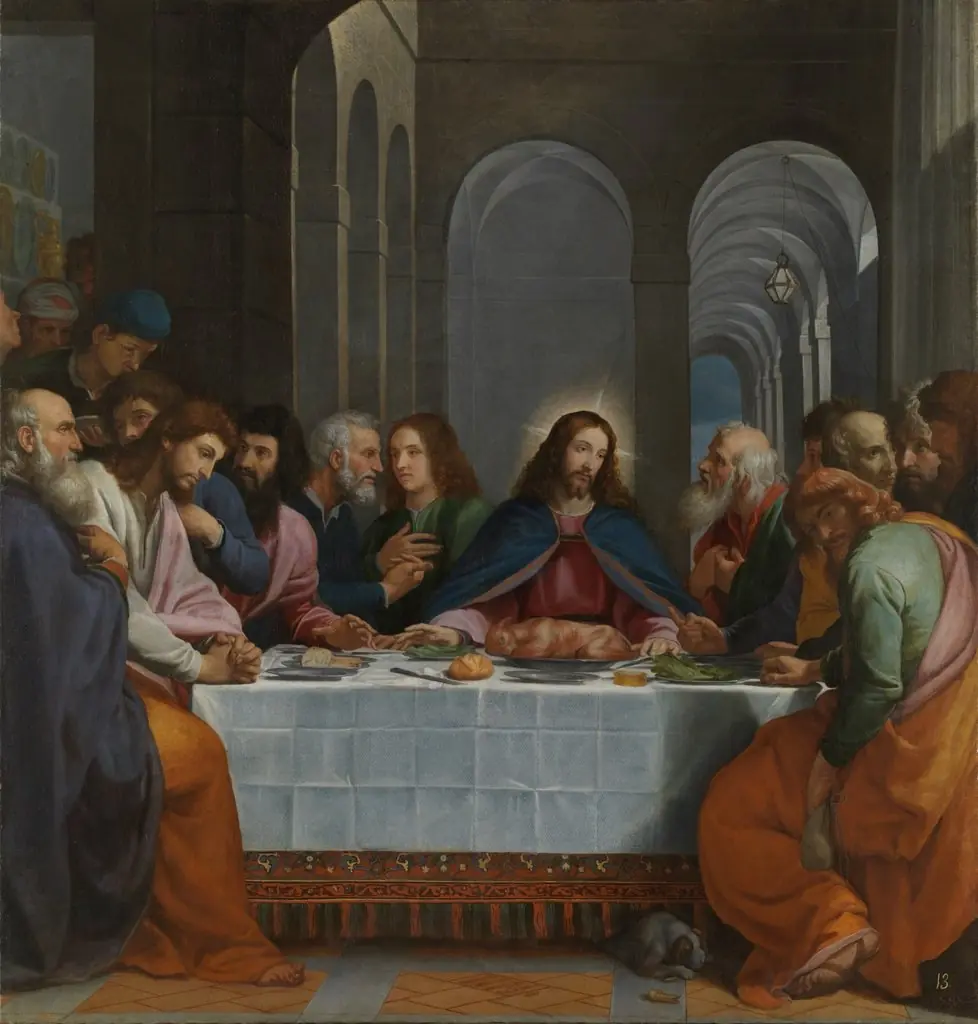 The Last Supper
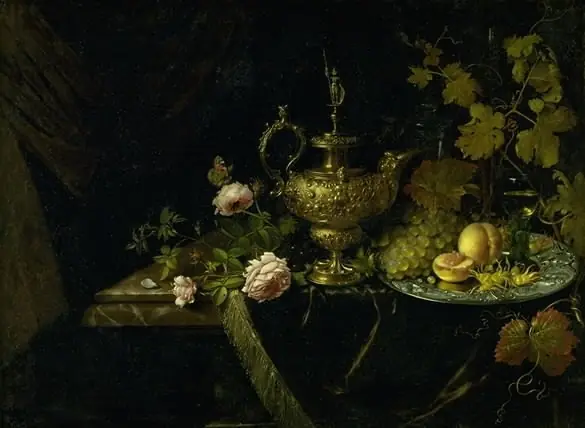 Still Life
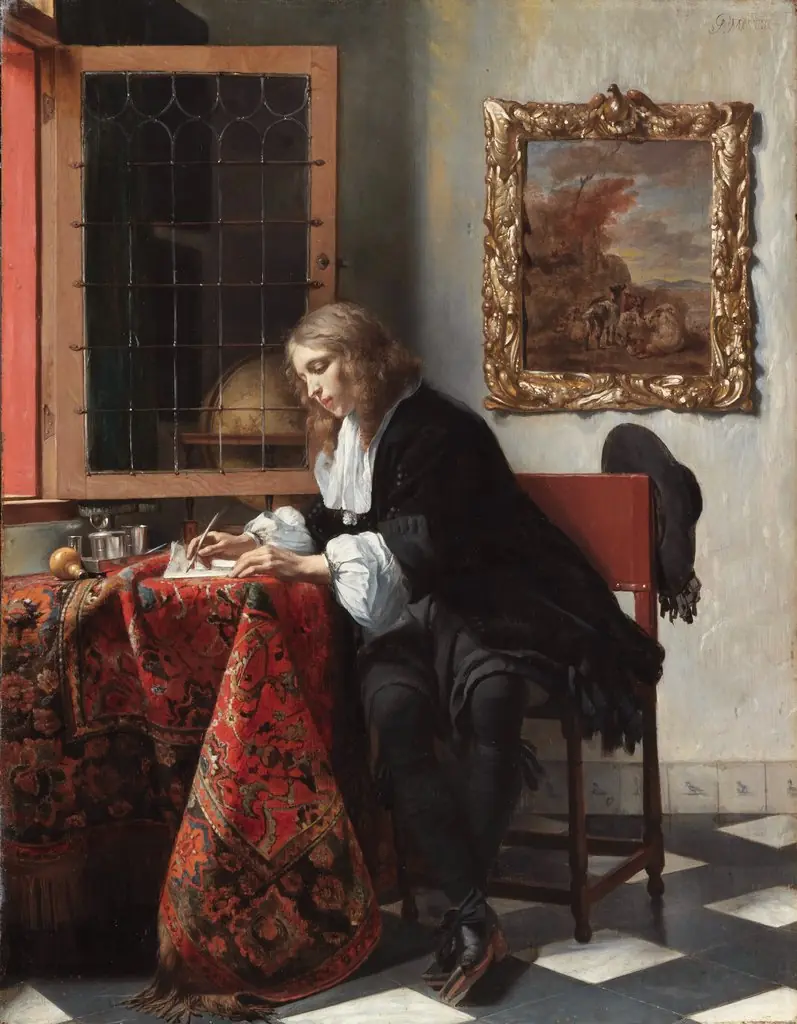 Man Writing a Letter
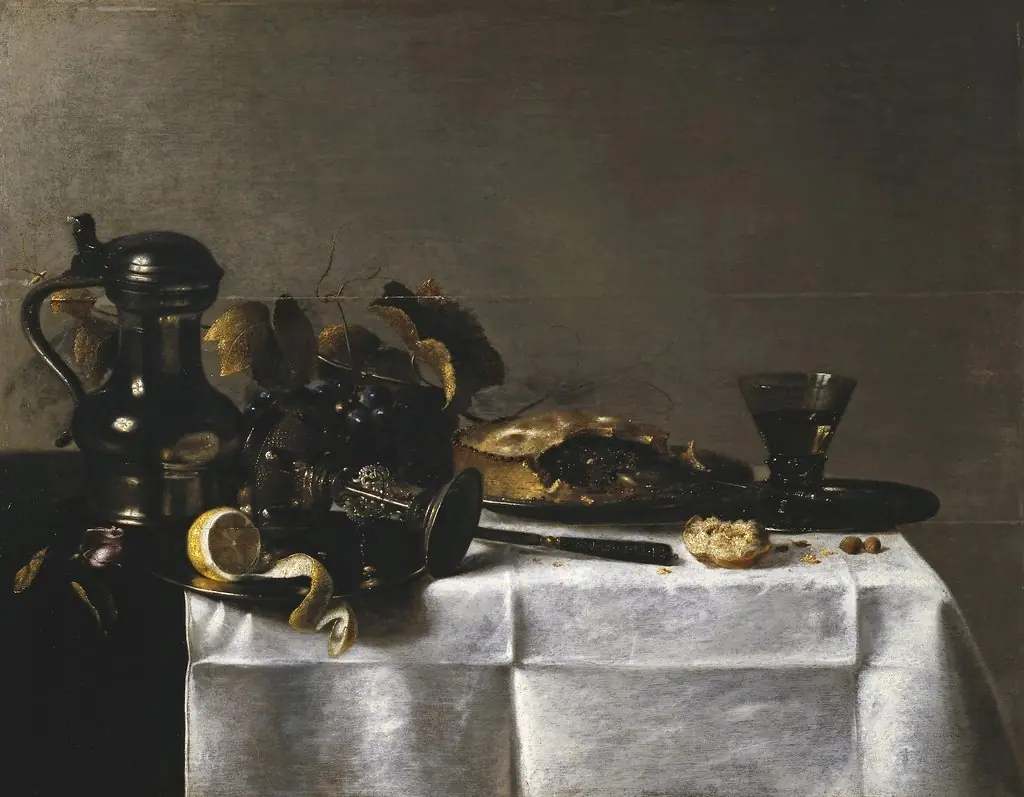 Breakfast
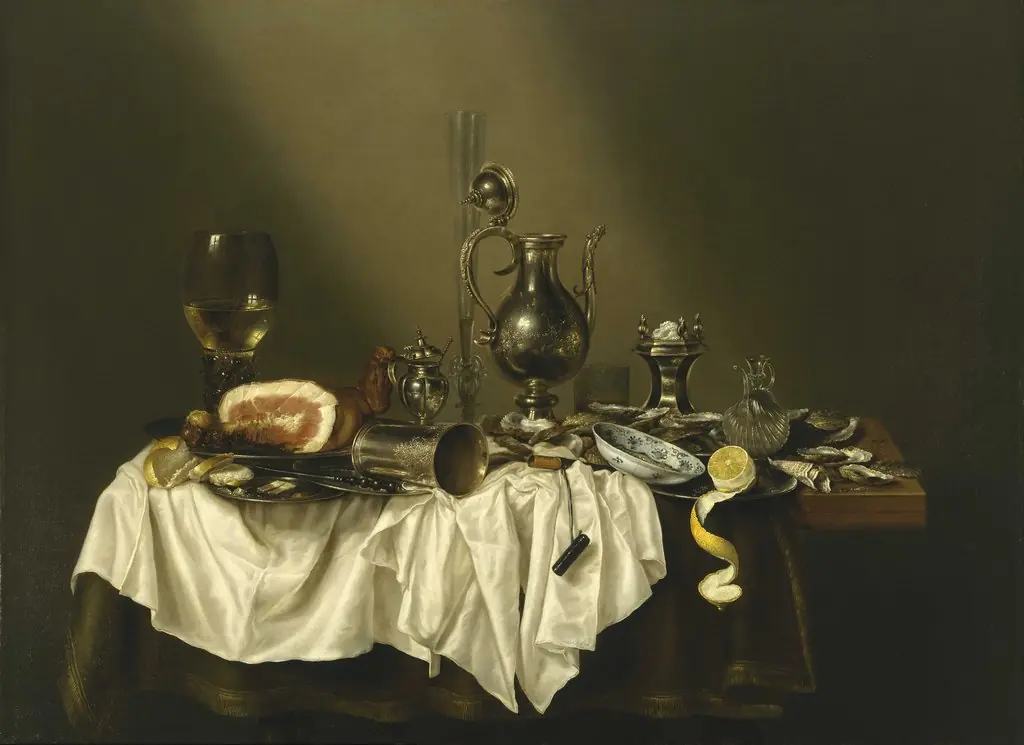 Banquet Piece with Ham
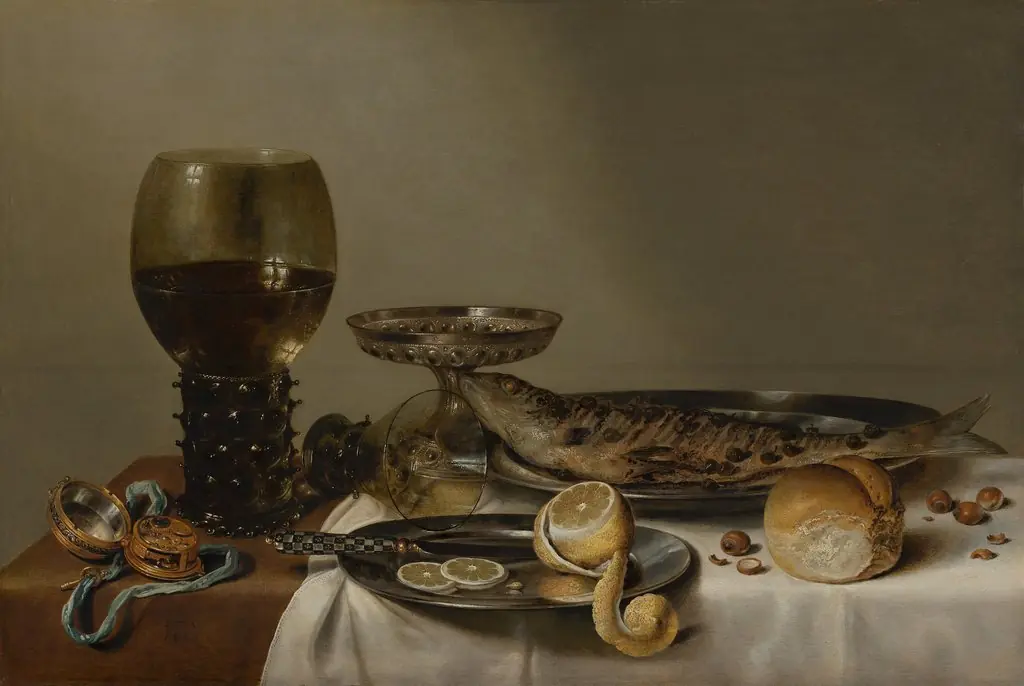 Still Life with a Roemer and a Watch
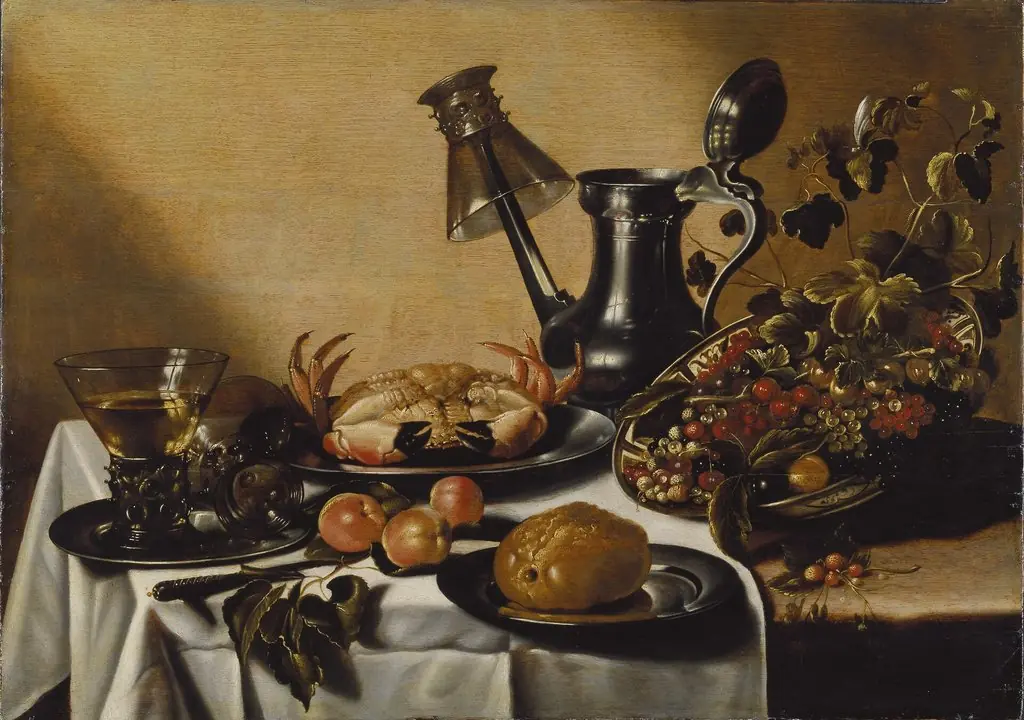 Still Life with Crab and Fruit
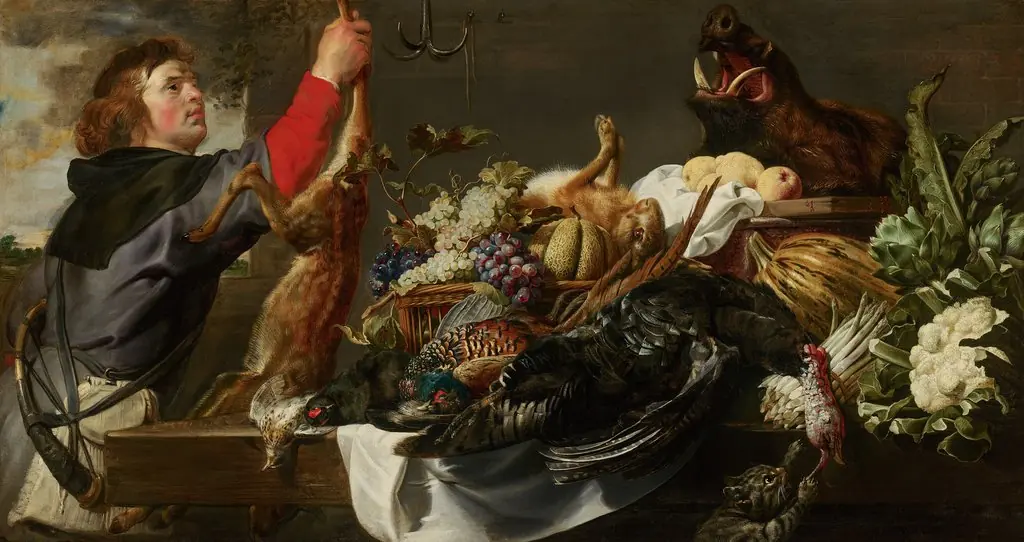 Still Life with Huntsman
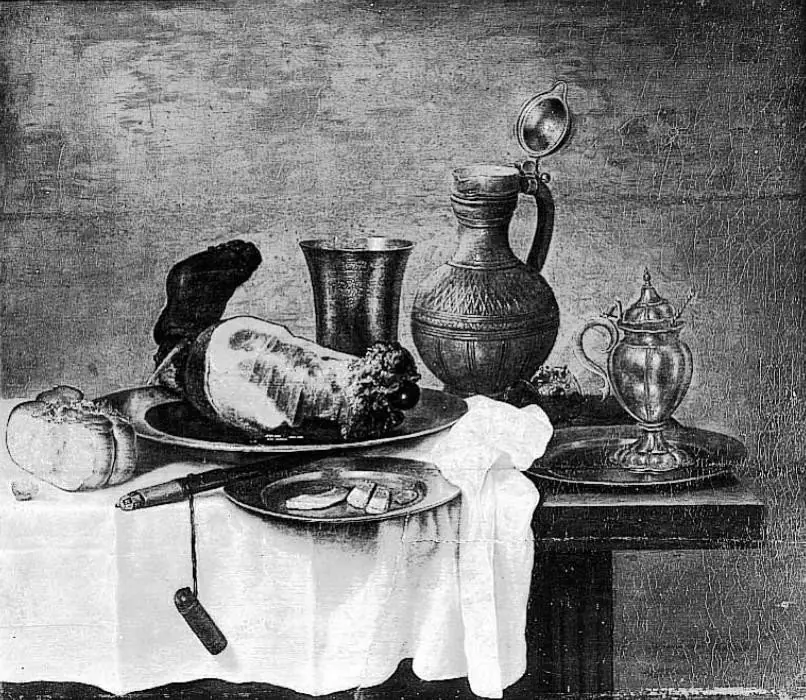 Still life with ham and utensils
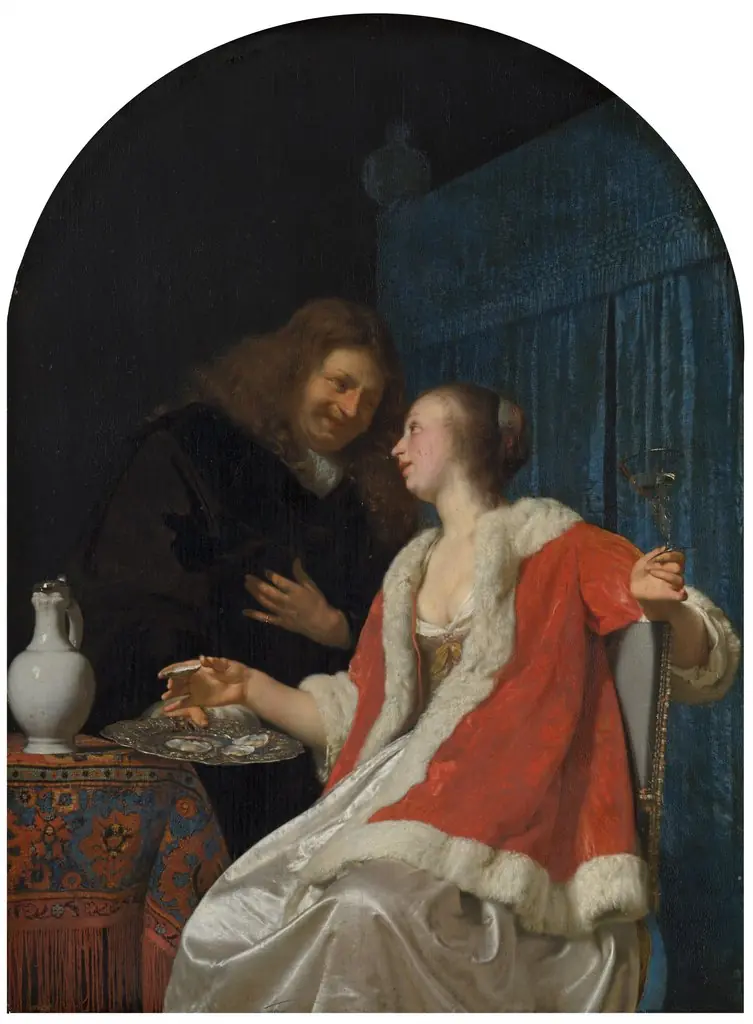 A Meal of Oysters
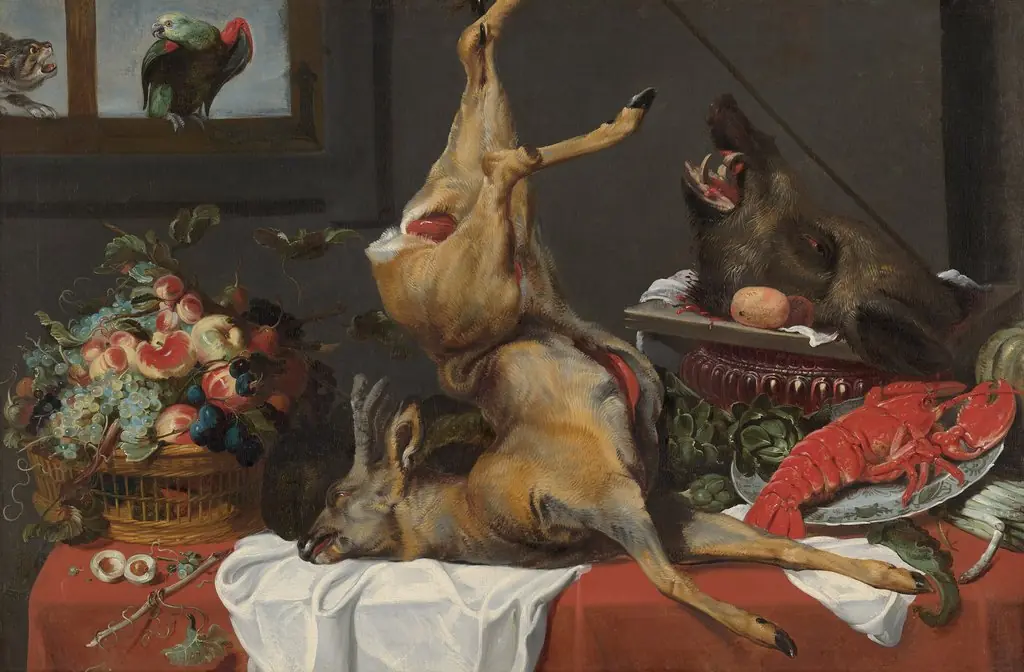 Still Life with a Dead Stag
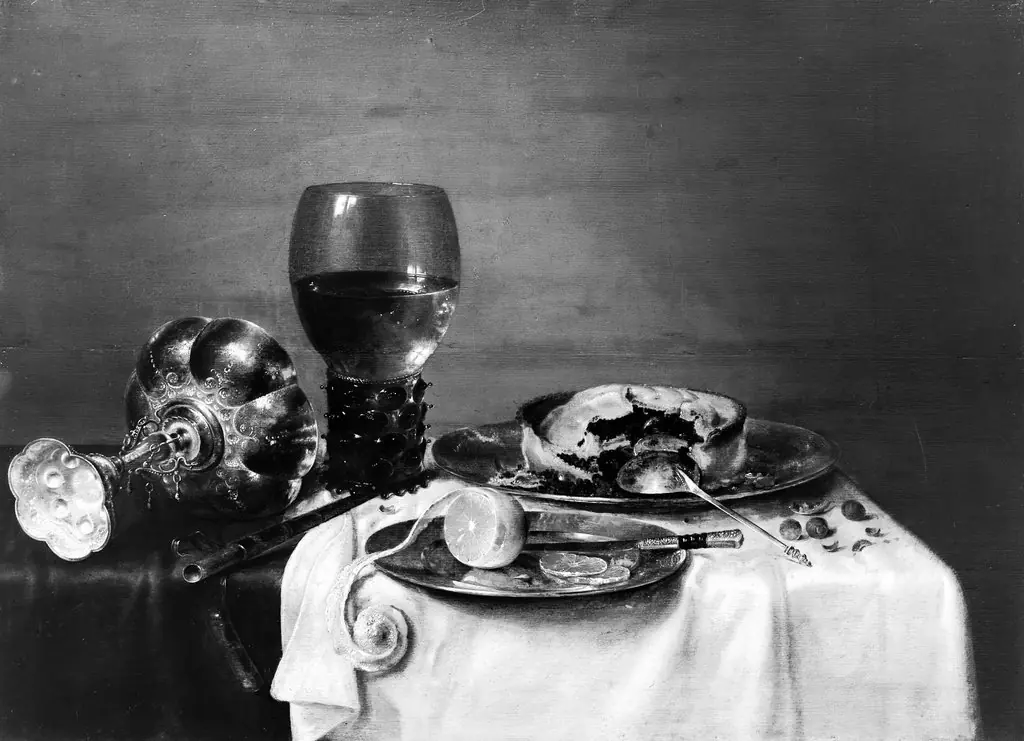 Stilleben mit Römer
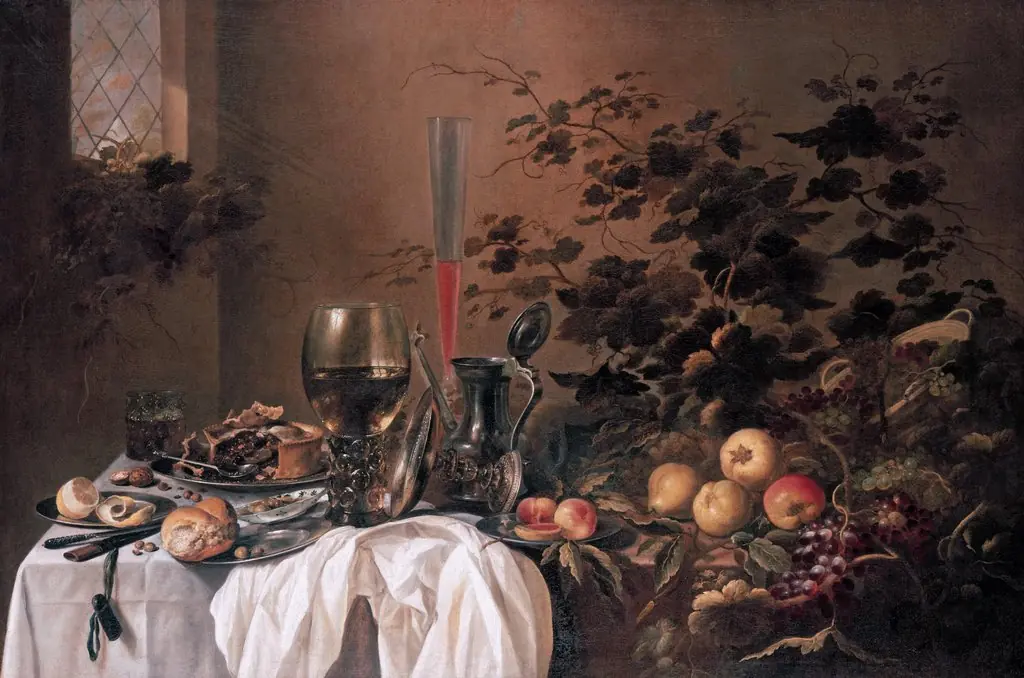 Still life with tumblers and fruit
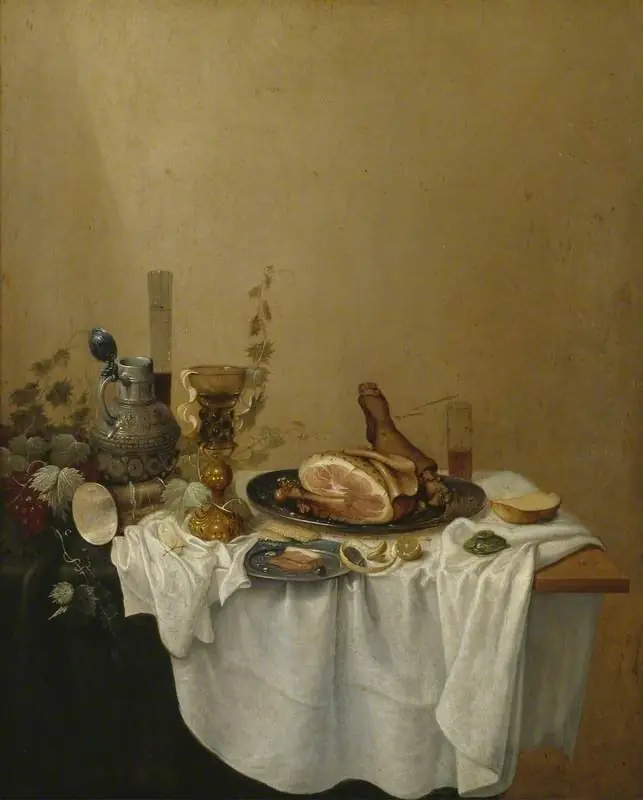 Still life with stoneware jug, bekerschroef, glassware and a leg of ham
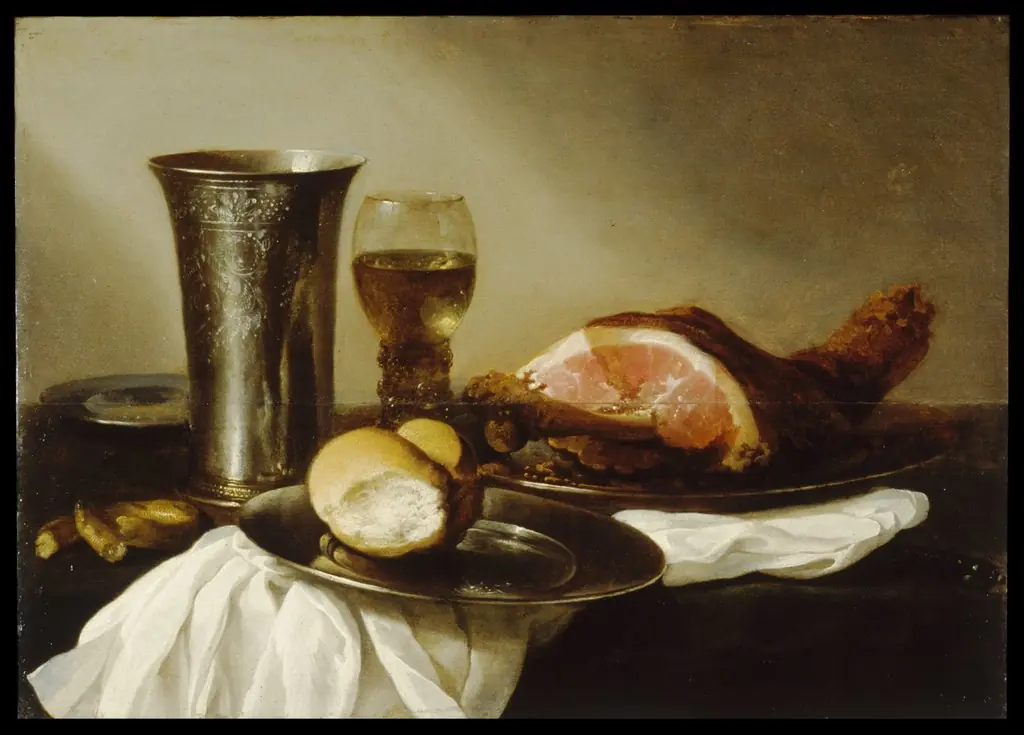 Breakfast Piece
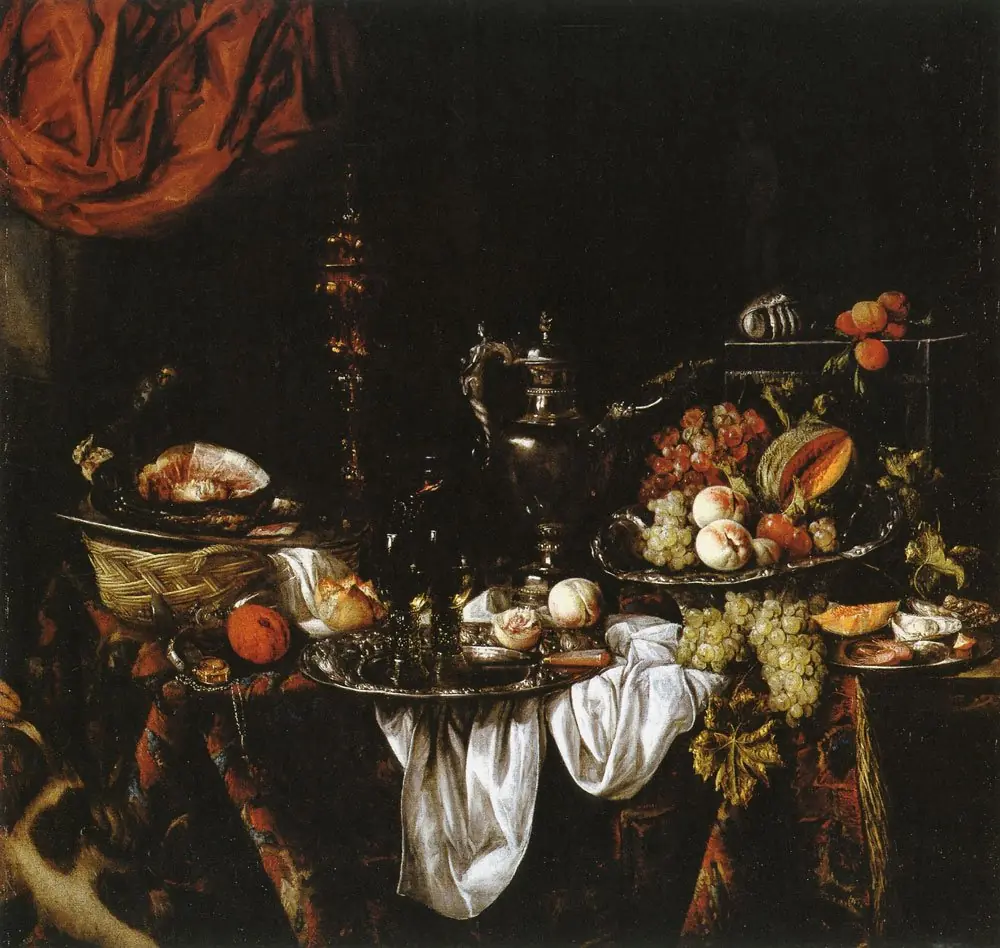 Still life on a draped table with a sculpture of Venus in a niche behind a curtain
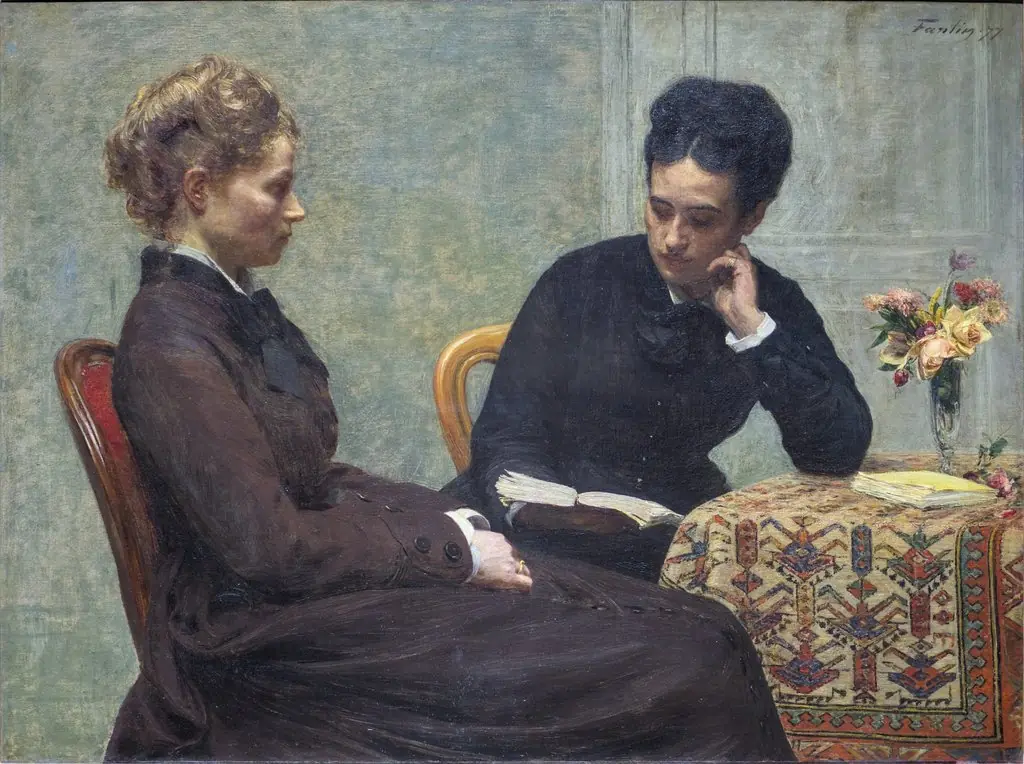 The Reading
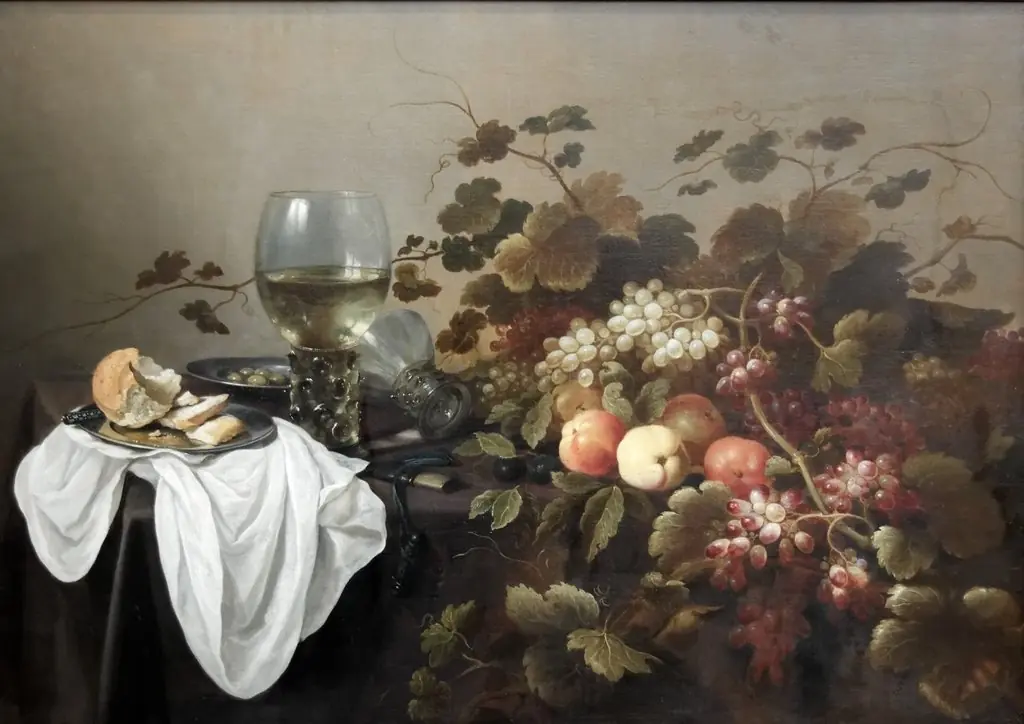 Still life with fruits and Roemer
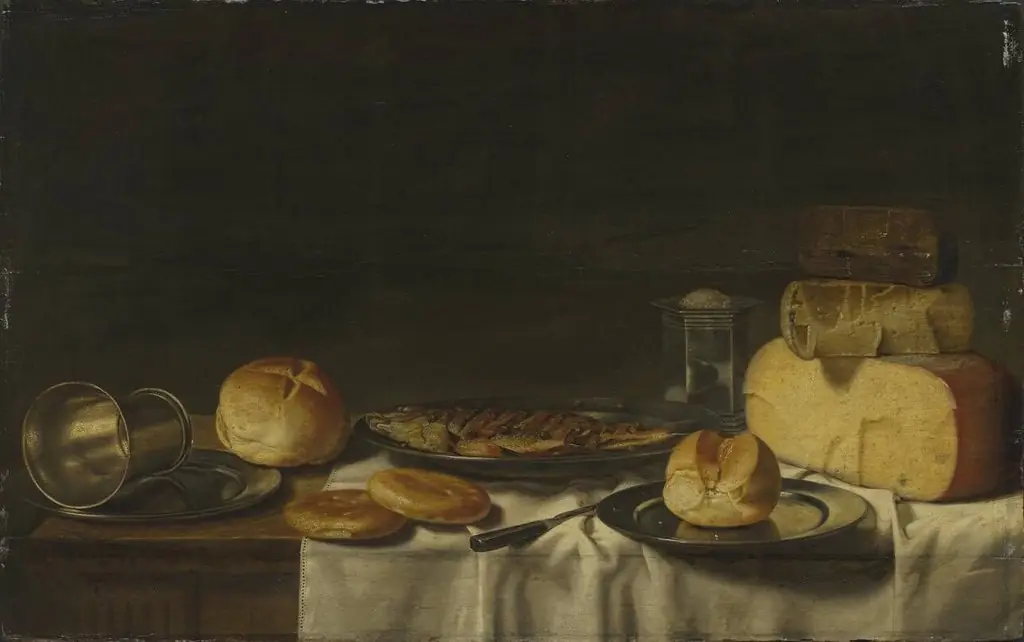 Still life of laid table with cheese
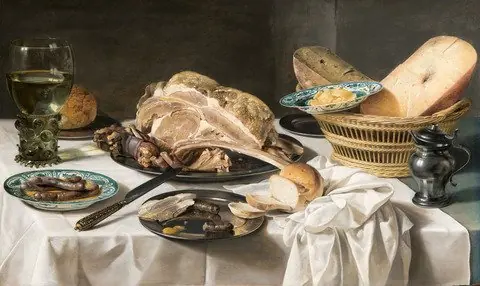 Breakfast Still Life with a Ham and a Basket of Cheese
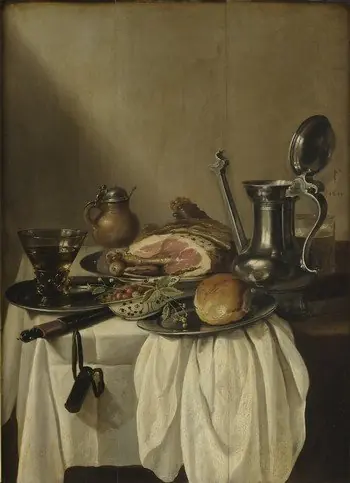 Still life of a laid table
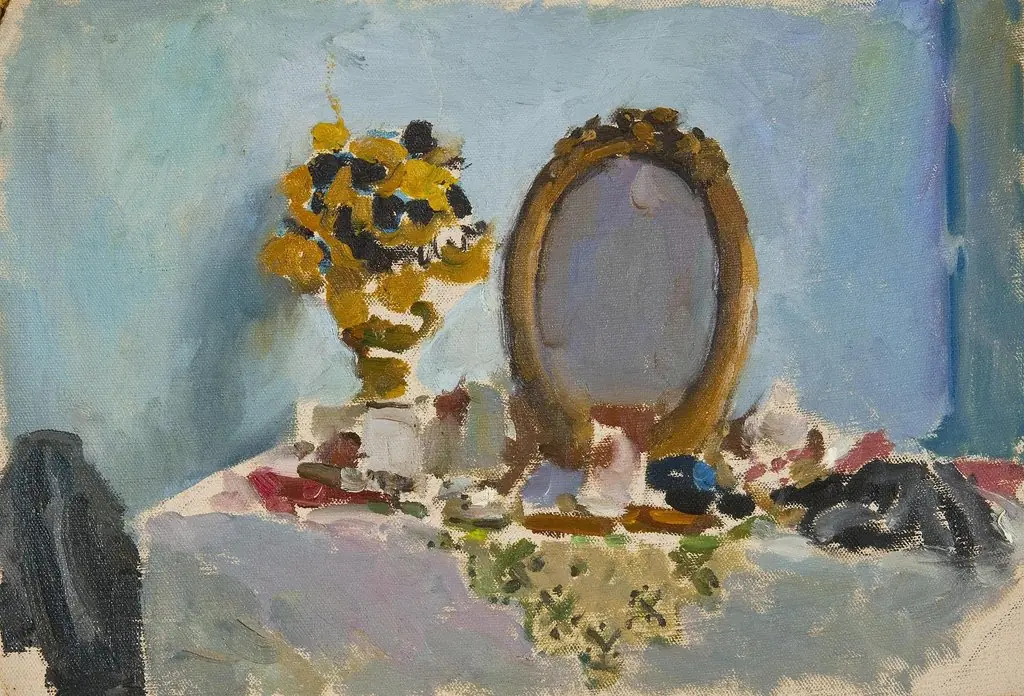 Still Life with a Mirror. Sketch
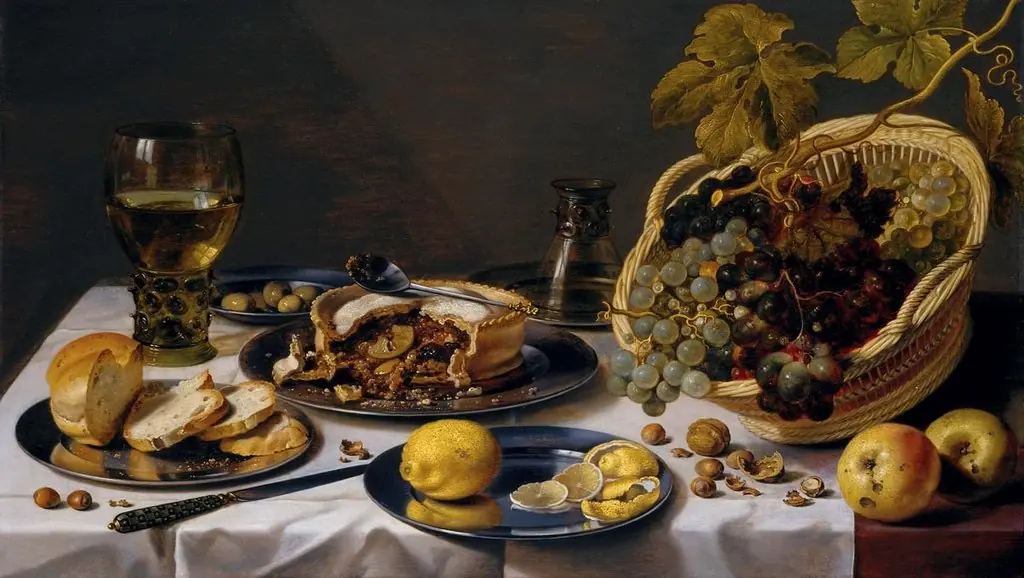 Tabletop Still Life with Mince Pie and Basket of Grapes
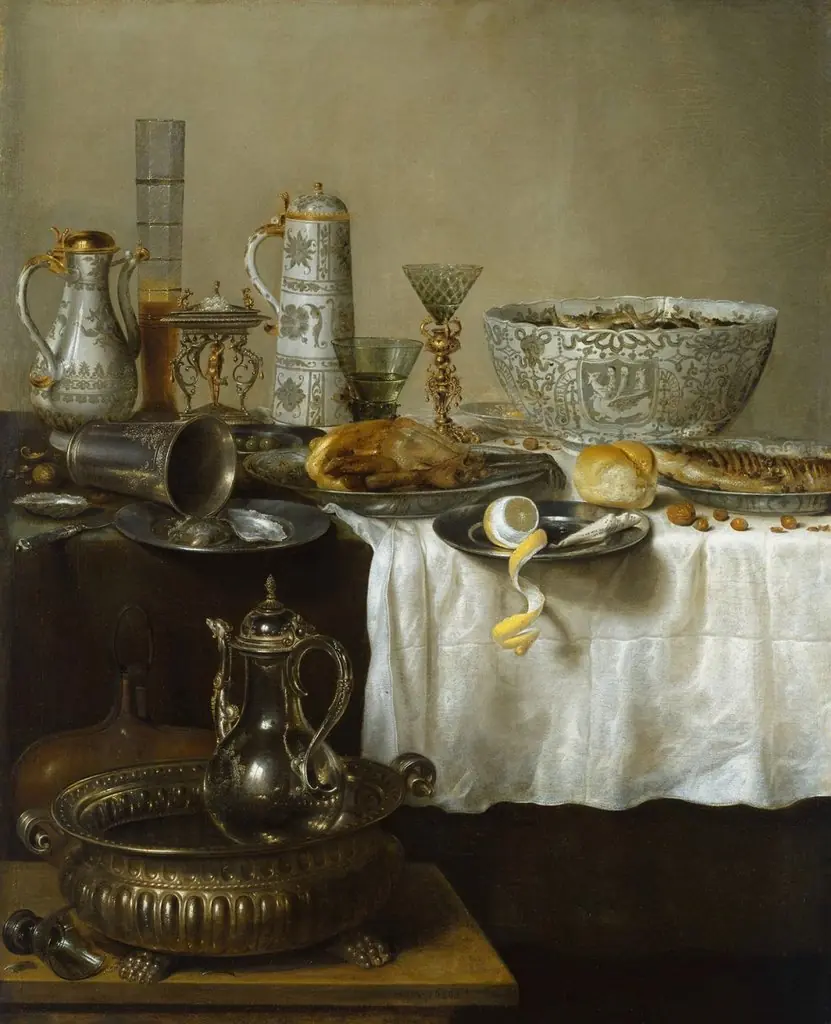 Sumptuous still life
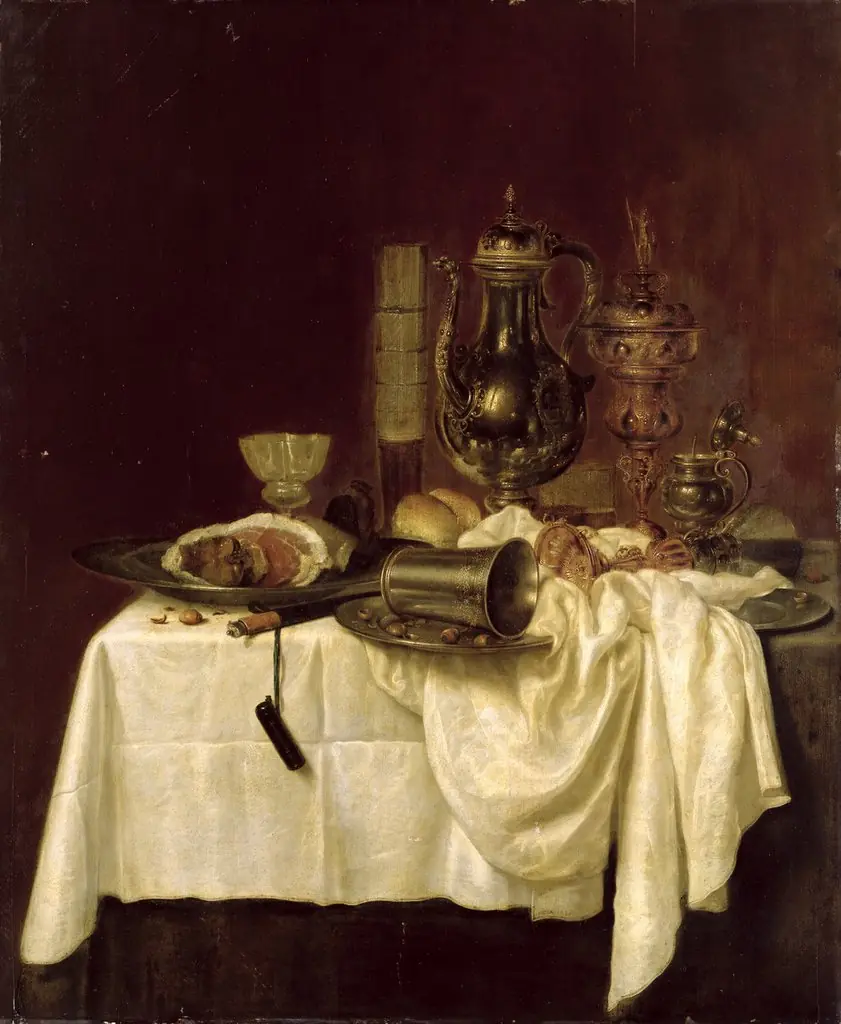 Still life with ham, decanter, columbine cup and passglass on a laid table
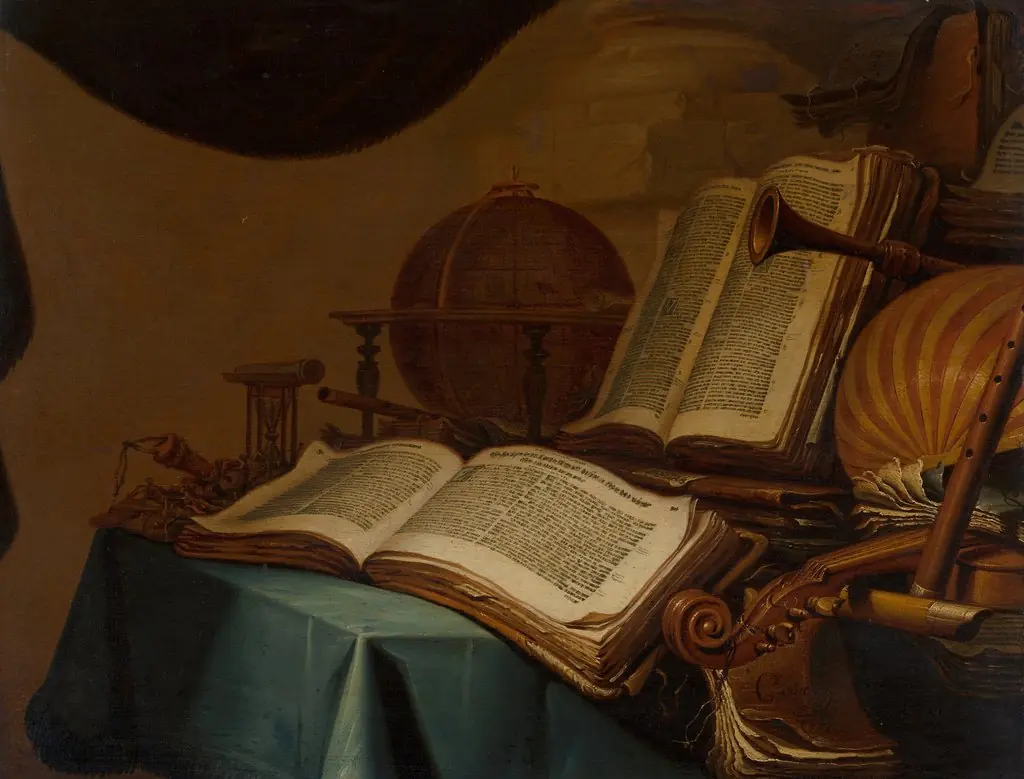 Still Life with Books, a Globe and Musical Instruments
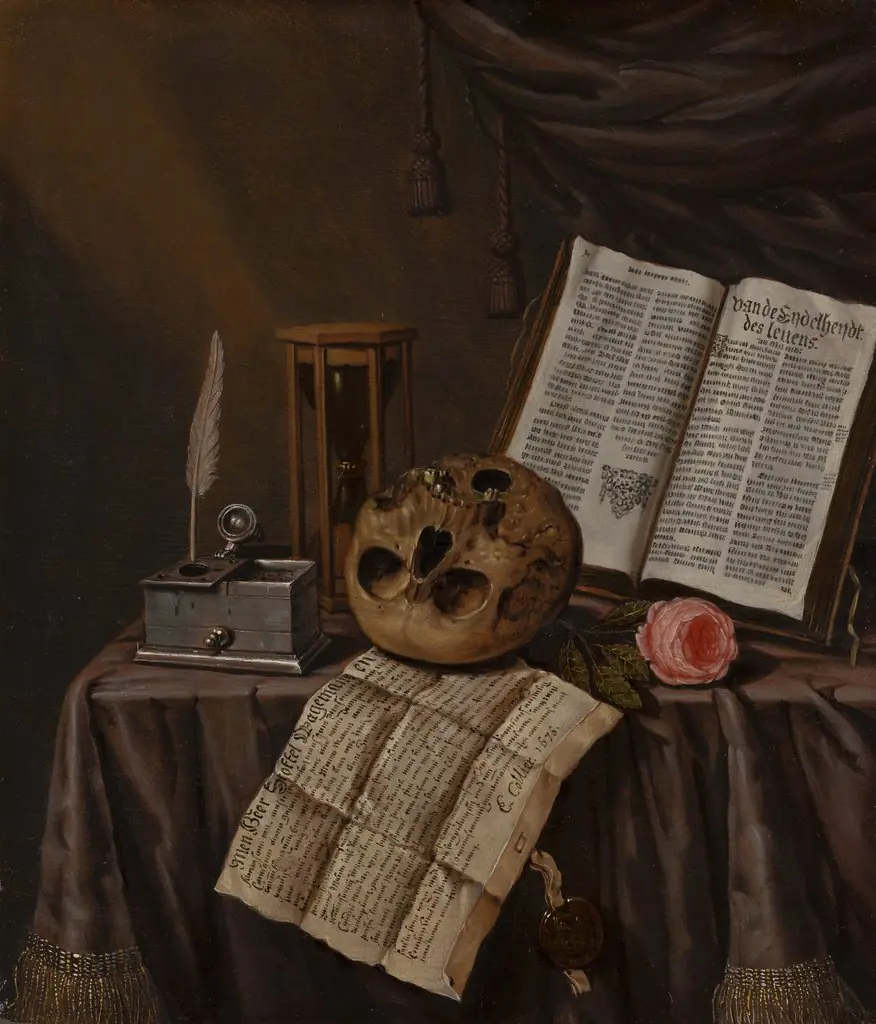 Vanitas Still Life
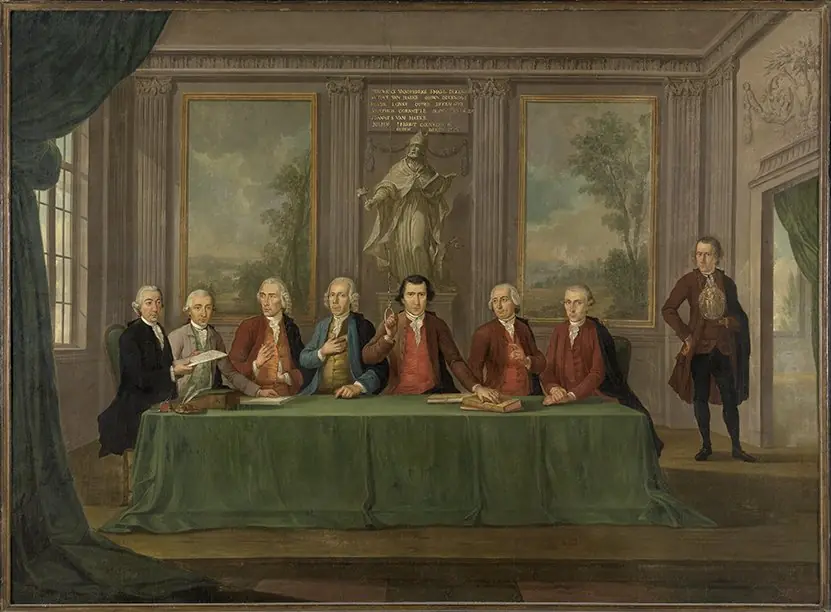 Het bestuur van het Brugse smedenambacht
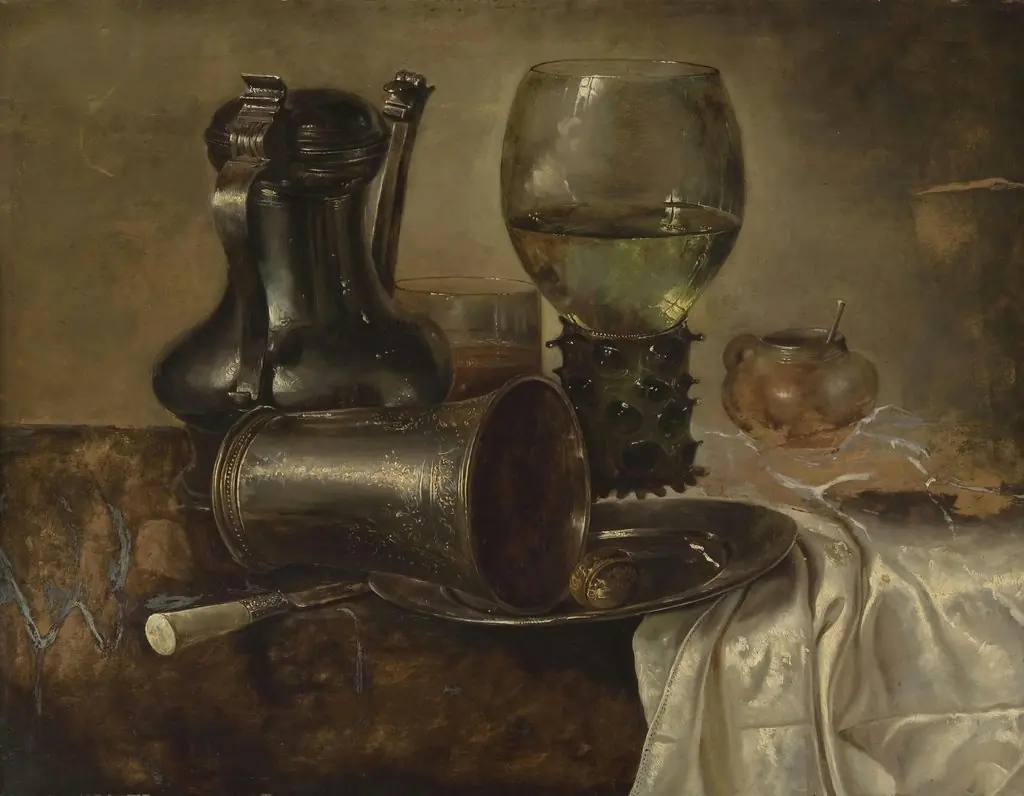 Still Life with a Roemer, a Covered Flagon, and a Beaker
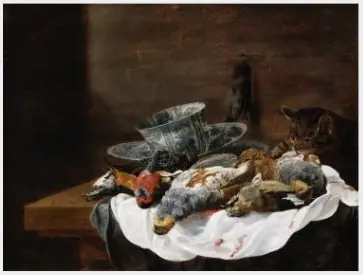 Still Life with Dead Birds
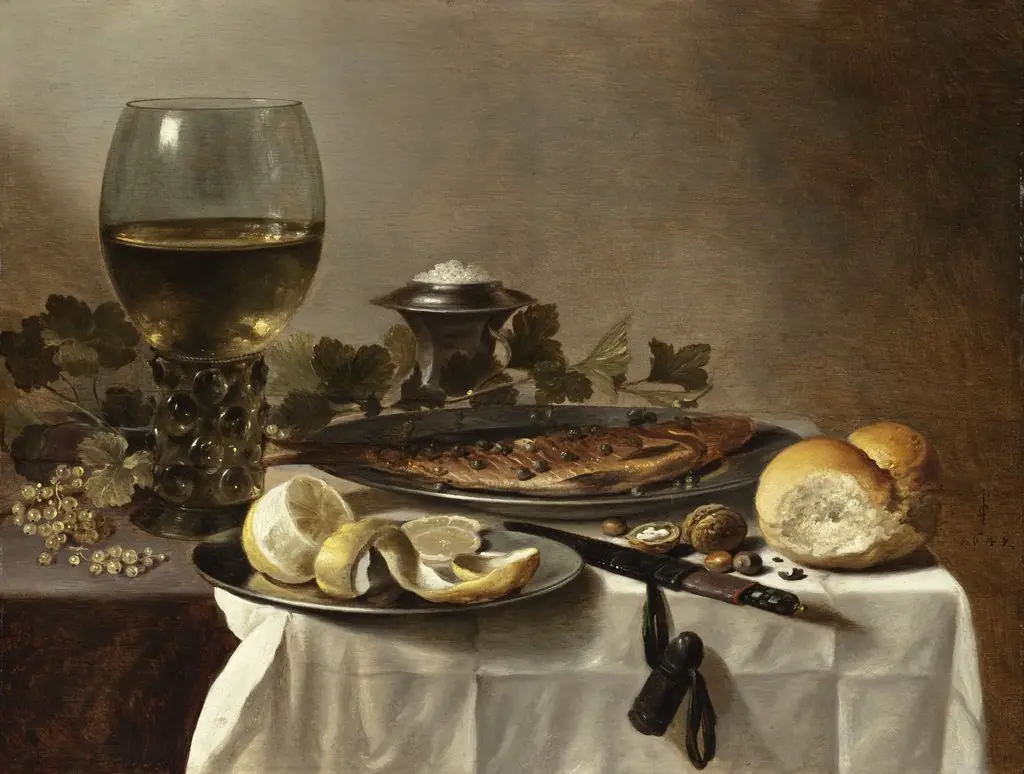 Still Life with Herring, Wine and Bread
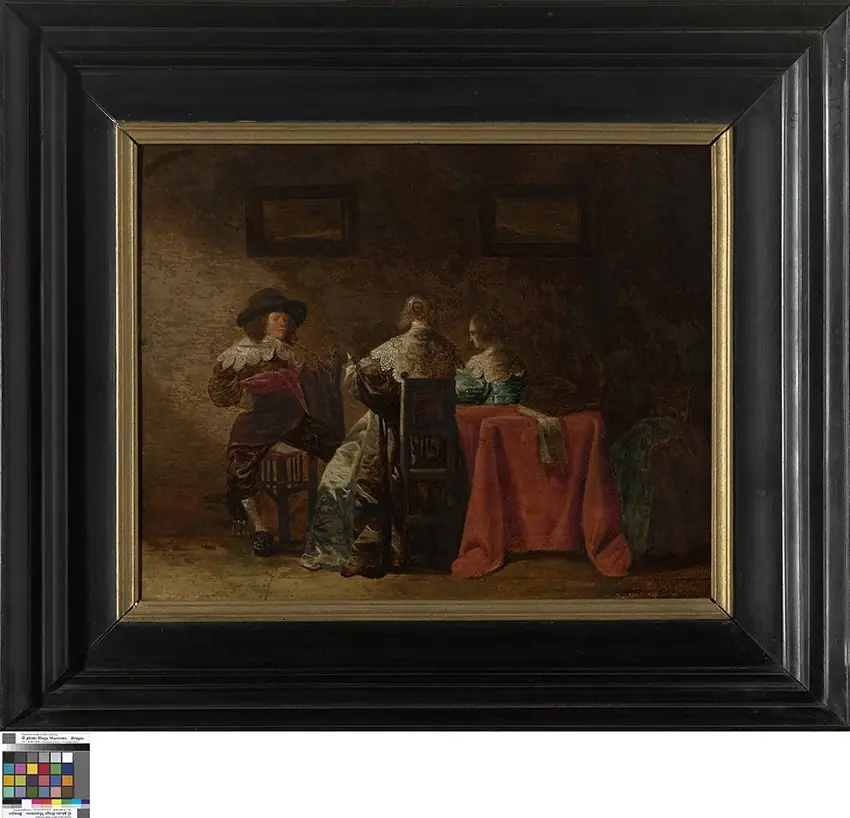 Musicerend gezelschap
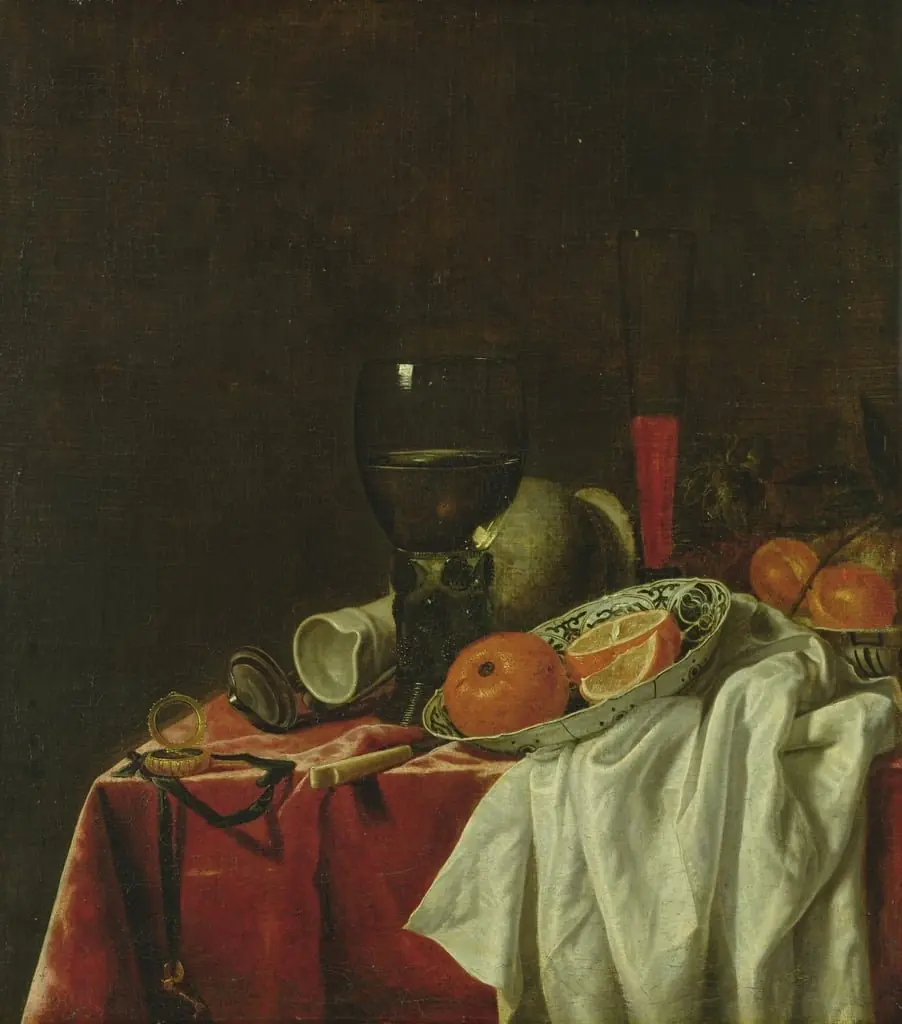 Still Life
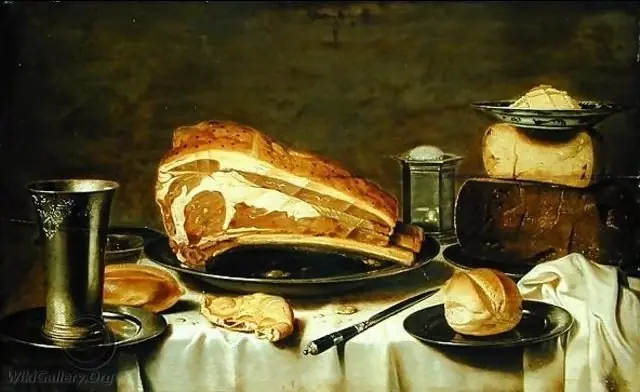 Still life of a laid table with cheese, meat and bread
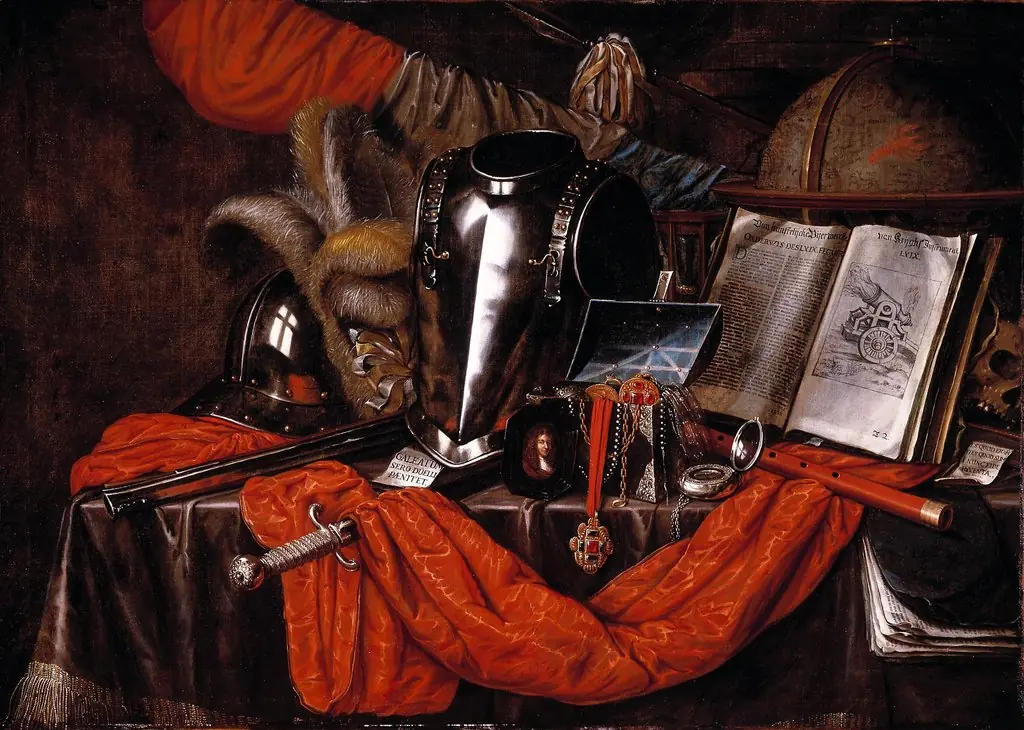 A Vanitas
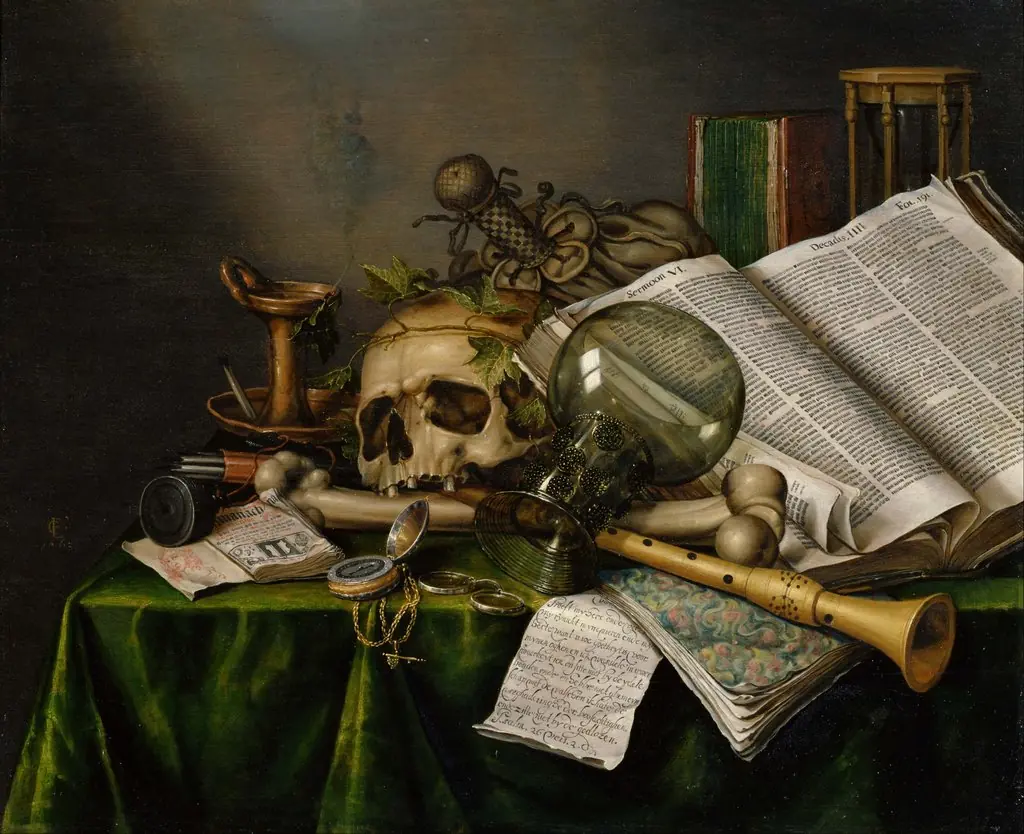 Vanitas, Still Life with Books and Manuscripts and a Skull
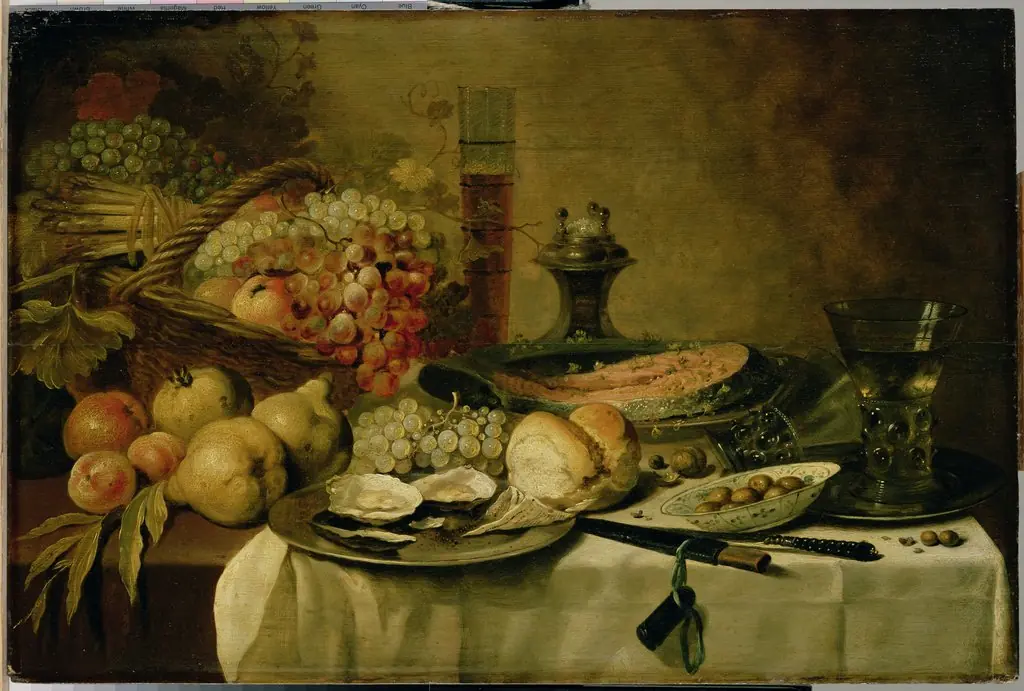 Still life with berkemeyers, salmon, fruit and oysters on a laid table
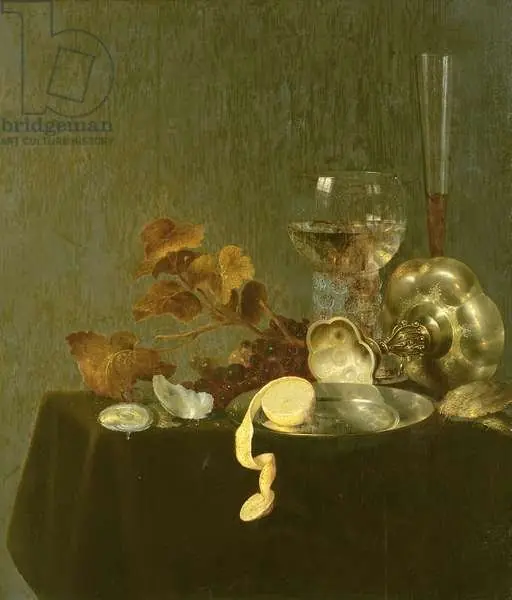 Still life with roemer and tazza
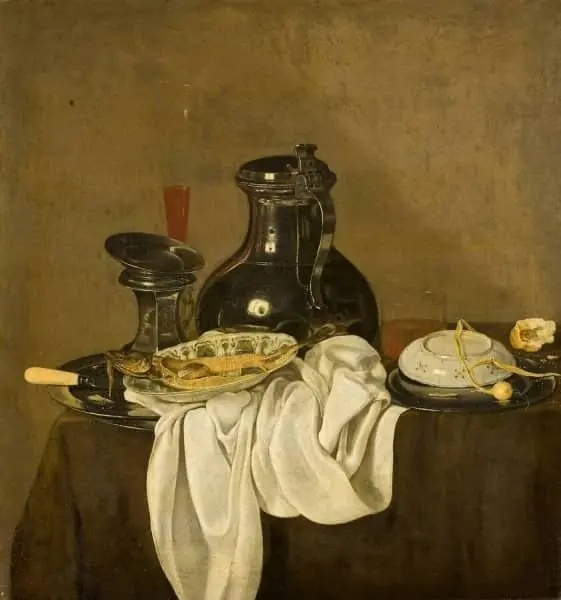 Still Life circa 1640
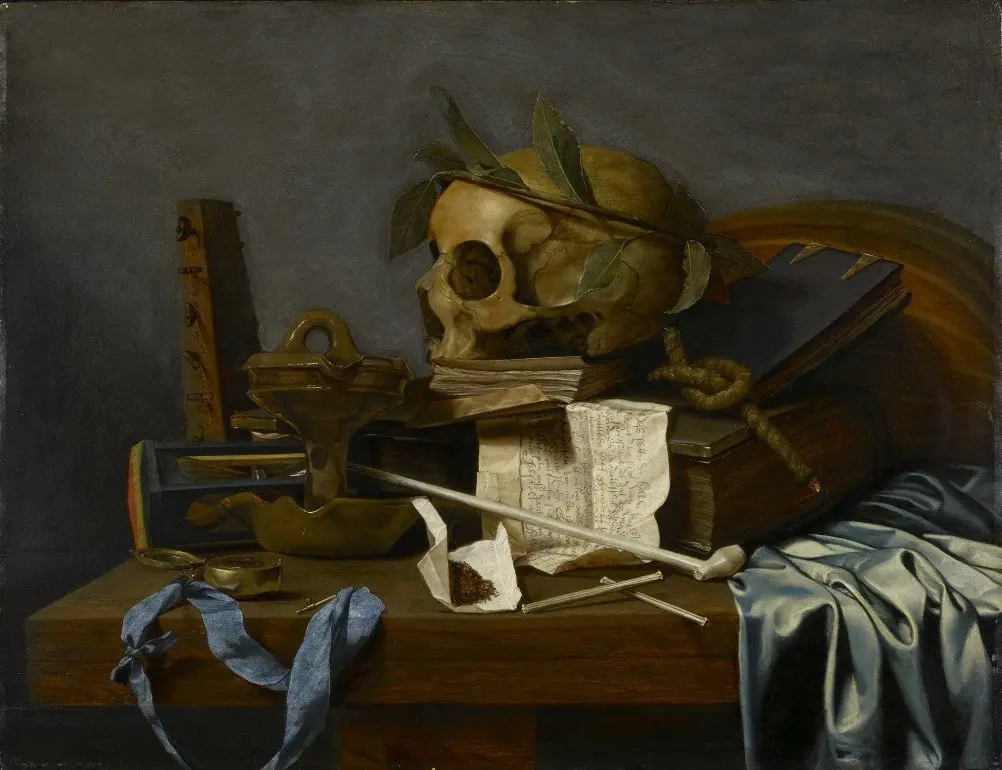 Vanitas Still Life
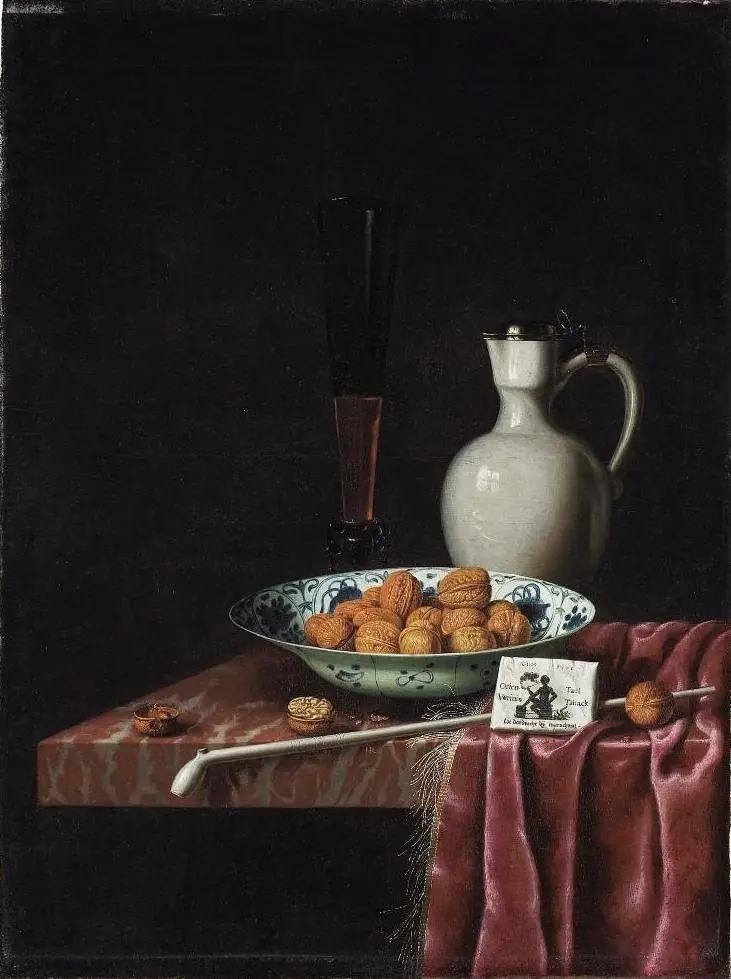 Still Life with Walnuts, Tobacco and Wine
 Endpaper with Animals
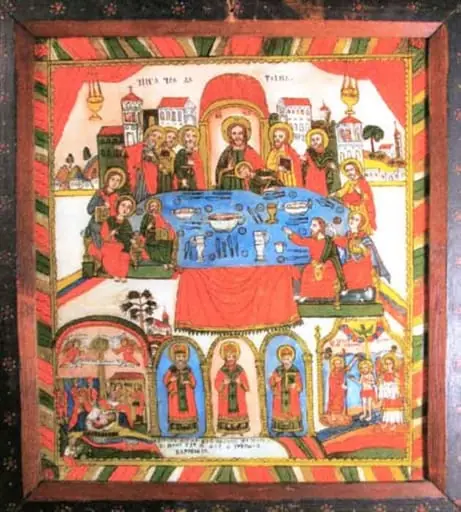 Cina cea de Taină
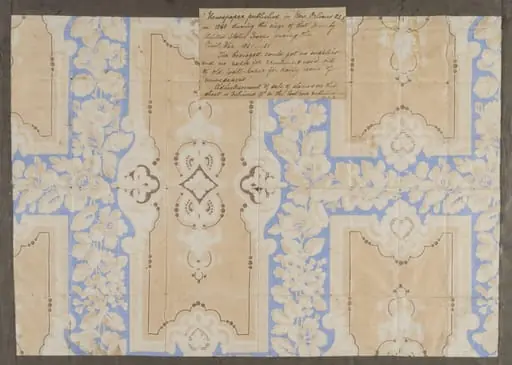 Untitled
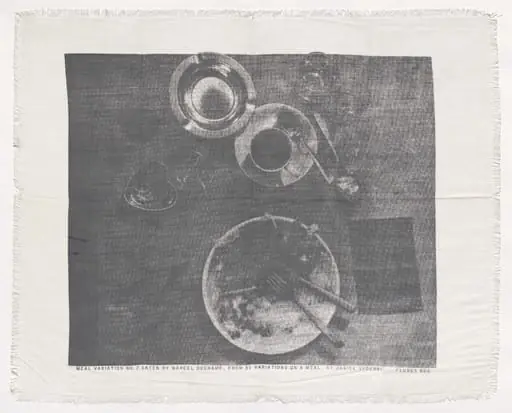 Untitled
Frequently asked questions
What is Tablecloth?
Tablecloth is a subject in art. A tablecloth is a cloth used to cover a table.
How many Tablecloth works does Artifact World Gallery have?
Artifact World Gallery holds 88 public-domain Tablecloth works, all free to view and download.
Who are the key Tablecloth artists?
Key Tablecloth artists in the collection include Edgar Degas, Johannes Vermeer and Claude Monet.
Where can I see Tablecloth works?
Tablecloth works in the collection are held by Rijksmuseum, Mauritshuis and Gemäldegalerie Berlin.