Artwork
The End of the Hunt
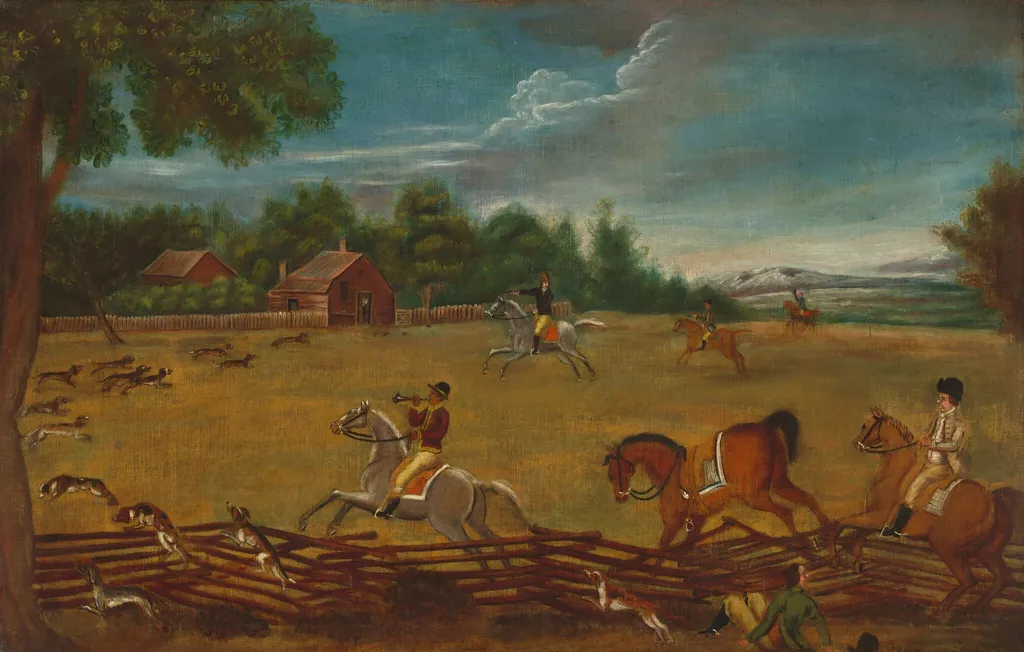
The End of the Hunt is an oil painting. It dates from 1800 and is held in the collection of the National Gallery of Art.
About this work
Technique & Style
The painting is executed in oil on canvas, measuring 87.6 cm in height by 136.8 cm in width. It depicts a hunting scene with a focus on the dramatic termination of the pursuit, rendered with a restrained palette and precise brushwork characteristic of early American genre painting. The handling emphasizes clear delineation of figures against a muted landscape background, contributing to a formal composition that balances narrative detail with compositional stability.
History & Provenance
The provided sources detail this ownership history but do not record specific exhibition dates or venues for the painting.
The painting was commissioned by Bartholomew Trueheart of Powhatan County, Virginia, and passed through his descendants. It was sold following the disposition of the family estate Selma, then acquired by Dr. Henderson, who gave it to Trueheart's daughter Martha Armistead. The work remained in the Armistead Bolling family before being sold in 1948 to Edgar William and Bernice Chrysler Garbisch, who later gifted it to the National Gallery of Art in 1953.
The provenance was documented by Mrs. Wyndham B. Blanton in a 1962 letter to William Campbell, though her 1964 publication West Hill, Cumberland County, Virginia: The Story of Those Who Have Loved It provides additional context for the family transfer [1].
The work is an oil on canvas painting dated 1800, reflecting an American 19th-century genre scene.
The End of the Hunt is held in the collection of the National Gallery of Art in Washington, D.C., where it was received as a gift from Edgar William and Bernice Chrysler Garbisch in 1953. Prior to this donation, the work was sold in 1948 by Wyndham Bolling Blanton of Richmond, Virginia, to the Garbisches. Its provenance traces back to a commission by Bartholomew Trueheart in Powhatan County, Virginia, around 1800, followed by a complex chain of ownership involving Dr. Henderson, Martha Armistead, Eliza Bolling, and Wyndham Bolling.
The provided sources detail this ownership history but do not record specific exhibition dates or venues for the painting.
Legacy
The End of the Hunt has been part of the National Gallery of Art's collection in Washington, D.C. since 1953, ensuring its continued public visibility.
The painting's provenance reflects a documented lineage from its 1800 creation through multiple generations of the Trueheart-Bolling-Blanton family to its acquisition by the Garbisches in 1948 and subsequent donation to the National Gallery of Art in 1953.
Scholarly reference to its provenance is found in Mrs. Wyndham B. Blanton's 1964 publication _West Hill, Cumberland County, Virginia: The Story of Those Who Have Loved It_, which addresses gaps in the earlier transmission of ownership.
The work remains accessible to researchers and the public at the National Gallery of Art, contributing to the study of American 19th-century painting.
Overview
The oil painting titled The End of the Hunt depicts a group of horses and dogs making their way back after a chase. Rendered on canvas, the work captures a moment of transition from the excitement of pursuit to the quiet of return, focusing on the animals rather than human participants.
Subject & Meaning
The scene centers on exhausted horses and their accompanying hounds, their weary postures suggesting the physical toll of the hunt. By emphasizing the animals’ expressions, the artist conveys a realistic observation of rural life, highlighting the labor and fatigue inherent in traditional hunting practices.
Context
Hunting scenes were a common genre in European art, often used to illustrate aristocratic leisure or rural customs. This painting aligns with that tradition, yet its focus on the animals’ fatigue offers a more grounded, less idealized perspective on the activity.
Artist & collection

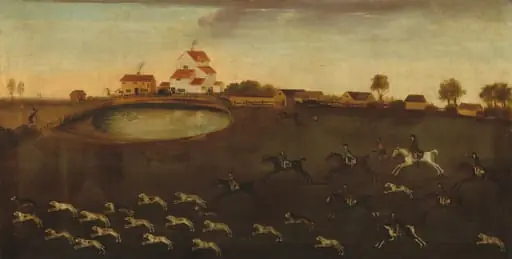 Hunting Scene with a Pond
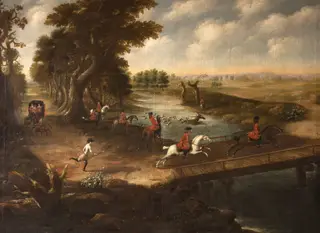 En jagt af kongelige personer
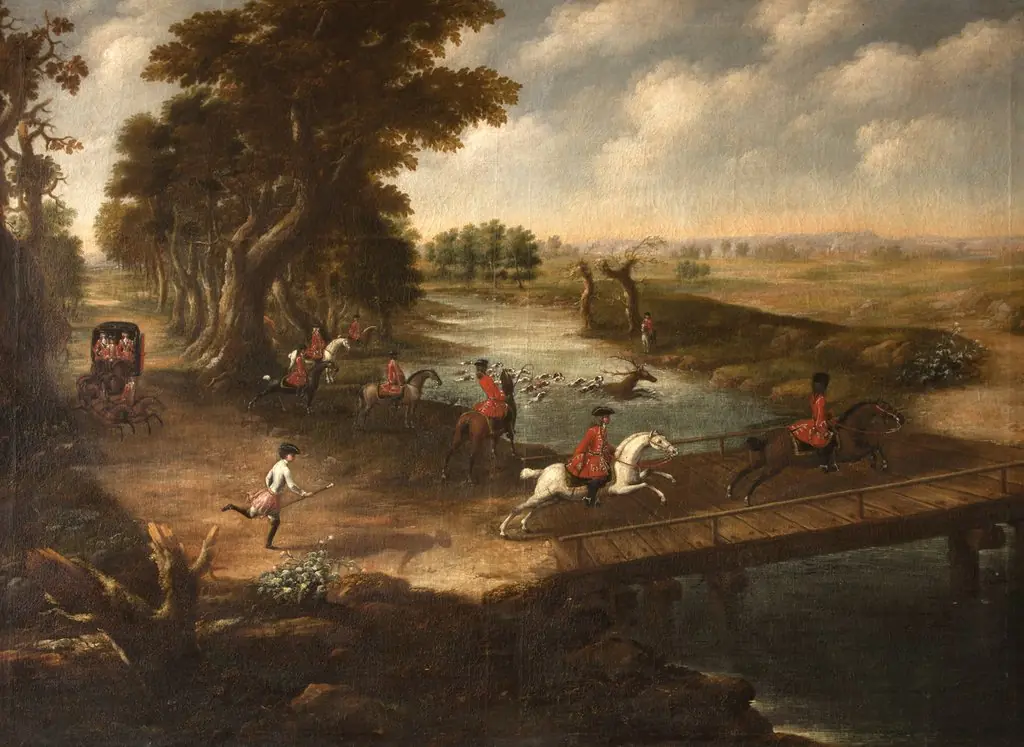 En jagt af kongelige personer
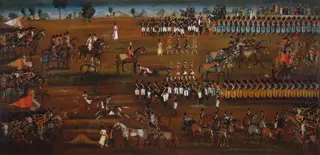 Military Review with Fath Ali Shah and Abbas Mirza
 Turkish irregular cavalry charging Russian infantry
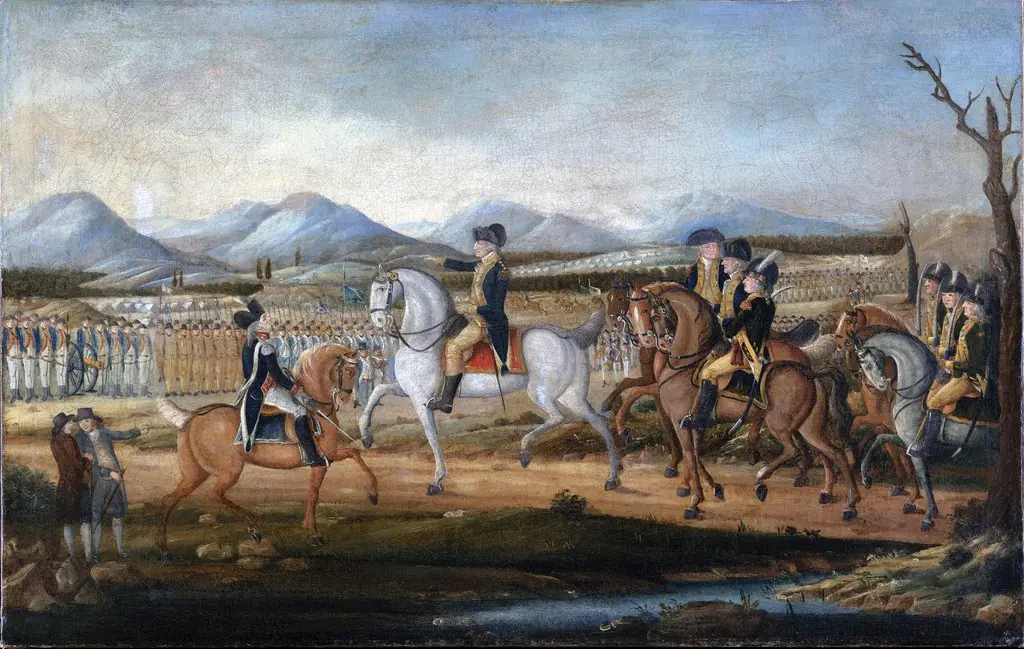 The Whiskey Rebellion
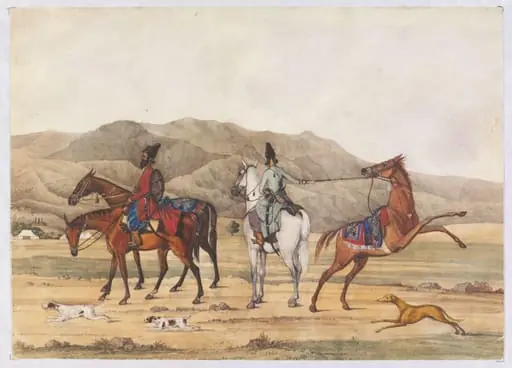 Arabians and Turkoman Horse the property of Sir J. C - - with Persians
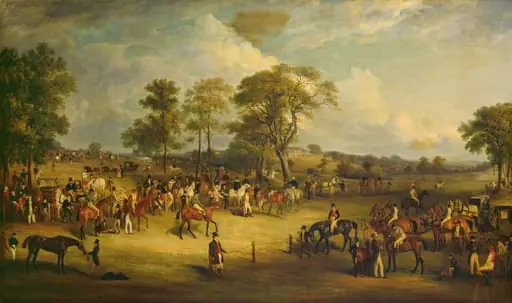 Heaton Park Races
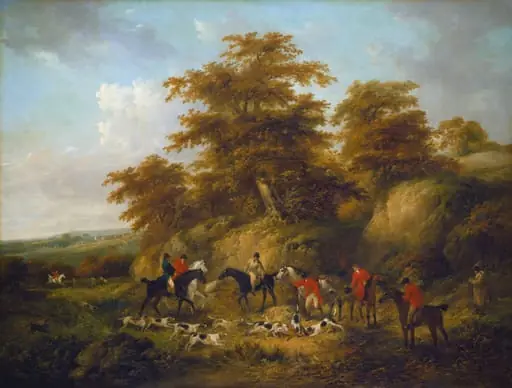 The Death of the Fox
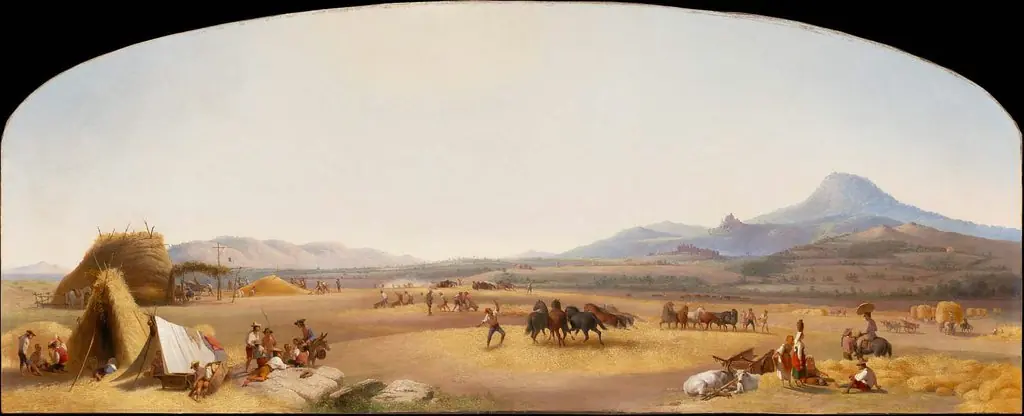 Harvesting on the Roman Campagna
 Staying the Walk
- The Start of the Hunt