Artwork
Heaton Park Races
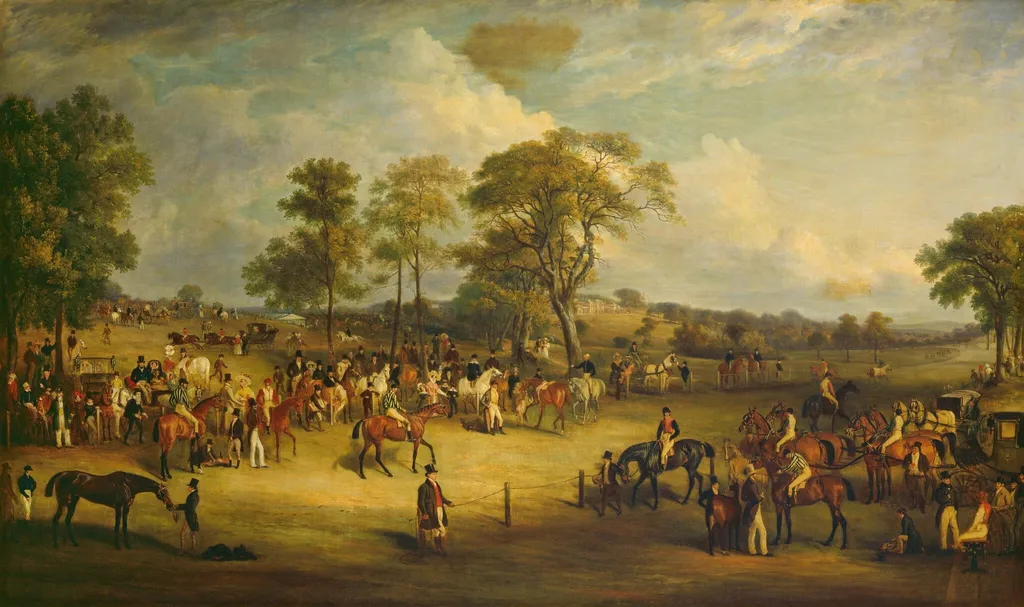
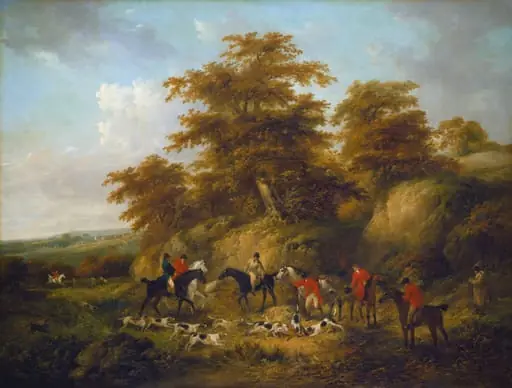
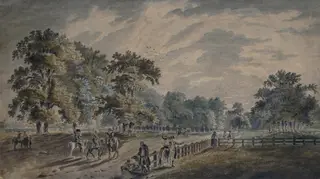
Heaton Park Races is an oil painting by the Romanticist artist John Ferneley. It dates from 1829 and is held in the collection of the National Gallery of Art.
About this work
Subject & Meaning
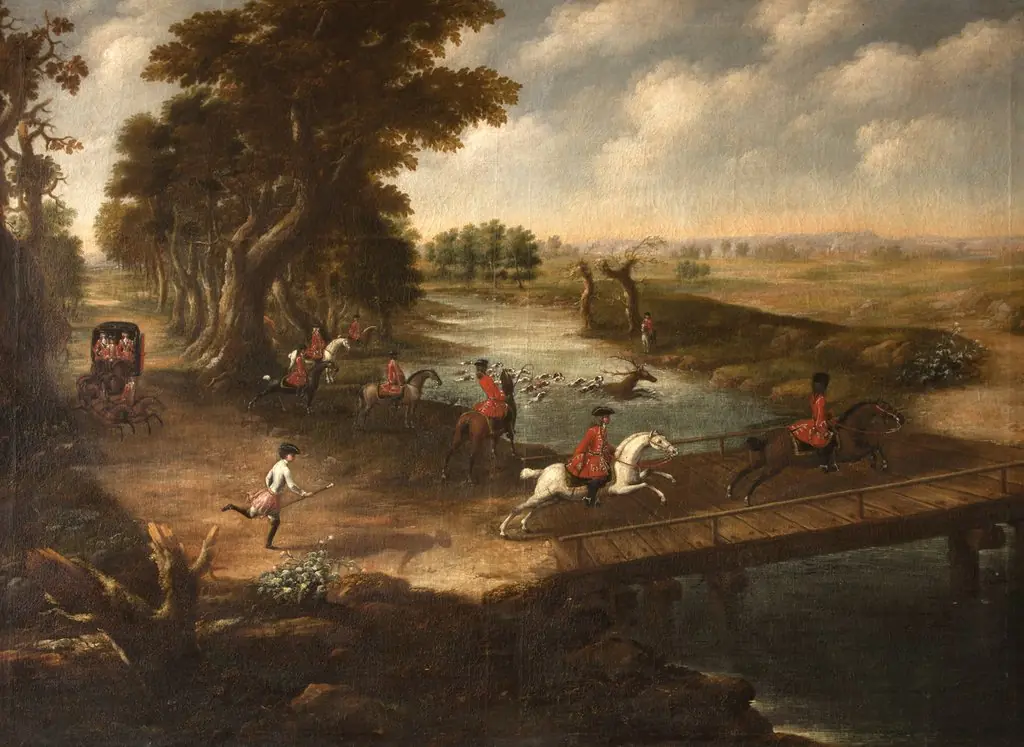
Painted in 1829, this landscape work visually documents a horse racing event, historically cataloged under the title A Country Race Meeting.
Painted in 1829, this landscape work visually documents a horse racing event, historically cataloged under the title A Country Race Meeting. The composition integrates natural elements, specifically trees, with human figures identified as soldiers, suggesting a gathering where military presence intersects with sporting leisure. While the specific narrative of the race is not detailed in the available records, the inclusion of uniformed personnel alongside the equestrian activity implies a depiction of a formal or significant local occasion rather than a casual practice.
The painting serves as a topographical and social record of early 19th-century Lancashire life, commissioned for the estate of the Earl of Wilton, thereby representing the aristocratic patronage of sporting art during this period.
Technique & Style
Heaton Park Races is an oil on canvas landscape painting executed by John Ferneley in 1829. The work is executed in oil paint on canvas, a standard support for British sporting painting of the period, and measures 92 by 152.6 centimeters, a horizontal format suited to the panoramic depiction of a race meeting. Classified as a landscape, the composition incorporates figures including a soldier and trees within the racing scene.
The painting was originally commissioned for Heaton Hall in Lancashire, passing through the Egerton family before entering the American market and ultimately joining the National Gallery of Art in Washington, D.C.
History & Provenance
John Ferneley executed this oil on canvas in 1829 as a commission for Thomas Grosvenor, who assumed the surname Egerton in 1821 and held the title of 2nd Earl of Wilton. The work remained at Heaton Hall in Lancashire, passing by inheritance to the 2nd Earl's son, Arthur Edward Holland Grey Egerton, the 3rd Earl of Wilton. Upon the 3rd Earl's death, ownership transferred to his wife, Elizabeth, Countess of Wilton.
Following her death in 1919, her estate consigned the painting, then titled A Country Race Meeting, to Sotheby & Co. in London, where it was sold on May 16, 1928. The dealer M. Knoedler & Co. subsequently acquired the piece before selling it in July 1928 to Ailsa Mellon Bruce of New York. Bruce bequeathed the artwork to the National Gallery of Art in 1970.
Overview
Heaton Park Races, an oil on canvas painting from 1829, was created by the English artist John E. Ferneley. This work exemplifies his consistent engagement with equestrian and sporting themes, for which he was widely recognized. The composition captures a dynamic scene of horses in motion within a park setting, featuring a soldier and a prominent tree in the background, characteristic of his detailed approach to such subjects.
Context
John E. Ferneley established himself as a significant figure among British equine artists of his era. Born in Leicestershire and later residing in Melton Mowbray, a hub for fox hunting, he developed a reputation for his depictions of sporting horses and hunting narratives. Heaton Park Races stands as a testament to his expertise in this specialized genre, illustrating his contribution to the visual culture surrounding equestrian sports in the 19th century.
Own this work as a print
Artist & collection

Artist
John E. Ferneley (18 May 1782 Thrussington, Leicestershire – 1860 Melton Mowbray, Leicestershire), was an English painter who specialised in portraying sporting horses and hunting scenes. Although his rendition of…