Artwork
Watermelon on a Plate
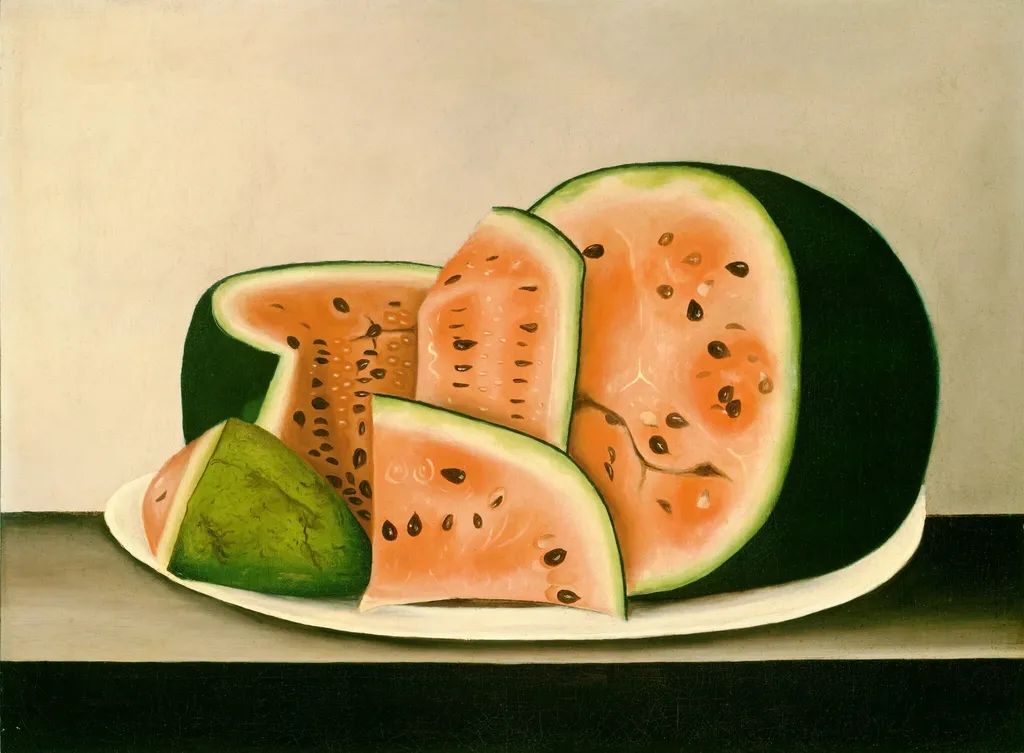
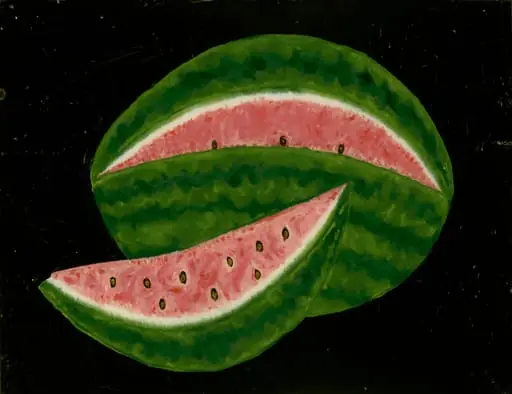
Watermelon on a Plate is an oil painting. It dates from 1850 and is held in the collection of the National Gallery of Art. The work is an oil painting on canvas that depicts a single white plate bearing several slices of watermelon.
About this work
Technique & Style
The handling of the medium follows traditional painting practices of the period, using standard materials to achieve the composition.
Created in 1850, this still life is executed in oil paint on a canvas support. The work measures 45.7 cm in height and 61 cm in width. While the specific artist remains unidentified beyond the designation of an American nineteenth-century painter, the piece exemplifies the genre through its direct representation of a watermelon presented on a plate.
The handling of the medium follows traditional painting practices of the period, using standard materials to achieve the composition.
History & Provenance
Watermelon on a Plate is an oil on canvas by an unidentified American artist of the 19th century, dated 1850 and measuring 45.7 by 61 cm. It was recorded as being in Massachusetts and was sold by Kennedy Galleries in New York in 1970 to Edgar William and Bernice Chrysler Garbisch, who bequeathed it to the National Gallery of Art in Washington, D.C. The painting has been part of the Gallery's collection since 1980, where it remains.
Context
Watermelon on a Plate is a still life created in 1850 by an unidentified American artist. The work entered the National Gallery of Art through the bequest of Edgar William and Bernice Chrysler Garbisch, whose collection emphasized American folk and naïve painting. It is regarded as a representative example of 19th-century American still life and is documented in the Gallery's catalogues and institutional records, underscoring its place within the broader history of American art.
Overview
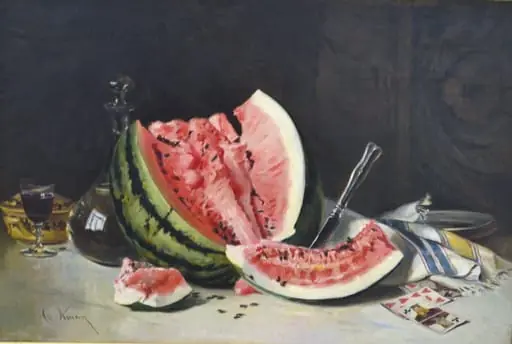
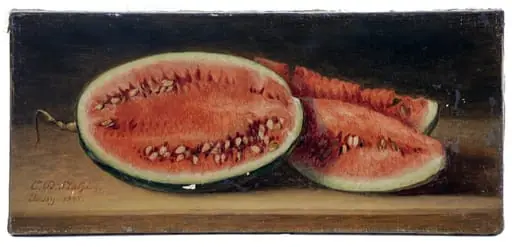
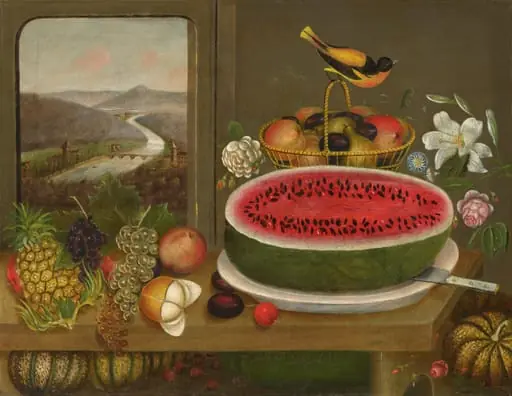
The work is an oil painting on canvas that depicts a single white plate bearing several slices of watermelon. The largest slice occupies the right side of the plate, while smaller pieces are arranged around it. The fruit’s flesh is rendered in pink with its characteristic black seeds, and the green rind is visible at the edges. The background is a uniform light tone, and no other objects or figures appear.
Subject & Meaning
The composition isolates the everyday act of serving fruit, focusing attention on the visual qualities of the watermelon, its color contrast, texture, and form. By presenting the food without any surrounding narrative elements, the painting invites contemplation of the simple, sensory experience of a summer fruit.
Artist & collection