Artwork
Woman in Red Arrowback Chair
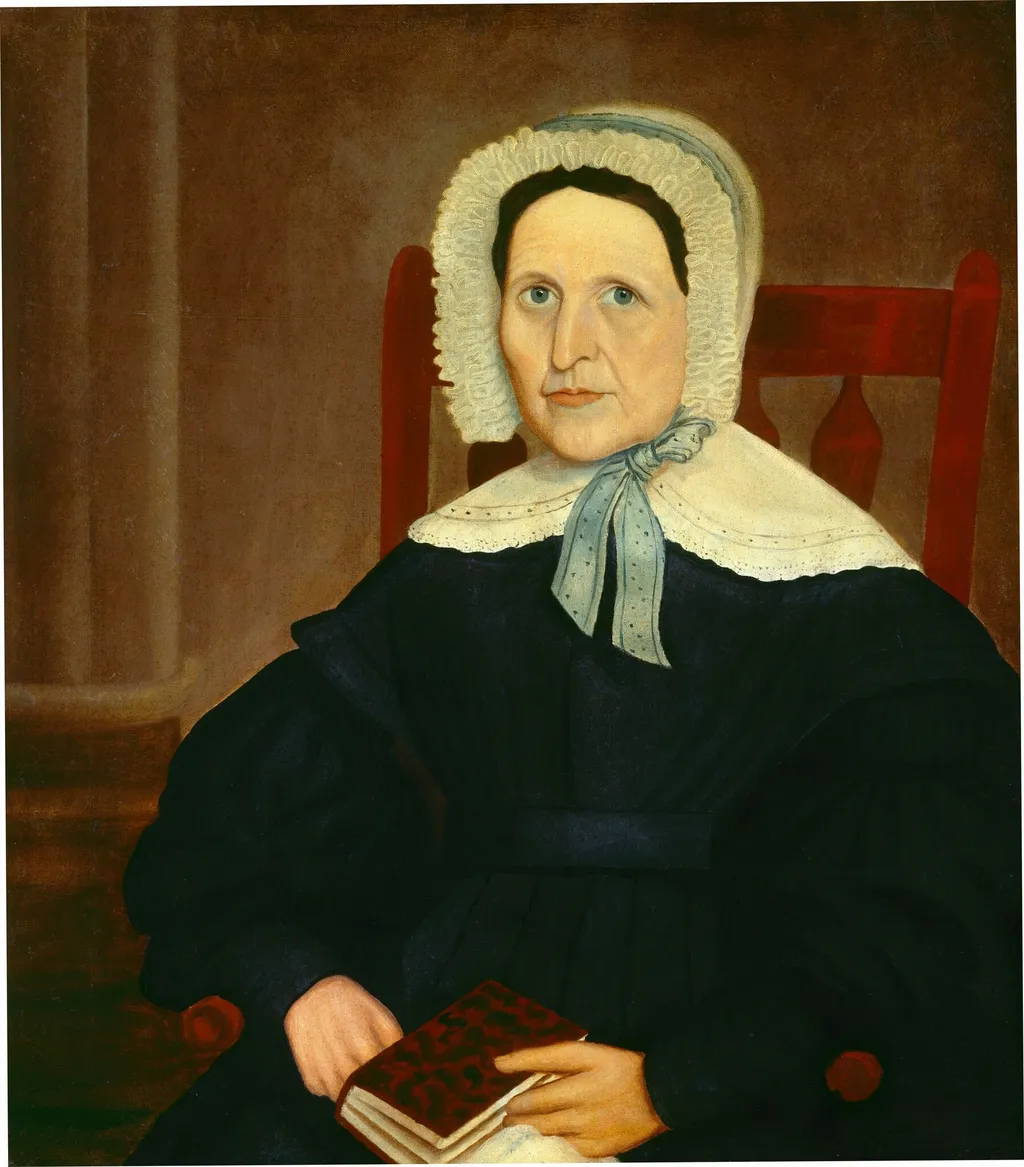
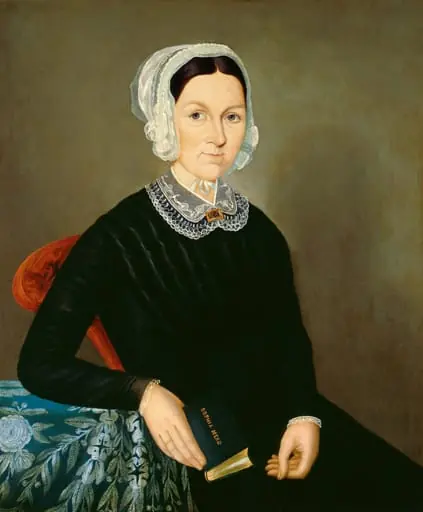
Woman in Red Arrowback Chair is an oil painting. It dates from 1838 and is held in the collection of the National Gallery of Art.
About this work
Technique & Style
The composition balances the figure against the vivid red background, producing a formal stiffness typical of early American folk portraiture.
The painting is executed in oil on canvas, a common support for nineteenth-century portraiture. The work measures roughly 80 cm in height by 70.5 cm in width, as recorded in the catalog entry. The artist applies thin layers of pigment to create a smooth surface, allowing subtle modeling of the sitter's features.
Brushwork remains relatively restrained, emphasizing a clear delineation of the red-upholstered armchair and the sitter's attire. The composition balances the figure against the vivid red background, producing a formal stiffness typical of early American folk portraiture.
History & Provenance
Created in 1838 by an unidentified American artist of the nineteenth century, this oil on canvas portrait originated in upper New York State. It was purchased in 1949 by Edgar William and Bernice Chrysler Garbisch and donated to the National Gallery of Art in Washington, D.C., in 1953, where it remains part of the permanent collection. The provided sources do not specify an accession number or document any exhibition history for the work.
Overview
This oil on canvas painting, titled Woman in Red Arrowback Chair, presents a seated female figure. She occupies a distinctive red chair, which draws the viewer's eye. The composition emphasizes a quiet stillness, with the subject's gaze directed forward. The work's simplicity highlights the interplay between the figure and her immediate surroundings, particularly the vibrant furniture.
Subject & Meaning
The central figure is depicted in period attire, her expression composed and unsmiling. Her direct gaze engages the viewer without revealing overt emotion, conveying a sense of introspection or quiet observation. The "arrowback" chair, with its prominent red hue and unique curved design, functions as more than mere furniture; it becomes a significant element that anchors the composition and contributes to the painting's overall character.
Artist & collection