Artwork
The Repose
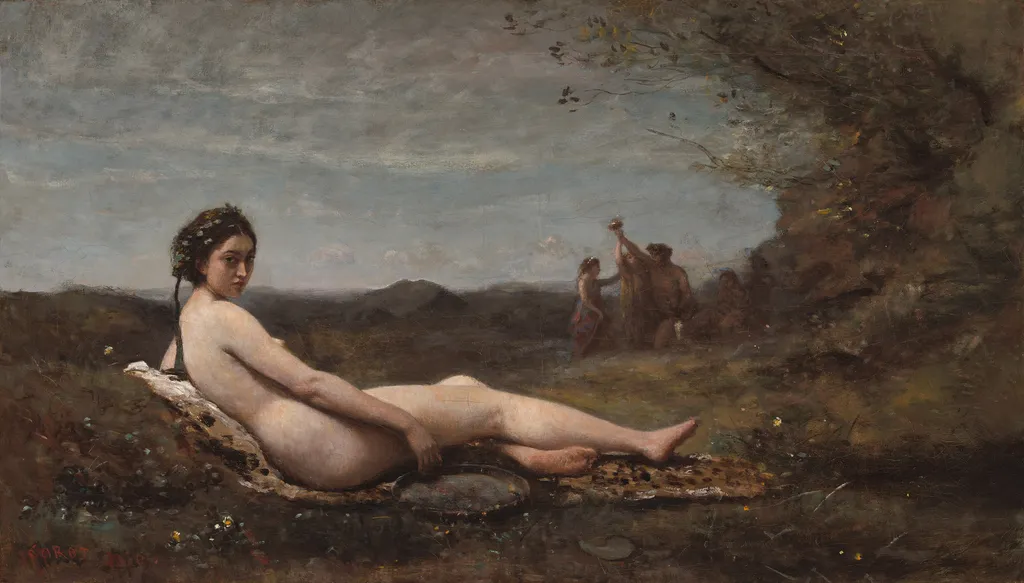
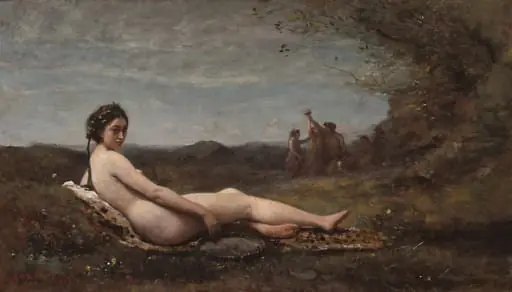
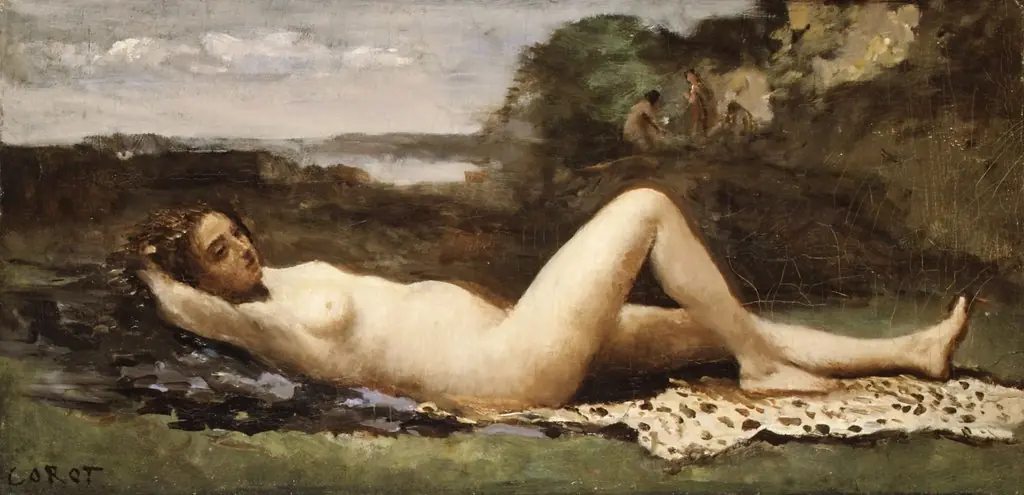
The Repose is an oil painting by the Realist artist Jean Baptiste Camille Corot. It dates from 1860 and is held in the collection of the National Gallery of Art.
About this work
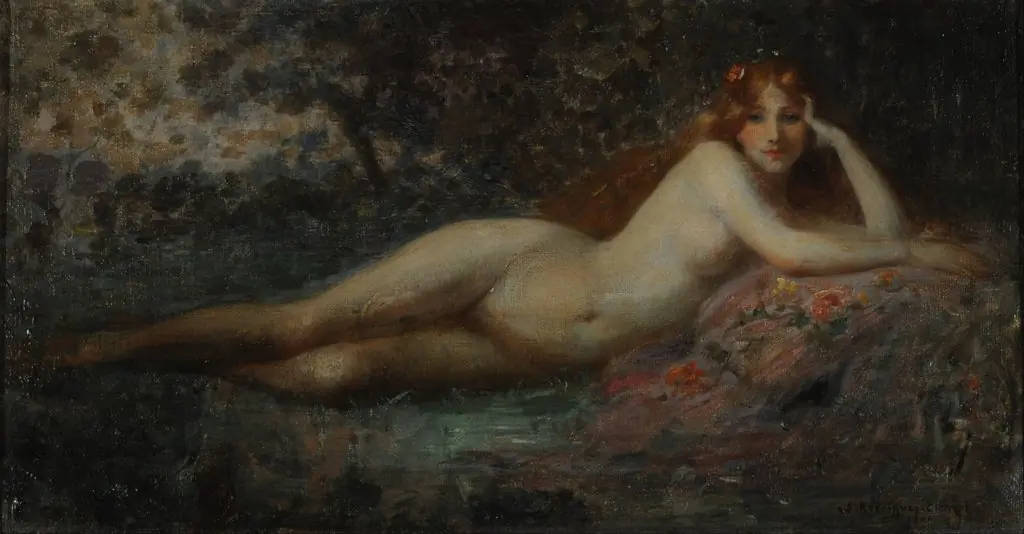
Agostina Segatori, the Italian model who later ran the Cafe du Tambourin in Montmartre, reclines nude on a panther skin, a wreath in her hair and an overturned tambourine nearby. Corot painted this resting bacchante in 1860 and reworked it years later. It now hangs in the National Gallery of Art.
Subject & Meaning
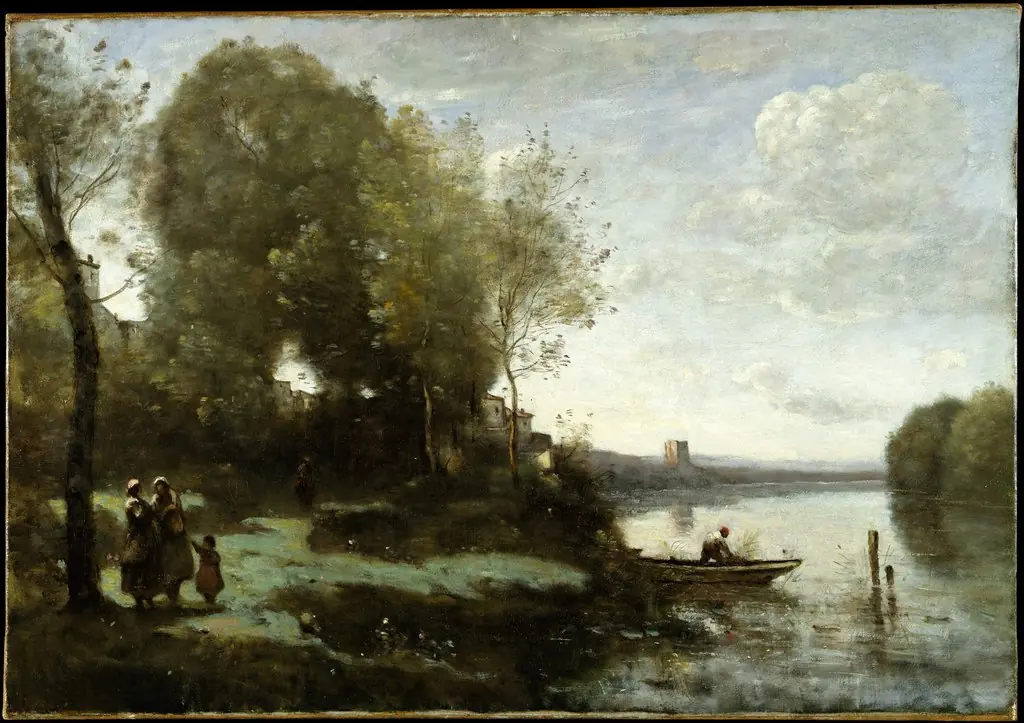
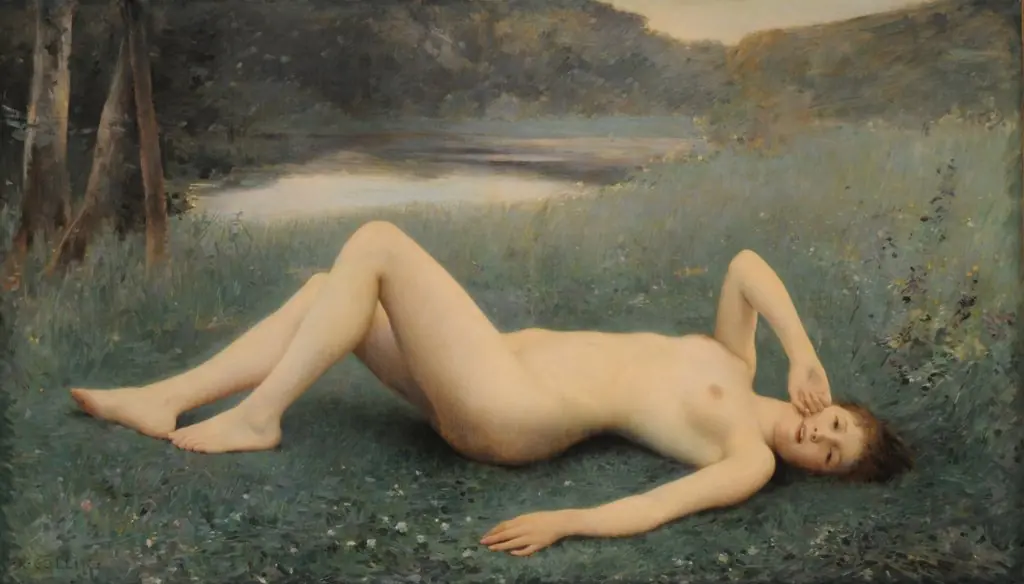
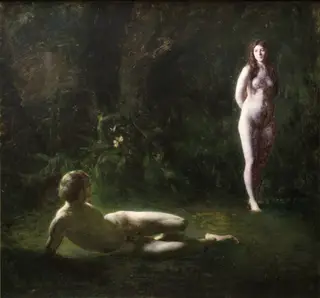
It shows a reclining nude woman and a male figure, possibly a shepherd with goats, in a forest clearing beside a lake under a twilight sky.
The painting belongs to the mythological genre and depicts a scene of repose. It shows a reclining nude woman and a male figure, possibly a shepherd with goats, in a forest clearing beside a lake under a twilight sky. Iconographic elements include sleep (the woman's reclining pose and closed eyes), a staff, drapery, and pastoral attributes such as goats.
The setting, a tranquil landscape at dusk, enhances themes of rest and liminality. The work may draw on classical myths involving sleep or a pastoral idyll, representing a moment of serene abandonment to nature.
Technique & Style
The Repose is an oil painting on canvas, executed by Jean-Baptiste-Camille Corot. The work dates to 1860 and measures approximately 58.5 by 101.9 centimeters, indicating a wide, landscape-oriented format. It belongs to both the mythological and landscape genres, depicting a scene with figures set among trees, water, and sky. The materials used are oil paint on canvas.
History & Provenance
The Repose is held at the Walters Art Museum in Baltimore. It was included in the exhibition "From Ingres to Gauguin: French Paintings from the Collection of the Walters Art Gallery" at the National Gallery of Art, Washington, D.C. (1969). No inventory or accession number is provided in the available sources.
Overview
Painted in 1860, The Repose is an oil on canvas by Jean-Baptiste-Camille Corot that depicts a mythological bacchante resting in a wooded landscape. The figure, identified by art historians as the model Agostina Segatori, reclines nude upon a panther skin, her body angled to catch the dappled sunlight filtering through the trees. She wears a wreath of leaves in her hair, and an overturned tambourine lies at her side, signaling her association with the cult of Bacchus.
While Corot is primarily celebrated for his naturalistic landscapes and tonalist studies, this work exemplifies his engagement with the female nude within an idealized, poetic setting. The composition balances the soft, atmospheric rendering of the foliage with the smooth modeling of the figure, reflecting Corot's mature style where the boundary between observed nature and classical allusion is deliberately blurred. Created during a period when the artist frequently integrated mythological themes into his landscapes, the painting stands as a significant example of his ability to infuse pastoral scenes with a sense of timeless, quiet reverie.
Artist & collection
Artist
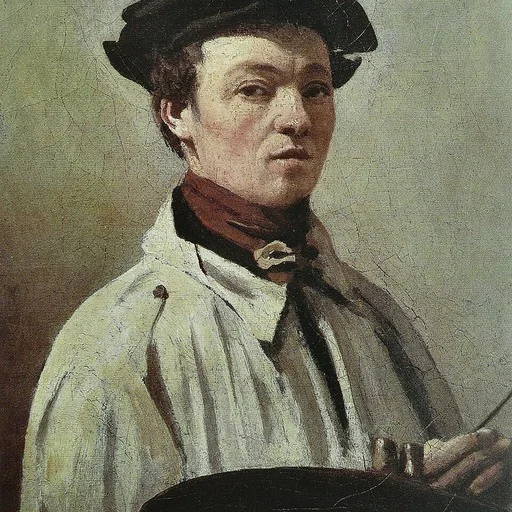
Jean-Baptiste-Camille Corot (UK: KORR-oh, US: kə-ROH, kor-OH; French:; 16 July 1796 – 22 February 1875), or simply Camille Corot, was a French landscape and portrait painter as well as a printmaker in etching.

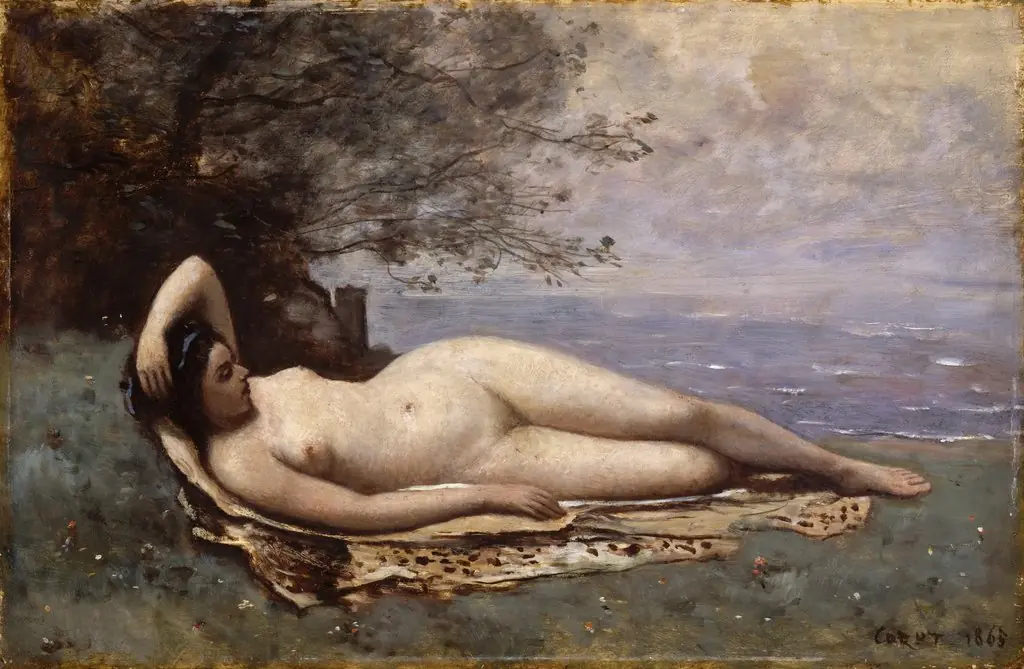
 Studied in the Impressionism course
  Compared in the How to Look at a Painting course