Artwork
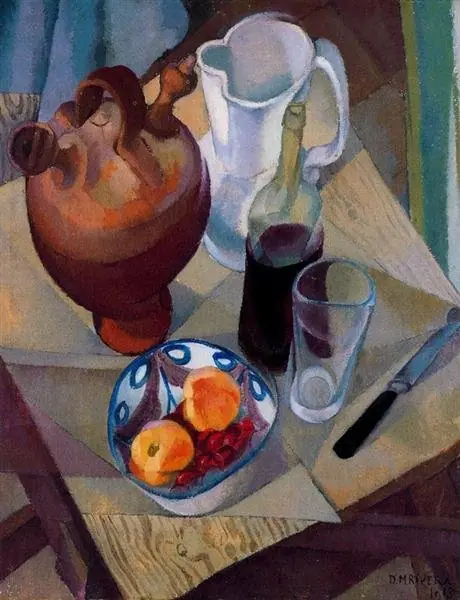
Nature morte à la table
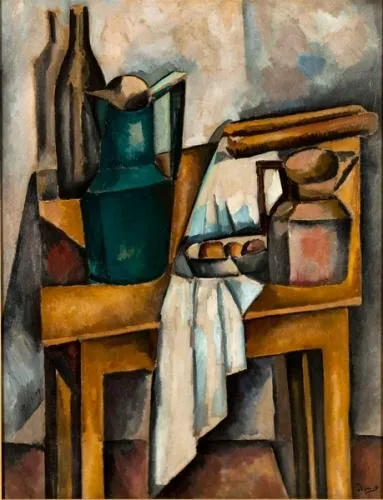
Nature morte à la table is an oil painting by the Post-Impressionist artist André Derain. It dates from 1910 and is held in the collection of the Musée d'art moderne de Paris.
About this work
Overview
Derain constructs the scene using bold, non-naturalistic color choices and simplified forms that prioritize emotional resonance over strict optical realism.
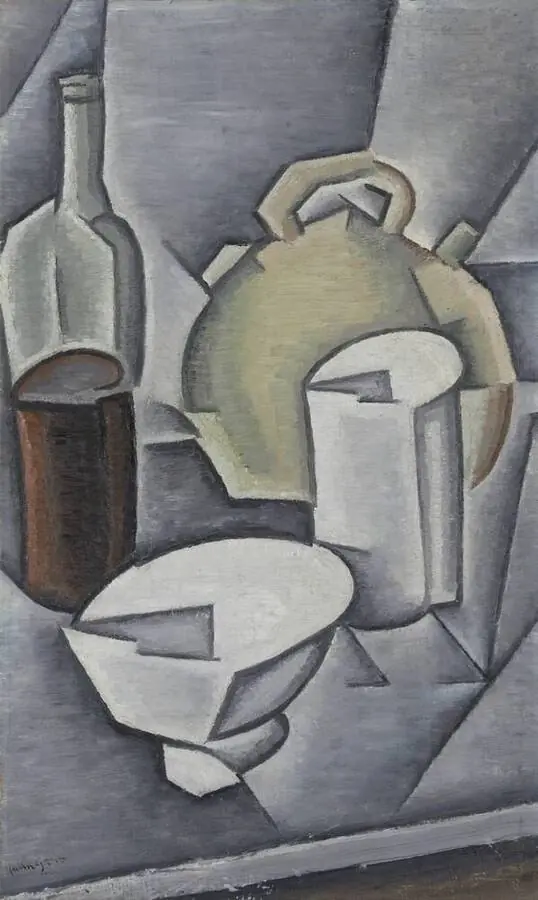
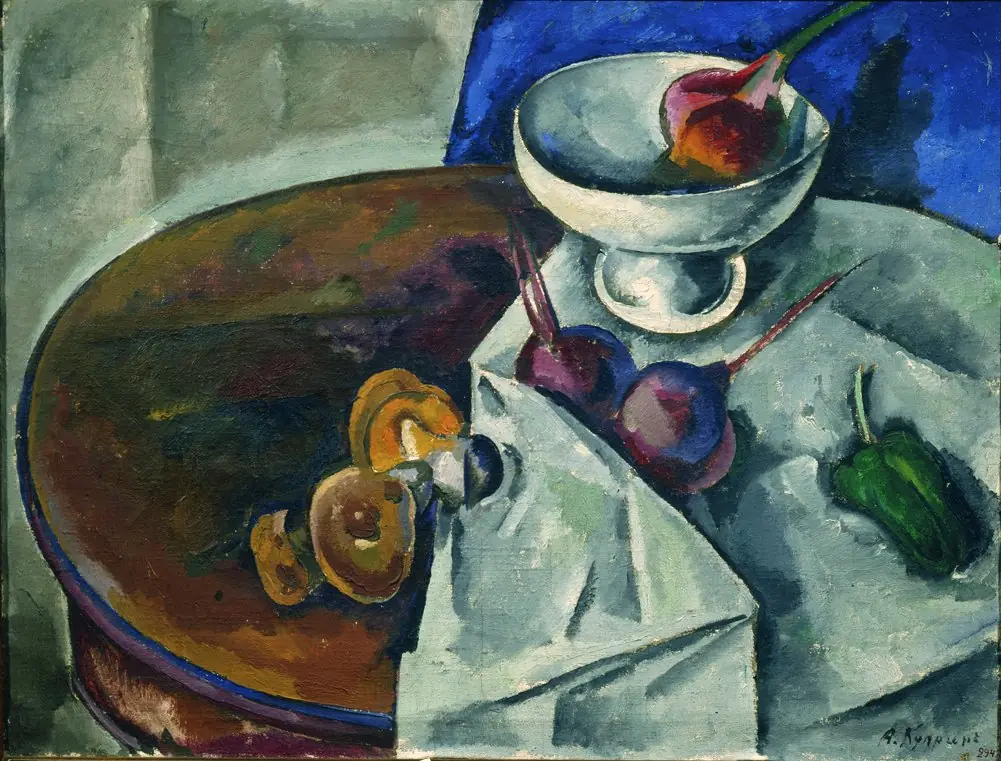
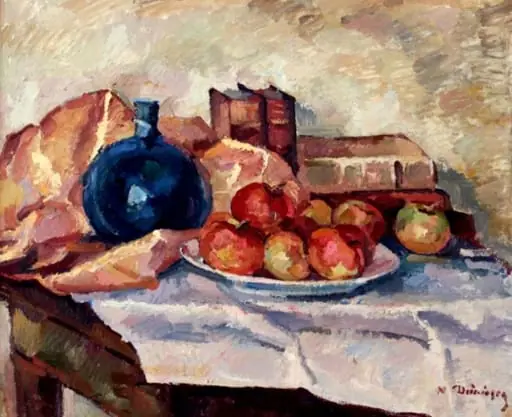
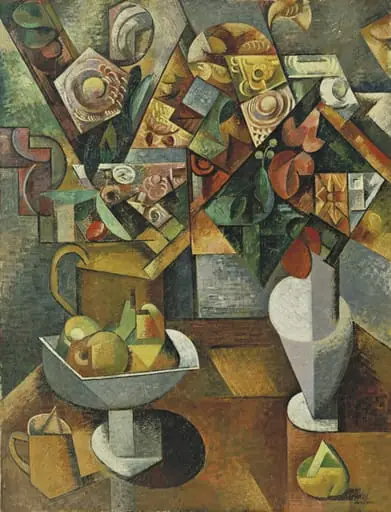
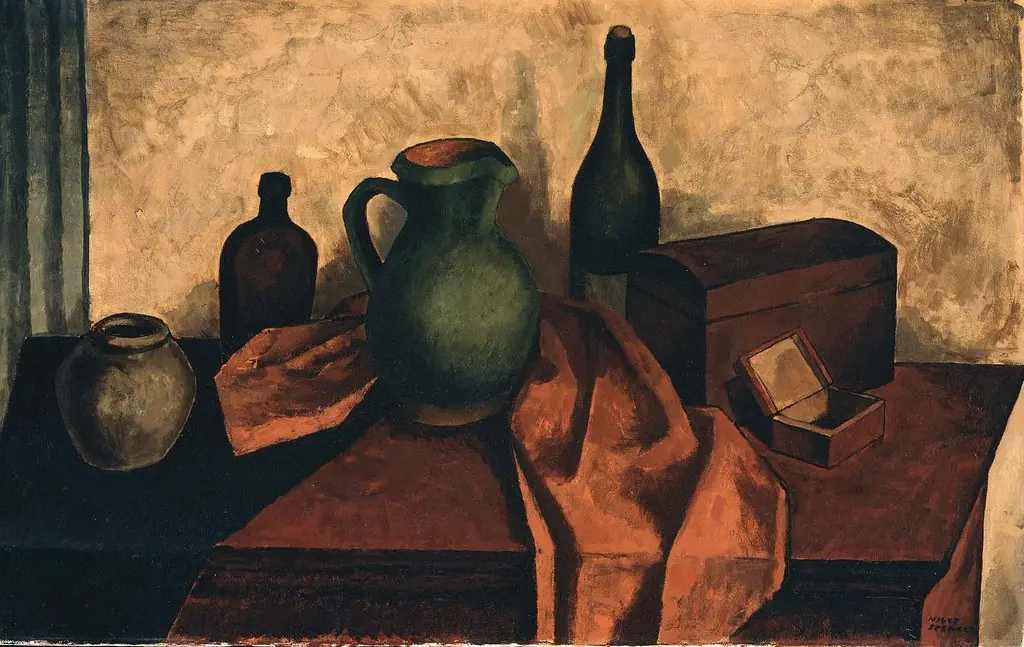
André Derain's Nature morte à la table, executed in 1910, is a quintessential example of his mature Fauvist still life. The composition centers on a table draped with a white cloth, upon which rests an arrangement of ceramic vessels including a tall, dark green jug, a shorter brown vessel, and a large, light brown handled jug. Derain constructs the scene using bold, non-naturalistic color choices and simplified forms that prioritize emotional resonance over strict optical realism.
The background is rendered in a mix of earthy and muted tones that contrast with the vibrant objects in the foreground, creating a sense of depth while maintaining a flattened, decorative surface. Painted during a period when Derain was refining his approach to structure and color following the height of the Fauve movement, the work demonstrates his shift toward a more solid, Cézanne-influenced construction of space. The painting captures the artist's enduring interest in the quiet dignity of domestic objects, utilizing thick impasto and decisive brushwork to define the volume of the jugs and the texture of the fabric.
This piece stands as a significant document of early 20th-century French modernism, illustrating Derain's ability to balance expressive color with a rigorous sense of order.
Subject & Meaning
The tableau features a tall dark‑green jug and a shorter brown jug on the left, while a larger light‑brown jug with a handle occupies the right side, accompanied by additional items. The juxtaposition of forms and the careful placement of objects suggest an interest in exploring spatial relationships and the visual tension between volume and surface.
Technique & Style
Derain employs a palette that blends warm hues with cooler accents, allowing the warm tones to dominate the visual field. The handling of oil paint renders the objects with a sense of three‑dimensionality, while the background’s intermingling of light and dark tones adds depth. The composition reflects an early move toward a more structured, almost cubist organization of form.
History & Provenance
Created in 1910, the painting entered the holdings of the Musée d’art moderne de Paris, where it remains on display. Its acquisition reflects the museum’s focus on early 20th‑century French modernism and Derain’s role within that artistic milieu.
Context
Produced during a period when Derain was transitioning from Fauvist exuberance toward a more measured, geometric approach, the work anticipates elements later associated with Cézannian cubism. The emphasis on planar simplification and the analytical arrangement of objects align it with contemporary experiments in redefining pictorial space.
Artist & collection

Artist
André Derain was a French artist, painter, sculptor and co-founder, with Henri Matisse, of Fauvism.