Artwork
Still Life
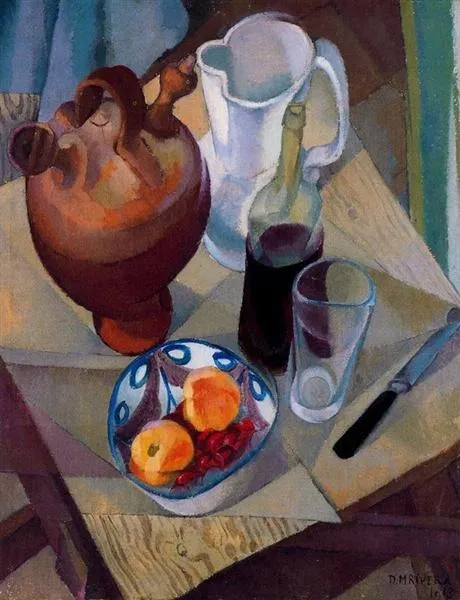
Still Life is an oil painting by the Cubism Synthetic artist Diego Rivera. It dates from 1913 and is held in the collection of the Hermitage Museum.
About this work
Subject & Meaning
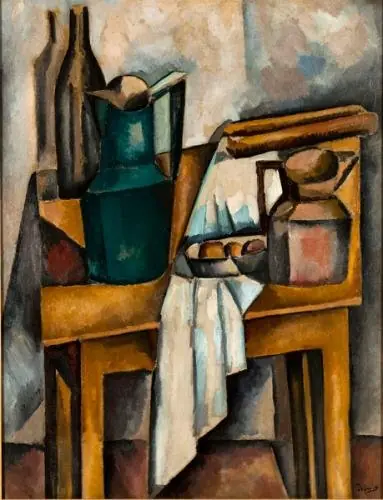
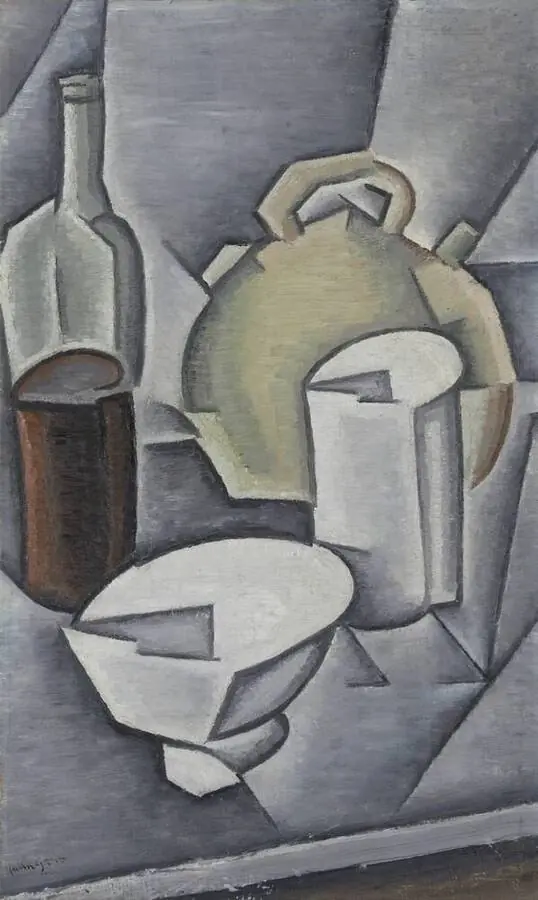
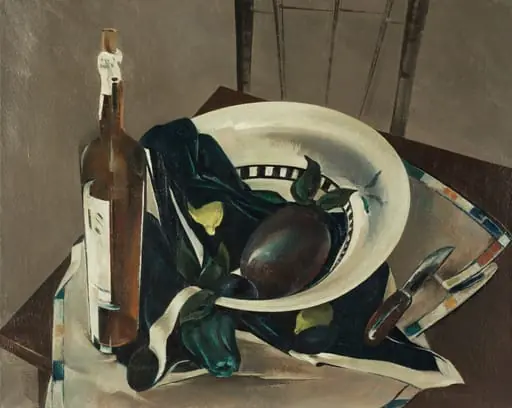
The composition features everyday objects, specifically a drinking glass, a bottle, a botijo (a traditional Spanish clay water jug), a knife, and a table.
Diego Rivera's 1913 painting belongs to the still life genre, depicting a carefully arranged tabletop scene. The composition features everyday objects, specifically a drinking glass, a bottle, a botijo (a traditional Spanish clay water jug), a knife, and a table. Through this assemblage of common domestic items, the work explores form and materiality, representing a focus on the ordinary and utilitarian rather than grand narrative subjects.
Technique & Style
Diego Rivera executed this 1913 still life in tempera, with Wikidata also noting the use of oil paint and canvas as materials. The composition depicts a drinking glass, bottle, table, botijo, and knife, arranged as a traditional tabletop still life. The work measures 84 × 65 cm. The choice of tempera, a medium associated with earlier European panel painting, suggests a deliberate engagement with artistic tradition during Rivera's early European period.
Context
Diego Rivera's 1913 still life, housed in the Hermitage Museum, depicts a drinking glass, bottle, table, botijo, and knife in oil on canvas, reflecting early Russian acquisitions of his work. Scholarly attention to Rivera's still lifes highlights their role within his broader oeuvre and artistic development, situating this piece within the evolution of modernist still life painting.
The work's presence in a major institution underscores its significance in art historical narratives of 20th-century painting.
Overview
Created in 1913, this tempera work by Diego Rivera presents a modest arrangement of everyday objects on a tabletop. A brown, handled pot, a white pitcher, a bottle, a drinking glass, a knife, and a bowl containing oranges and red berries compose the composition. The painting resides in the State Hermitage Museum, offering a quiet study of domestic still life.
History & Provenance
Executed early in Rivera’s career, the piece predates his later mural phase and reflects his initial engagement with traditional genre subjects. After changing hands several times, it entered the collection of the State Hermitage Museum, where it has been displayed as part of the museum’s European and Russian art holdings.
Artist & collection

Artist
Diego María de la Concepción Juan Nepomuceno Estanislao de la Rivera y Barrientos Acosta y Rodríguez was a Mexican painter. His large frescoes helped establish the mural movement in Mexican and international art.