Artwork
Untitled
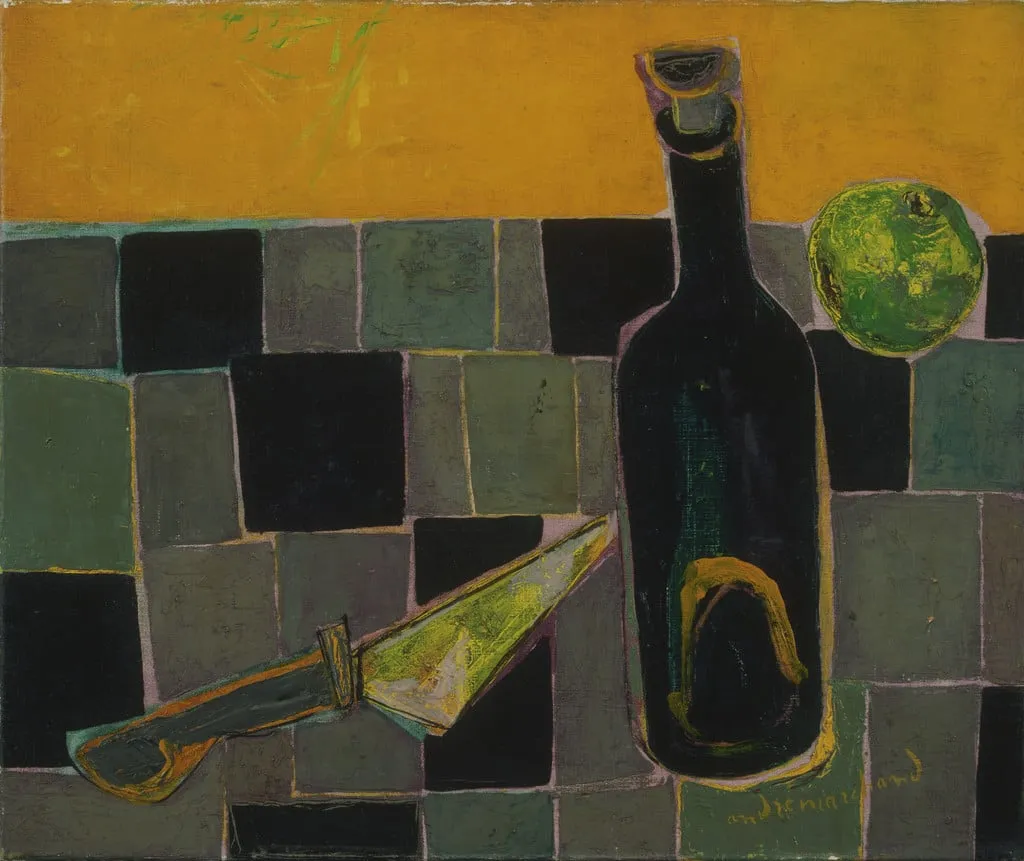
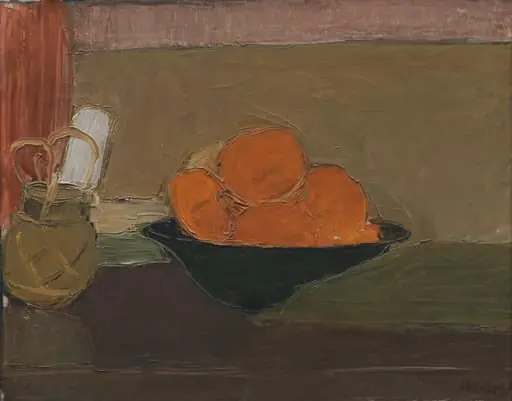
Untitled is an oil painting by the French Classical Baroque artist André Marchand. It dates from 1957 and is held in the collection of the Museum of Modern Art.
About this work
Overview
The painting presents a restrained still life, stripped of narrative, focusing instead on material presence and spatial tension through color and texture.
Painted around 1957, this oil on canvas work by French artist André Marchand belongs to his mid-career output. A founding member of the Salon de Mai, Marchand engaged with postwar Parisian abstraction while retaining elements of representational form. The painting presents a restrained still life, stripped of narrative, focusing instead on material presence and spatial tension through color and texture.
Subject & Meaning
A green bottle, a lemon, and a knife with a yellow handle rest on a tiled surface against a warm yellow wall. These everyday objects are rendered without symbolic intent, their significance emerging from arrangement and tone rather than function. The composition avoids traditional still-life hierarchy, suggesting an interest in the quiet dignity of ordinary things, framed by the artist’s attention to form over narrative.
Technique & Style
Thick, tactile brushwork builds the surfaces, employing impasto to give weight to the bottle, fruit, and tiles. Colors are intensified and non-naturalistic, lemon and bottle greens are saturated, the background a flat, luminous yellow. The tiles are suggested through irregular blocks of gray and green, rejecting perspective in favor of rhythmic pattern. The effect is sculptural, emphasizing texture over realism.
History & Provenance
Created during Marchand’s active years in postwar Paris, the painting entered The Museum of Modern Art’s collection as part of its broader effort to document European modernism beyond American abstraction. Its acquisition reflects institutional interest in artists who bridged figuration and expressionism. No documented exhibition history precedes its museum acquisition, suggesting it was selected for its formal coherence rather than public recognition.
Context
Marchand’s work emerged alongside the Salon de Mai’s rejection of rigid academic traditions, yet he avoided full abstraction. His approach aligned with a generation reinterpreting still life through emotional and material immediacy, influenced by Cézanne and the Fauves but filtered through postwar sensibilities. The painting resists both surrealism and pure abstraction, occupying a middle ground focused on sensory presence.
Legacy
Though not widely exhibited, the painting contributes to understanding how French painters of the 1950s reimagined traditional genres without abandoning representation. Its inclusion in MoMA’s collection affirms its role in the broader narrative of mid-century European painting, where texture and color became vehicles for quiet, non-narrative expression beyond the dominant movements of the time.
Artist & collection
Artist
André Marchand (10 February 1907 – 29 December 1997) was a French painter of the new Paris school and one of the founder members of the Salon de Mai.

- Natură moartă cu tingire
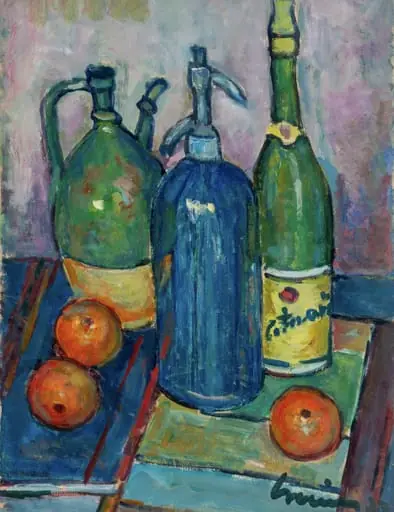 Natură statică cu trei portocale, un sifon, o sticlă pe a cărei etichetă scrie "Cotnari" și un ulcior colorat verde-ocru. Suport albastru-verde, fundal gri-albastru-violet. Compoziție dezechilibrată prin prezența celor trei verticale (vas de lut, sifon, sticlă) poziționate central. Semnat și datat cu verde, dreapta jos: Craiu (19)71?.
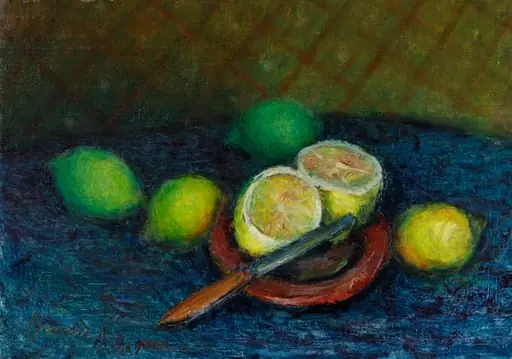 Lămâi
Lămâi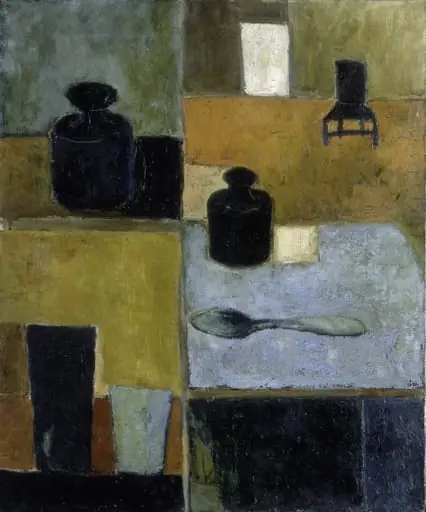 Untitled
 Natură statică cu căni
 Still Life (F.1972.44.P)
 Crockery on a Table
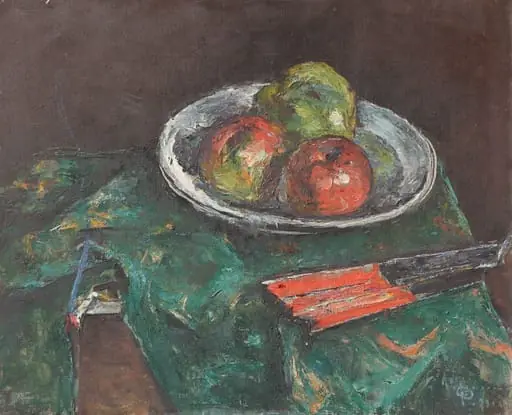 Mere și evantai
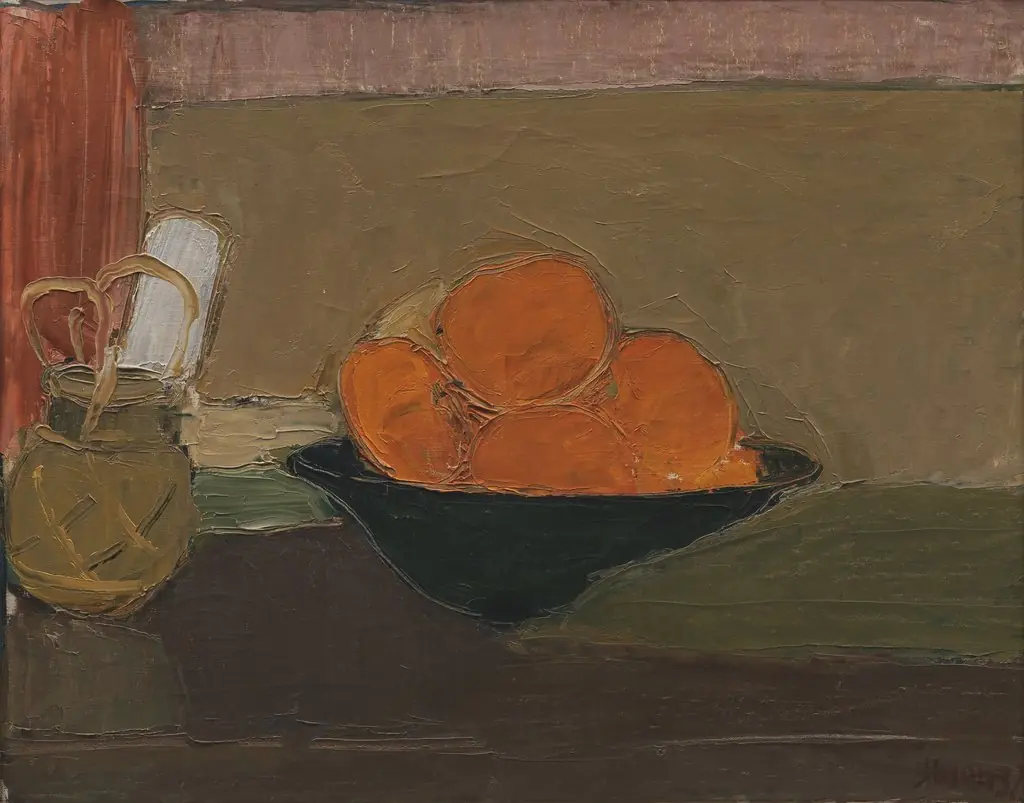 Still Life with Oranges
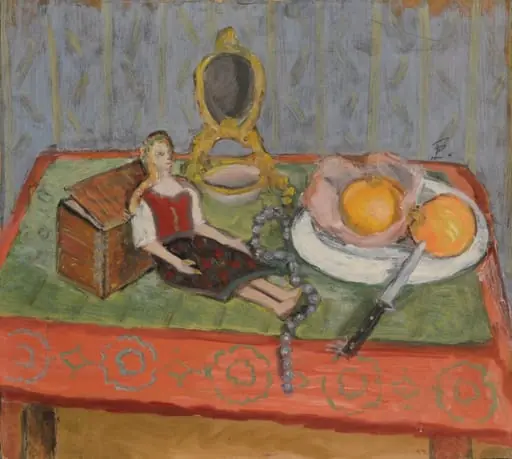 Natură statică cu păpușă
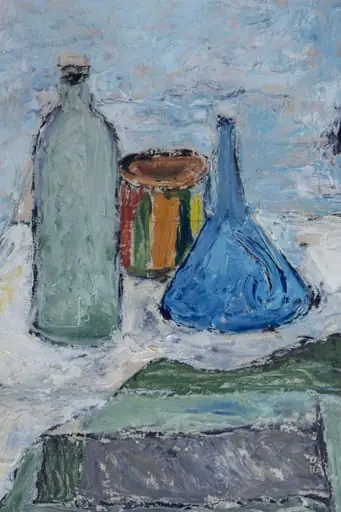 Natură statică
 Still Life with Oranges