Artwork
Virgin and Child, with Saints Mary Magdalene, John the Baptist, Jerome, and Catherine of Alexandria
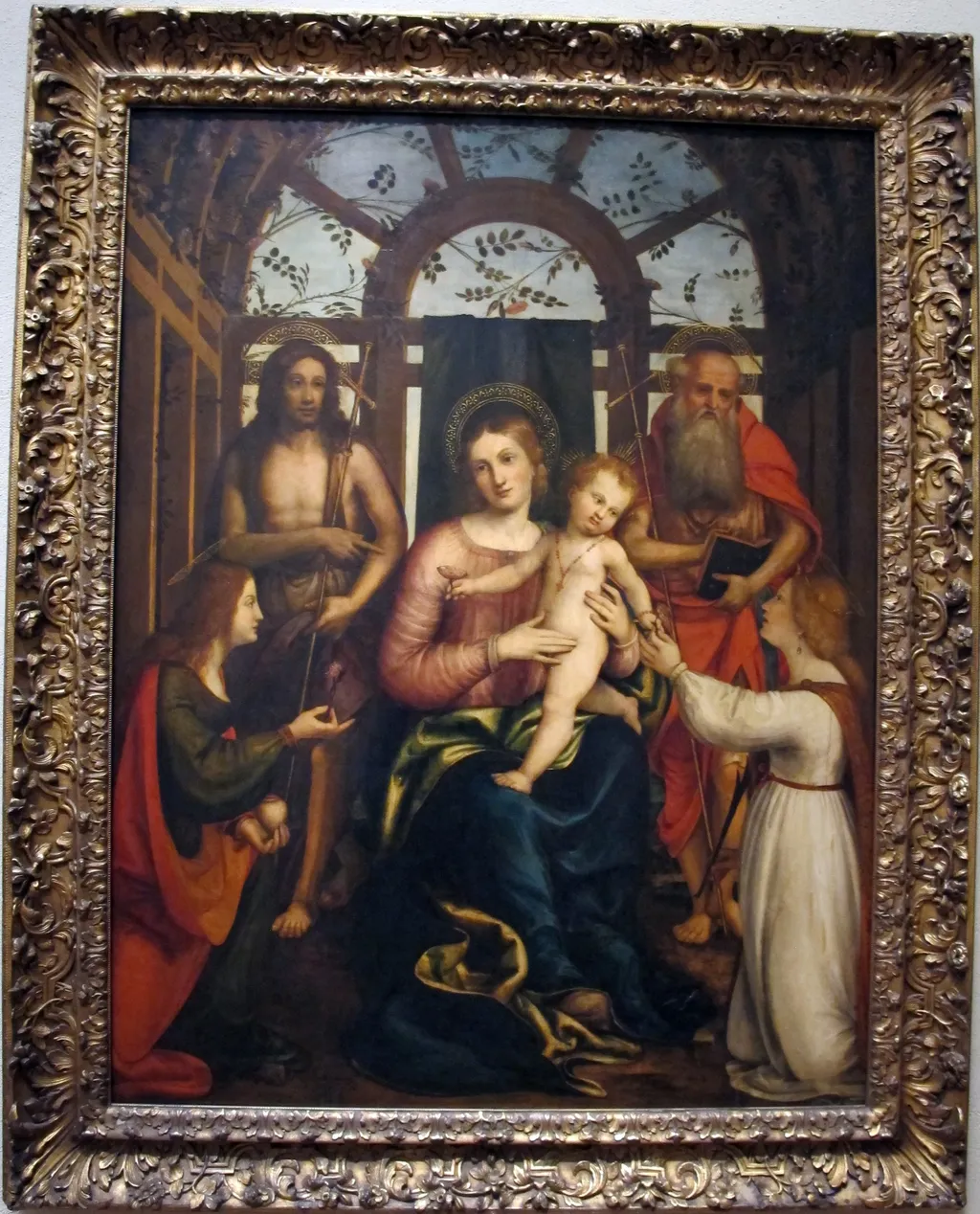
Virgin and Child, with Saints Mary Magdalene, John the Baptist, Jerome, and Catherine of Alexandria is an unspecified painting by the High Renaissance artist Andrea Previtali. It dates from 1517 and is held in the collection of the Philadelphia Museum of Art. Created in 1517, this oil painting brings together the Virgin Mary with the infant Jesus and four saints in a compact grouping.
About this work
Subject & Meaning
Created in 1517 by Andrea Previtali, this religious painting presents a sacred conversation featuring the Virgin Mary holding the Christ Child at its center.
Created in 1517 by Andrea Previtali, this religious painting presents a sacred conversation featuring the Virgin Mary holding the Christ Child at its center. They are surrounded by four specific saints: Mary Magdalene, John the Baptist, Jerome, and Catherine of Alexandria. The composition groups these holy figures together in a unified devotional space, a format designed to facilitate contemplation of their collective spiritual significance.
By depicting these particular saints alongside the mother and child, the work embodies key figures of Christian hagiography and theology within a single visual narrative.
History & Provenance
The altarpiece was painted in 1517 for a private devotional context, likely commissioned by a patron associated with the Dominican order in Bergamo, though specific patron details are not documented. It remained in the artist’s native city until it entered the collection of the Italian antiquarian and dealer Giovanni Morelli in the late 19th century. The work was subsequently acquired by the American collector and philanthropist John G. Johnson, who purchased it in 1892 and housed it at his villa in Cernobbio before bequeathing it to the Philadelphia Museum of Art in 1919, where it has been part of the permanent collection ever since.
The painting’s provenance reflects a clear chain of ownership from its creation in Lombardy to its 19th‑century European circulation, culminating in its acquisition by Johnson and eventual donation to a public institution.
The Virgin and Child, with Saints Mary Magdalene, John the Baptist, Jerome, and Catherine of Alexandria, painted by Andrea Previtali in 1517, is housed in the collection of the Philadelphia Museum of Art in Philadelphia.
The work bears the inventory number 1923-1-1 and has been part of the museum’s holdings since its acquisition from the estate of John G. Johnson.
It was included in the museum’s 1924 inaugural exhibition of Italian Renaissance masterpieces and featured in the 1955 retrospective "Italian Paintings from the Johnson Collection," which traveled to several regional museums.
The painting was also part of the 1976 exhibition "Renaissance Altarpieces and Devotional Works" at the Philadelphia Museum of Art.
Context
Andrea Previtali painted this altarpiece in 1517 for the Dominican church of San Vincenzo in Bergamo. Contemporary records indicate it was praised for its devotional clarity and harmonious composition, reflecting High Renaissance ideals. Scholarship emphasizes its role in bridging Venetian colorism with Lombard narrative detail, positioning Previtali within the transitional moment before the full emergence of Mannerist dynamism.
The work entered the collection of John G. Johnson, whose acquisitions shaped early American museum holdings, and now resides at the Philadelphia Museum of Art, where it continues to inform studies of early sixteenth-century devotional painting.
Overview
Created in 1517, this oil painting brings together the Virgin Mary with the infant Jesus and four saints in a compact grouping. Executed during the High Renaissance, the work exemplifies the period’s emphasis on harmonious arrangement and clear delineation of figures, and it now belongs to the Philadelphia Museum of Art’s collection.
Technique & Style
Previtali employs pronounced chiaroscuro, using stark light‑dark contrasts to model the bodies and separate each figure from the dark, arched background. The composition balances the vertical thrust of the standing saints with the softer, intimate gesture of the mother and child, showcasing the refined draftsmanship typical of the High Renaissance.
Own this work as a print
Artist & collection
Artist
Andrea Previtali (c. 1480–1528) was an Italian painter of the Renaissance period, active mainly in Bergamo. He was also called Andrea Cordelliaghi.

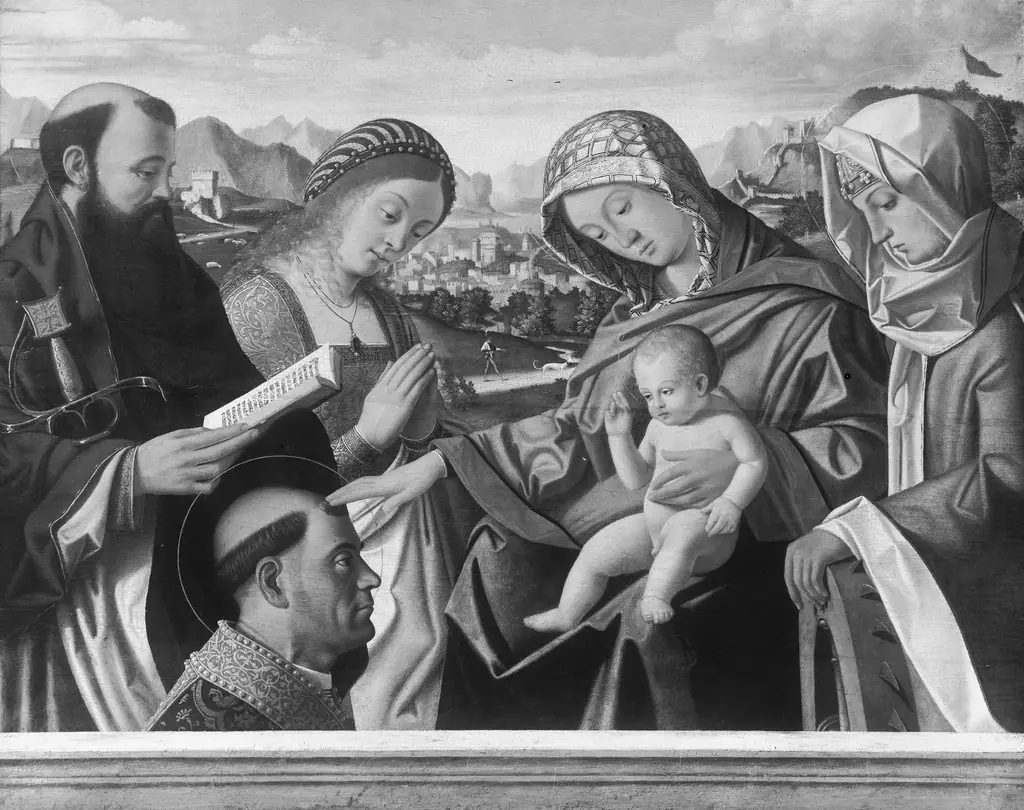
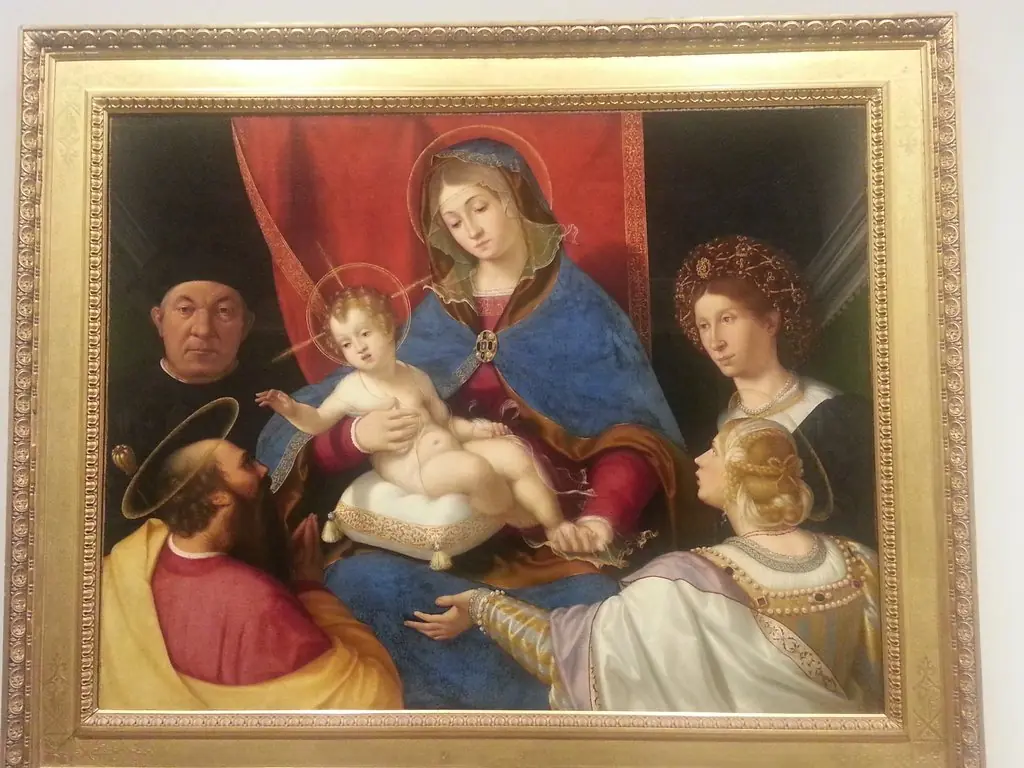
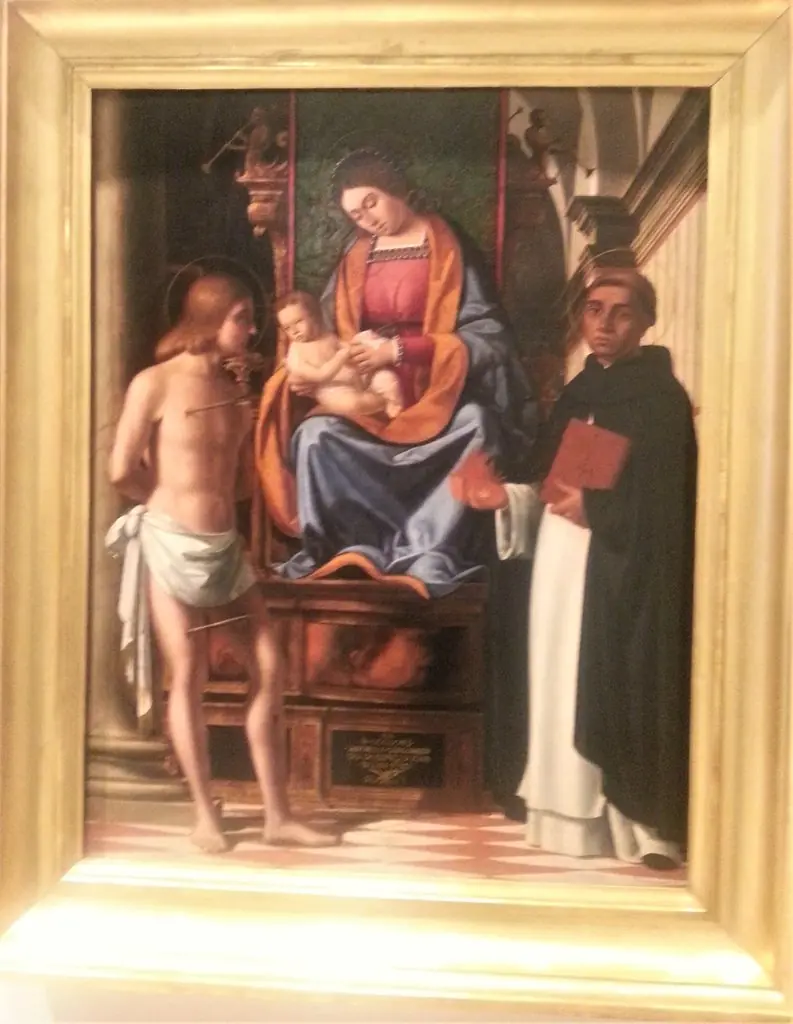
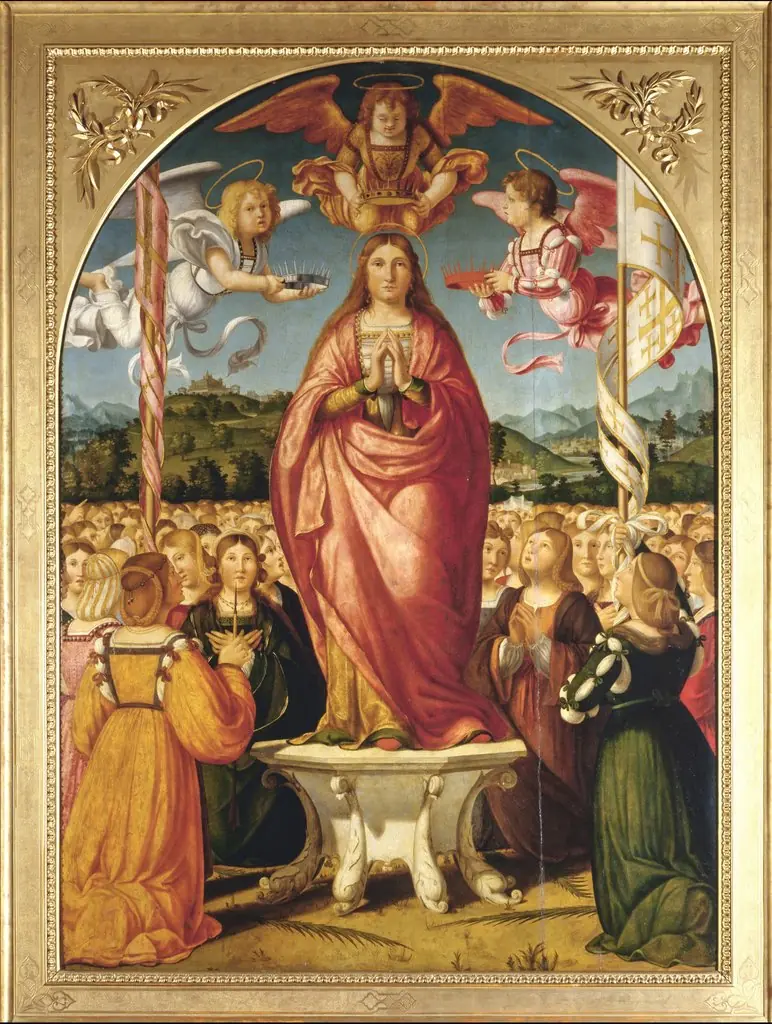
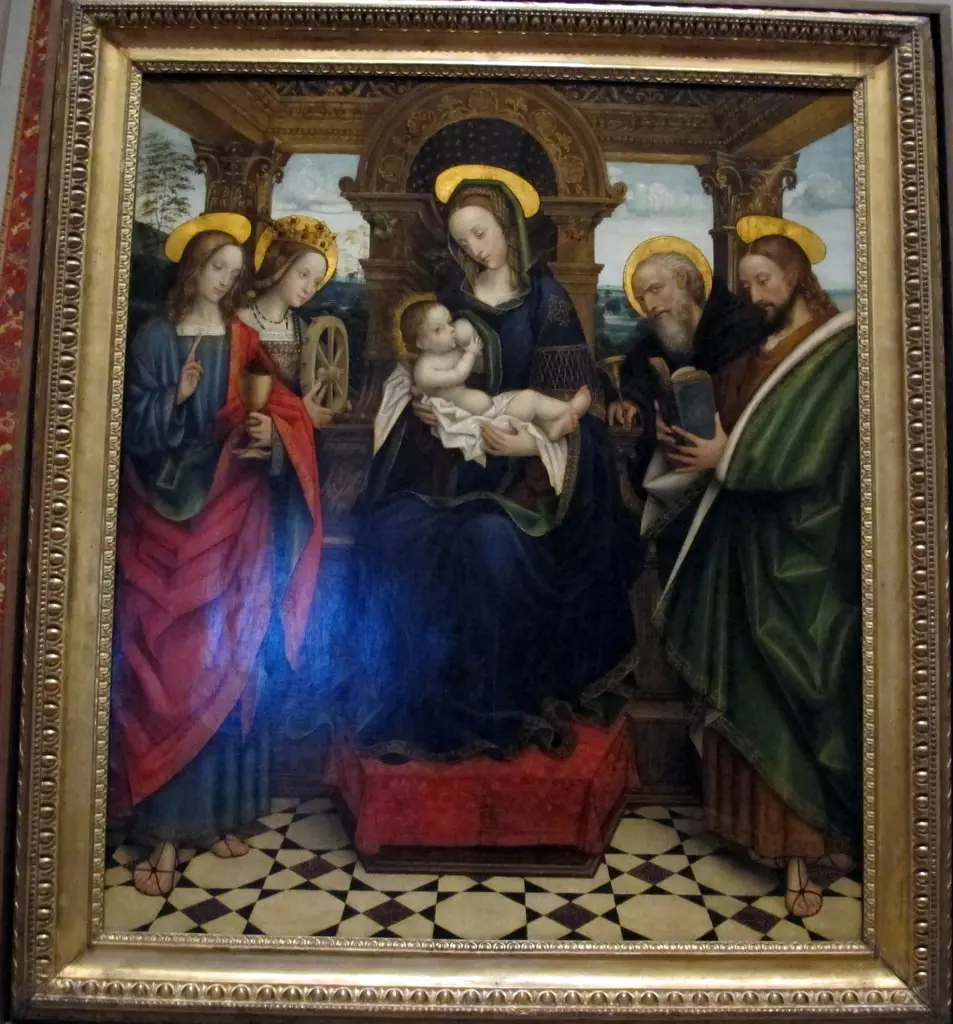 Enthroned Virgin and Child, with Saints John the Evangelist, Catherine of Alexandria, and Anthony Abbot, and a Saint Reading a Book
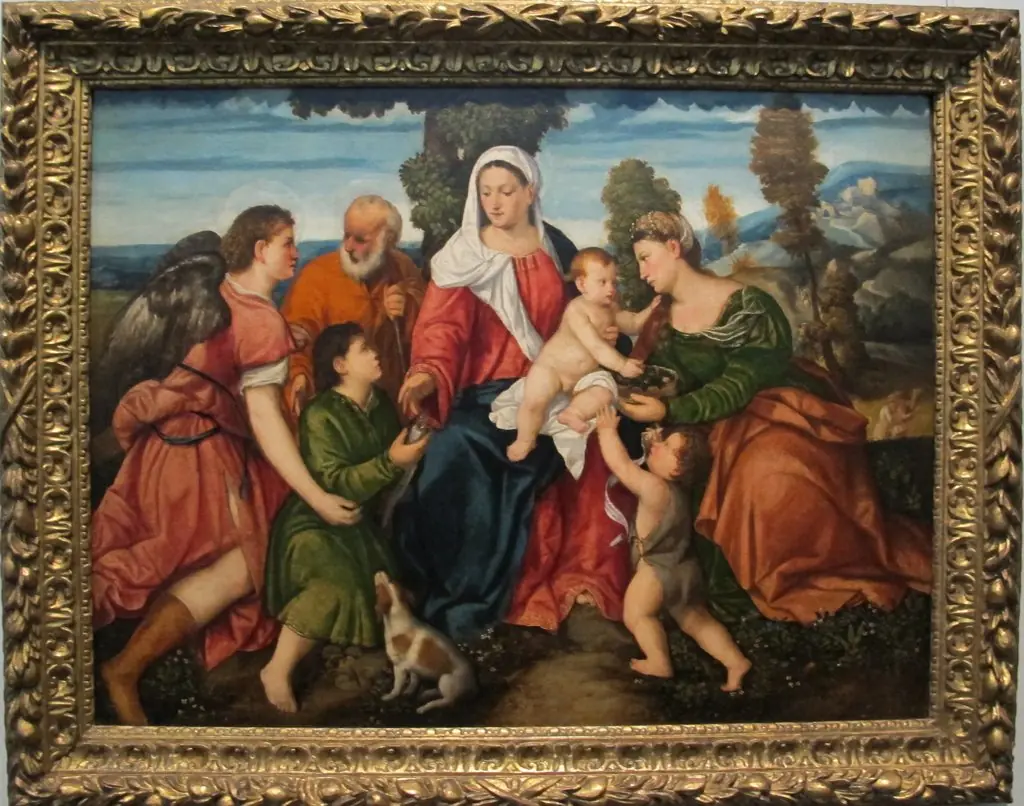 The Holy Family with Tobias and the Angel, Sts. Dorothy, and Infant John the Baptist
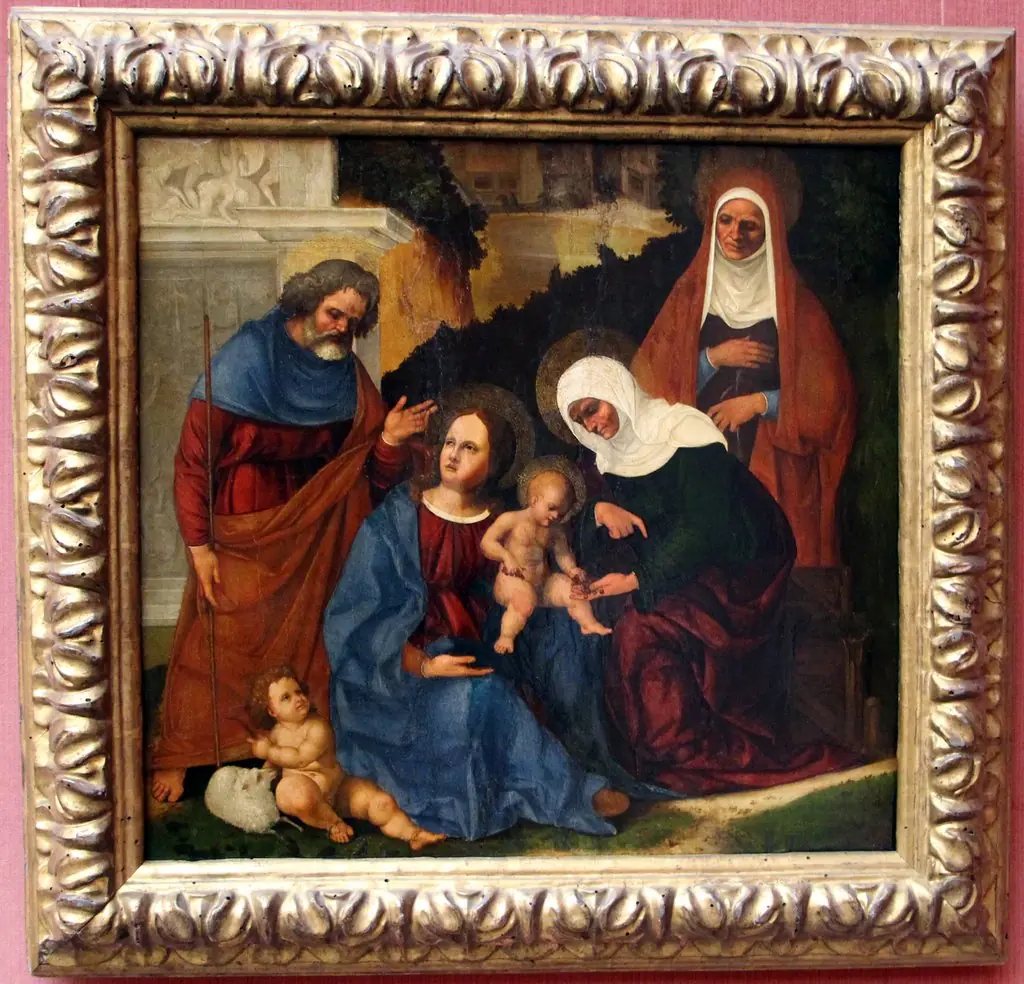 Die Heilige Familie mit Elisabeth, Anna und dem Johannesknaben
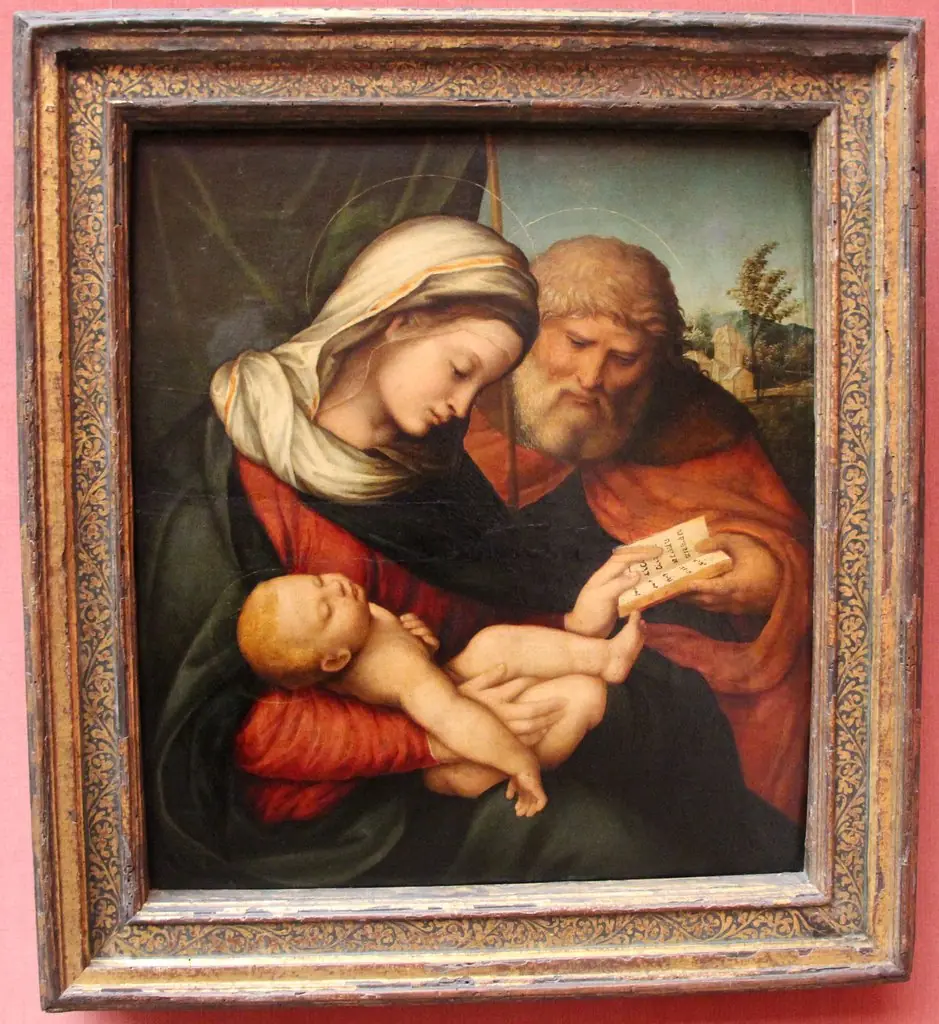 Die Heilige Famillie
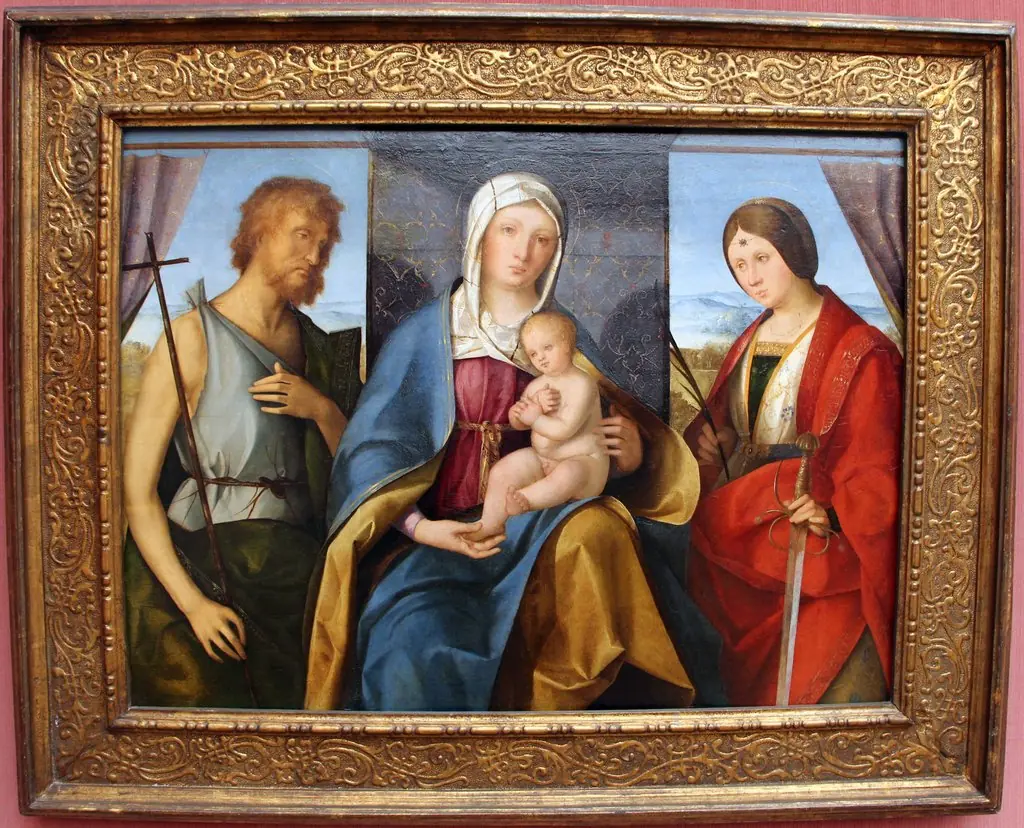 Thronende Maria mit d. Kind und den Heiligen Johannes dem Täufer und Katharina von Alexandrien
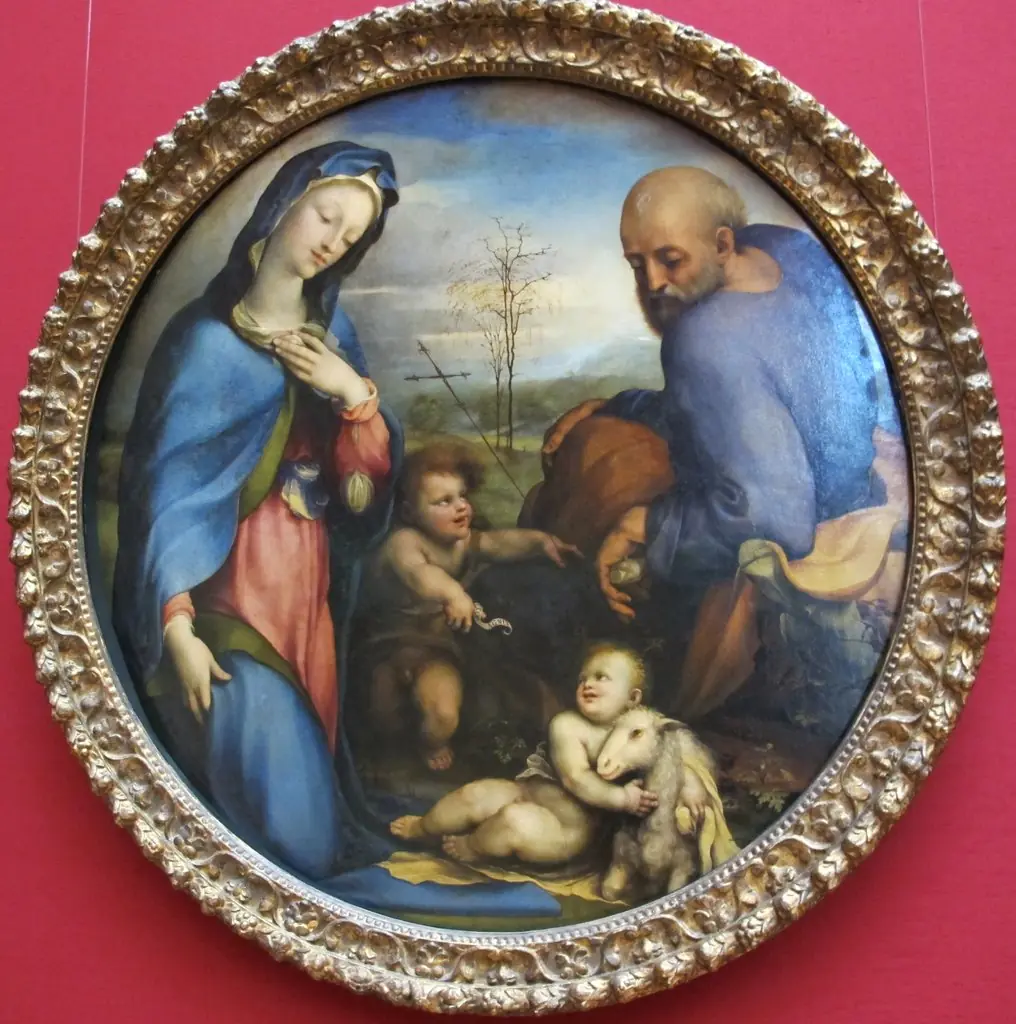 Holy Family with the Infant Saint John the Baptist and a Sheep
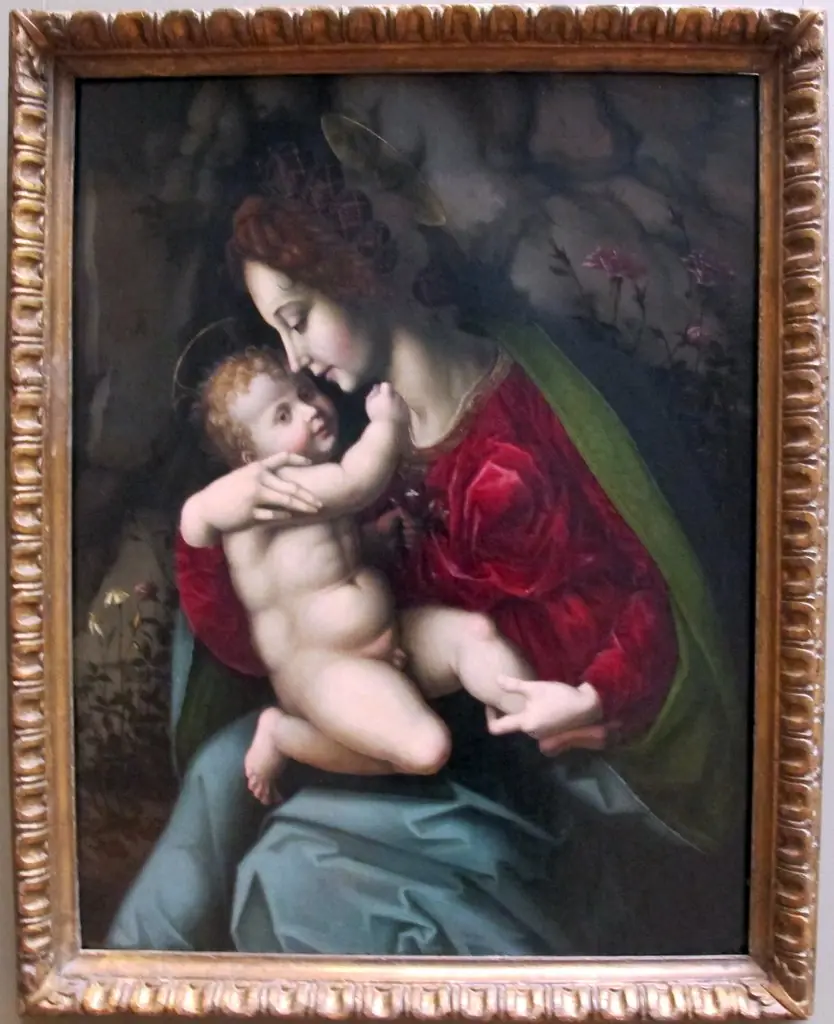 Virgin and Child
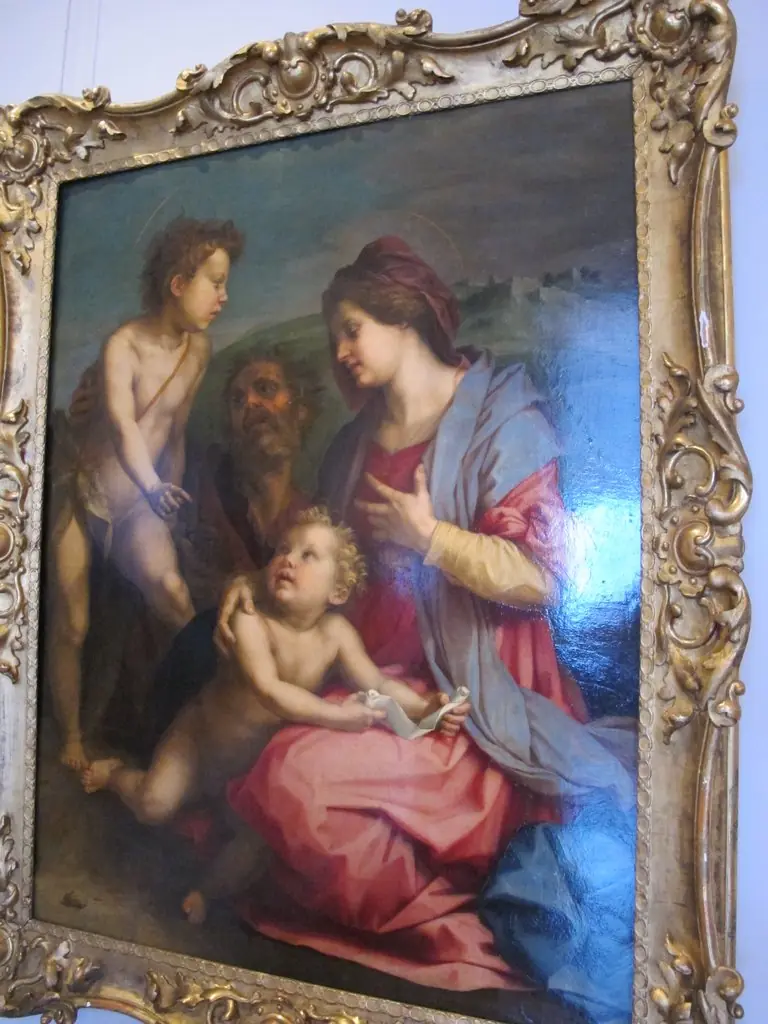 Holy Family with St John the Baptist
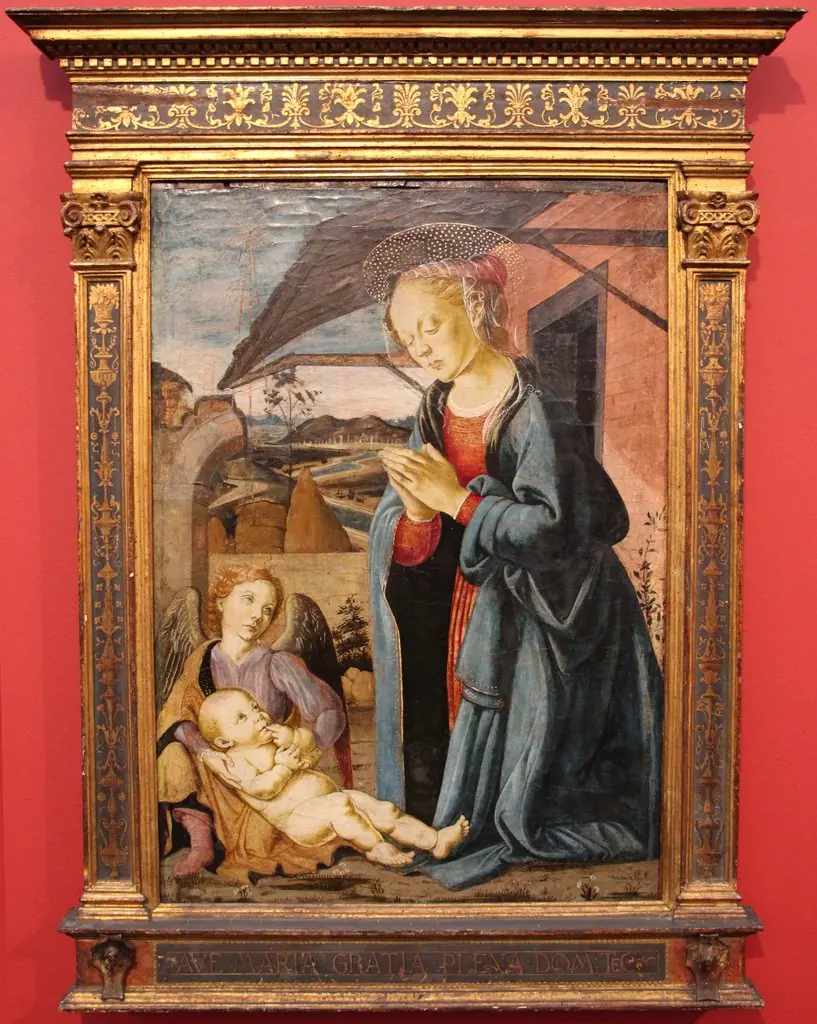 Madonna and Child and an Angel