Artwork
Landschap in Holland
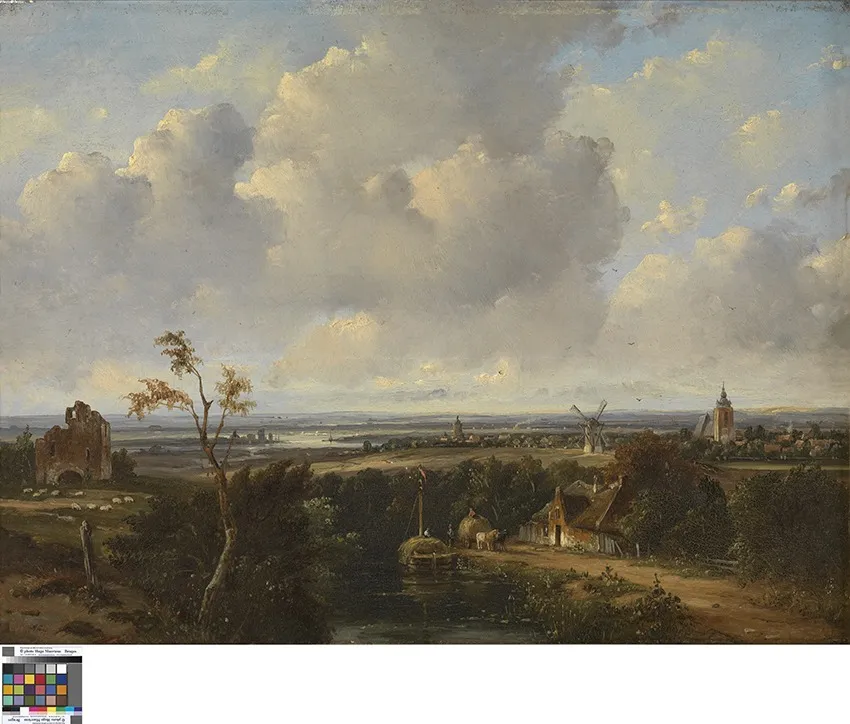
Landschap in Holland is an oil painting by Andreas Schelfhout. It dates from 1850 and is held in the collection of the Groeningemuseum.
About this work
Subject & Meaning
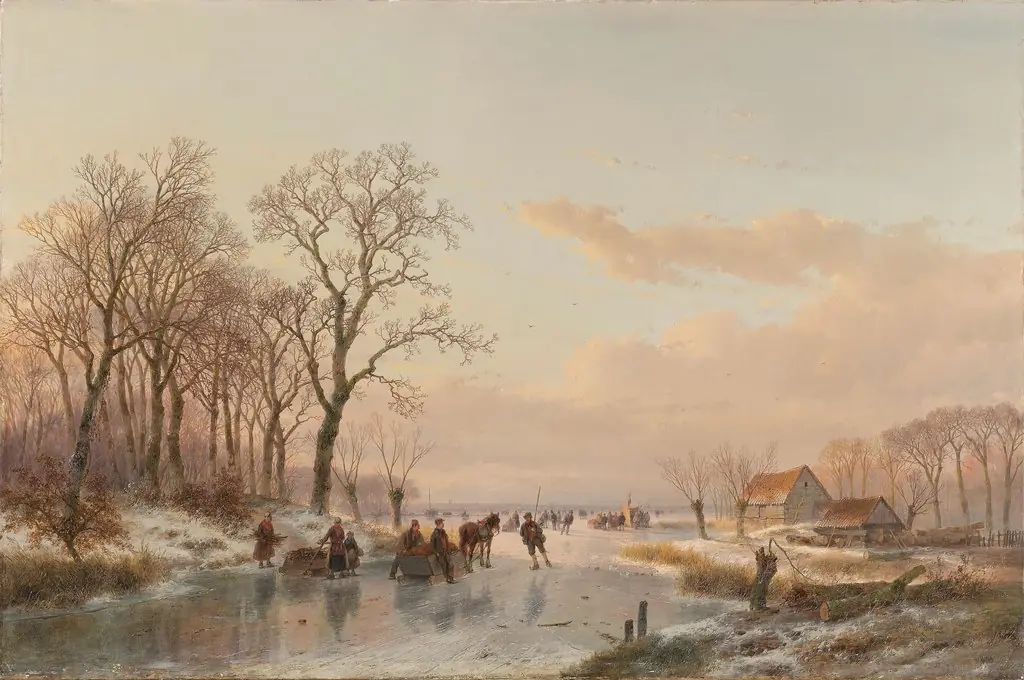
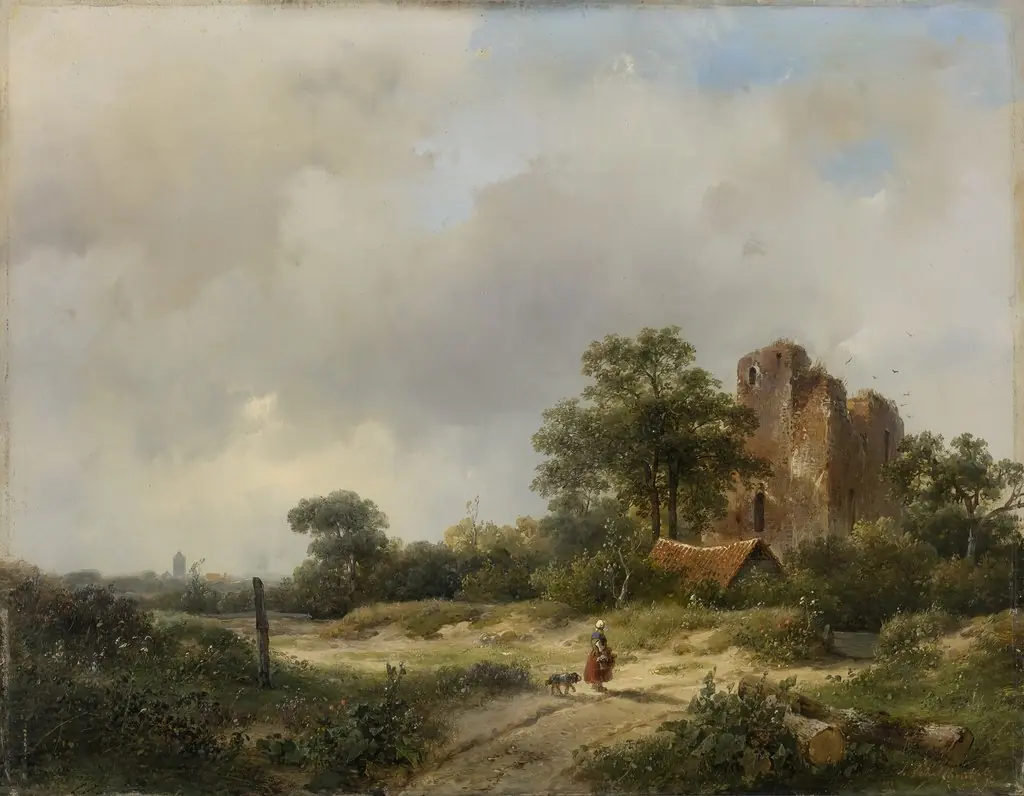
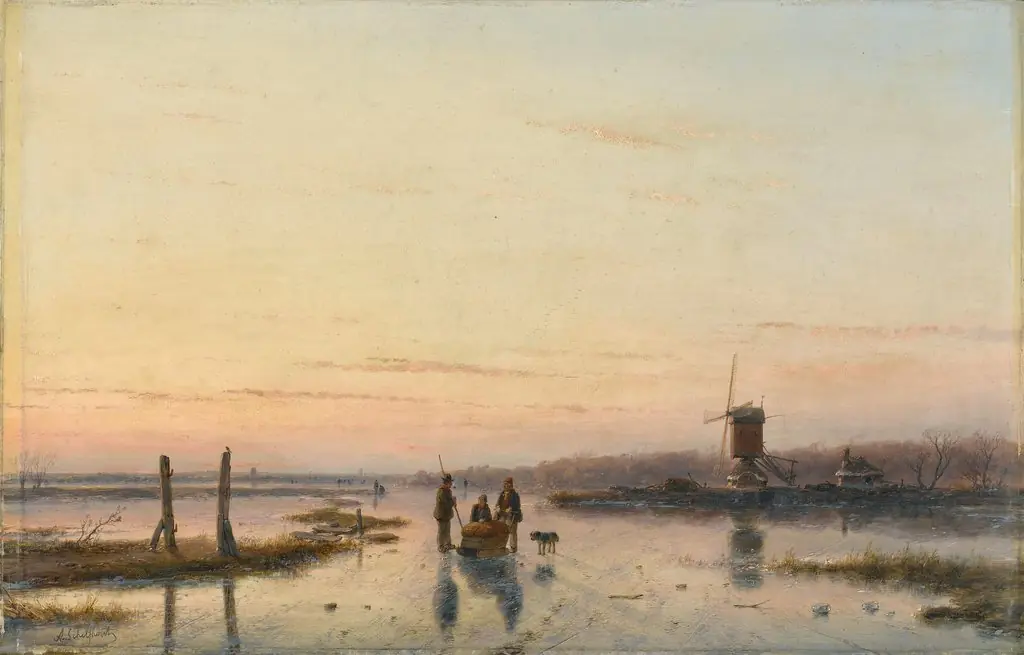
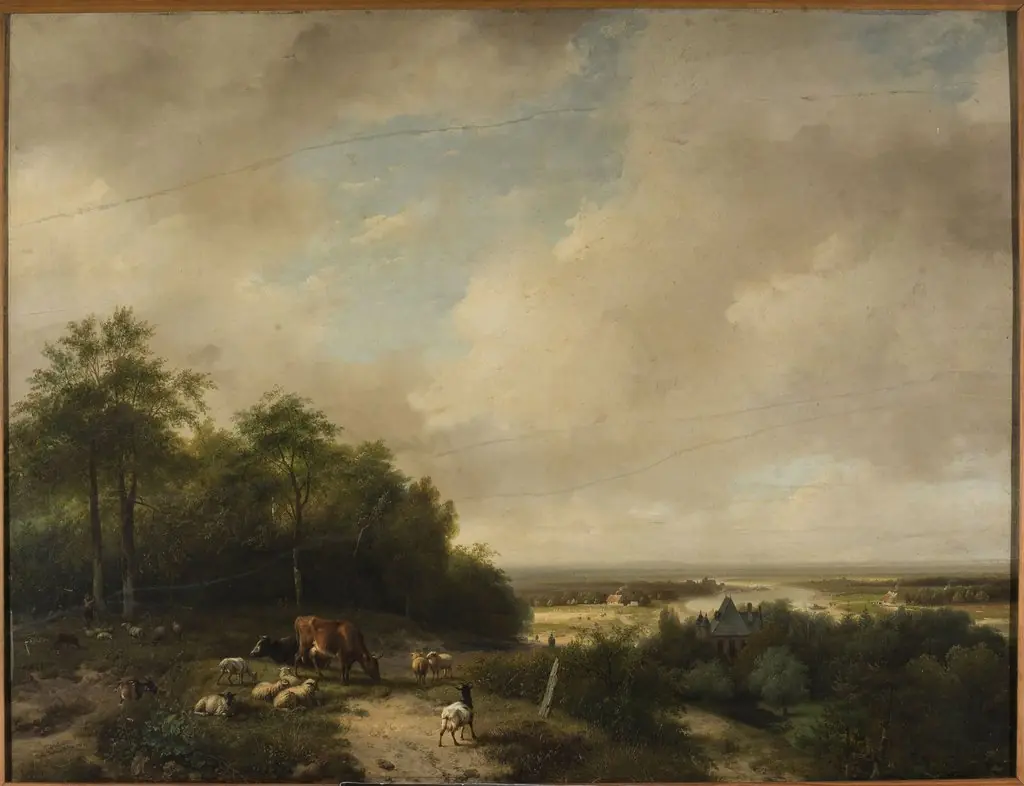
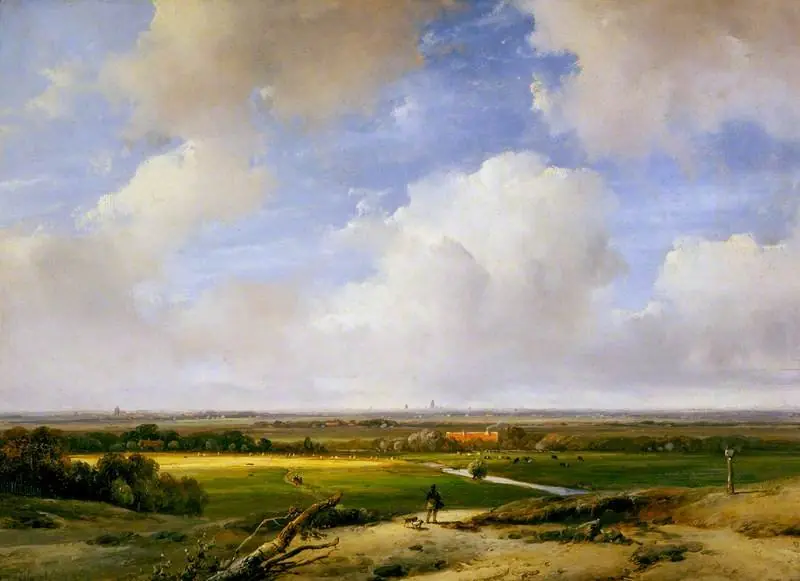
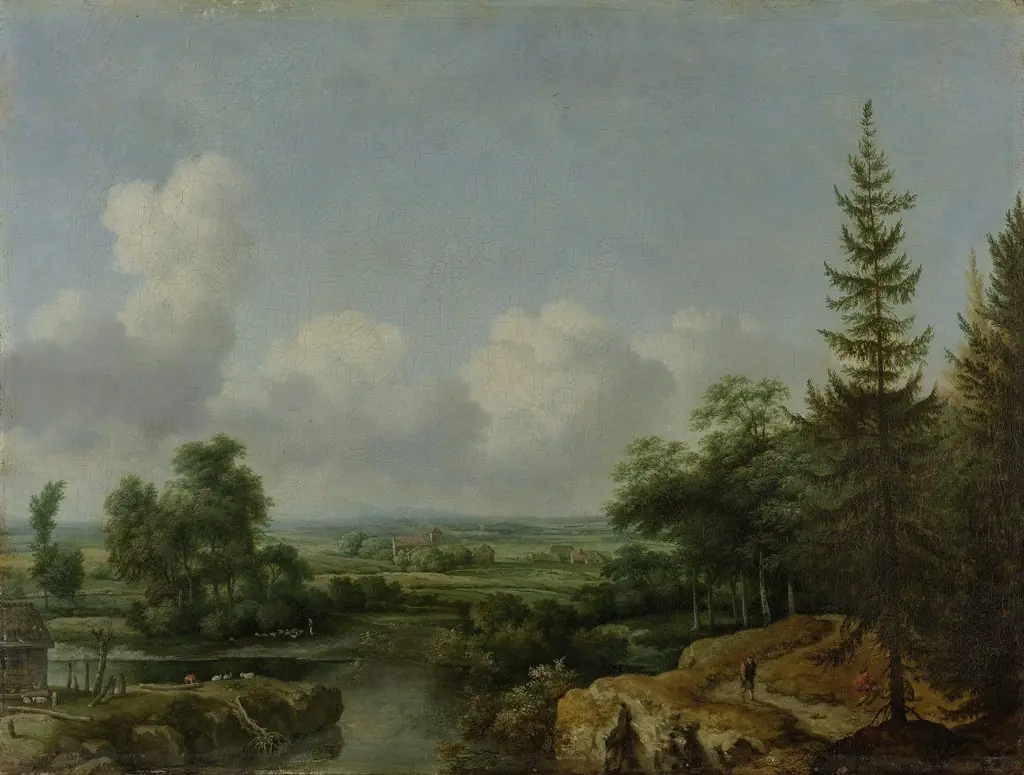
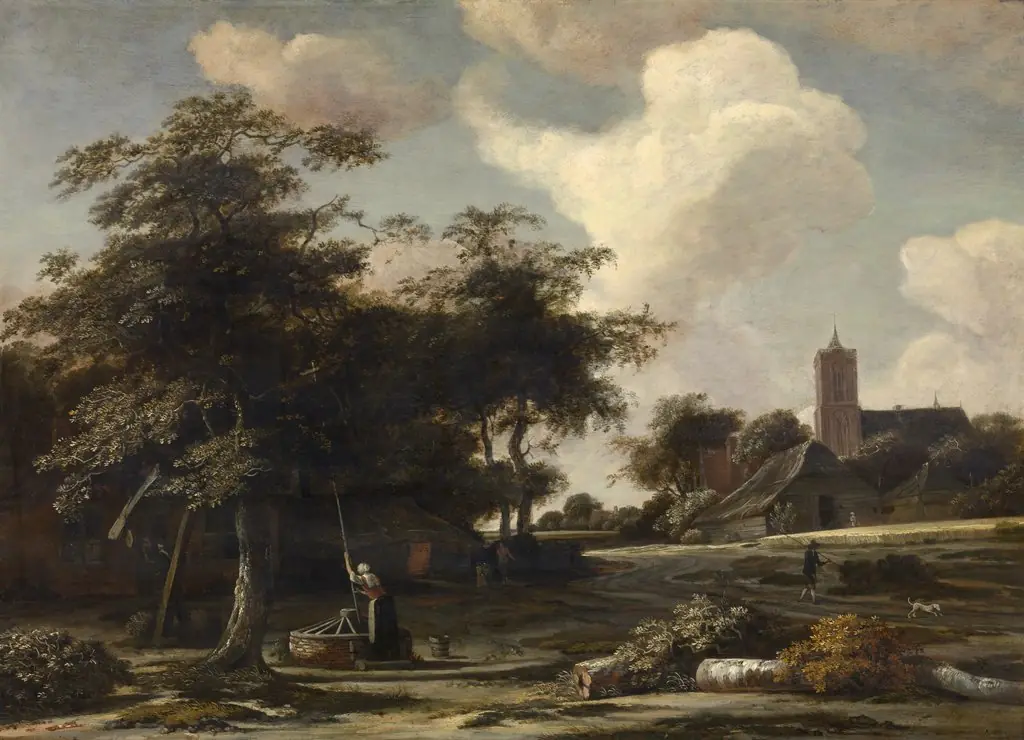
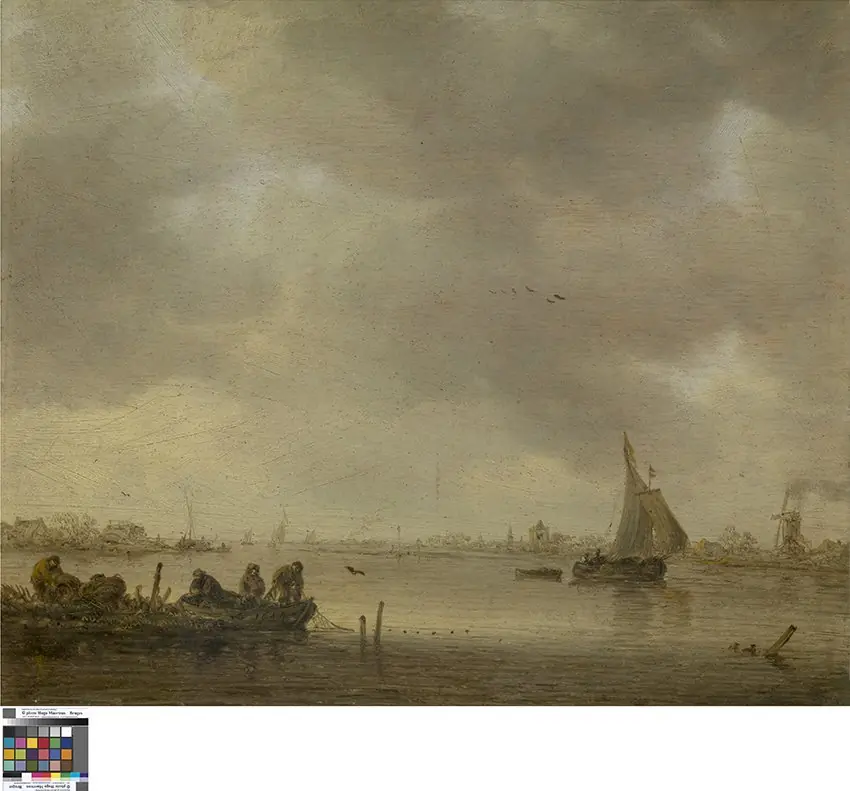
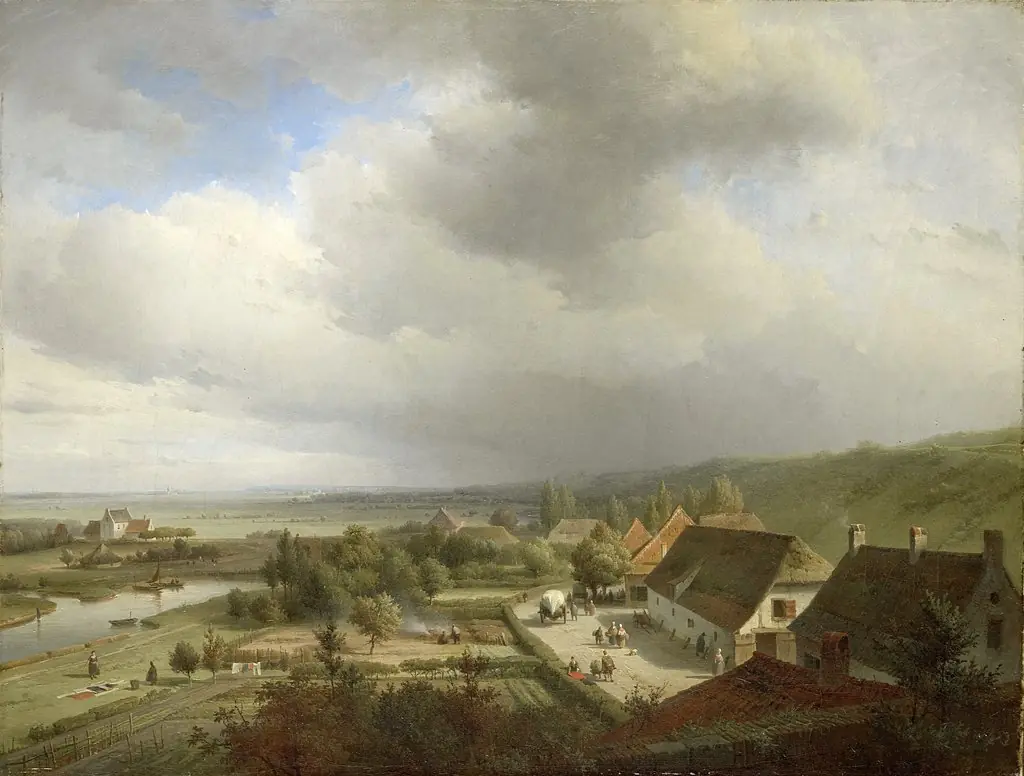
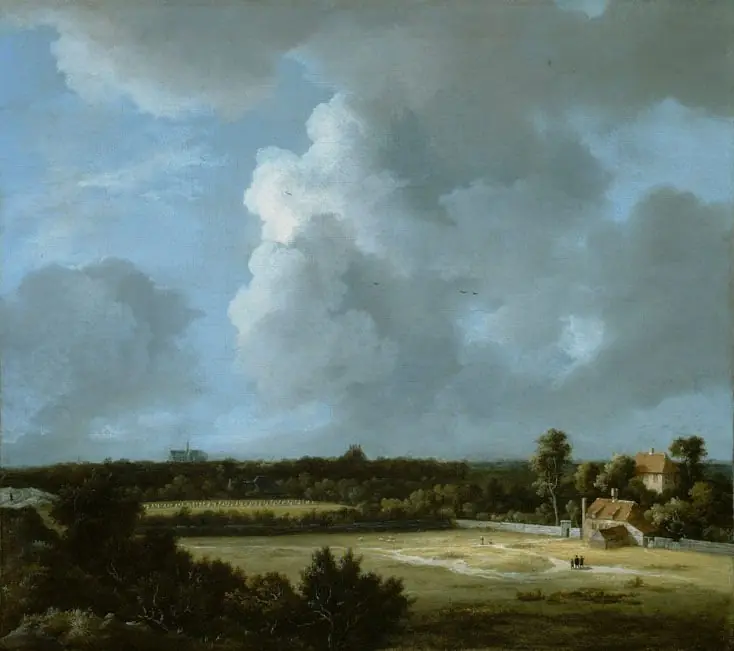
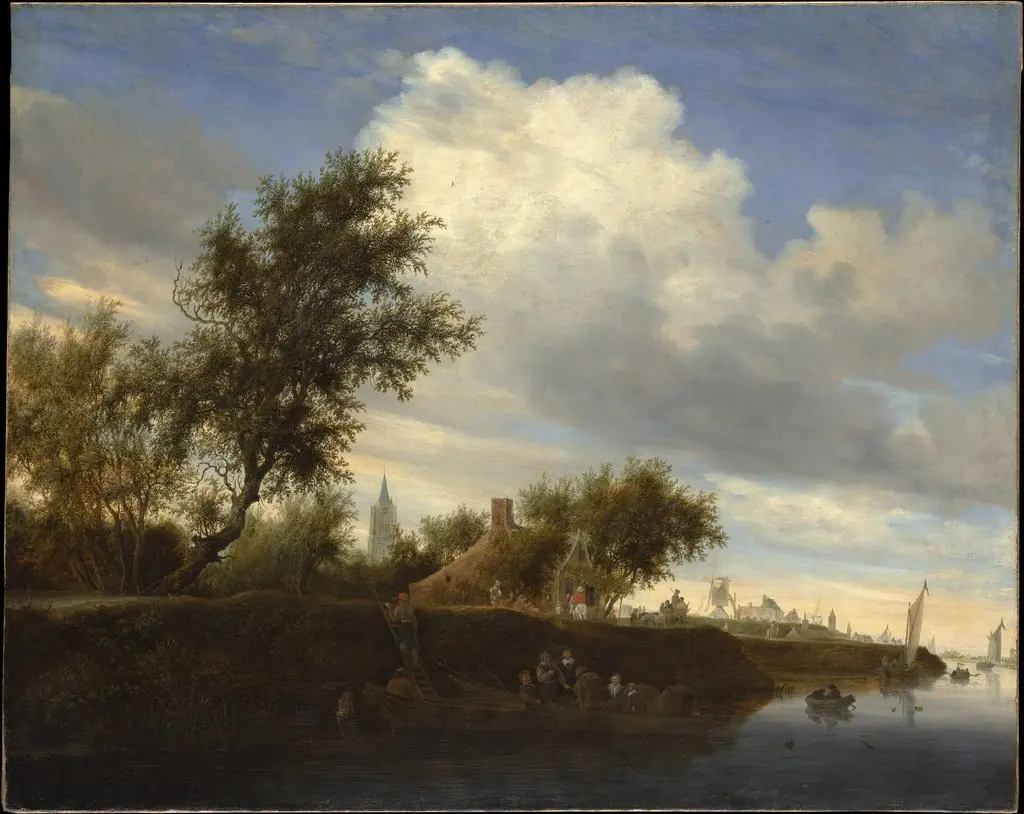
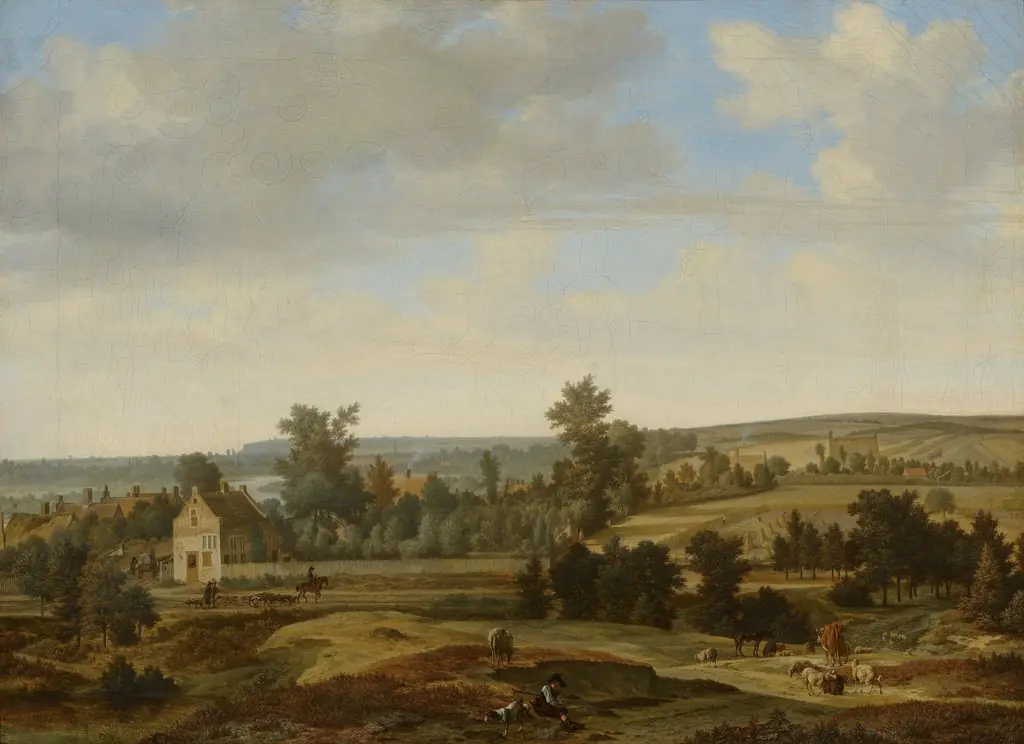
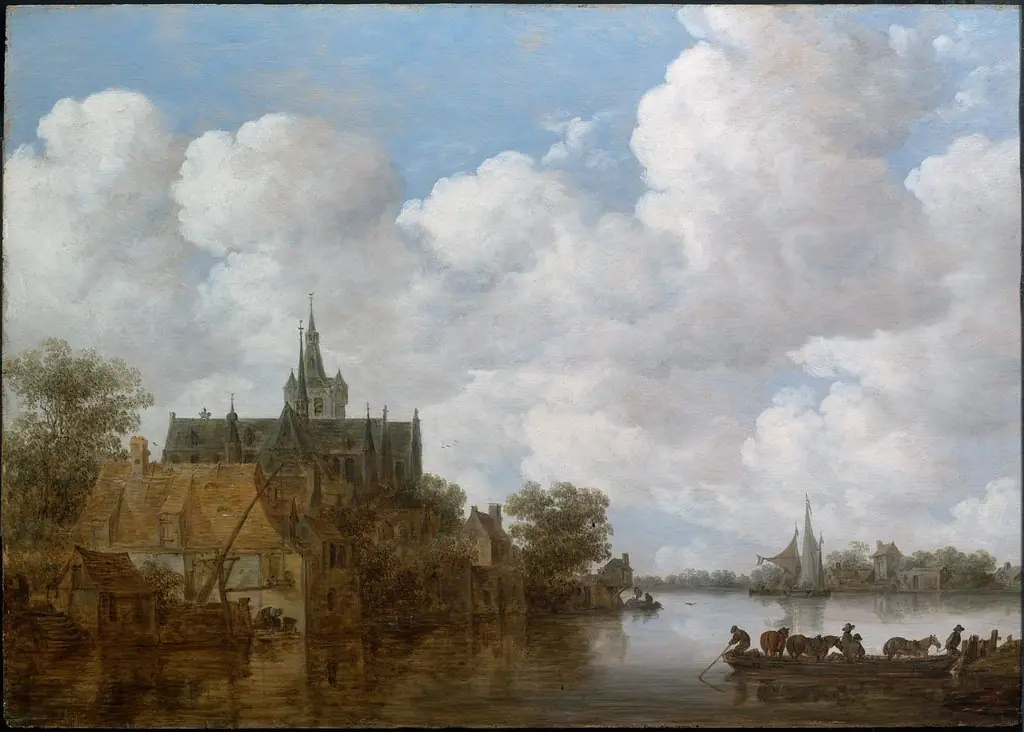
The painting depicts a wide, low-lying Dutch landscape under a clouded sky, centered on a farmstead with a thatched barn, a ladder wagon, and a horse.
The painting depicts a wide, low-lying Dutch landscape under a clouded sky, centered on a farmstead with a thatched barn, a ladder wagon, and a horse. A windmill stands in the middle distance, its sails catching the light, while a small church rises above clustered village rooftops. A boat rests on the riverbank, and ruins of an older structure punctuate the horizon, suggesting layers of historical time.
The scene conveys the quiet persistence of rural life in the Netherlands during the mid-nineteenth century. Schelfhout’s composition emphasizes domesticated nature, cultivated fields, managed waterways, and traditional buildings, reflecting pride in Dutch landscape identity and the integration of technology (the windmill) with agrarian routine.
Technique & Style
Schelfhout employed oil paint on a wooden panel to render the Dutch landscape, a technique evident in the detailed brushwork and atmospheric rendering of foliage, sky, and water. The composition balances precise architectural elements such as the farmhouse, windmill, and church ruins with natural motifs including trees, a boat, and a ladder wagon, reflecting the formal clarity and stylistic restraint characteristic of early 19th-century Dutch landscape painting. The work’s handling of light and spatial depth underscores its formal stylistic qualities, aligning with the genre’s emphasis on observed realism and compositional harmony.
History & Provenance
The painting Landschap in Holland was created by Andreas Schelfhout in 1850. Executed in oil on panel, the work measures 52.5 cm in height and 68 cm in width. The piece is currently held in the collection of the Groeningemuseum.
The artwork depicts a Dutch landscape featuring elements such as a tree, boat, farmhouse, ladder wagon, horse, ruins, a church building, a windmill, and a village.
The painting Landschap in Holland by Andreas Schelfhout is held in the collection of the Groeningemuseum. Created in 1850, the work is executed in oil paint on panel and depicts a Dutch landscape featuring elements such as a windmill, church, and farmhouse. The provided sources confirm its current location and classification within the museum's holdings but do not list specific inventory numbers or details regarding its exhibition history.
Context
Landschap in Holland is an 1850 oil painting by Andreas Schelfhout depicting a Dutch river scene with trees, a boat, farmhouse, and windmill. The work belongs to the Groeningemuseum's collection in Bruges and exemplifies 19th-century Dutch landscape painting's focus on atmospheric detail and rural life. Its composition reflects Schelfhout's influence on the Romantic movement while maintaining ties to the Dutch Golden Age tradition of topographical accuracy.
The painting's material execution on panel and precise rendering of architectural elements underscore the technical conventions of Dutch landscape artists of the period. Critical scholarship highlights its significance as both a record of mid-century Dutch scenery and a bridge between classical landscape conventions and emerging naturalist approaches in 19th-century European art. The work remains a key reference point for understanding the evolution of Dutch landscape painting within broader European artistic developments.
Overview
Created circa 1850, Landschap in Holland is an oil painting by the Dutch artist Andreas Schelfhout. The work presents a tranquil rural vista, anchored by a modest stone wall and a thatched farmhouse, with a horse and a few figures nearby. A windmill rises on the horizon under a sky filled with soft, billowing clouds, conveying a sense of calm expanses.
Artist & collection
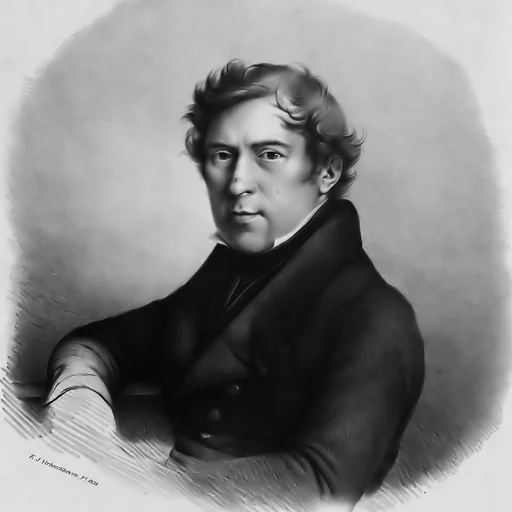
Artist
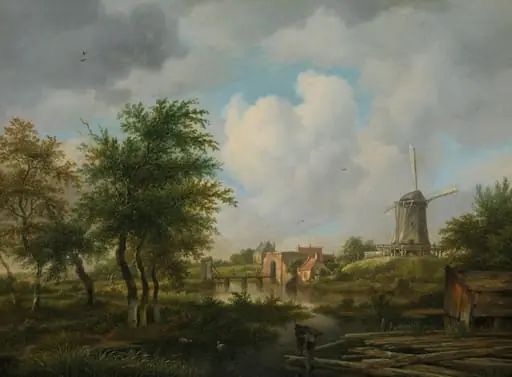
Andreas Schelfhout (1787–1870) was a Dutch painter, etcher and lithographer, known for his landscape paintings.