Artwork
Christ the Redeemer
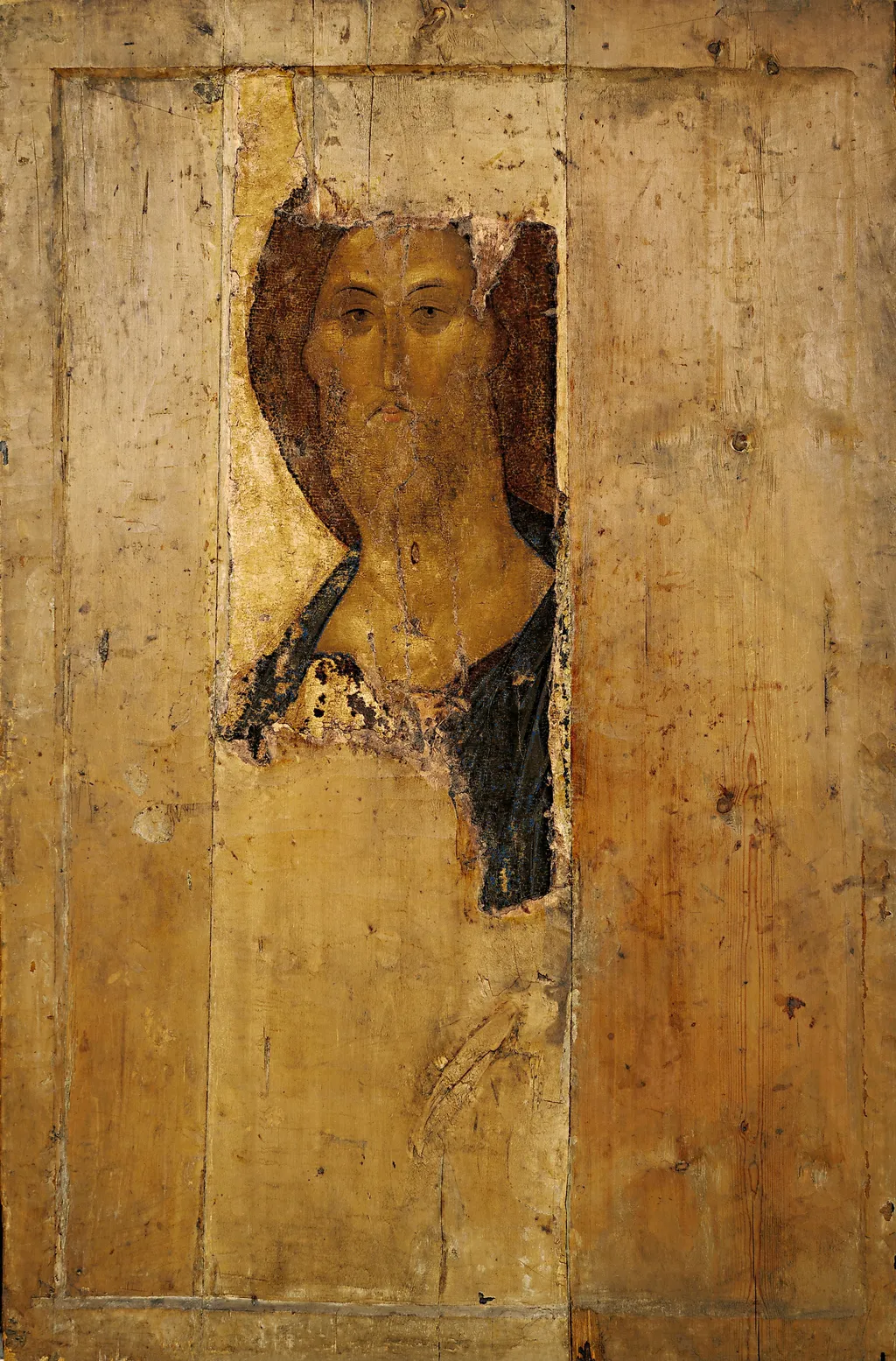
Christ the Redeemer is a tempera painting by the Russian Icon artist Andrei Rublev. It dates from 1420 and is held in the collection of the Tretyakov Gallery.
About this work
Overview
It is now part of the Tretyakov Gallery’s permanent collection in Moscow.
Created around 1420 by the Russian iconographer Andrei Rublev, this tempera painting portrays Christ the Redeemer in the traditional style of Orthodox Christian iconography. Executed on a wooden panel, the work reflects the spiritual priorities of medieval Russian religious art, emphasizing stillness and divine presence over naturalistic detail. It is now part of the Tretyakov Gallery’s permanent collection in Moscow.
Subject & Meaning
The image presents Christ with a serene, downward gaze and a calm expression, embodying compassion and divine authority. His long hair and beard follow established iconographic conventions, signaling both humanity and divinity. The absence of dramatic gesture or narrative context invites contemplation rather than storytelling, aligning with the devotional function of icons as windows to the sacred.
Technique & Style
Rublev applied tempera pigment mixed with egg yolk onto a prepared wood panel, allowing for fine detail and a luminous surface. The subtle layering of paint enhances the softness of the facial features and the depth of the robes. The natural grain of the wood remains visible, integrating the materiality of the support into the spiritual atmosphere of the image.
History & Provenance
The painting has been preserved within Russian ecclesiastical and later state collections since its creation. It entered the Tretyakov Gallery in the late 19th century as part of Pavel Tretyakov’s effort to assemble a national canon of Russian art. Its attribution to Rublev, while not documented by contemporary records, is supported by stylistic analysis and historical consensus.
Context
Produced during a period of religious consolidation in Muscovite Russia, the icon reflects the theological emphasis on Christ as merciful redeemer. Rublev’s work emerged from monastic traditions, particularly those linked to the Trinity Monastery, where spiritual discipline shaped artistic practice. This image was likely used for private devotion or liturgical veneration.
Legacy
Rublev’s Christ the Redeemer became a model for later Russian icon painters, influencing the aesthetic and spiritual tone of Orthodox imagery for centuries. Its restrained composition and meditative quality continue to be studied as exemplars of Byzantine-derived traditions adapted to Russian piety. The painting remains a touchstone in discussions of medieval religious art in Eastern Europe.
Own this work as a print
Artist & collection
Artist
Andrei Rublev (Russian: Андрей Рублёв, romanized: Andrey Rublyov, IPA:; c. 1360 – c. 1430) was a Russian artist considered to be one of the greatest medieval Russian painters of Orthodox Christian icons and frescoes. He…

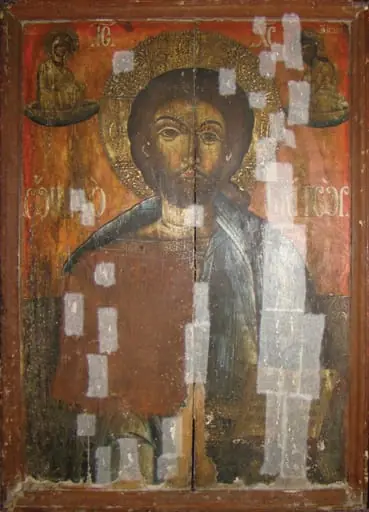 Deisis
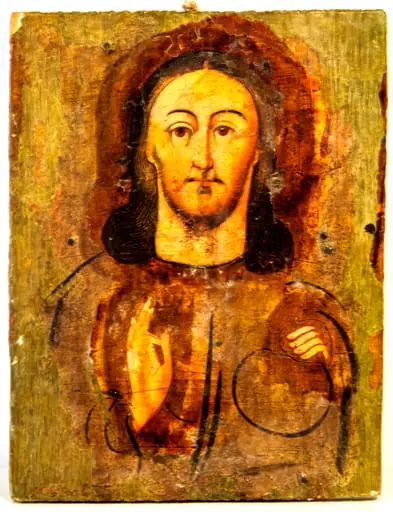 Pe un suport de lemn de brad de formă dreptunghiulară, în ax vertical este reprezentat Isus în ipostaza de Pantocrator.Cu dreapta binecuvintează, în stânga ține globul pământesc. Icoana a fost anterior acoperită cu ferecătură metalică, în momentul de față lipsește, fiind pictate doar zonele mâinilor și feței, restul fiind acoperit cu grund și un strat de culoare verzuie. Desenul este realizat coform canoanelor bizantine, tehnica iluminării treptate.Fața prelungă, barba scurtă, ochii mari, căprui, nasul lung, proporțiile fiind cele consacrate de tradiția bizantină.Părul castaniu, lucrat cu minuțiozitate, lăsat pe umeri. Desenul mâinilor foarte fin, contur roșcat. Se observă urme de cuie metalice în care a fost fixată ferecătura. Peste pictură a fost aplicat vernis.
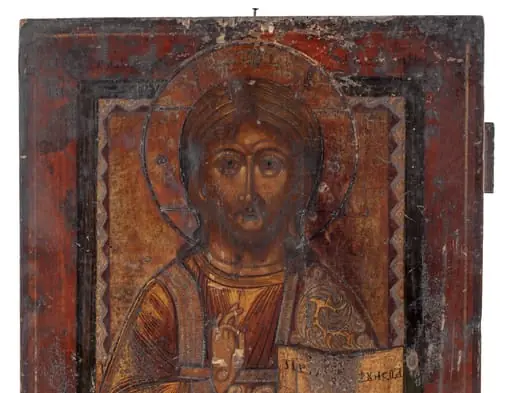 Iisus Christos (Iisus Hristos)
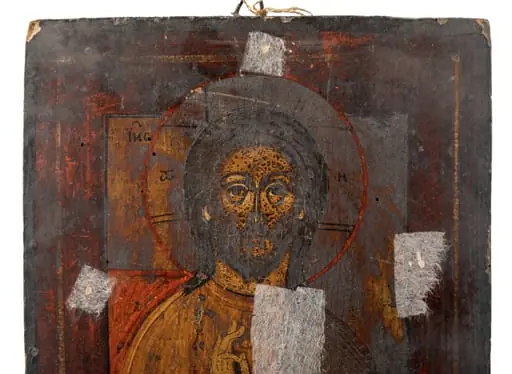 Crist binecuvântând
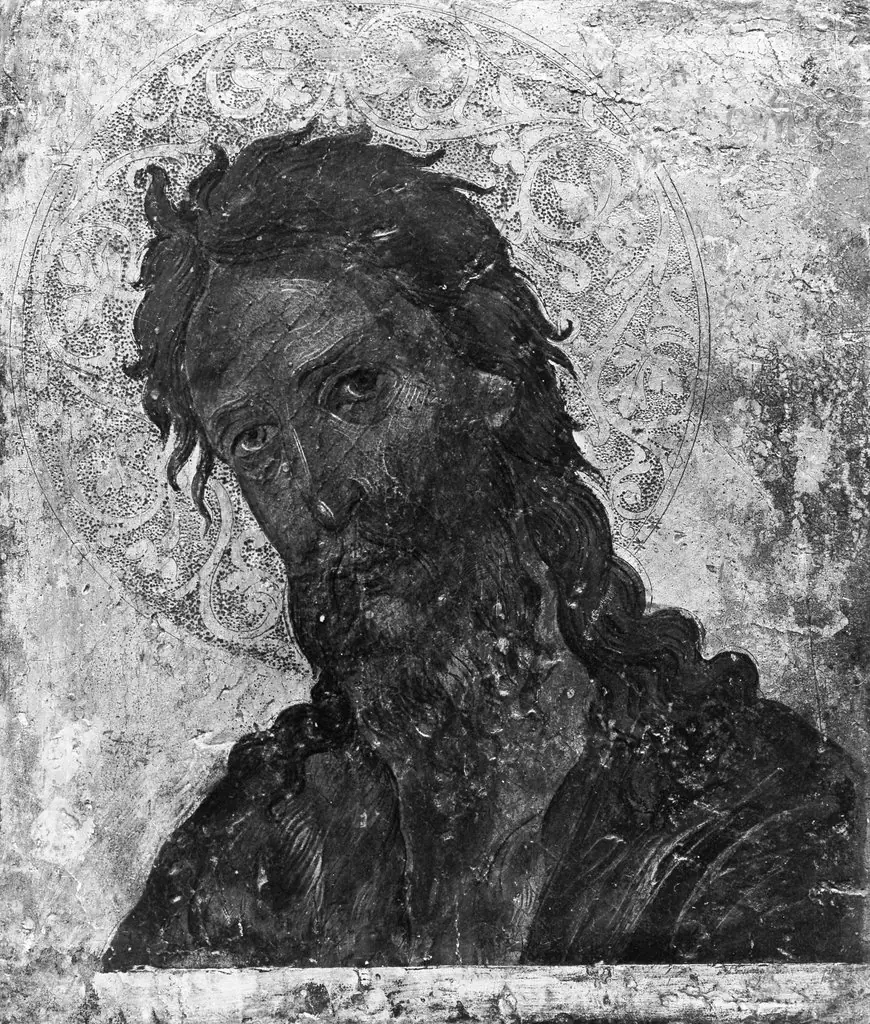 Head of Saint John the Baptist
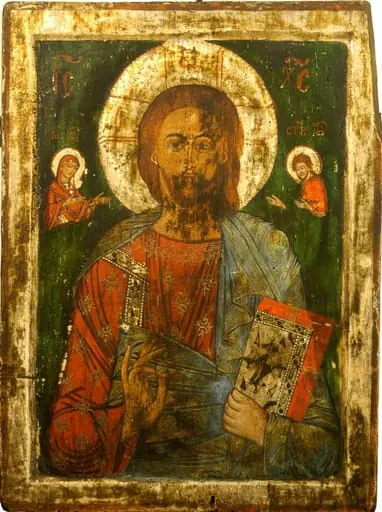 Deisis
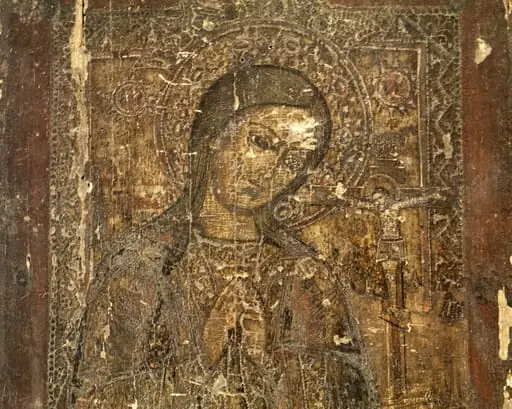 Icoana denumită și "Maica Domnului jalnică" sau îndurerată, o redă pe Maica Domnului în prim plan, cu mâinile împreunate, privind în depărtare către Fiul Ei răstignit pe cruce. Imaginea planurilor este inversată, accentul căzând pe durerea Mamei la moartea lui Iisus, redat în planul îndepărtat, răstignit pe dealul Golgotei. Fecioara Maria, cu capul ușor înclinat spre stânga, are părul despletit, căzând pe umeri, ovalul feței rotunjit, nas subțire și drept, gura mică, ochi migdalați, mari, sprâncenele arcuite, mâinile împreunate la piept.În jurul capului aureolă cu motive geometrice incizate, la fel coroana ce depășește linia de delimitare a chenarului, deasupra aureolei . Tunica are cu mâneci larg cu borduri cu motive geometrice. La baza crucii Răstignirii craniul lui Adam. Pământul sugerat de benzi de culoare alb-gălbui, negru și verde. Chenar dublu, la interior motive geometrice: zigzaguri, puncte și motive fitomorfe. Siclitadele Maicii Domnului în chenare circulare pe fondul aurit. În stânga inscripție parțial indescifrabilă, din care se poate deduce doar numele Mariei(Precista) Bordura marginală(și foița metalică incizată) specifică icoanelor de tip krashnuskha, realizate în centrele de la Holui și Mstera.
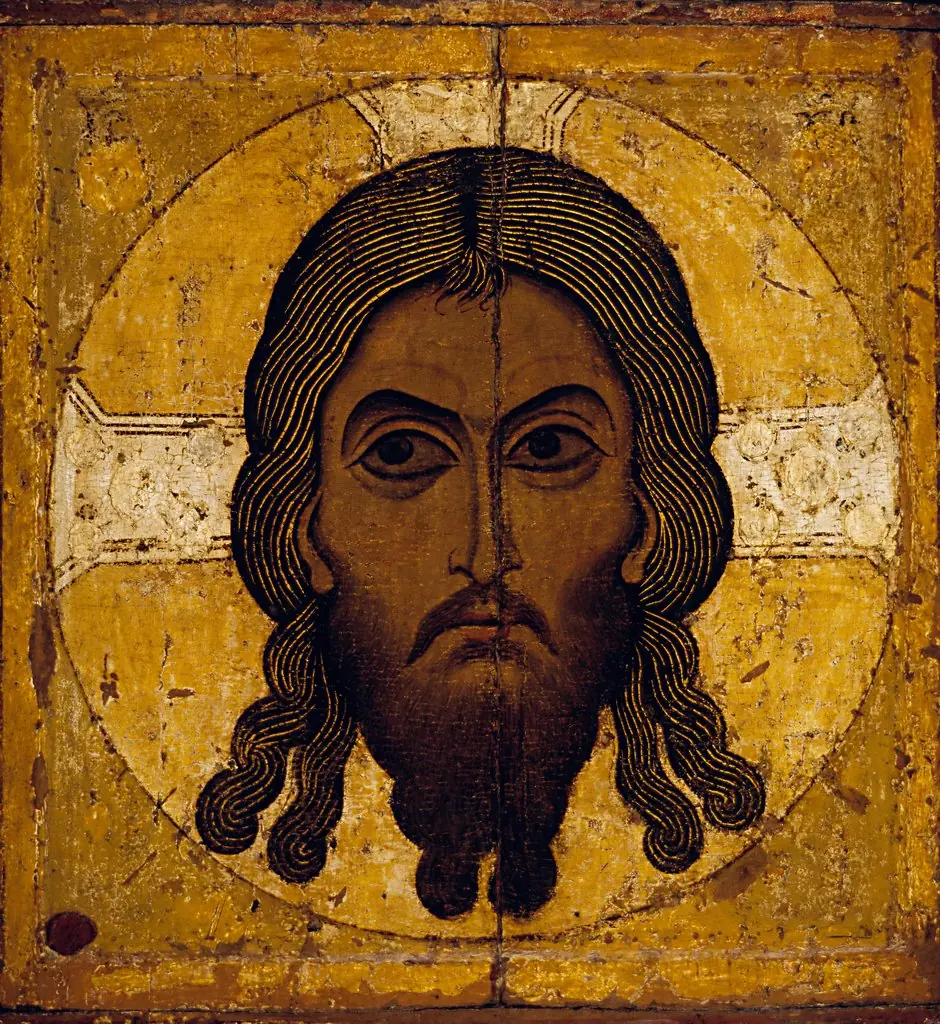 Saviour Made Without Hands
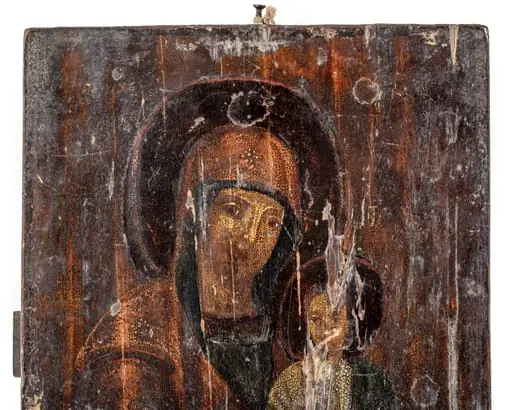 Maica Domnului
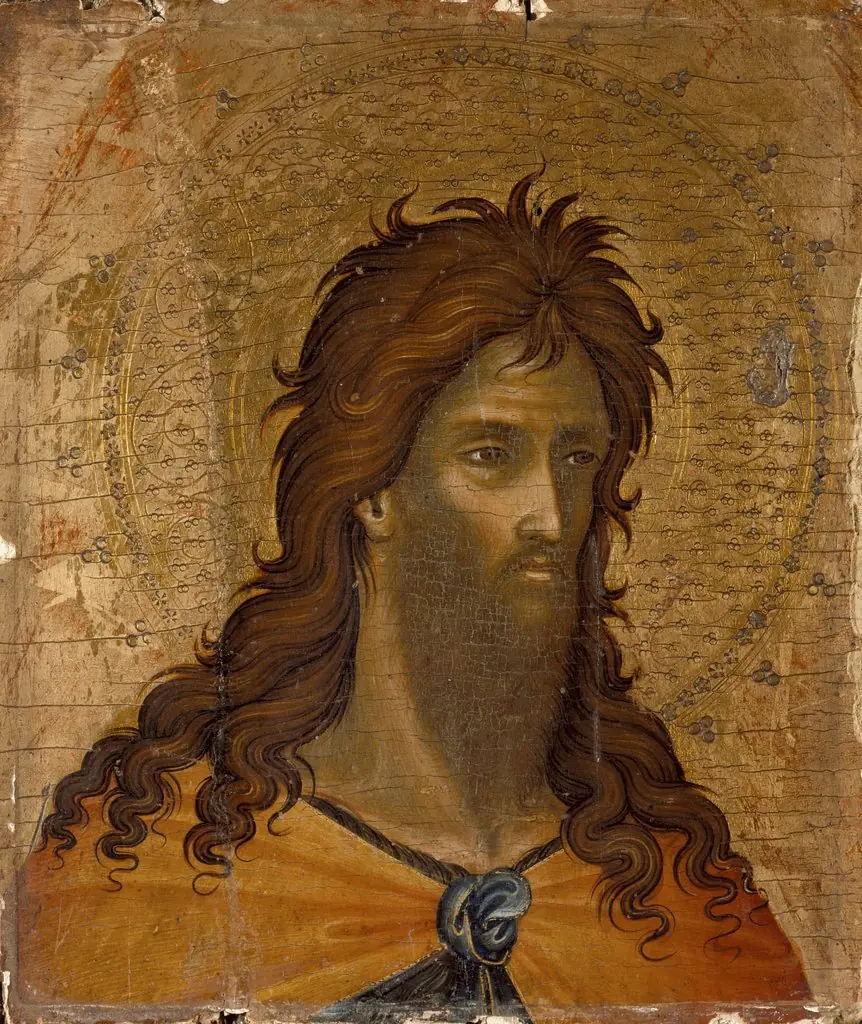 St. John the Baptist (fragment)