Artwork
The Castle of Batavia
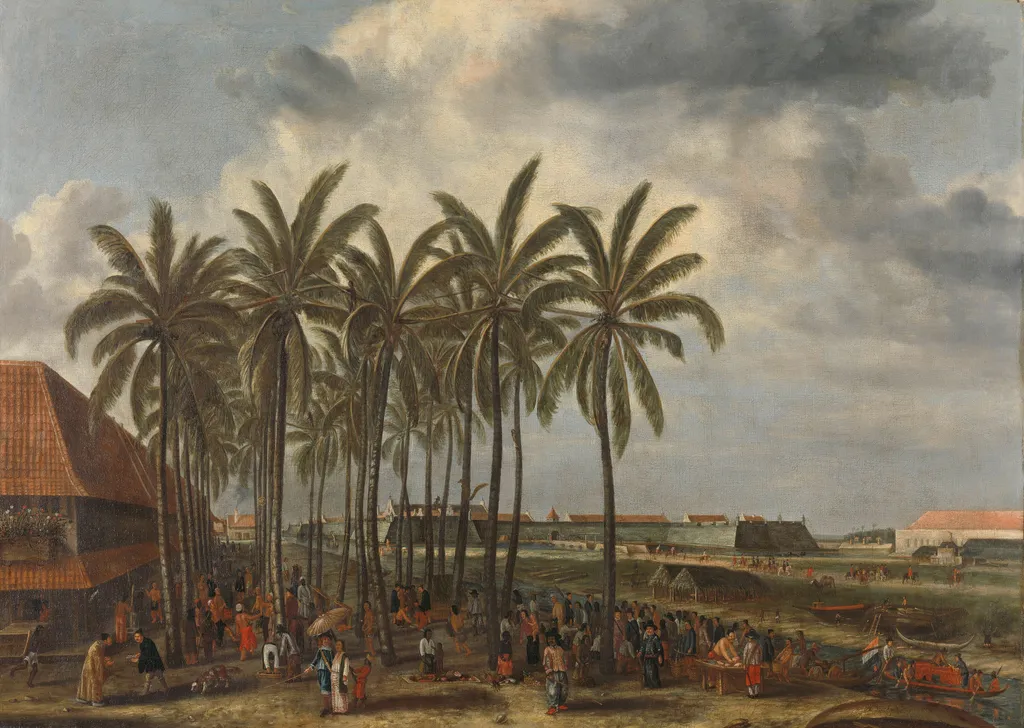
The Castle of Batavia is an oil painting by the Dutch Golden Age artist Andries Beeckman. It dates from 1662 and is held in the collection of the Rijksmuseum.
About this work
Subject & Meaning
In the background, the fortress looms as Dutchmen on horseback depart, symbolizing the power and reach of the VOC amidst the diverse inhabitants of the city.
The painting depicts the Batavia Castle, the headquarters of the Dutch East India Company in present-day Jakarta, viewed from the perspective of Kali Besar Barat with the river to the right and a covered fish market to the left. The scene functions as a vibrant tableau of the colony's multi-ethnic society, populated by Chinese, Malay, Moluccan, Dutch, mestizo, Japanese, and Timorese figures. Specific groups are identified by their attire and activities: men in striped clothing represent Mardijkers (freed slaves), while a Dutch man walks with his Asian wife under a parasol.
The composition also captures daily life, showing Maluku people playing a rattan ball game and boys harvesting coconuts from palm trees. In the background, the fortress looms as Dutchmen on horseback depart, symbolizing the power and reach of the VOC amidst the diverse inhabitants of the city.
Technique & Style
Created by Andries Beeckman between 1662 and 1663, The Castle of Batavia is an oil painting executed on canvas. The work measures approximately 108 to 111 cm in height and 151.5 to 154 cm in width. Stylistically, the piece functions as a landscape that depicts the Batavia Castle and its surrounding environment with a vibrant, multi-ethnic street market scene.
Beeckman utilized sketches made during his time as a VOC soldier in Batavia to construct the composition, though he exercised topographical freedom by repositioning the fish market relative to the river and castle. The painting is signed "ABeeckman Fecit" in the lower right corner. It was originally commissioned to decorate the meeting room of the East Indies House in Amsterdam before entering the Rijksmuseum collection.
History & Provenance
Andries Beeckman, who served as a VOC soldier in Batavia in 1657, returned to Amsterdam in 1658 and created this work using sketches made on site. In April 1662, the Amsterdam Chamber of the VOC commissioned two paintings from the artist for the meeting room of the East Indies House, paying 240 guilders for the pair delivered in 1663. This painting, signed "ABeeckman Fecit," is believed to be one of these commissioned works, likely executed between 1662 and 1663.
The artwork hung above the chimney in the East Indies House until 1859. That year, the Rijksmuseum purchased the painting from the institution, transferring it to the museum's collection where it remains.
The painting is held in the Rijksmuseum, Amsterdam, where it is displayed in Room 2.9.
It was accessioned in 1859 after the Rijksmuseum purchased it from the East India House in Amsterdam, where it had hung above the mantel in the meeting room until that year.
Its exhibition history includes inclusion in Treasures of the Golden Age: Masterpieces of National History, Gewürze. Sinnlicher Genuss. Lebendige Geschichte, and the Rijksmuseum’s long-term display in Room 2.9.
Context
Andries Beeckman created this work following his service as a VOC soldier in Batavia, utilizing sketches made on-site to compose the scene after returning to Amsterdam. Commissioned by the Amsterdam Chamber of the VOC around 1662 to decorate the East Indies House, the painting serves as a historical document of the colony's multi-ethnic society, depicting diverse groups including Chinese, Malays, and Mardijkers within a bustling market setting.
While Beeckman took topographical liberties, such as altering the fish market's proximity to the fortress, the composition remains a significant representation of Dutch colonial presence in Indonesia. The work's historical importance is evidenced by an authorized 1688 copy commissioned by the Elector of Saxony, which integrated elements from Beeckman's separate costume series. Acquired by the Rijksmuseum in 1859, the painting endures as a primary visual record of 17th-century Batavia.
Legacy
The painting Het Kasteel van Batavia became a reference point for Dutch colonial visual culture, shaping how European audiences conceptualized Batavia’s multicultural urban life. Its depiction of diverse ethnic groups in the market scene influenced later colonial-era artworks and ethnographic displays, including copies commissioned by John George III of Saxony and adaptations such as De markt van Batavia. The work’s legacy persists in museum exhibitions, scholarly discussions of VOC-era art, and its role as a visual document of 17th-century Batavia’s social fabric.
The Rijksmuseum’s acquisition in 1859 ensured its preservation and continued influence on the study of Dutch colonial history.
Overview
Andries Beeckman’s 17th‑century oil painting portrays the fortified complex that served as the Dutch East India Company’s headquarters in Batavia, the settlement that later became Jakarta’s historic Kota Tua district. The work is part of the Rijksmuseum’s collection in Amsterdam.
Own this work as a print
Artist & collection
Artist
Andries Beeckman (baptized 31 August 1628, Hasselt - buried 9 August 1664, Amsterdam) was a Dutch painter of the 17th century.

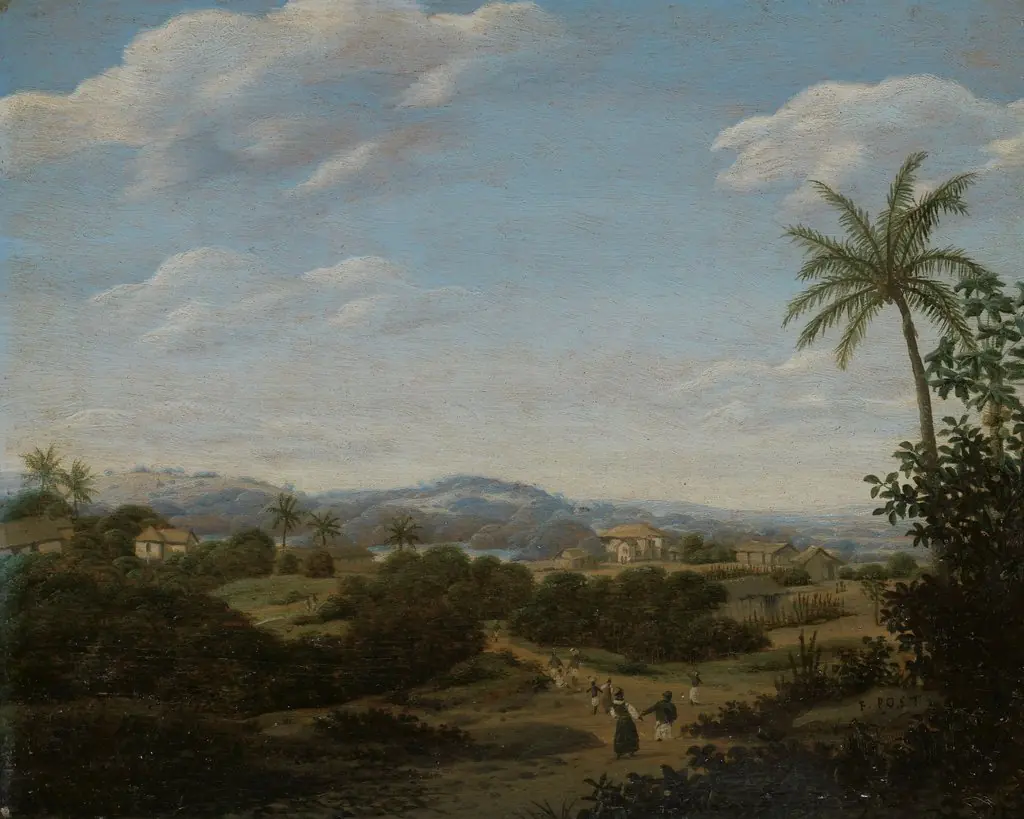 Brazilian Landscape
 Landscape in Brazil with Sugar Plantation
 Landscape in Brazil with Sugar Plantation
 Brazilian Village
 Landscape by the Rio Senhor de Engenho, Brazil
 Market Scene in an Imaginary Oriental Port
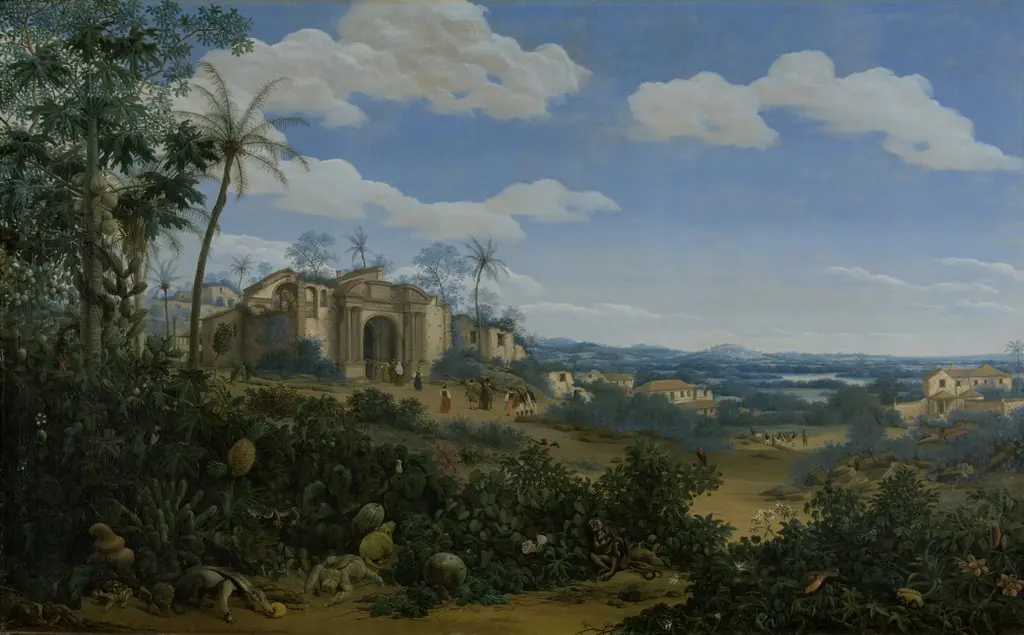 View of Olinda, Brazil
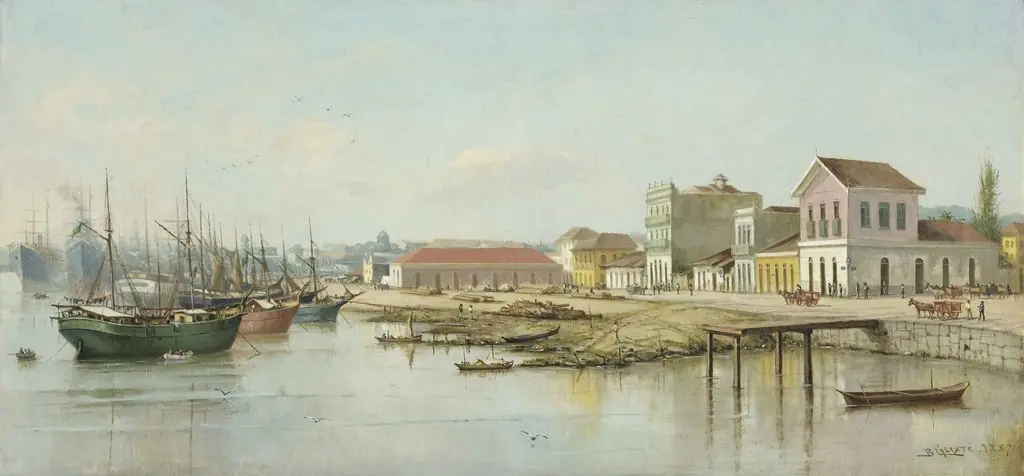 Porto do Bispo, Santos, SP
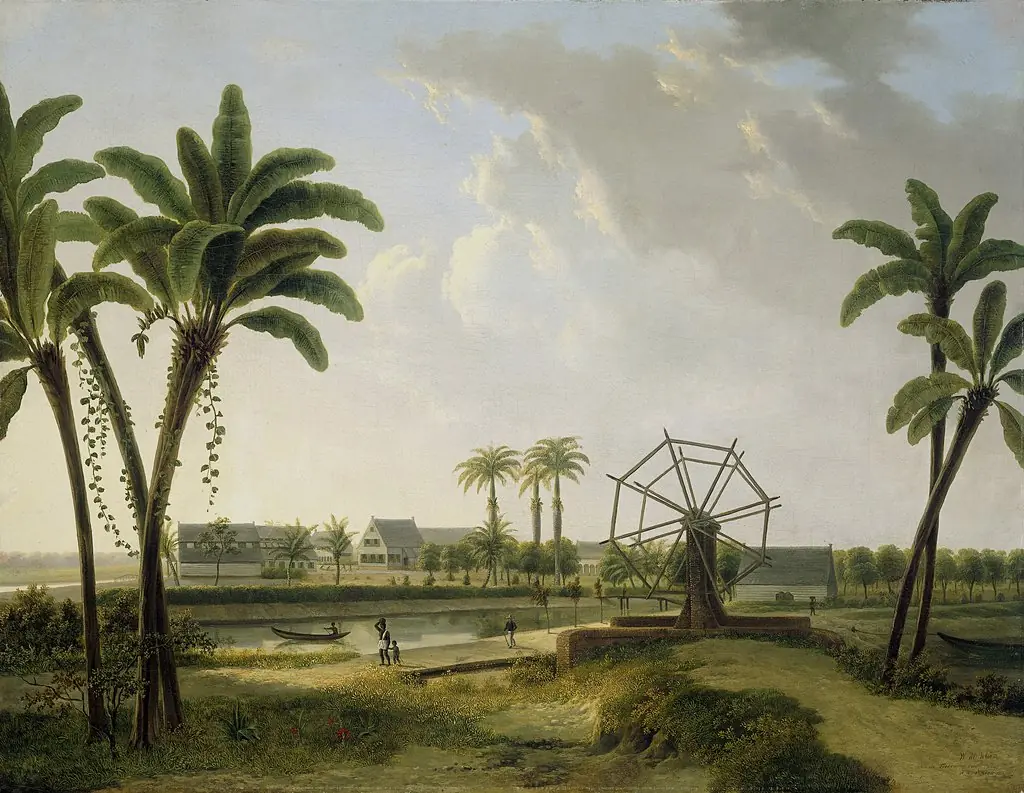 View of the Coffee Plantation Marienbosch in Surinam
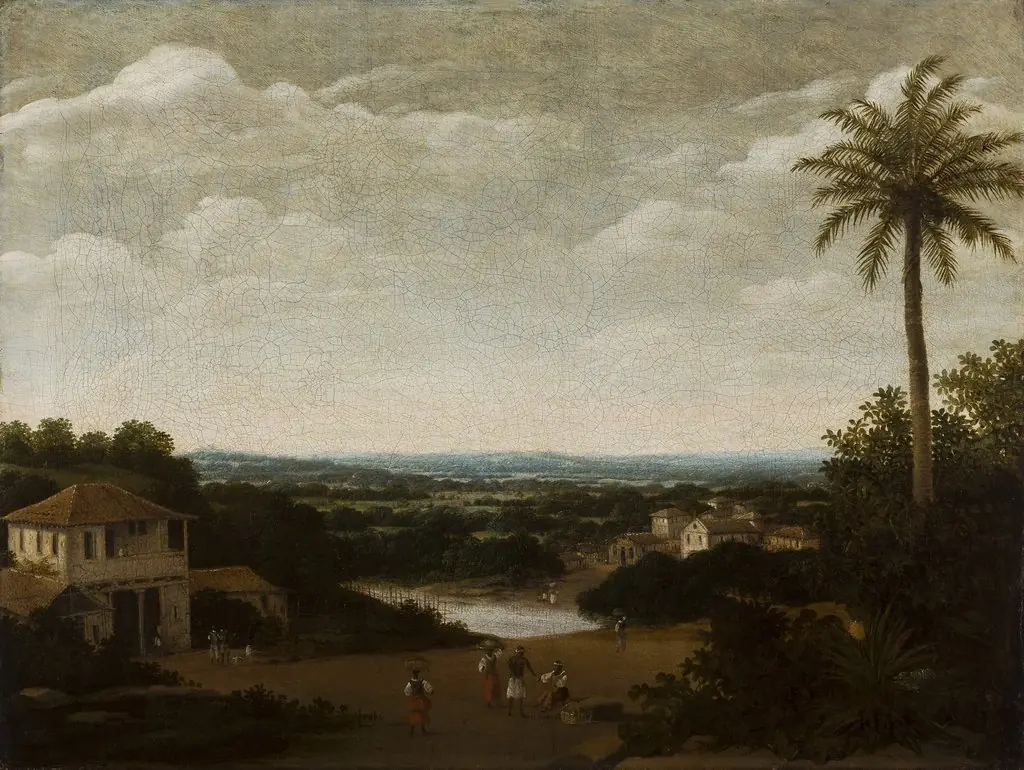 Vilarejo (atribuído)