Artwork
View of the Coffee Plantation Marienbosch in Surinam
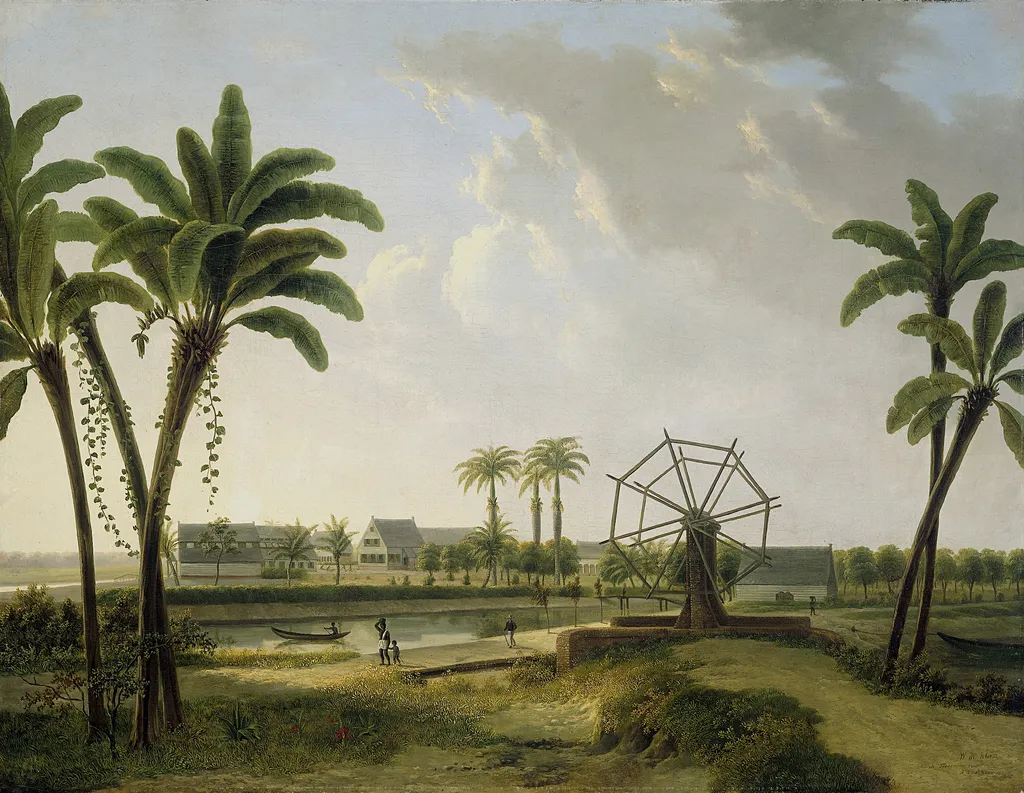
View of the Coffee Plantation Marienbosch in Surinam is an oil painting by the Realist artist Willem de Klerk. It dates from 1850 and is held in the collection of the Rijksmuseum.
About this work
Subject & Meaning
As a view of a specific colonial estate, the work serves as a visual record of the plantation system in Surinam during the mid-nineteenth century.
Willem de Klerk's 1850 oil painting depicts the Groot Marienbosch coffee plantation in Surinam. The composition centers on the agricultural landscape, featuring trees that characterize the plantation environment. As a view of a specific colonial estate, the work serves as a visual record of the plantation system in Surinam during the mid-nineteenth century. The depiction of the Groot Marienbosch highlights the organized nature of the coffee industry in the region.
Technique & Style
The painting employs oil paint on a canvas support, applied in smooth, descriptive layers typical of mid-nineteenth-century Dutch colonial views. Handling emphasizes clarity and precision, with careful delineation of plantation layout, coffee bushes, and distant hills, reflecting a documentary approach to landscape. Stylistically, the work aligns with academic realism, prioritizing legibility over painterly brushwork.
Formal qualities include a balanced composition centered on the symmetrical road bisecting the plantation, framed by dense vegetation and framed structures. Figures and laborers appear as punctuation within the orderly environment, reinforcing the scene’s didactic function rather than expressive effect.
History & Provenance
The painting View of the Coffee Plantation Marienbosch in Surinam was created by Willem de Klerk in 1850 as an oil on canvas work measuring 75 cm by 97.5 cm, painted in Dordrecht. It entered the collection of the Rijksmuseum, where it remains on display.
The artwork was commissioned as a view of the Marienbosch sugar plantation in Suriname, reflecting Dutch colonial interests in the region during the mid-nineteenth century. Its production in the Netherlands and subsequent acquisition by the Rijksmuseum underscore its historical significance within European representations of colonial landscapes.
View of the Coffee Plantation Marienbosch in Surinam is an oil painting by Willem de Klerk, created in 1850 and housed at the Rijksmuseum in Amsterdam. The work measures 75 cm by 97.5 cm and was produced in Dordrecht. It has been part of the Rijksmuseum collection since its acquisition and was included in the exhibition "Dutch Masters from the Rijksmuseum" at the Rijksmuseum in 2015.
Overview
Willem de Klerk’s oil on canvas, painted around 1850, presents a tranquil view of the Marienbosch coffee estate in Suriname. The composition centers on a spacious plantation landscape, with a windmill, a pond, and a modest white building set amid tropical vegetation. Two figures are shown strolling along the water’s edge, while a small boat drifts nearby, conveying a sense of calm daily life on the plantation.
Context
During the mid‑1800s Suriname was a Dutch colony whose economy relied heavily on coffee and other cash crops. Artists like de Klerk traveled to the colonies to document landscapes and economic enterprises, providing metropolitan audiences with visual information about distant territories and their productive capacities.
Own this work as a print
Artist & collection

- Landscape in Brazil with Sugar Plantation
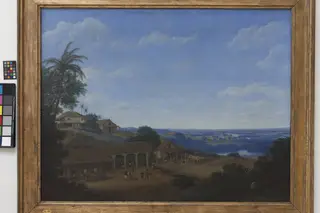 Landscape in Brazil with Sugar Plantation
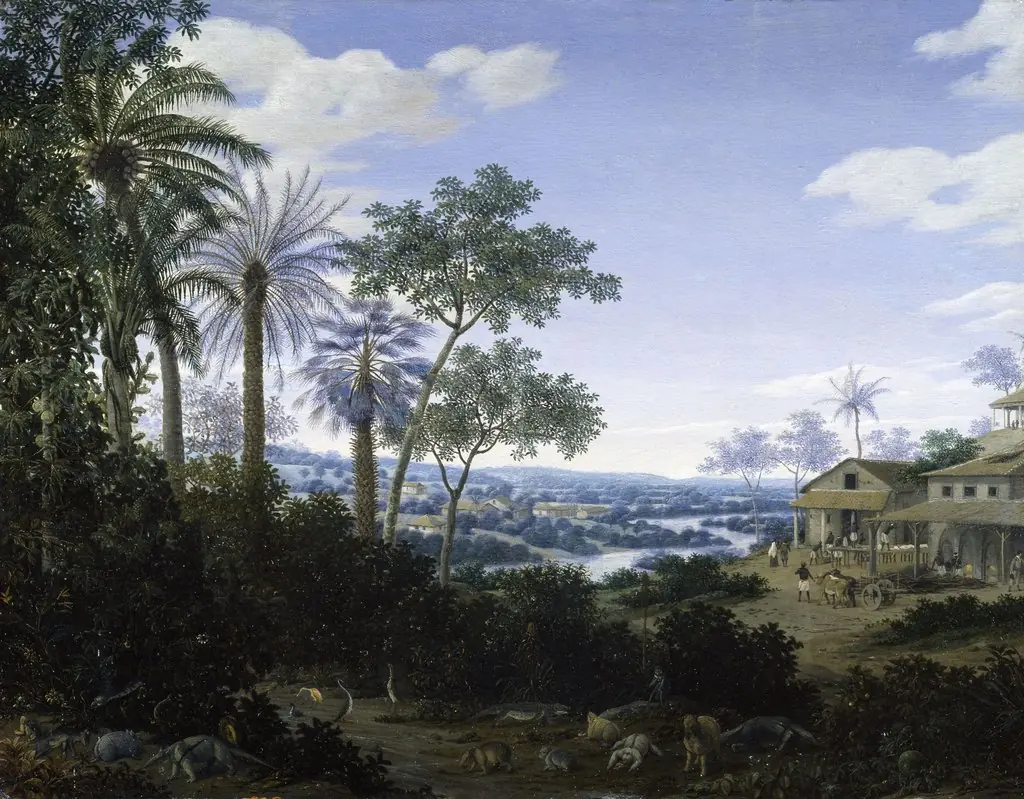 Brazilian Landscape with Sugar Mill
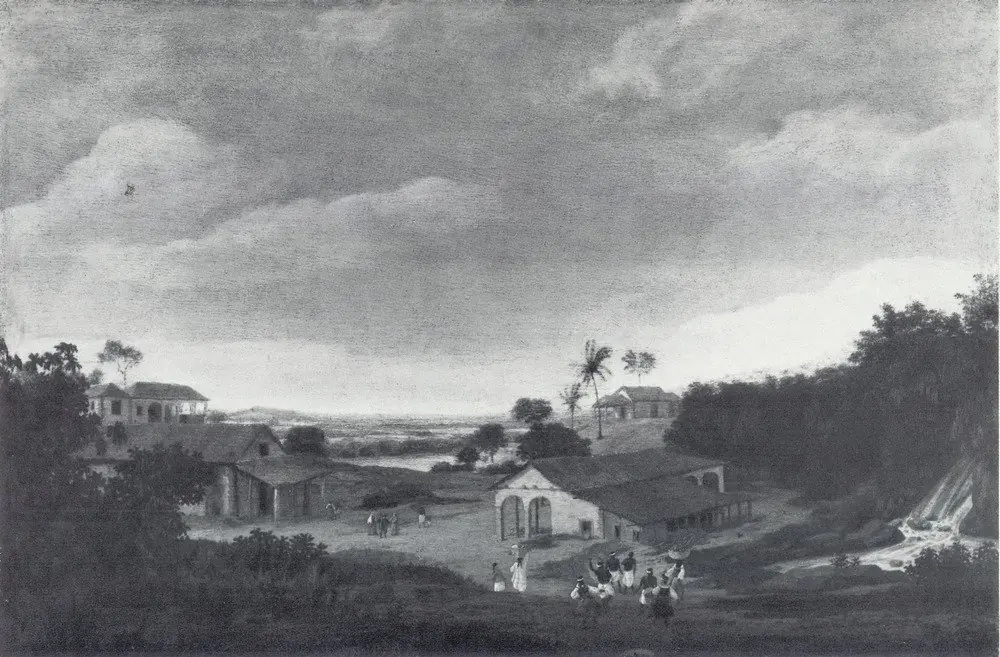 Sugar Mill (Sugar Plantation)
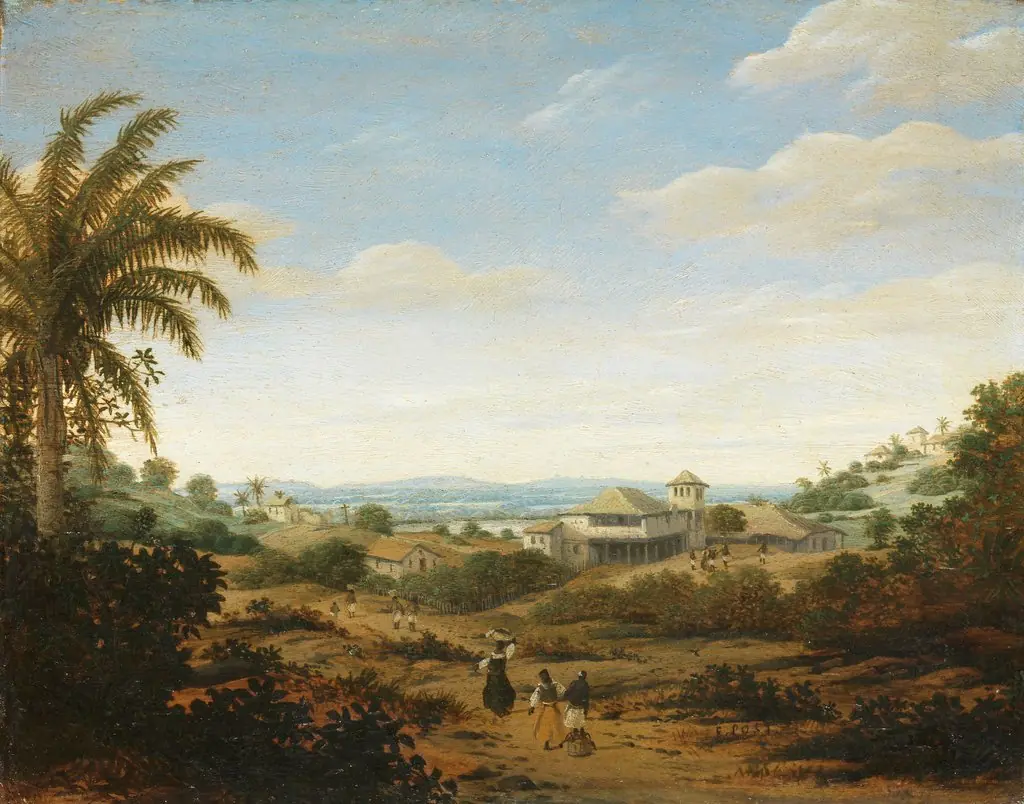 Landscape by the Rio Senhor de Engenho, Brazil
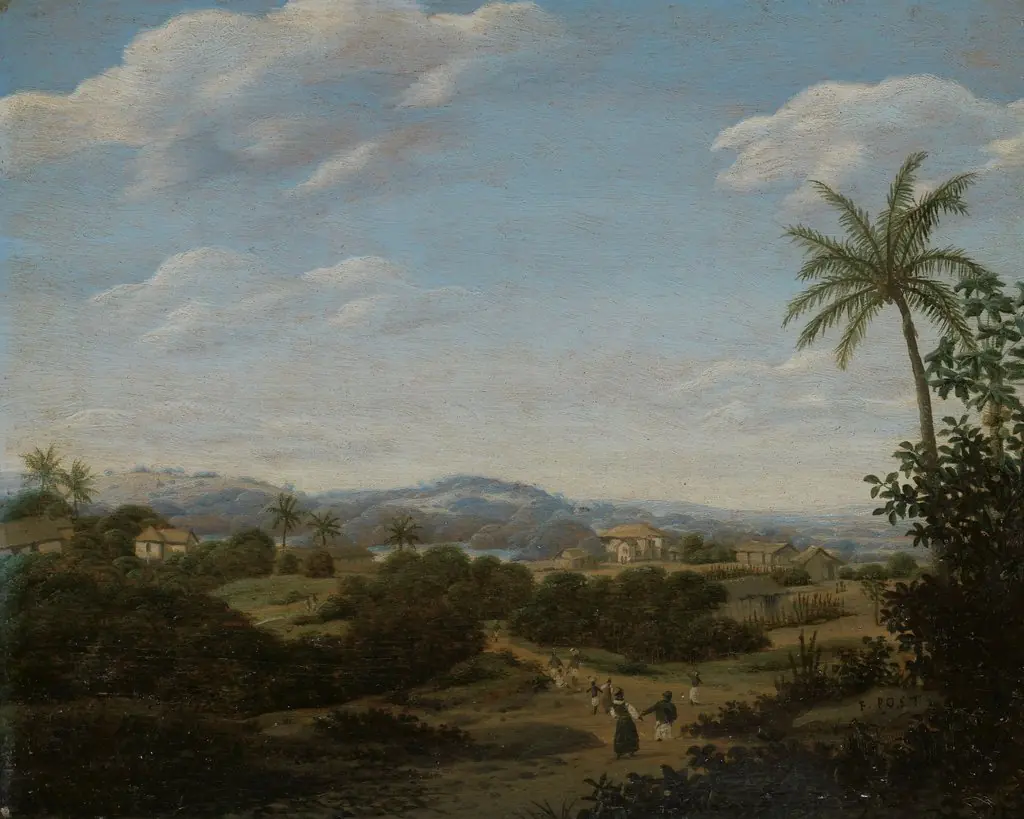 Brazilian Landscape
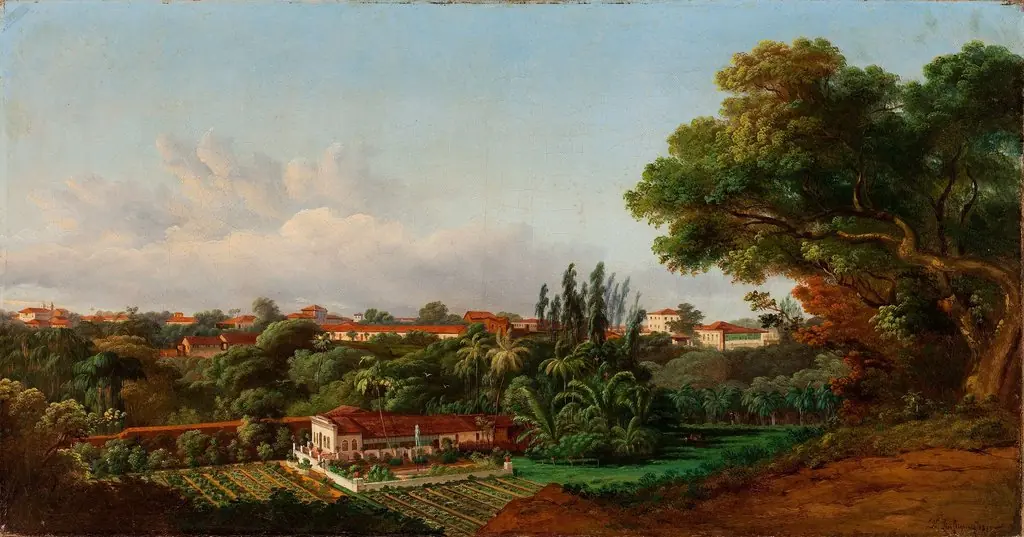 Sítio Sossego, São Luís, Maranhão (atribuído)
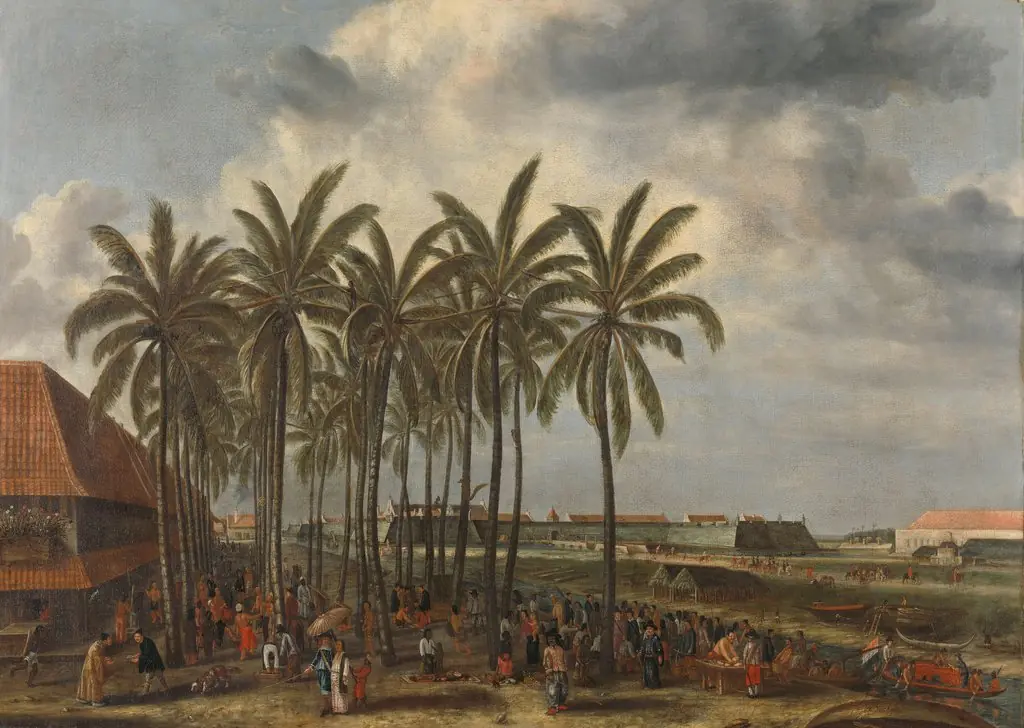 The Castle of Batavia
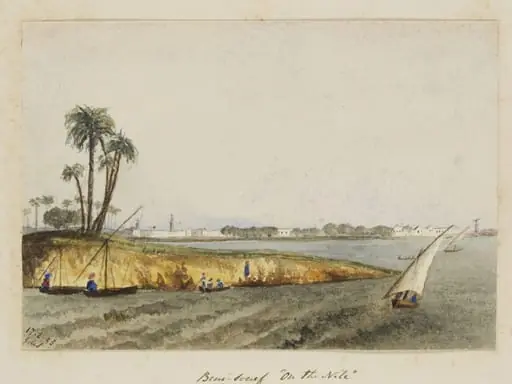 `Beni-Souef "On the Nile"
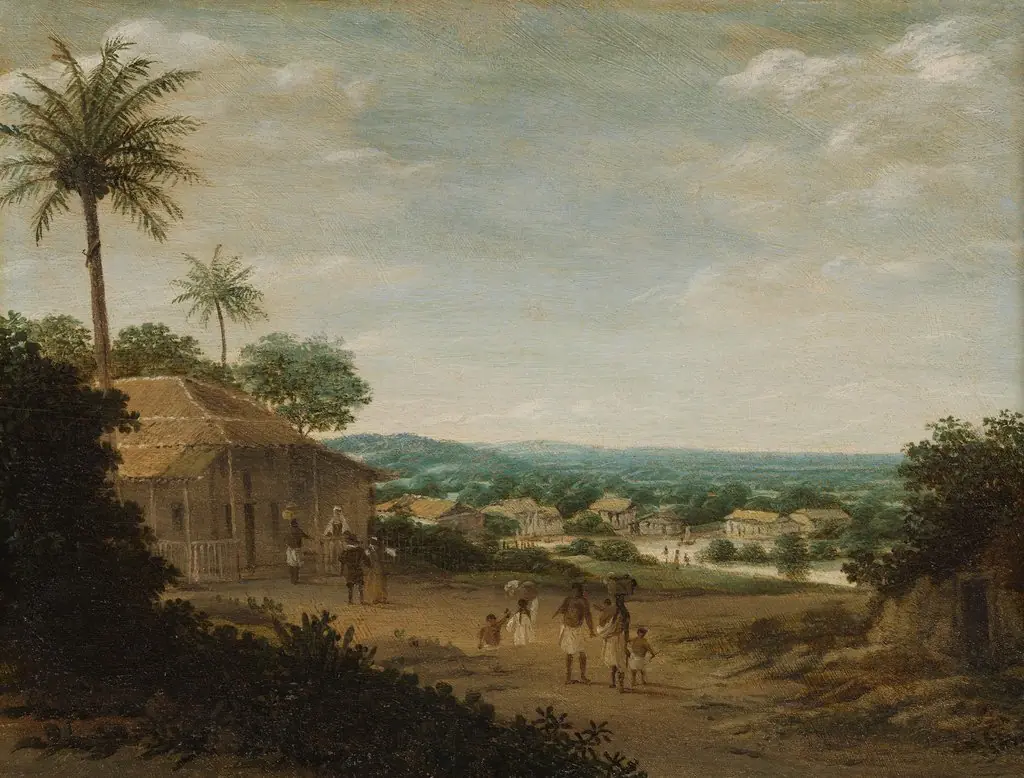 Brazilian Village