Artwork
View of Batavia
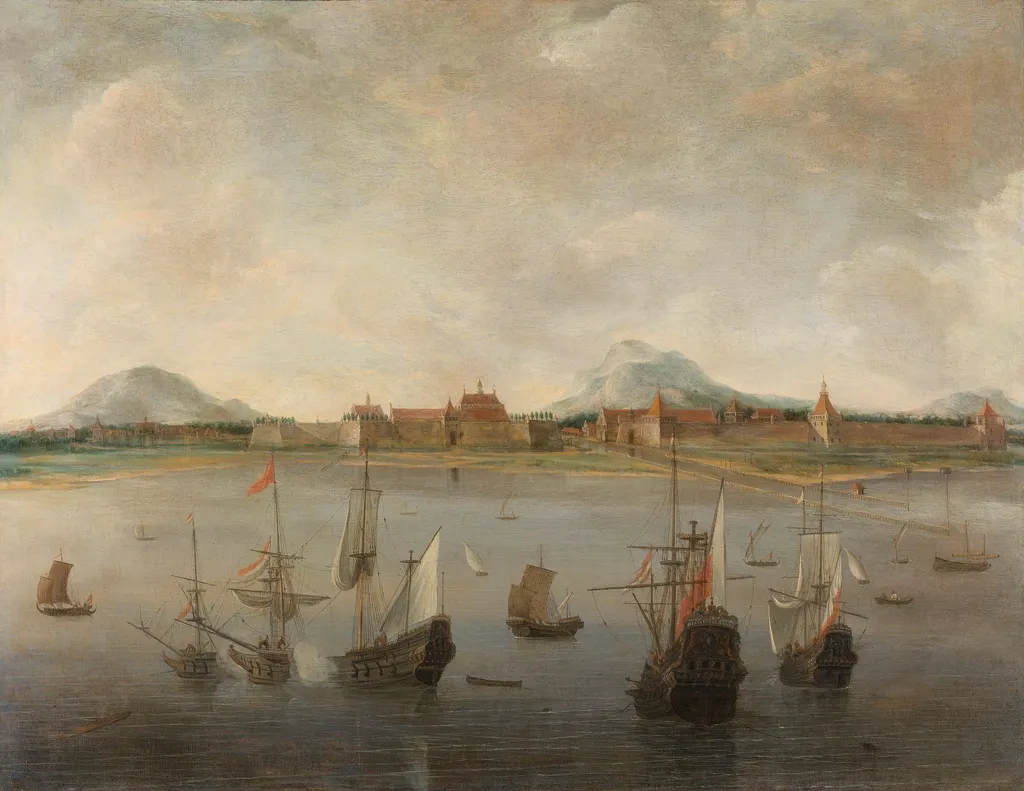
View of Batavia is an oil painting by the Dutch Golden Age artist Hendrick Dubbels. It dates from 1650 and is held in the collection of the Rijksmuseum.
About this work
Subject & Meaning
As a work of landscape painting, the image serves as a visual record of the port city's environment during the mid-17th century.
Hendrick Dubbels's 1650 oil painting presents a landscape view of Batavia, the historic name for Jakarta. The composition focuses on natural and maritime elements, specifically depicting trees and boats within the scene. As a work of landscape painting, the image serves as a visual record of the port city's environment during the mid-17th century.
The inclusion of vessels highlights the location's significance as a hub for maritime activity and trade, while the surrounding foliage grounds the view in its specific tropical setting.
Technique & Style
Executed in 1650, View of Batavia is an oil painting on canvas by Hendrick Dubbels. The work measures 65.5 cm in height and 84 cm in width. Stylistically classified as a landscape, the composition incorporates natural and maritime elements, specifically depicting trees and boats within the scene. The piece is currently held in the collection of the Rijksmuseum.
History & Provenance
View of Batavia is an oil painting on canvas created in 1650 by Hendrick Jacobsz. Dubbels. The work measures 65.5 cm in height and 84 cm in width and depicts a tree and a boat. It belongs to the landscape genre and was originally part of the Rijksmuseum collection, where it remains on display.
The painting entered the Rijksmuseum’s holdings as part of its foundational collection, reflecting its enduring significance in Dutch landscape art.
View of Batavia is held in the collection of the Rijksmuseum. The work is accessioned under the Rijksmuseum's inventory system, though the specific accession number is not provided in the source. It has been exhibited as part of landscape painting presentations at the Rijksmuseum, including displays focused on 17th-century Dutch art.
The painting was created by Hendrick Jacobsz. Dubbels in 1650 using oil paint on canvas. Its dimensions are 65.5 cm in height and 84 cm in width.
Context
View of Batavia (1650) by Hendrick Dubbels exemplifies early Dutch Golden Age landscape painting, depicting a coastal scene with trees and a boat. The work is housed in the Rijksmuseum collection, reflecting the artist's focus on atmospheric coastal environments characteristic of mid-17th century Amsterdam.
Scholarship identifies this painting as representative of Dubbels' contribution to the evolution of specialized landscape genres within Dutch art, distinct from the more commercially dominant marine works of contemporaries like Willem van de Velde. Its precise topographical elements and handling of light have been analyzed in relation to broader trends in Dutch maritime visualization during the century.
The artwork's placement within the Rijksmuseum's holdings underscores its significance as a documented example of Dutch landscape painting circa 1650, positioned among other coastal scenes that illustrate the period's interest in naturalistic representation of maritime territories under Dutch commercial expansion.
Overview
Hendrick Jacobszoon Dubbels, a Dutch painter active in the mid‑17th century, produced the oil‑on‑canvas work View of Batavia around 1650. The composition presents a tranquil harbor scene, populated by a variety of vessels and framed by a distant city and low mountains under a cloud‑filled sky. The painting is part of the Rijksmuseum’s collection.
Own this work as a print
Artist & collection
Artist
Hendrick Jacobszoon Dubbels (1621–1707) was a Dutch Golden Age painter of marine subjects and winter landscapes, who spent much of his career working in the studios of other marine artists.

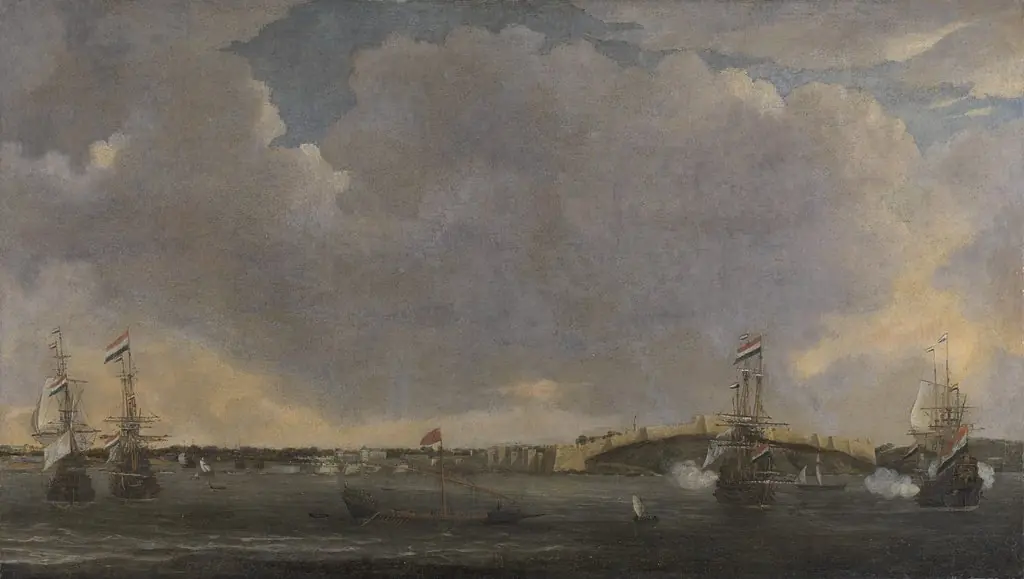 View of Tripoli
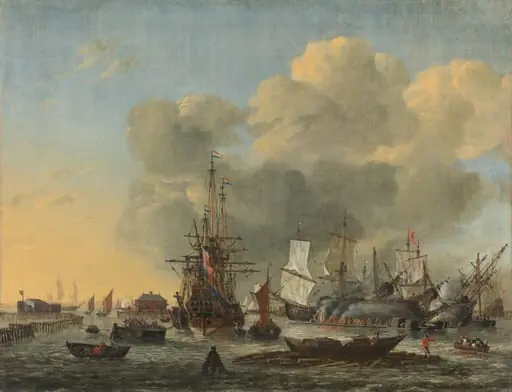 Untitled
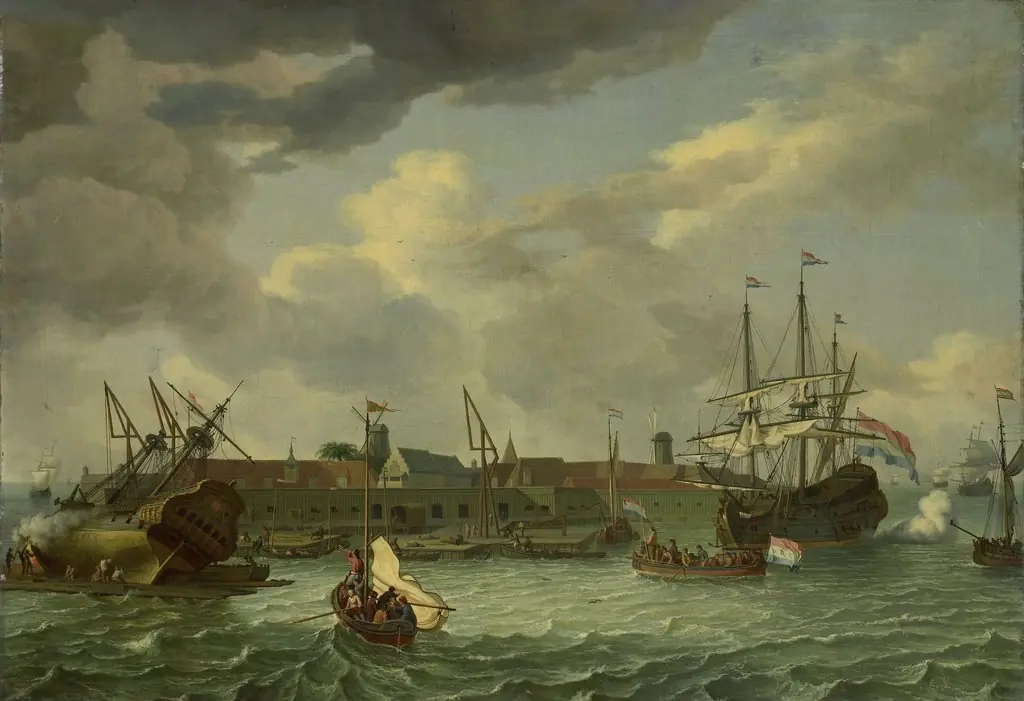
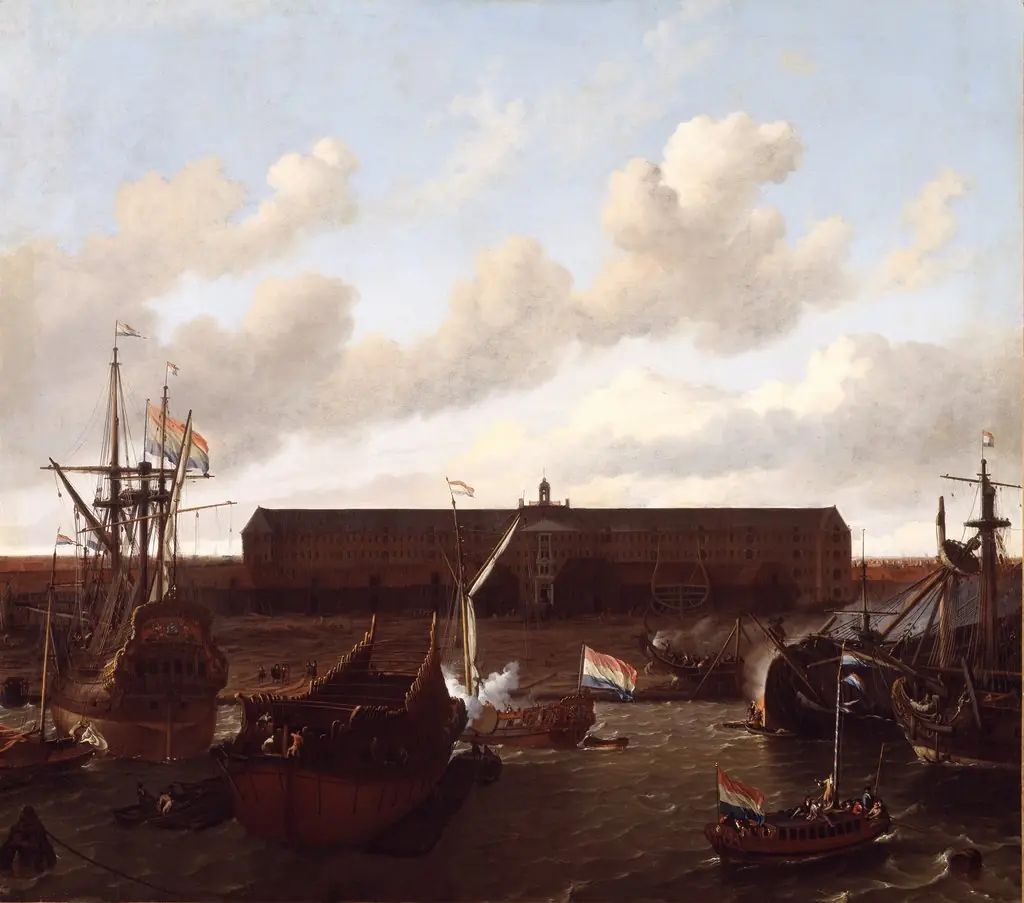 The dock of the Dutch East India Company at Amsterdam
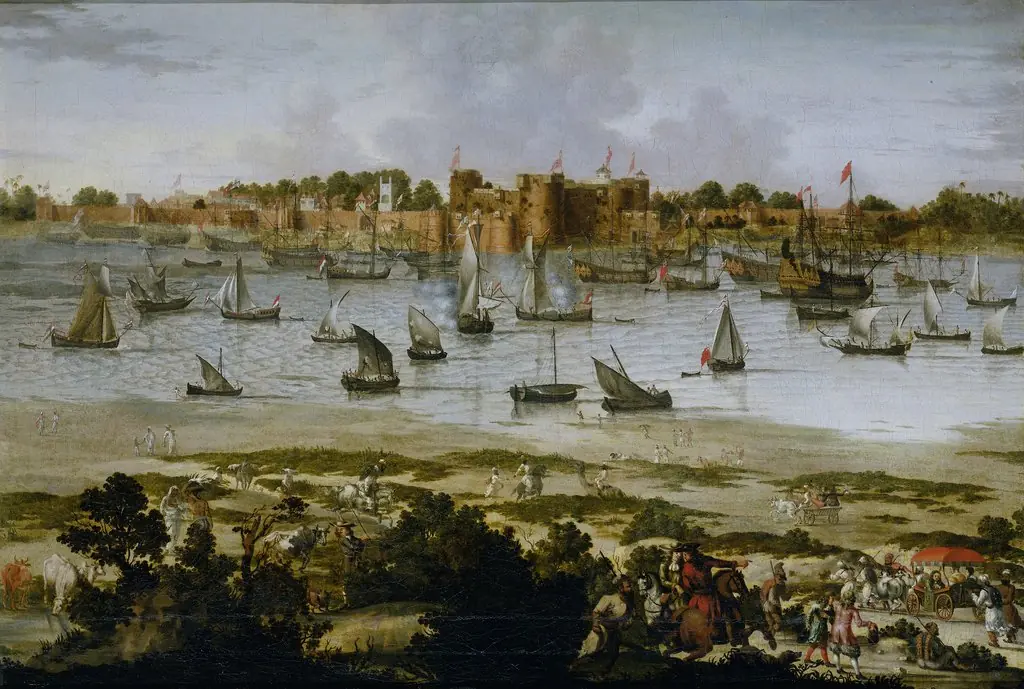 View of the Harbor of Surat in Gujarat
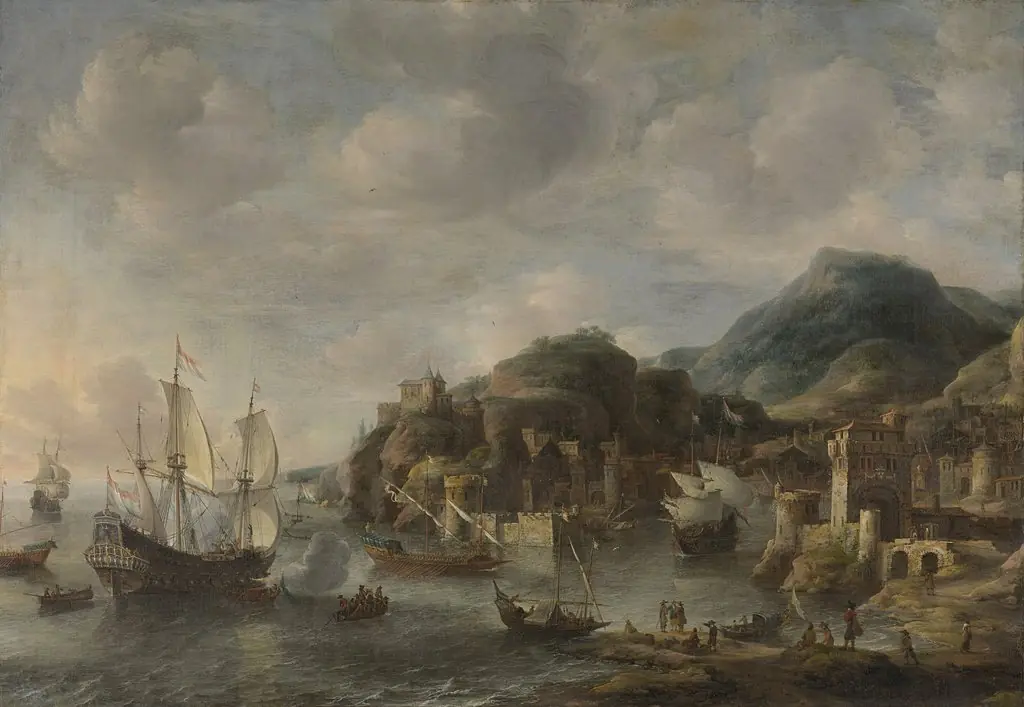 Dutch ships in a foreign port
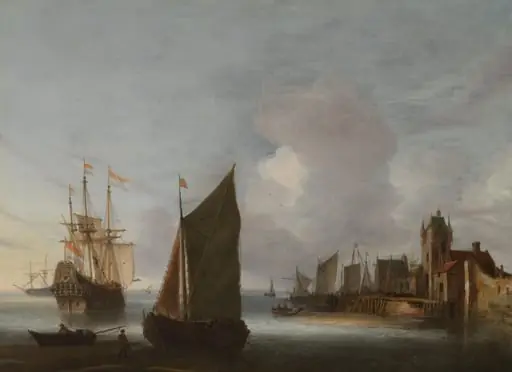 Ships near Zierikzee with the Zuidhavenpoort in the Background
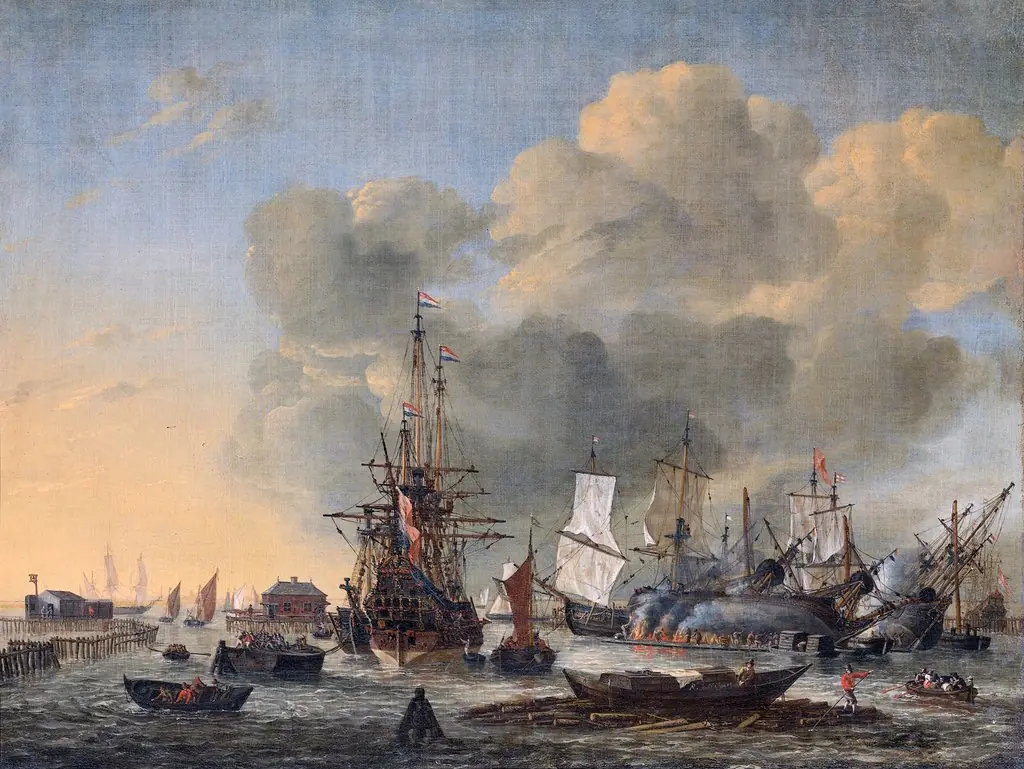 Caulking ships at the Bothuisje (flounder shed) on the Y at Amsterdam
 View of Algiers with de Ruyter's ship 'De Liefde', 1662
 The Harbour in Amsterdam
 Arrival of William of Orange in Rotterdam