Artwork
Brazilian Village
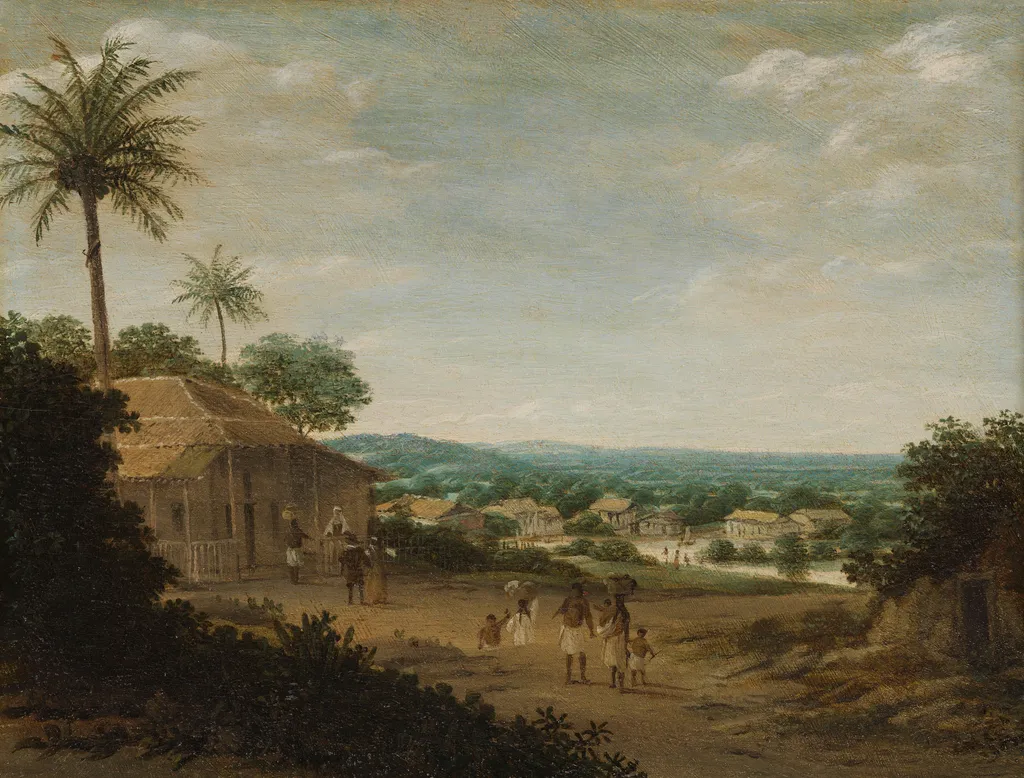
Brazilian Village is an oil painting by the Dutch Golden Age artist Frans Post. It is held in the collection of the Rijksmuseum.
About this work
Subject & Meaning
By portraying the landscape as orderly and productive, Post reinforced the Dutch West India Company’s narrative of successful colonization.
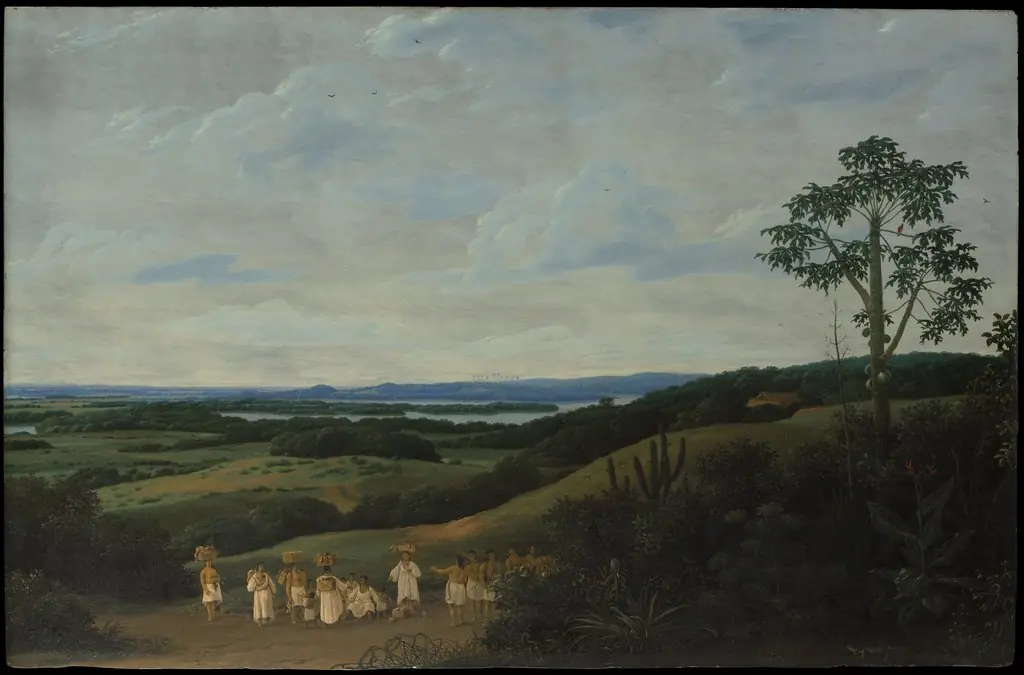
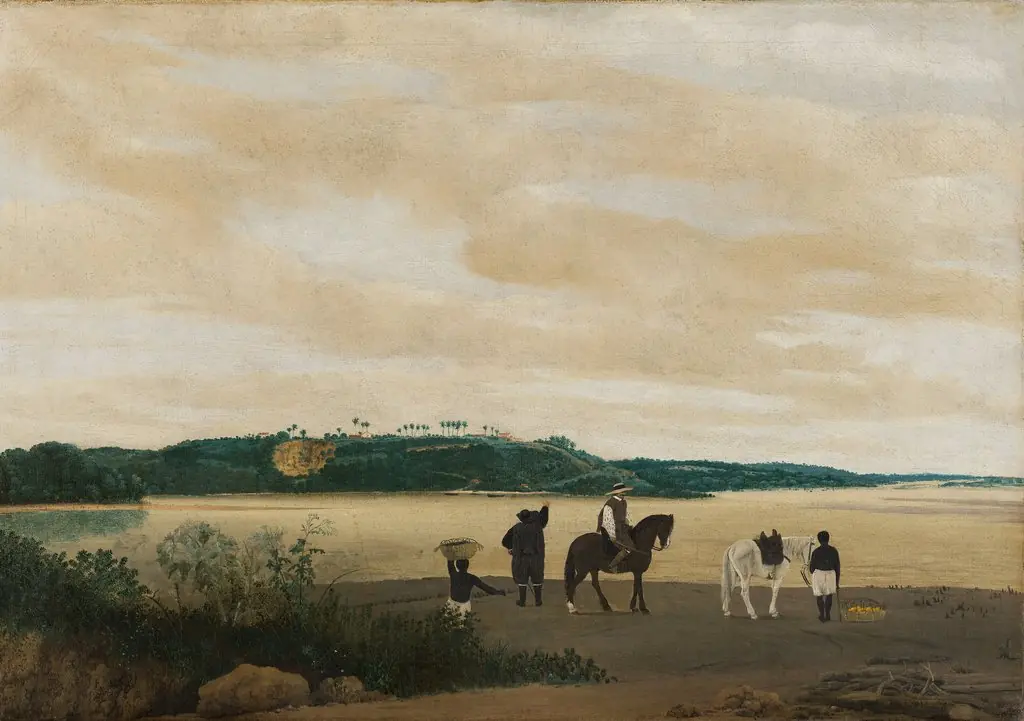
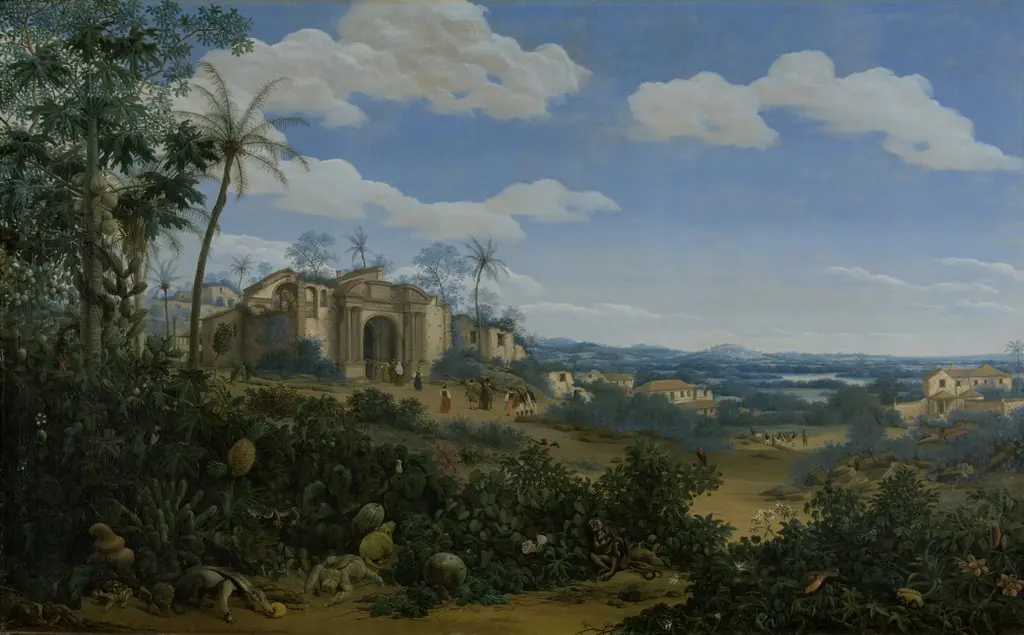
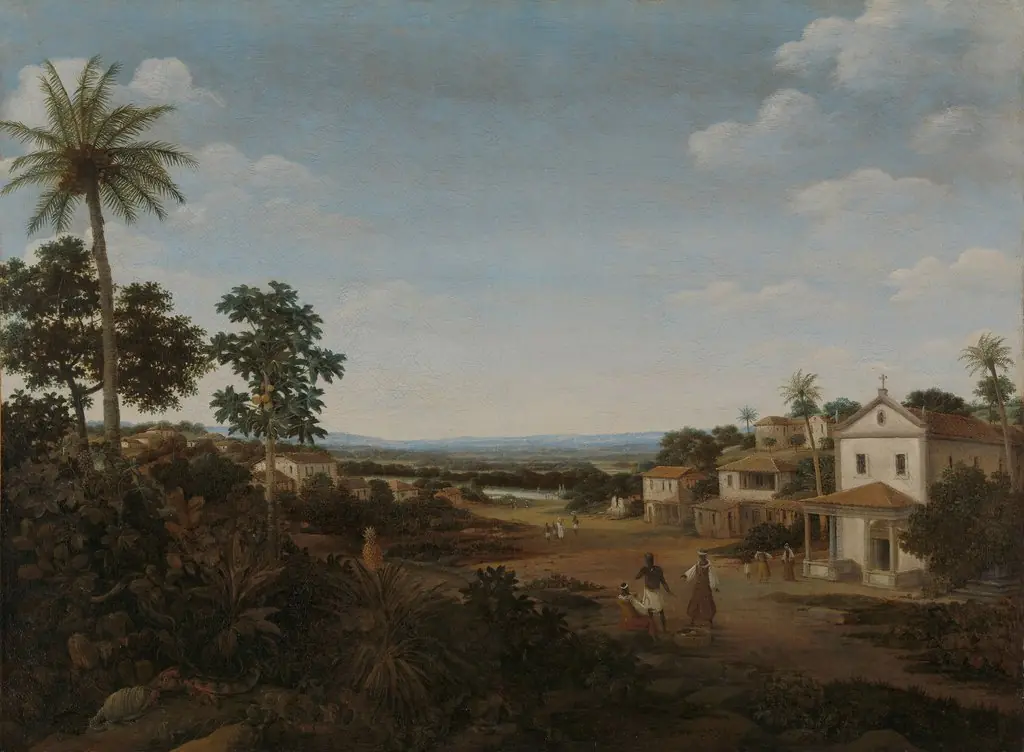
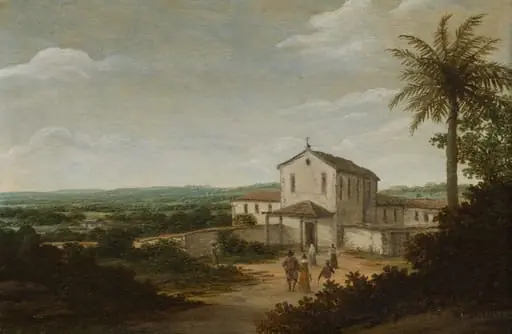
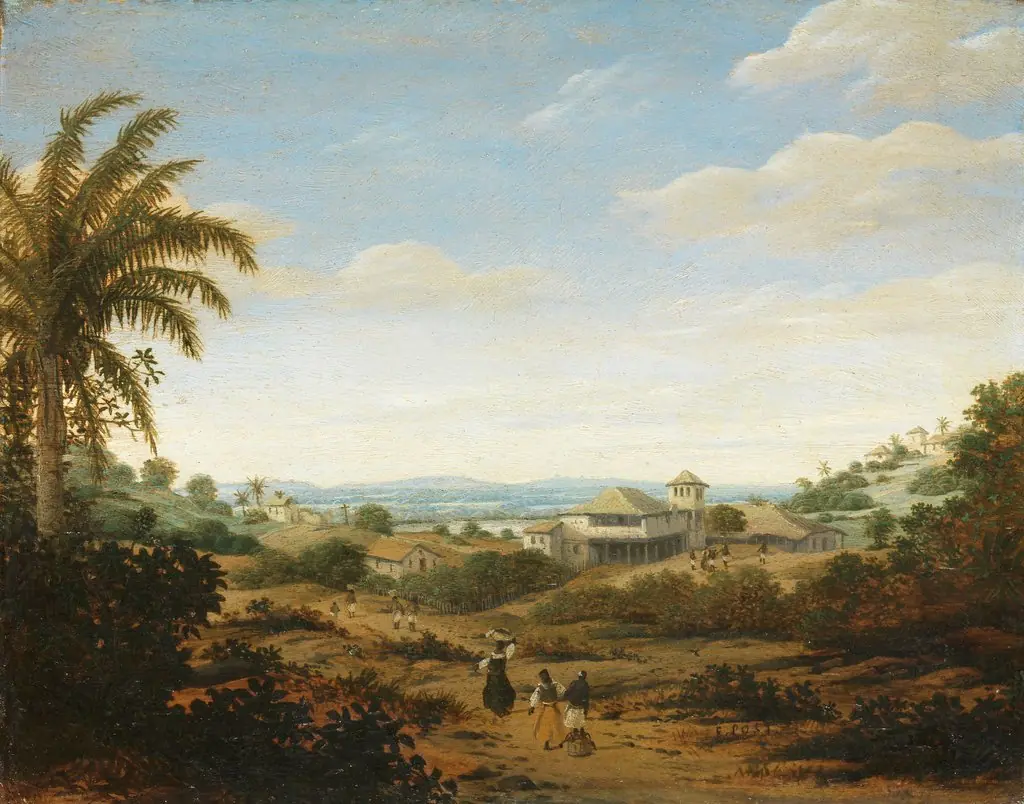
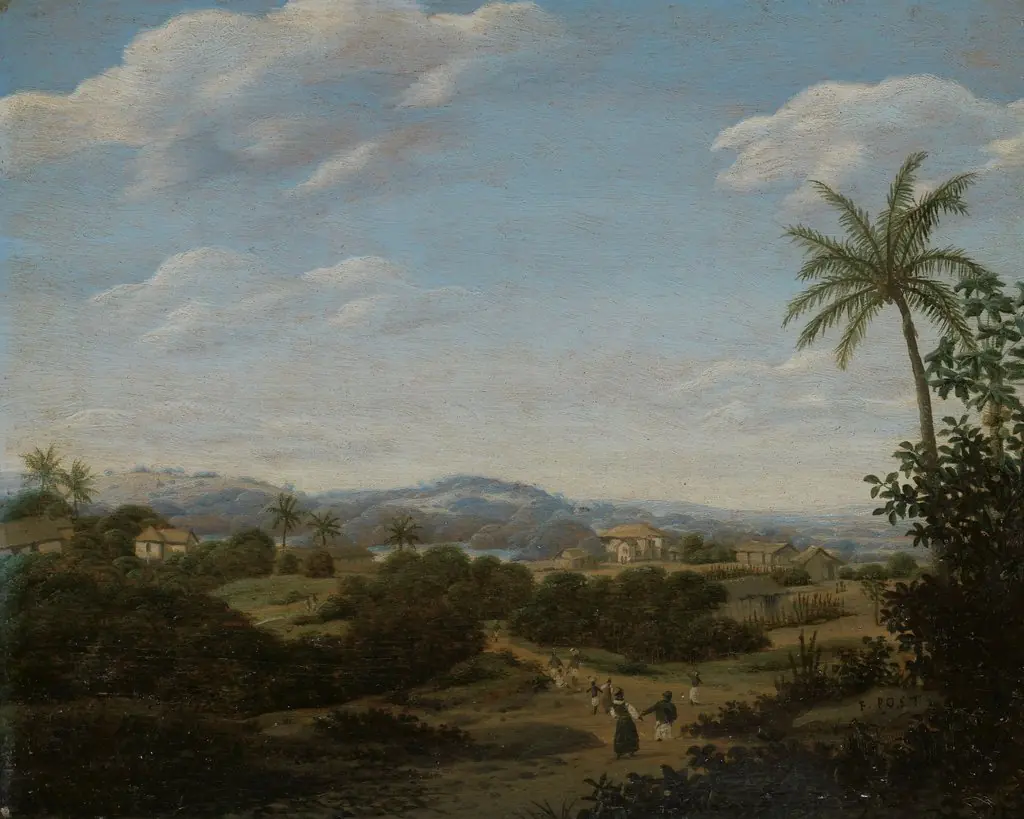
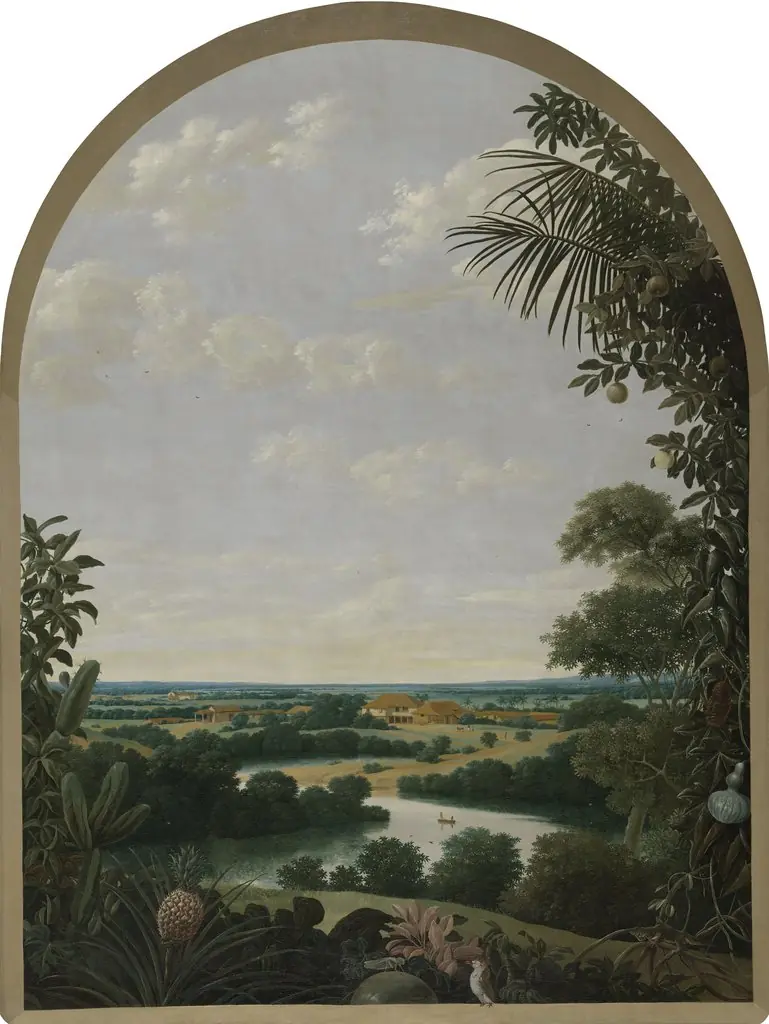
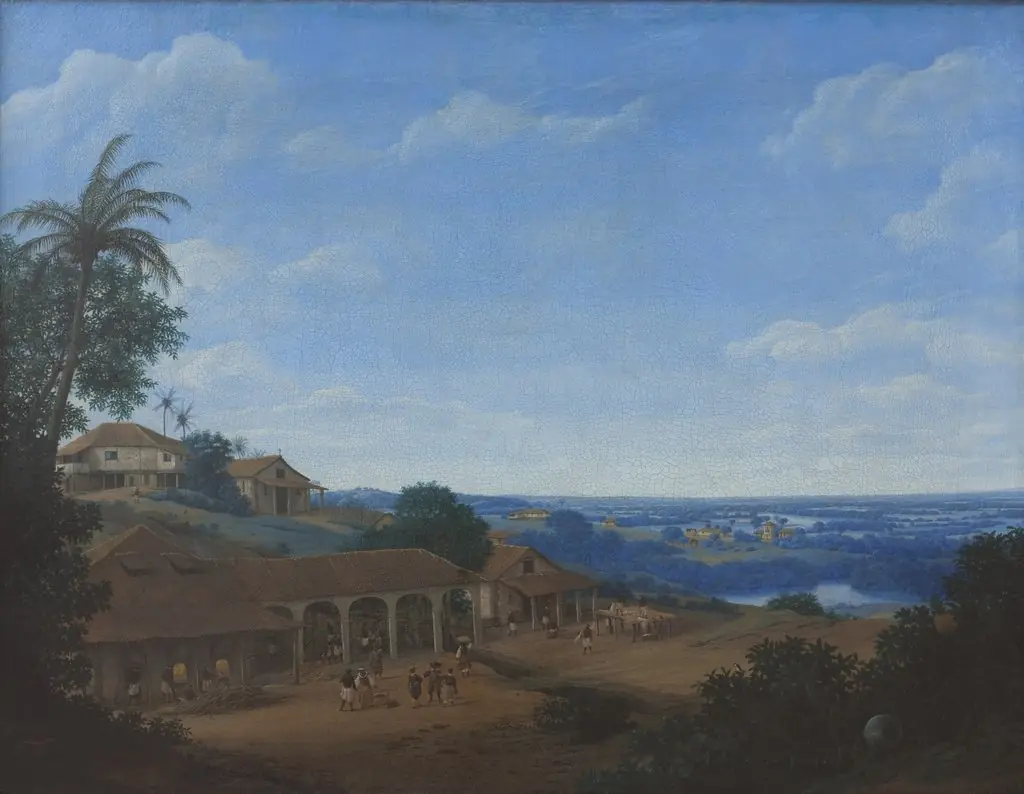
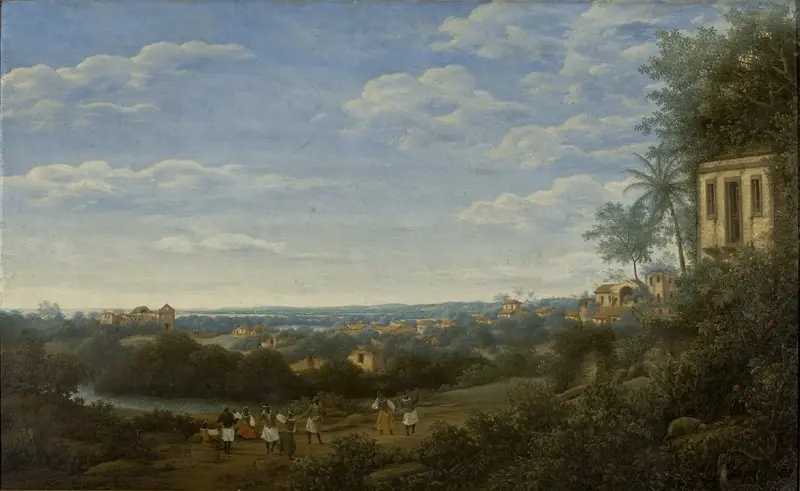
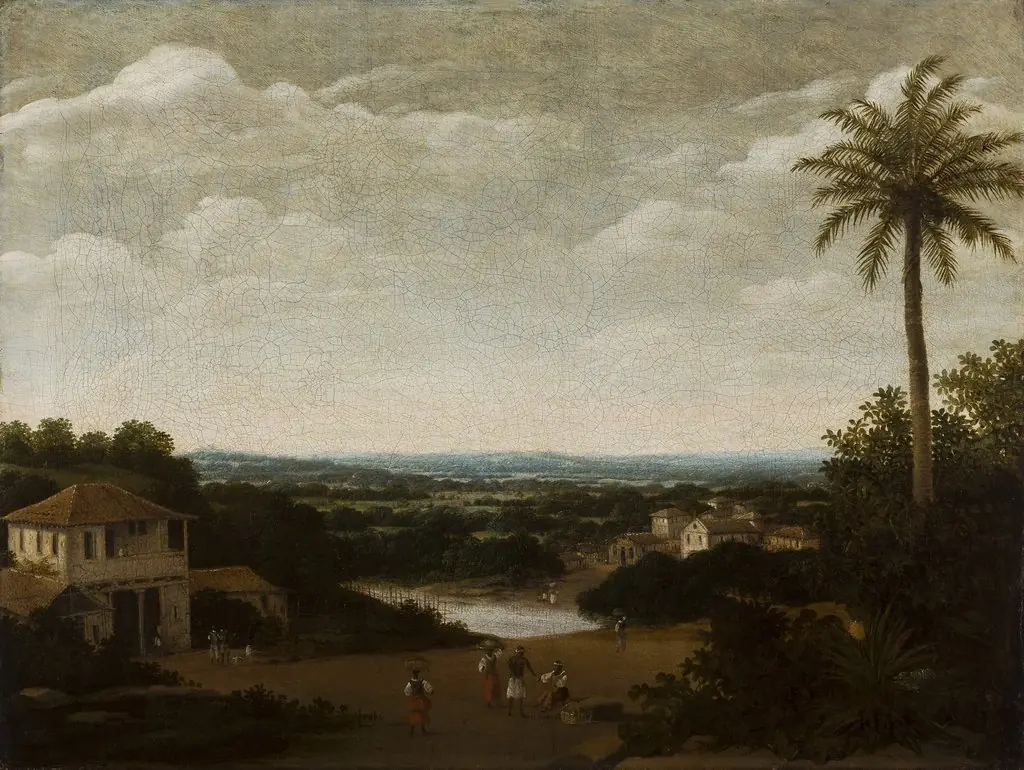
Frans Post’s Brazilian Village depicts a seventeenth-century colonial settlement in Dutch Brazil, integrating European architectural elements with tropical vegetation and local inhabitants. The composition centers on a cluster of whitewashed buildings with red-tiled roofs, typical of Dutch colonial design, set against a backdrop of palm trees and rolling hills. Indigenous and African figures appear in the foreground, engaged in daily activities such as carrying goods or conversing, reflecting the multicultural reality of the region under Dutch rule.
The painting functions as both a topographical record and an ideological statement. By portraying the landscape as orderly and productive, Post reinforced the Dutch West India Company’s narrative of successful colonization. The inclusion of exotic flora and fauna, alongside the harmonious coexistence of diverse figures, served to exoticize Brazil while legitimizing Dutch presence as civilizing and economically beneficial.
Technique & Style
The work is executed in oil paint on a wooden panel, measuring 20.5 cm in height by 26.5 cm in width. Its surface exhibits a smooth handling characteristic of 17th‑century Dutch landscape practice, with a luminous palette and precise atmospheric rendering that emphasize spatial depth through gradations of light and shadow. These formal qualities align with the stylistic traits observed in Post’s Brazilian vistas, where meticulous detail and a balanced composition convey both topographical accuracy and poetic ambience.
History & Provenance
The painting titled Brazilian Village was created by the artist Frans Post. Based on the available records, the work dates to the year 1677. It was executed using oil paint on a panel support.
The piece is currently held within the collection of the Rijksmuseum and the Amsterdam Museum in Amsterdam, where it is located in Hall 2.10. Specific details regarding the original commission, the full chain of ownership prior to its museum acquisition, or the precise circumstances of its creation are not provided in the available sources.
Overview
Frans Post’s 1689 oil painting titled Brazilian Village depicts a tranquil settlement beside a waterway, framed by modest dwellings and towering palm trees. A narrow path runs along the shore where figures, some bearing bundles, move through the scene under a soft, pale sky. The composition balances warm, earthy tones of the architecture with the bright, sun‑lit foliage, creating a serene impression of colonial life.
Context
Brazilian Village belongs to a series of images produced by Post, the first European artist to record American landscapes. His observations introduced European audiences to the geography and architecture of Brazil, influencing subsequent depictions of overseas territories and expanding the visual vocabulary of landscape painting beyond Europe.
Own this work as a print
Artist & collection
Artist
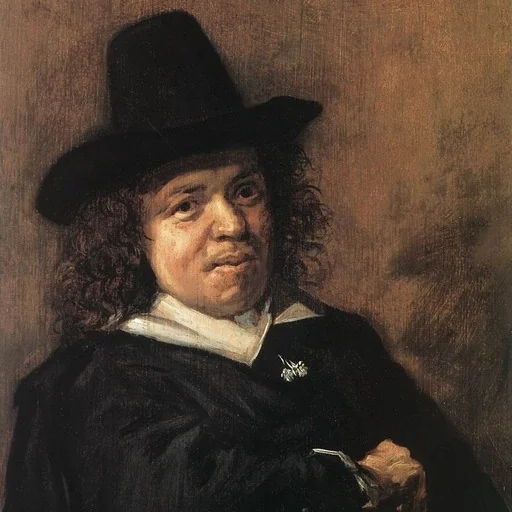
Frans Janszoon Post (17 November 1612 – 17 February 1680) was a painter during the Dutch Golden Age.