Artwork
Venus Induces Helen to Fall in Love with Paris
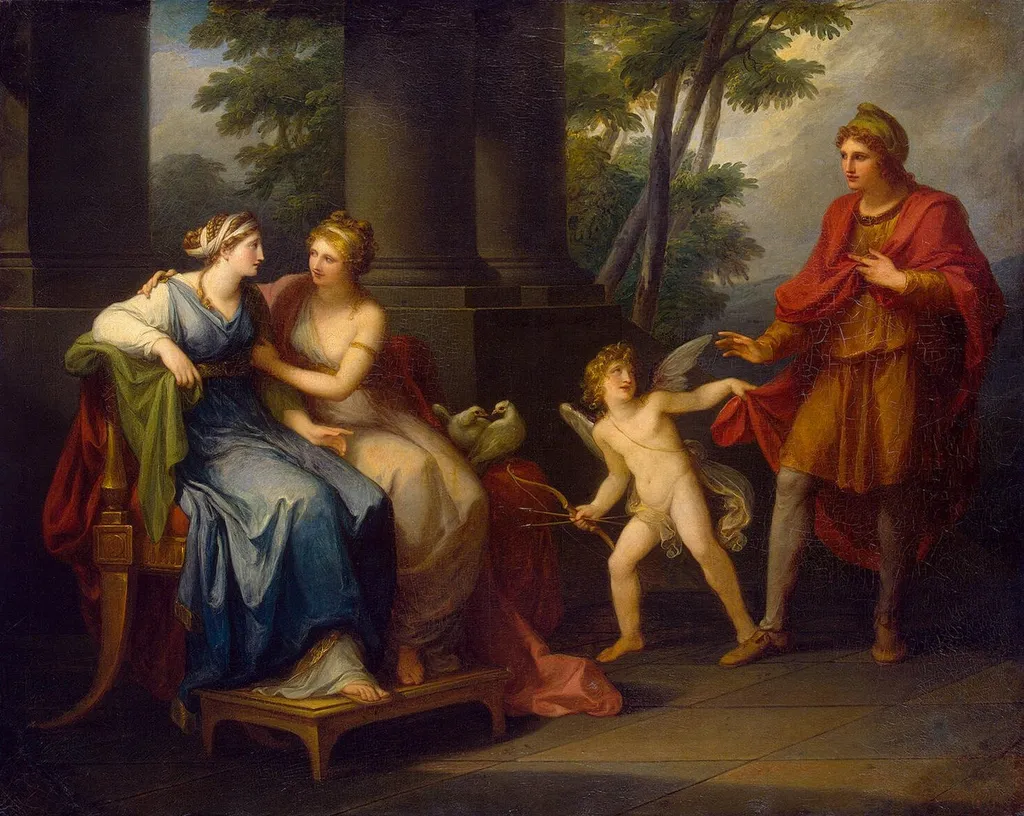
Venus Induces Helen to Fall in Love with Paris is an oil painting by Angelica Kauffmann. It dates from 1796 and is held in the collection of the Hermitage Museum. Angelica Kauffman’s oil painting, created in 1790, depicts the mythological episode in which Venus encourages Helen to fall for Paris.
About this work
Technique & Style
The setting is a peristyle limited by column bases and a grove, with a landscape of hills opening the perspective in the background behind Paris.
Executed in 1790, this work is an oil painting on canvas measuring 102 cm by 127.5 cm. The composition reflects a resolutely Neoclassical style, characterized by elegance and allusion rather than the lascivious poses found in Renaissance or Baroque treatments of the same mythological subject. The complex construction features light entering from the left, illuminating a sequence that moves from Helen's passive arm to Venus's chest, finally resting on Cupid as the scene's most illuminated figure. An imaginary line is formed by the interlocking gazes of the three primary figures: the submissive Helen in blue, the persuasive Venus, and the slightly intimidated Paris.
The setting is a peristyle limited by column bases and a grove, with a landscape of hills opening the perspective in the background behind Paris.
History & Provenance
Angelica Kauffmann created the oil-on-canvas painting Venus Induces Helen to Fall in Love with Paris in 1790. Preparatory sketches for the work survive in the Royal Collection and the British Museum. The painting was formerly held in the collection of the Yusupov Palace.
Following the Russian Revolution, the state seized the artwork and it remained at the palace, which had been converted into the Yusupov Palace Museum, until 1925. In that year, the painting was transferred to its current location, the Hermitage Museum in Saint Petersburg.
The painting is held in the Hermitage Museum, Saint Petersburg, where it is listed under inventory number ОЭ-331. It entered the museum in 1925 after being moved from the Yusupov Palace, having previously been part of the palace's collection. The work was seized by the Soviet state following the Russian Revolution and remained in the palace museum until its transfer to the Hermitage. Earlier sketches related to the composition are documented in the Royal Collection and the British Museum.
Context
Painted in 1790, this work exemplifies Angelica Kauffmann's resolutely neoclassical and elegant style. Unlike Renaissance and Baroque predecessors who depicted similar mythological subjects with lascivious poses, Kauffmann presents an allusive composition where neither Paris nor Helen assumes overtly sensual stances. The artist, who maintained a studio near the Pincio in Rome for eight years, cultivated an aristocratic and educated circle passionate about the revival of antiquity, hosting figures such as Goethe and the Duchess of Saxe-Weimar.
This intellectual environment informed her approach to classical narratives, emphasizing complex construction and symbolic lighting over dramatic eroticism. The painting's focus on the imaginary line created by the characters' gazes and the central illumination of Cupid underscores the psychological tension of the scene rather than physical indulgence.
Overview
Angelica Kauffman’s oil painting, created in 1790, depicts the mythological episode in which Venus encourages Helen to fall for Paris. Executed on canvas, the work measures roughly the size of a typical salon piece of the period and is now part of the collection of the State Hermitage Museum in Saint Petersburg.
Subject & Meaning
The composition illustrates a moment from the Trojan myth: the goddess Venus, representing love, persuades Helen of Sparta to yield to the charms of Paris, the Trojan prince. Kauffman emphasizes the interplay of divine influence and mortal desire, using the figures’ gestures and glances to convey the persuasive power of love.
Artist & collection

Artist
Maria Anna Angelika Kauffmann, usually known in English as Angelica Kauffman, was a Swiss painter who had a successful career in London and Rome.

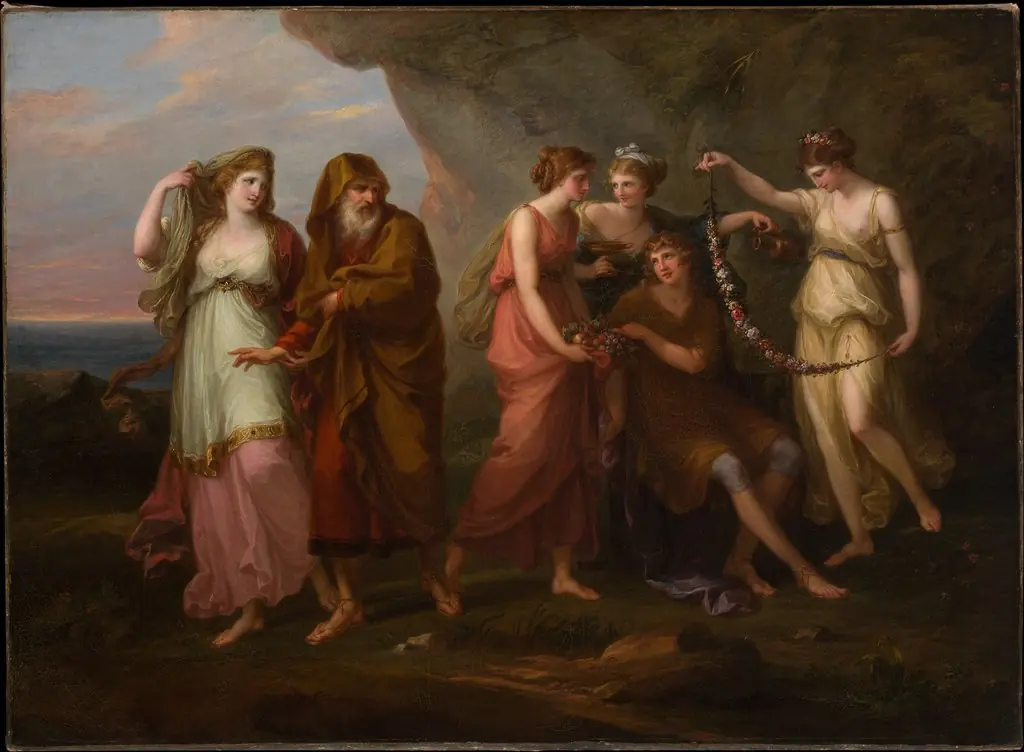 Telemachus and the Nymphs of Calypso
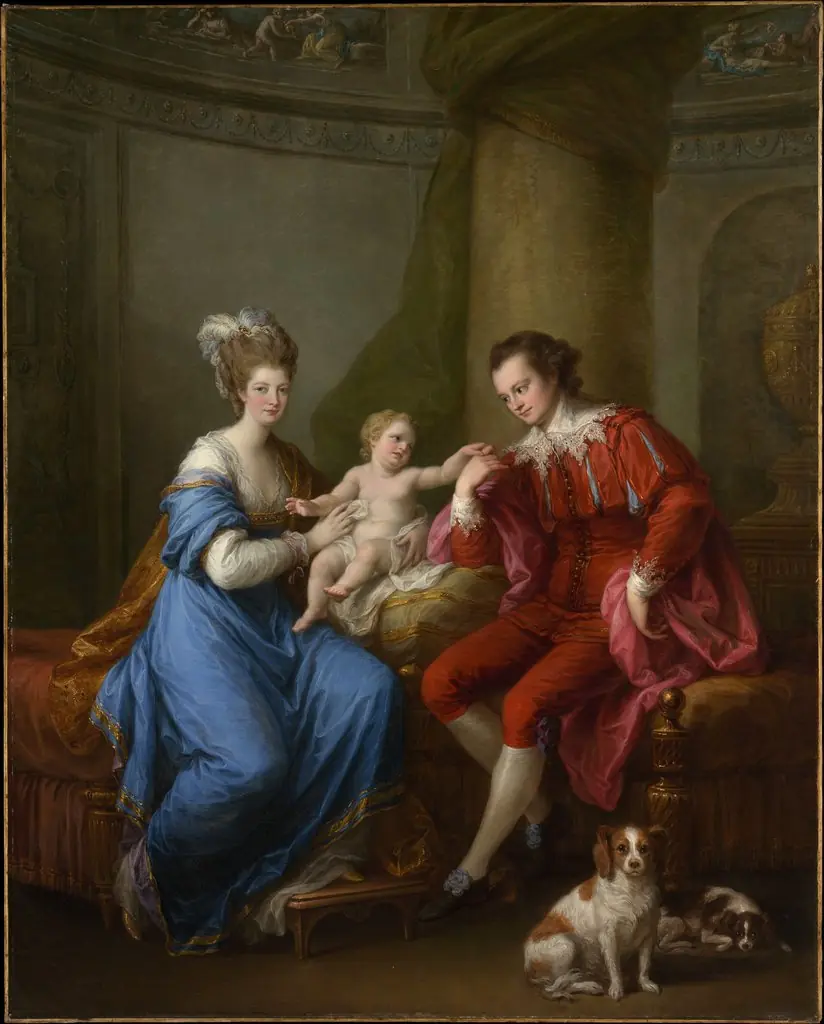 Edward Smith Stanley (1752–1834), Twelfth Earl of Derby, with His First Wife (Lady Elizabeth Hamilton, 1753–1797) and Their Son (Edward Smith Stanley, 1775–1851)
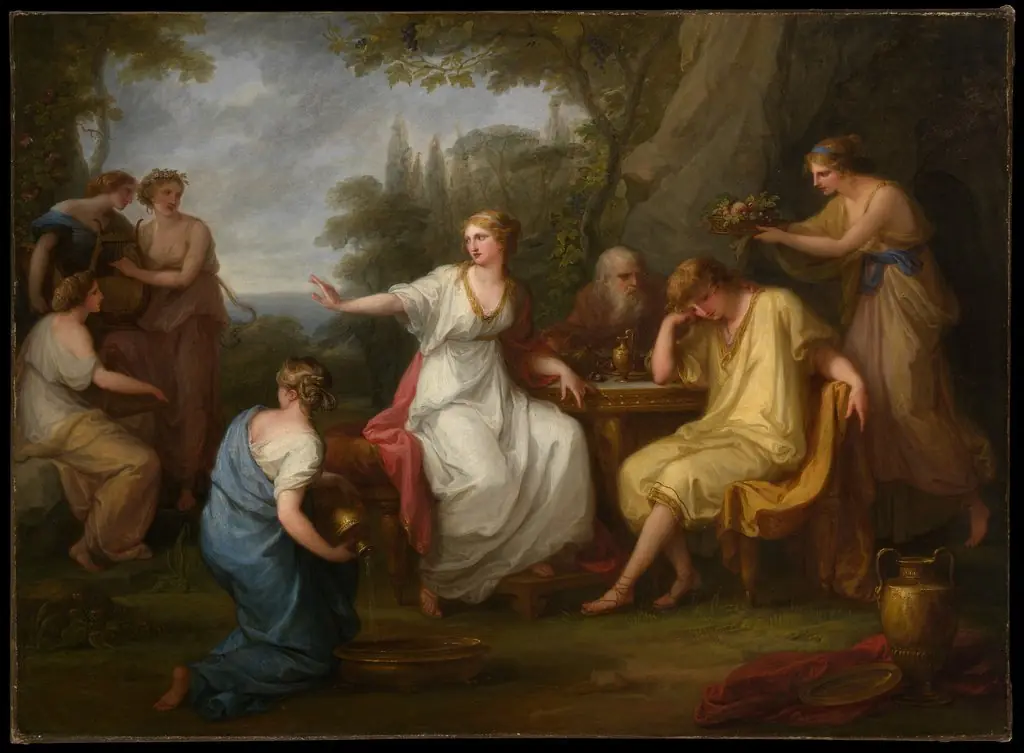
- The Sorrow of Telemachus
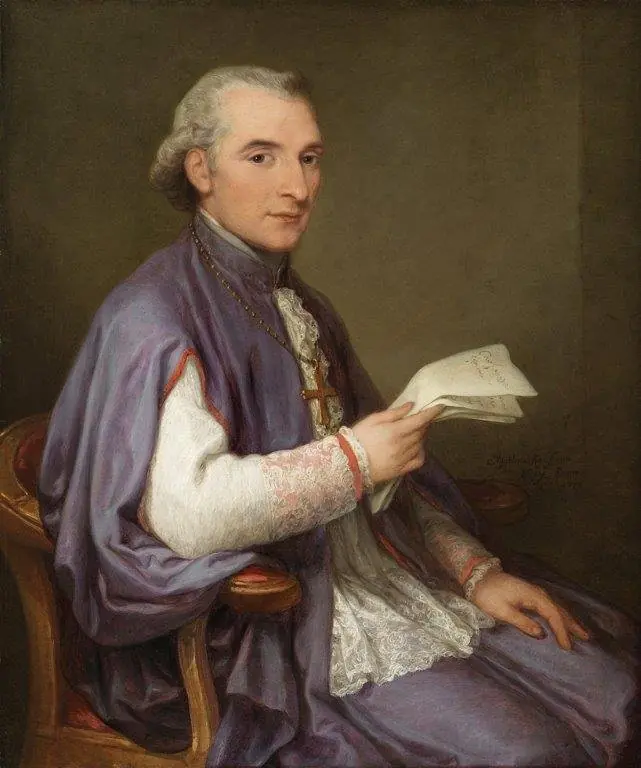 Monsignor Giuseppe Spina (1756–1828)
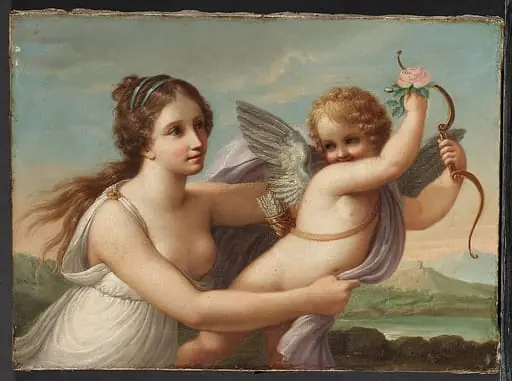 The Victory of Eros
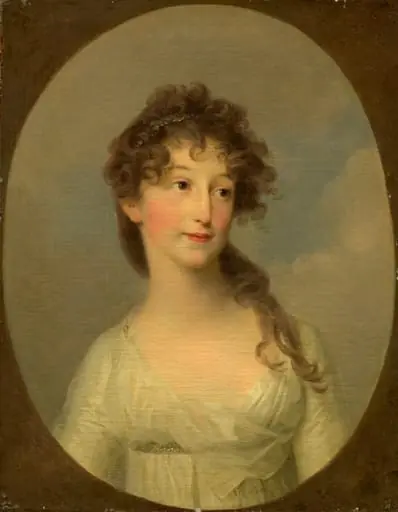 Possibly Franciska Krasinska, Duchess of Courland
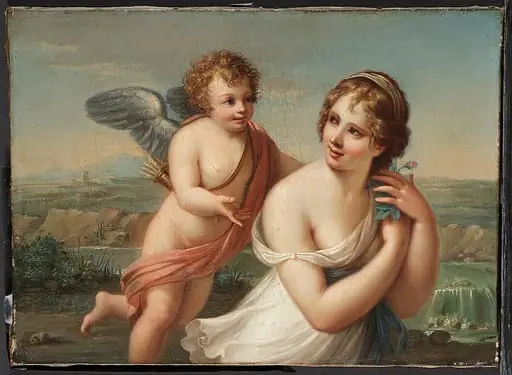 The Temptation of Eros
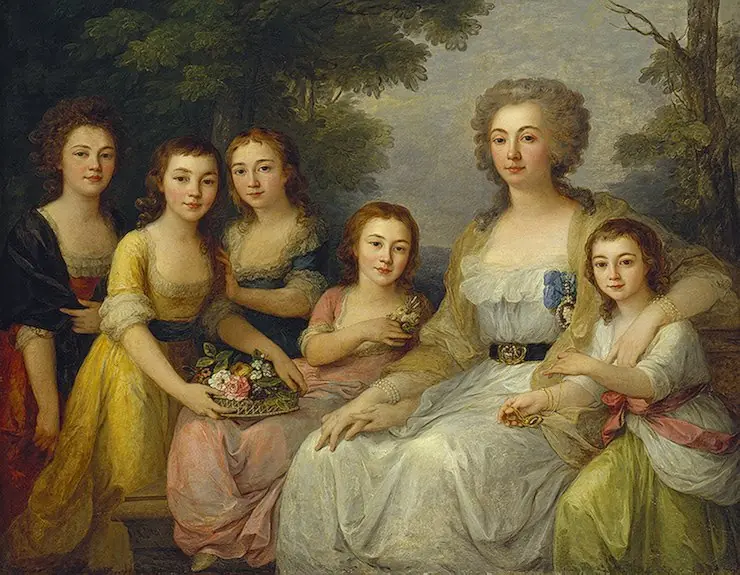 Portrait of Countess A.S. Protasova with her Nieces
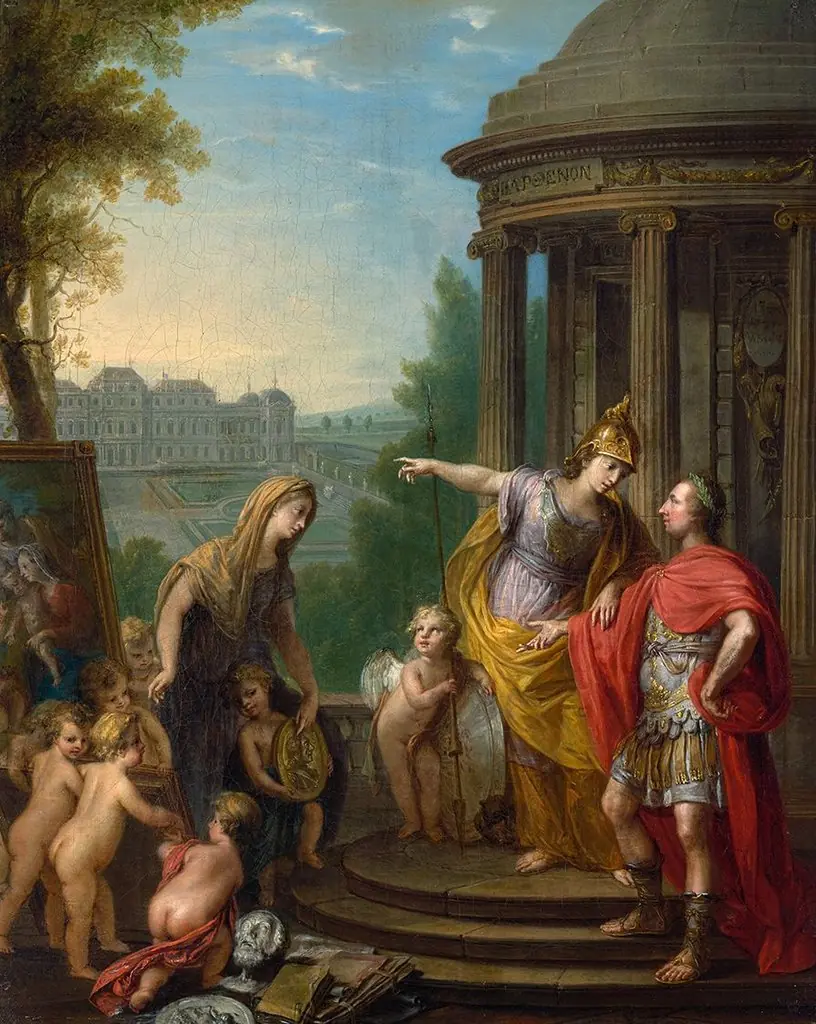 Allegory of the Transfer of the Imperial Gallery to the Belvedere
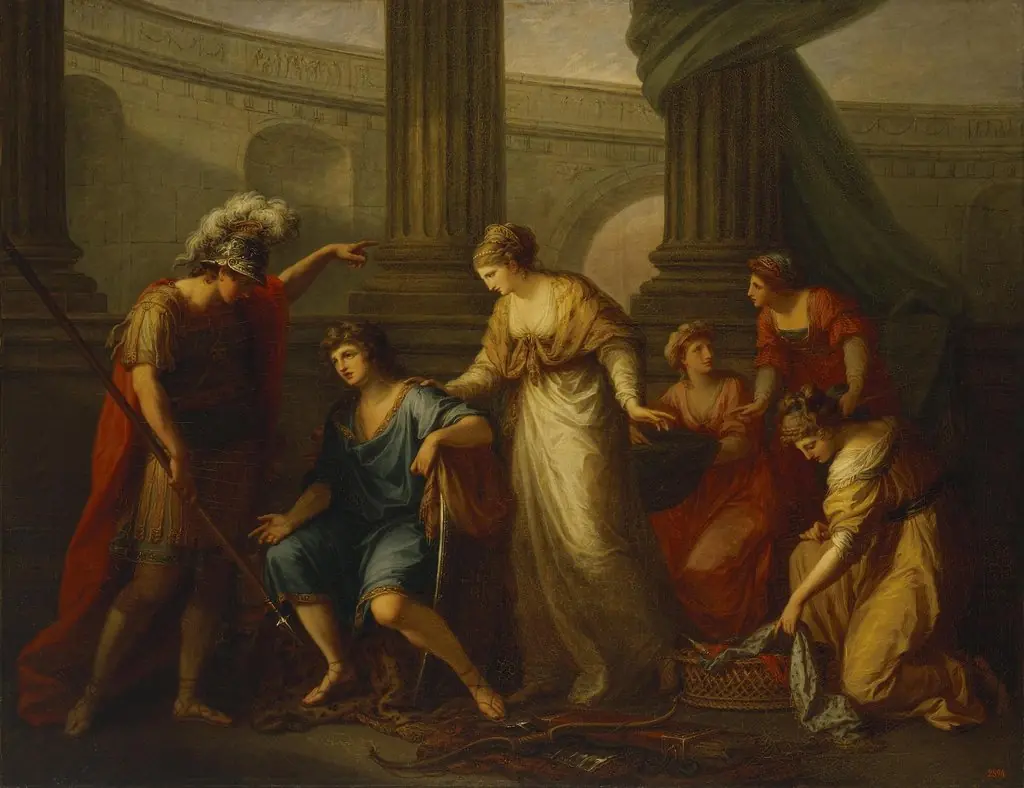 Hector Calling Up Paris to a Battle
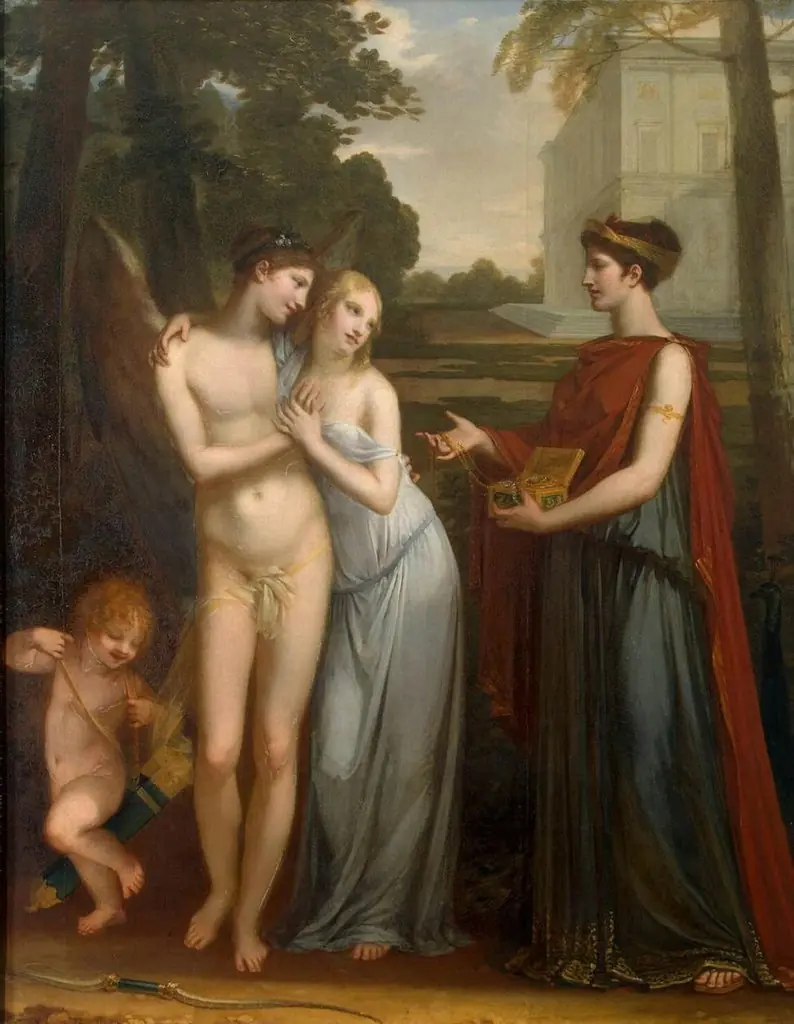 Innocence Preferring Love to Wealth
 Chloe
Chloe Antony and Cleopatra
 Bacchus and Ariadne
 The Muses Urania and Calliope
 Alexander the Great Founding Alexandria
 "Shepherds and Shepherdesses in a Landscape
 The Continence of Scipio
 Augustus schließt den Tempel des Janus