Artwork
The Sorrow of Telemachus
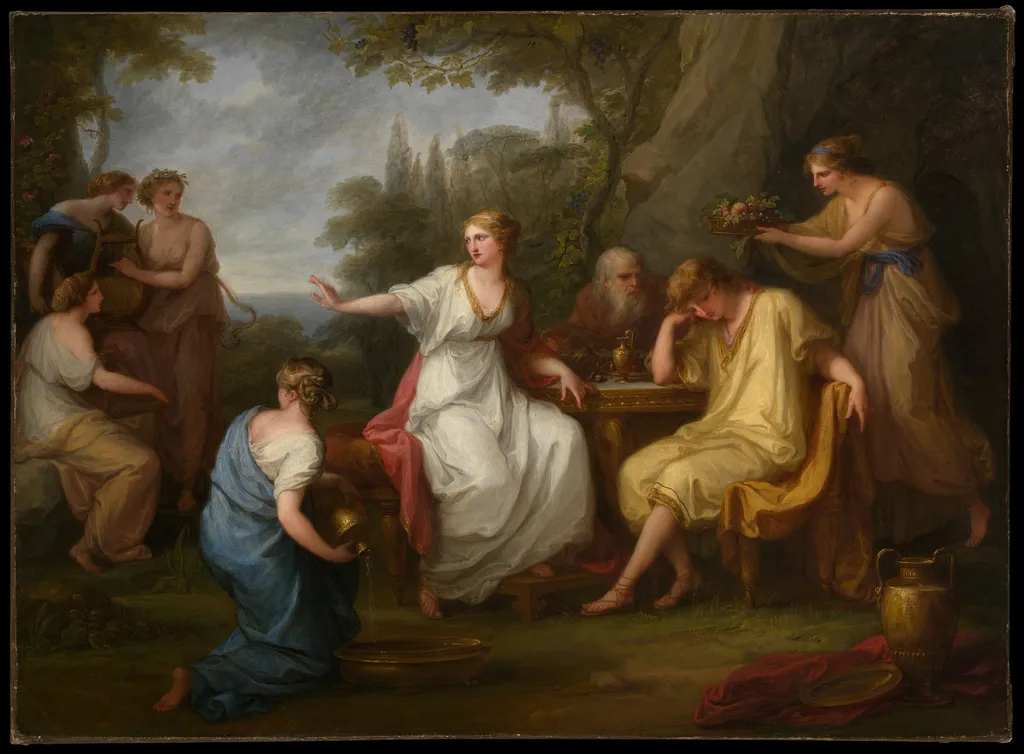
The Sorrow of Telemachus is an oil painting by the Neoclassicist artist Angelica Kauffmann. It dates from 1792 and is held in the collection of the Metropolitan Museum of Art.
About this work
Subject & Meaning
Calypso, shown directing her nymphs to cease singing Odysseus’ praises so as not to deepen the youth’s sorrow, embodies the moment of compassionate restraint.
The painting depicts Telemachus seated at a table, absorbed in thought, while a nymph prepares to wash his feet, a scene drawn from François Fénelon’s 1699 novel Les Aventures de Télémaque. Calypso, shown directing her nymphs to cease singing Odysseus’ praises so as not to deepen the youth’s sorrow, embodies the moment of compassionate restraint. Symbolic details include copper basins, a lira‑guitar, and Calypso’s white veil, which highlight themes of mourning, hospitality, and the shift from exile to self‑discovery. The composition reflects neoclassical fascination with mythological emotion and Enlightenment ideas of filial grief and guided wisdom.
Technique & Style
The Sorrow of Telemachus is executed in oil paint on a canvas support, a medium consistently noted across sources. The handling is refined and smooth, characteristic of Angelica Kauffmann’s neoclassical approach, with careful attention to texture in the fabrics, furnishings and the delicate rendering of the figures. Stylistically, the work displays a balanced composition, soft lighting and a sentimental mood, while the interior details, such as the gilt‑carved Louis XVI‑style table and Calipso’s white peplos, reflect the contemporary taste for elegant, classical revival motifs. These formal qualities align with Kauffmann’s broader output of mythological scenes that emphasize grace and emotional restraint.
History & Provenance
The Sorrow of Telemachus (1783) is an oil on canvas painting by Angelica Kauffmann, commissioned by the Roman prelate Monsignor Onorato Caetani (1742‑1797) to illustrate episodes from François Fénelon’s 1699 novel Les Aventures de Télémaque. The work, dated 1783, portrays Telemachus in contemplation as Calypso orders her nymphs to cease praising Odysseus, a scene described in contemporary accounts. After Caetani’s collection, the painting passed through the hands of collector Eugene Fischoff and subsequently to Collis P. Huntington, Arabella Huntington, and Archer Milton Huntington before entering the Metropolitan Museum of Art.
Kauffmann also produced two later versions in 1788 (held by the Bündner Museum of Art, Chur) and 1989 (sold at Christie’s London).
The Sorrow of Telemachus is held in the collection of the Metropolitan Museum of Art in New York. The painting entered the museum through the bequest of Arabella Huntington, who inherited it from her father Eugene Fischoff and later passed it to the museum via the Huntington family holdings. No specific exhibition record is documented in the available sources; the work is listed only as part of the museum’s permanent collection. Its accession number is not specified in the provided references.
Context
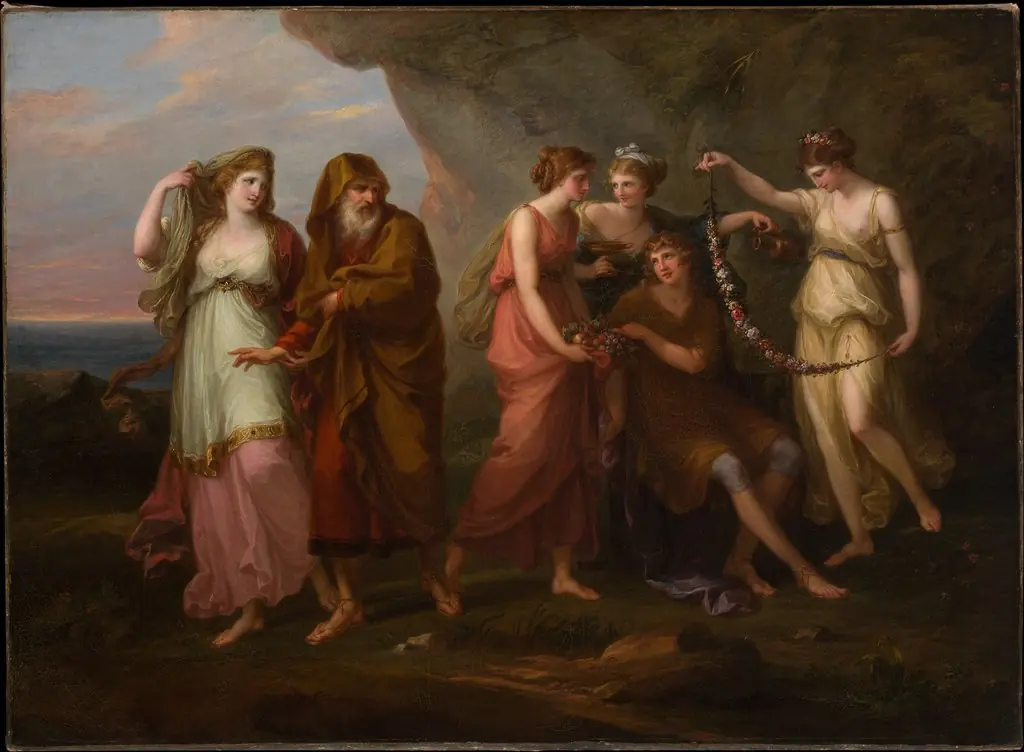
Painted in 1783 during Kauffmann's second Roman period, The Sorrow of Telemachus was commissioned by the scholar-collector Onorato Caetani, Duke of Sermoneta, alongside its companion piece Telemachus and the Nymphs of Calypso, both now at the Metropolitan Museum of Art. The work belongs to a wider Neoclassical engagement with Fénelon's 1699 novel, a text written for the instruction of the Duke of Burgundy and freely adapted from the first four books of the Odyssey. Kauffmann's Roman studio on Via Sistina, opened in 1782 with her husband Antonio Zucchi, served Grand Tour travellers and Roman patrons, situating the painting within her mature practice of literary-mythological subjects.
Critics including Schlegel and Freud have remarked on the androgynous quality of her male youths, and scholars note that Kauffmann, favoured by the London aristocracy for her sensibility, emphasized Telemachus's emotional paralysis over heroic action. Replicas were frequently requested, attesting to the composition's currency.
Overview
Angelica Kauffman's 1783 oil painting, The Sorrow of Telemachus, captures a poignant moment from Homer's epic poem, The Odyssey. This work by the Swiss artist is part of the collection at the Metropolitan Museum of Art in New York. It presents a classical scene with figures in draped attire, conveying a deep emotional narrative centered around Odysseus's son, Telemachus, during his arduous search for his father.
Own this work as a print
Artist & collection

Artist
Maria Anna Angelika Kauffmann, usually known in English as Angelica Kauffman, was a Swiss painter who had a successful career in London and Rome.

- Telemachus and the Nymphs of Calypso
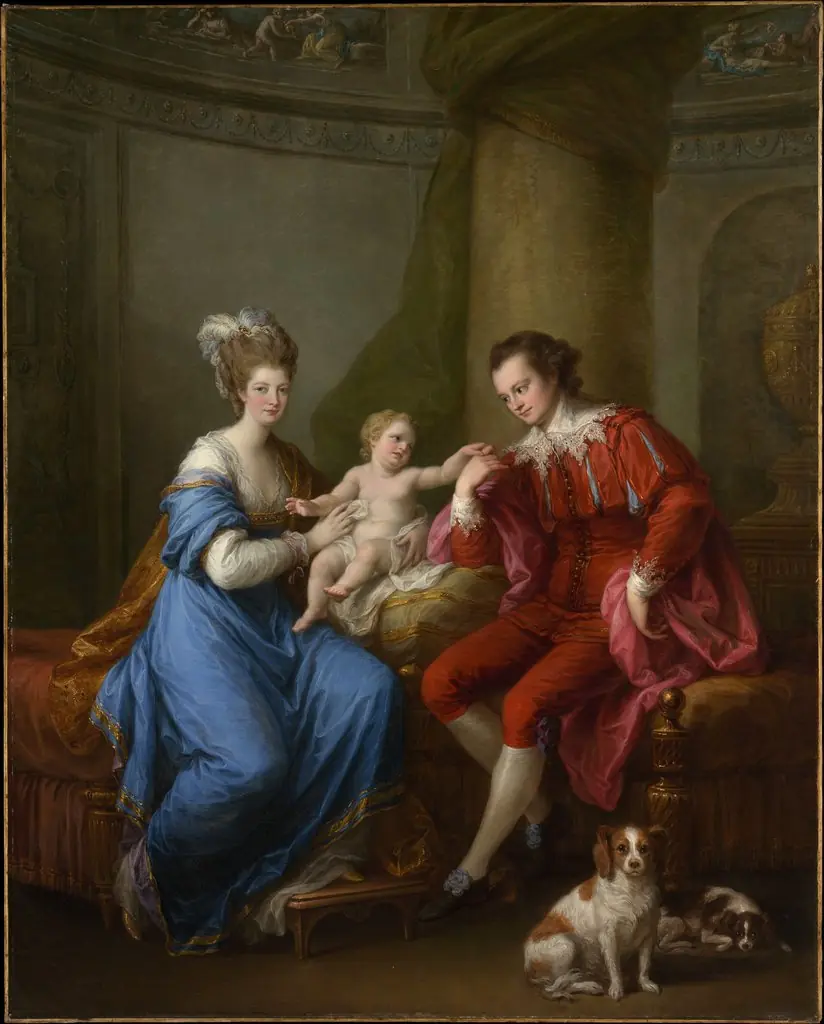 Edward Smith Stanley (1752–1834), Twelfth Earl of Derby, with His First Wife (Lady Elizabeth Hamilton, 1753–1797) and Their Son (Edward Smith Stanley, 1775–1851)
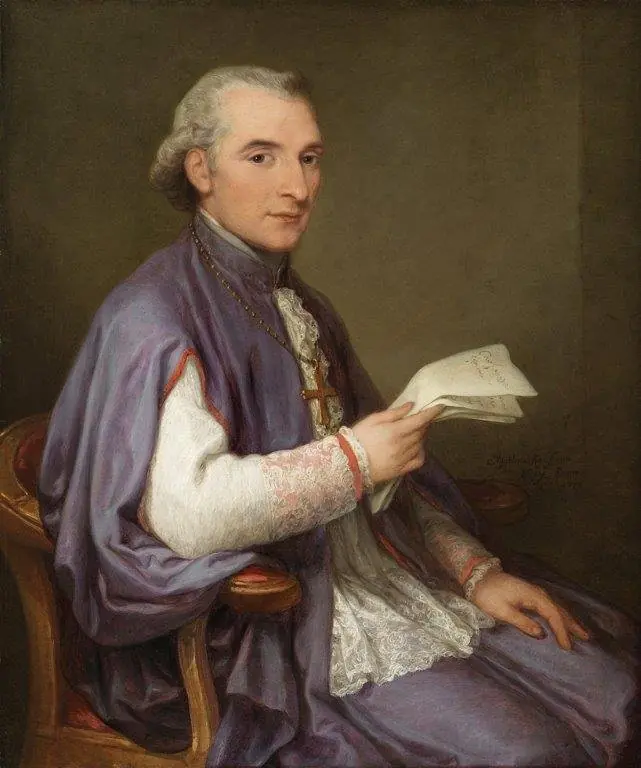 Monsignor Giuseppe Spina (1756–1828)
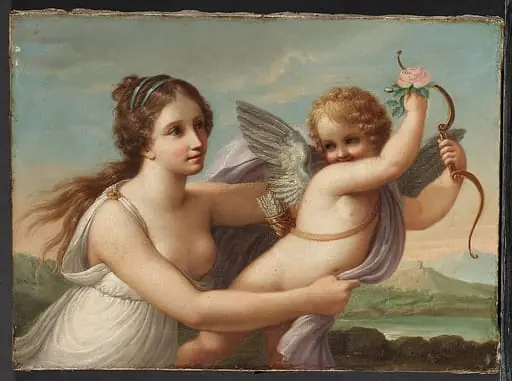 The Victory of Eros
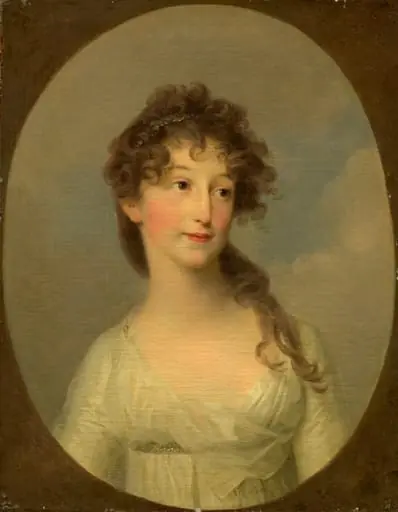 Possibly Franciska Krasinska, Duchess of Courland
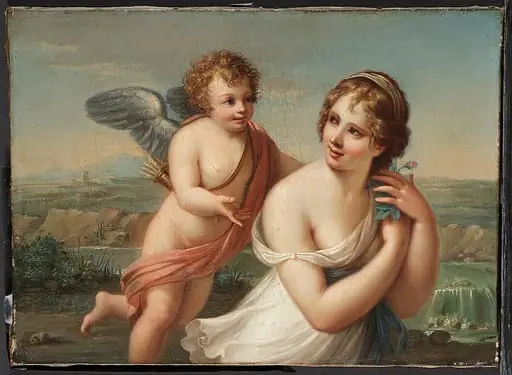 The Temptation of Eros
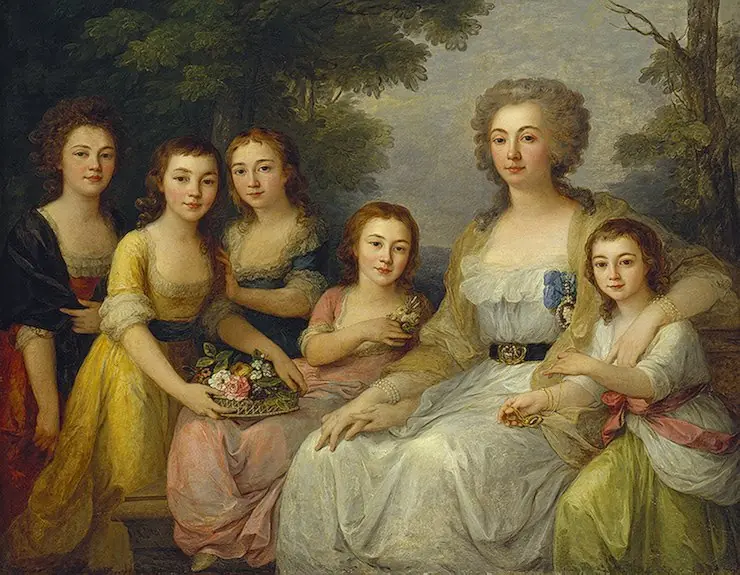 Portrait of Countess A.S. Protasova with her Nieces
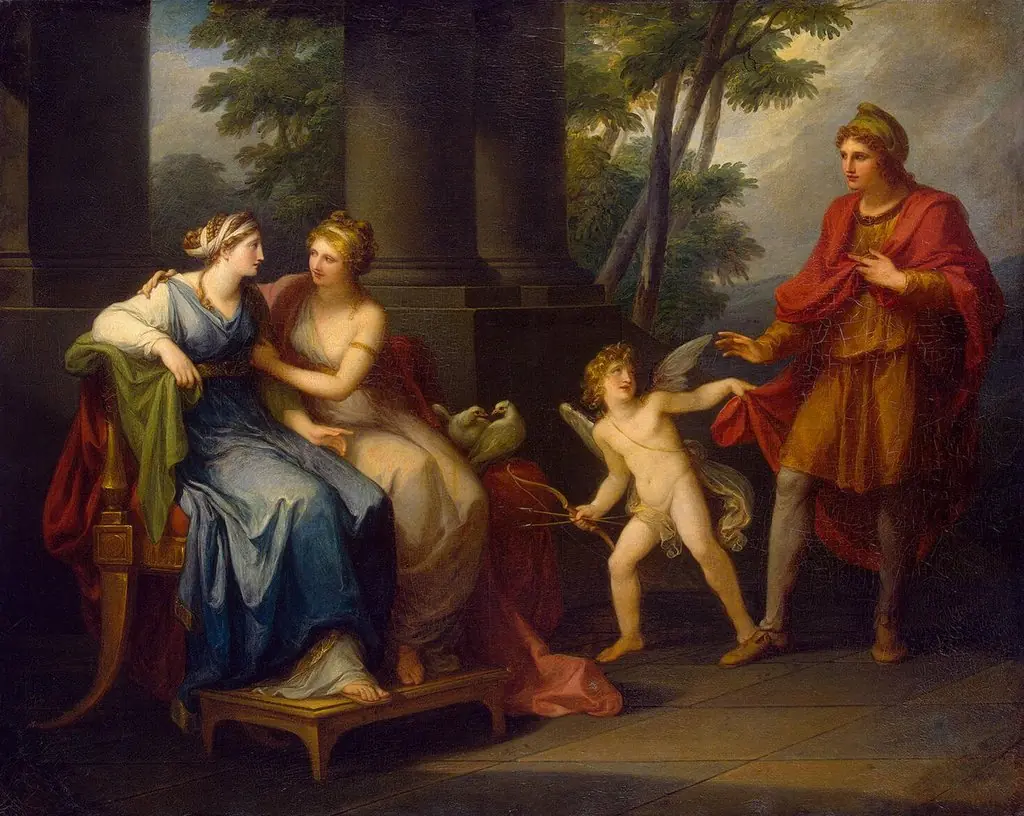 Venus Induces Helen to Fall in Love with Paris
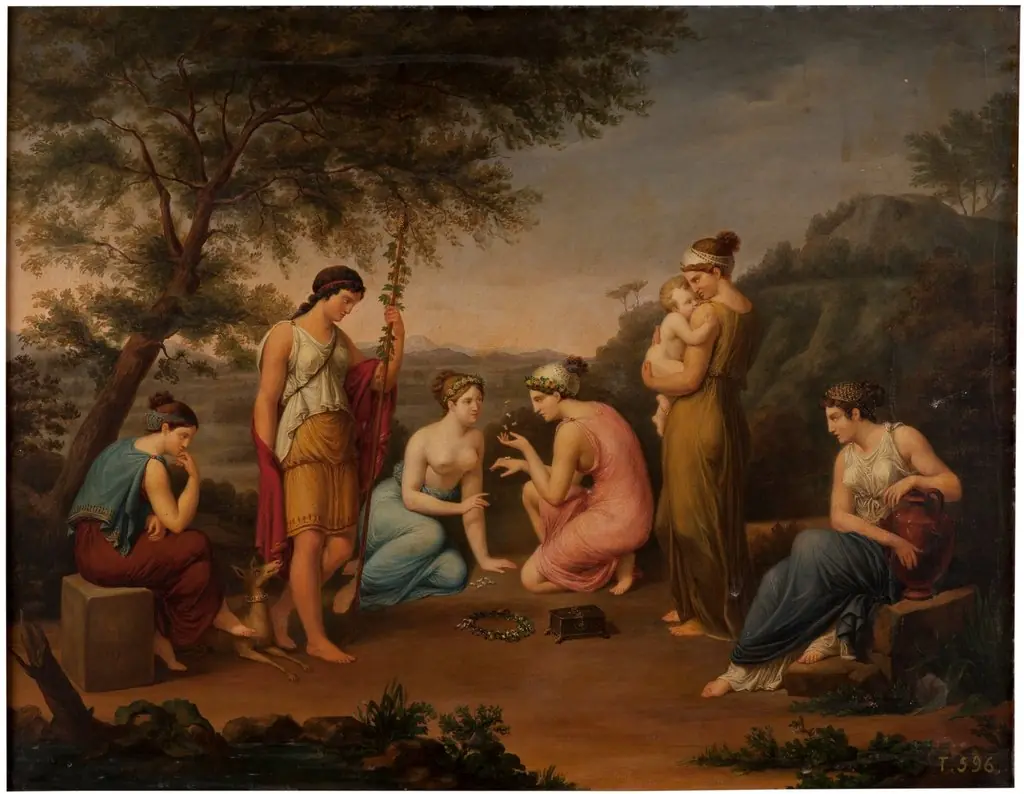 Las griegas de los dados
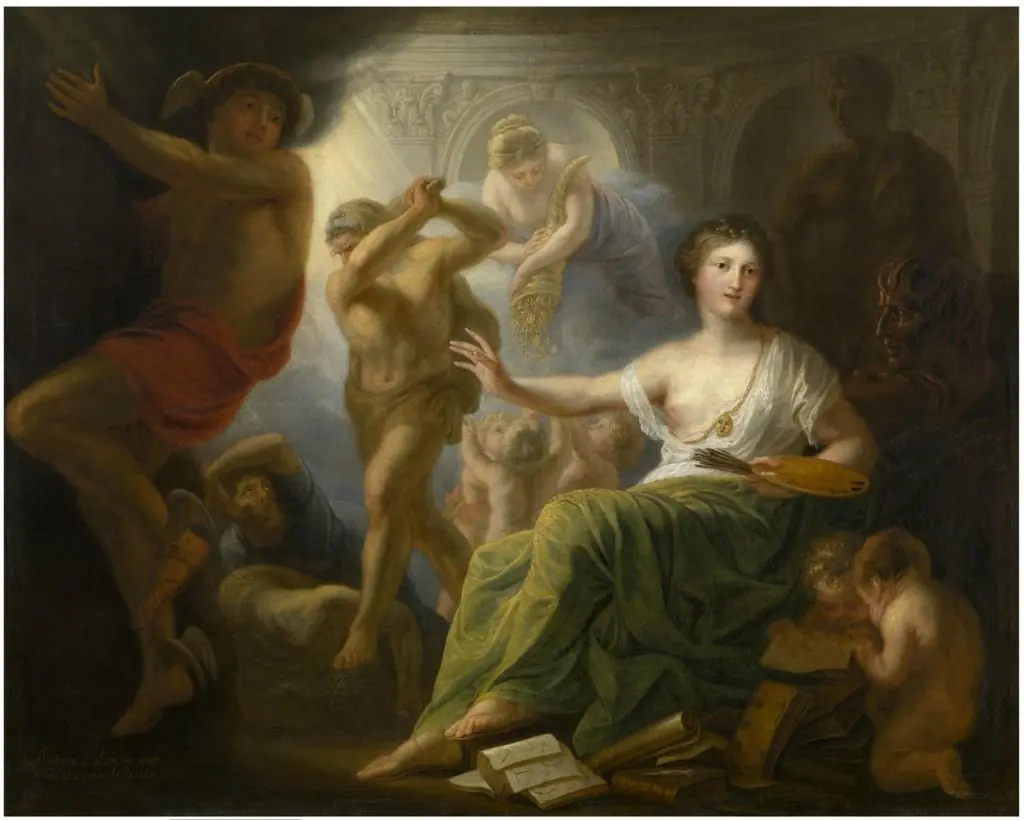 Hercules Protects Painting from Ignorance and Envy
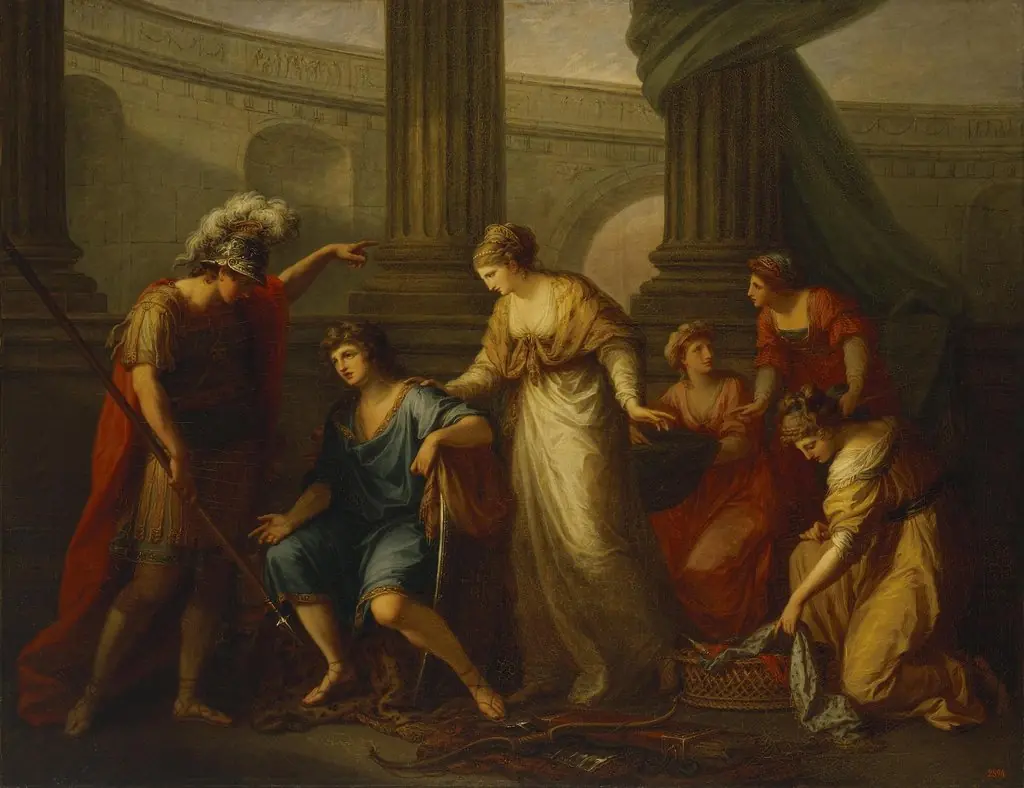 Hector Calling Up Paris to a Battle
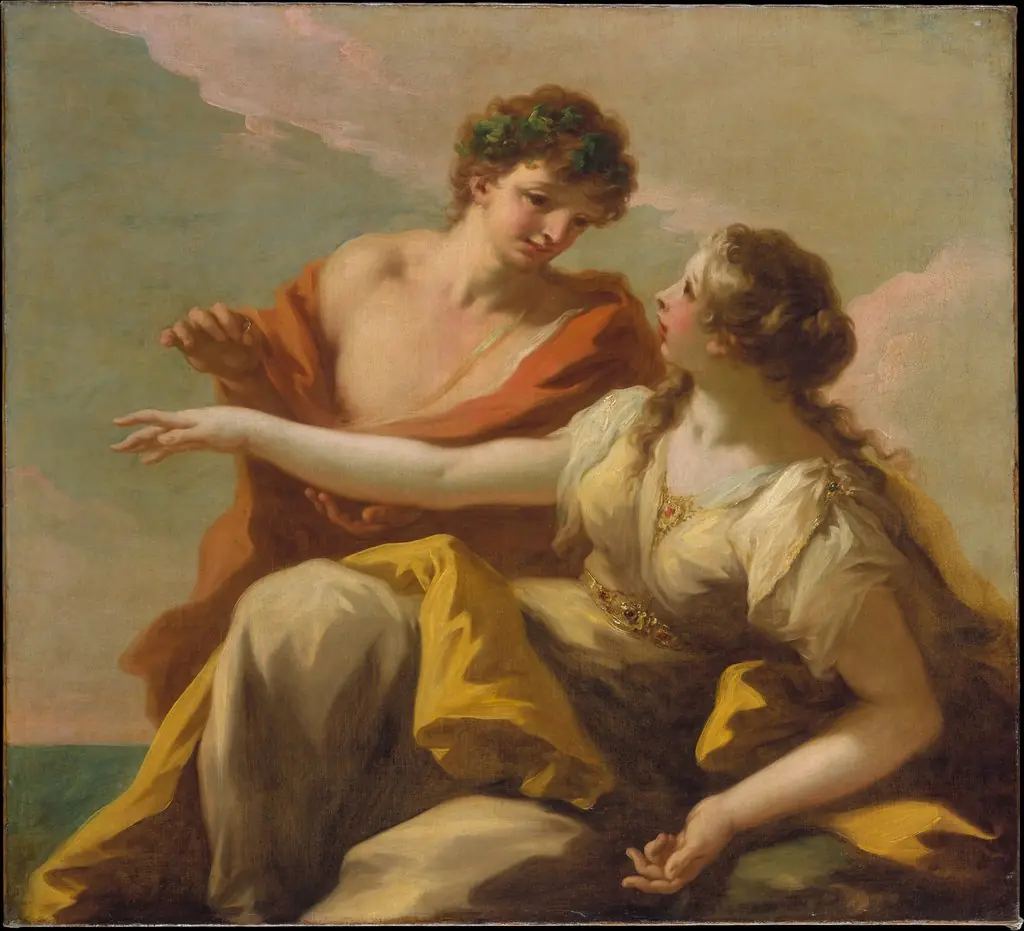 Bacchus and Ariadne
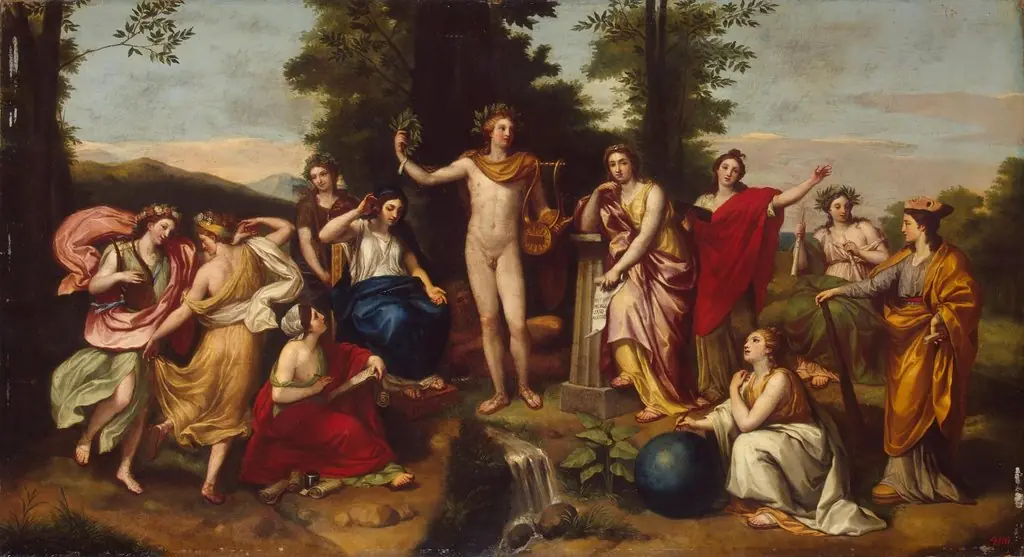 Parnassus
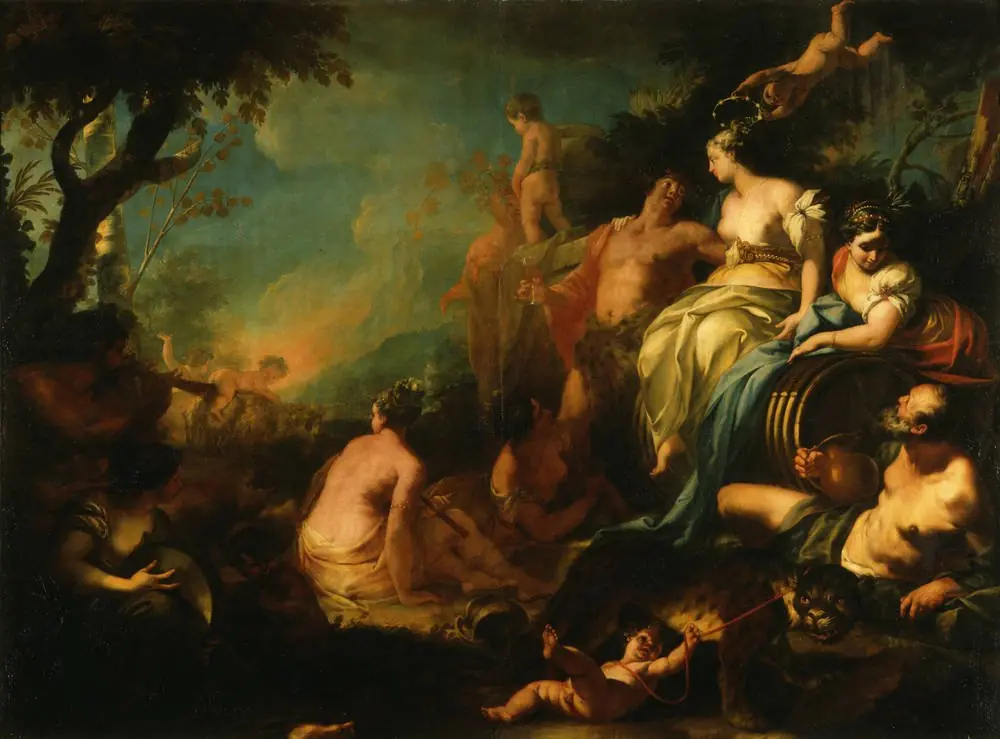 Bacchus and Ariadne
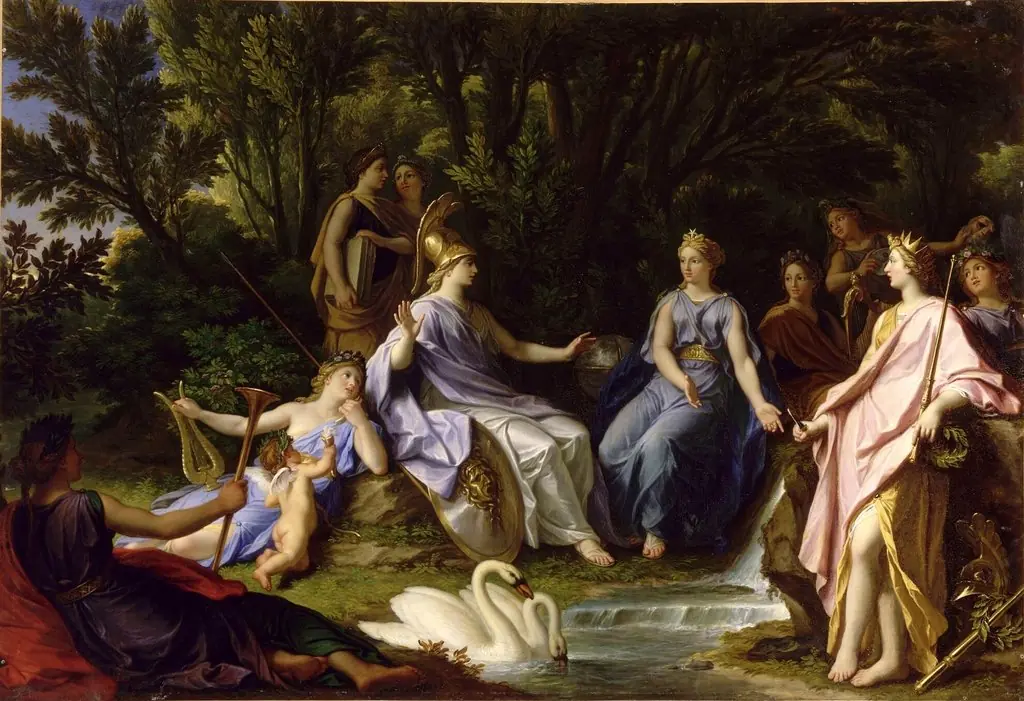 Story of Minerva - The Muses Showing Minerva Hippocrene Waters of the River that Brings Out Pegasus
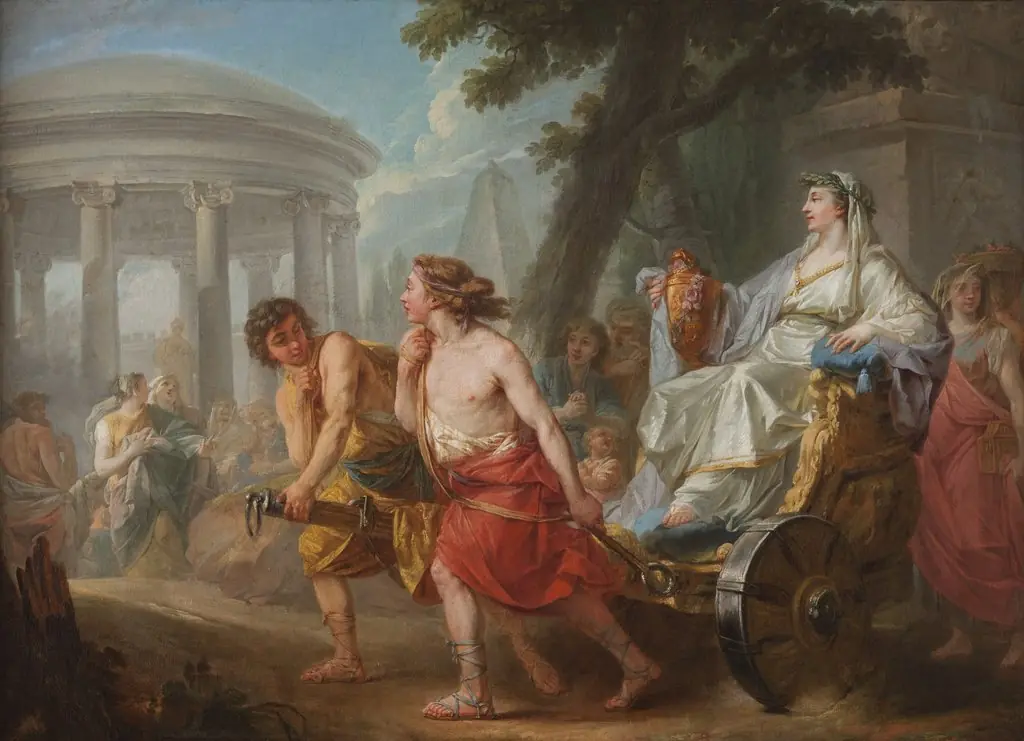 Cleobis and Biton with Cydippe in the Front of Hera Temple