Artwork
The Victory of Eros
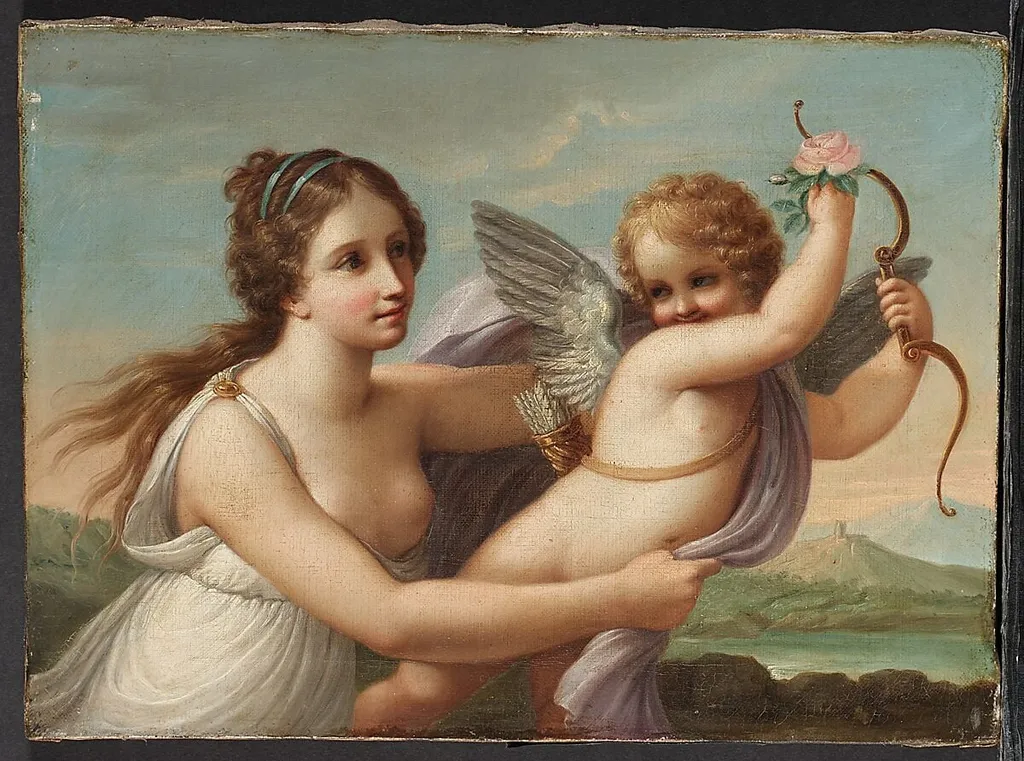
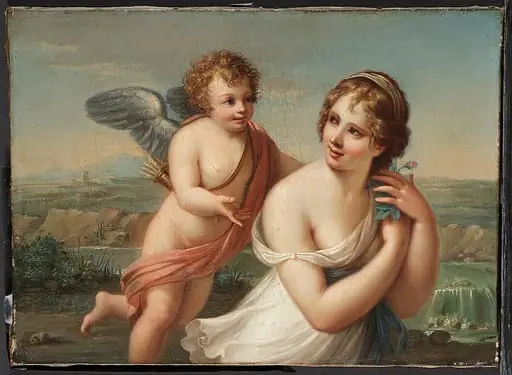
The Victory of Eros is an oil painting by the Rococo painting artist Angelica Kauffmann. It dates from 1762 and is held in the collection of the Metropolitan Museum of Art.
About this work
Subject & Meaning
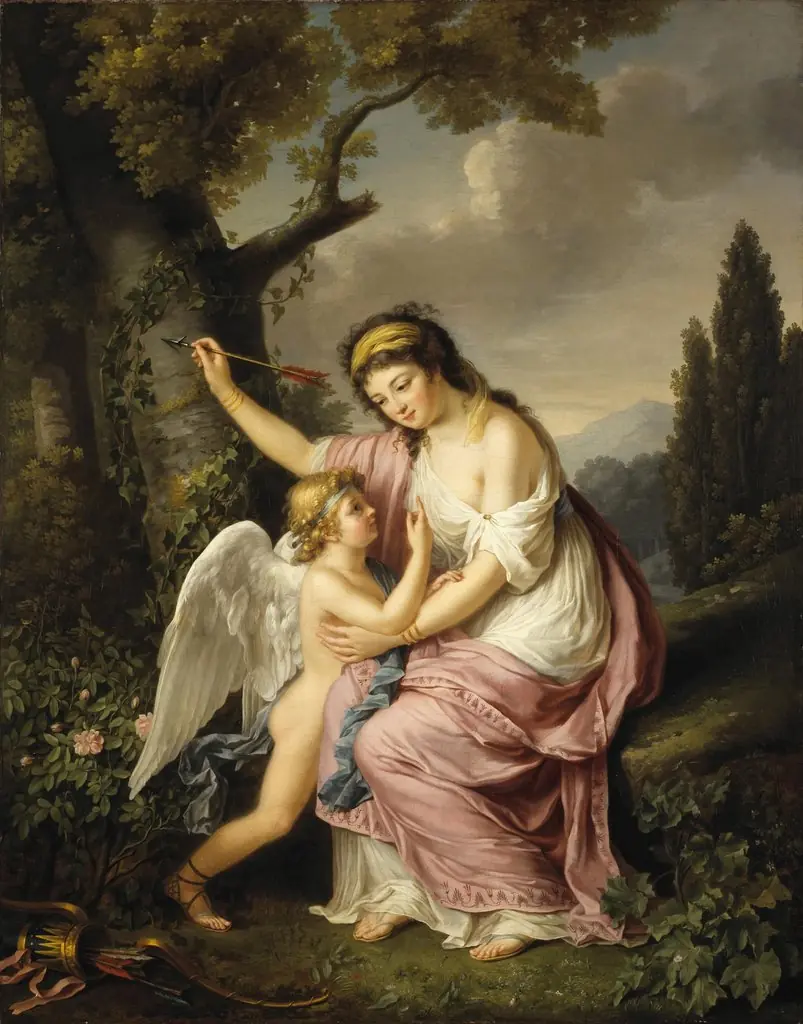
The painting depicts a mythological scene centered on Eros, the Greek god of love, shown in a moment of triumph or conquest.
The painting depicts a mythological scene centered on Eros, the Greek god of love, shown in a moment of triumph or conquest. A female figure and a rose accompany him, forming the core iconographic elements of the composition. The rose, traditionally associated with Venus and love, reinforces the erotic and amorous symbolism, while the presence of a woman suggests a narrative of seduction, devotion, or the subduing power of desire.
Together, these motifs articulate the classical theme of love's victory, a subject well suited to Kauffmann's Neoclassical sensibility and her engagement with antique mythology. The work thus operates as an allegory of love triumphant, conveyed through the conventional attributes of Eros and the rose.
History & Provenance
The painting known as The Victory of Eros was created in 1762 by the artist Angelica Kauffmann. Executed in oil on canvas, the work depicts a mythological scene featuring Eros, a woman, and a rose. The piece is currently held in the collection of the Metropolitan Museum of Art.
While the specific circumstances of its original commission and the detailed chain of ownership prior to its museum acquisition are not elaborated upon in the available records, the work's inception is dated to 1762. It remains a significant example of Kauffmann's mythological genre paintings from this period.
Legacy
The 1762 oil on canvas The Victory of Eros by Angelica Kauffmann, held by the Metropolitan Museum of Art, has come to reflect the artist's enduring reputation in mythological painting. Its presence in a premier collection highlights scholarly recognition of Kauffmann's contribution to eighteenth-century European Neoclassical art and reinforces the work's status as a reference point for studies of Eros iconography. The painting's continued display and scholarly citation illustrate its lasting influence on interpretations of mythological subjects in Western art.
Overview
Angelica Kauffmann's The Victory of Eros, painted in 1762, is an oil on canvas work. This mythological composition features the Roman god of love, Eros, alongside a female figure amidst a profusion of roses. The painting exemplifies Kauffmann's engagement with classical themes, rendered with a characteristic grace and narrative subtlety.
Technique & Style
Executed in oil on canvas, The Victory of Eros showcases Kauffmann's refined approach to mythological subjects. Her work often features delicate brushwork and a soft palette, characteristic of the Neoclassical and Rococo influences prevalent in her era. The composition emphasizes emotional nuance through subtle gestures and expressions, creating a harmonious and engaging visual narrative.
Artist & collection

Artist
Maria Anna Angelika Kauffmann, usually known in English as Angelica Kauffman, was a Swiss painter who had a successful career in London and Rome.

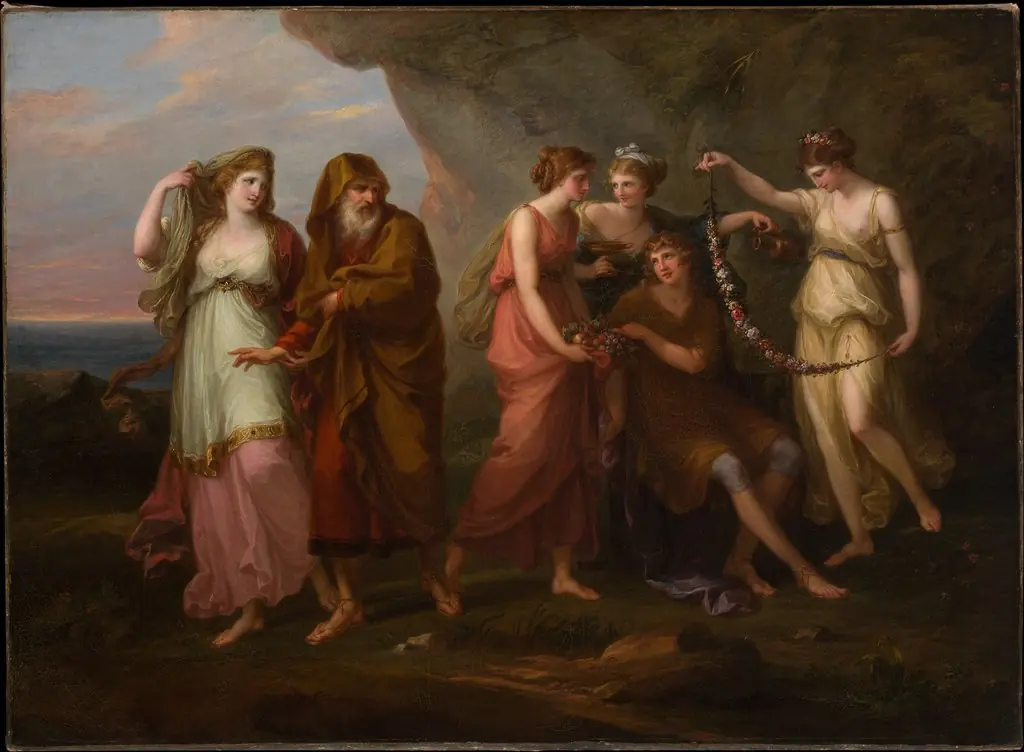 Telemachus and the Nymphs of Calypso
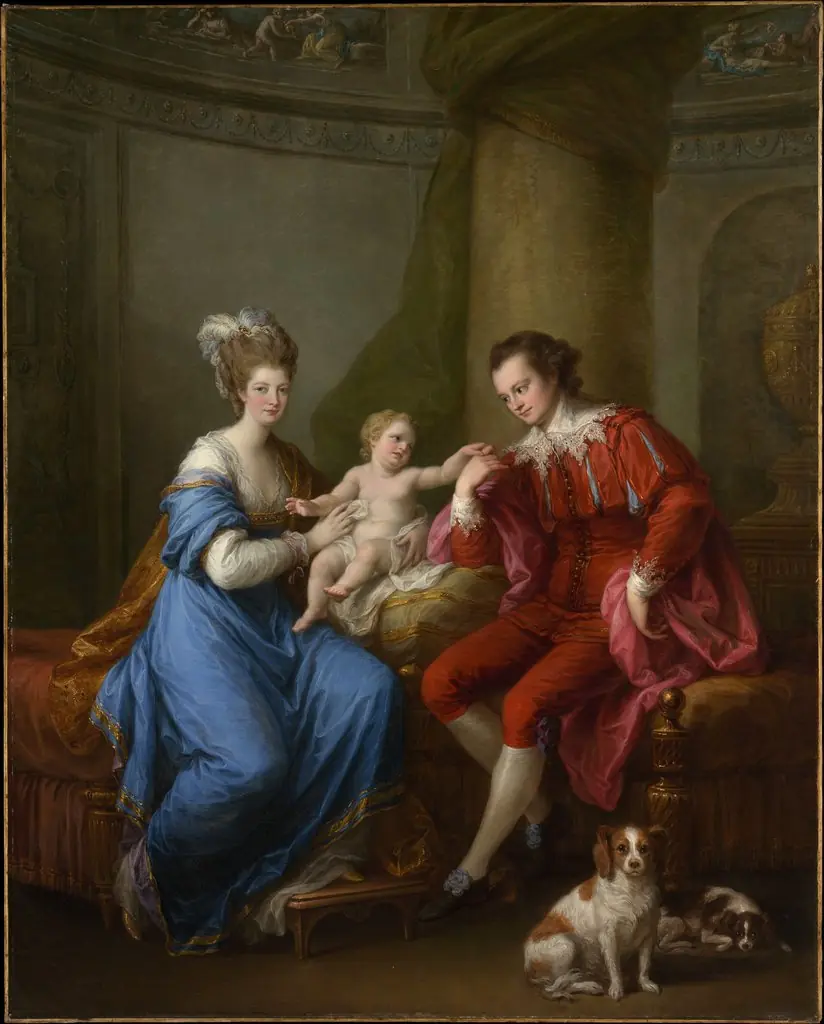 Edward Smith Stanley (1752–1834), Twelfth Earl of Derby, with His First Wife (Lady Elizabeth Hamilton, 1753–1797) and Their Son (Edward Smith Stanley, 1775–1851)
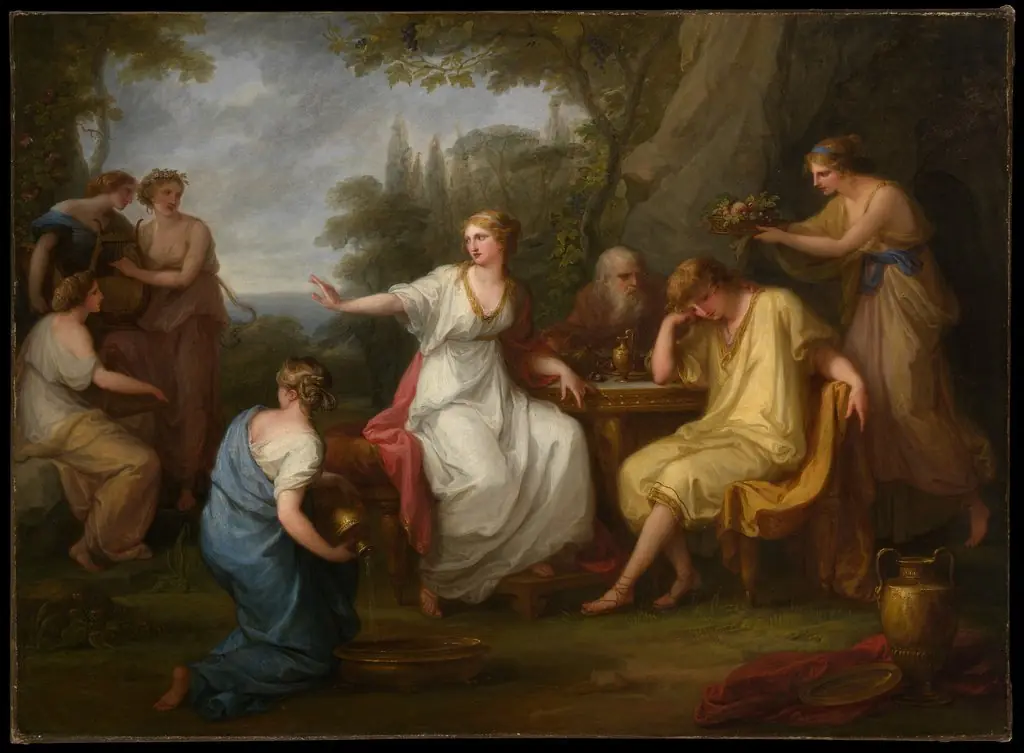 The Sorrow of Telemachus
 Monsignor Giuseppe Spina (1756–1828)
 Possibly Franciska Krasinska, Duchess of Courland
- The Temptation of Eros
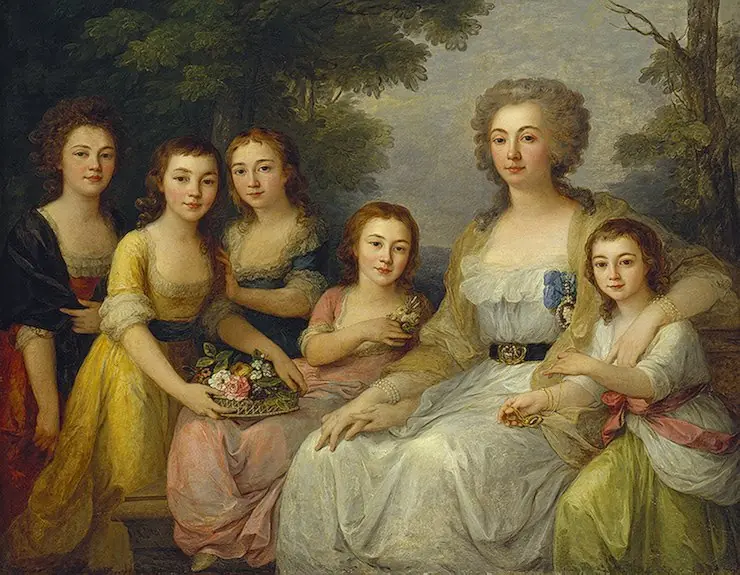 Portrait of Countess A.S. Protasova with her Nieces
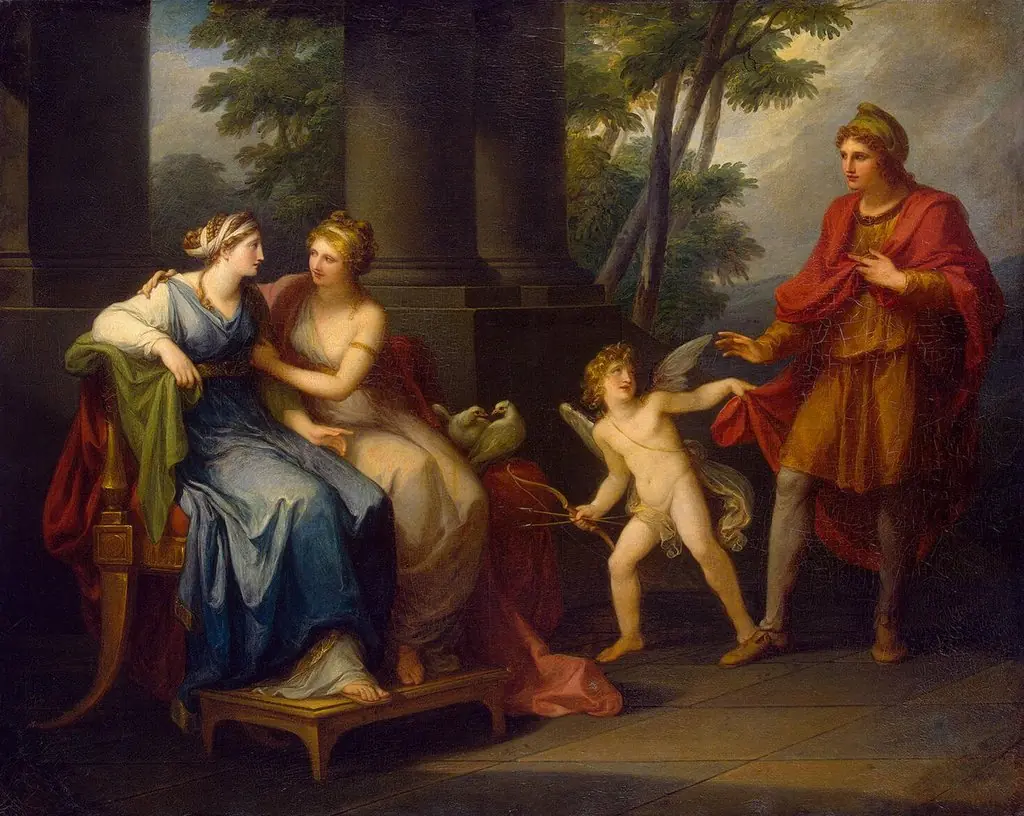 Venus Induces Helen to Fall in Love with Paris