Artwork
Barbara van Beck
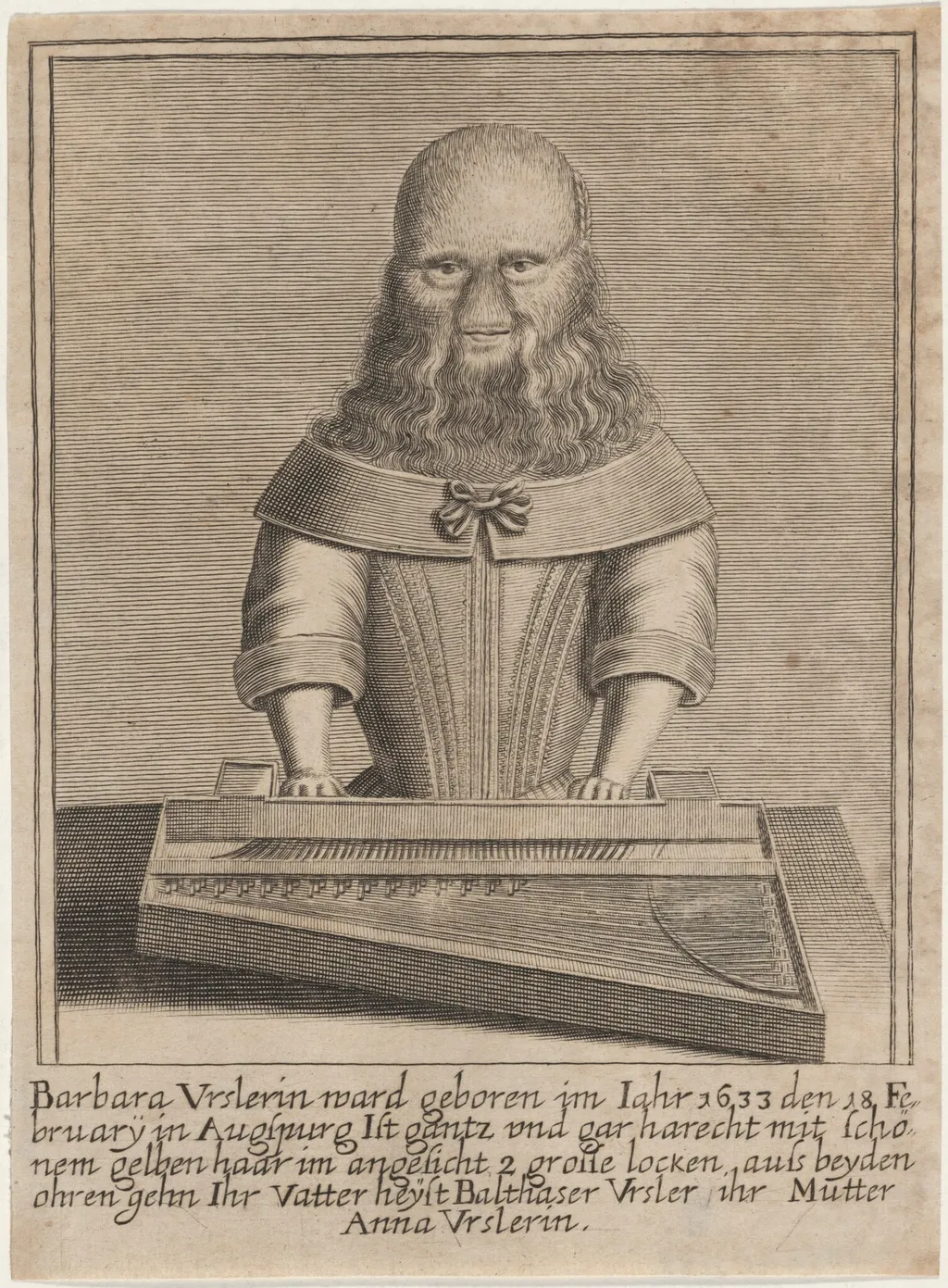
Barbara van Beck is an ink print by the Renaissance artist after Isaac Brun. It dates from 1630 and is held in the collection of the National Gallery of Art.
About this work
Overview
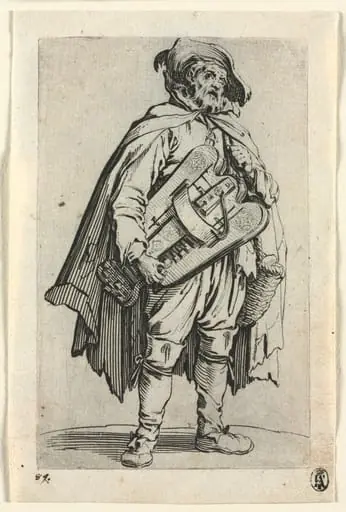
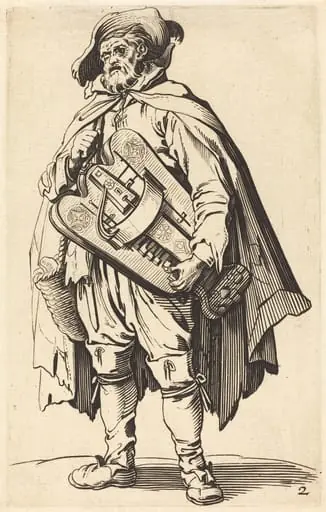
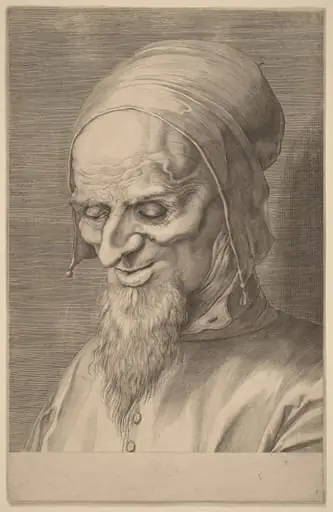
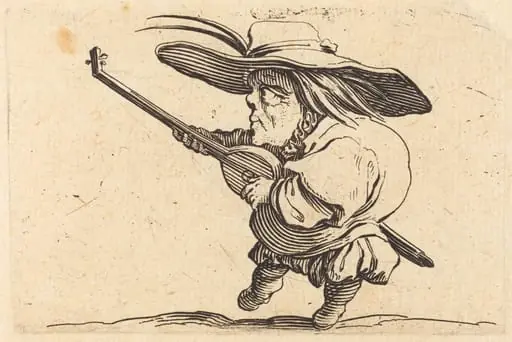
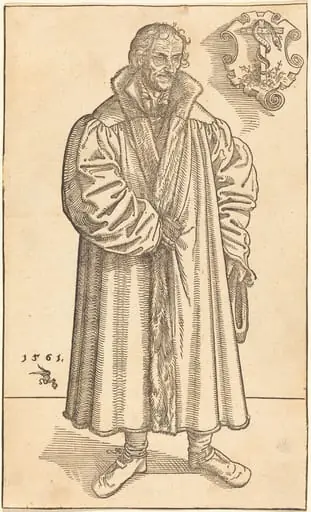
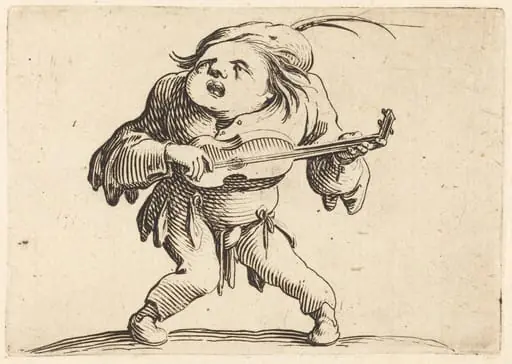
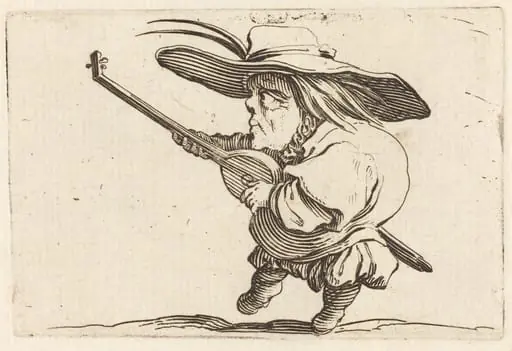
This black-and-white engraving depicts a man with a long, curly beard and hair, dressed in 17th-century attire featuring a high, lace-trimmed ruff. His hands rest on a flat surface, with a small object partially concealed beneath his left hand. The image is rendered entirely in fine, intersecting lines, a technique known as cross-hatching, which builds form and shadow without tone or color.
Subject & Meaning
The identity of the man is not definitively known, though he is often associated with Barbara van Beck, a Dutch performer and courtesan. The portrait’s formal pose and detailed attire suggest an attempt to convey status or individuality. The object under his hand may imply a profession or personal possession, though its purpose remains ambiguous.
Technique & Style
The artist employed meticulous cross-hatching to model volume and texture, particularly in the beard, ruff, and fabric folds. Fine, parallel lines are layered at varying angles to create gradations of light and shadow. This method, common in early printmaking, relies on precision rather than wash or tone to achieve depth and realism.
History & Provenance
The engraving is attributed to a 17th-century Dutch artist, likely produced as a standalone portrait print. It circulated among collectors interested in likenesses of notable or eccentric figures. No definitive record of its original commission survives, but its survival in institutional collections indicates early scholarly interest.
Context
During the mid-1600s, engraved portraits of individuals, whether artists, scholars, or performers, were widely produced in the Netherlands. These prints served as both documentation and cultural artifacts, reflecting a growing interest in individual identity and the visual representation of social roles beyond nobility.
Legacy
The engraving remains a modest but instructive example of early modern printmaking techniques. Its use of line to convey texture and presence influenced later portrait engravers. Though not widely known today, it contributes to the historical record of how non-elite figures were visually represented in early print culture.
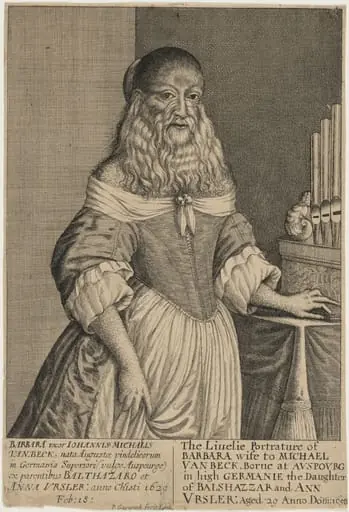
Artist & collection
Artist