Artwork
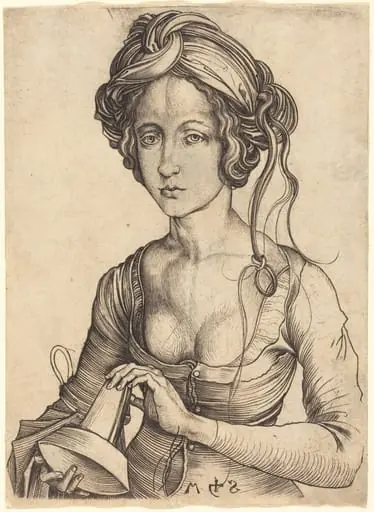
A Bust Figure of a Foolish Virgin Holding Her Inverted Lamp
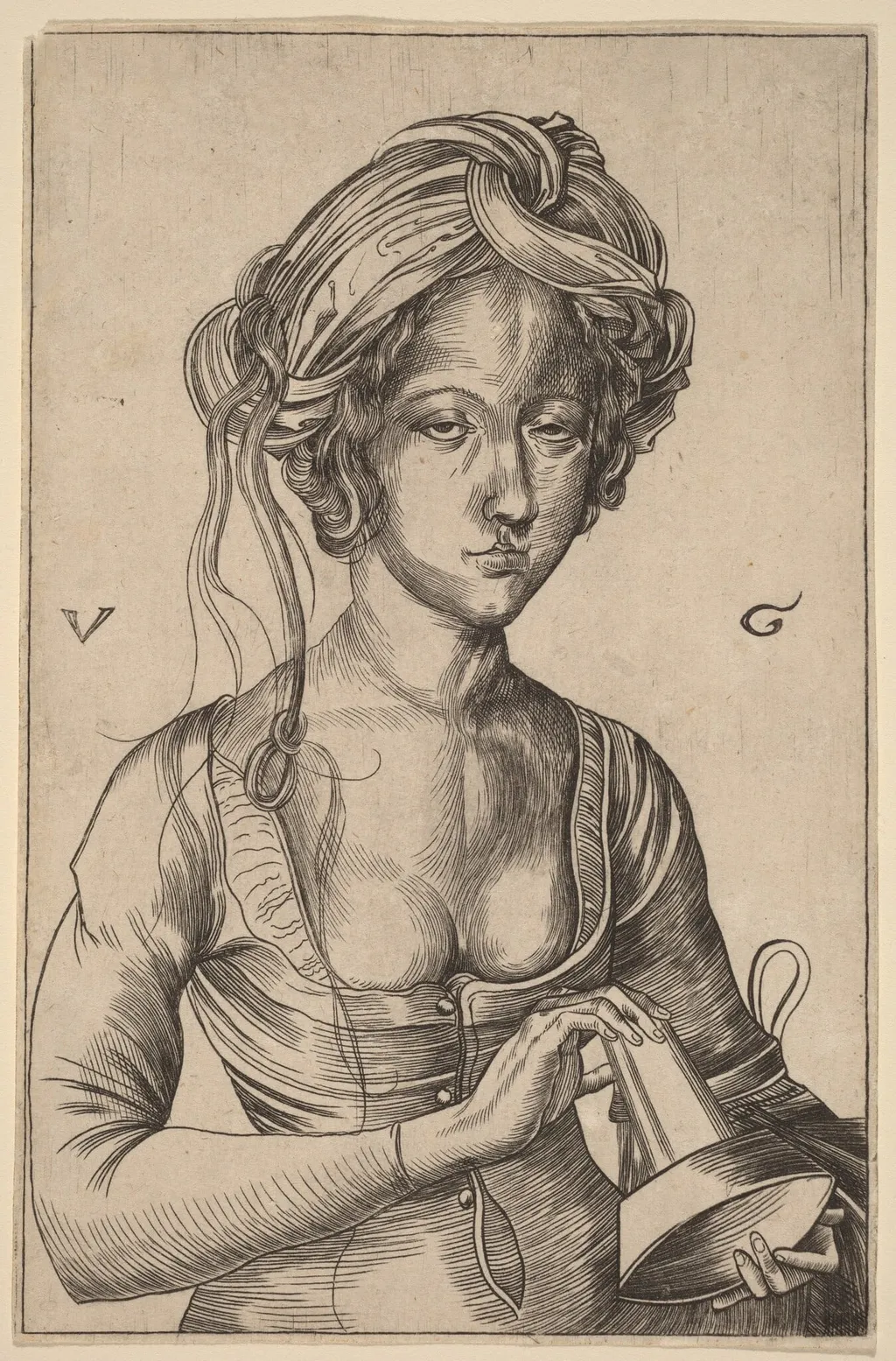
A Bust Figure of a Foolish Virgin Holding Her Inverted Lamp is an ink print by the Renaissance artist Urs Graf I. It dates from 1507 and is held in the collection of the National Gallery of Art.
About this work
Overview
This work exemplifies Graf's engagement with religious allegory and moral instruction, themes prevalent in his prints during the early 16th century.
Created in 1507 by the Swiss Renaissance artist Urs Graf I, this engraving depicts a bust-length figure of one of the foolish virgins from the Parable of the Ten Virgins. The subject is shown holding an inverted lamp, a direct visual reference to the biblical narrative in Matthew 25 where the foolish virgins fail to bring sufficient oil for their lamps. Graf renders the figure with sharp, energetic lines characteristic of his graphic style, utilizing heavy hatching to model the face, hands, and the voluminous folds of her draped dress.
Her hair is swept upward, framing a face that conveys a sense of realization or dismay. The composition focuses tightly on the upper body, eliminating background details to emphasize the symbolic gesture of the overturned vessel. This work exemplifies Graf's engagement with religious allegory and moral instruction, themes prevalent in his prints during the early 16th century.
The piece serves as a visual exegesis of the parable, using the specific iconography of the empty, upside-down lamp to signify spiritual unpreparedness and wasted opportunity within the context of the artist's broader oeuvre of woodcuts and engravings.
Subject & Meaning
The central figure is identified as a “foolish virgin,” a moral allegory common in early‑sixteenth‑century visual culture. The upside‑down lamp functions as a symbolic device, suggesting the misuse or squandering of light, metaphorically, the waste of wisdom or virtue. By pairing the virgin motif with this emblem, the print conveys a cautionary narrative about folly and misplaced priorities.
Technique & Style
Graf employed the traditional copper‑plate engraving method, incising fine lines into a metal surface before inking and pressing onto paper. The work’s stark contrasts arise from dense cross‑hatching that deepens shadows, while the sharper, isolated strokes delineate the figure’s contours. This approach reflects the Northern Renaissance’s emphasis on detailed surface texture and precise draftsmanship.
History & Provenance
Created in 1507, the print belongs to a period when engravings served as a primary means of disseminating visual stories and moral lessons across Europe. Although specific ownership records are scarce, the work is catalogued among Graf’s early prints, which were widely circulated among collectors and guild members in the Germanic regions of the Holy Roman Empire.
Context
During the early sixteenth century, the burgeoning print market allowed artists like Graf to reach audiences beyond the confines of a workshop. Engravings such as this one functioned both as decorative objects and as vehicles for didactic content, reflecting contemporary concerns about virtue, education, and the moral instruction of a largely illiterate public.
Own this work as a print
Artist & collection


![The Madonna with Saint Ulrich and Saint Afra [recto], by Urs Graf I](https://artifactworldgallery.com/img/urs-graf-i--the-madonna-with-saint-ulrich-and-saint-afra-recto--563a13dc2b4b63a3-w320.webp)
![Title Page for a Missal, with Satyr and Putti Border [verso], by Urs Graf I](https://artifactworldgallery.com/img/urs-graf-i--title-page-for-a-missal-with-satyr-and-putti-border-verso--df26a3e076a25bf5-w320.webp)