Artwork
Christ at the Sea of Galilee
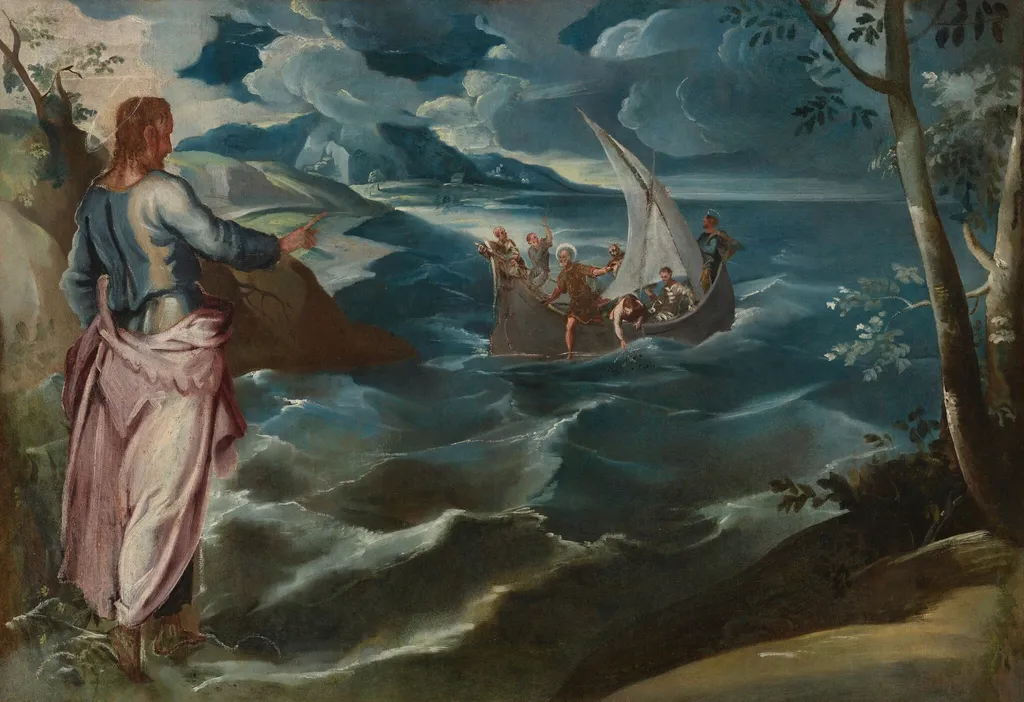
Christ at the Sea of Galilee is an oil painting by the Mannerist artist Circle of Jacopo Tintoretto (Probably Lambert Sustris). It dates from 1574 and is held in the collection of the National Gallery of Art.
About this work
Subject & Meaning
The iconography emphasizes the divine intervention of Christ amidst the chaos of the sea.
The painting depicts the biblical episode from Matthew 14:22–33, wherein Jesus Christ raises a hand toward his apostles who are struggling in a boat amidst hostile waves. As a work of Mannerism, the scene prioritizes dramatic tension and exaggerated proportions over realistic representation, utilizing expressive postures to convey spiritual urgency. The iconography emphasizes the divine intervention of Christ amidst the chaos of the sea.
Stylistically, the meaning is amplified through extreme lighting contrasts; thin paint layers and intense highlights create a compressed, directed light source that intensifies the darkness, symbolizing the spiritual illumination of the divine figure against the turmoil of the natural world.
Technique & Style
Executed circa 1570, this work is an oil painting on canvas measuring 117.1 by 169.2 centimeters. Stylistically, it exemplifies Mannerism through exaggerated proportions and compositional tension, evident in the expressive postures of the figures within the boat. The artist departed from realistic depiction to create an overly dramatic scene, utilizing thin layers of paint to achieve a muted yet intense coloration in the sea and sky.
A defining technical feature is the use of extreme highlights that intensify the surrounding darkness, suggesting a compressed, directed light source. This handling of light and shadow enhances the hostile atmosphere of the waves, distinguishing the work from the artist's typical Venetian scenes.
History & Provenance
The painting was created circa 1570, attributed to the circle of Jacopo Tintoretto. Its early provenance traces to Count Joseph Gallotti, after which it passed through the New York firm of Durlacher Brothers before entering the collection of Arthur Sachs in New York by 1925. Sachs consigned the work for sale in March 1943 through Jacques Seligmann & Co. and Moses & Singer, with the latter executing the bill of sale to the Samuel H. Kress Foundation.
The Kress Foundation donated the painting to the National Gallery of Art, Washington, D.C., in 1952, where it remains.
Christ at the Sea of Galilee is held in the collection of the National Gallery of Art in Washington, D.C., specifically within the Samuel H. Kress Collection. The work entered the institution in 1952 as a gift from the Samuel H. Kress Foundation, which had acquired the painting in March 1943 from Arthur Sachs through the dealers Jacques Seligmann & Co. and Moses & Singer. Earlier provenance records indicate the painting was associated with Count Joseph Gallotti and the Durlacher Brothers in New York by 1925.
While the work is documented in curatorial files and scholarly publications regarding its transfer to the Kress Foundation, the provided sources do not list specific public exhibition histories or assign a distinct inventory accession number beyond its identification within the Kress Collection.
Context
Scholarly discourse situates Christ at the Sea of Galilee within Tintoretto’s late Venetian mannerism, emphasizing its dramatic figural torsion and compressed, directional illumination that heightens emotional tension rather than naturalism. The painting’s attribution has varied: once firmly given to Tintoretto, later considered from his circle and even plausibly associated with Lambert Sustris, reflecting ongoing debates about studio collaboration and authorship in sixteenth-century Venetian workshops. The work’s atypical maritime subject departs from Tintoretto’s usual Venetian scenes, aligning instead with biblical narrative and Counter-Reformation taste for the miraculous rendered through exaggerated gesture and stark chiaroscuro.
Its display in the Samuel H. Kress Collection at the National Gallery of Art anchors it within a twentieth-century canon of European old masters, securing its place in American museum culture rather than its original Venetian context.
Overview
Jacopo Tintoretto's Christ at the Sea of Galilee, an oil painting from the 1570s, captures a significant biblical event. The artwork presents Jesus Christ standing calmly on the shore, while his apostles are depicted in a boat amidst turbulent waters. This piece serves as a notable example of Mannerist painting, characterized by its dramatic narrative and distinctive stylistic elements that convey heightened emotion and compositional complexity.
Artist & collection

 Homer’s Riddle
 The Crossing of the Red Sea
 Reinaldo huye de las islas Afortunadas
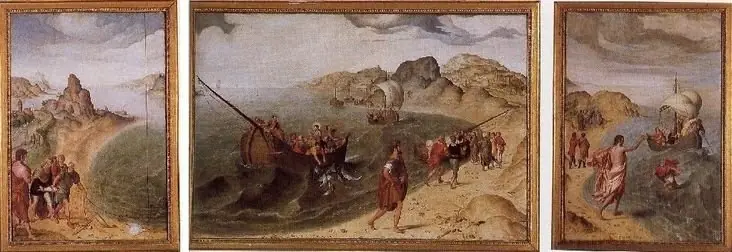 Triptiek van de Brugse visverkopers
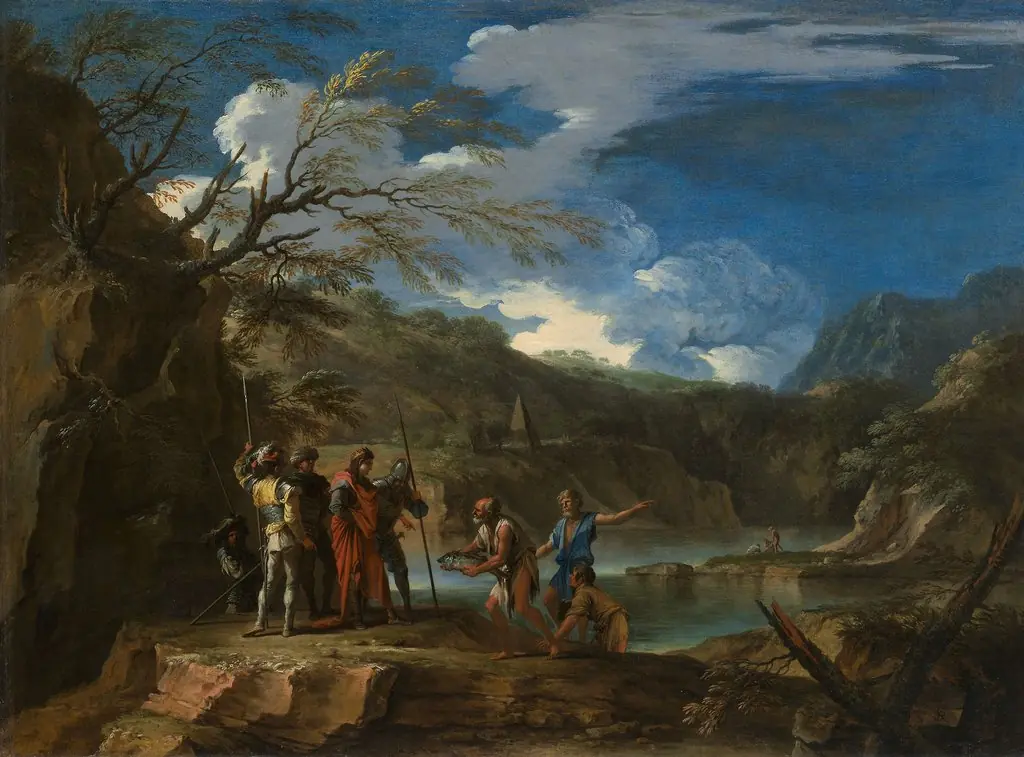 Polycrates and the Fisherman
 Polycrates and the Fisherman
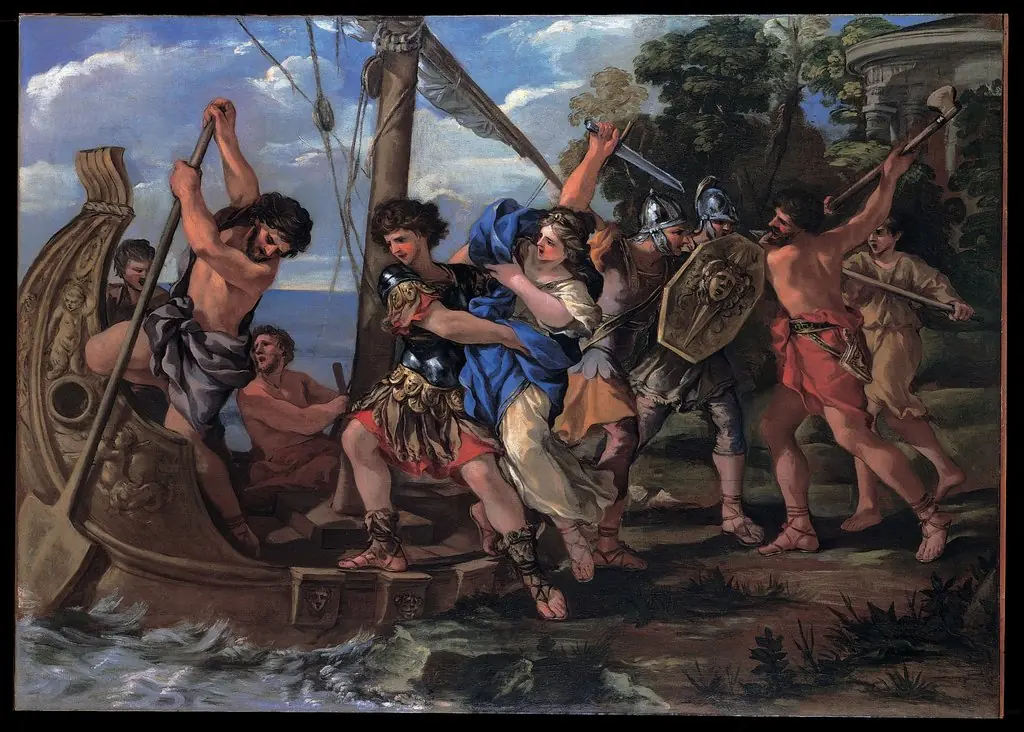 The Elena kidnapping
 L’addio di Rinaldo ad Armida
 Landscape with St John the Evangelist at Patmos
 chiamata di san pietro che cammina sulle acque
 Noah's Ark
- Christ on the Sea of Galilee