Artwork
Christ on the Sea of Galilee
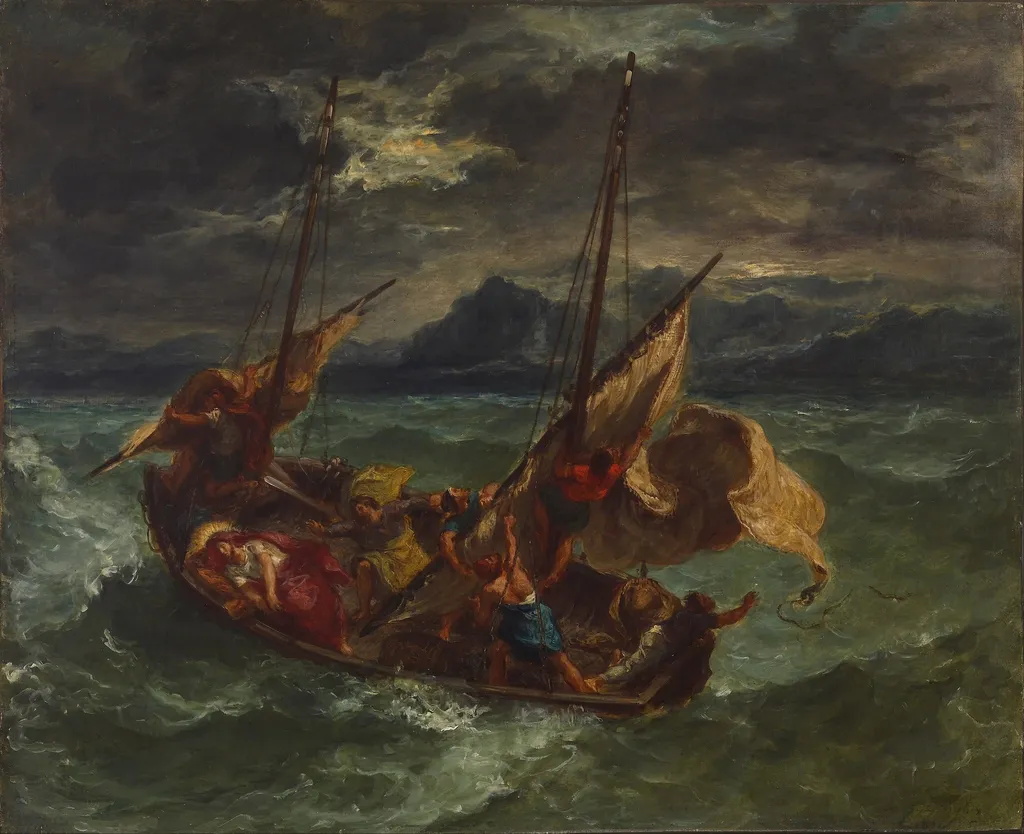
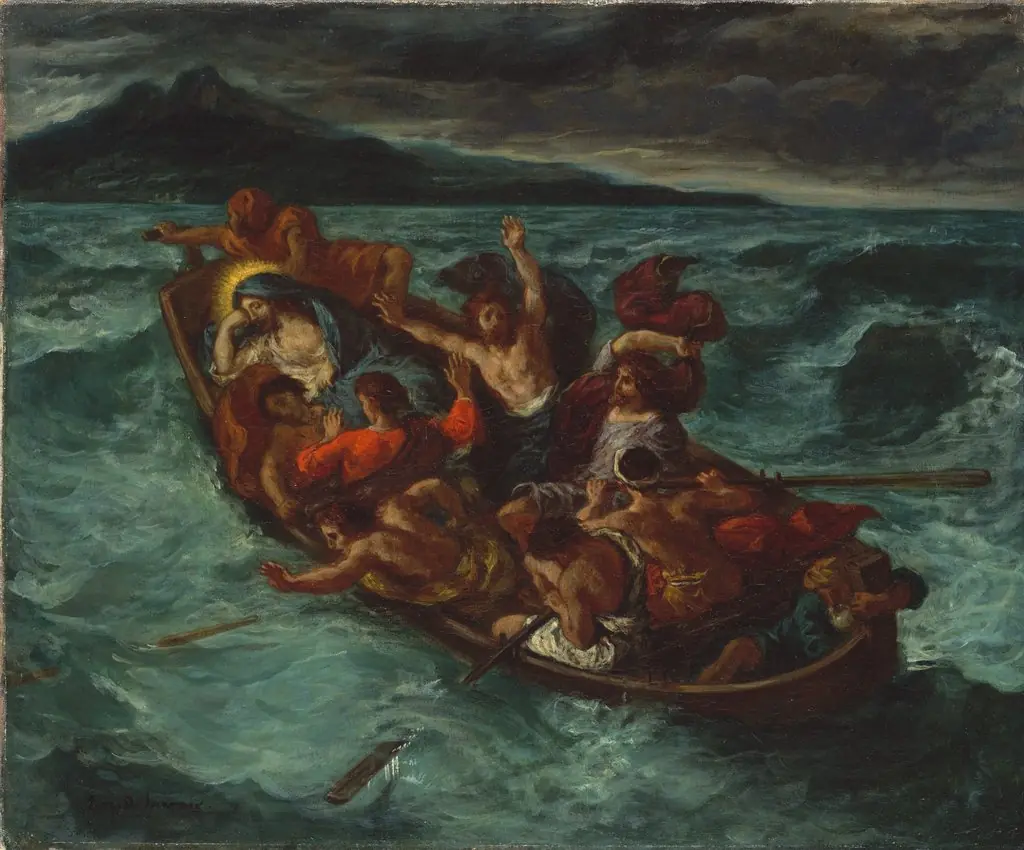
Christ on the Sea of Galilee is an oil painting by the French Romanticist artist Eugène Delacroix. It dates from 1854 and is held in the collection of the Walters Art Museum.
About this work
Subject & Meaning
The painting depicts a specific narrative from the New Testament, illustrating a moment of crisis on the Sea of Galilee, also known as the Lake of Tiberias.
The painting depicts a specific narrative from the New Testament, illustrating a moment of crisis on the Sea of Galilee, also known as the Lake of Tiberias. The scene features Jesus Christ asleep within a boat while a storm rages across the water, surrounded by fishers. This composition captures the biblical account of the disciples' peril during a tempest while their leader rests.
As a work of religious art, the subject emphasizes the contrast between the chaotic natural elements and the figure of Christ. The imagery draws directly from the Gospel accounts to represent faith amidst turmoil. The work is categorized within the genres of religious and marine art.
Technique & Style
Christ on the Sea of Galilee is an oil painting on canvas completed by Eugène Delacroix in 1854, measuring about 59.8 cm high and 73.3 cm wide. The work portrays a religious marine subject: Jesus Christ resting in a boat on the Sea of Galilee amid a storm, with the sky, water and fishermen depicted in oil paint. While the medium and support are clearly oil on canvas, the sources do not provide information on the painting’s handling or present condition.
History & Provenance
Eugène Delacroix created the oil-on-canvas painting Christ on the Sea of Galilee in 1854. The work depicts a scene from the New Testament featuring Jesus Christ asleep in a boat during a storm on the Sea of Galilee. William Thompson Walters acquired the painting in 1889, establishing its place in his collection.
It is currently held by the Walters Art Museum in Baltimore, Maryland. While this specific version dates to 1854, the artist produced other variations on the same religious theme that are now located in institutions such as the Metropolitan Museum of Art in New York.
Christ on the Sea of Galilee is held in the collection of the Walters Art Museum in Baltimore, Maryland. The work entered the museum's holdings after being acquired by William Thompson Walters in 1889. While other variations of this theme by Eugène Delacroix exist in institutions such as the Metropolitan Museum of Art in New York, this specific 1854 oil painting remains part of the Baltimore institution's permanent assembly. The piece has been exhibited in Baltimore as part of the museum's display history.
Context
Delacroix's 1854 canvas depicting Christ calming the storm on the Sea of Galilee formed part of his broader exploration of religious and turbulent natural themes, reflecting Romantic fascination with the sublime and divine intervention. The work, housed in the Walters Art Museum, was noted in contemporary discourse for its dramatic composition and emotional intensity, aligning with the artist's established reputation for dynamic historical and literary subjects. Scholarship situates it within 19th-century French religious painting, emphasizing its synthesis of biblical narrative and Romantic aesthetics, as discussed in art historical surveys of the period.
Overview
Eugène Delacroix created the oil painting Christ on the Sea of Galilee in 1854. The work belongs to his mature period, when he favored vivid color and dynamic composition over strict academic form. It is presently part of the Walters Art Museum’s collection.
Own this work as a print
Artist & collection

Artist
Ferdinand Victor Eugène Delacroix ( DEL-ə-krwah, -KRWAH; French:; 26 April 1798 – 13 August 1863) was a French Romantic artist who was regarded as the leader of the French Romantic school.