Artwork
Long-Tailed Weasel
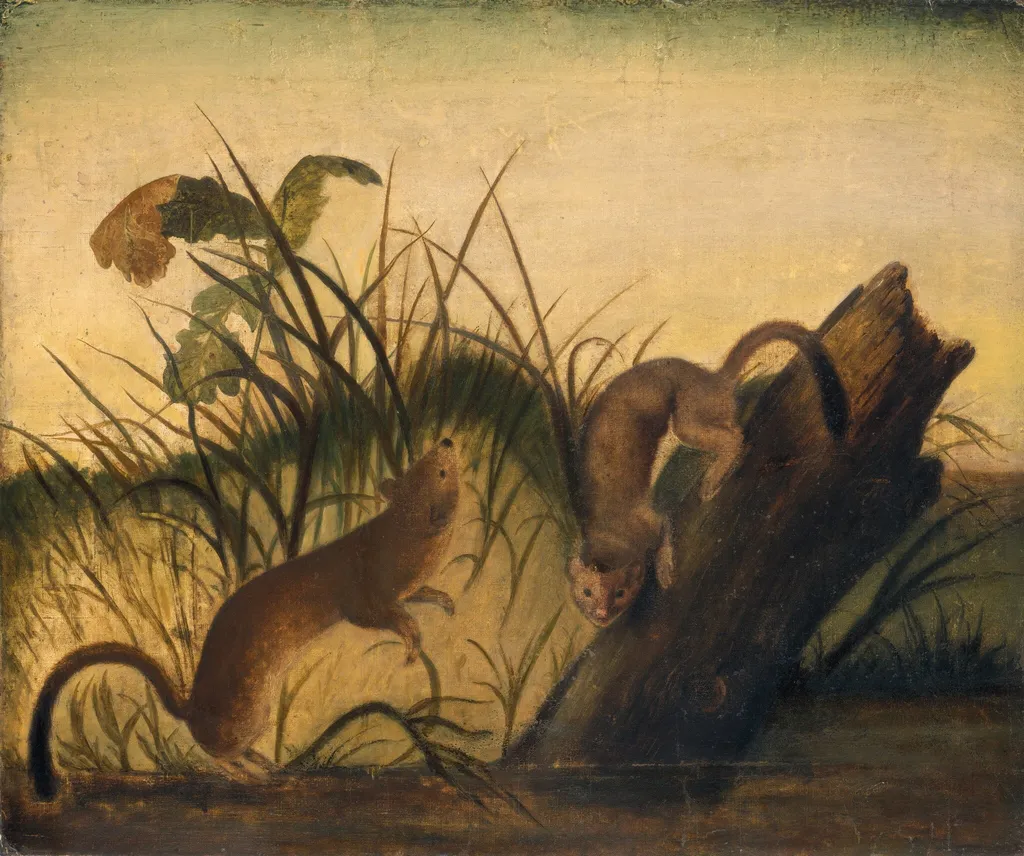
Long-Tailed Weasel is an oil painting by the American Folk Art artist Studio of John James Audubon. It dates from 1845 and is held in the collection of the National Gallery of Art. The work is an oil painting on canvas depicting a pair of long‑tailed weasels positioned among tall grasses.
- Inscription
- Inscribed:on reverse at top: White Weasel Stoat by J.J. Audubon; on reverse at bottom: W. B. Audubon
About this work
This was made around 1845, when artists often painted animals to show nature’s beauty.
This painting shows two long-tailed weasels in tall grass. One sits upright, looking alert, while the other leans forward with its head down. The background is soft greens and yellows, with a few dead leaves scattered around.
The artist focused on small details like the fur texture and the way the grass sways. This was made around 1845, when artists often painted animals to show nature’s beauty.
Next, look up Romanticism to see how artists used nature to express emotion.
Subject & Meaning
The painting depicts a single long-tailed weasel, a small North American mammal rendered in the naturalistic style typical of mid-nineteenth-century American wildlife painting. Created in 1845, the work focuses on the animal's physical characteristics. It is classified as a still life and presents the subject with documentary precision, reflecting the era's interest in recording North American fauna. The work is held in the collection of the National Gallery of Art in Washington, D.C.
Technique & Style
Created in 1845, Long-Tailed Weasel is executed in oil paint on canvas and measures 51.2 cm in height and 61.5 cm in width. Classified as a still life, the work is attributed to an unknown artist, though its provenance is closely associated with John James Audubon and his descendants. The medium and support are consistent with mid-nineteenth-century painting practice.
History & Provenance
The painting was created in 1845, an oil on canvas associated with the circle of John James Audubon. It passed by inheritance through the Audubon family: from John James Audubon to his son John Woodhouse Audubon, then to John's second wife Caroline Hall Audubon, and subsequently to William Bakewell Audubon and his son Leonard Benjamin Audubon in Australia. The work was sold in 1950 to E.J.L. Hallstrom of Sydney, who gifted it to the National Gallery of Art in 1951, where it is now held. The available records do not list a specific accession number or public exhibition history.
Context
The painting was received by the National Gallery of Art in 1951 as a gift from E.J.L. Hallstrom, who had acquired it through inheritance from the Audubon family in Australia. Its provenance traces back to John James Audubon, likely passing to his son William Bakewell Audubon and then to his grandson Leonard Benjamin Audubon before the 1950 sale. The work entered the National Gallery of Art collection with documented provenance linking it to the Audubon lineage and eventual donation.
Scholarly attention to the piece remains limited, with minimal dedicated analysis in major art historical literature, though its attribution to John James Audubon has been consistently recognized in catalogues and institutional records. The painting is situated within the broader context of Audubon's early still-life works, reflecting his engagement with natural subjects beyond ornithological illustration. Its placement in the National Gallery of Art's collection underscores its significance as part of a larger narrative about Audubon's artistic legacy and family stewardship of his works.
Overview
The work is an oil painting on canvas depicting a pair of long‑tailed weasels positioned among tall grasses. One animal sits upright, its posture alert, while the second leans forward with its head lowered. The surrounding landscape is rendered in muted greens and yellows, punctuated by scattered dead leaves, creating a quiet natural setting.
Artist & collection
Artist

 Murmeldjur
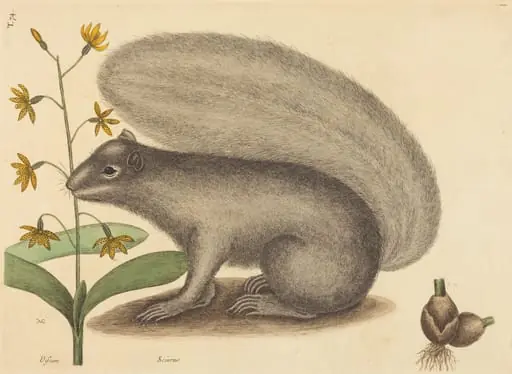 The Grey Fox Squirrel (Sciurus cinereus)
 Hudson's Bay Lemming
 Ansichten aus den vier Weltteilen mit Szenen von Tieren: Santiago
 Plate 40: Two Otters and a Beaver
 Plate 46: Stone Marten, Chipmunk, and Moles with a Marigold and Lettuce
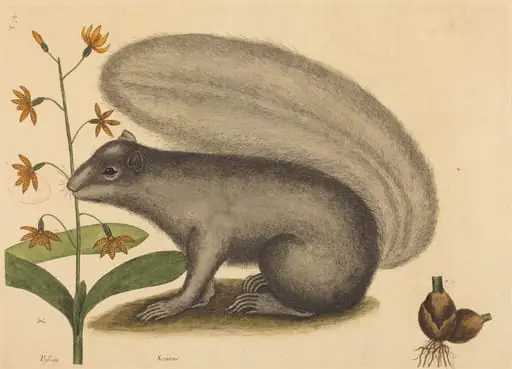 The Grey Fox Squirrel (Sciurus cinereus)
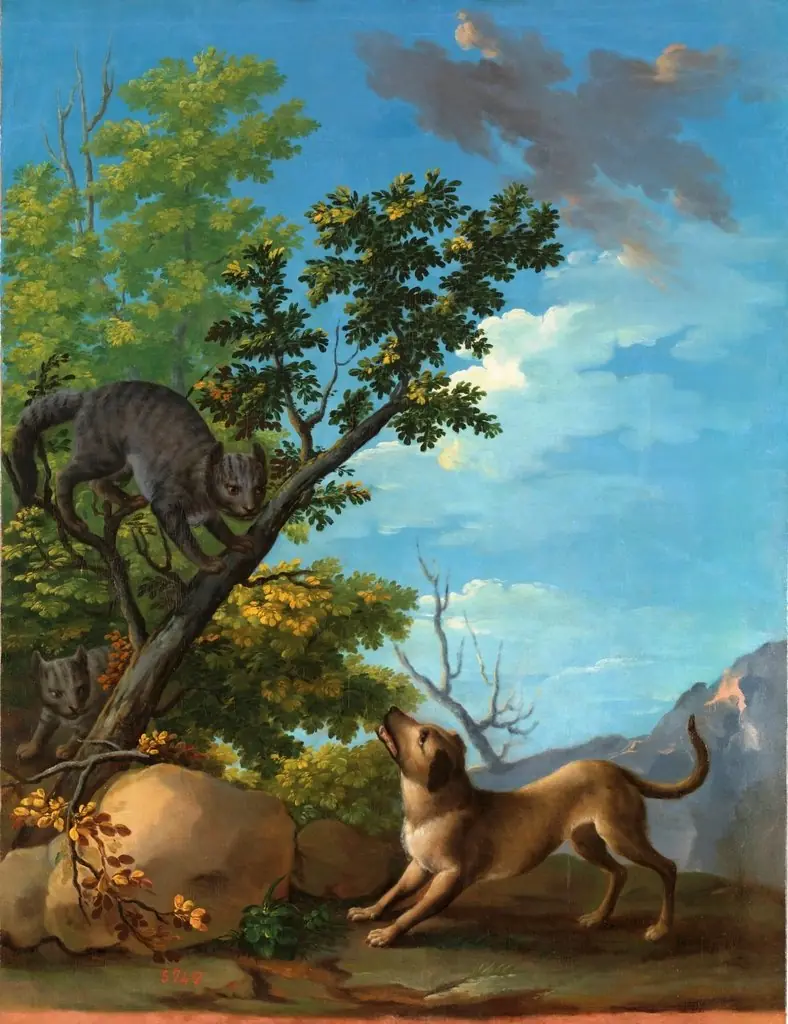 Perro y gatos
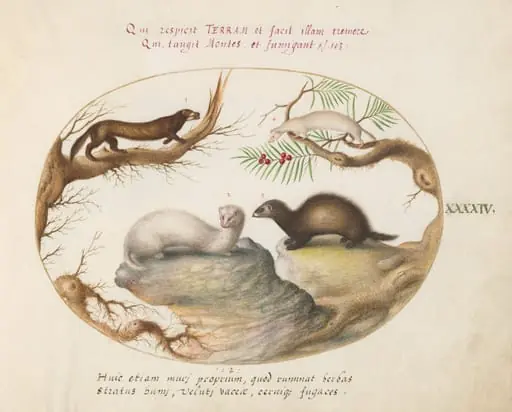 Plate 44: Polecat, Mink, and Ermine
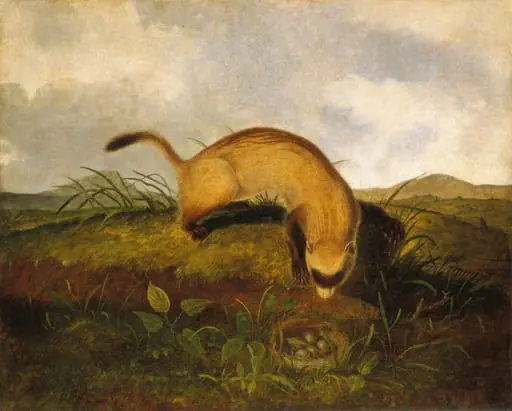 Black-Footed Ferret