Artwork
The Holy Kinship
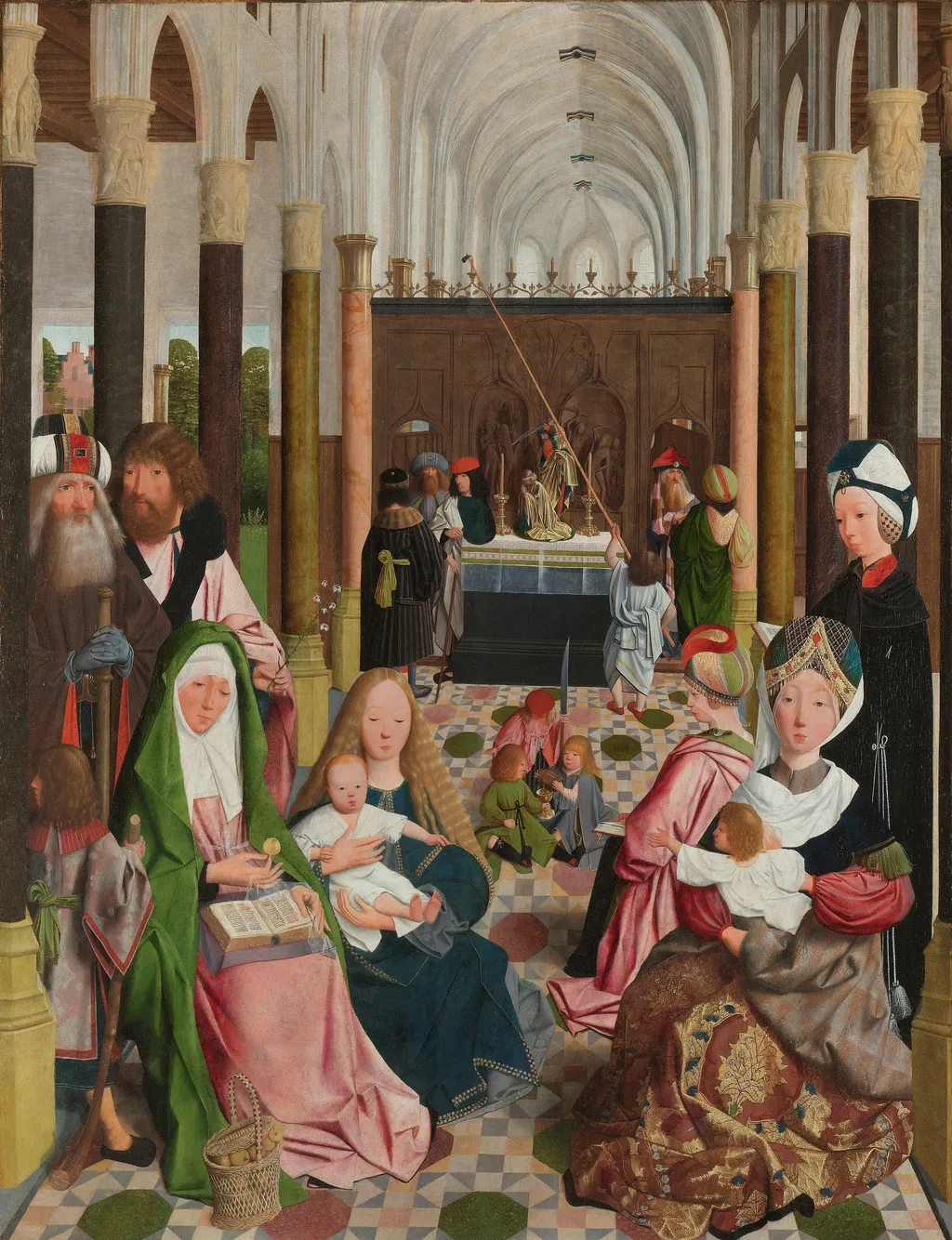
The Holy Kinship is an oil painting by the Northern Renaissance artist Unknown. It dates from 1498 and is held in the collection of the Rijksmuseum.
About this work
Subject & Meaning
The Holy Kinship depicts the Virgin Mary with the infant Christ at the center, flanked by Saint Elizabeth and the young John the Baptist.
The Holy Kinship depicts the Virgin Mary with the infant Christ at the center, flanked by Saint Elizabeth and the young John the Baptist. Saint Anne holds a book on the left while her husband Joachim stands behind her, and Saint Joseph presents a lily toward his wife. Three young cousins of the infants, later identified as the future disciples Simon, James, and John, pour wine into a chalice, symbolizing the Eucharist, and a sculpture of Abraham's sacrifice of Isaac appears on an altar, representing God's offering of Jesus. A figure of Judas Thaddaeus lights candles at the choir gate, and two additional husbands of Saint Anne, fathers of other Marias, are positioned behind Saint Elizabeth. The composition integrates theological symbolism linking kinship, sacrifice, and sacrament within a religious narrative.
Technique & Style
The Holy Kinship is an oil painting executed on oak panel around 1495. The work depicts the Virgin and Child flanked by Saint Elizabeth and the infant John the Baptist, with Saint Anne holding a book and Saint Joachim standing behind her, while Saint Joseph presents a lily as a symbol of the Immaculate Conception. Three young cousins of the infants, later identified as the future disciples Simon, James, and John, pour wine into a chalice at the centre, a visual reference to the Eucharist, and a sculpture of Abraham’s sacrifice of Isaac appears on an altar behind them, symbolising God’s offering of His Son. The panel measures 137.2 cm in height and 105.8 cm in width. The painting was created in Haarlem by a workshop associated with Geertgen tot Sint Jans and is now housed in the Rijksmuseum. Its condition has been carefully managed, including a restoration of twelve centimeters of water damage to the lower edge between 1983 and 2000.
History & Provenance
Created circa 1495 by the workshop of Geertgen tot Sint Jans in Haarlem, this oil on oak panel likely originated as an altarpiece for an unspecified church, with the Commanderie van Sint-Jan often suggested due to the artist's residence there. The documented ownership chain begins with a sale in Brussels in 1797. In 1808, the work was acquired under the attribution to Jan and Hubert van Eyck; it was not correctly identified as a piece by the Haarlem master until 1888. Previous owners include Pieter Joseph Thijs and Gerrit van der Pot. While historical records place Geertgen's death between 1486 and 1492, modern dendrochronological analysis indicates the wood used for the panel dates to 1496 at the earliest.
The Holy Kinship is held in the collection of the Rijksmuseum in Amsterdam. Its museum inventory number is SK-A-500. The work's documented provenance begins with a sale in Brussels in 1797, after which it was acquired by the museum in 1808, initially attributed to Jan and Hubert van Eyck before being correctly identified as a work by the Haarlem master in 1888.
Regarding its exhibition history, the painting has been featured in all Highlights of the Rijksmuseum catalogs since its acquisition. It was the subject of a specific mini-exhibition following an extensive restoration campaign that lasted from 1983 to 2000, during which conservators repaired twelve centimeters of water damage at the bottom of the panel.
Context
The painting’s reception shifted markedly after its acquisition by the Rijksmuseum in 1808, when it was initially attributed to Jan and Hubert van Eyck; only in 1888 was it correctly identified as a work connected with Geertgen tot Sint Jans’s Haarlem circle. From that point, it has been treated as a key example of late fifteenth-century Northern European religious art. Scholarly debate centers on dating and authorship. Dendrochronological analysis suggests the oak panel was felled around 1496, later than Geertgen’s documented death circa 1486-1492, indicating workshop production. Technical and stylistic comparisons link the composition and tiled floor to Albert van Ouwater’s Lazarus and to works by the Master of Alkmaar, situating it within Haarlem’s artistic milieu.
Artist & collection









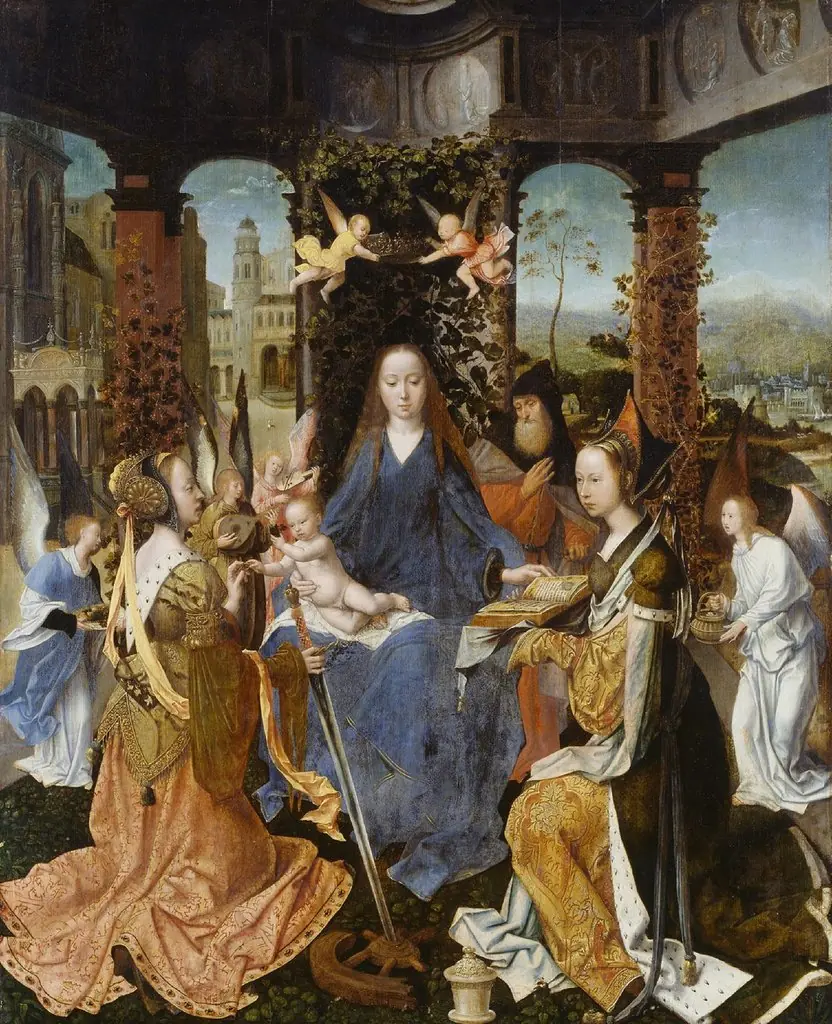 The mystic marriage of Saint Catherine
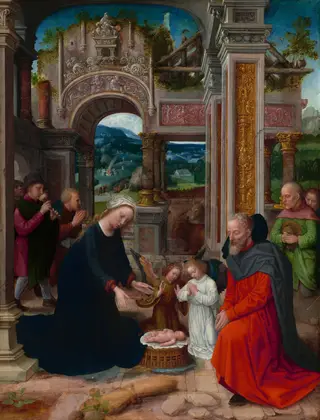 The Adoration of the Shepherds
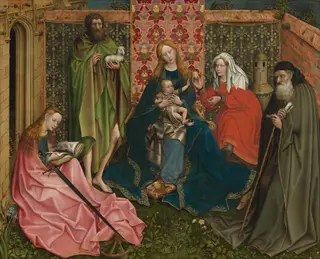 Madonna and Child with Saints in the Enclosed Garden
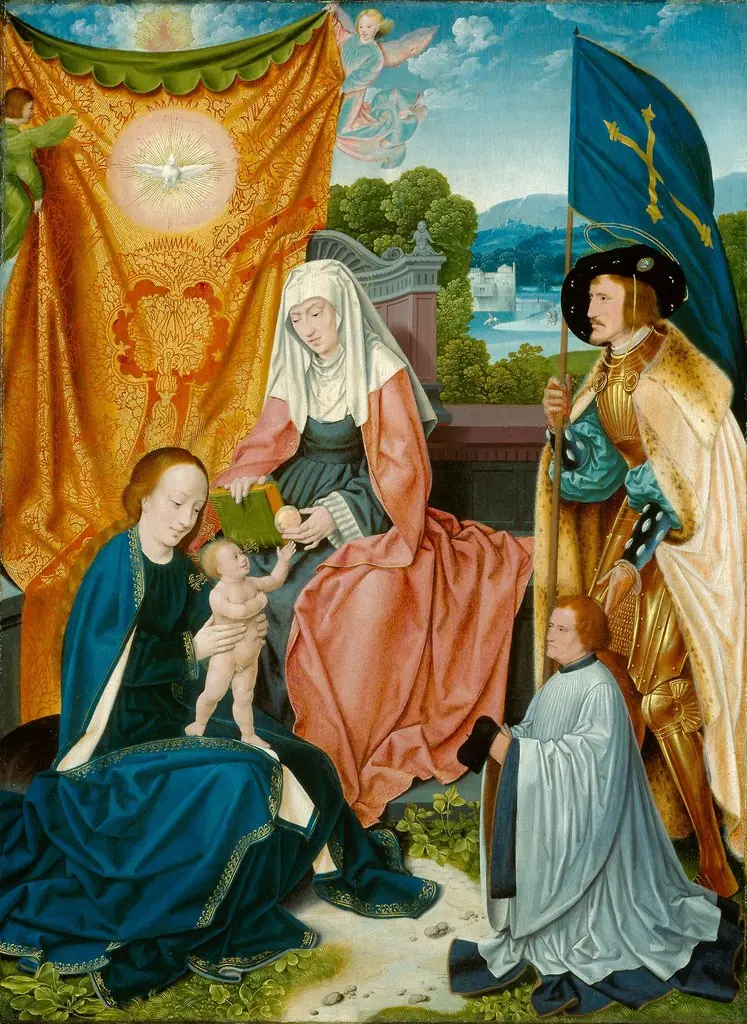 Virgin and Child with Saint Anne, Saint Gereon, and a Donor
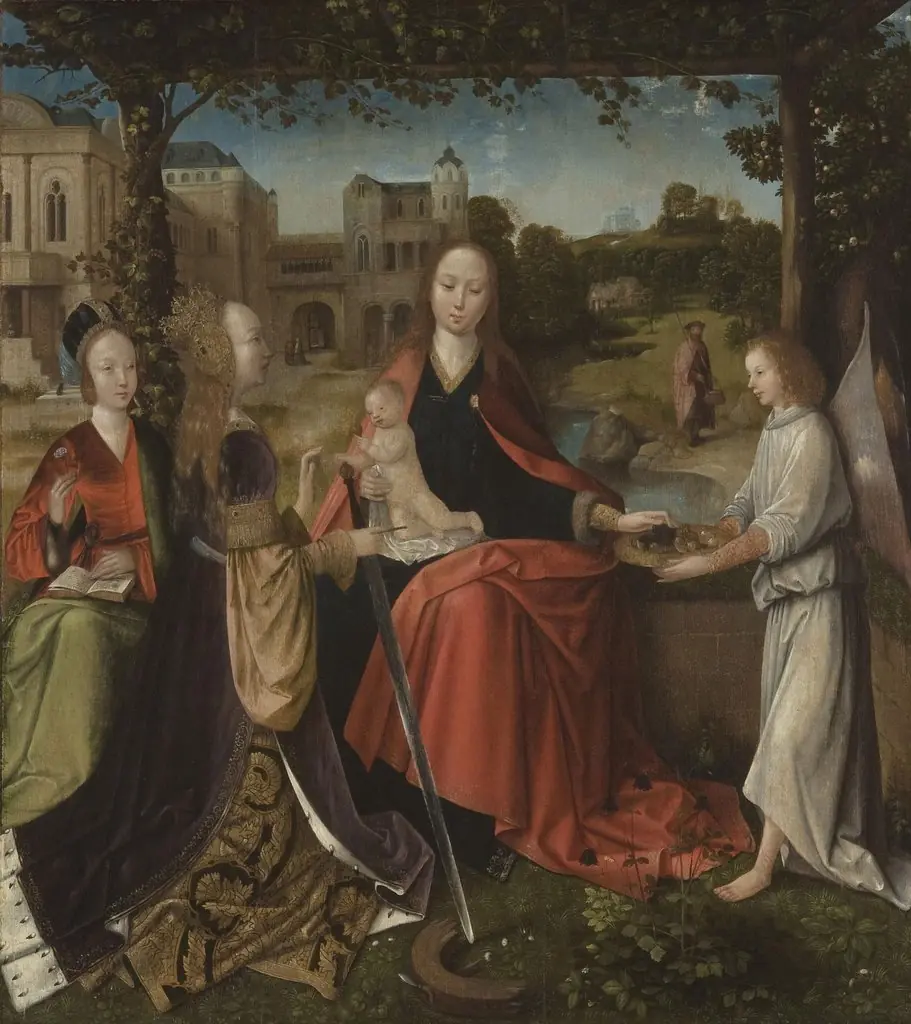 Virgin and Child, with Saint Catherine of Alexandria, a Female Saint, and an Angel
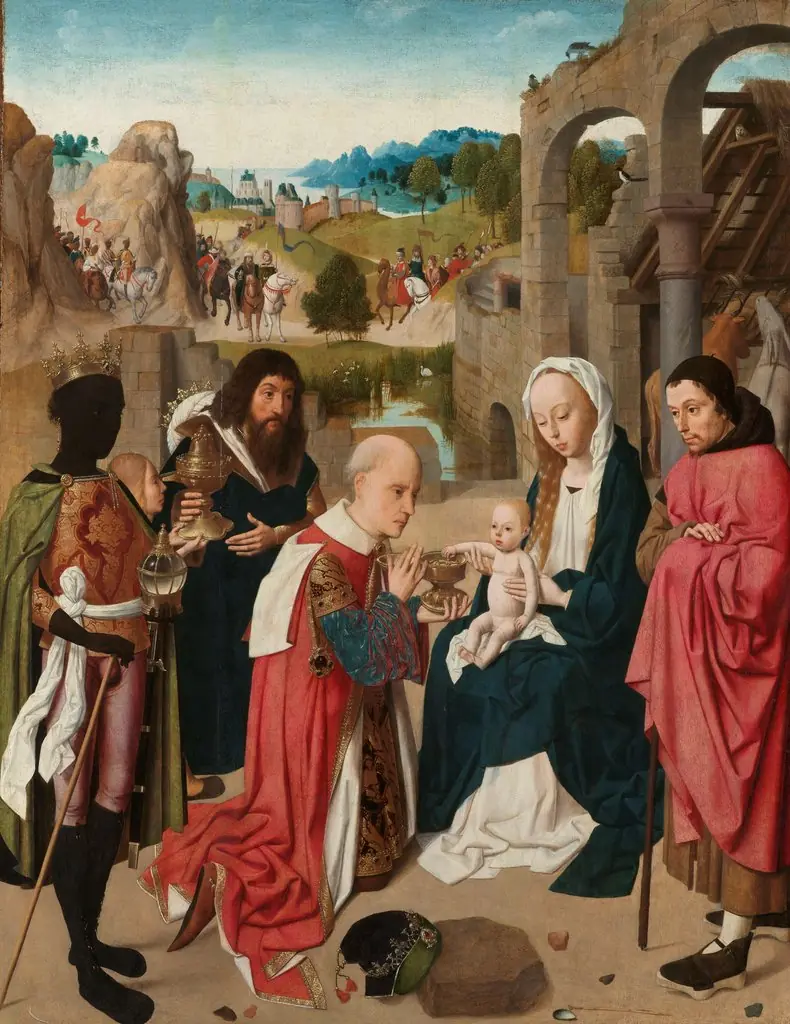 The Adoration of the Magi
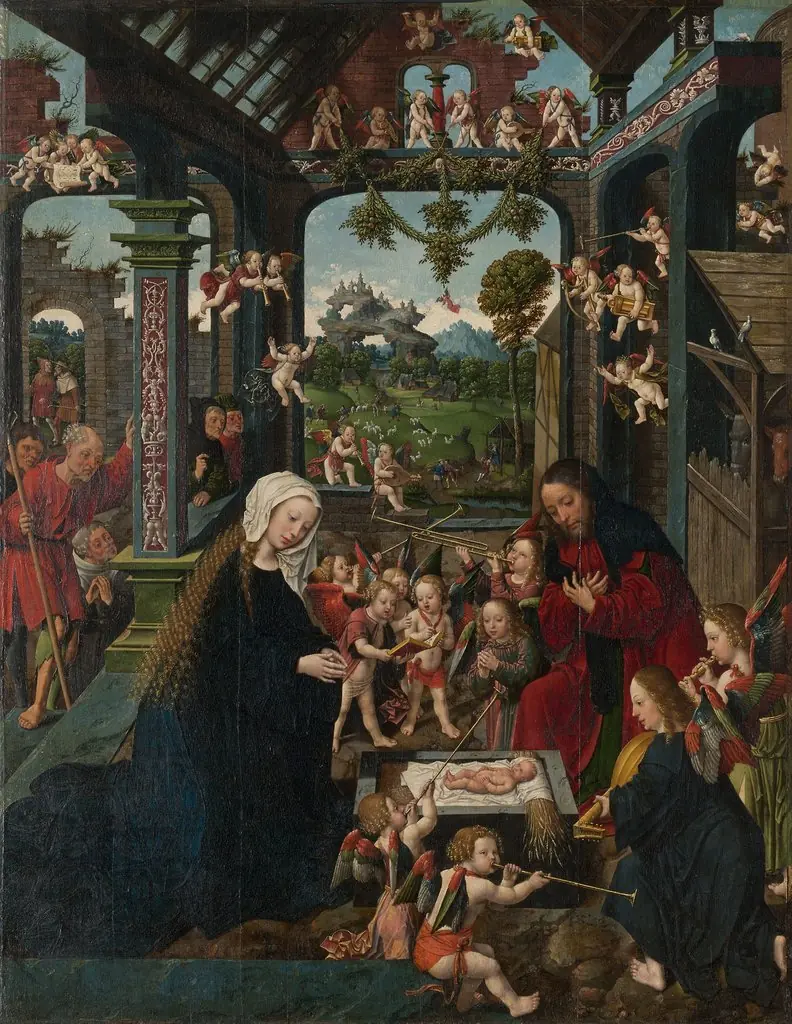 The Adoration of the Christ Child
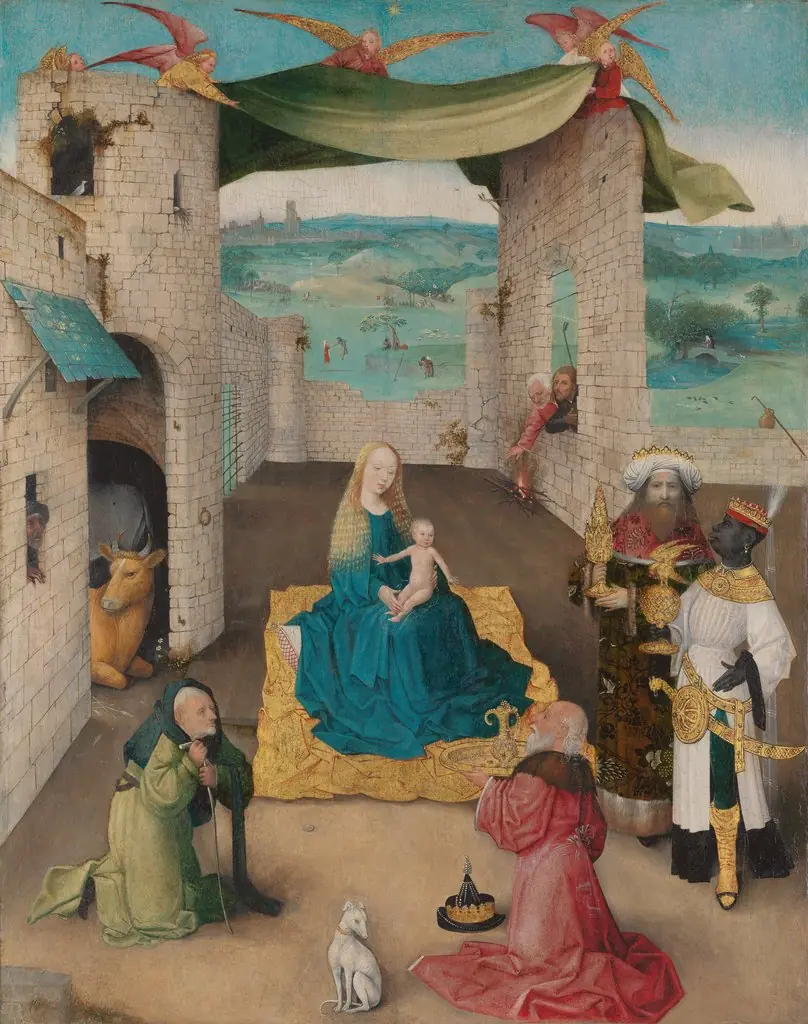 The Adoration of the Magi
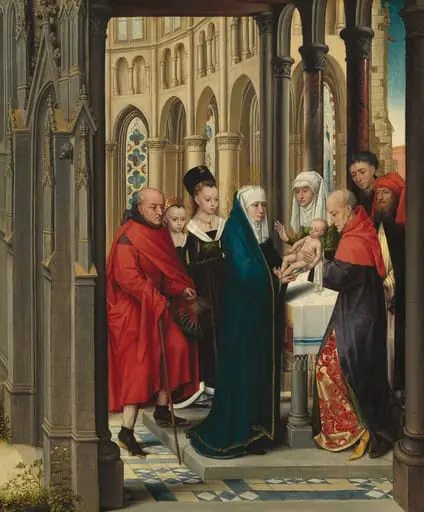 The Presentation in the Temple
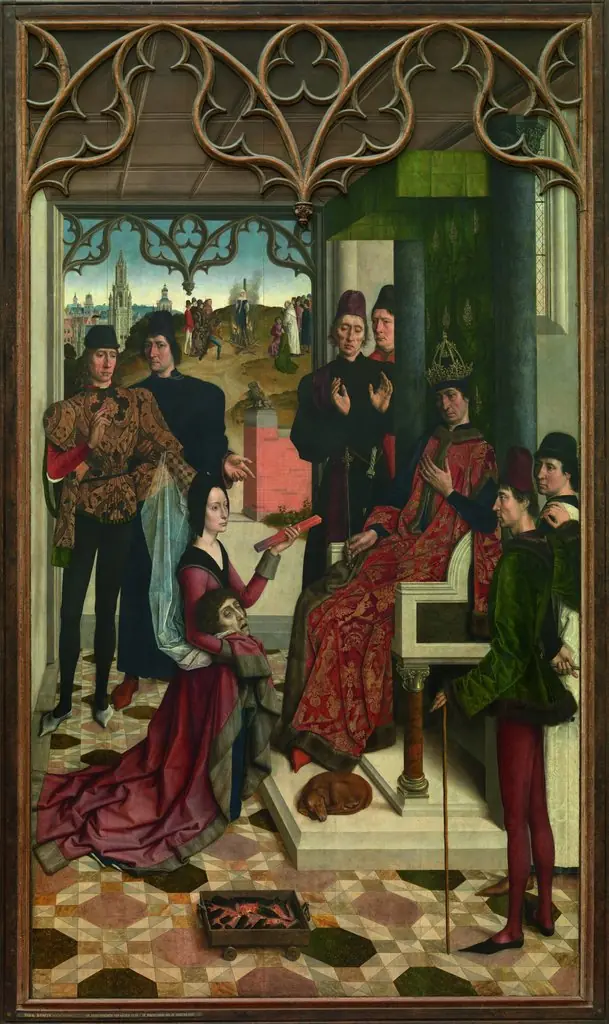 Justice of Emperor Otto III: The Trial by Fire