Artwork
Geburt Christi
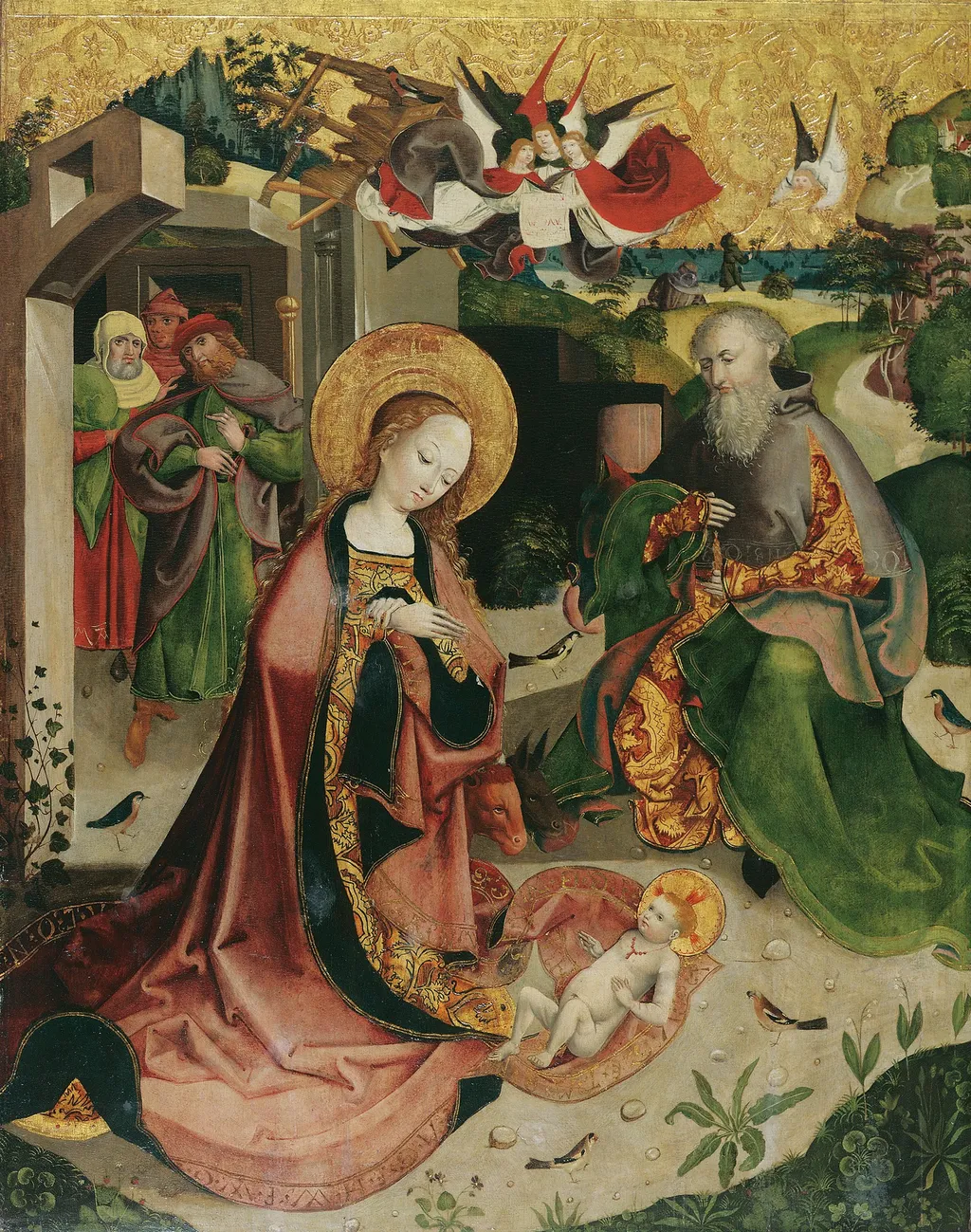
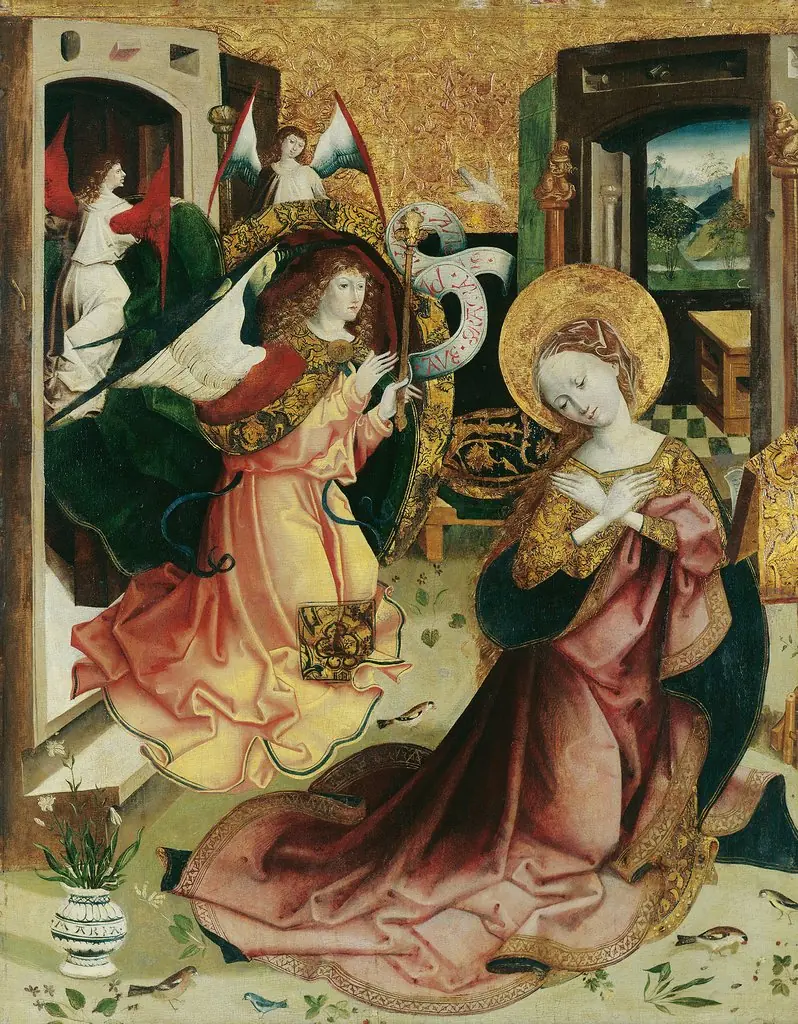
Geburt Christi is an unspecified painting by the Northern Renaissance artist Unknown. It dates from 1500 and is held in the collection of the Kunsthistorisches Museum.
About this work
Overview
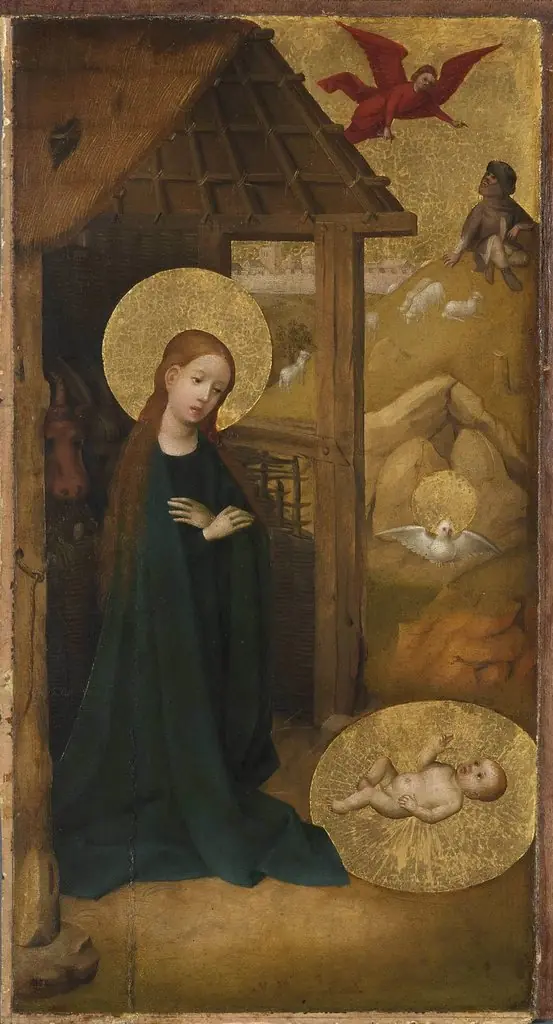
Geburt Christi is a religious panel painting created by an anonymous artist from Upper Austria around the year 1500. The work depicts the Nativity of Jesus and measures 139.5 by 110 centimeters. It is classified as a painting and is currently held in the Belvedere collection of the Kunsthistorisches Museum in Vienna.
Subject & Meaning
The composition emphasizes the adoration of the newborn, transforming the humble setting into a sacred space where the infant becomes the object of veneration.
The artwork portrays the Nativity of Jesus, featuring the Virgin Mary kneeling in reverence with her hands crossed over her chest before the Christ Child, who lies on a red cloth on the ground. Mary wears a voluminous rose-pink mantle over a dark blue and gold-patterned gown, her red garment symbolizing her giving love. The child also bears a golden halo. An elderly bearded man, Joseph, kneels nearby with his hands extended toward the child. Behind them, a donkey and an ox are partially visible, animals whose presence in nativity scenes derives from the prophecy of Isaiah, symbolizing recognition of the divine. In the upper portion, three angels in red and white garments hover, one holding a scroll, while another angel appears at the upper right. To the left, three male figures in colorful robes and head coverings emerge from a wooden structure to observe the scene. The composition emphasizes the adoration of the newborn, transforming the humble setting into a sacred space where the infant becomes the object of veneration.
History & Provenance
Created circa 1500 by an anonymous Upper Austrian painter, the painting entered the Belvedere collection of the Kunsthistorisches Museum, where it is currently housed. The specific commission and early ownership chain remain unrecorded in the available sources.
Context
The Nativity of Jesus has been a major subject of Christian art since the fourth century, originating in early depictions on Roman sarcophagi and evolving through various media including altarpieces, manuscript illuminations, and panel paintings. By the late fifteenth and early sixteenth centuries, the iconography had absorbed diverse influences, from the apocryphal legends of midwives to the visions of Saint Bridget of Sweden, which popularized the motif of the Christ Child lying on the ground rather than in a manger. The anonymous Upper Austrian painter worked within this established visual tradition, utilizing the gold-leaf background and hierarchical arrangement characteristic of earlier medieval devotional images, while contemporaries in regions like the Danube School were experimenting with dramatic nocturnal lighting to emphasize Christ as the light of the world.
Artist & collection