Artwork
Holy Family
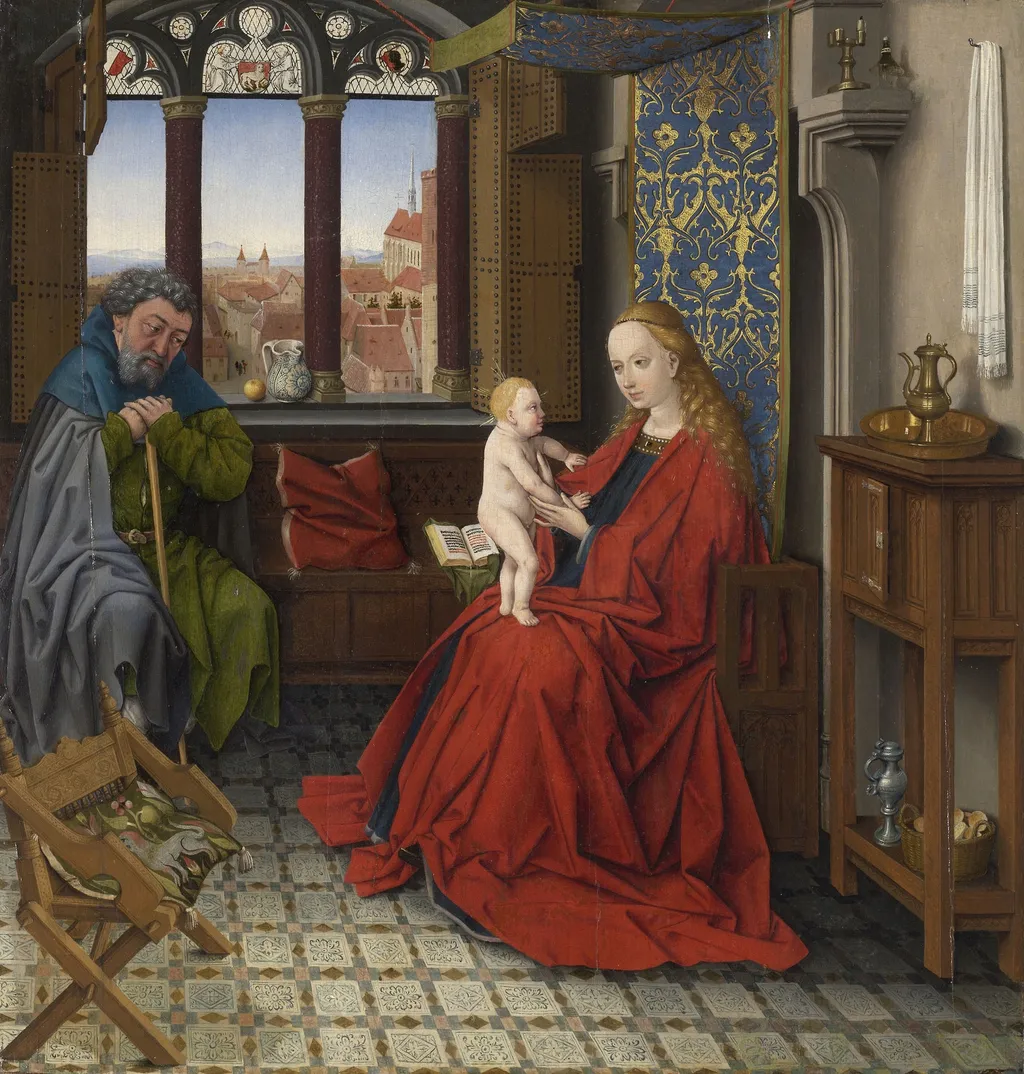
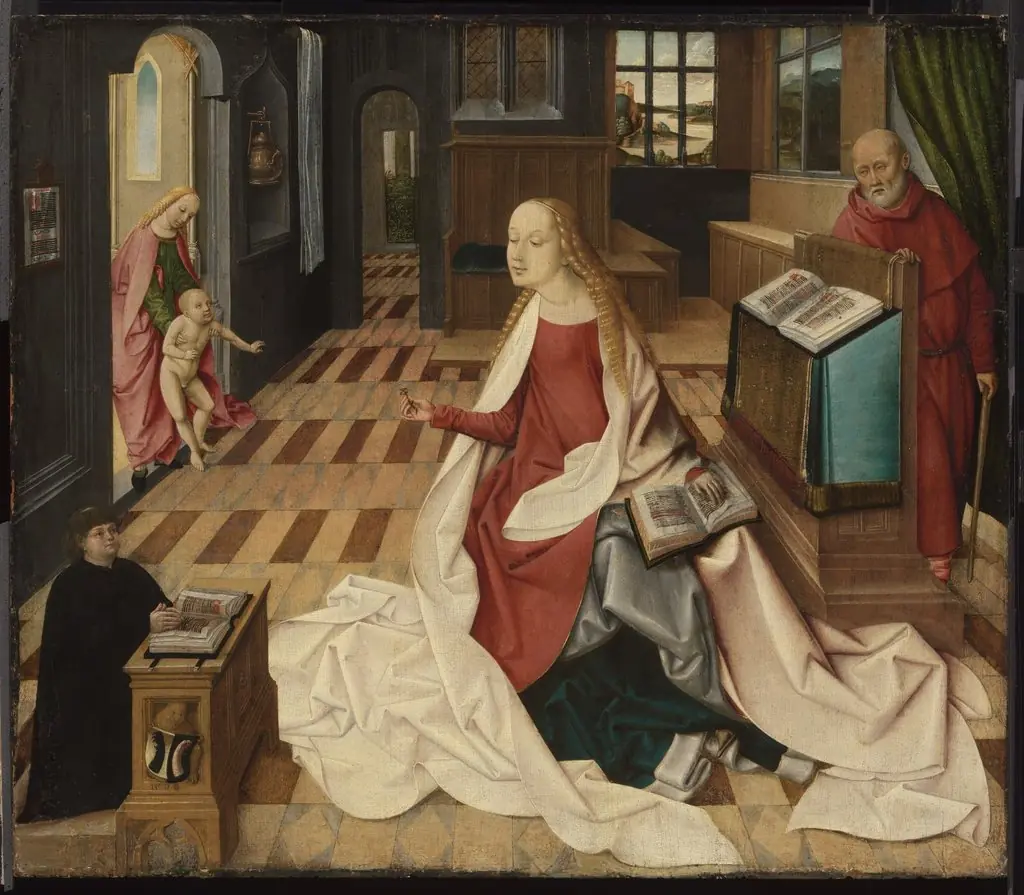
Holy Family is an oil painting. It dates from 1475 and is held in the collection of the Art Institute of Chicago. The work portrays a domestic interior in which a woman clothed in a vivid red garment cradles an infant on a bench.
About this work
Subject & Meaning
The painting portrays the Virgin Mary cradling the infant Jesus alongside Saint Joseph, forming the traditional Holy Family composition within Christian iconography. As a religious work from the South German school, it emphasizes domestic holiness and familial devotion, reflecting theological themes of divine incarnation and earthly protection. The depiction of Mary, Jesus, and Joseph together serves as a visual meditation on the sacredness of family life and the human nature of Christ, central to devotional practices of the period.
The artwork’s symbolic elements reinforce its spiritual narrative, with Mary’s tender embrace highlighting maternal care and Joseph’s presence signifying paternal guardianship within the divine plan. Its creation in 1475 places it within the early Renaissance context of religious art production in Germany, where such subjects were commissioned for private contemplation and liturgical use.
Technique & Style
Light falls softly across the figures, highlighting delicate facial features and drapery folds characteristic of early Northern Renaissance naturalism.
The artwork is an oil painting executed on a wooden panel, reflecting South German artistic practice of the late 15th century. The composition centers the Virgin Mary holding the infant Jesus, with Saint Joseph positioned nearby, forming a triangular arrangement that emphasizes stability and intimacy. Light falls softly across the figures, highlighting delicate facial features and drapery folds characteristic of early Northern Renaissance naturalism.
The brushwork demonstrates careful layering of translucent glazes to achieve depth in skin tones and fabric textures, while the subdued color palette of earth tones and muted blues enhances the devotional quietness of the scene.
History & Provenance
The Holy Family was created in 1475, executed in oil paint on panel as a religious work depicting the Virgin Mary, the Christ Child, and Saint Joseph. The painting is held in the collection of the Art Institute of Chicago, where it remains located. No information is available regarding the specific commission, earlier ownership, or acquisition history of the work prior to its presence in the museum's collection.
The painting Holy Family, created in 1475 by a South German artist, is held in the collection of the Art Institute of Chicago. The work is executed in oil on panel and depicts the Holy Family, specifically Mary, the Christ Child, and Joseph. While the source confirms its current location and medium, no specific inventory or accession number is provided in the available records. Furthermore, the provided texts do not contain details regarding a specific exhibition history for this artwork.
Context
Attributed to a South German painter working circa 1475, this composition entered the Art Institute of Chicago collection as a religious work featuring the Virgin Mary with the Christ Child and Saint Joseph. Art historical context places it within the early Northern Renaissance tradition of domestic devotional imagery, where renderings of the Holy Family emphasized intimate familial bonds amid devotional piety. Its panel medium and oil technique align with regional practices of the late 15th century, though scholarly debate persists regarding precise authorship within the workshop circle of this artistic milieu.
Overview
The work portrays a domestic interior in which a woman clothed in a vivid red garment cradles an infant on a bench. A bearded man, leaning on a staff, gazes downward nearby. The setting includes elaborately carved woodwork, a patterned floor, a window revealing a distant settlement, an open book, and a pitcher placed on a shelf.
Artist & collection

- Holy Family
 Madonna and Child with Saints in the Enclosed Garden
 Virgin and Child Crowned by Angels
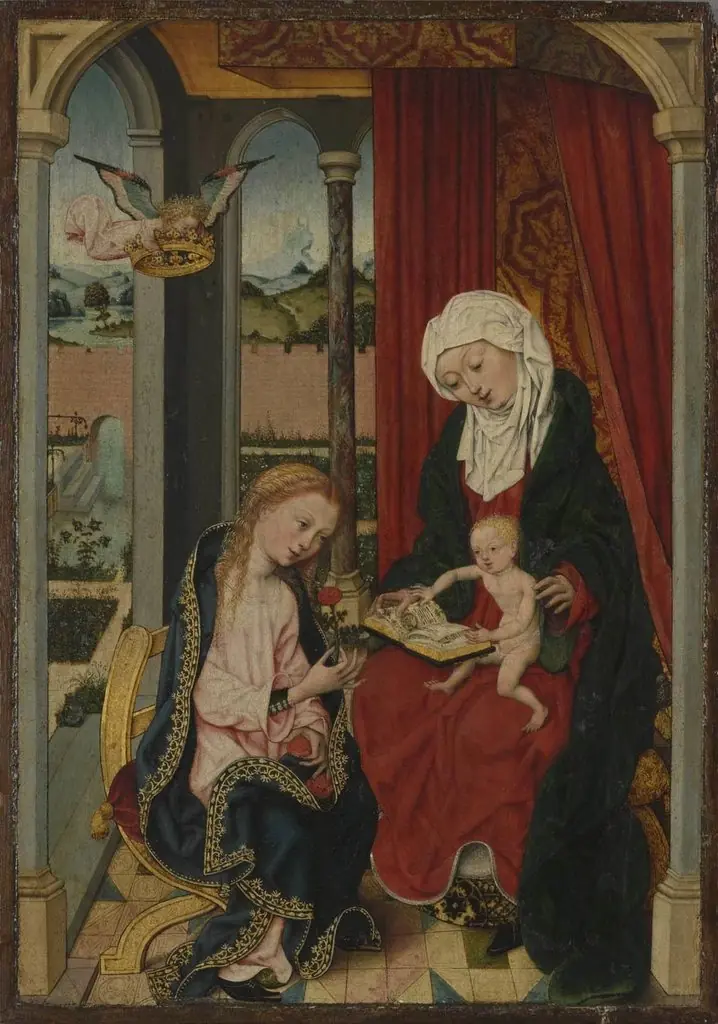 Virgin and Child with Saint Anne
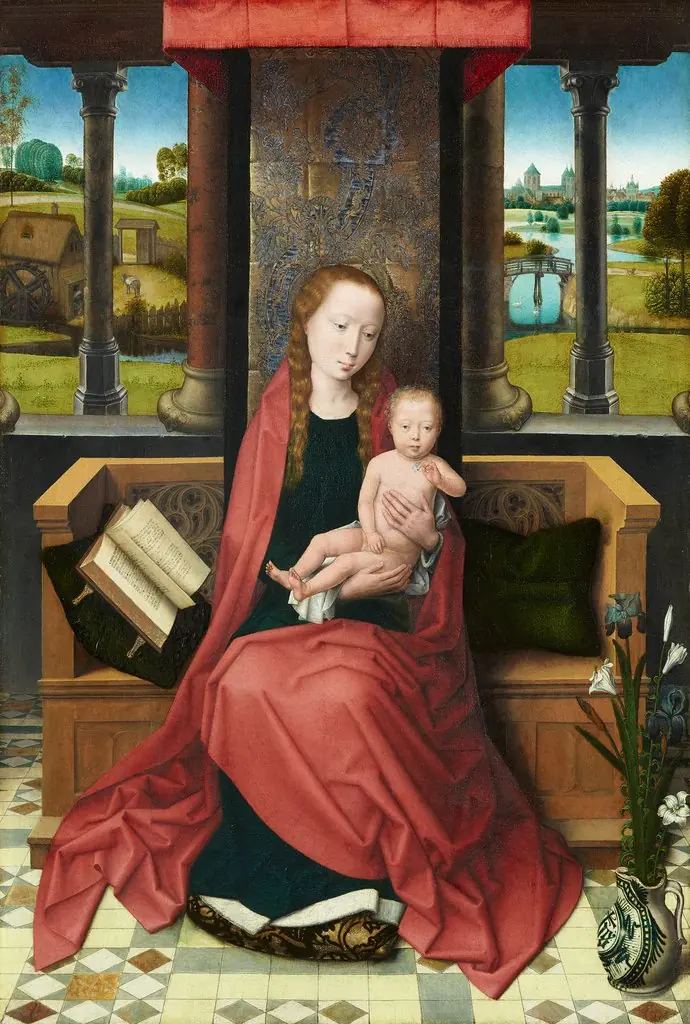 The Virgin and Child Enthroned
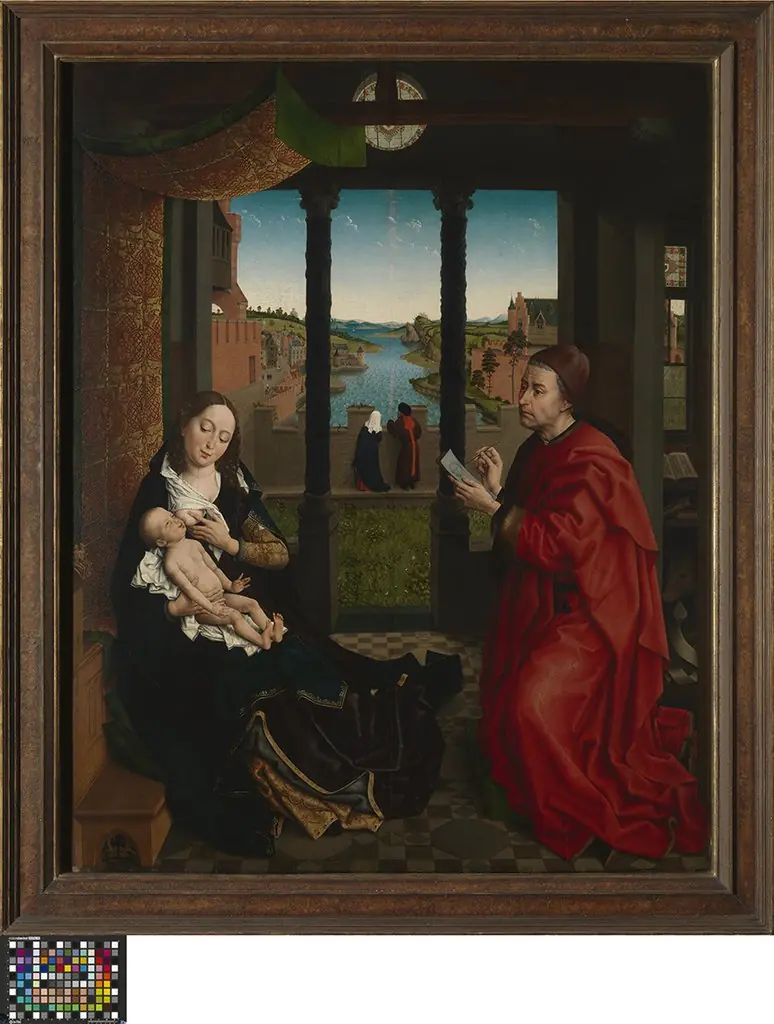 Saint Luke drawing the Madonna
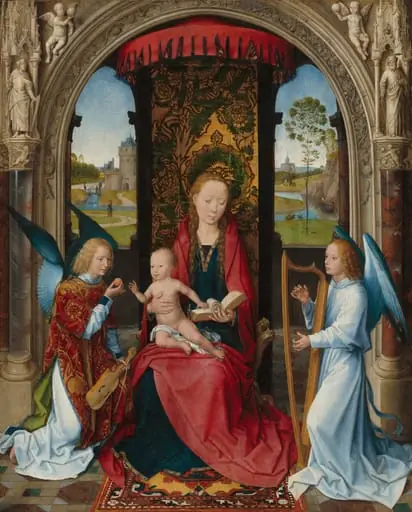 Madonna and Child with Angels
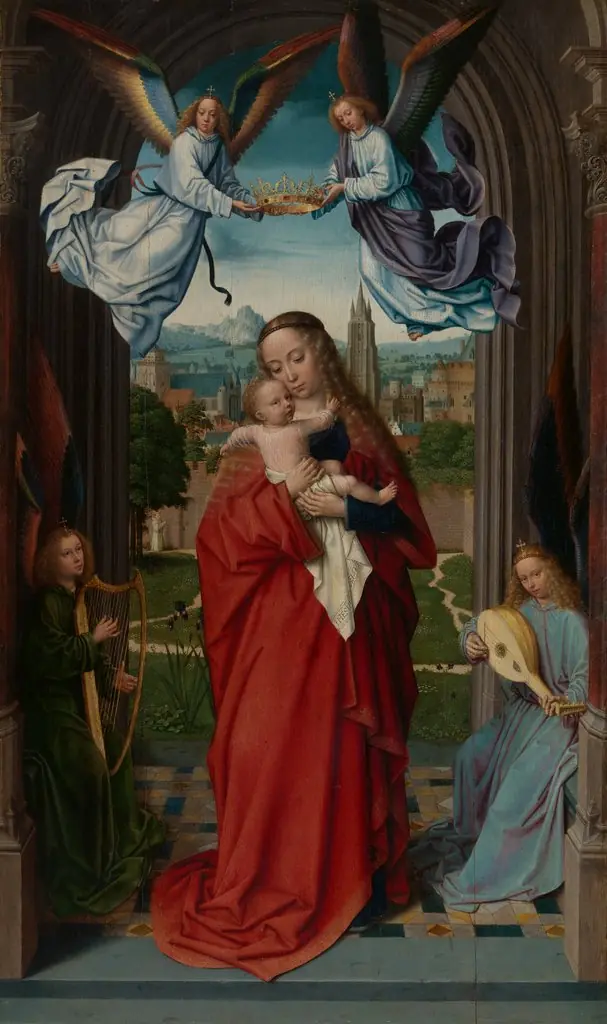 Virgin and Child with Four Angels
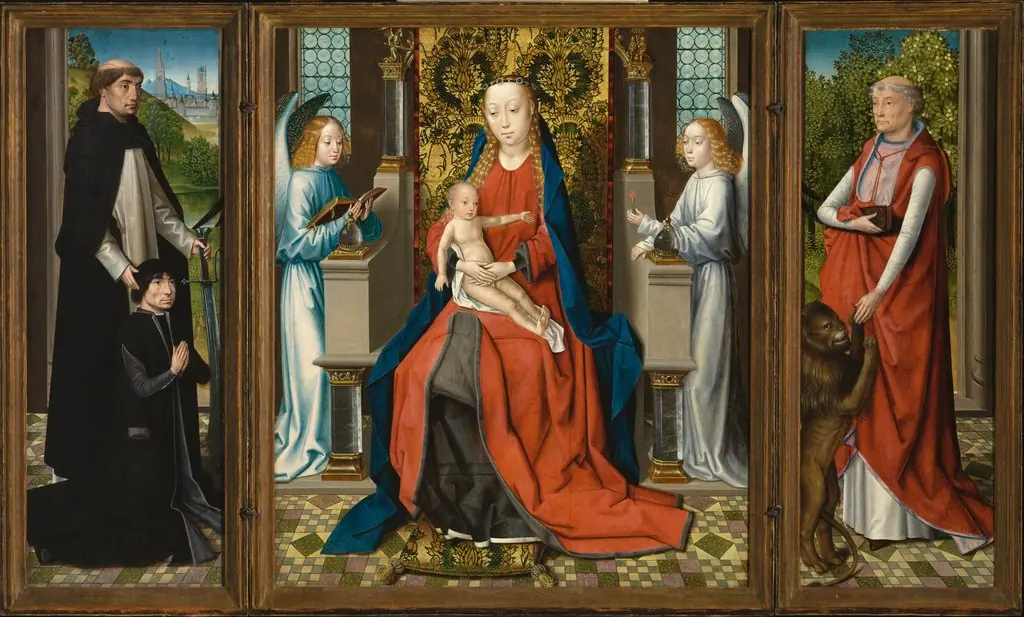 Triptych of Madonna and Child with Angels; Donor and His Patron Saint Peter Martyr; and Saint Jerome and His Lion
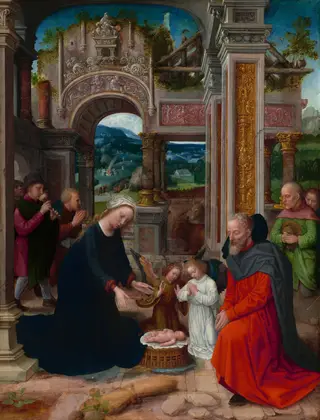 The Adoration of the Shepherds
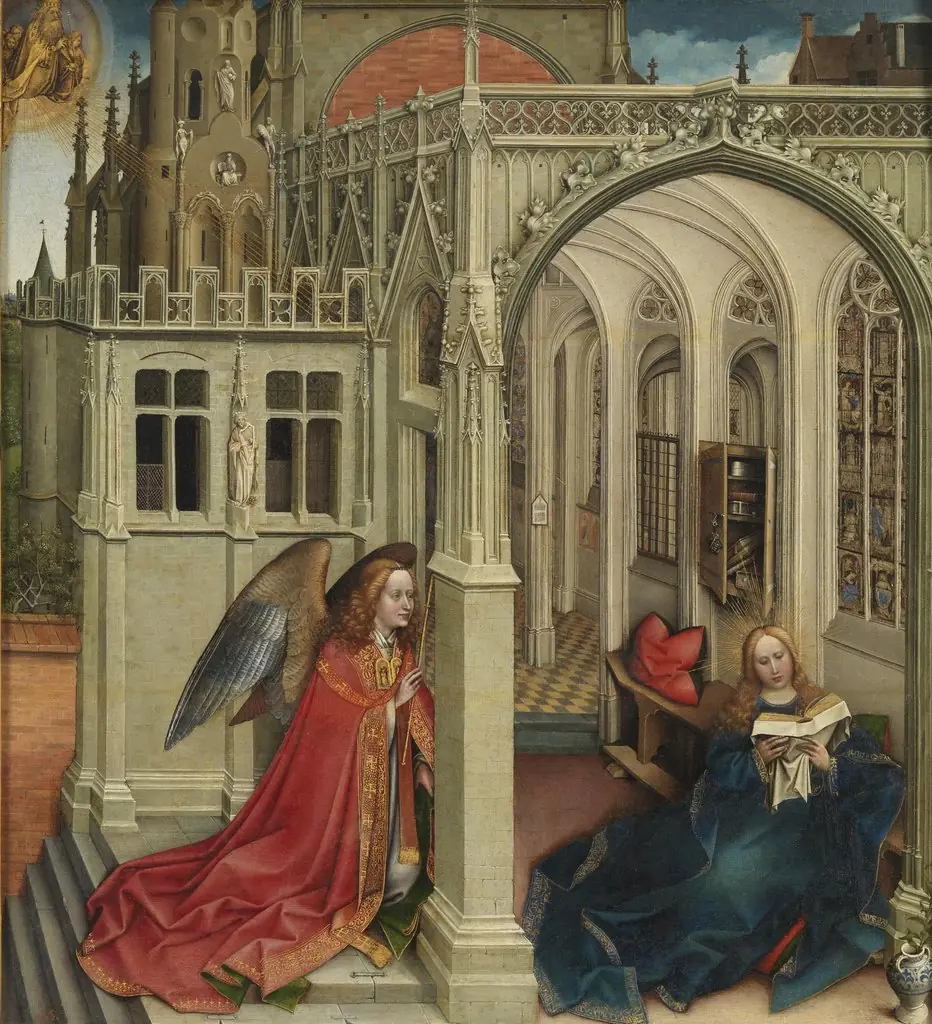 Annunciation
 The Education of the Infant Christ