Artwork
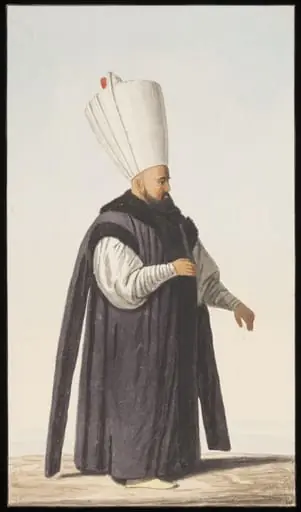
Nöbetçi, or Palace watchman
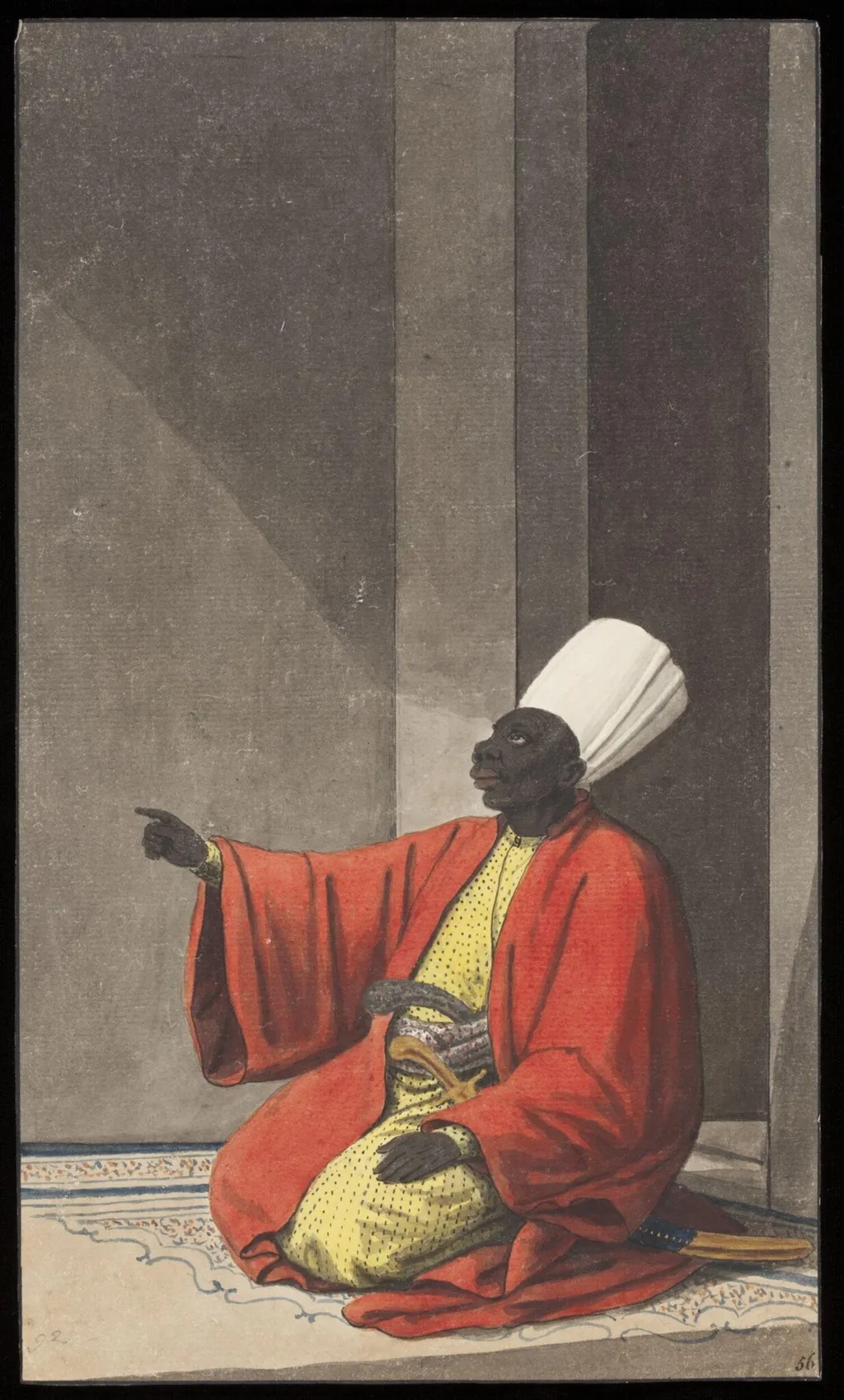
Nöbetçi, or Palace watchman is a watercolor work on paper by the Romanticist artist Anonymous Greek artist. It dates from 1809 and is held in the collection of the Victoria and Albert Museum. This watercolour is part of a series commissioned by British diplomat Stratford Canning during his early years in Istanbul.
About this work
Overview
This watercolour is part of a series commissioned by British diplomat Stratford Canning during his early years in Istanbul.
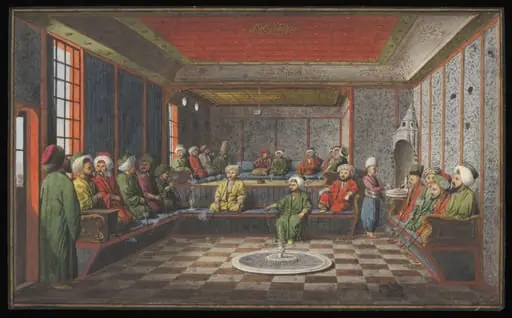
This watercolour is part of a series commissioned by British diplomat Stratford Canning during his early years in Istanbul. Created around 1810, the works document Ottoman architecture and daily life through the eyes of a foreign observer. The artist, whose identity remains unconfirmed, was likely a local painter trained in the traditions of Constantinople’s visual culture, possibly connected to Konstantin Kapidagli’s circle.
Subject & Meaning
The image depicts a palace watchman, a figure emblematic of Ottoman institutional life. Rather than idealizing the subject, the work presents him with quiet realism, uniform, posture, and setting rendered with attention to detail. These drawings served as ethnographic records, capturing routines and spaces unfamiliar to European audiences, reflecting Canning’s scholarly interest in Ottoman society beyond official diplomacy.
Technique & Style
The watercolour employs opaque pigments alongside transparent washes, blending Ottoman manuscript traditions with European spatial conventions. Details are rendered with precision, and architectural elements follow linear perspective, yet the palette and brushwork retain local sensibilities. This hybrid approach suggests a painter fluent in both visual languages, bridging Ottoman aesthetics and Western documentary aims.
History & Provenance
The series was assembled during Canning’s tenure in Istanbul, beginning in 1808. After his return to Britain, the drawings remained in his family. In 1895, his daughter Charlotte donated the complete set to the Victoria and Albert Museum.
Earlier, British architect Charles Cockerell, who visited the embassy in 1810, made copies of the artist’s architectural studies, now held in the British Museum, confirming the original’s circulation among European intellectuals.
Context
Canning’s commission occurred during a period of heightened European interest in Ottoman culture, driven by diplomatic engagement and antiquarian curiosity. While Western travelers often romanticized the East, this series stands out for its observational rigor. The artist’s anonymity underscores the marginal status of local painters in colonial-era documentation, despite their crucial role in shaping foreign perceptions of the empire.
Legacy
The set remains a rare visual archive of early 19th-century Istanbul, offering insight into how Ottoman life was recorded by insiders for external audiences. Though the artist’s name is lost, his work influenced British perceptions of Ottoman architecture and contributed to the development of ethnographic illustration in European collections. The drawings continue to inform scholarly studies on cross-cultural representation in the Ottoman context.
Artist & collection

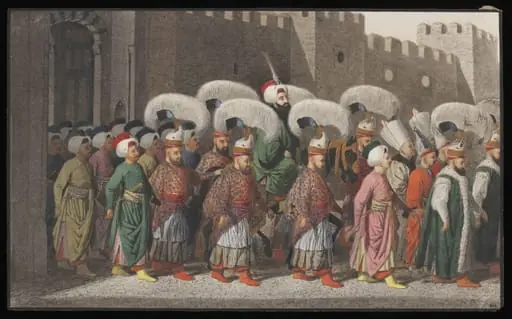
![A Pasha travelling with his escort[?], by Anonymous Greek artist](https://artifactworldgallery.com/img/anonymous-greek-artist--a-pasha-travelling-with-his-escort--01de32b8fcf30843-w320.webp)
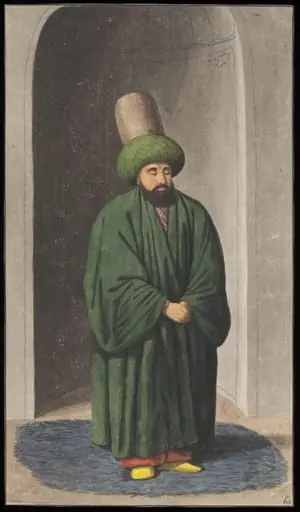
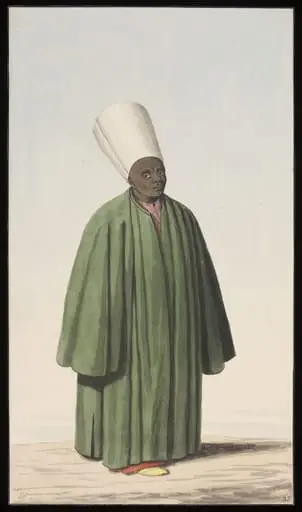
- A Eunuch of the middle rank
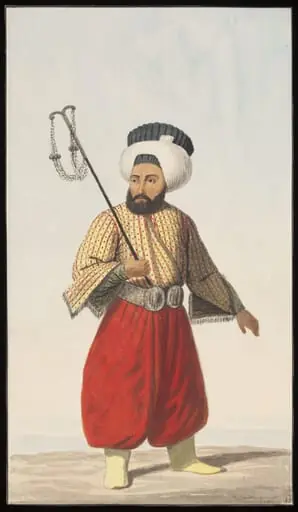
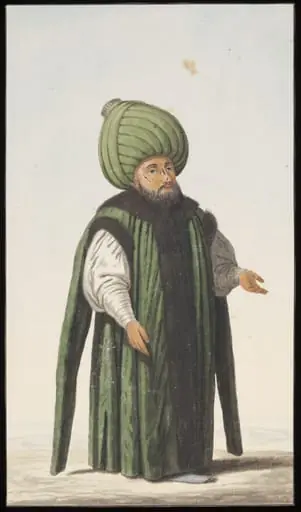 A senior Ottoman official
![A Dervish[?], by Anonymous Greek artist](https://artifactworldgallery.com/img/anonymous-greek-artist--a-dervish--3c8916f5a95abb6a-w320.webp) A Dervish[?]
A Dervish[?]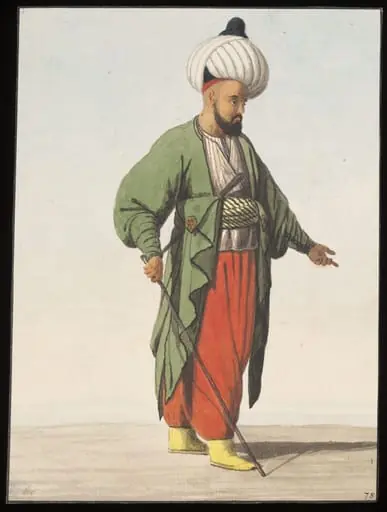 A Turkish official
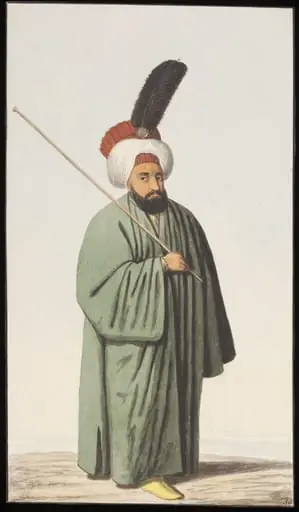 Basçavus, or Palace Usher
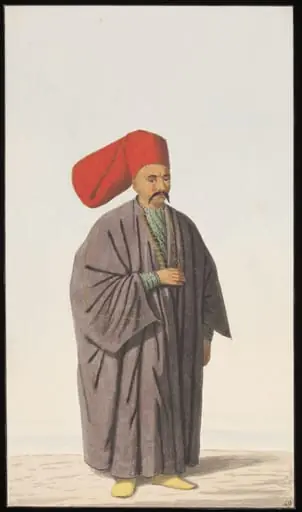 Bostancibasi, or member of the Imperial Guard
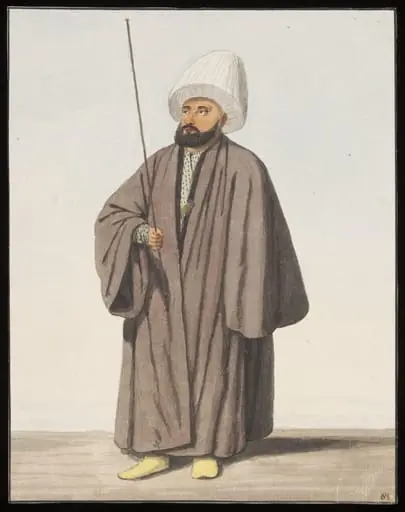 Nöbetçi, or orderly officer
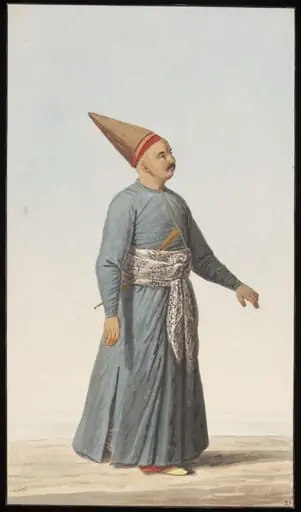 An official in the Sultan's palace
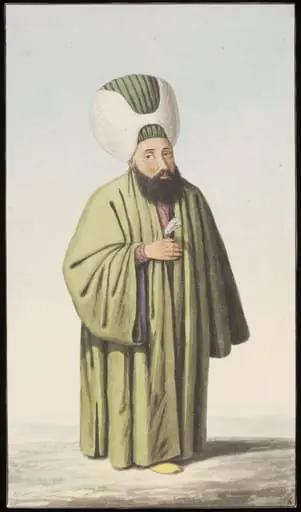 An Ottoman Military officer, possibly the Yeniçeriagasi, or Commander-in-chief of the Janissaries