Artwork
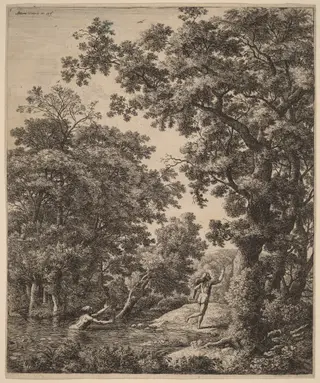
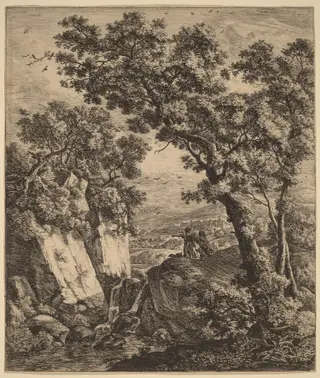
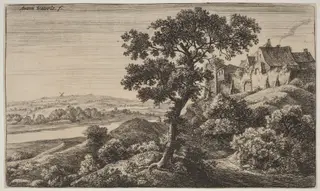
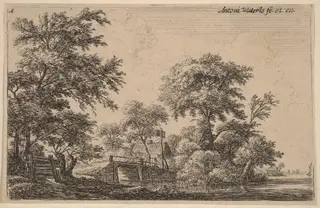
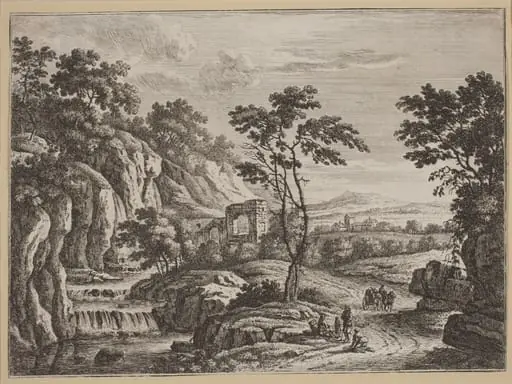
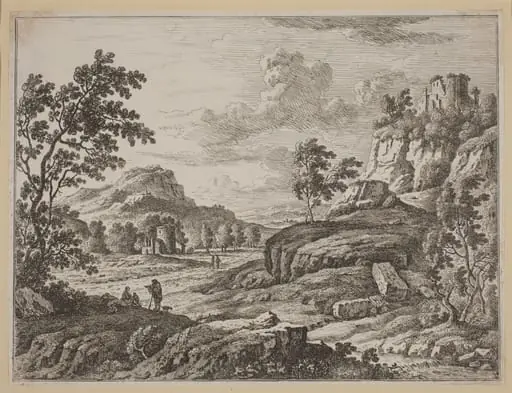
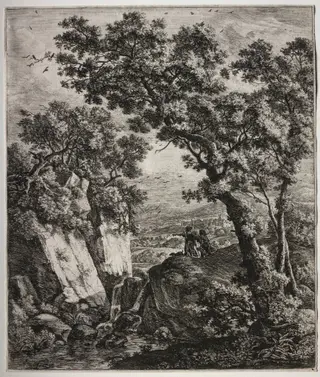
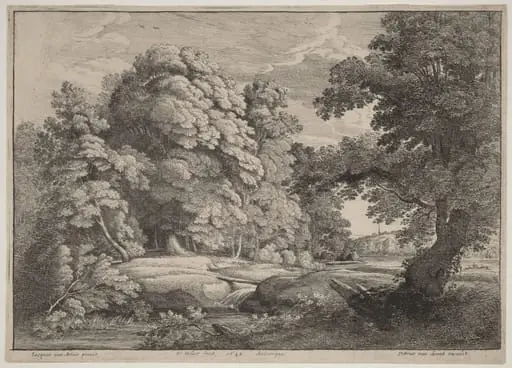
Four Landscapes: The Pierced Rock
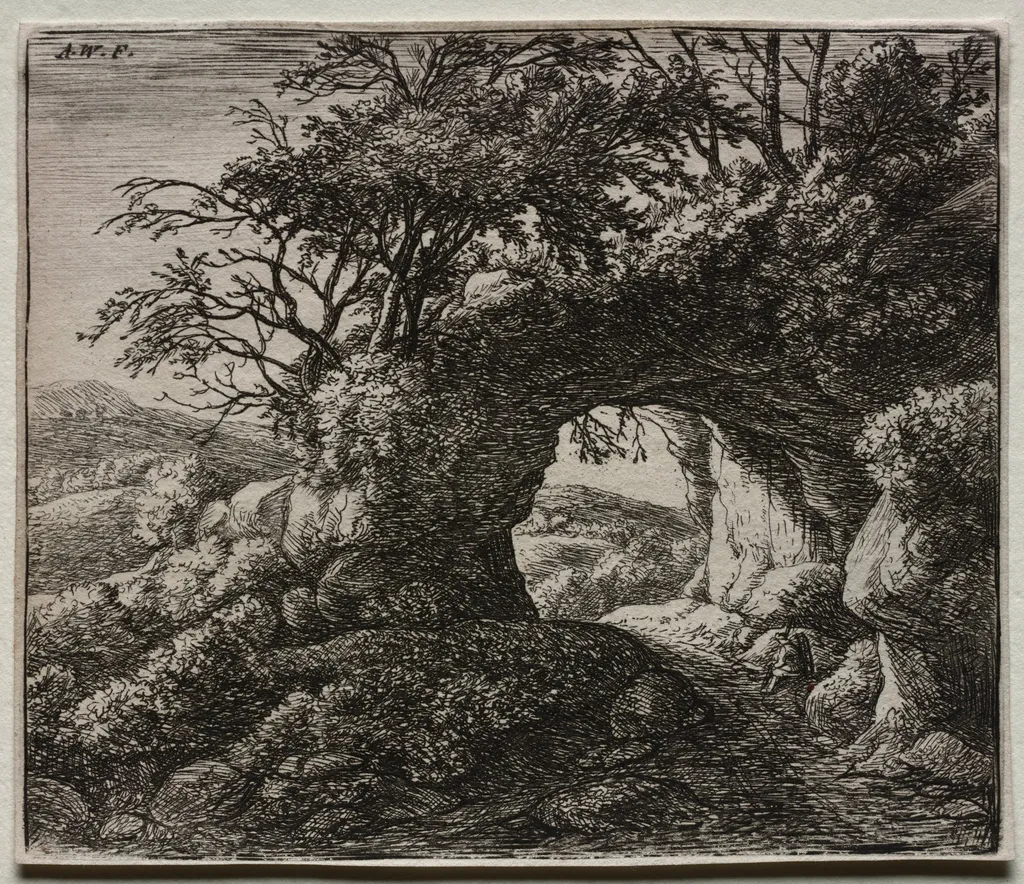
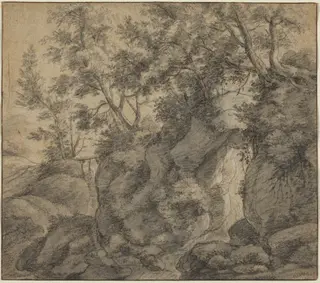
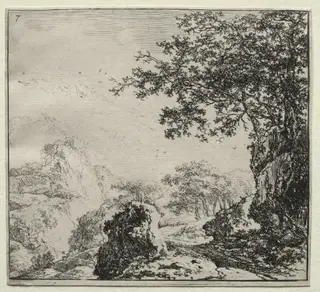
Four Landscapes: The Pierced Rock is a print by the Baroque artist Anthonie Waterloo. It dates from 1664 and is held in the collection of the Cleveland Museum of Art.
- Accession no.
- 1960.259
- Credit line
- Gift of Leona E. Prasse in honor of L. C. J. Frerichs
About this work
Overview
Executed in etching, the work relies on stark tonal contrasts to define form and space, characteristic of 17th-century Northern European printmaking traditions.
Created in 1664, this black-and-white print by Anthonie Waterloo depicts a solitary, jagged rock formation surrounded by dense vegetation. The composition is minimal yet forceful, with the rock dominating the center and the sky reduced to a narrow horizontal band. Executed in etching, the work relies on stark tonal contrasts to define form and space, characteristic of 17th-century Northern European printmaking traditions.
Subject & Meaning
The pierced rock, partially obscured by gnarled roots and undergrowth, suggests a natural monument shaped by time and weather. Its isolation and rugged texture evoke a sense of endurance, possibly reflecting contemporary Dutch interest in the sublime qualities of untamed nature. The absence of human figures or architectural elements reinforces a quiet, contemplative mood, focusing attention on the landscape’s intrinsic presence.
Technique & Style
Waterloo employed etching with heavy cross-hatching and deep shadows to model the rock and foliage, creating a strong sense of volume. The sky, rendered as a flat, untextured line, heightens the verticality of the composition. This use of chiaroscuro, sharp contrasts between light and dark, was a standard method in Dutch printmaking to convey depth and drama without color, emphasizing texture and form through tone alone.
History & Provenance
The print entered the collection of The Cleveland Museum of Art through established acquisition channels, though its earlier ownership history remains undocumented. As a work from Waterloo’s mature period, it aligns with his known output of landscape prints made during his time in the Netherlands after returning from Italy. Its preservation reflects the enduring interest in Northern European graphic art of the 17th century.
Context
Waterloo’s work emerged during a period when Dutch artists increasingly turned to landscape as an independent subject, moving beyond religious or narrative themes. His prints, influenced by Italianate traditions yet grounded in Northern realism, contributed to a growing market for small-scale, intimate views of nature. This piece reflects a broader trend toward valuing natural forms for their own aesthetic and emotional resonance.
Legacy
Though not widely known today, Waterloo’s prints like this one helped shape the visual language of landscape etching in the Netherlands. His emphasis on atmospheric depth and naturalistic detail influenced later generations of printmakers who sought to capture the quiet power of the natural world. This work remains a quiet example of how technical precision could convey profound stillness.
Own this work as a print
Artist & collection