Artwork
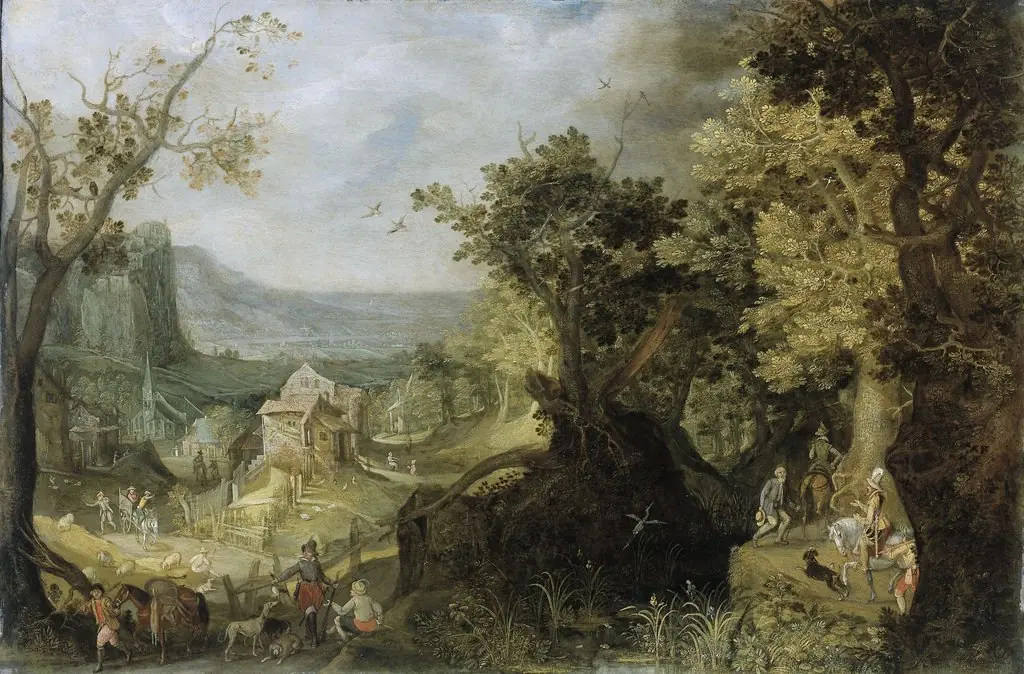
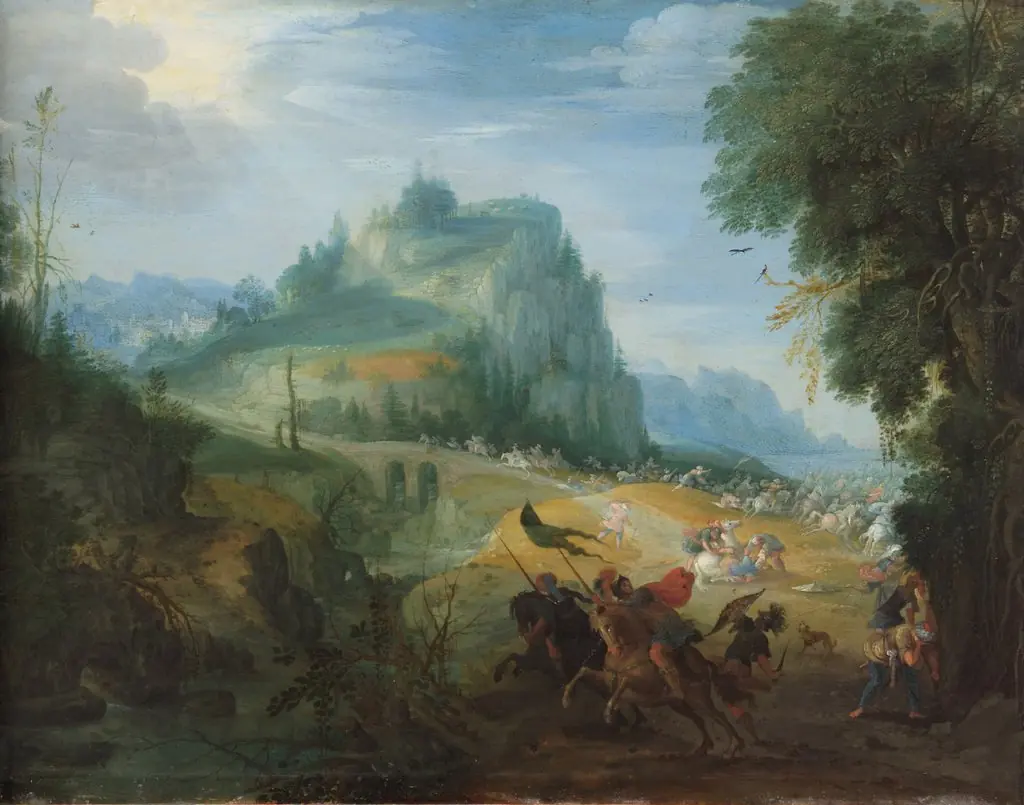
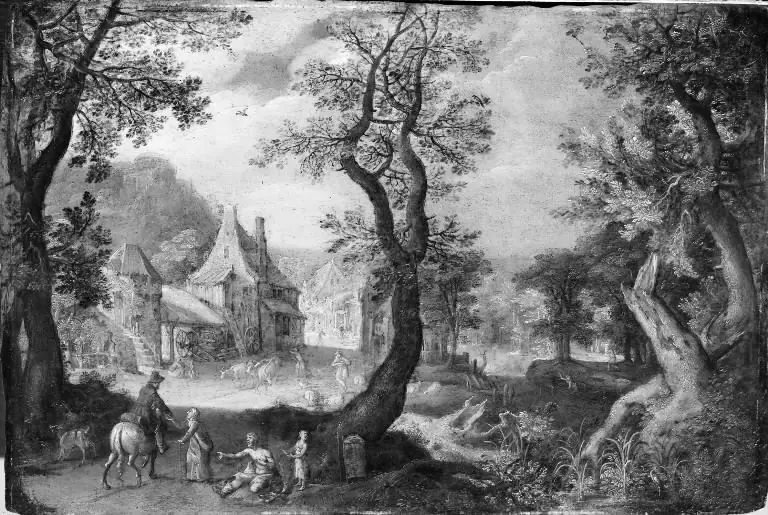
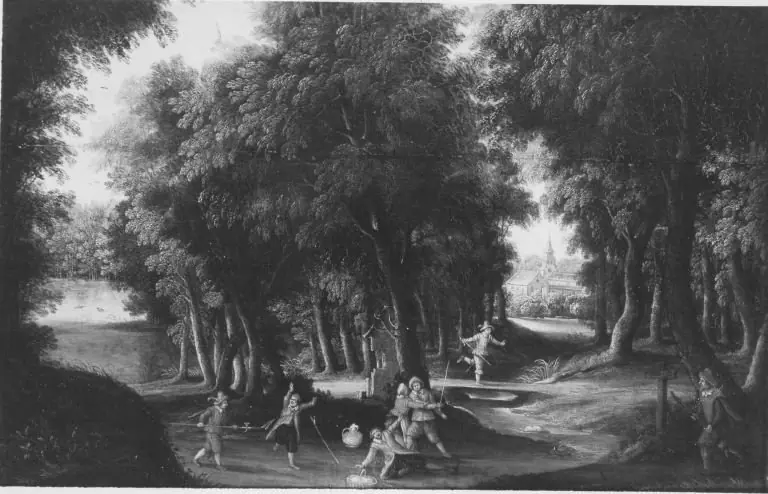
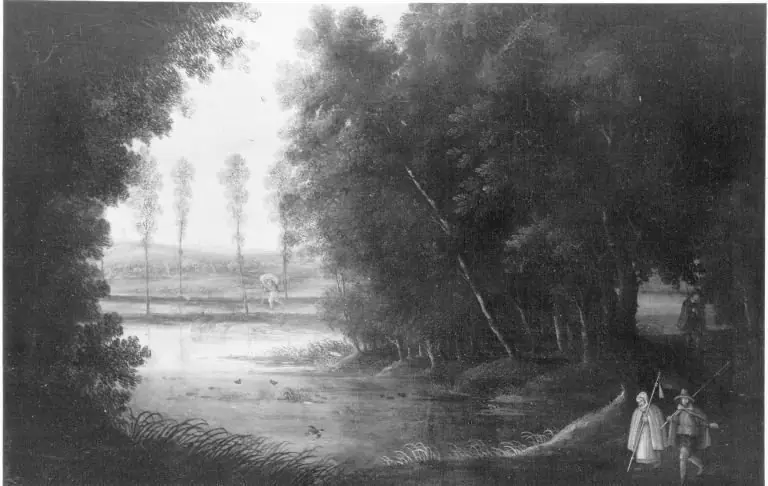
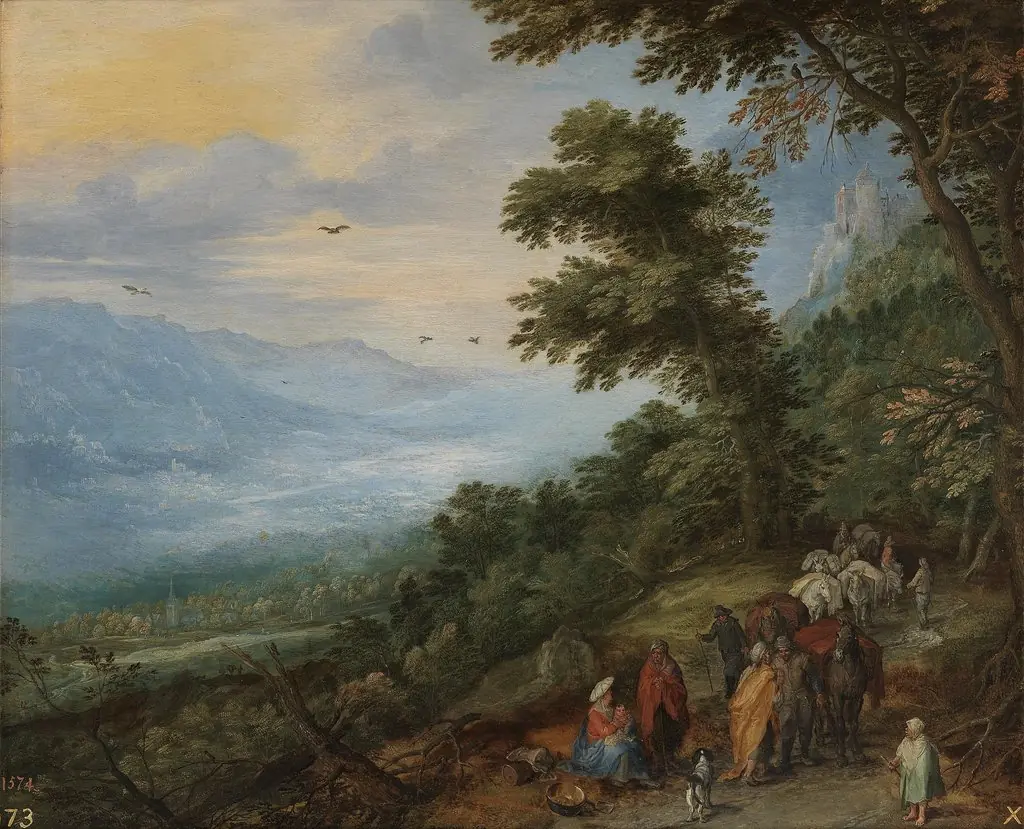
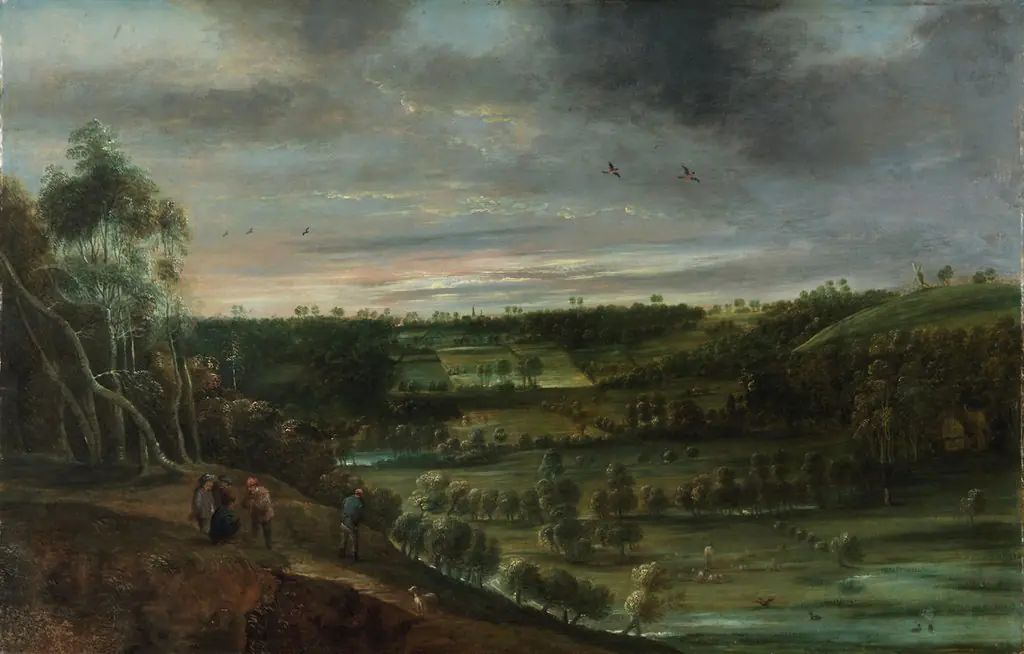
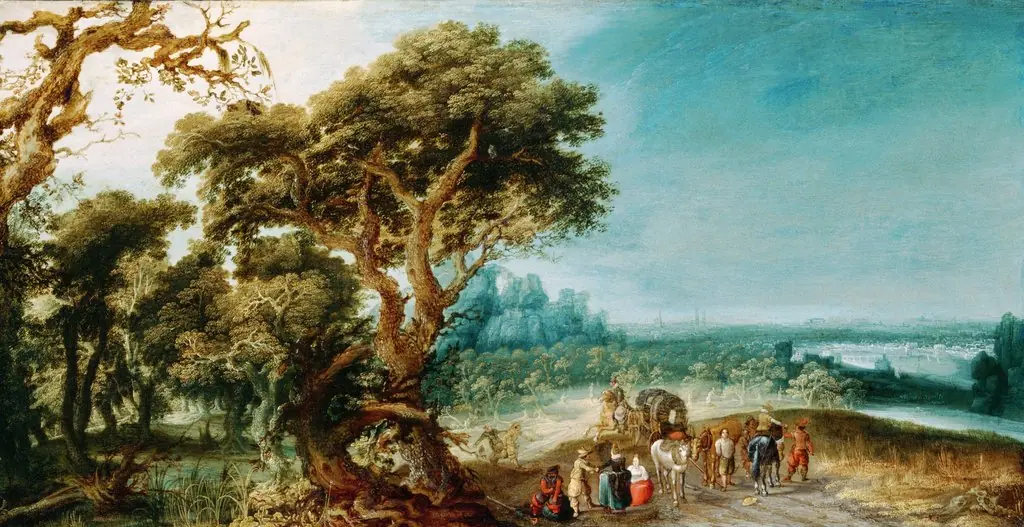
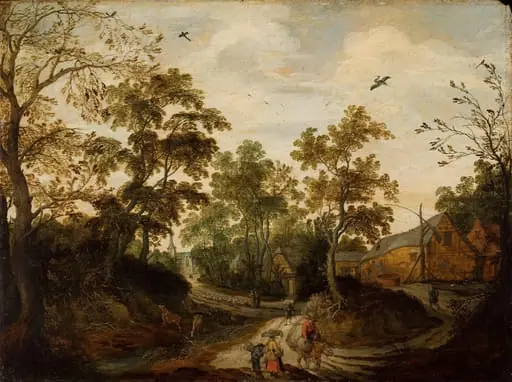
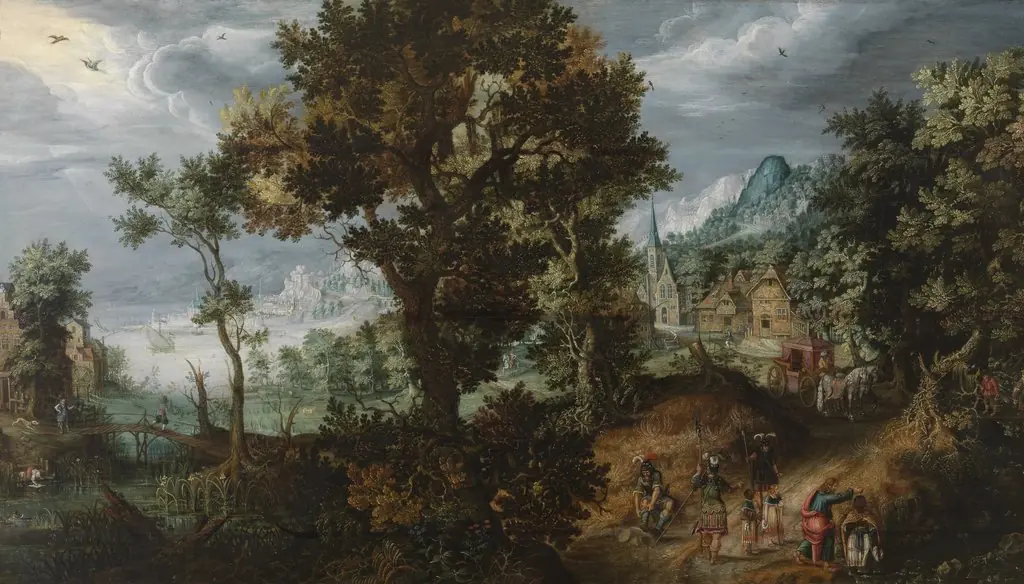
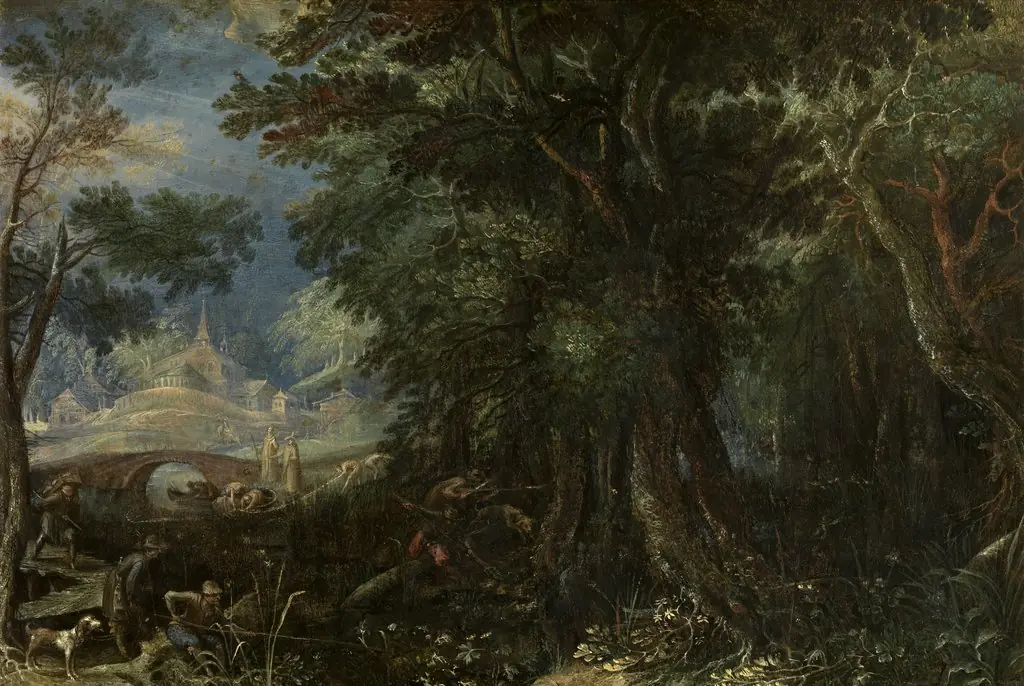
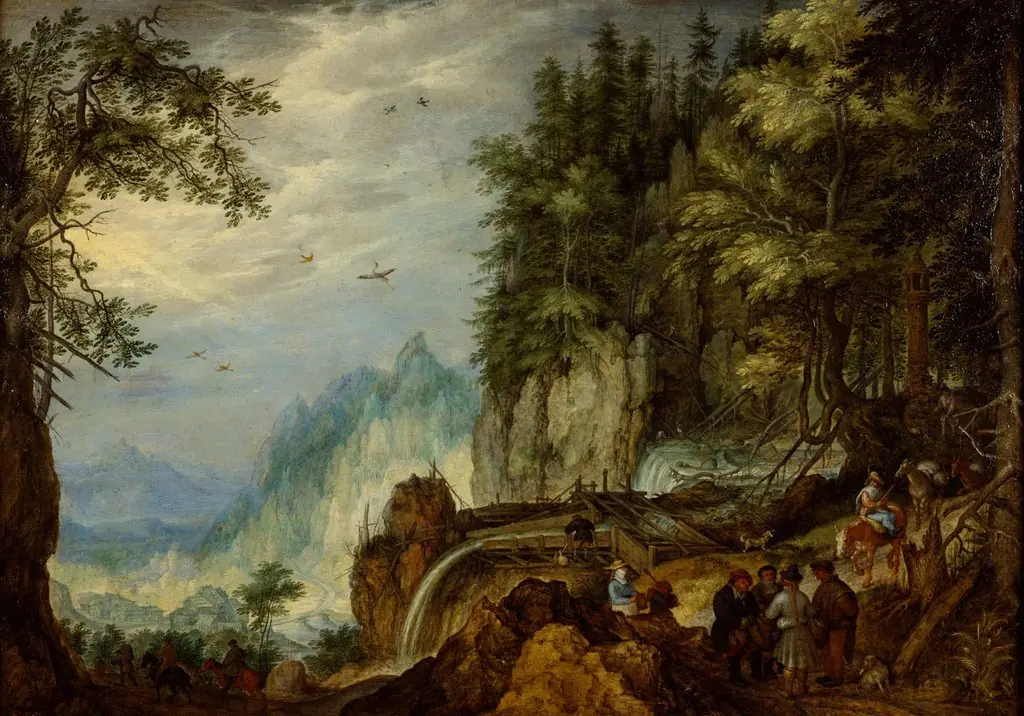
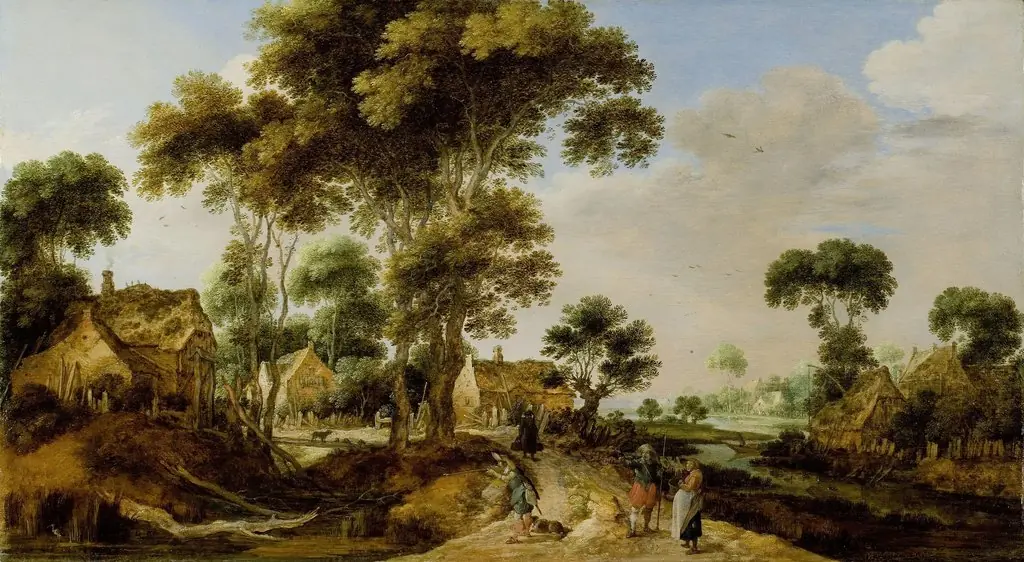
Hunter and Horsemen on a Wooded Road, with a Village in a Valley beyond
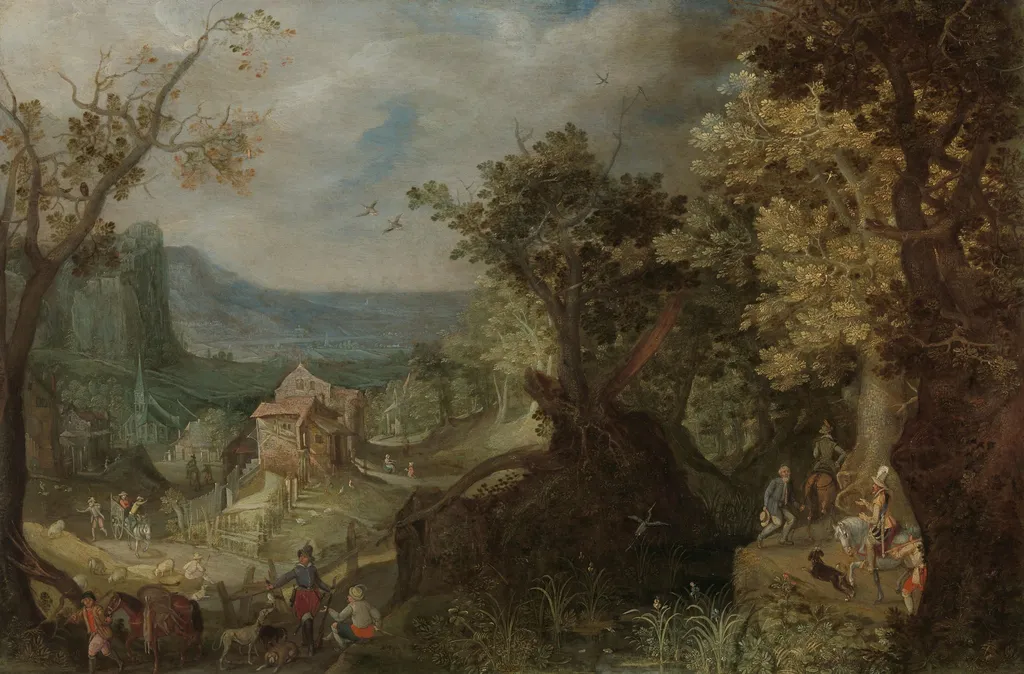
Hunter and Horsemen on a Wooded Road, with a Village in a Valley beyond is an unspecified painting by the Dutch Golden Age artist Anton Mirou. It dates from 1608 and is held in the collection of the Rijksmuseum.
About this work
Subject & Meaning
The painting depicts a hunter and horsemen traveling along a wooded road, with a village visible in a valley beyond, a composition that aligns with Anton Mirou's signature approach to landscape. Mirou was known for populating his wooded paths with richly dressed figures that often appeared ill matched with their natural surroundings, and he frequently incorporated villages and travelers into his scenes. After about 1614, his work shifted toward village landscapes filled with many figures, influenced by Pieter Schoubroeck, and the present 1608 canvas reflects his earlier Coninxloo-inspired manner, characterized by abundant trees, complex paths, and incidental human activity.
The inclusion of a hunter and mounted travelers on a forest road, combined with a distant village, embodies the everyday rural and travel motifs typical of the Frankenthal school, where figures animate the landscape rather than dominate it.
Context
Hunter and Horsemen on a Wooded Road, with a Village in a Valley beyond (1608) belongs to Anton Mirou’s early Frankenthal period, where he developed a distinct manner within the Frankenthal school by populating dense wooded paths with finely dressed figures whose elegance contrasts with the rugged terrain. Scholarly assessments of Mirou’s oeuvre describe him as cautious toward stylistic change, sometimes appearing slightly old-fashioned, a characterization that places this work within a conservative strain of Flemish landscape painting rather than at the vanguard of innovation. The painting’s integration of narrative detail, hunters, riders, and a distant village, reflects Mirou’s engagement with topographical tradition while aligning with the Frankenthal circle’s shared interest in populated landscapes, a genre in which Gillis van Coninxloo and Pieter Schoubroeck were also active.
Its later reception has been framed by Mirou’s status as a draftsman whose compositions circulated widely through prints, notably via Matthäus Merian’s 1620 engravings after his views of Bad Schwalbach, underscoring the interplay between his painted and graphic practices.
Overview
The work, titled Hunter and Horsemen on a Wooded Road, with a Village in a Valley beyond, is a painted scene that juxtaposes a forested path with a distant settlement. On the right side, mounted riders traverse a narrow track through trees, while on the left a group of hunters pause beside a fence overlooking the rooftops of a small village nestled in a valley.
Technique & Style
The artist renders the forest with careful attention to foliage, using subtle variations of light and shadow to convey depth. The figures are delineated with restrained detail, allowing the surrounding trees and sky to dominate the visual field. The palette is muted, reinforcing the calm atmosphere, while the perspective leads the eye from the foreground fence to the distant village.
History & Provenance
The creator of the piece remains unidentified, and the painting’s early ownership is not recorded in surviving documents. It entered the collection of the Rijksmuseum, where it is displayed among other works that illustrate rural genre scenes from the same period.
Own this work as a print
Artist & collection
Artist
Antoine, or Anton Mirou (1578 – 1621/1627), was a Flemish Baroque landscape painter of the Frankenthal school.