Artwork
The Vision of Saint Anthony of Padua
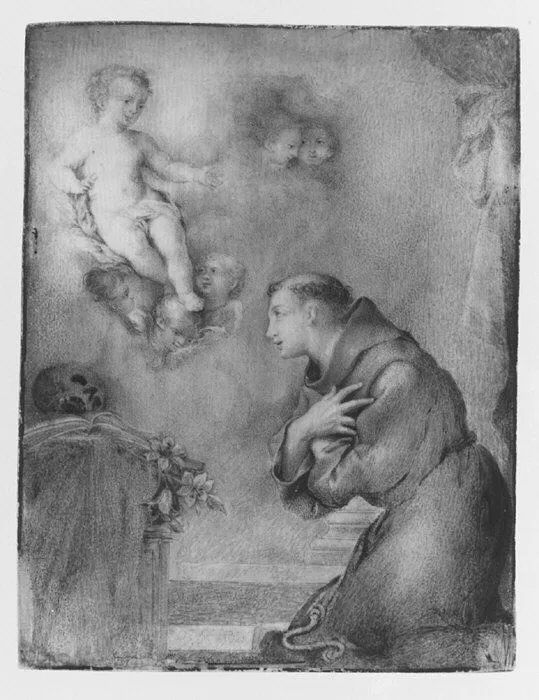
The Vision of Saint Anthony of Padua is an unspecified painting by the Neoclassicist artist Anton Raphael Mengs. It dates from 1763 and is held in the collection of the Metropolitan Museum of Art. This painting depicts a pivotal moment for Saint Anthony of Padua, capturing a divine encounter.
About this work
Subject & Meaning
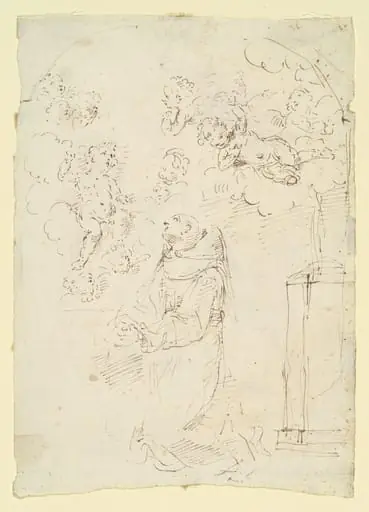
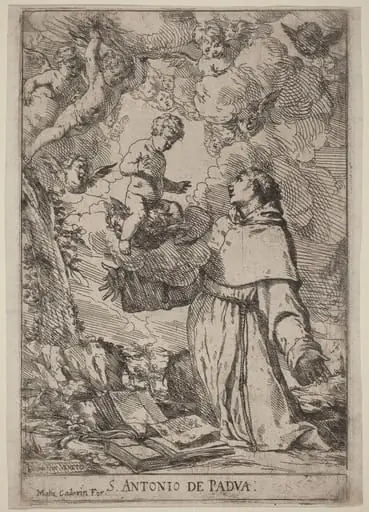
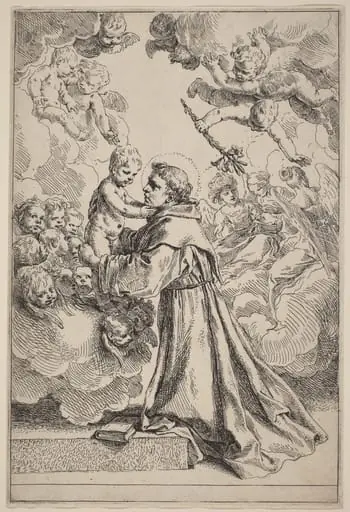
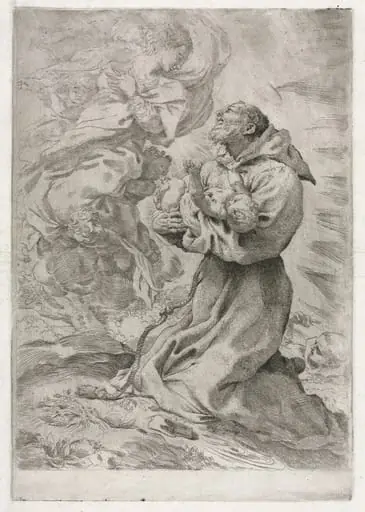
The Vision of Saint Anthony of Padua portrays the Franciscan saint in a moment of divine revelation, as the infant Christ appears to him in a vision.
The Vision of Saint Anthony of Padua portrays the Franciscan saint in a moment of divine revelation, as the infant Christ appears to him in a vision. The composition includes a skull, a traditional attribute that underscores the transience of life, alongside the figure of Anthony himself and the youthful Jesus, emphasizing the saint’s role as a conduit of divine instruction. Mengs arranges these elements to convey both contemplative devotion and the immediacy of the heavenly encounter, aligning with Counter‑Reformation emphases on personal experience of the sacred.
The work is classified as a religious painting and is part of the Metropolitan Museum of Art’s collection.
Context
Anton Raphael Mengs created The Vision of Saint Anthony of Padua, a religious painting now held by the Metropolitan Museum of Art. The work, measuring roughly 130 × 96 cm, portrays Saint Anthony of Padua alongside attributes such as a skull and representations of Jesus Christ, aligning with the iconography typical of Counter‑Reformation devotional art. As part of Mengs’s broader output of ecclesiastical subjects, the composition reflects his neoclassical synthesis of Baroque dynamism and Enlightenment rationality.
Art historians cite the piece as an exemplar of mid‑18th‑century religious painting, noting its technical execution and its role within the artist’s effort to revive classical ideals in sacred imagery.
Overview
This painting depicts a pivotal moment for Saint Anthony of Padua, capturing a divine encounter. The composition centers on the kneeling saint, absorbed in prayer, as a celestial figure appears before him. This work illustrates a profound spiritual experience, characteristic of religious art that seeks to convey moments of divine intervention and personal devotion.
Technique & Style
The visual execution of this painting emphasizes the spiritual intensity of the scene. The ethereal quality of the floating figures, particularly the soft rendering of the celestial being and the infant, contributes to the otherworldly atmosphere. The artist employs subtle transitions and a delicate touch to depict the divine manifestation, contrasting with the more grounded figure of the saint. This approach enhances the sense of a mystical experience unfolding before the viewer.
Artist & collection