Artwork
Archduke Ferdinand and Archduchess Maria Anna of Austria
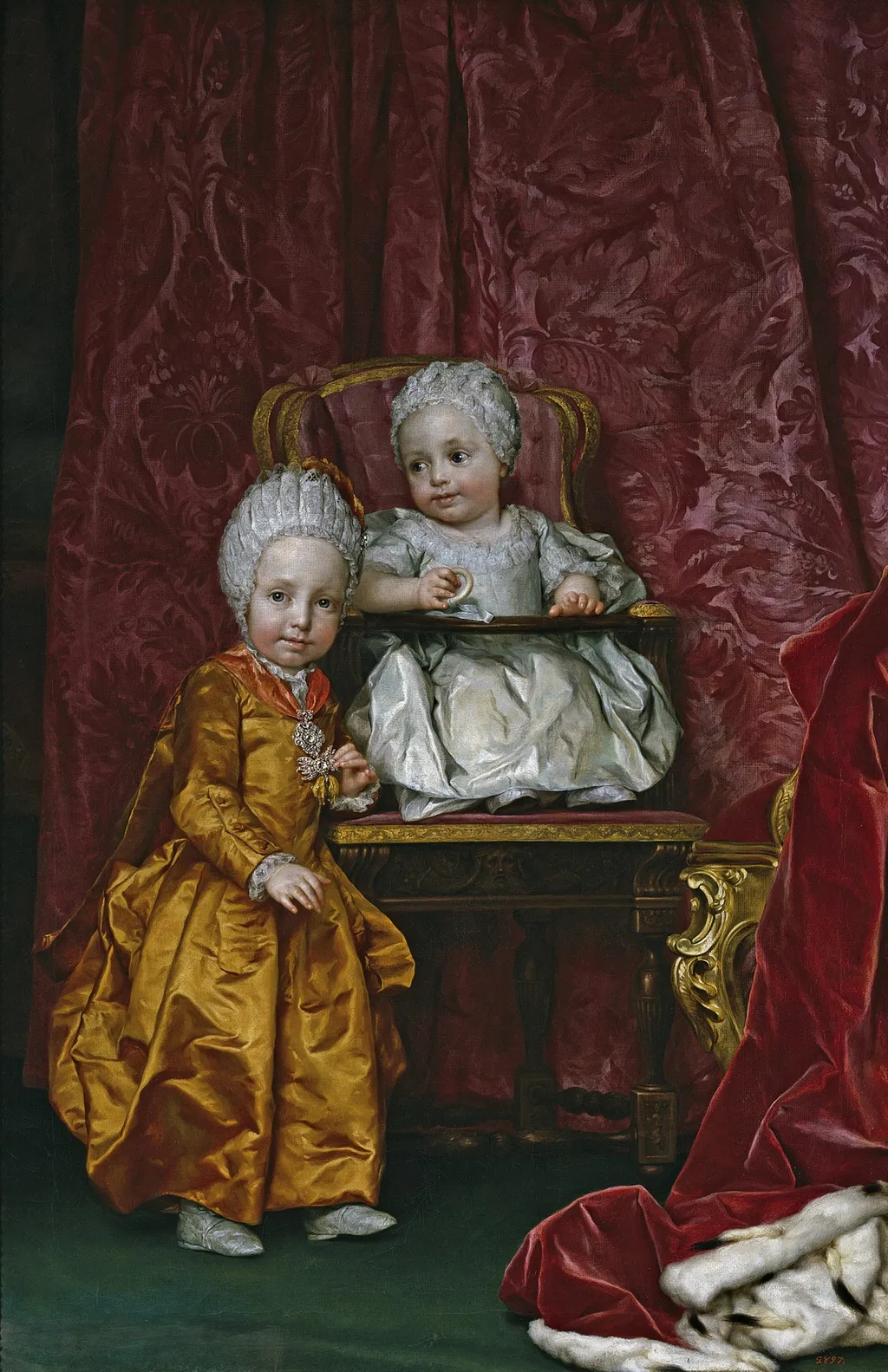
Archduke Ferdinand and Archduchess Maria Anna of Austria is an oil painting by the Rococo painting artist Anton Raphael Mengs. It dates from 1770 and is held in the collection of the Museo del Prado.
About this work
A boy in a bright yellow coat stands holding a fancy medal, while a baby in a white dress sits in a gilded chair behind him.
A boy in a bright yellow coat stands holding a fancy medal, while a baby in a white dress sits in a gilded chair behind him. Both have big white wigs and serious faces. Rich red curtains frame the scene, and a red cloth lies on the floor with a white fur trim.
The boy’s medal looks like the Golden Fleece, a symbol of honor. The painting was made in 1770, but the kids’ expressions feel timeless.
Next, look up the Golden Fleece to see why this medal mattered.
Subject & Meaning
The painting portrays Ferdinand III, Grand Duke of Tuscany, alongside his wife Archduchess Maria Anna of Austria, both members of the Austrian Habsburg dynasty. Their depiction in regal attire, accompanied by symbols such as the Golden Fleece, emphasizes their aristocratic status and dynastic connections. Rendered by Anton Raphael Mengs in 1770, the work functions as a formal portrait that conveys the political and familial significance of the subjects within European aristocracy.
Technique & Style
Executed in 1770, this portrait by Anton Raphael Mengs is an oil painting on canvas. The work measures 147 cm in height and 96 cm in width. As a formal group portrait, the composition depicts Archduke Ferdinand and Archduchess Maria Anna of Austria, with the inclusion of the Golden Fleece insignia indicating their royal status and affiliations.
The piece is classified within the genre of portraiture and is currently held in the collection of the Museo del Prado, having previously been associated with the Royal Palace of Aranjuez.
History & Provenance
Anton Raphael Mengs executed this double portrait in oil on canvas in 1770. The work depicts Archduke Ferdinand and Archduchess Maria Anna of Austria. Historical records indicate the painting was owned by Charles III of Spain and subsequently by Ferdinand VII of Spain.
The artwork is currently held in the collection of the Museo del Prado, where it is located at the Royal Palace of Aranjuez.
The painting is held in the collection of the Museo del Prado, Madrid, with inventory number P007126.
It was included in the exhibition “Anton Raphael Mengs (1728–1779)” held at the Museo del Prado, Madrid, from 15 June to 15 September 2019.
Context
Created by Anton Raphael Mengs in 1770, this double portrait of Archduke Ferdinand and Archduchess Maria Anna of Austria exemplifies the Neoclassical style that defined the artist's mature career. As a court painter active across Europe, Mengs produced this work during a period of intense artistic exchange between the Habsburg and Spanish royal houses. The painting currently resides in the collection of the Museo del Prado, having previously been held by Spanish monarchs Charles III and Ferdinand VII.
Its presence in the Royal Palace of Aranjuez and subsequent transfer to the Prado underscores its historical significance within the Spanish royal collection and its enduring status as a key example of 18th-century portraiture.
Legacy
Anton Raphael Mengs' 1770 double portrait of Archduke Ferdinand and Archduchess Maria Anna of Austria, depicting Ferdinand III, Grand Duke of Tuscany, his wife Maria Anna, and the Golden Fleece, entered the Spanish royal collection through Ferdinand VII and Charles III. The work remained in the Museo del Prado, Royal Palace of Aranjuez, where it was studied as a model of court portraiture in the 19th century. Mengs' technical precision and diplomatic representation of Habsburg family ties influenced later court painters across Europe, particularly in their rendering of aristocratic status and symbolic regalia.
Overview
Anton Raphael Mengs painted an oil portrait in 1770 that is now part of the Museo del Prado’s collection. The work presents two young members of the Habsburg family, positioned against a richly draped backdrop of red curtains and a floor covered with a red carpet edged in white fur. The composition balances formal regalia with the children’s solemn expressions.
Own this work as a print
Artist & collection


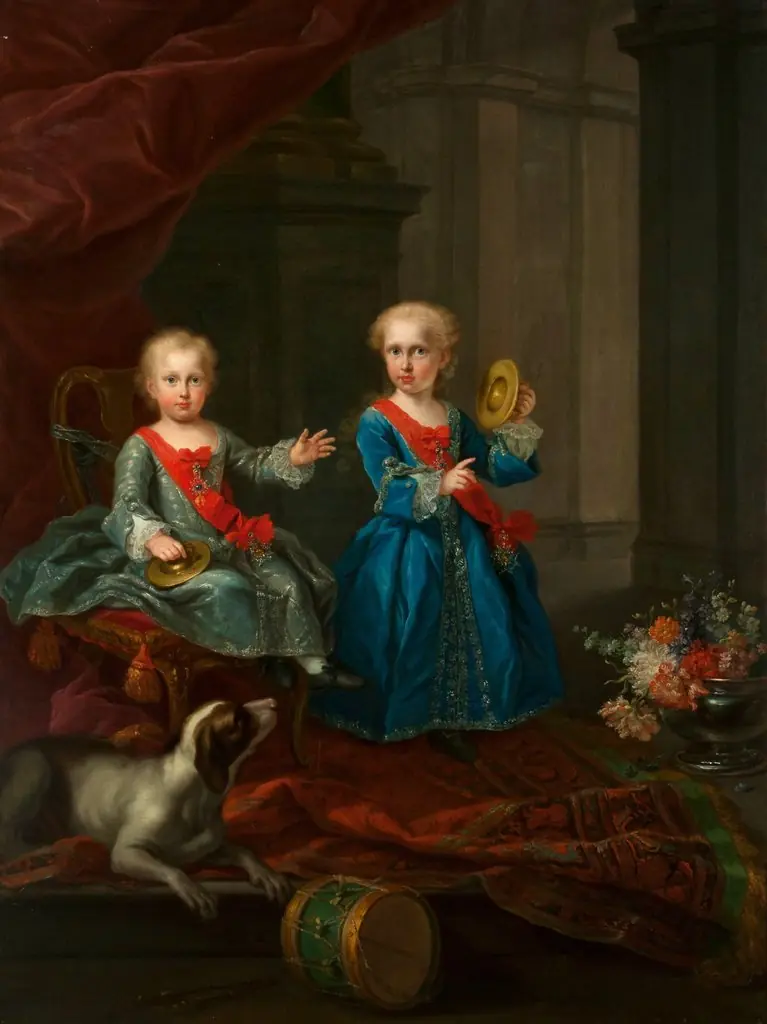 Francesco Saverio e Antonio Pasquale di Borbone
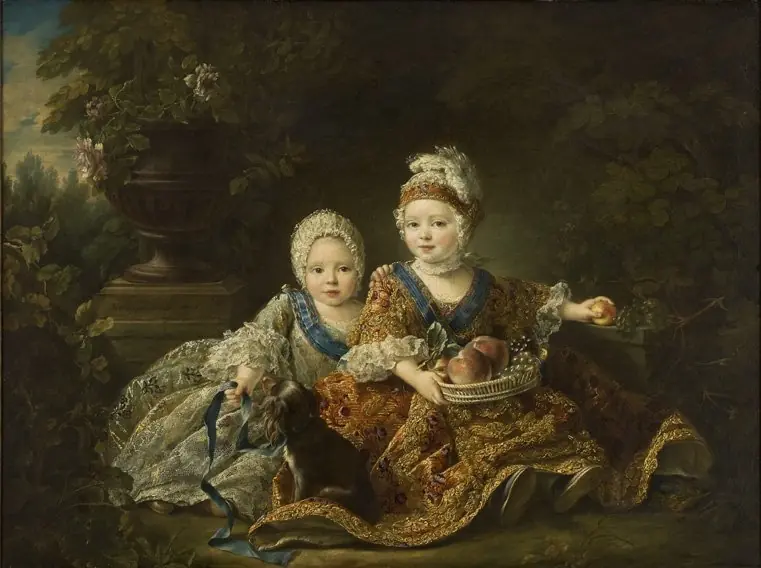 The Duke of Berry and the Count of Provence as Children
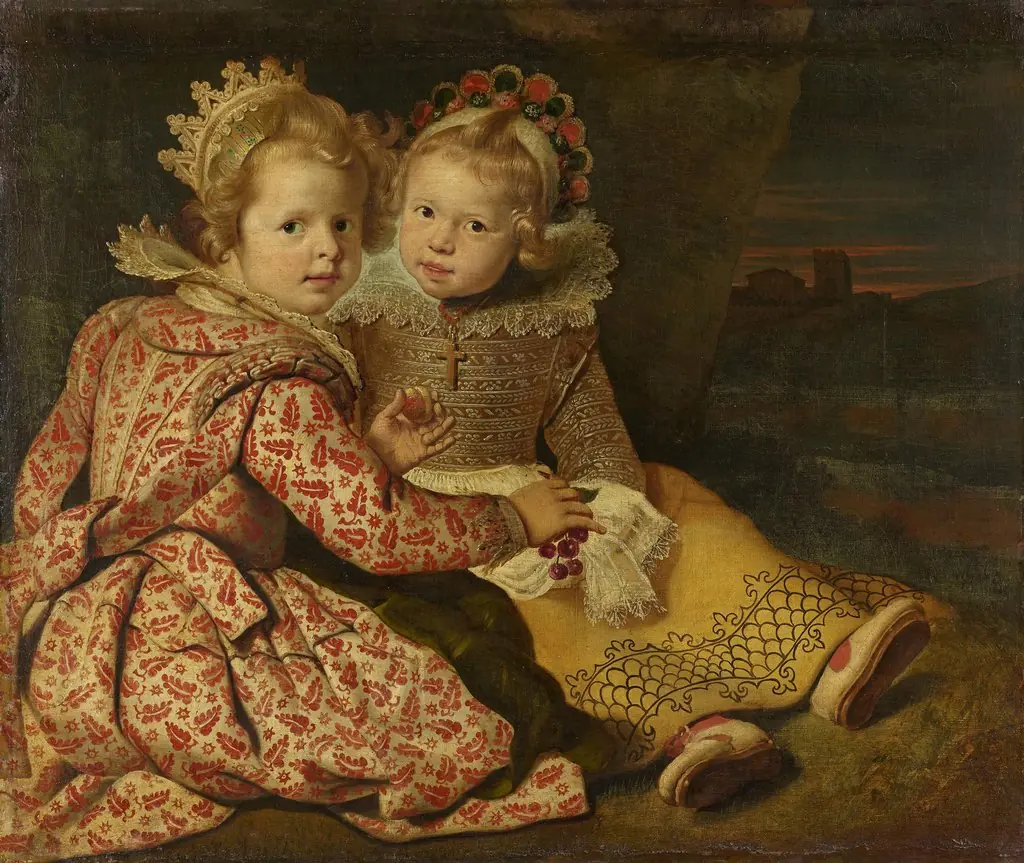 Magdalena and Jan-Baptist de Vos, Children of the Painter
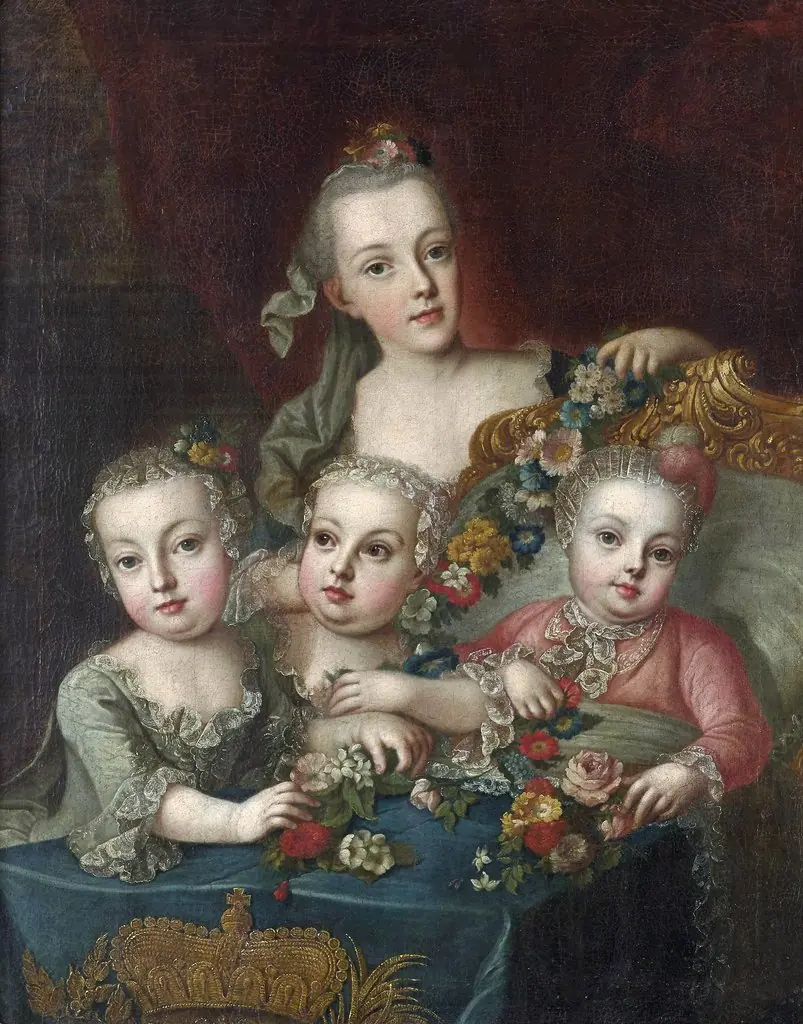 Portrait of the children of the Austrian Empress Maria Theresa
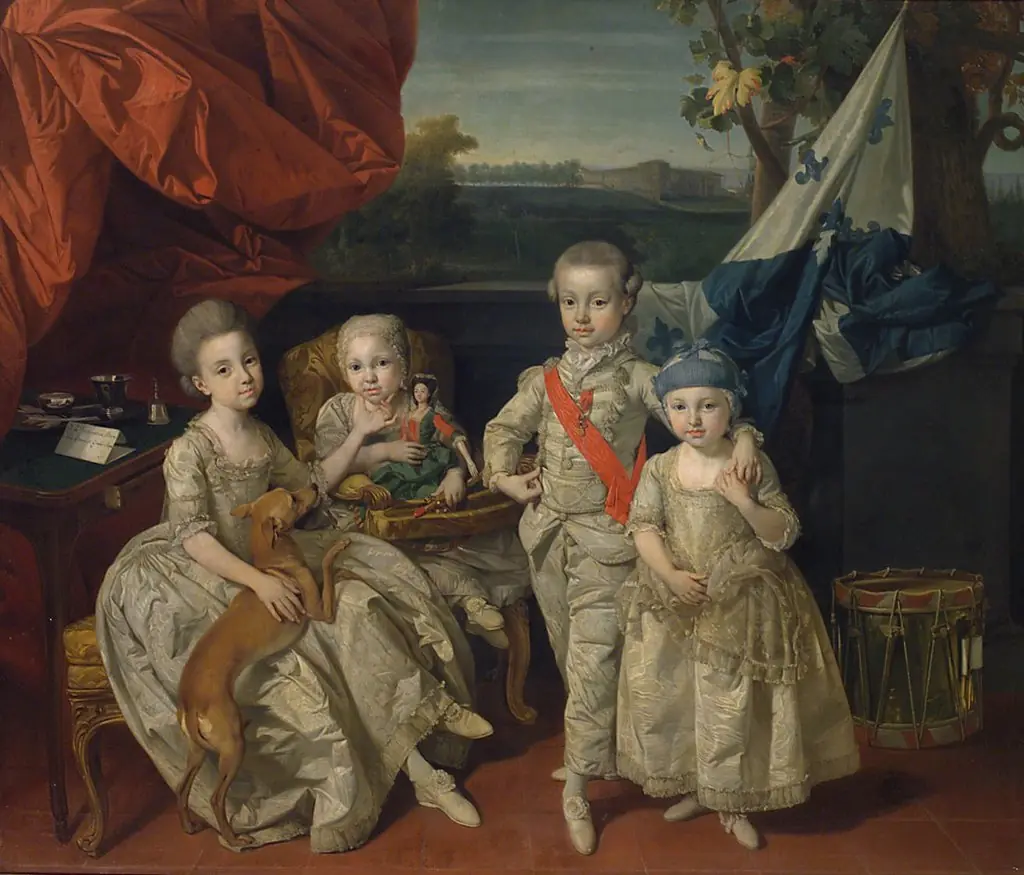 Prinz Ludwig von Parma (1773-1803) mit seinen drei ältesten Geschwistern Karoline (1770-1804), Marie Antonie (1774-1841) und Charlotte (1777-1813)
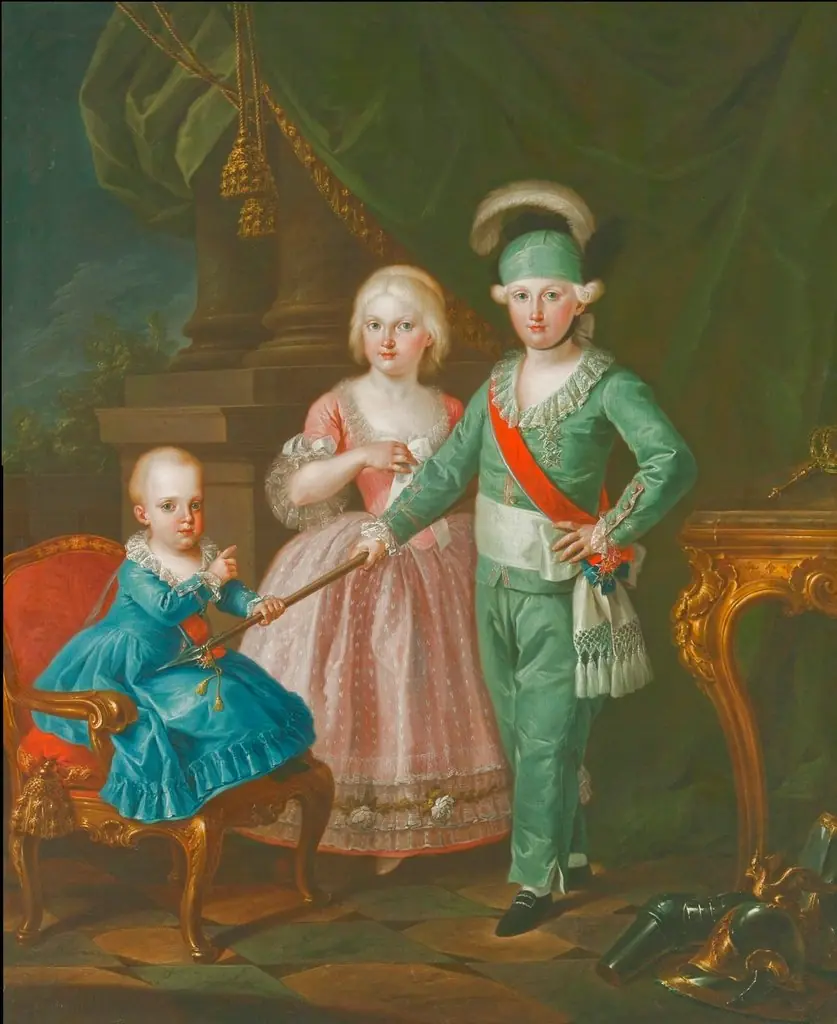 I figli di Carlo di Borbone: Carlo, Maria Luisa, Francesco Saverio
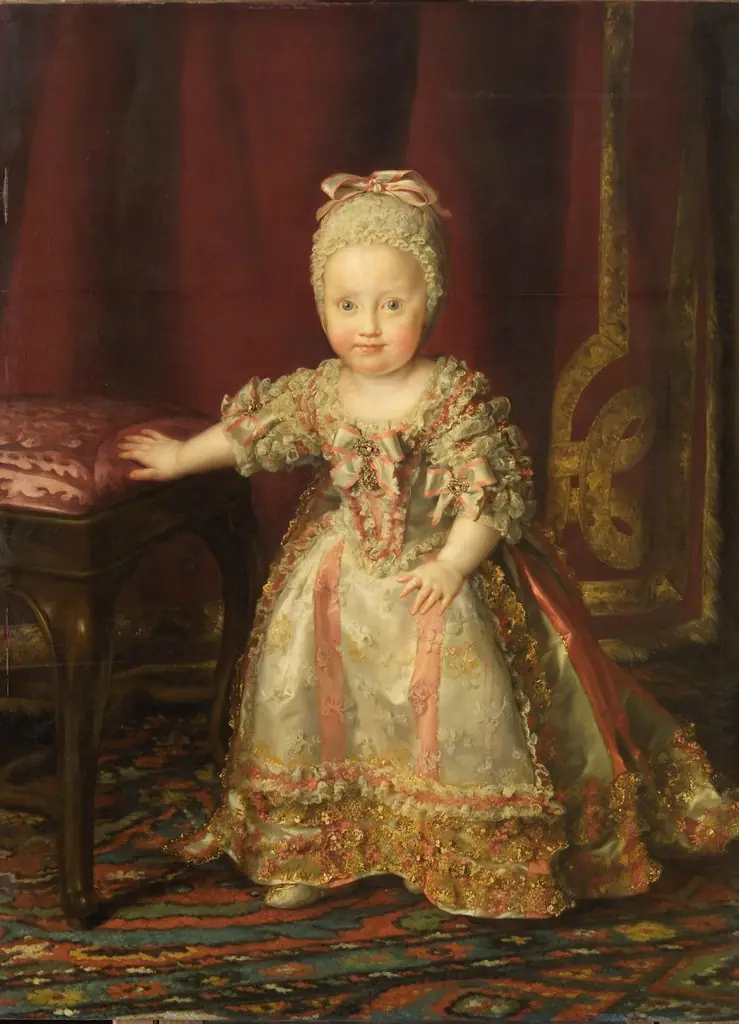 Infantin Maria Theresa von Neapel (1772-1807)
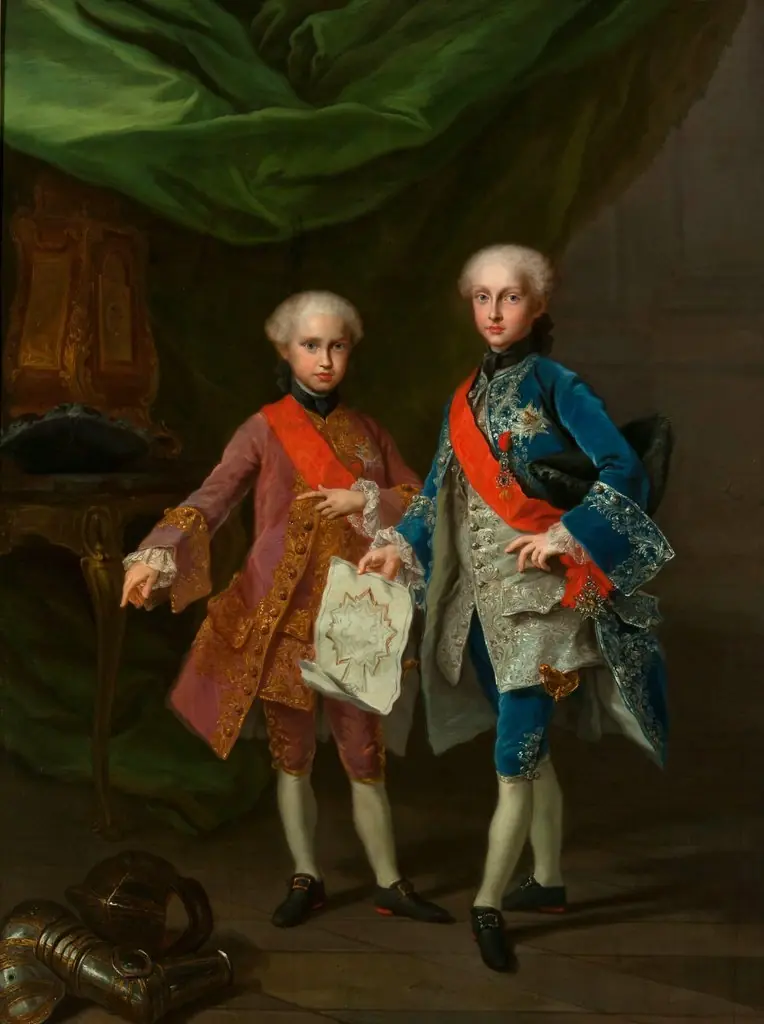 I principi Filippo Pasquale e Carlo Antonio di Borbone con la pianta di una fortezza
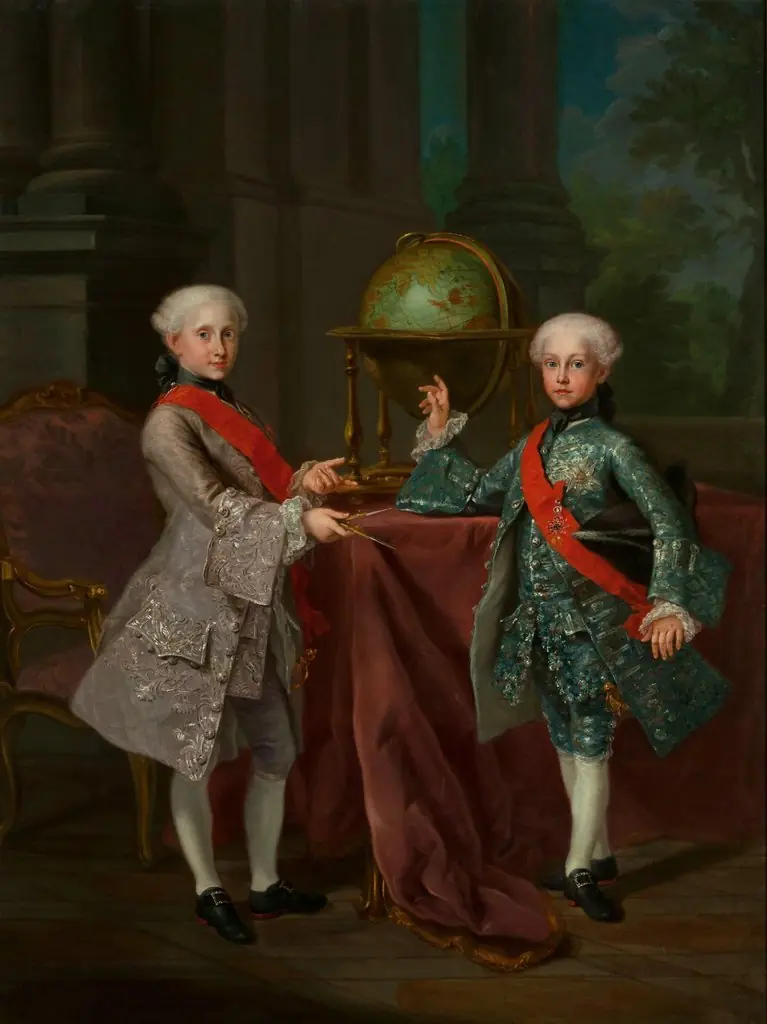 The Infantes Fernando and Gabriel
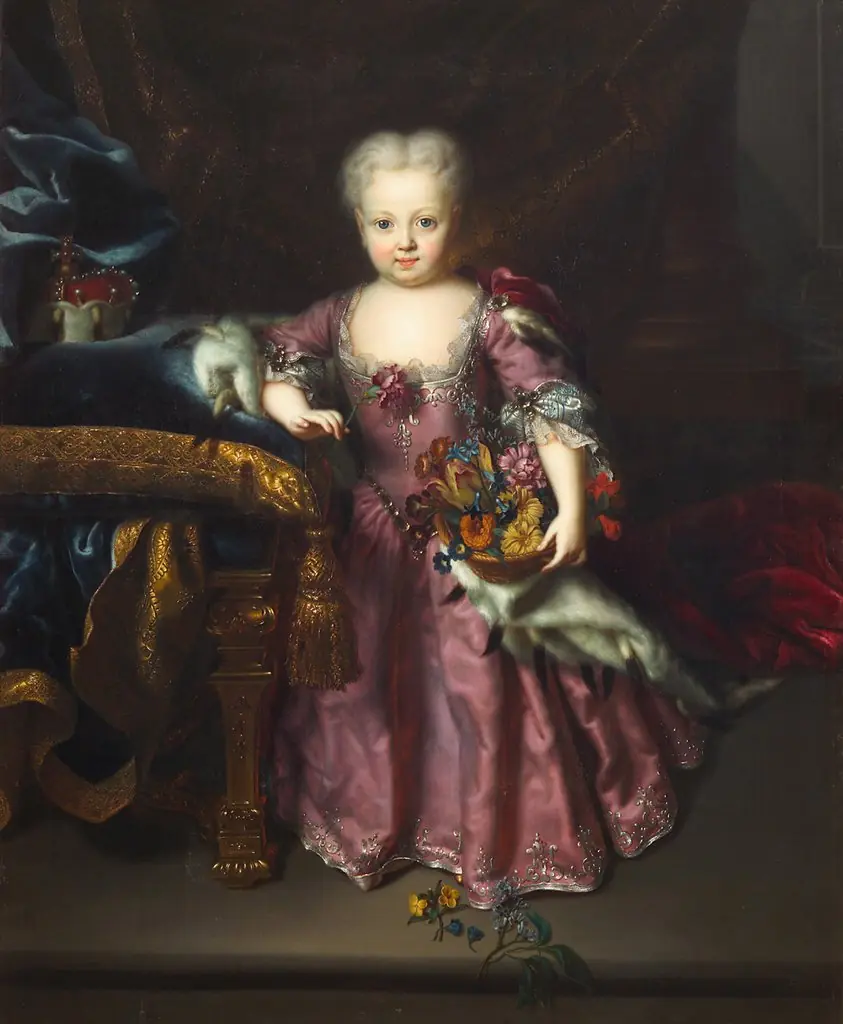 Erzherzogin Maria Amalie (1724-1730) im Alter von drei Jahren