Artwork
Epimetheus Opening Pandora's Box
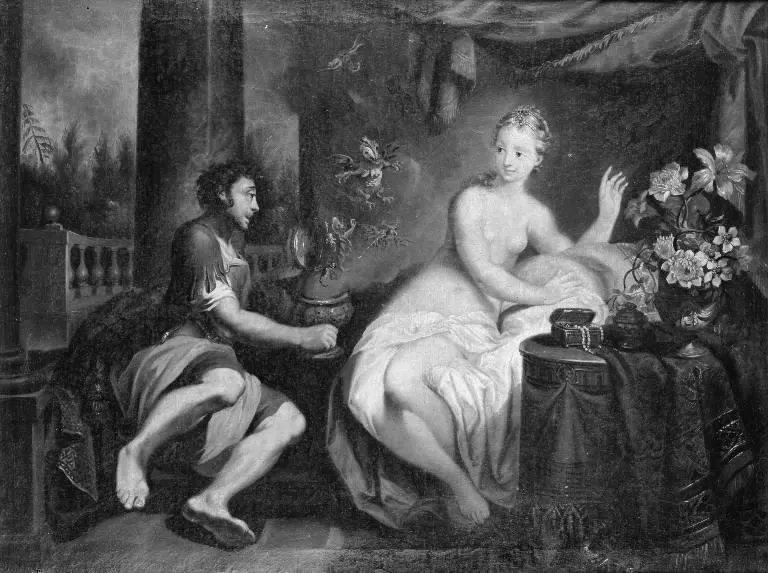
Epimetheus Opening Pandora's Box is an oil painting by the Rococo painting artist Anton Wilhelm Tischbein. It dates from 1771 and is held in the collection of the Statens Museum for Kunst.
About this work
Technique & Style
Executed in 1771, this work by Anton Tischbein is an oil painting on canvas. The composition measures 630 by 840 units and depicts the mythological figures Epimetheus and Pandora alongside a bouquet and the titular box. As a painted surface, the piece utilizes traditional oil pigments applied to a woven textile support, characteristic of eighteenth-century European panel and canvas traditions.
History & Provenance
Epimetheus Opening Pandora's Box by Anton Tischbein, painted in 1771, is held in the collection of the Statens Museum for Kunst in Denmark.
Anton Tischbein created the oil painting Epimetheus Opening Pandora's Box in 1771. Executed on canvas, the work depicts the mythological figures Epimetheus and Pandora alongside a bouquet and the titular box. The painting is currently held in the collection of the Statens Museum for Kunst, where it remains located.
Epimetheus Opening Pandora's Box by Anton Tischbein, painted in 1771, is held in the collection of the Statens Museum for Kunst in Denmark. The work, executed in oil on canvas, is documented in the museum's holdings through its Wikidata record, which records the painting's dimensions (63 cm in height and 84 cm in width) and its 1771 inception date. No specific accession number is provided in the available sources, and no exhibition history is documented beyond its inclusion in the Statens Museum for Kunst collection.
Overview
Anton Tischbein’s 1771 oil painting, Epimetheus Opening Pandora’s Box, belongs to the Rococo period and is part of the Statens Museum for Kunst’s collection. The composition presents a kneeling male figure reaching toward a seated woman who holds an open box on her lap, set against a dimly lit interior with draped curtains, a vase of flowers and a wall mirror.
Subject & Meaning
The work visualizes the moment from Greek myth when Epimetheus, the brother of Prometheus, encounters Pandora’s opened container. The contrast between the man’s tense, inquisitive posture and the woman’s serene demeanor suggests the tension between curiosity and the inevitable release of the evils traditionally associated with the box.
Context
Rococo art often favored mythological subjects rendered with elegance and a sense of playful narrative. Tischbein’s choice of the Pandora episode aligns with contemporary tastes for allegorical scenes that combined moral instruction with the era’s penchant for ornamental composition.
Artist & collection
Artist
Anton Wilhelm Tischbein, known as the Hanauer Tischbein (1 March 1730, Haina - 1 November 1804, Hanau) was a German painter from the Tischbein family of artists.

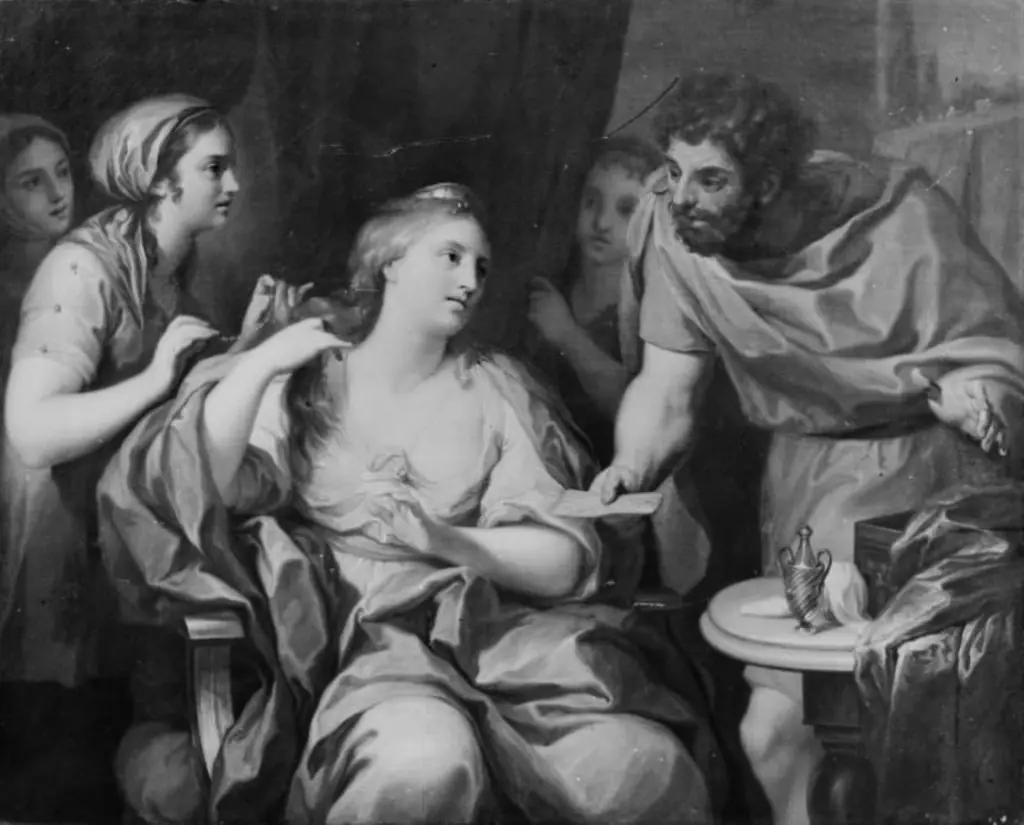 Dronning Semiramis som sværger ikke at ville rede sit hår før hun har underkuet et oprør
 Dronning Semiramis som sværger ikke at ville rede sit hår før hun har underkuet et oprør
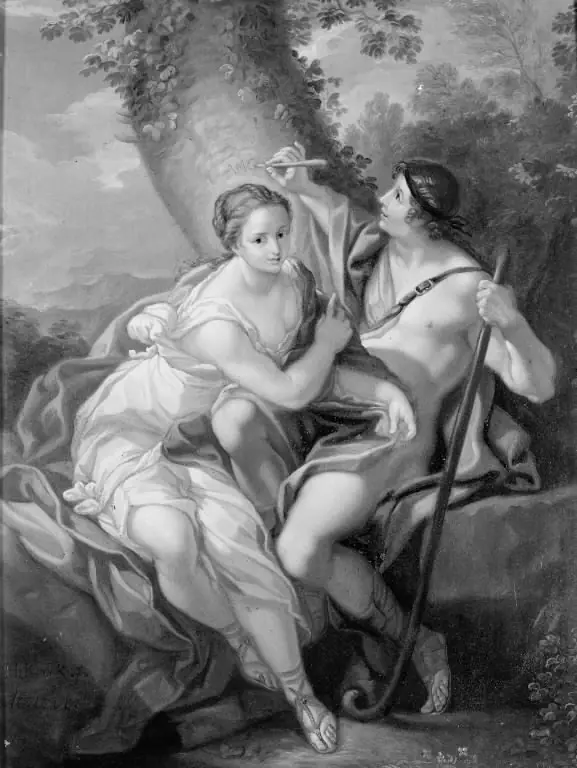 Medos og Angelica
 Medos og Angelica
 Semele and Juno
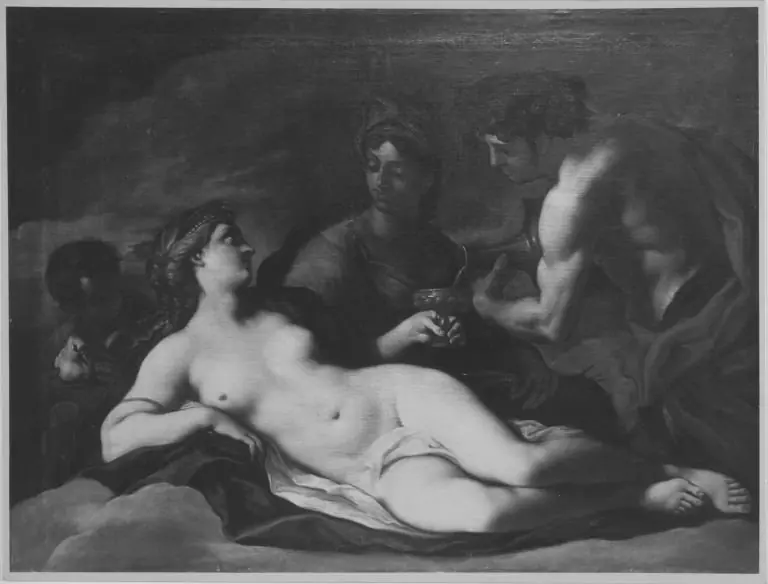 Venus mit Ceres und Bacchus
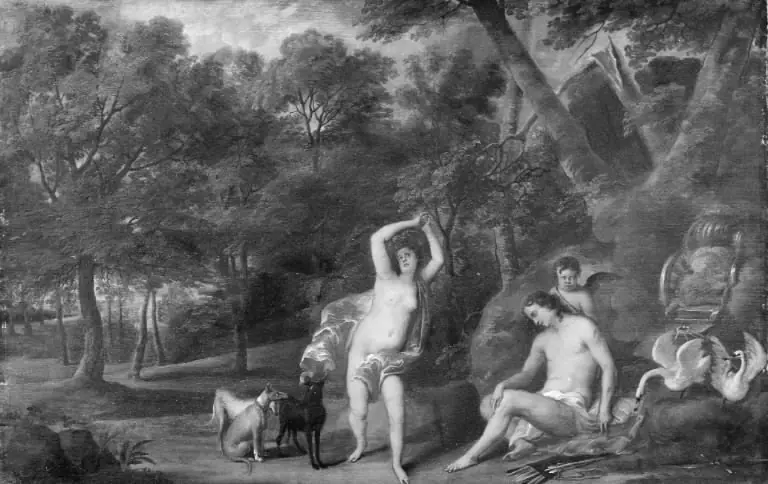 Venus Bewailing the Slain Adonis
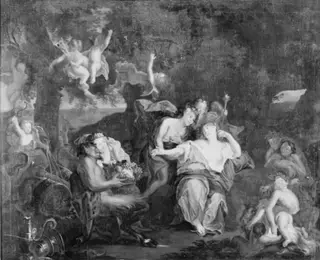 Bacchus og Ariadne sidder sammen i et landskab omgivne af amoriner, bacchantinder og satyrer
 Bacchus og Ariadne sidder sammen i et landskab omgivne af amoriner, bacchantinder og satyrer
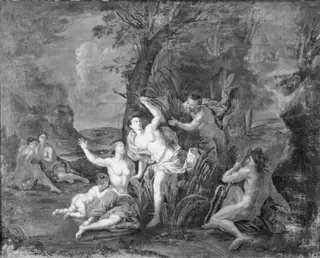 Nogle nymfer overraskes af en satyr. Ved siden sidder en flodgud
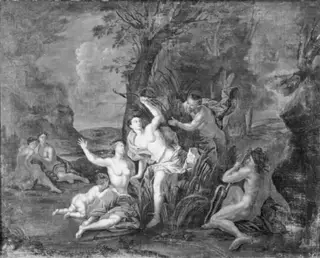 Nogle nymfer overraskes af en satyr. Ved siden sidder en flodgud
- Epimetheus Opening Pandora's Box
 Mrs. Noah Smith and Her Children
 The Contest for the Bouquet: The Family of Robert Gordon in Their New York Dining-Room
 Portrait of Marianne Dorothy Harland (1759–1785), Later Mrs. William Dalrymple
 View on the Catskill—Early Autumn
 The Daughters of Catulle Mendès
 The Interior of an Atelier of a Woman Painter
 Annunciation
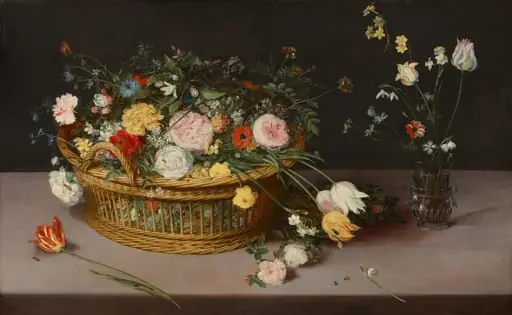 Flowers in a Basket and a Vase