Artwork
The Holy Family with Saint Augustine
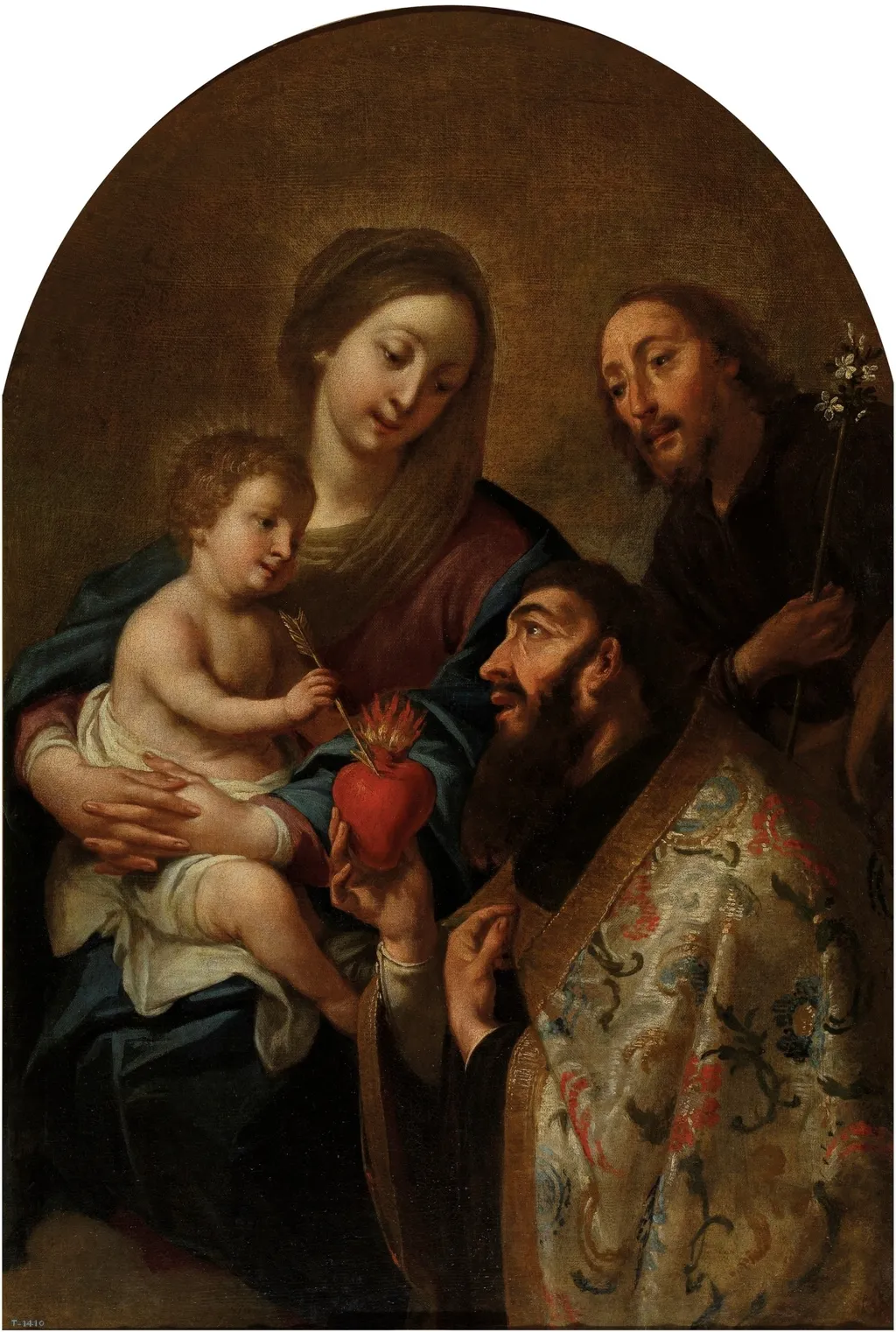
The Holy Family with Saint Augustine is an oil painting by the Rococo painting artist Antoni Viladomat i Manalt. It dates from 1720 and is held in the collection of the Museo del Prado.
About this work
Technique & Style
Warm tonalities and restrained chiaroscuro create a calm, devotional mood, typical of Viladomat’s mature style.
The painting is executed in oil on canvas, a standard support for European devotional works of the period. Handling aligns with early eighteenth-century Catalan practice, characterized by smooth modeling and carefully blended passages to articulate flesh and drapery, while retaining crisp contours in the figures’ outlines. The composition’s compact arrangement and symmetrical balance emphasize the Holy Family grouped at center, with Saint Augustine positioned to the right in a three-quarter view that directs attention toward the Christ Child. Warm tonalities and restrained chiaroscuro create a calm, devotional mood, typical of Viladomat’s mature style.
The work’s dimensions are 107 cm in height by 72 cm in width.
History & Provenance
The work was created in 1720 by Antoni Viladomat i Manalt as an oil painting on canvas measuring 107 by 72 centimeters. It portrays Augustine of Hippo together with the Holy Family and was produced for devotional use within a religious context. The painting entered the collection of the Museo del Prado, where it remains on view today.
The work is held in the collection of the Museo del Prado, where it is recorded under inventory number P00968. It was created in 1720 by Antoni Viladomat i Manalt using oil paint on canvas, and has been exhibited within the museum's religious art displays as part of its permanent collection.
Overview
The Holy Family with Saint Augustine is a 1720 oil painting by Antoni Viladomat i Manalt, blending Baroque tradition with Rococo style, now part of the Museo del Prado's collection.
Subject & Meaning
The painting depicts the Holy Family (Mary with infant Jesus, Joseph) accompanied by Saint Augustine, who kneels in devotion. Symbolic elements include Jesus holding a wheat stalk (purity) and a heart with a crown of thorns (future sacrifice), while Joseph's lily represents innocence.
Context
This work reflects the artistic transition from Baroque to Rococo in early 18th-century Spain, with Viladomat i Manalt's style adapting these influences for religious subjects.
Legacy
While specific impact or notable exhibitions of The Holy Family with Saint Augustine are not highlighted, its presence in the Museo del Prado ensures its contribution to the study of Spanish Baroque-Rococo transitional art.
Own this work as a print
Artist & collection
Artist
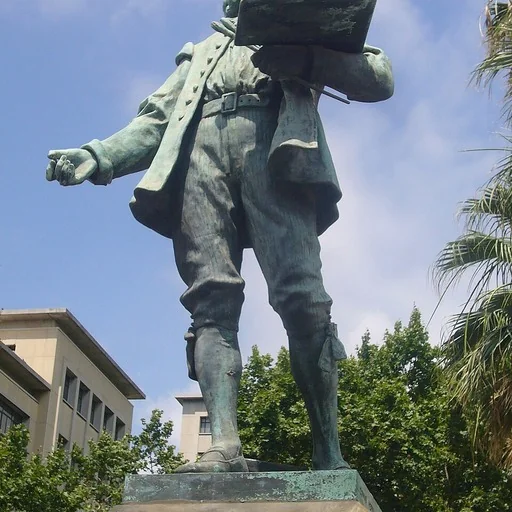
Antoni Viladomat i Manalt (20 March 1678 in Barcelona, Spain – 22 January 1755 in Barcelona, Spain) was a Spanish painter in the Baroque style.

- The Holy Family
 The Holy Family
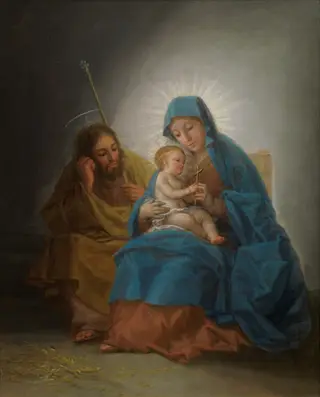 The Holy Family
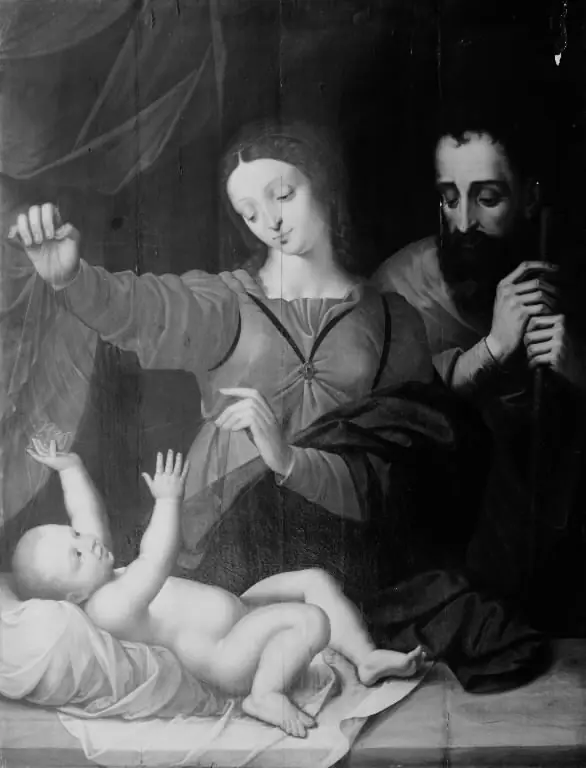 The Holy Family
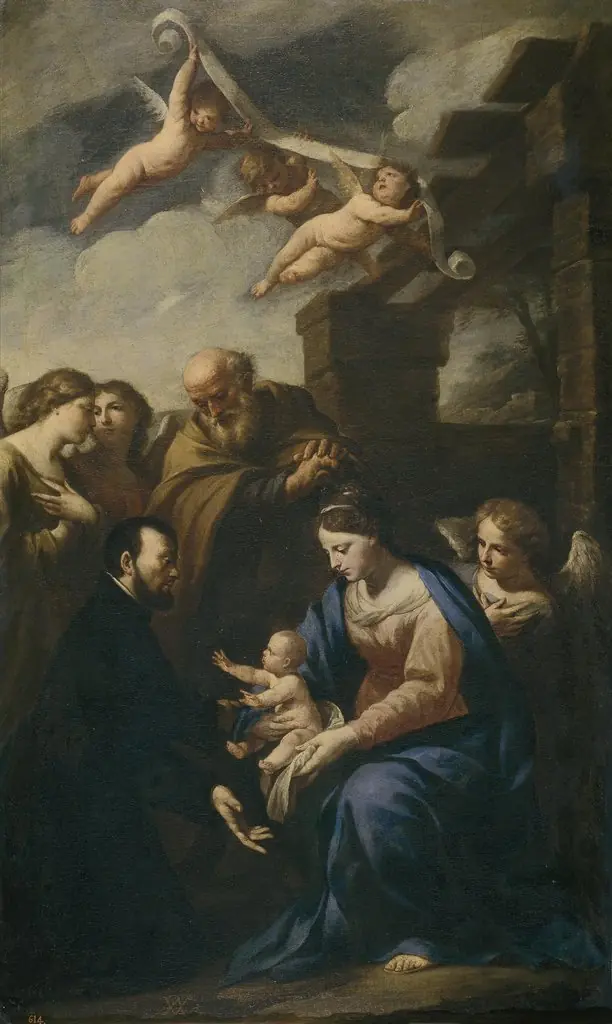 San Cayetano ante la Sagrada Familia
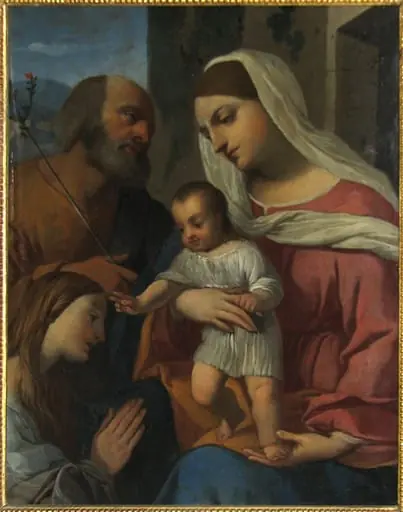 Sfânta Familie
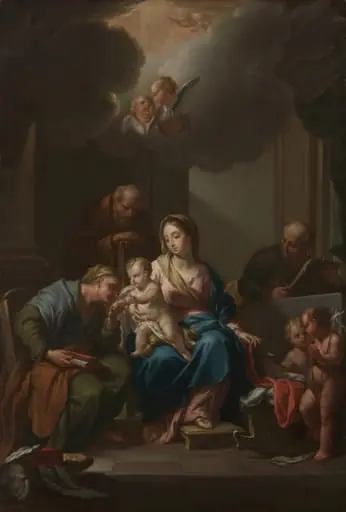 Presentation Sketch for "The Holy Family with Saints Anne, Joachim, and John the Baptist" (for Santa Maria in Via Lata, Roma)
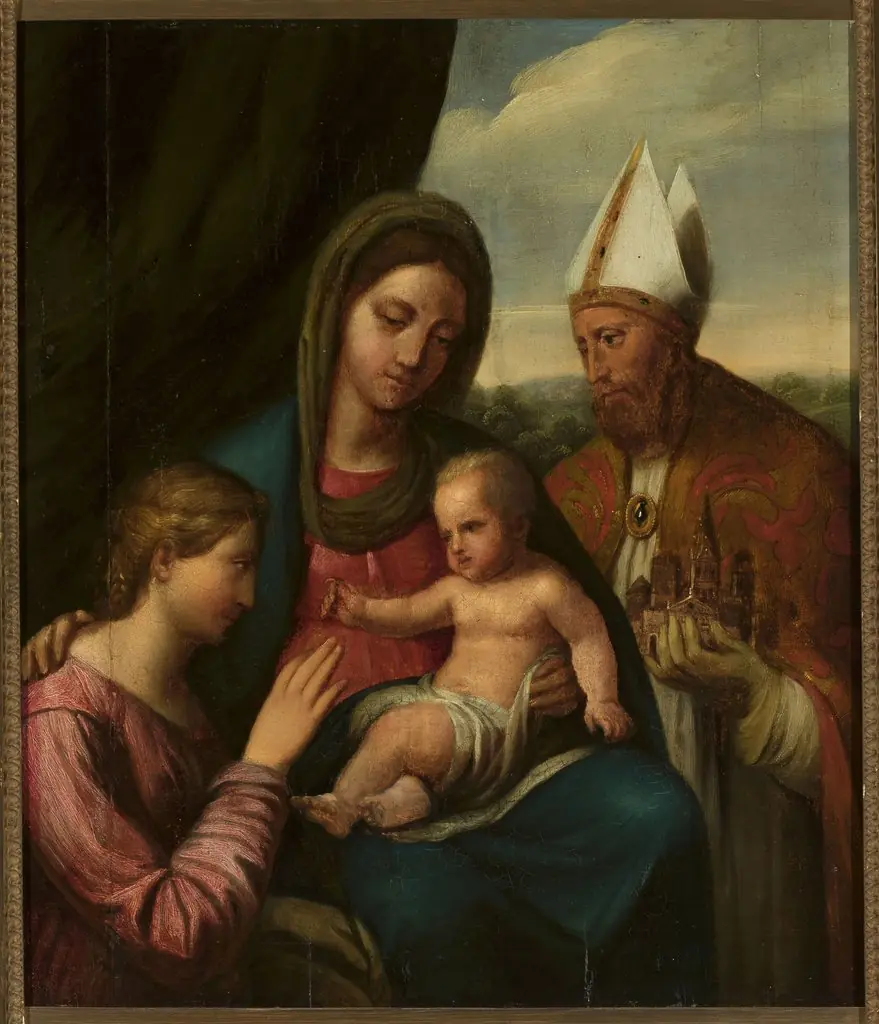 Mystical marriage of St. Catherine
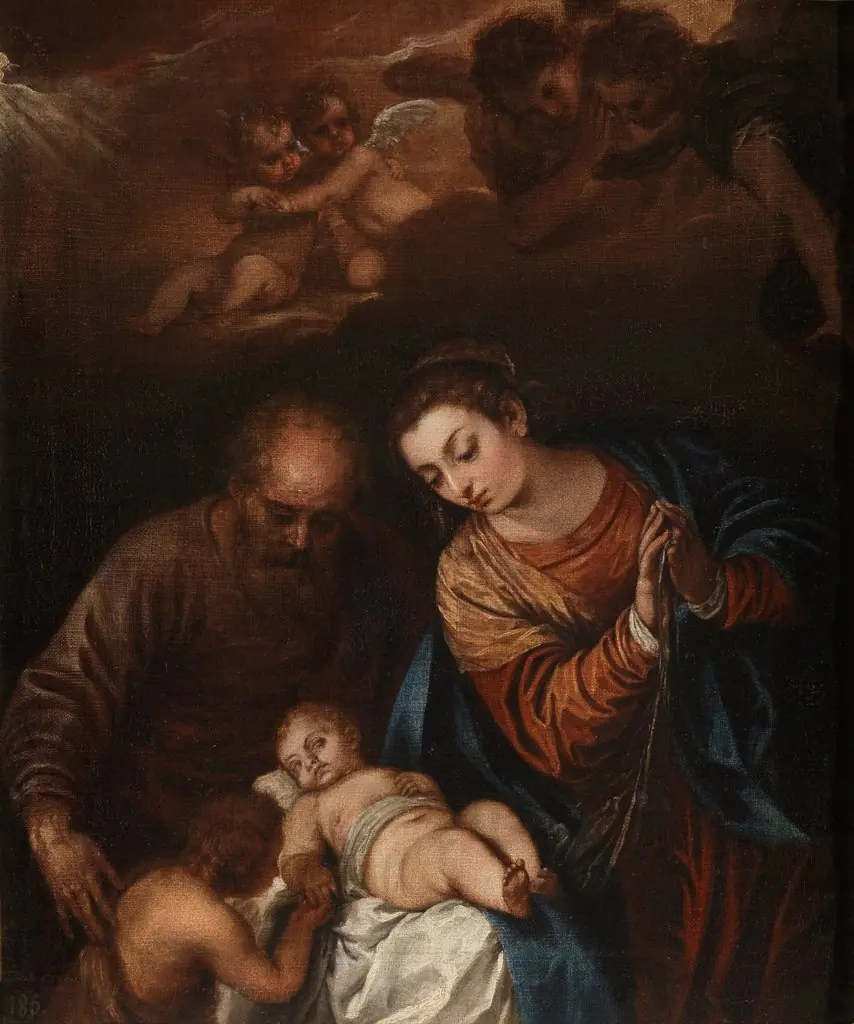 La Sagrada Familia
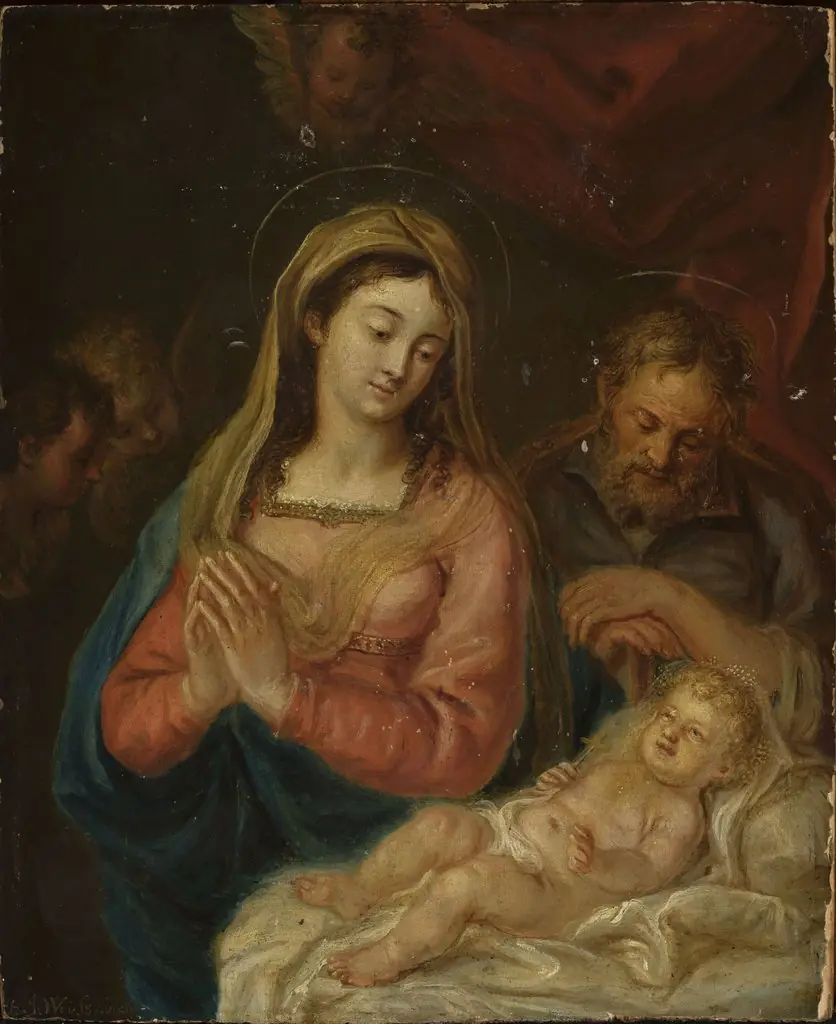 Holy Family
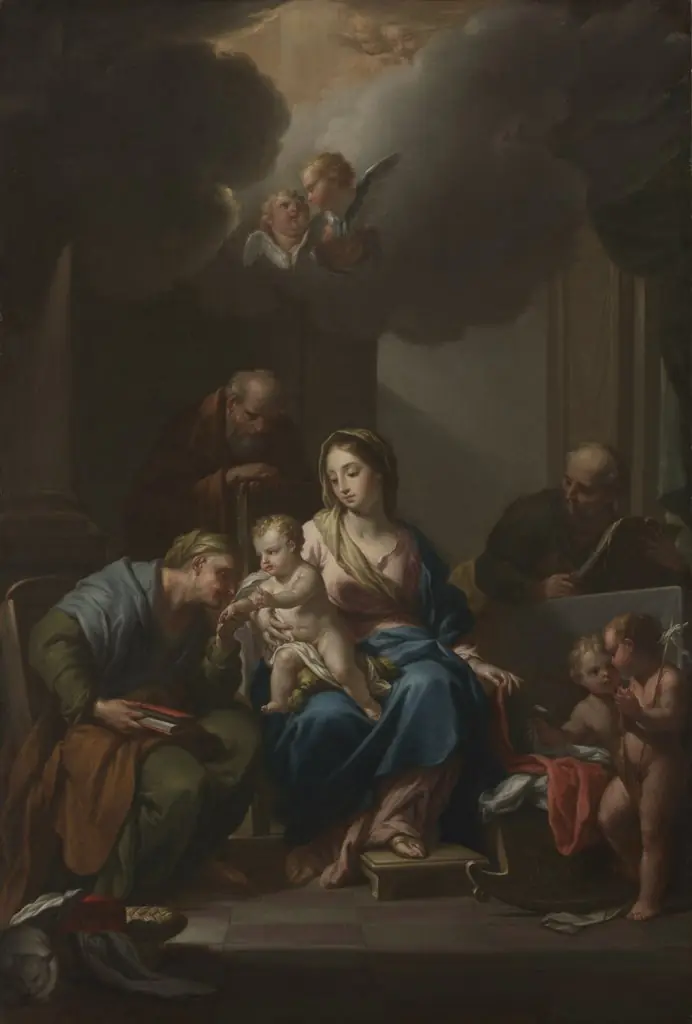 Presentation Sketch for "The Holy Family with Saints Anne, Joachim, and John the Baptist" (for Santa Maria in Via Lata, Roma)
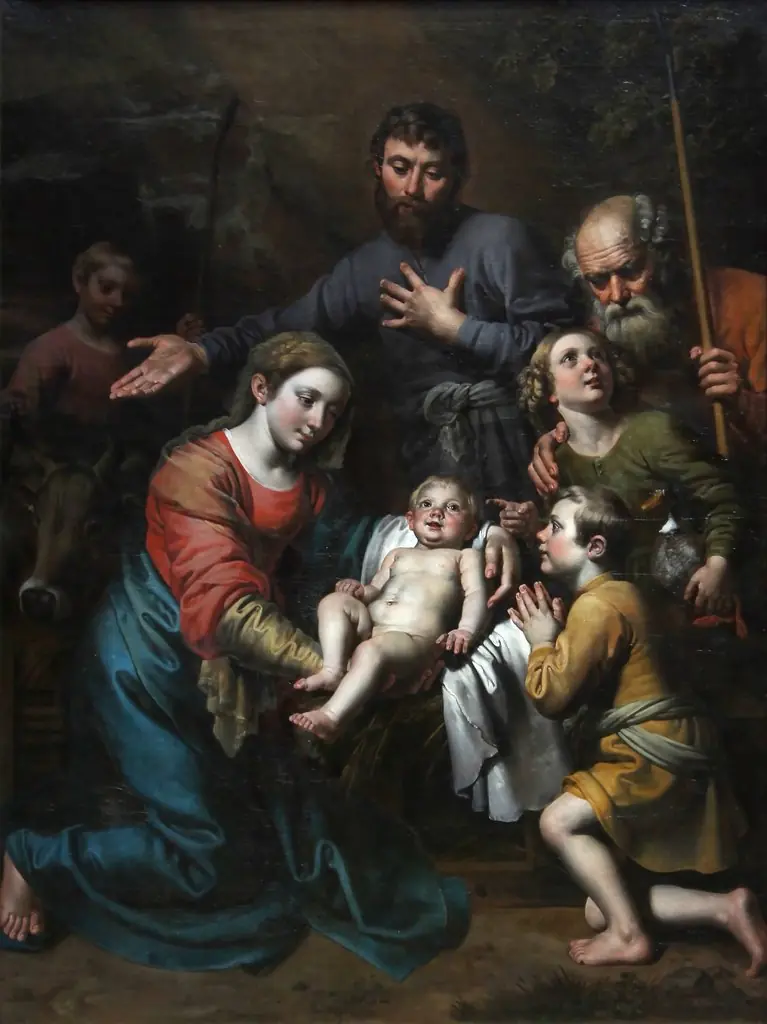 Adoration of the Shepherds