Artwork
The Holy Family
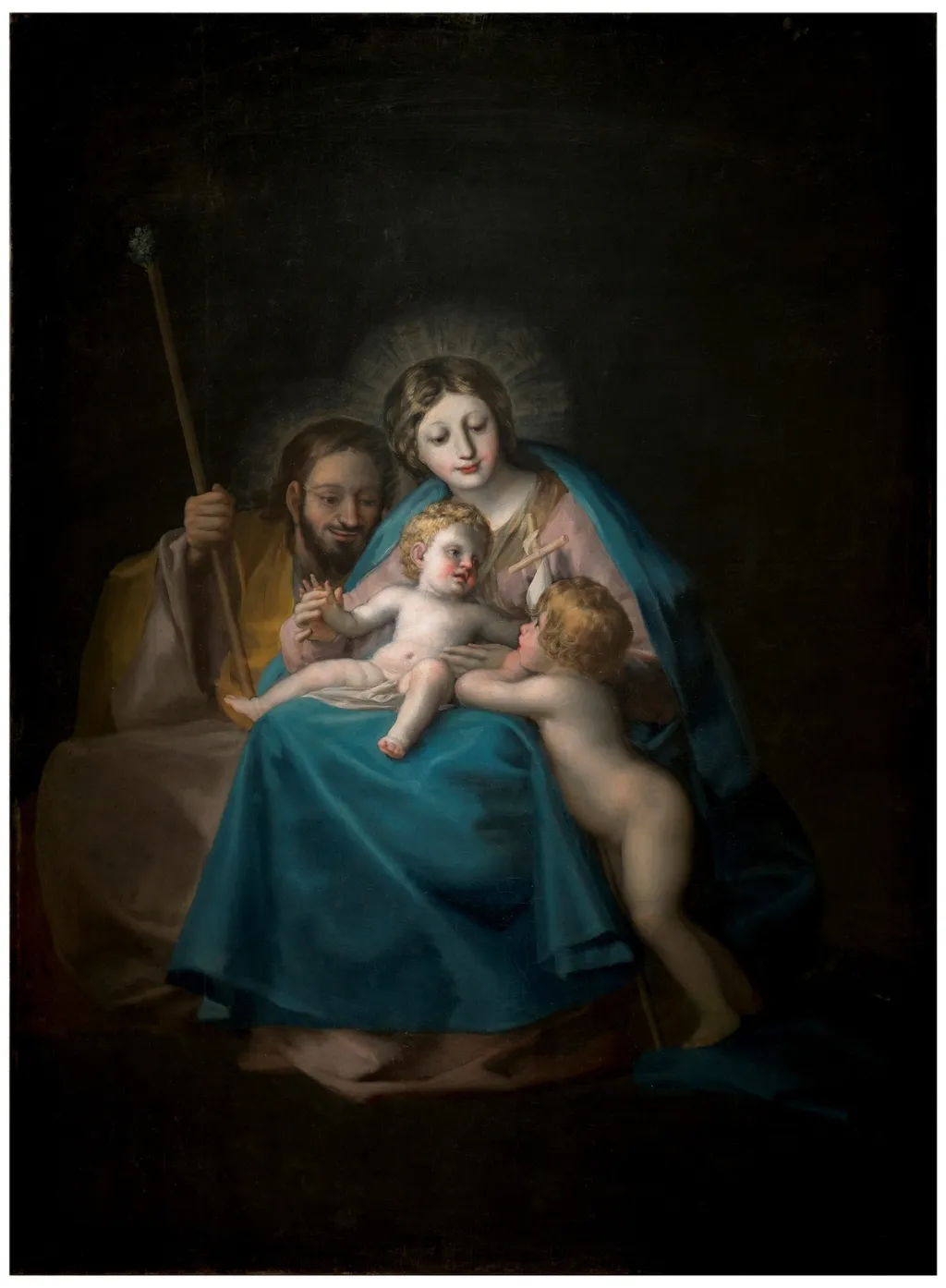
The Holy Family is an oil painting by the Rococo painting artist Francisco de Goya. It dates from 1775 and is held in the collection of the Museo del Prado.
About this work
Subject & Meaning
Symbolically, the work reflects the devotional emphasis of 18th‑century Spanish religious art, presenting the Holy Family as a model of virtuous household life.
The painting depicts the Holy Family, Mary, the infant Christ Child, and Saint Joseph, arranged in a tender domestic grouping. The iconography emphasizes familial intimacy and divine protection, with the child held close to his mother and Joseph positioned as a protective figure. Symbolically, the work reflects the devotional emphasis of 18th‑century Spanish religious art, presenting the Holy Family as a model of virtuous household life.
The composition draws on Rococo decorative sensibilities while integrating the spiritual gravity characteristic of Goya’s early religious subjects. The painting was created between 1775 and 1780 for the decoration of the Basilica of Our Lady of the Pillar in Zaragoza, acquired by the Museo del Prado in 1877 after the Spanish king Alfonso XII purchased it for 2000 pesetas from the heirs of Manuel Chávez, and it later served as a preparatory study for a related work that omitted the infant John the Baptist.
The piece exemplifies the fusion of secular decorative intent with sacred narrative, underscoring the theological theme of the Holy Family as both a human and holy unit within the Christian tradition.
Technique & Style
Created between 1775 and 1780, this work is an oil painting executed on canvas. The piece exhibits a Rococo style, a formal quality attributed to the notable influence of Anton Raphael Mengs during Goya's youth. While dimensions are recorded as 203 cm in height and 143 cm in width, the specific handling of the paint and current physical condition of the support are not detailed in the provided records.
The artwork was originally intended for the decoration of the Basilica of Nuestra Señora del Pilar in Zaragoza before being rejected by the construction committee.
History & Provenance
Francisco Goya executed this Rococo oil painting between 1775 and 1780 to decorate the Basilica of Nuestra Señora del Pilar in Zaragoza. The work was ultimately rejected by the religious commissioners responsible for the building's completion. Goya subsequently sold the canvas to Manuel Chávez.
In 1877, King Alfonso XII of Spain ordered its acquisition for the Museo del Prado, paying 2,000 pesetas to Chávez's heirs.
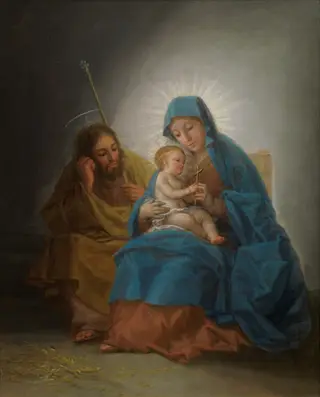
A separate, privately held composition by Goya depicting the same subject without the infant John the Baptist remained unknown until its discovery in 2003. The Spanish State purchased this second version, which is paired with 'Tobias and the Angel,' and transferred it to the Prado collection.
The work is held at the Museo del Prado, where it bears the accession number P00968. It entered the museum's collection in 1877 after King Alfonso XII purchased it for 2000 pesetas from the heirs of Manuel Chávez. The painting has been part of several exhibitions at the Prado, including a 2003 retrospective that highlighted its discovery and acquisition.
Context
The Holy Family (c. 1775–1780) belongs to Goya’s early religious works and reflects the Rococo style then prevalent in Spain. Its acquisition by the Museo del Prado in 1877, executed under King Alfonso XII, secured the painting within Spain’s national collection, marking a late recognition of Goya’s formative period. Scholars identify Anton Raphael Mengs’s influence in the composition’s refined modeling and luminous palette, situating the work within the broader Spanish neoclassical milieu that shaped Goya’s early career.
The canvas’s rejection for the Basilica of Nuestra Señora del Pilar in Zaragoza and subsequent sale to Manuel Chávez before its eventual museum acquisition underscore its initially contested reception in ecclesiastical contexts.
The painting’s pairing with Tobias and the Angel in private hands, only definitively attributed and acquired for the Prado in 2003, situates The Holy Family within a broader corpus of Goya’s devotional pictures from the late 1770s. Its inclusion in the Prado’s holdings reframed Goya’s early religious subjects as integral to his artistic development, bridging the transition from Spanish Rococo toward his later, more personal idioms.
Overview
Francisco Goya’s 1775 oil painting titled The Holy Family presents a intimate religious scene rendered in the Rococo idiom. The composition features a seated woman in a blue robe cradling a newborn infant, a second child leaning toward her, and a bearded man in a brown robe standing behind, staff in hand. The figures emerge from a darkened backdrop, emphasizing their forms.
Own this work as a print
Artist & collection
Artist
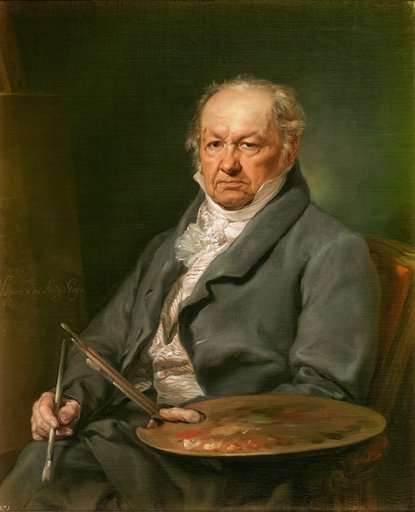
Francisco José de Goya y Lucientes was a Spanish romantic painter and printmaker.

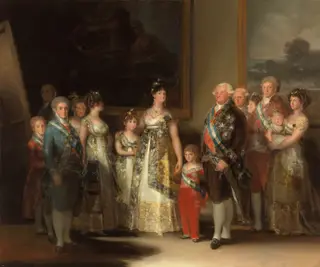
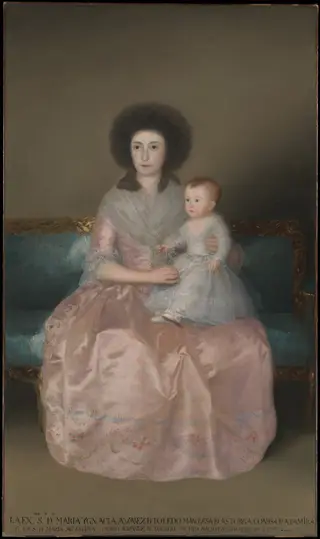
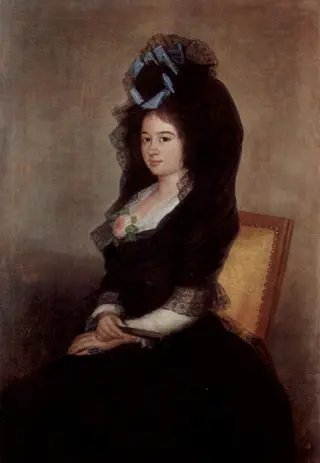
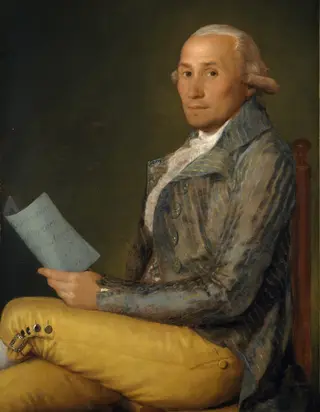
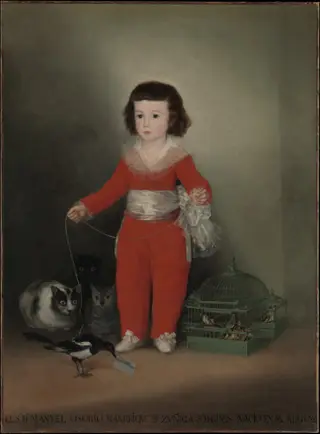
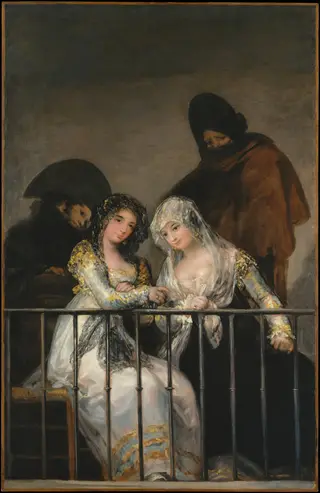
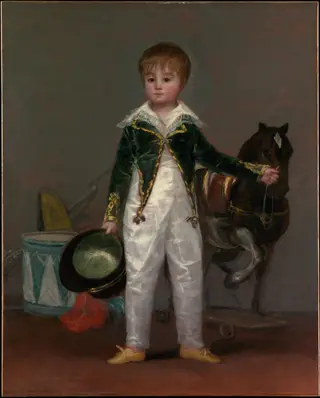
- The Holy Family
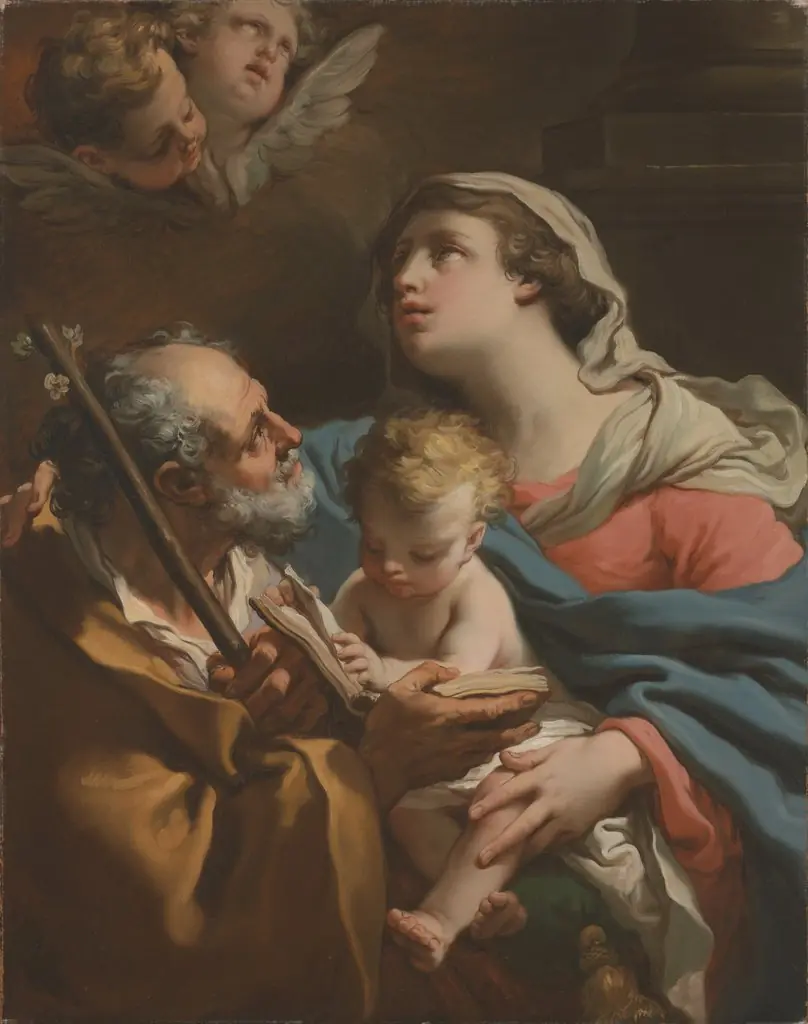 The Holy Family
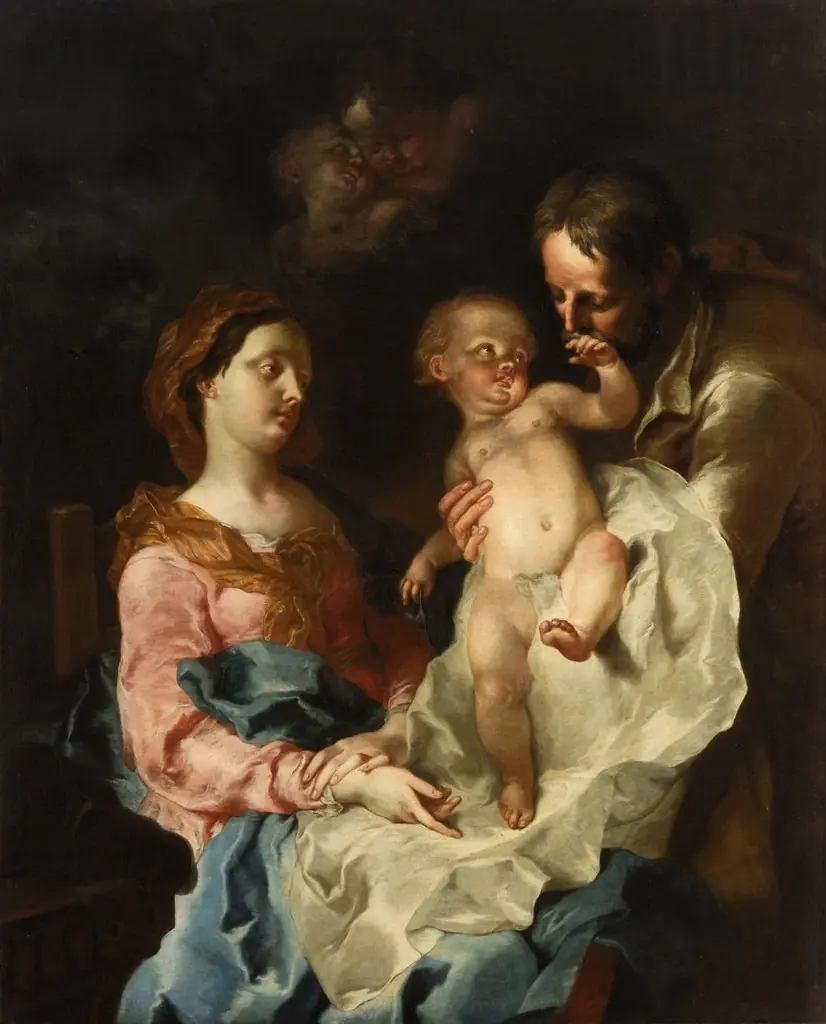 The Holy Family
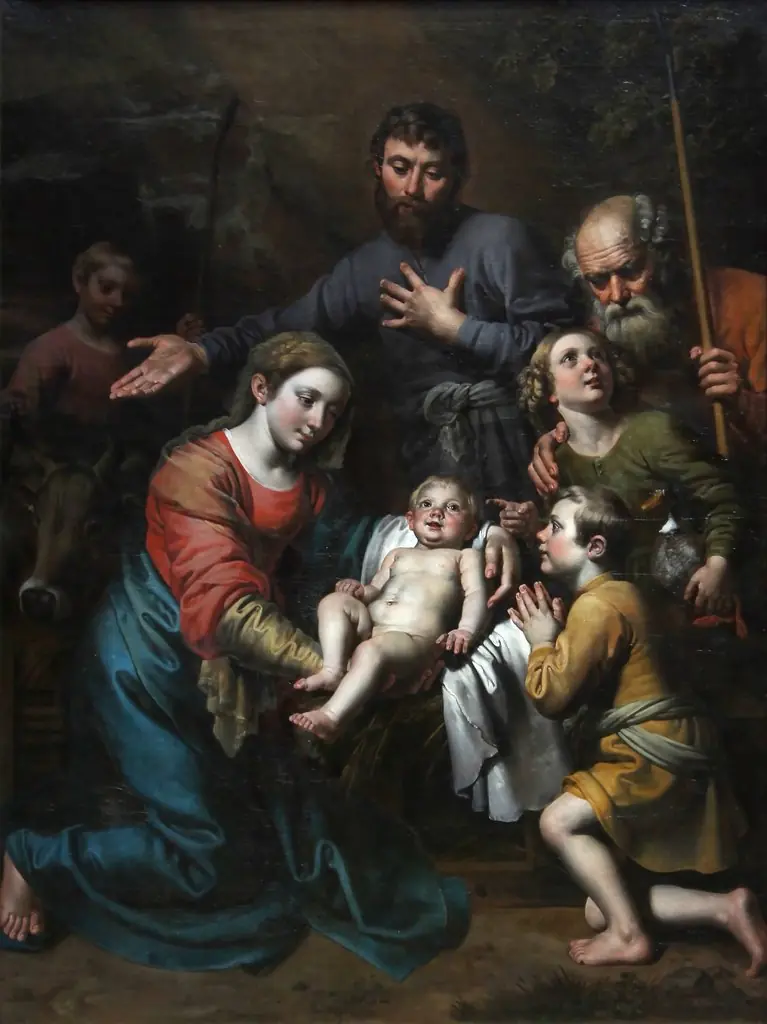 Adoration of the Shepherds
 Presentation Sketch for "The Holy Family with Saints Anne, Joachim, and John the Baptist" (for Santa Maria in Via Lata, Roma)
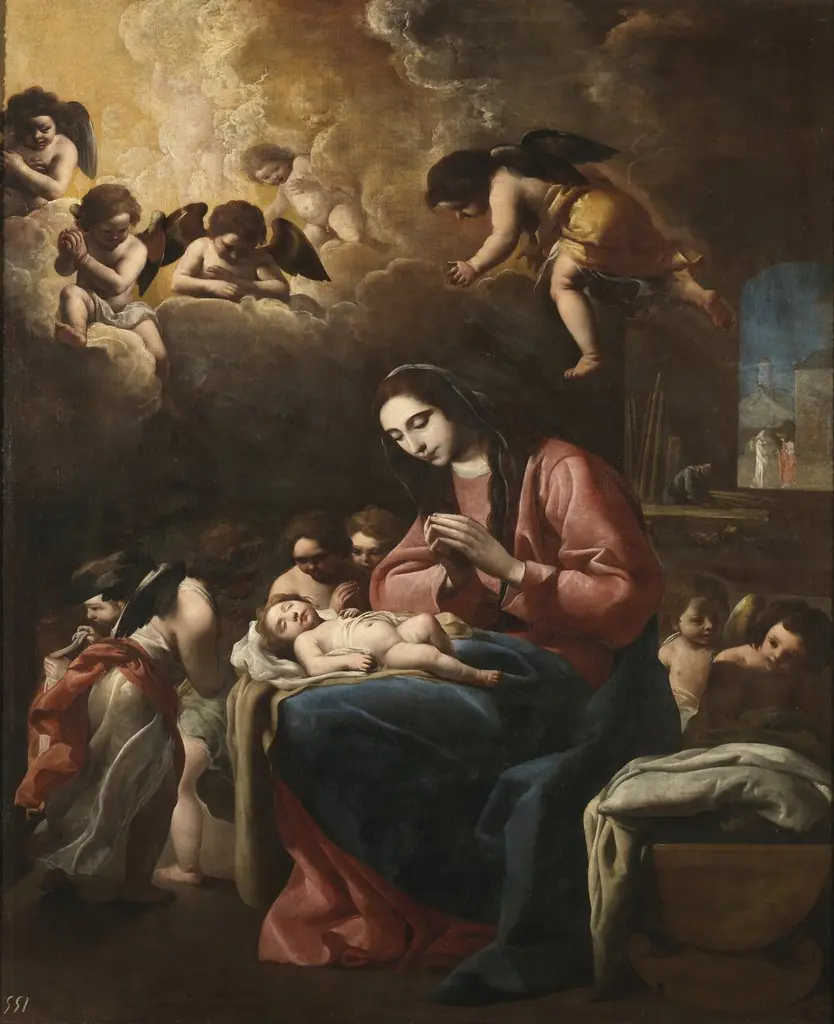 The Virgin and Child with Angels
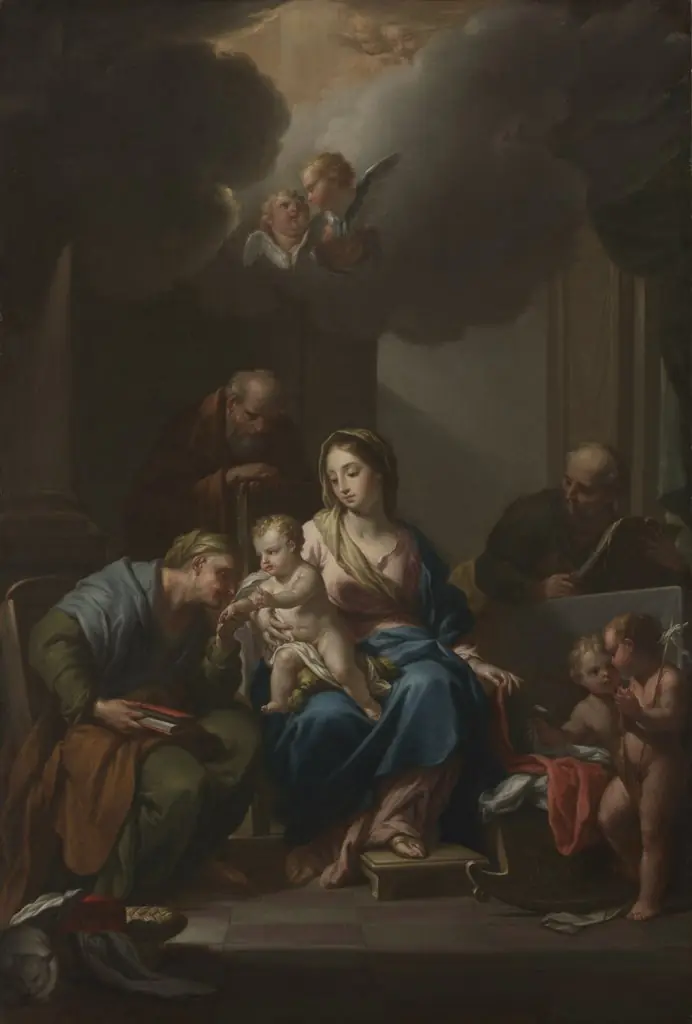 Presentation Sketch for "The Holy Family with Saints Anne, Joachim, and John the Baptist" (for Santa Maria in Via Lata, Roma)
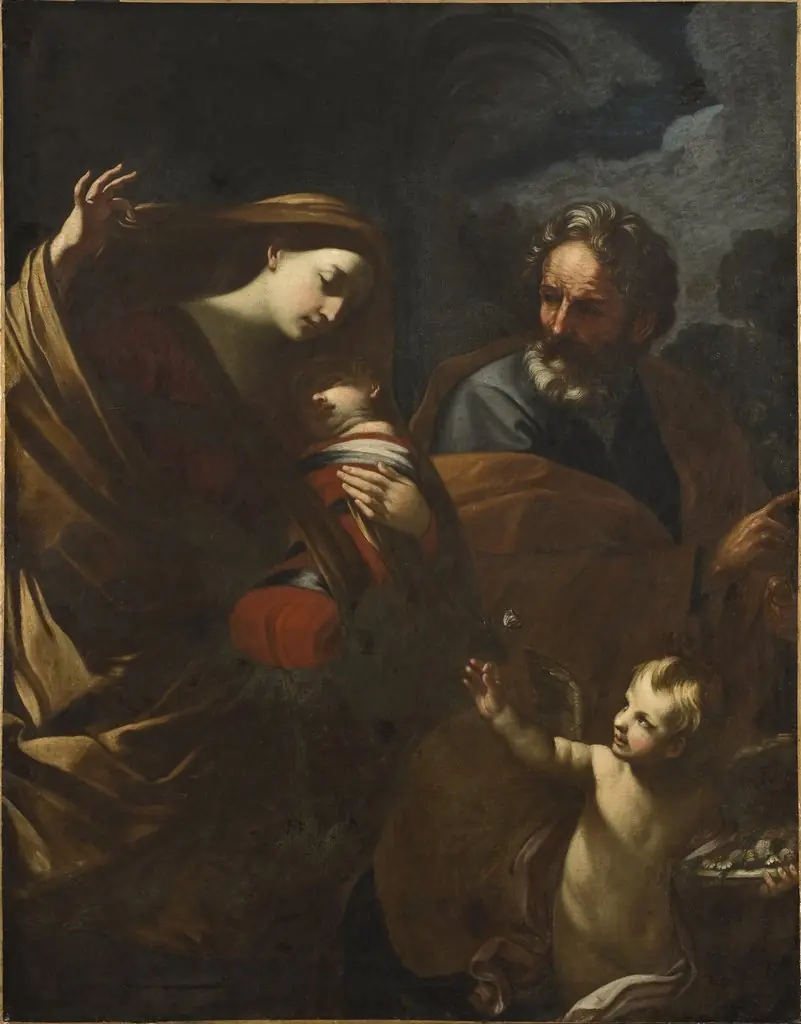 The Flight into Egypt
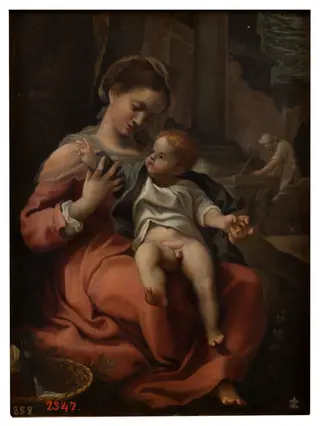 La Virgen del canastillo
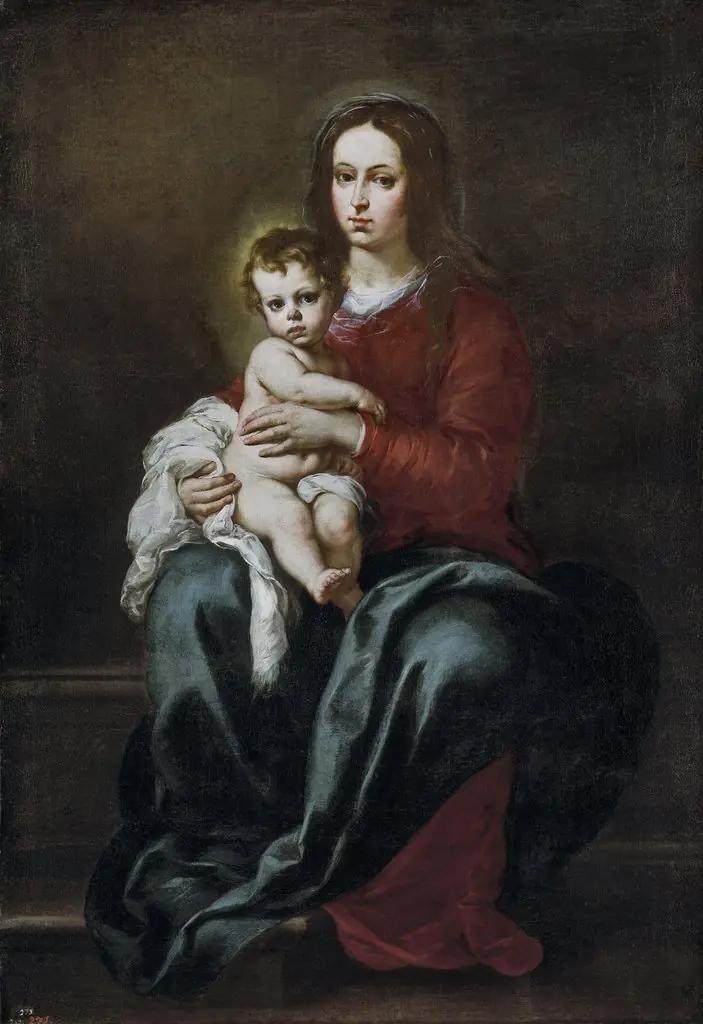 The Virgin and Child
 Holy Family with Sts Elizabeth and John the Baptist
 Madonna and Child