Artwork
The Holy Family
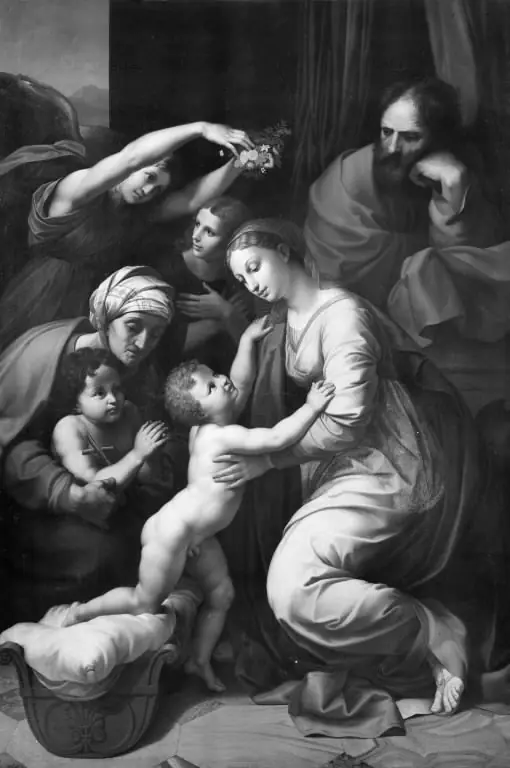
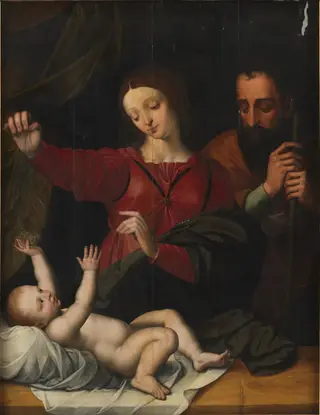
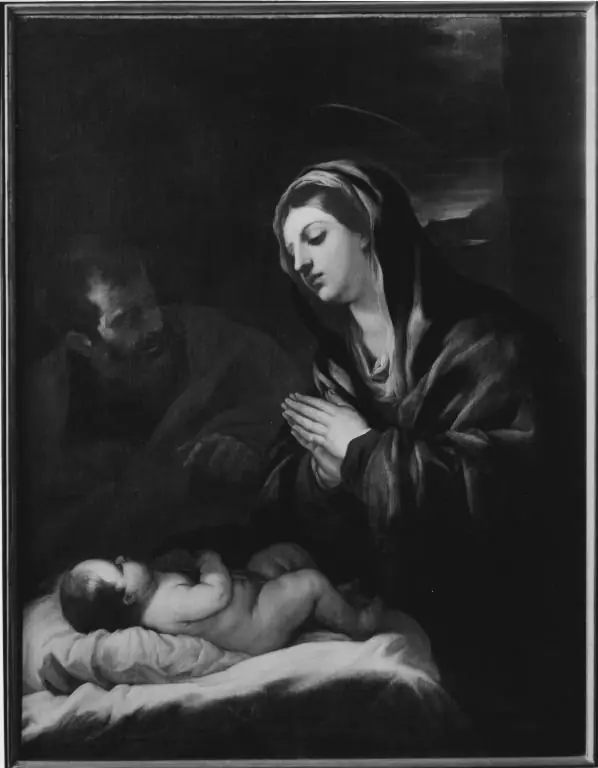
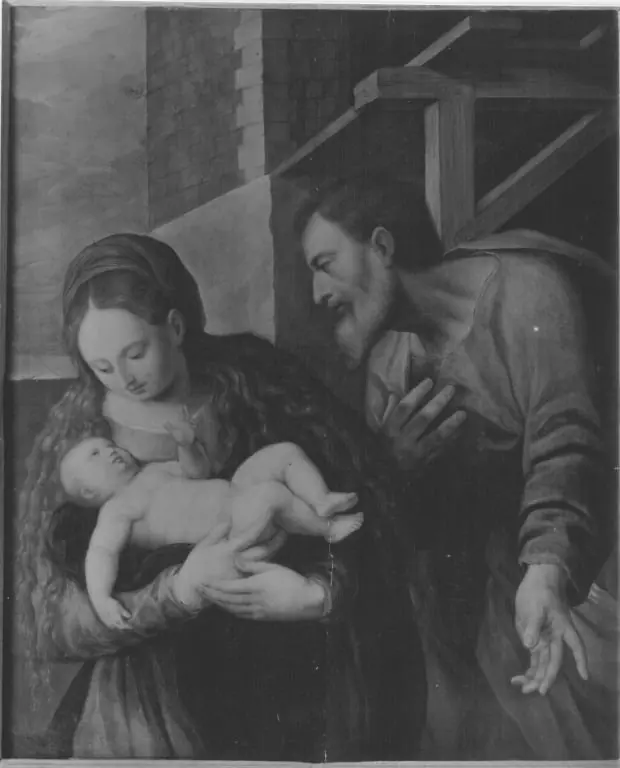
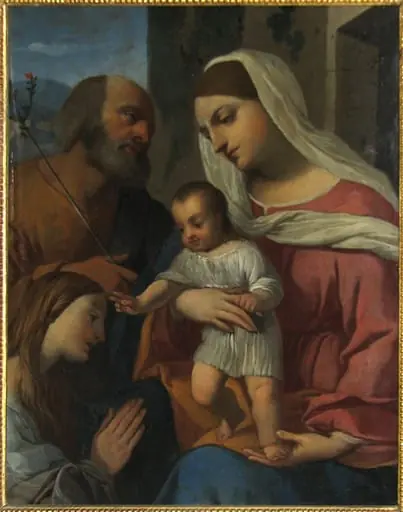
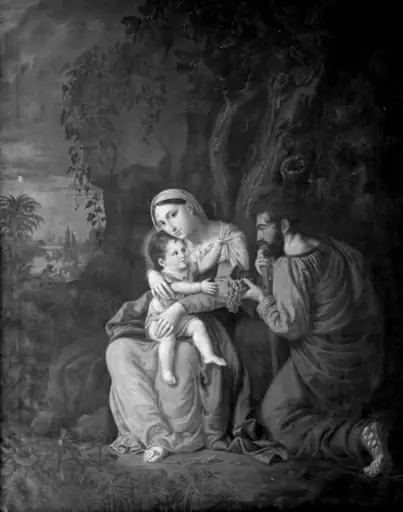
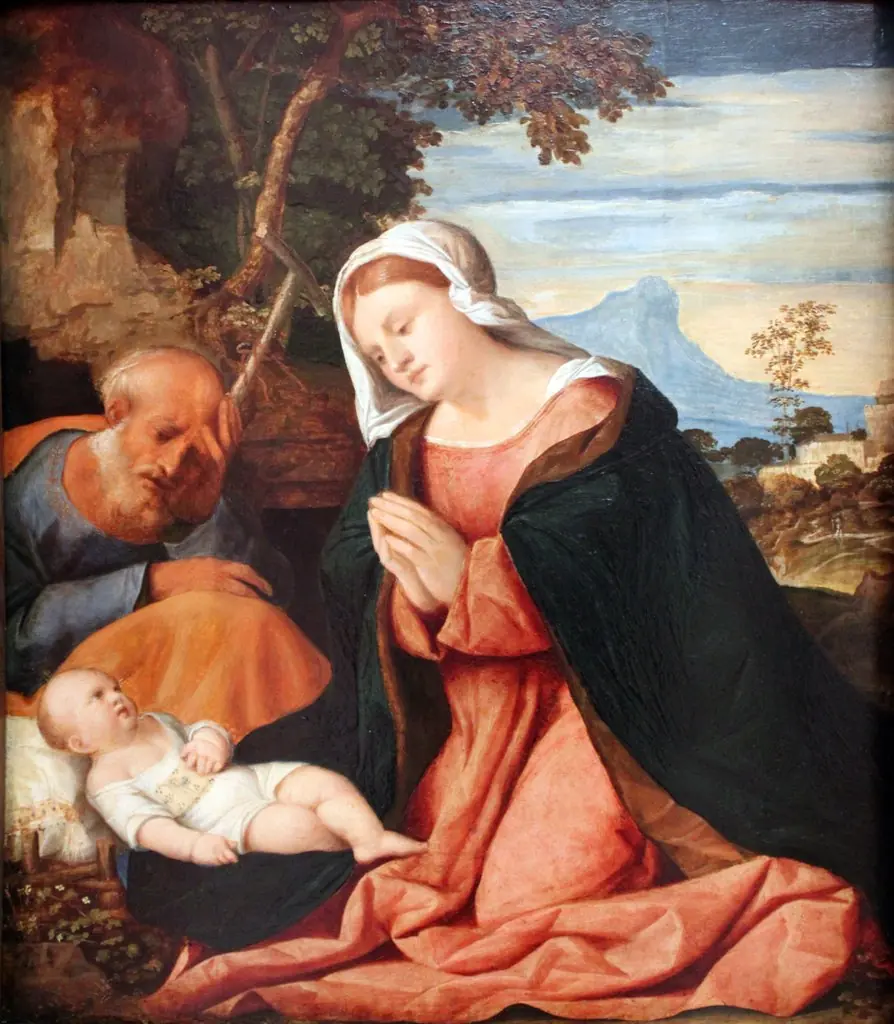
The Holy Family is an unspecified painting. It dates from 1554 and is held in the collection of the Statens Museum for Kunst. The work depicts a domestic scene of a woman in a light robe cradling an infant, while a bearded man kneels beside them with clasped hands.
About this work
Subject & Meaning
Created in 1554 within the tradition of the Italian Renaissance, this painting is an anonymous copy executed after a composition by Raphael.
The work depicts the Holy Family, a central subject in religious art, featuring the Virgin Mary, the Christ Child, and Saint Joseph. Created in 1554 within the tradition of the Italian Renaissance, this painting is an anonymous copy executed after a composition by Raphael. Specifically, the imagery is based on Raphael's Madonna of Loreto.
As a religious genre piece, the subject matter focuses on the domestic and sacred nature of the biblical family unit, emphasizing their spiritual significance through the intimate grouping of the three figures.
History & Provenance
The work titled The Holy Family was created in 1554 as a religious painting by an anonymous artist after Raphael, depicting Mary, the Christ Child, and Joseph. It is based on the Madonna of Loreto and was originally part of the collection at the Statens Museum for Kunst, where it remains on display. The painting measures 1175.0 cm in height and 903.0 cm in width, reflecting its large-scale composition typical of Italian Renaissance religious works.
The Holy Family is held by the Statens Museum for Kunst, which is listed as both the collection and the location of the work. According to the Wikidata record, the painting is catalogued as a work after Raphael, executed in 1554, and is based on Raphael's Madonna of Loreto.
No specific inventory or accession number is provided in the available sources, and no exhibition history is documented.
Overview
The work depicts a domestic scene of a woman in a light robe cradling an infant, while a bearded man kneels beside them with clasped hands. The child reaches upward toward the mother, who gazes down with a calm expression. A dark, slightly rumpled curtain forms the background, framing the trio.
Technique & Style
The painter employs chiaroscuro, contrasting illuminated forms with deep shadows to model the bodies and give them volume. Soft, blended brushwork renders the woman’s skin with a luminous quality, while the man’s beard and hands are rendered with finer, more textured strokes, highlighting the tactile differences between the figures.
Context
Set against a simple draped backdrop, the composition focuses attention on the interaction of the three figures rather than on elaborate setting. The use of light and shadow reflects a broader artistic interest in creating three‑dimensional presence on a two‑dimensional surface, a hallmark of the period’s devotional imagery.
Artist & collection