Artwork
Portrait of an Almoner of Antwerp
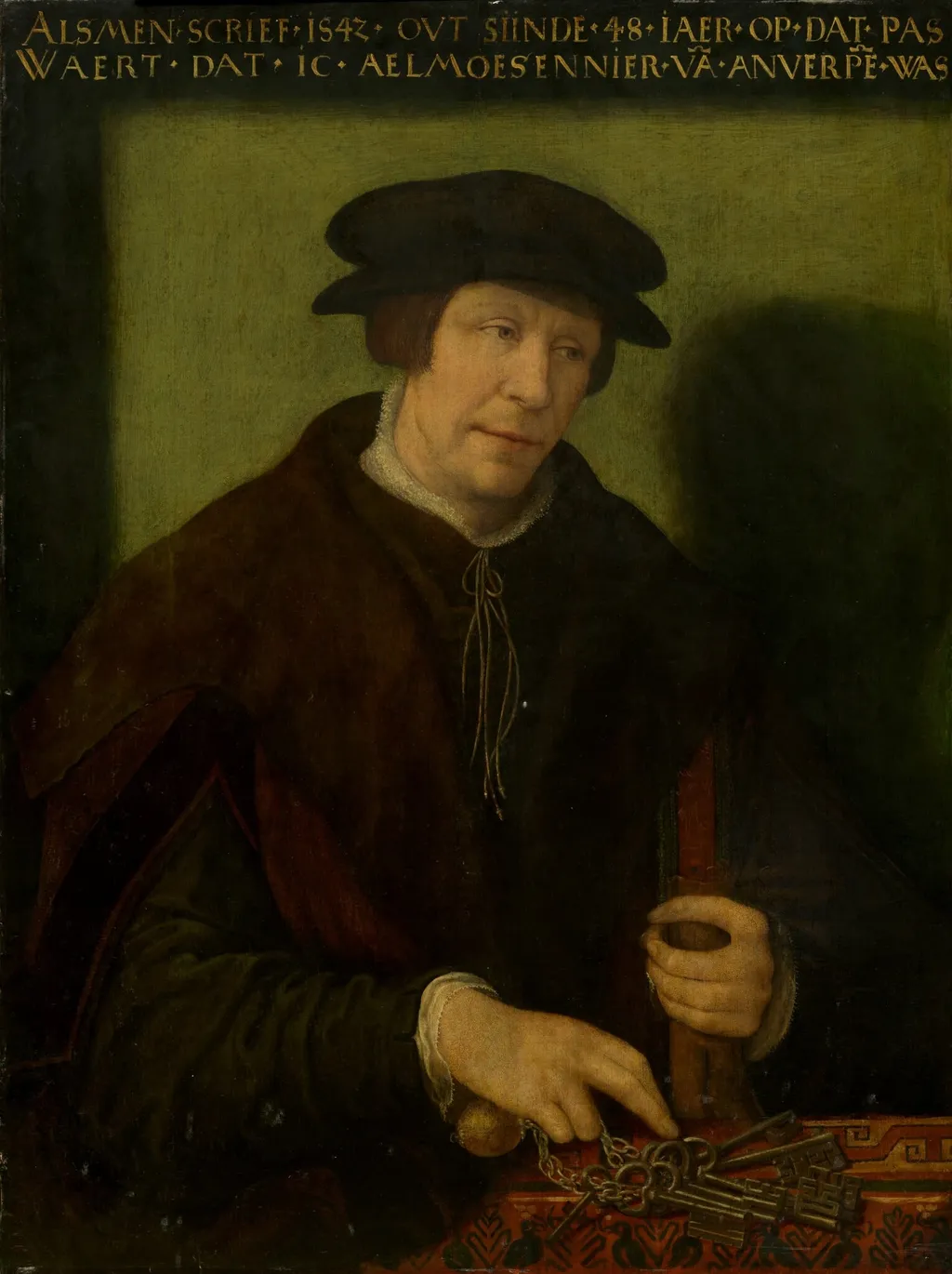
Portrait of an Almoner of Antwerp is an oil painting. It dates from 1542 and is held in the collection of the National Gallery of Art.
- Inscription
- Inscribed:across top: ALS MEN.SCRIEF.1542.OVT SIINDE.48.IAER.OP.DAT.PAS / WAERT.DAT.IC.AELMOESENNIER.VA.ANVERPE.WAS (In 1542 when I was 48, I was then almoner of Antwerp)
About this work
The text at the top reads in Latin: "Alsmen scrief 1542, ovt siunde 48 iaer op dat pas waert dat ic aelmoesennier va anverpe was.
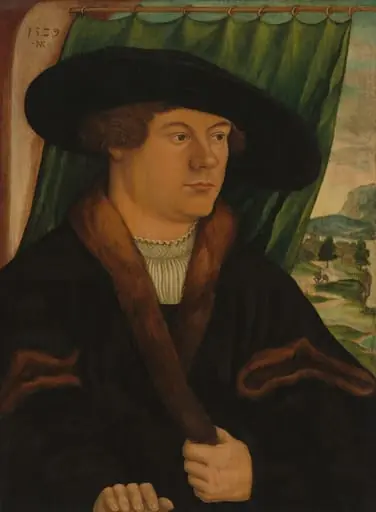
A man in a dark brown robe and black hat sits with his hands resting on a small table. His fingers hold a set of keys and a ring, while a chain lies across his lap. The background is a plain, dark green wall, and the colors are earthy and muted.
The text at the top reads in Latin: "Alsmen scrief 1542, ovt siunde 48 iaer op dat pas waert dat ic aelmoesennier va anverpe was." That means he was writing this down in 1542 as a record of his time as an almoner in Antwerp.
Look up Renaissance to see how this style shaped European art.
Overview
This oil on panel painting, titled "Portrait of an Almoner of Antwerp," depicts a seated man in official attire. Created in 1542, the work captures a specific individual during his tenure as an almoner in the city of Antwerp. The artist employs a restrained palette and focused composition to present the figure, whose identity and role are further clarified by an inscription within the painting itself.
Subject & Meaning
The sitter is identified by a Latin inscription at the top as an almoner of Antwerp, recording his age as 48 in 1542. He is shown holding keys and a ring, with a chain draped across his lap, objects likely symbolizing his administrative responsibilities and authority within the charitable institution. These details underscore his public role and the trust placed in him to manage resources for the poor.
Technique & Style
The portrait features a man dressed in a dark brown robe and black hat, rendered with precise detail. His hands rest on a small table, drawing attention to the keys and ring he holds. The background is a plain, dark green wall, which serves to emphasize the figure.
The artist utilized an earthy, muted color palette, characteristic of Northern Renaissance portraiture, to create a sober and dignified representation.
Context
This portrait exemplifies the Northern Renaissance tradition of depicting civic officials and merchants, reflecting the growing importance of individual identity and social roles in 16th-century Europe. Antwerp, a prominent economic and cultural center, fostered a demand for such works. The painting not only records an individual's likeness but also documents the specific social function of an almoner, a key figure in the city's welfare system during this period.
Artist & collection

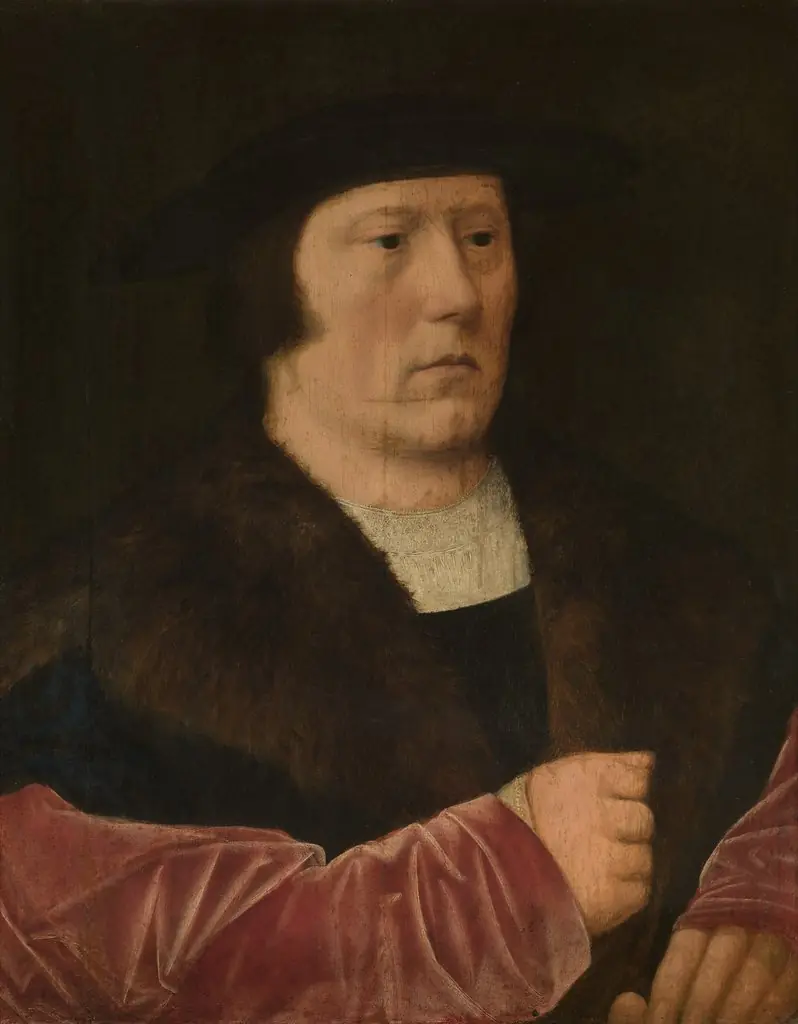
- Portrait of a Man
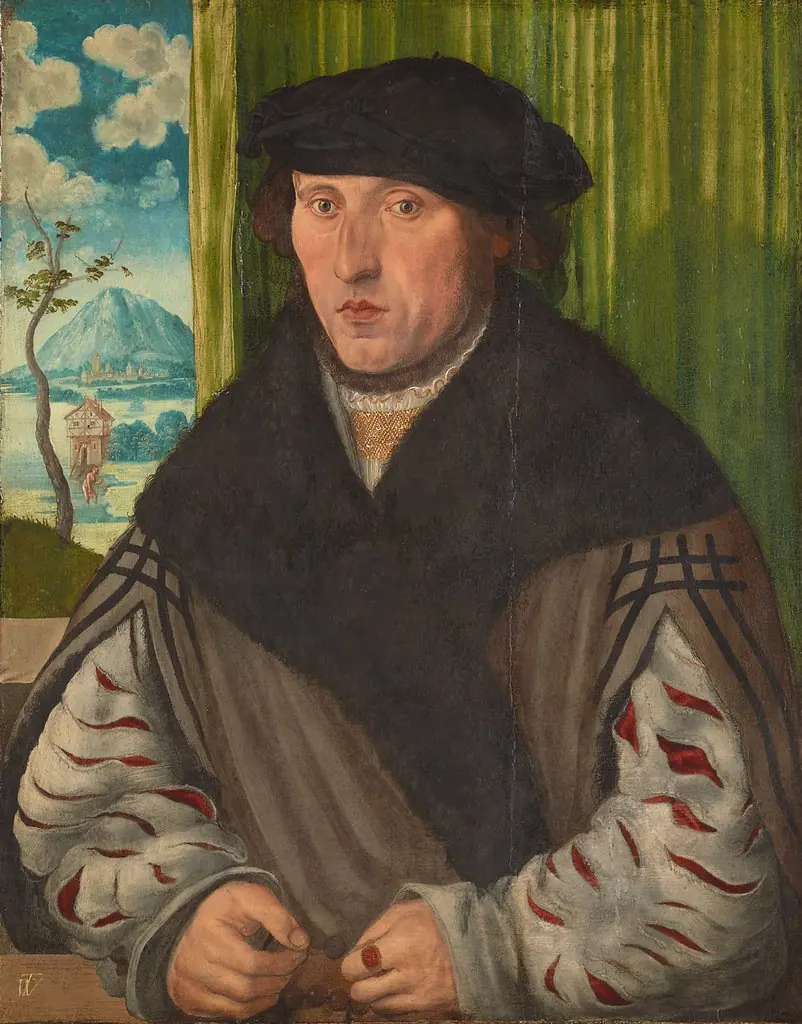 Männliches Bildnis
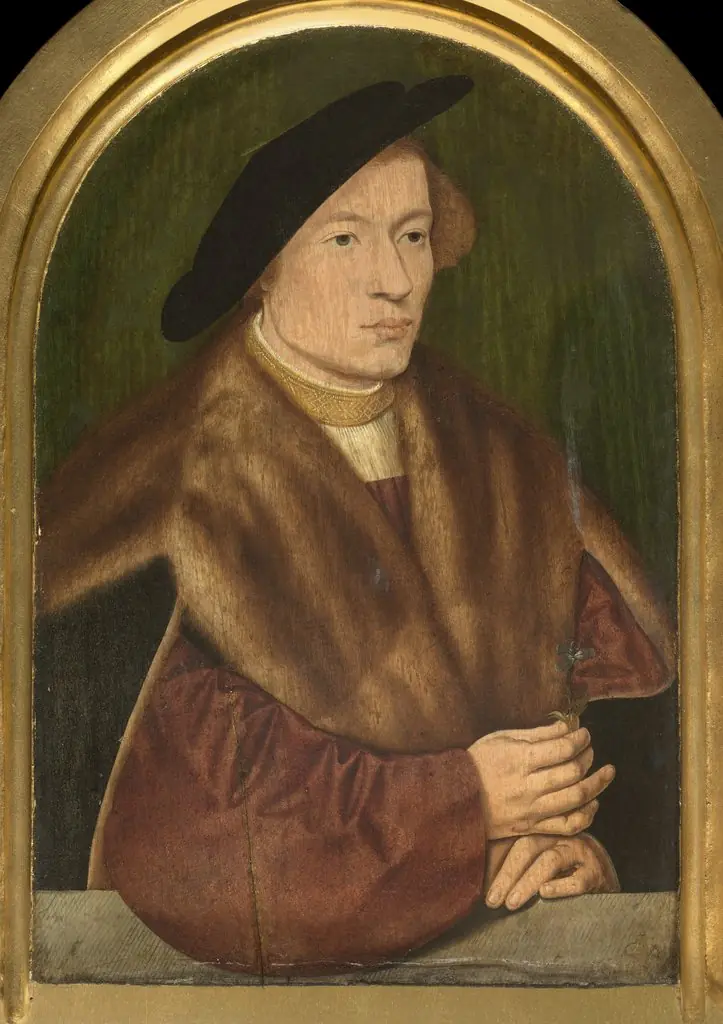 Portrait of a Young Man
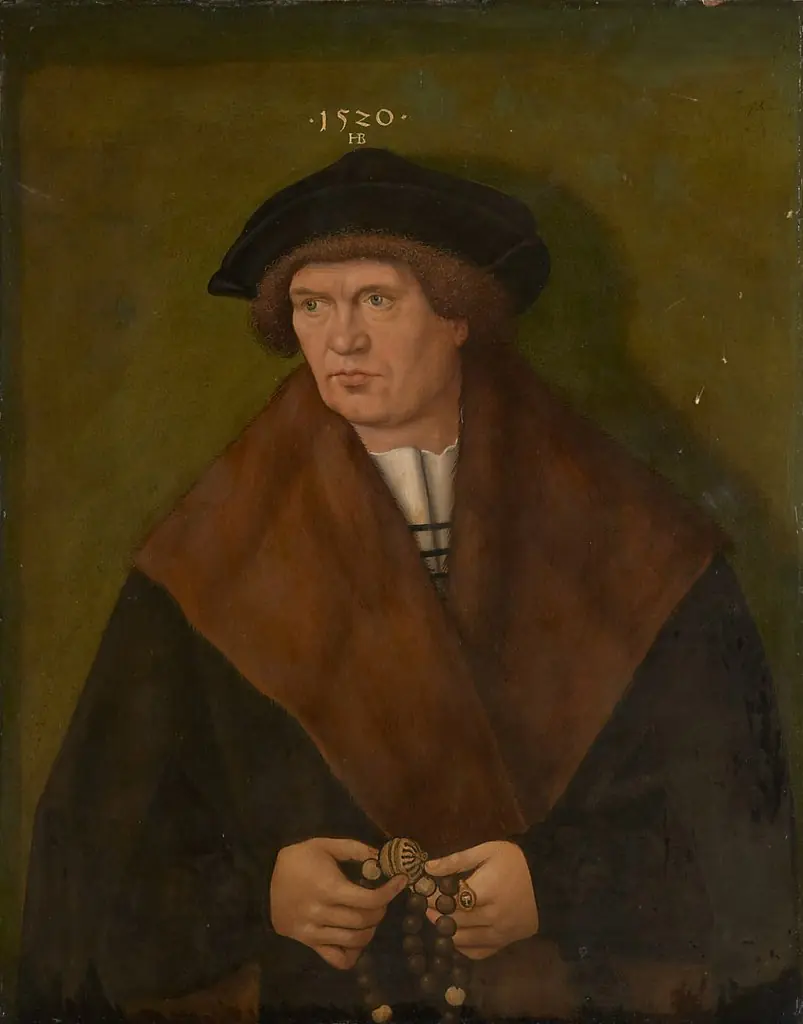 The Nuremberg dressmaker Hans Pirkel the Younger
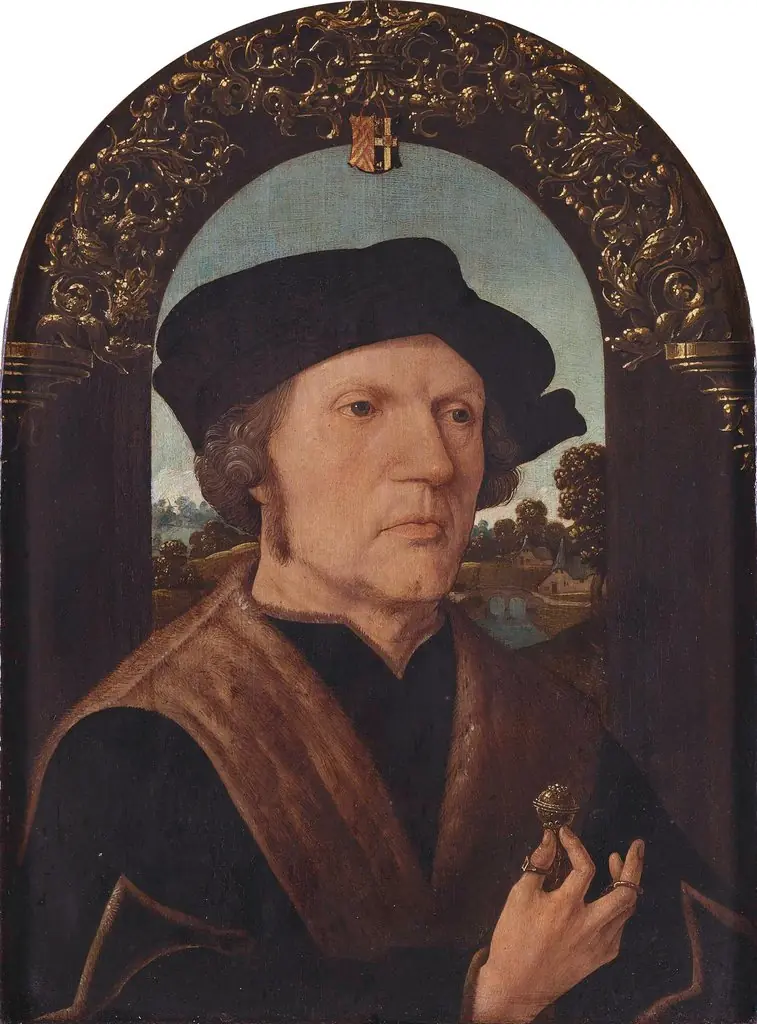 Portrait of Jan Gerritsz van Egmond van de Nijenburg (?-1523)
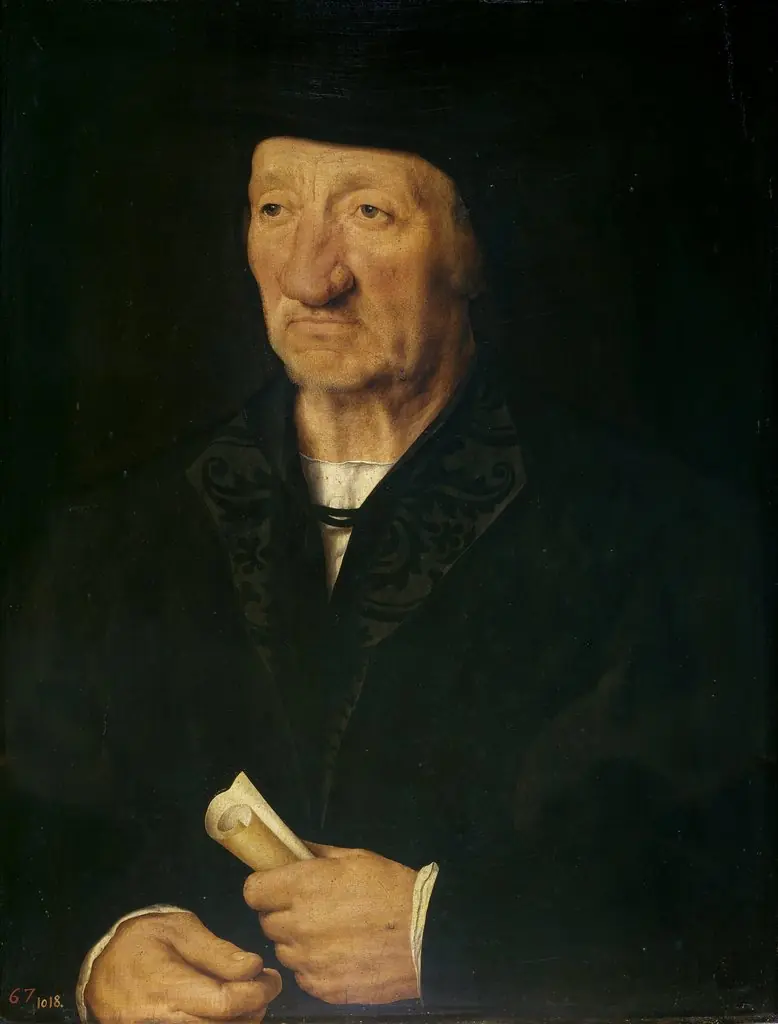 Portrait of an Old Man
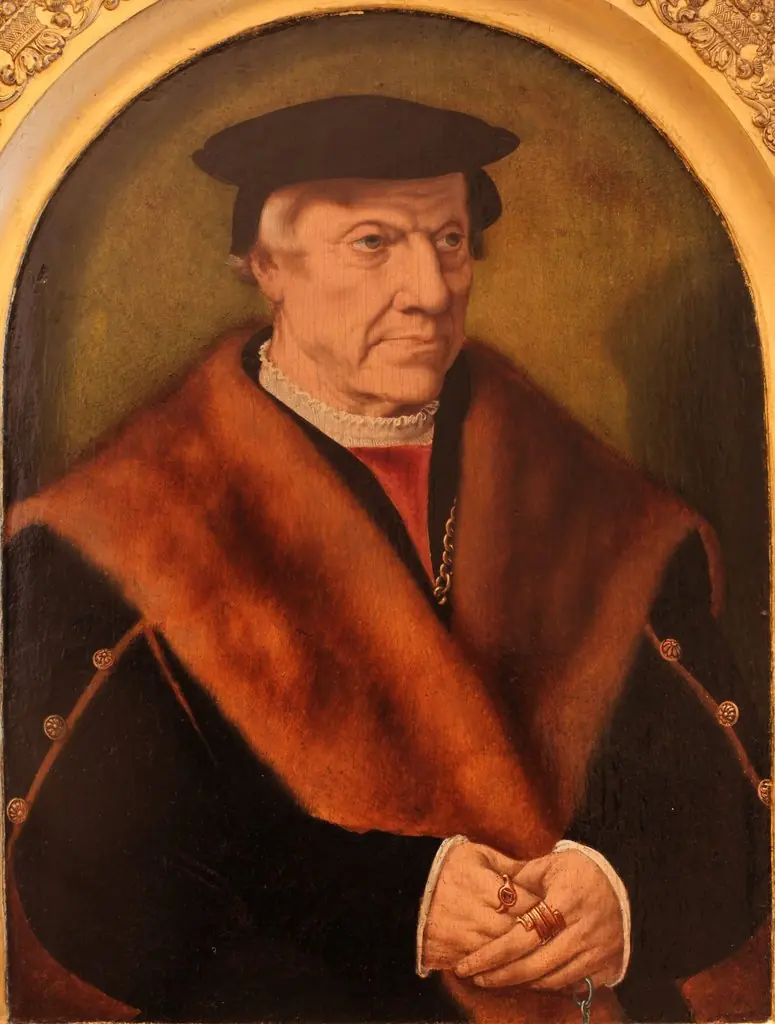 Portrait of a man
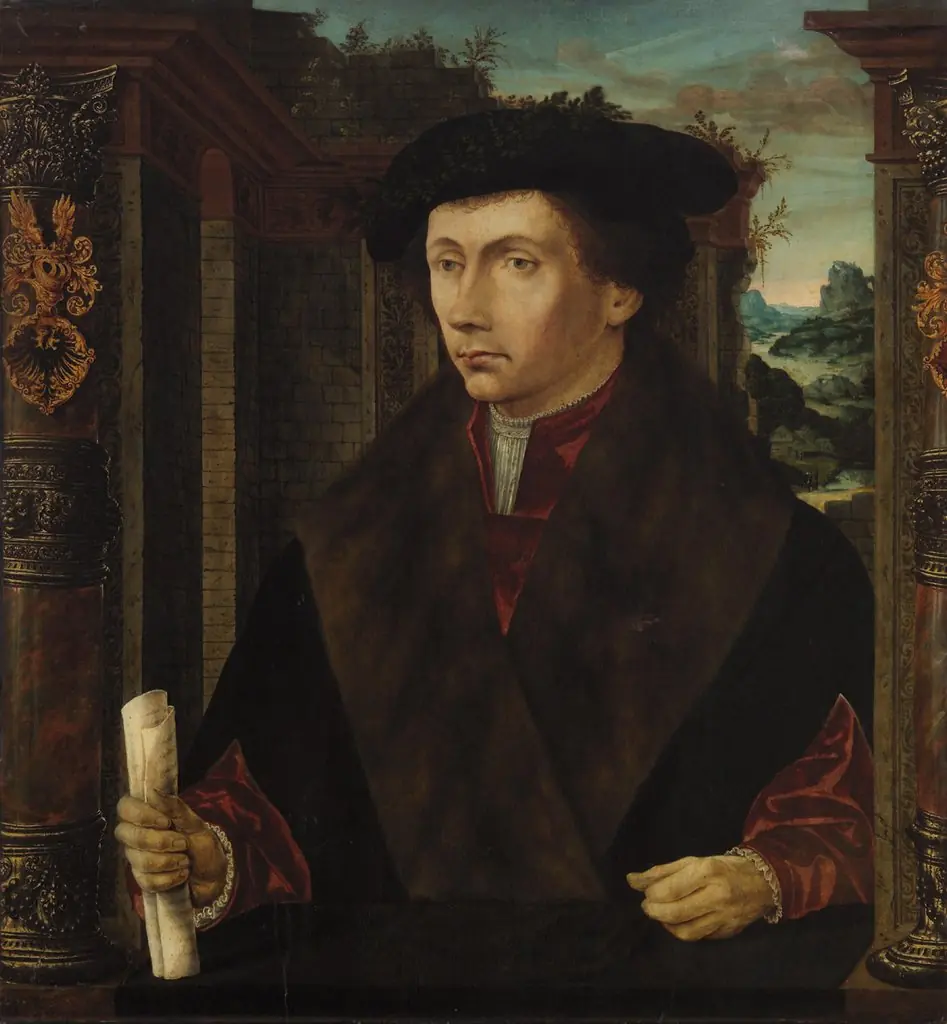 Portrait of Sybrand Pompejusz. Occo
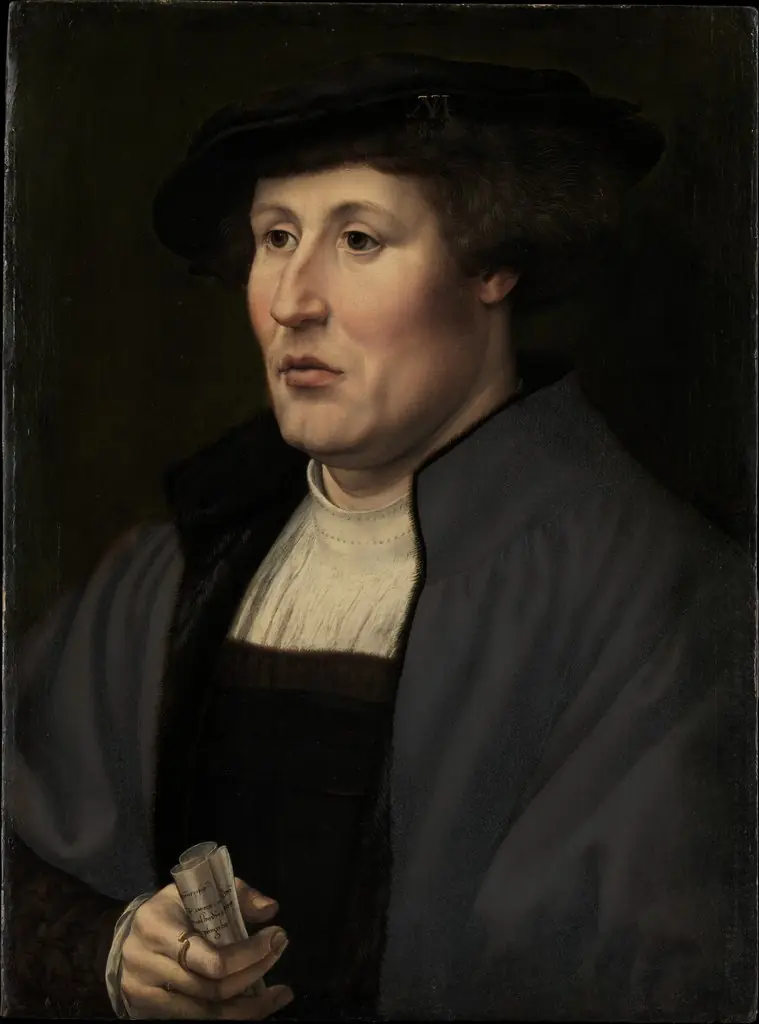 Portrait of a Man
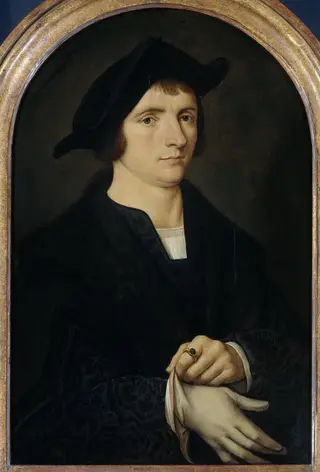 Portrait of Joris Vezeleer
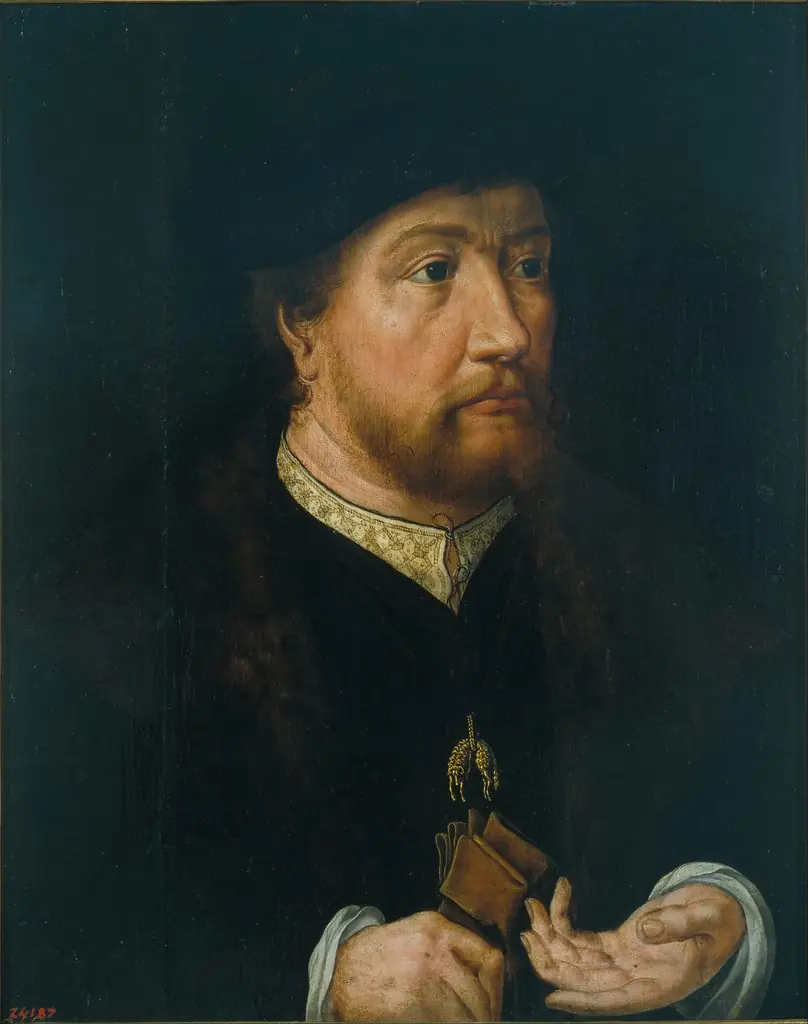 Portrait of Henry III, Count of Nassau
 Portrait of a Nobleman