Artwork
Esther's toilet
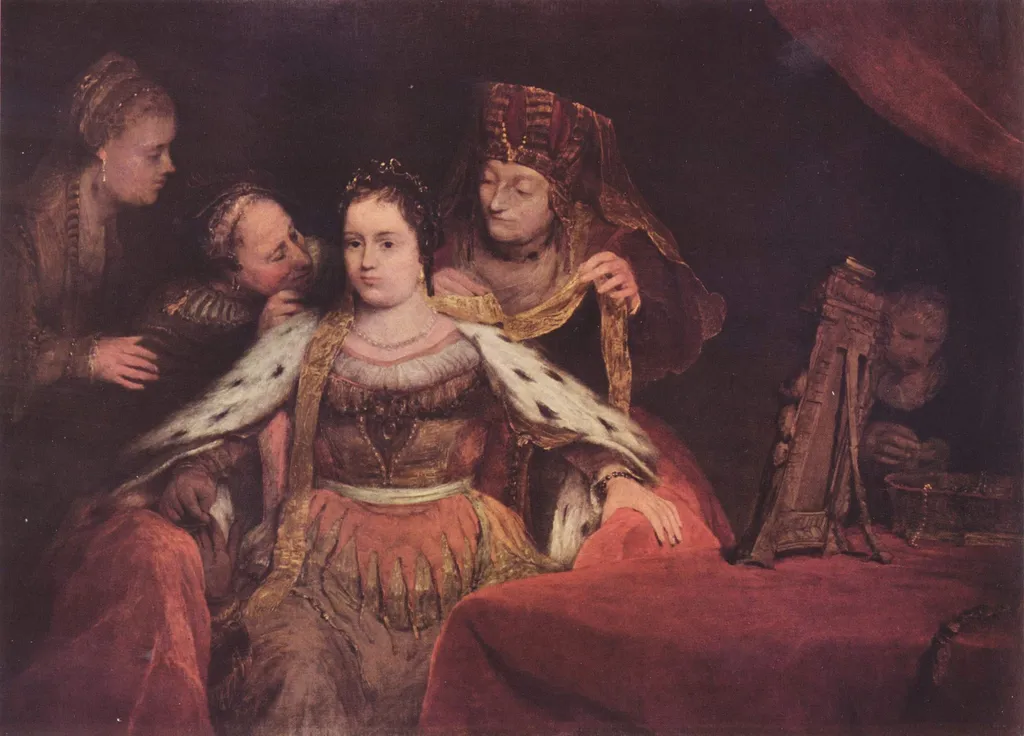
Esther's toilet is an oil painting by the Dutch Golden Age artist Arent de Gelder. It dates from 1692 and is held in the collection of the Hermitage Museum.
About this work
Subject & Meaning
The composition depicts the queen in the act of her toilet, a scene of personal preparation that precedes her pivotal intervention in the royal court.
Arent de Gelder's 1684 oil painting illustrates a specific narrative episode derived from the Book of Esther, focusing on the biblical figure Esther. The composition depicts the queen in the act of her toilet, a scene of personal preparation that precedes her pivotal intervention in the royal court. By rendering this moment, the work emphasizes the humanity and vulnerability of the protagonist before she assumes her public role to save her people.
The subject matter firmly places the piece within the tradition of religious art, utilizing a domestic setting to explore themes of destiny and courage associated with the Jewish heroine.
Technique & Style
The work is executed in oil paint on canvas, depicting the biblical heroine Esther within a religious composition. Arent de Gelder's handling of light and color emphasizes the narrative moment, while the canvas support provides a smooth surface that accommodates delicate brushwork. The painting measures 108 cm in height and 148 cm in width, reflecting the scale typical of 17th‑century Dutch religious works.
The composition demonstrates formal balance through the placement of Esther against a muted background, with subtle chiaroscuro modeling that highlights her figure. This stylistic approach aligns with the religious art genre prevalent in the period, as documented in the source.
The condition of the piece is stable, showing no significant deterioration in the paint layer or canvas support as of the latest assessment.
History & Provenance
The work is dated 1684, aligning with Arent de Gelder’s early career in the Dutch Republic.
Provenance records place the painting by 1764 in the Prussian royal collection at Rheinsberg Palace, later transferred to the Sanssouci Picture Gallery in Potsdam. It remained in Prussian state holdings until at least the mid-twentieth century. The Hermitage Museum in Berlin also records a connection to the Prussian Palaces and Gardens Foundation, indicating shared custody or exhibition between these institutions.
Arent de Gelder's 1684 oil painting "Esther's toilet" is held by the Prussian Palaces and Gardens Foundation Berlin-Brandenburg, with documented locations at the Sanssouci Picture Gallery, the New Palace, and Rheinsberg Palace. The work is catalogued as part of the Foundation's collection alongside its listing on Wikidata, which also references the Hermitage Museum as an associated collection entry. The painting's religious subject, drawn from the Book of Esther, has been documented in the Wikidata record that records its inception in 1684 and its canvas dimensions of 108 by 148.
No specific exhibition history, loan records, or accession number is provided in the available sources for this work.
Overview
Executed in 1692, Esther’s Toilet is an oil painting by the Dutch artist Arent de Gelder. The work belongs to the later phase of the Dutch Golden Age and is part of the collection of the State Hermitage Museum in St. Petersburg. It presents a biblical scene rendered in the dramatic lighting characteristic of de Gelder’s adherence to Rembrandt’s late style.
Context
Esther’s Toilet illustrates the enduring popularity of biblical genre scenes in Dutch art, where moral narratives were often conveyed through domestic interiors. De Gelder’s work demonstrates how later 18th‑century painters sustained Rembrandt’s influence, bridging the transition from the Golden Age to subsequent European artistic developments.
Own this work as a print
Artist & collection
Artist
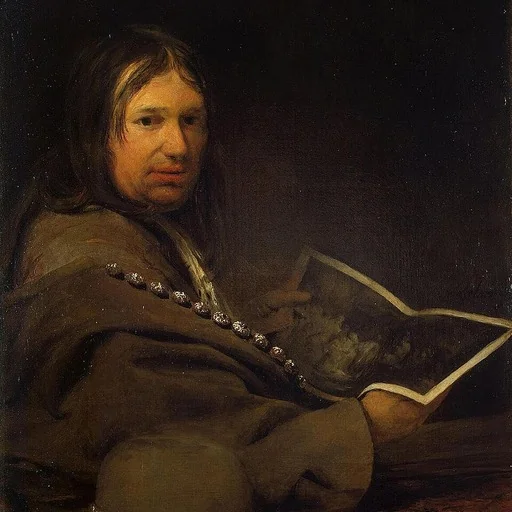
Aert de Gelder (Dutch:; October 26, 1645 – August 27, 1727) was a Dutch painter, the only Dutch artist to paint in the tradition of Rembrandt's late style into the 18th century.

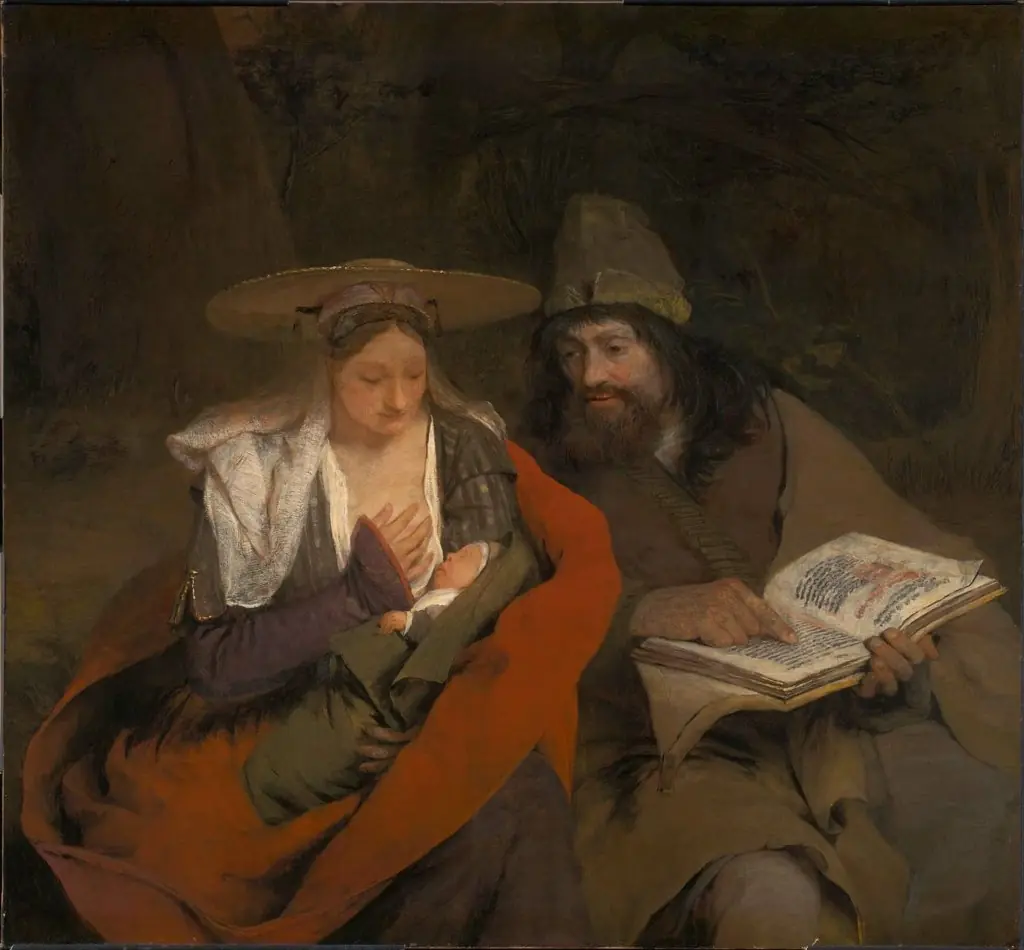 Rest on the Flight into Egypt
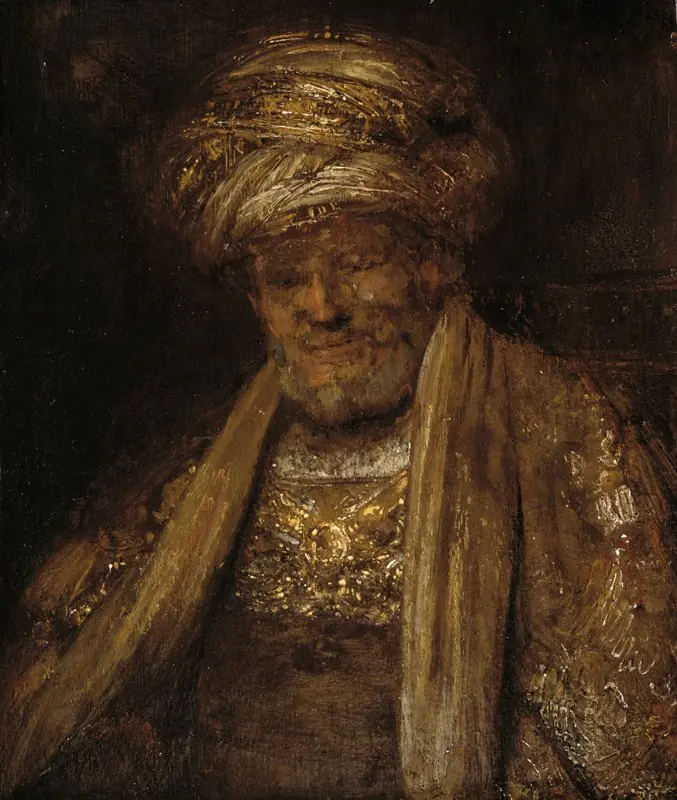 Portrait of an Oriental Man
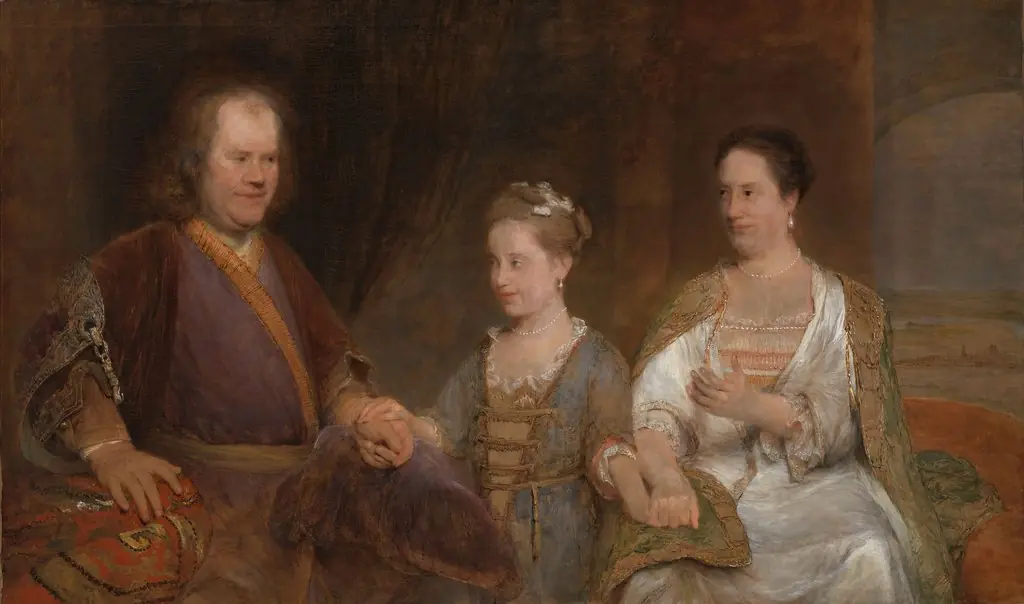 Portrait of Hermanus Boerhave (1668-1738), professor of medecine at the university of Leiden, with his wife Maria Drolenvaux (1686-1746) and their daughter Johanna Maria (1712-91)
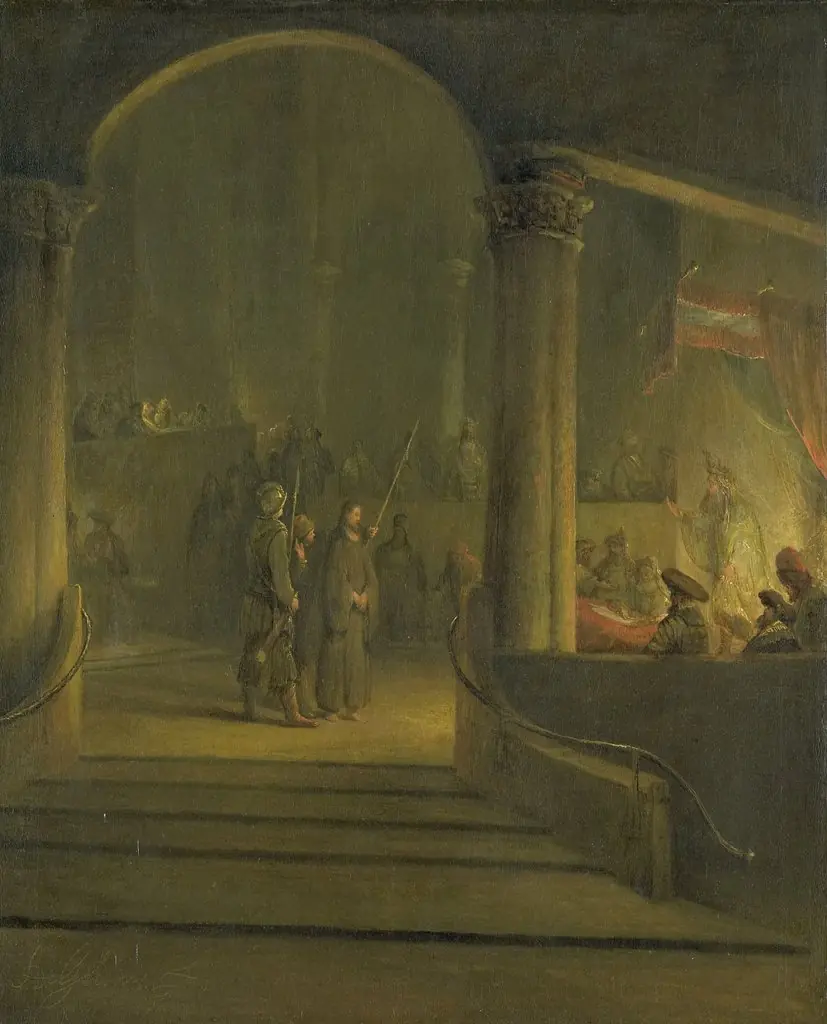 Christ before Caiphas
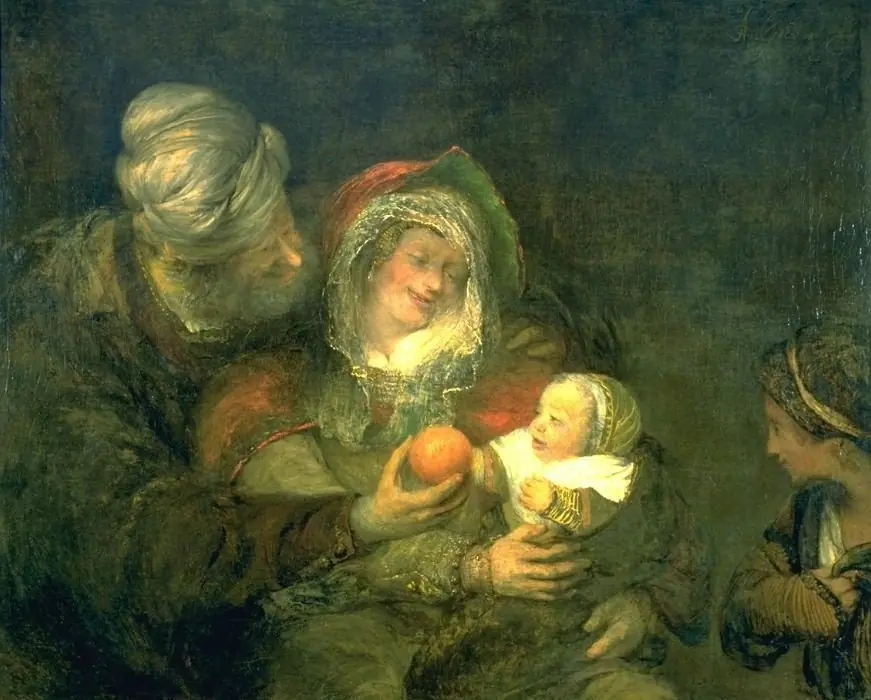 Holy Family
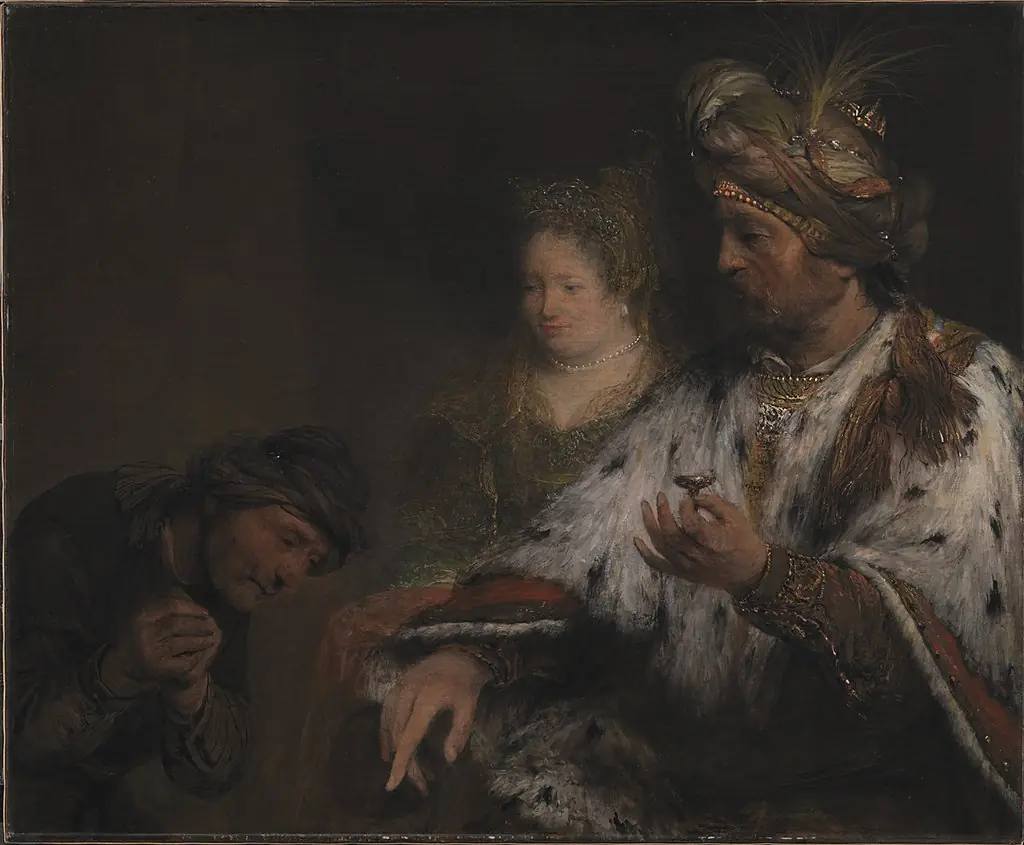 Den persiske kong Ahasverus giver Mordokaj ringen
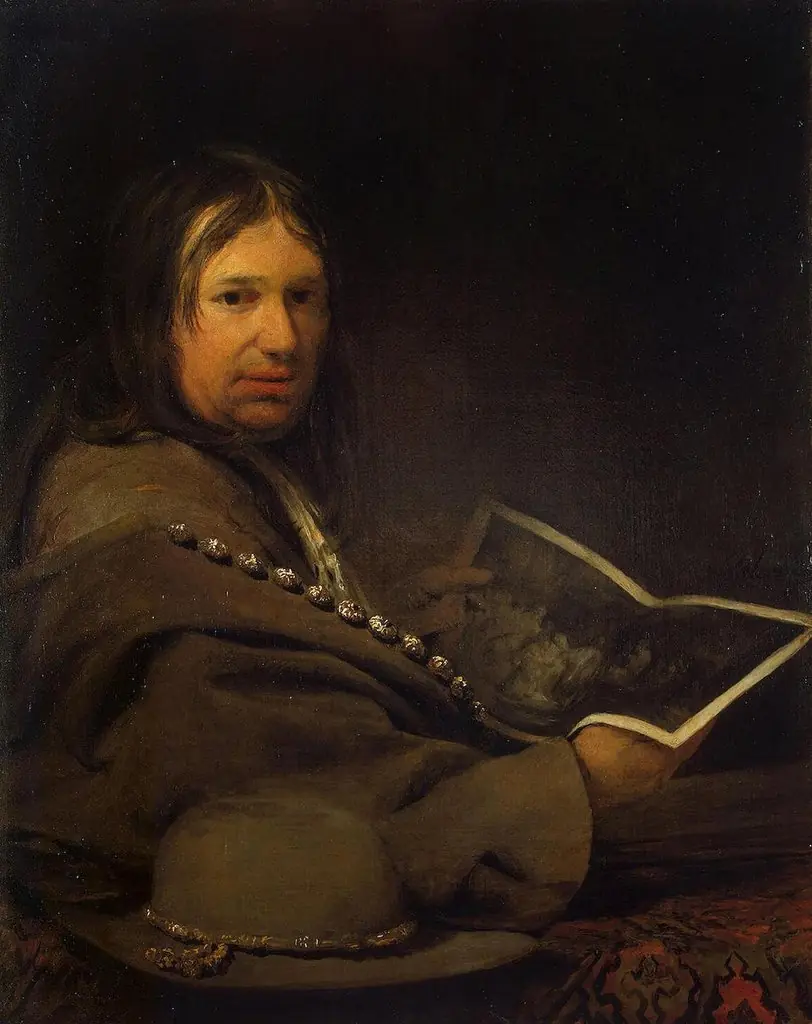 Portrait of a Collector
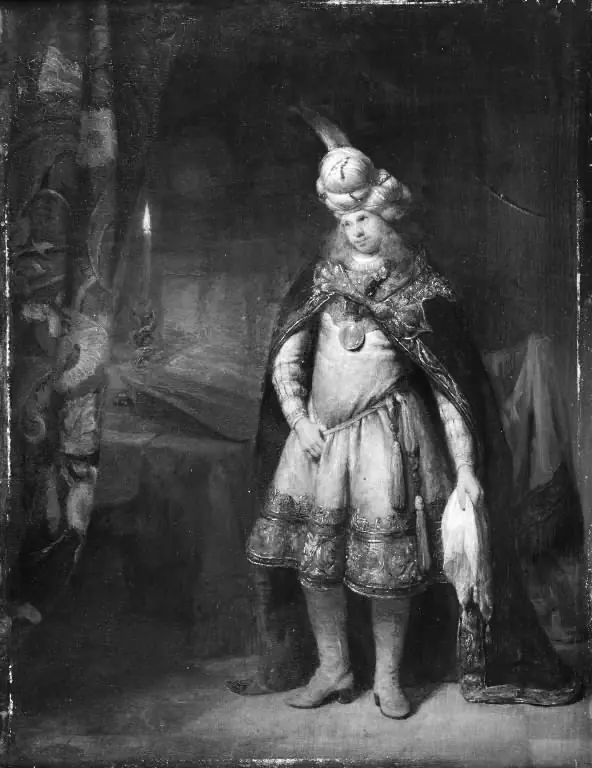 Joseph Crying in his Chamber after Having Seen his Brother Benjamin Again
- Christian I Proclaiming Holstein a Duchy in 1474. Painted for Christiansborg Castle
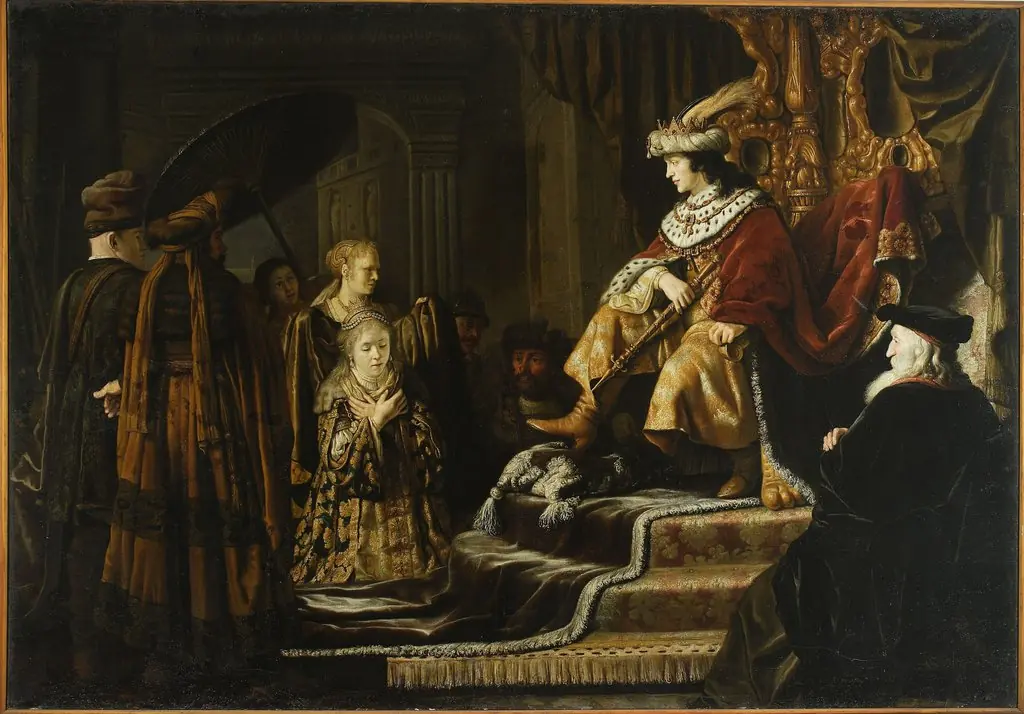 Esther before Ahasuerus (Esther 2:16)
 Allegory on Peace
 Woman at her Dressing Table
 Queen of Sheba before Solomon
 Esther before Ahasuerus
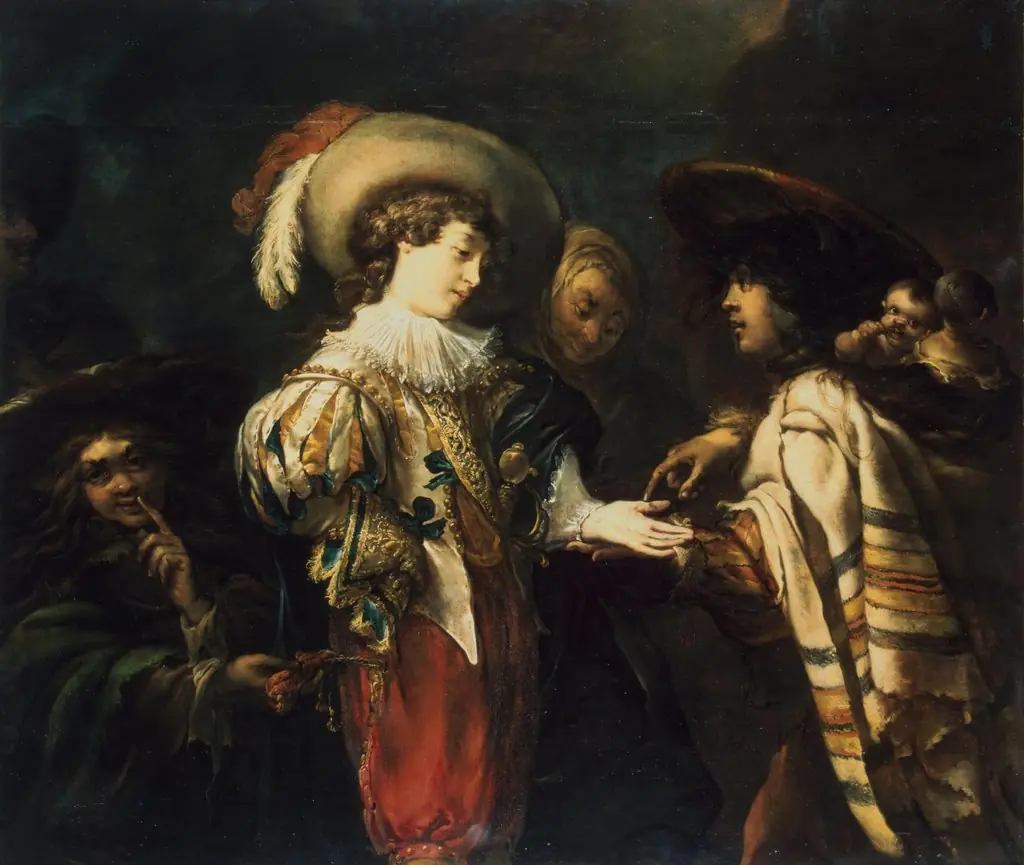 Fortune Telling
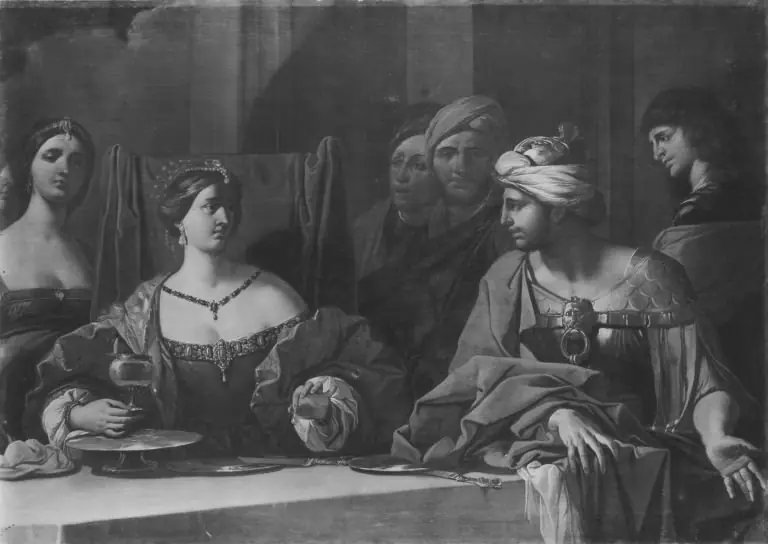 Das Gastmahl der Kleopatra
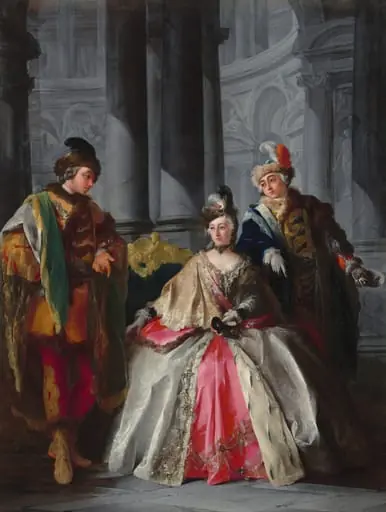 Three Figures Dressed for a Masquerade
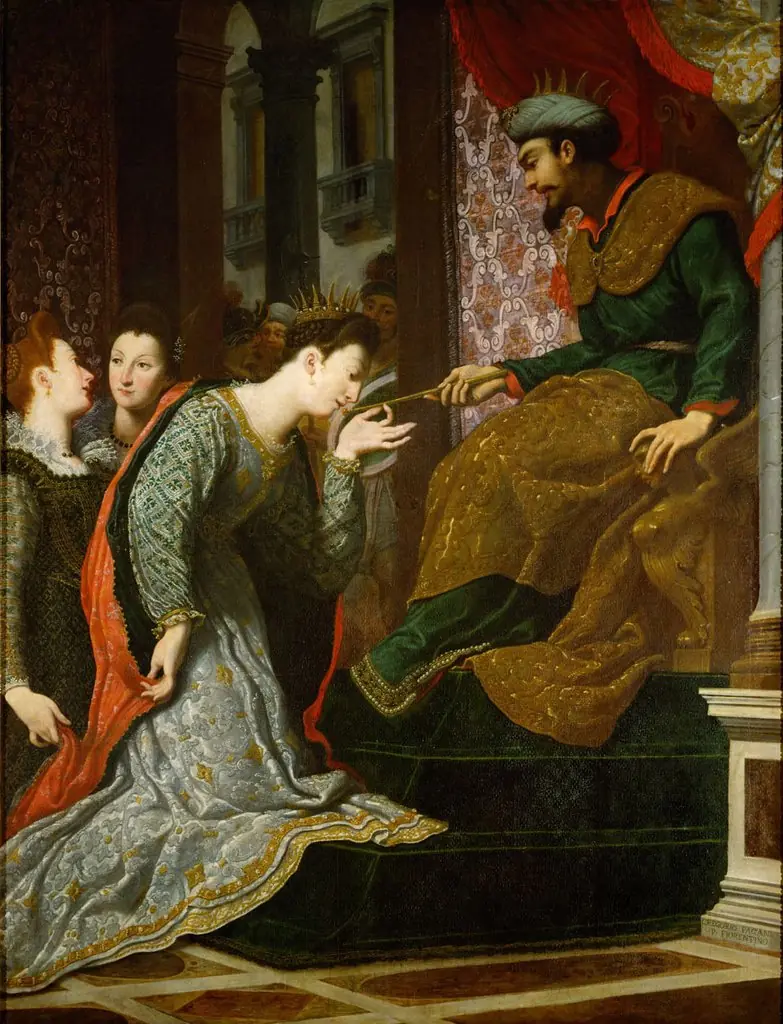 Esther vor Ahasver
 Juno
Juno Judith at the Banquet of Holofernes