Artwork
Three Figures Dressed for a Masquerade
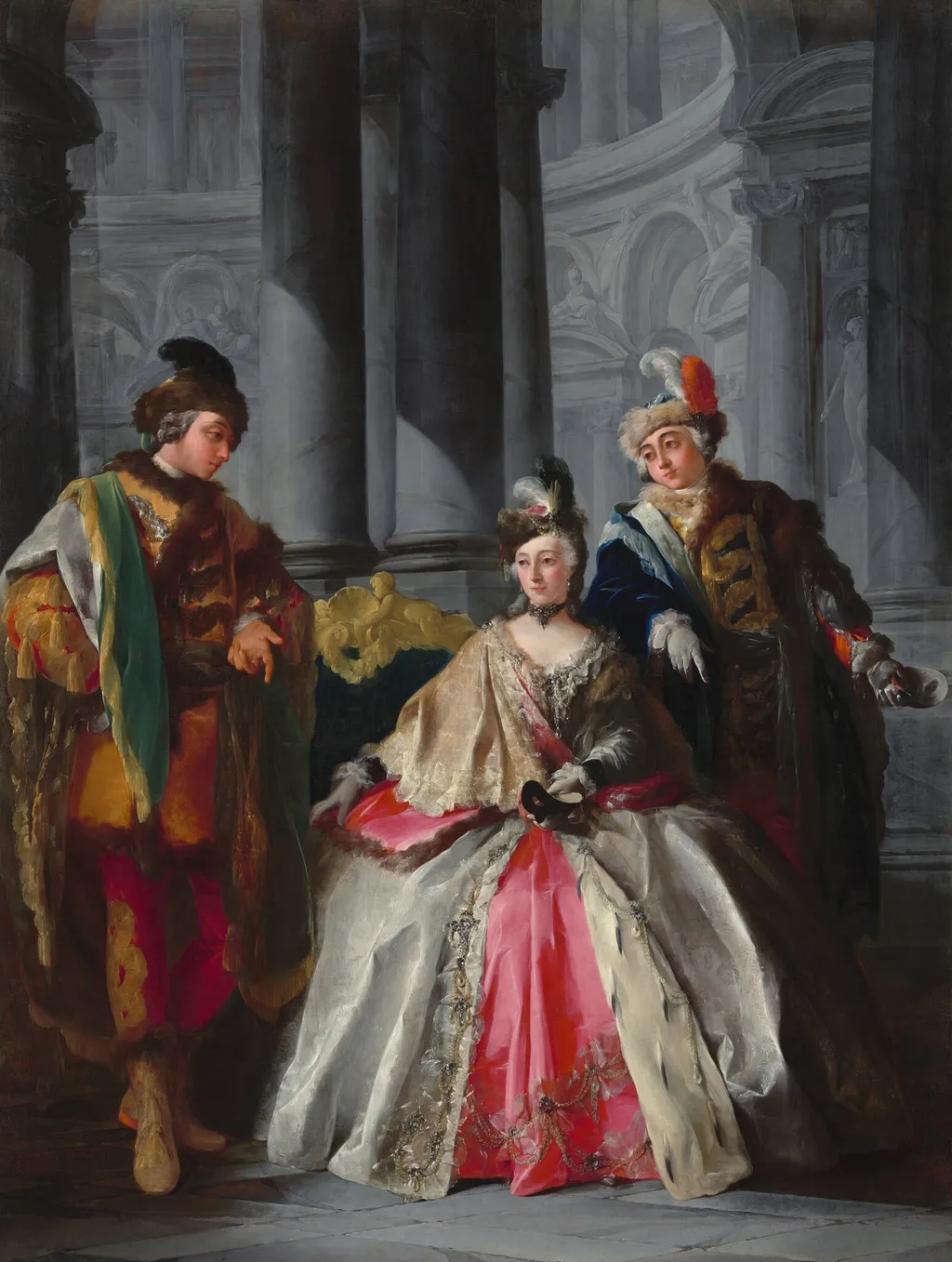
Three Figures Dressed for a Masquerade is an oil painting by the Baroque artist Louis-Joseph Le Lorrain. It dates from 1744 and is held in the collection of the National Gallery of Art.
About this work
Technique & Style
Executed in 1744, this work is an oil painting on canvas measuring 166.
Executed in 1744, this work is an oil painting on canvas measuring 166.4 cm in height and 127 cm in width. The composition features three figures attired in masquerade costumes, rendered in a style that historically prompted varying attributions, including to Lampi and Jacopo Amigoni, before being firmly identified as the work of Louis-Joseph Le Lorrain. The piece is classified as a painting and is held in the Samuel H. Kress Collection at the National Gallery of Art in Washington, D.C.
While specific details regarding the artist's brushwork, layering, or the current condition of the surface are not recorded in the available sources, the medium and support remain consistent with eighteenth-century French painting practices.
History & Provenance
Louis-Joseph Le Lorrain painted Three Figures Dressed for a Masquerade in 1744. The work entered the collection of Camille Groult in Paris, where it was often attributed to Johann Baptist Lampi, and on Groult's death likely passed to his son Jean Groult. It was offered at the Galerie Charpentier estate sale in Paris on 21 March 1952, catalogued as a work by Longhi, then acquired by an anonymous dealer in France before being sold to the David M. Koetser Gallery in New York and London.
In February 1953 the gallery sold it to the Samuel H. Kress Foundation, which listed it as an interior scene by Jacopo Amigoni. The Foundation gifted the work to the National Gallery of Art in 1961.
Overview
Louis-Joseph Le Lorrain’s oil on canvas, Three Figures Dressed for a Masquerade, dates to around 1744. The composition presents three costumed individuals positioned before a dark, carved wall that is punctuated by a window. The central figure dominates the scene in a luminous red‑silver gown with an expansive skirt and a feathered headdress, while the flanking figures wear vivid, patterned robes with fur trim and tall hats.
Subject & Meaning
The work captures a moment of theatrical festivity, suggesting a masquerade or courtly entertainment. The elaborate costumes, rich in color and ornament, emphasize the performative aspect of identity, where attire transforms the wearer into a character. The juxtaposition of the illuminated figures against the shadowed backdrop underscores the fleeting, staged nature of the celebration.
Own this work as a print
Artist & collection


- A Musical Company
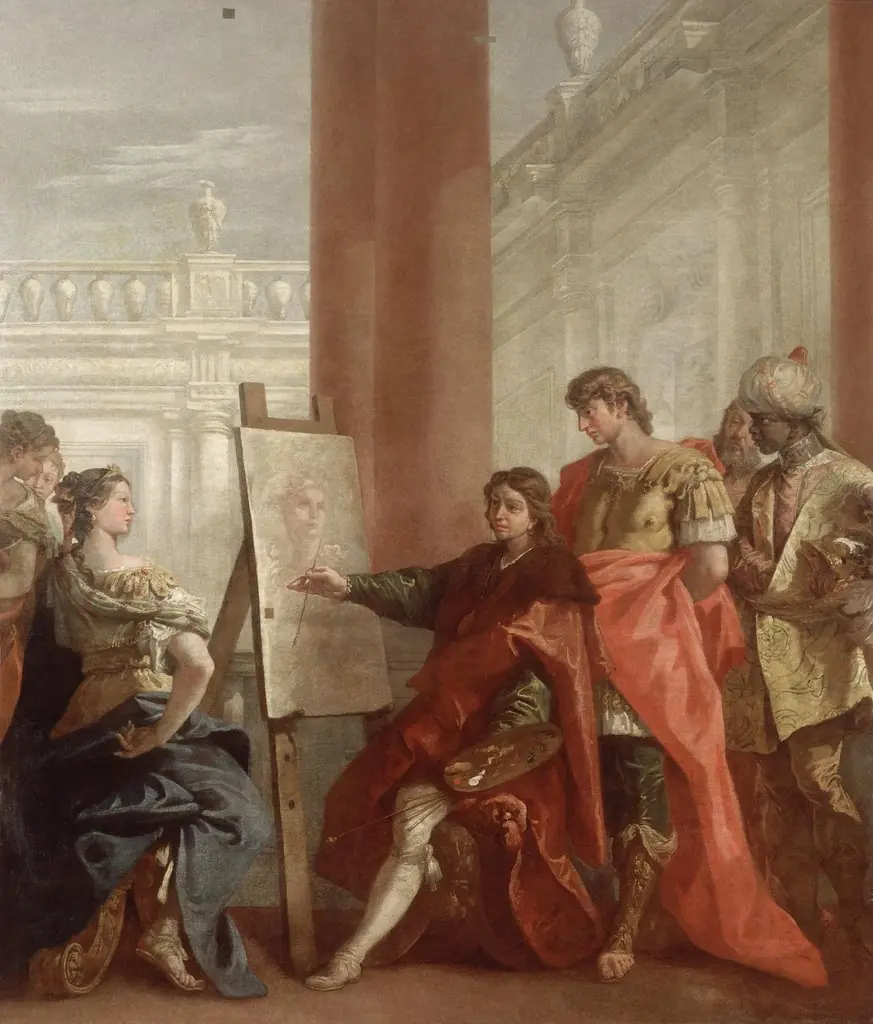 Apelles Paints Campaspa
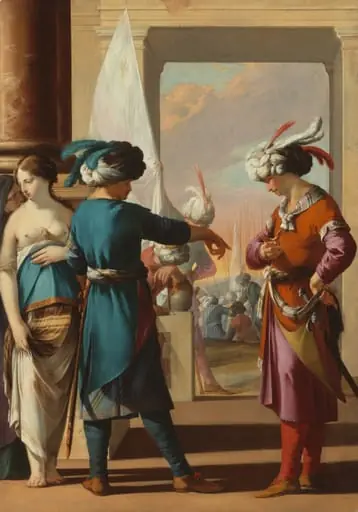 Panthea, Cyrus, and Araspas
 Portrait von Erlach with his Family
 Panthea, Cyrus, and Araspas
 Lady at Her Toilette
 Handkiss by the communities of Parma and Piacenza
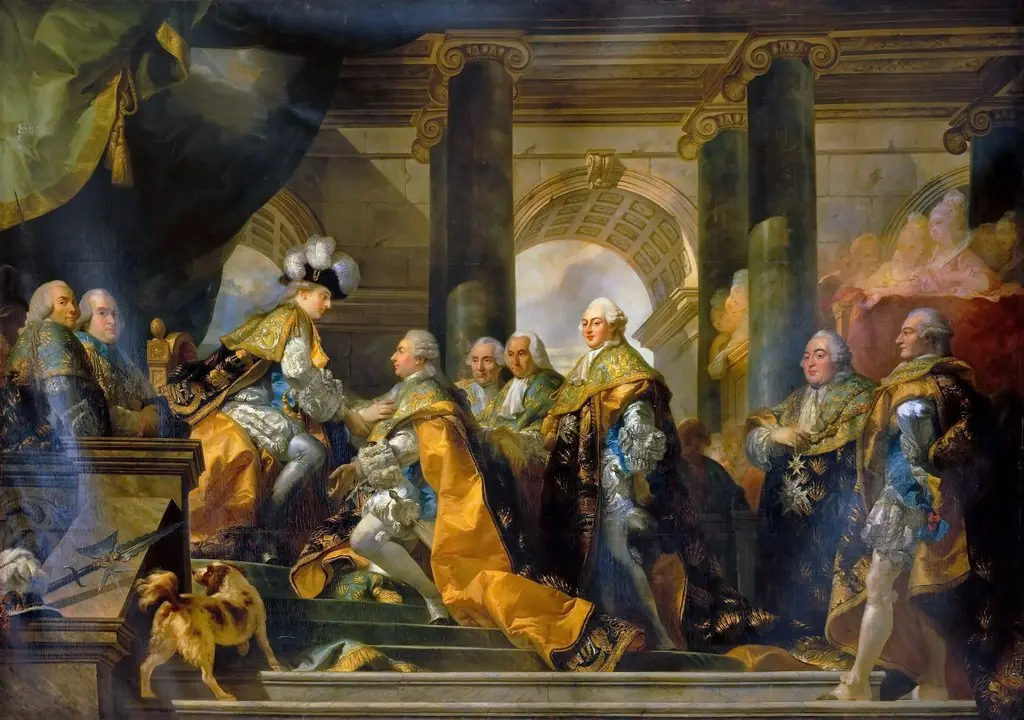 Louis XVI receives homage from the Knights of the Holy Spirit in Reims, June 13, 1775
 the tobacco guards
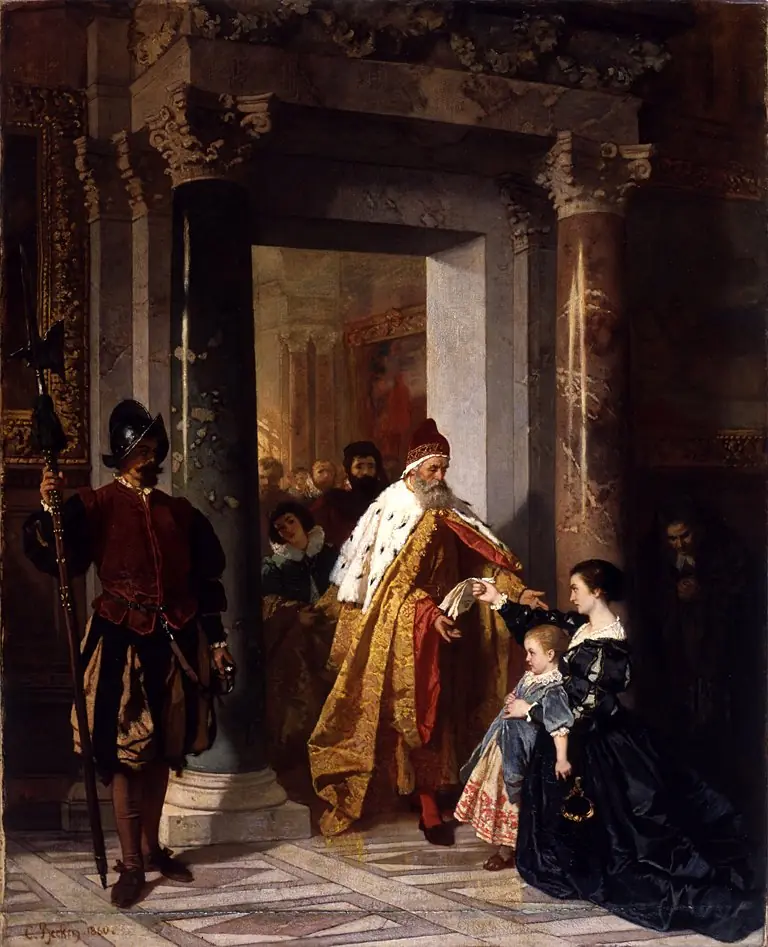 The Petition to the Doge
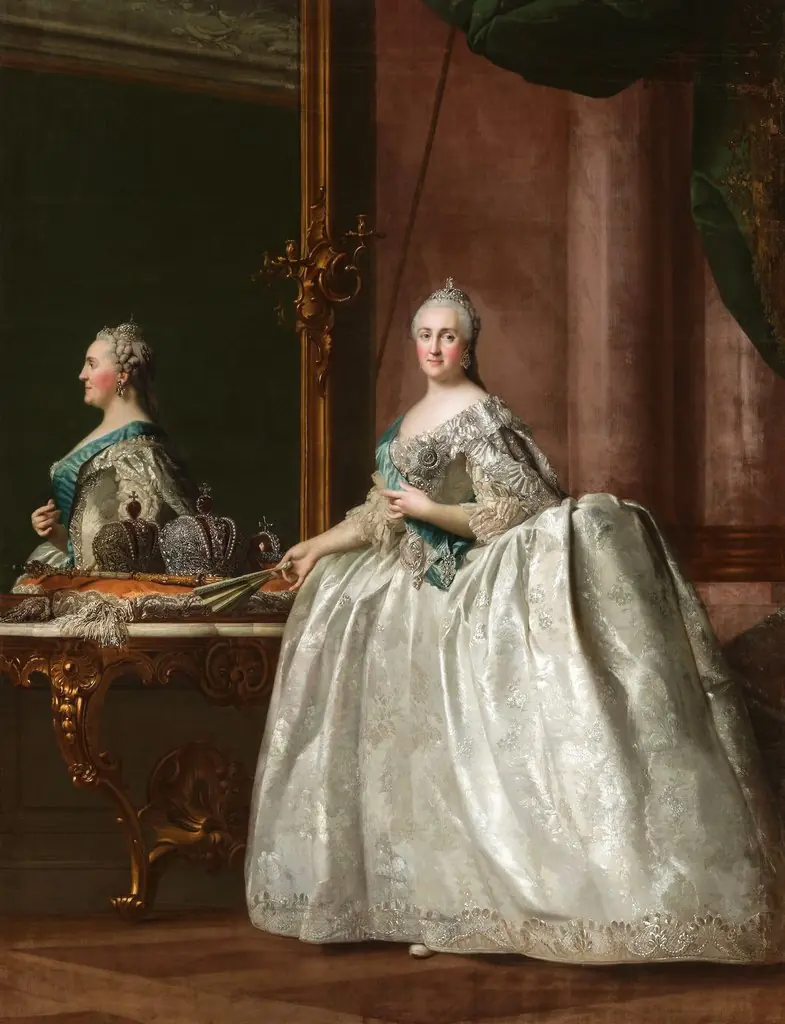 Portrait of Catherine II in front of a Mirror
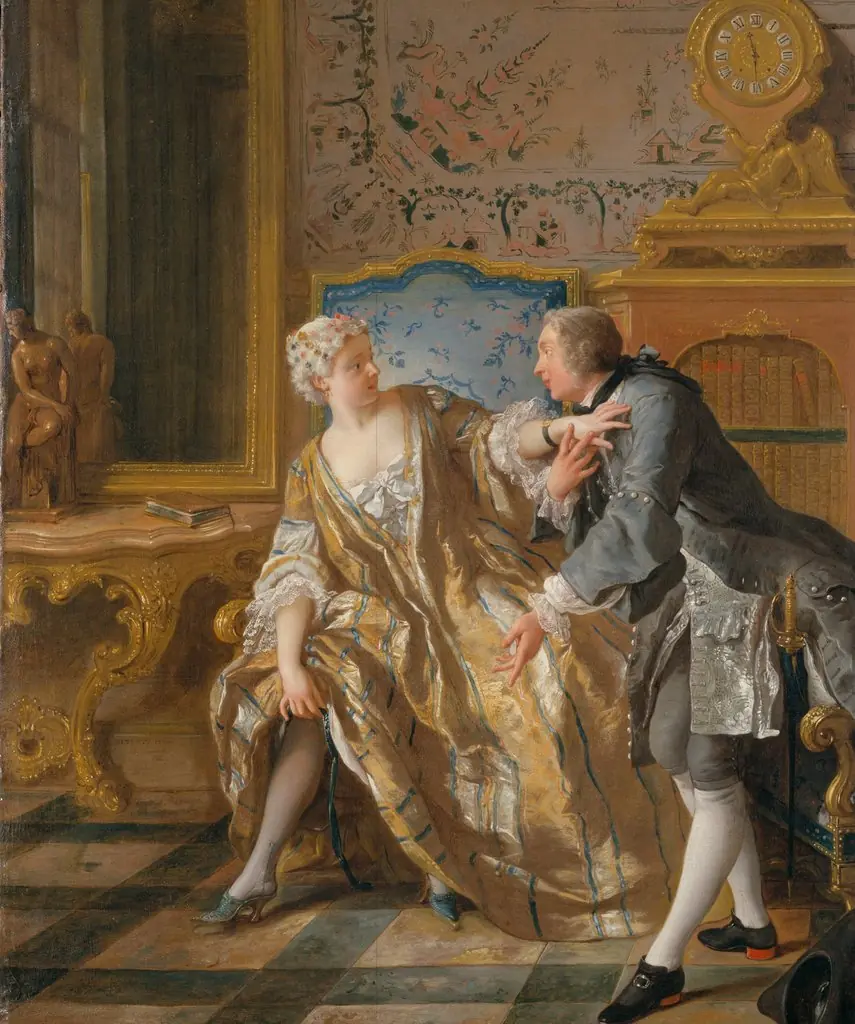 The Garter