Artwork
Hero and Leander
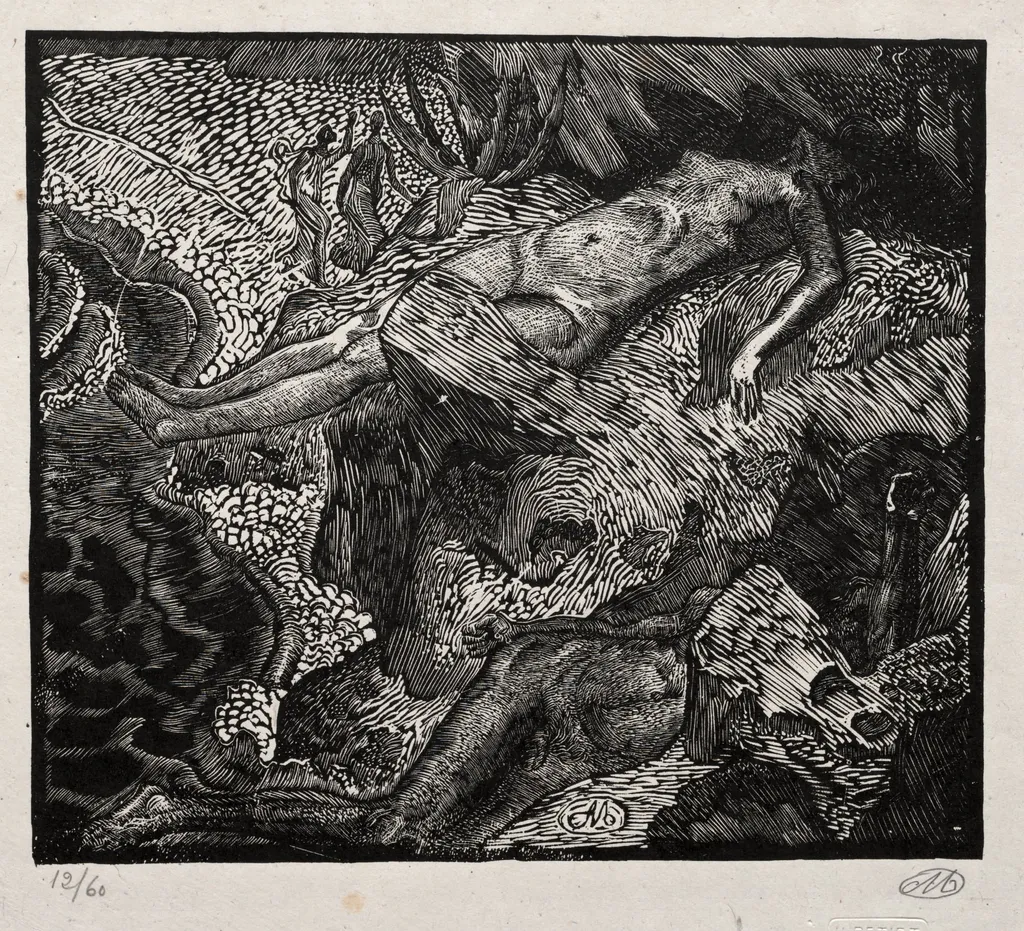
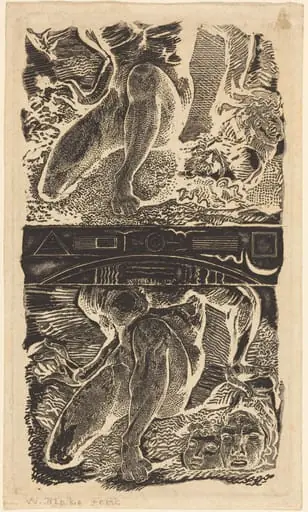
Hero and Leander is a print by the Impressionist artist Aristide Maillol. It dates from 1894 and is held in the collection of the Cleveland Museum of Art.
- Accession no.
- 1992.343
- Credit line
- John L. Severance Fund
About this work
Overview
Hero and Leander is a print by Aristide Maillol, created during his early exploration of printmaking techniques.
Subject & Meaning
The work depicts a scene from ancient Greek mythology, where Hero and Leander, two lovers separated by the Hellespont strait, are shown entwined in the water after Leander's fatal swim during a storm.
Technique & Style
Maillol densely filled the composition with intricate patterns and details, distinguishing it from the more sparse style of his contemporary, Paul Gauguin. The print's textured, layered quality is achieved through a technique that builds up the image with dense lines and shapes.
Context
The artist was becoming acquainted with Gauguin's work around the time of creating Hero and Leander, indicating a period of artistic exchange and influence.
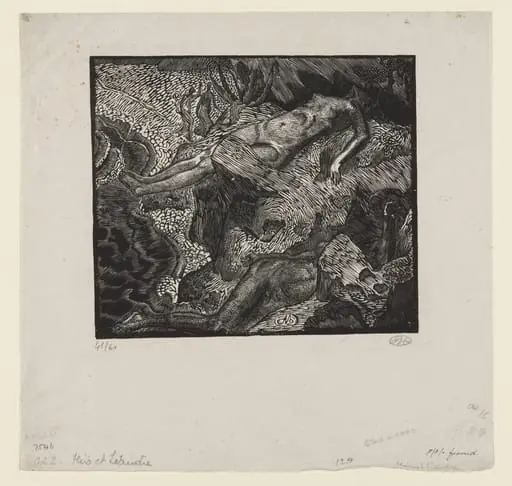
Own this work as a print
Artist & collection

Artist
Aristide Joseph Bonaventure Maillol was a French Catalan sculptor, painter, and printmaker.

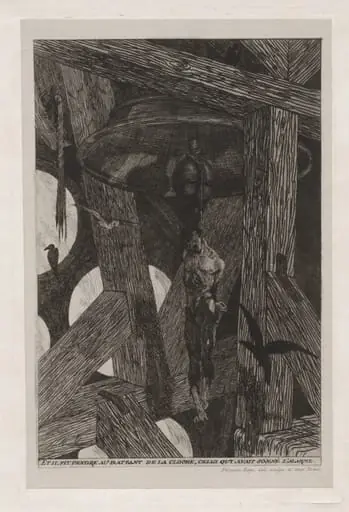 The Legend and Adventures of Ulenspiefel and Lamme Goedzak: The Hanged Man (La legende et les aventures d'Ulenspiegel et Lamme Goedzak: Le pendu)
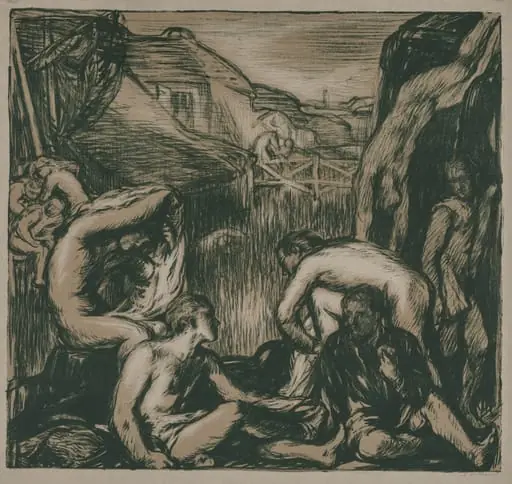 The Mill-Pond
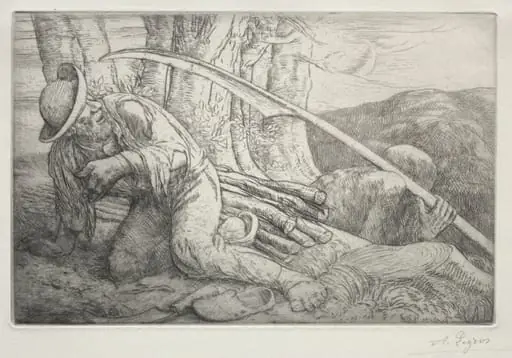 La Mort et le Bûcheron (5th Plate)
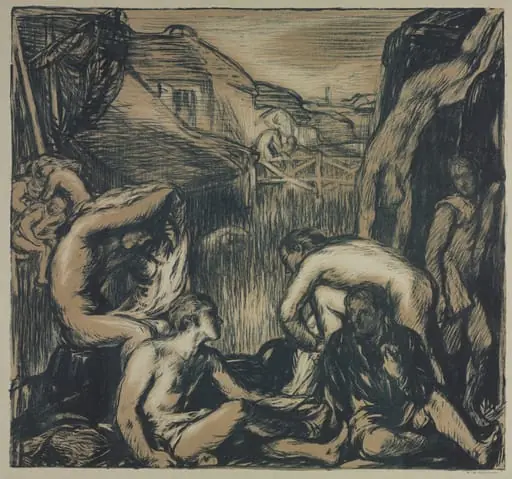 Bathers
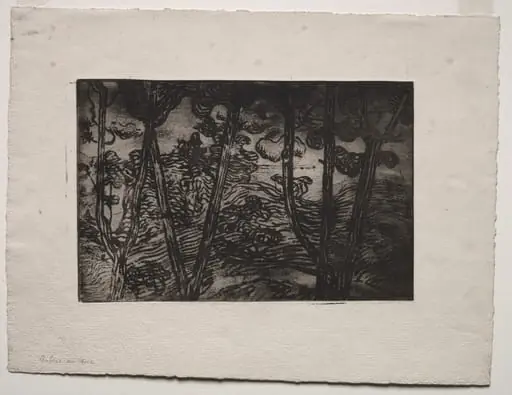 Trees at Night
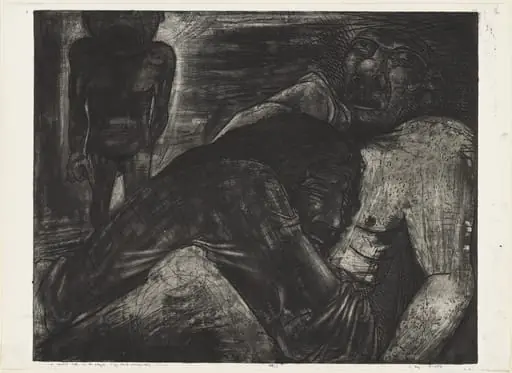 Untitled
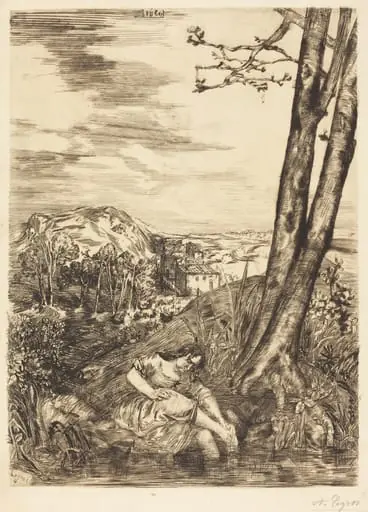 Peasant Washing Her Feet (Paysanne se lavant les pieds)
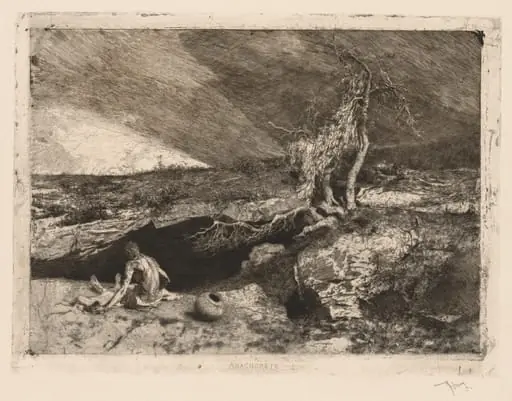 The Anchorite
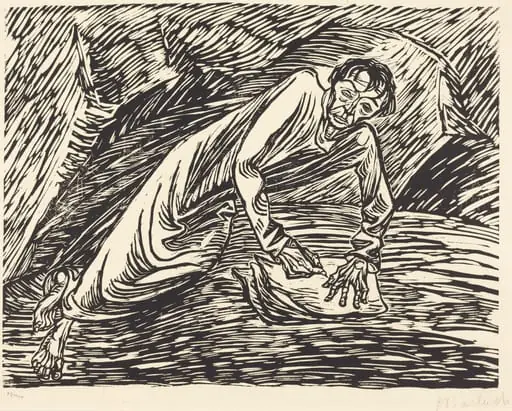 The Writing Prophet (Saint John on Patmos)
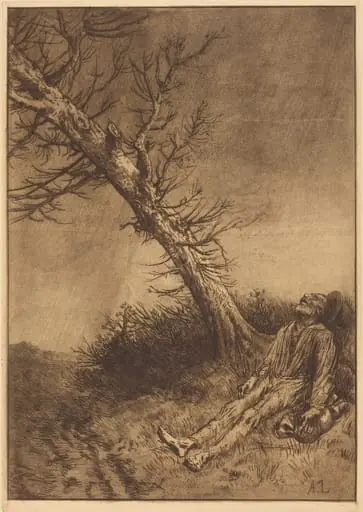 Death of the Vagabond (La mort du vagabond)
 Unknown subject (Let Him look up into the Heaven and laugh in the bright air)
- Untitled