Artwork
Hermes and the Infant Dionysus
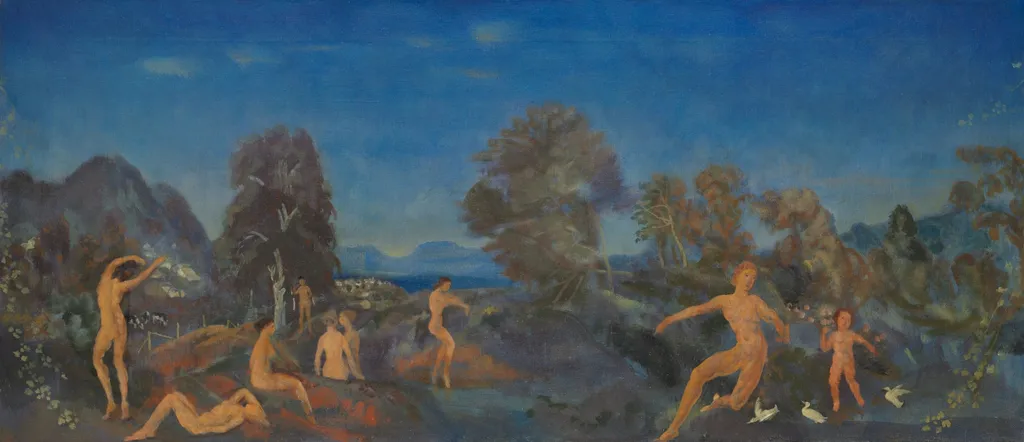
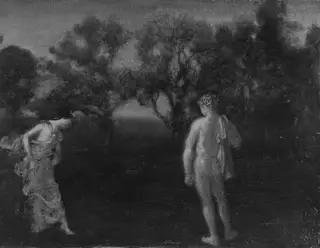
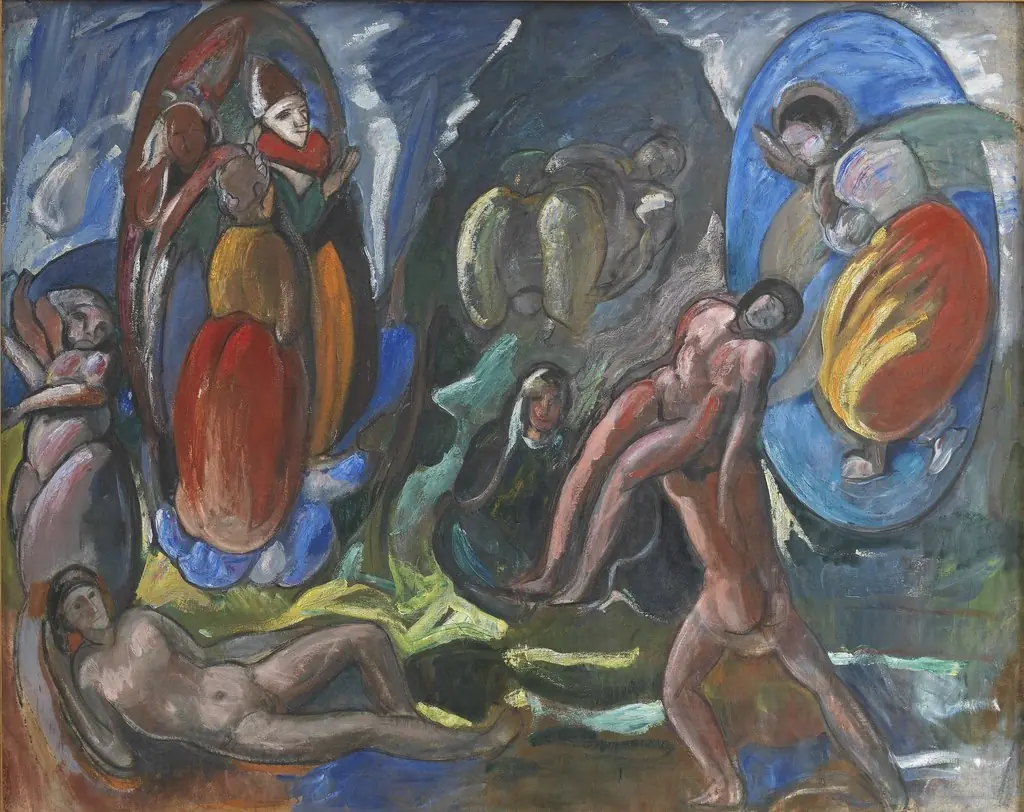
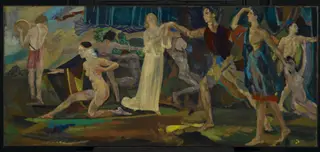
Hermes and the Infant Dionysus is an oil painting by the Symbolist artist Arthur B. Davies. It dates from 1907 and is held in the collection of the Cleveland Museum of Art.
About this work
Technique & Style
Created in 1907 by Arthur Bowen Davies, Hermes and the Infant Dionysus is an oil painting executed on canvas.
Created in 1907 by Arthur Bowen Davies, Hermes and the Infant Dionysus is an oil painting executed on canvas. The work measures 61.0 cm in height and 140.0 cm in width, presenting a significantly wider horizontal format. Produced in the United States, the piece utilizes traditional oil paints as its primary medium.
The composition features the mythological figures of Hermes and the infant Dionysus, rendered through Davies's distinctive approach to form and space characteristic of his early twentieth-century output.
History & Provenance
Held by the Cleveland Museum of Art in Cleveland, Ohio, this work is cataloged under the accession number 1927.198. It was created in 1907 by Arthur Bowen Davies in the United States and has been part of the museum's collection since its acquisition. The painting was included in the exhibition "American Art, 1900-1920," displayed at the Cleveland Museum of Art in 1982.
Legacy
Arthur Bowen Davies' 1907 oil painting Hermes and the Infant Dionysus entered the collection of the Cleveland Museum of Art, where it remains on view. The work's allegorical subject, drawing from Greek mythology, reflects Davies' interest in classical themes and Symbolist sensibilities prevalent in early twentieth-century American art. Its formal composition and ethereal handling of figures influenced subsequent interpretations of mythological narratives in modernist painting, particularly among artists associated with the Cleveland School.
The painting's presence in a major public collection has ensured continued scholarly attention to Davies' role in bridging Symbolism and early American modernism.
Overview
Created in 1907, Hermes and the Infant Dionysus is an oil painting by American artist Arthur Bowen Davies. Executed within the Symbolist idiom, the work presents a mythological scene that merges classical subject matter with a modern sensibility. The canvas is part of the permanent collection of the Cleveland Museum of Art, where it is displayed among other early‑twentieth‑century works.
Subject & Meaning
The composition features the messenger god Hermes cradling the newborn Dionysus, the future god of wine and revelry. Set in a sylvan landscape, the figures appear at ease, suggesting a moment of quiet intimacy rather than a dramatic narrative. By choosing this pairing, Davies invokes themes of guidance, transition, and the nurturing of divine potential within a timeless natural setting.
Context
At the turn of the century, American artists increasingly looked to European Symbolism for inspiration, adapting its emphasis on myth and emotion to a domestic audience. Davies’s choice of a classical Greek narrative aligns with this trend, while his painterly approach anticipates later modernist experiments with abstraction and expressive brushwork.

Artist & collection
Artist
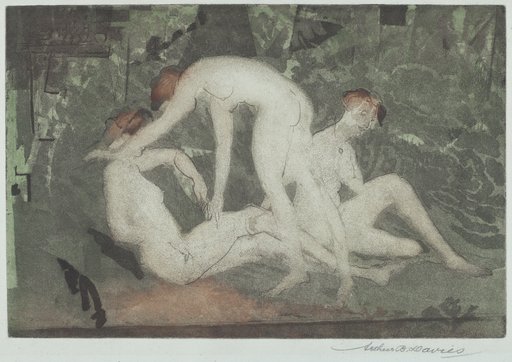
Arthur Bowen Davies (September 26, 1862 – October 24, 1928) was an avant-garde American artist and influential advocate of modern art in the United States c. 1910–1928.