Artwork
Untitled
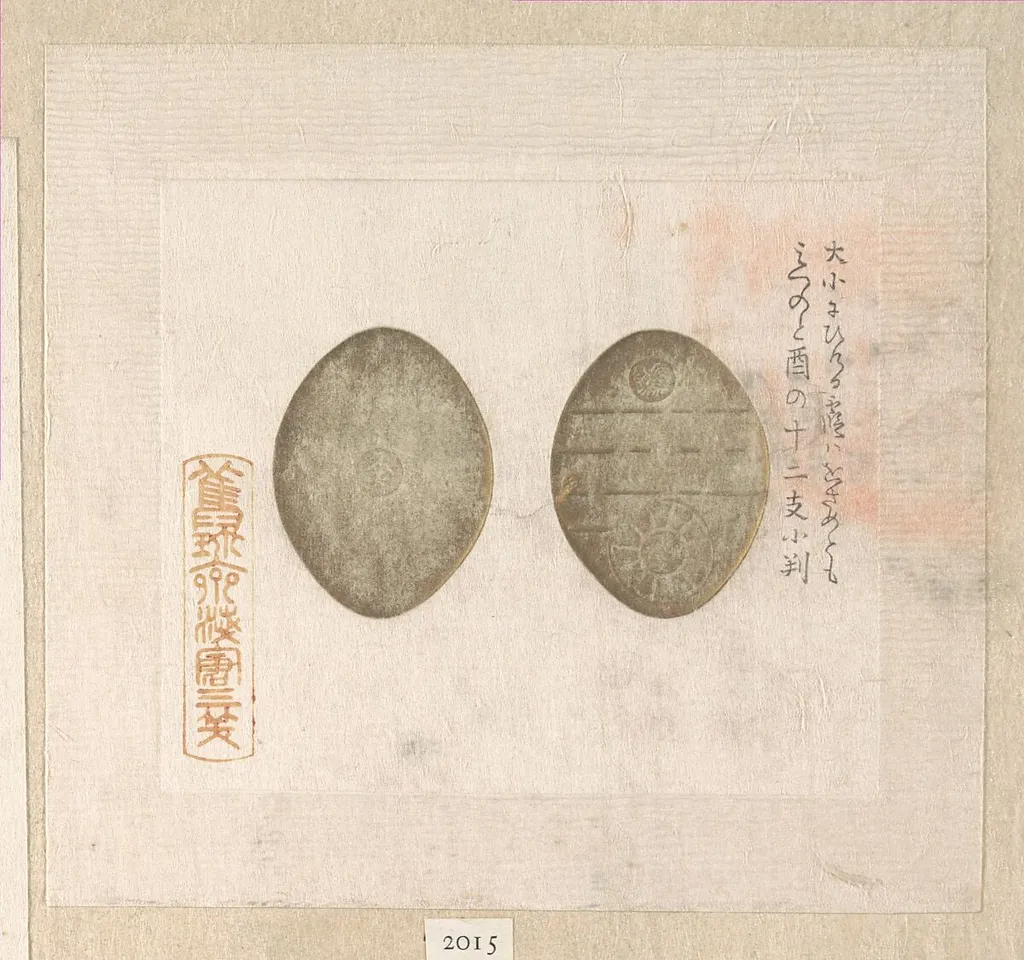
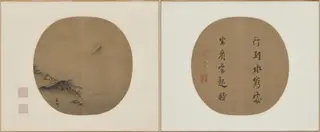
Untitled is an ink print by the Romanticist artist Asakura Sansho. It dates from 1813 and is held in the collection of the Metropolitan Museum of Art.
About this work
Overview
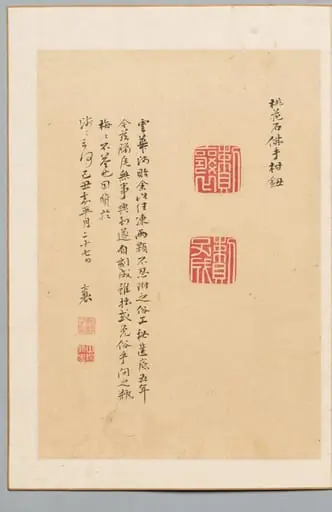
A red ink stamp and faint handwritten script flank the central forms, indicating its use as a refined, intimate object rather than a mass-produced image.
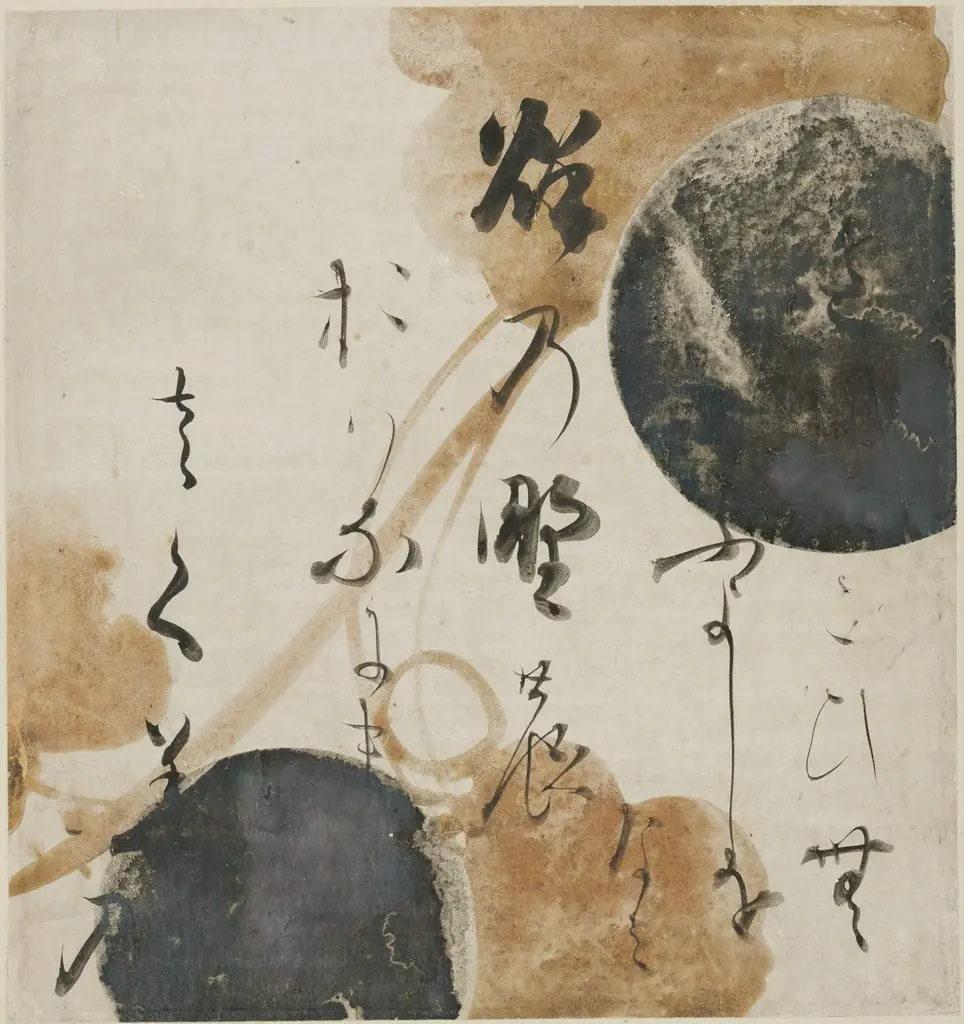
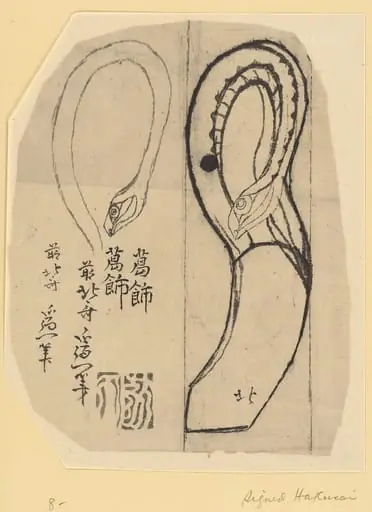
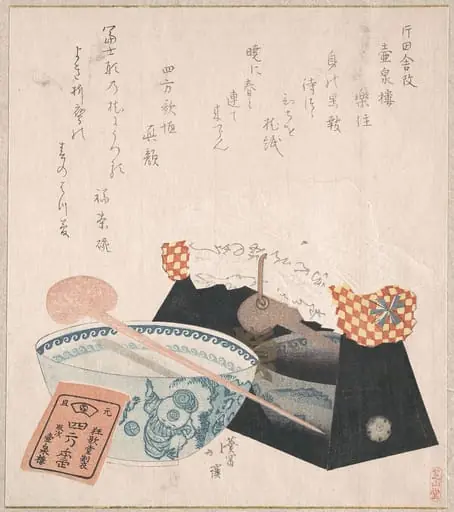
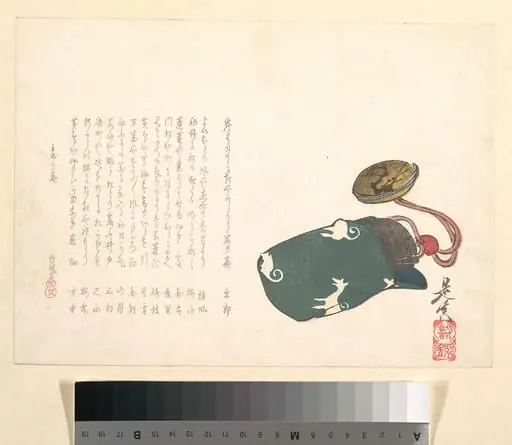
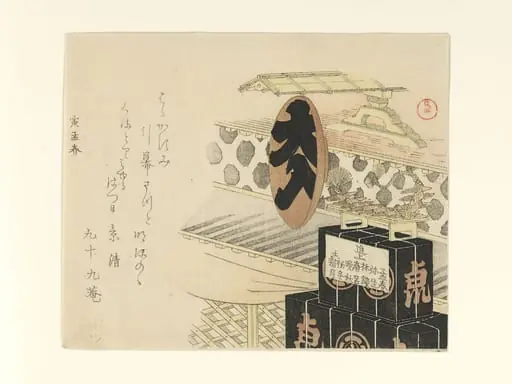
Created in 1813 by Asakura Sansho, this woodblock print is a surimono, a privately commissioned print often produced for special occasions. Executed in ink and color on paper, it features two oval objects resembling seals or coins, arranged side by side on a softly textured ground. A red ink stamp and faint handwritten script flank the central forms, indicating its use as a refined, intimate object rather than a mass-produced image.
Subject & Meaning
The two oval forms likely represent ceremonial seals or currency tokens, their subtle distinctions suggesting symbolic or functional contrast. The plain left object may signify neutrality or origin, while the right, marked with fine lines and a dot, could denote authority or specific identity. The accompanying red stamp and handwritten text, both in Japanese, imply a personal or institutional context, possibly tied to poetry, ritual, or private correspondence.
Technique & Style
The print employs delicate woodblock carving to render fine linear details, particularly in the faint markings on the right seal. Cross-hatching and minimal color enhance texture without distraction. The ink is applied with restraint, allowing the paper’s natural grain to show through.
Handwritten annotations, added after printing, reflect the collaborative nature of surimono production, where calligraphers and printers worked in tandem.
History & Provenance
This print entered the collection of The Metropolitan Museum of Art as part of its holdings in Japanese prints. Its survival in good condition suggests it was carefully preserved, likely by a collector or cultural institution familiar with surimono’s niche status. No public record of its original commission exists, but its craftsmanship aligns with early 19th-century Edo-period private print culture.
Context
Surimono were produced in limited numbers for elite circles, often to commemorate seasonal events, poetic gatherings, or personal milestones. Unlike commercial prints, they prioritized subtlety and craftsmanship over broad appeal. This work reflects the Edo period’s appreciation for understated aesthetics and the interplay between visual art, calligraphy, and material symbolism in private artistic expression.
Legacy
As a representative of surimono, this print illustrates the quiet sophistication of Japanese print culture beyond ukiyo-e’s popular themes. Its preservation highlights the value placed on ephemeral, hand-crafted objects within historical Japanese aesthetics. Today, it serves as a reference for scholars studying the intersection of print, text, and symbolic object in early 19th-century Japan.
Artist & collection