Artwork
The Manor, Deddington
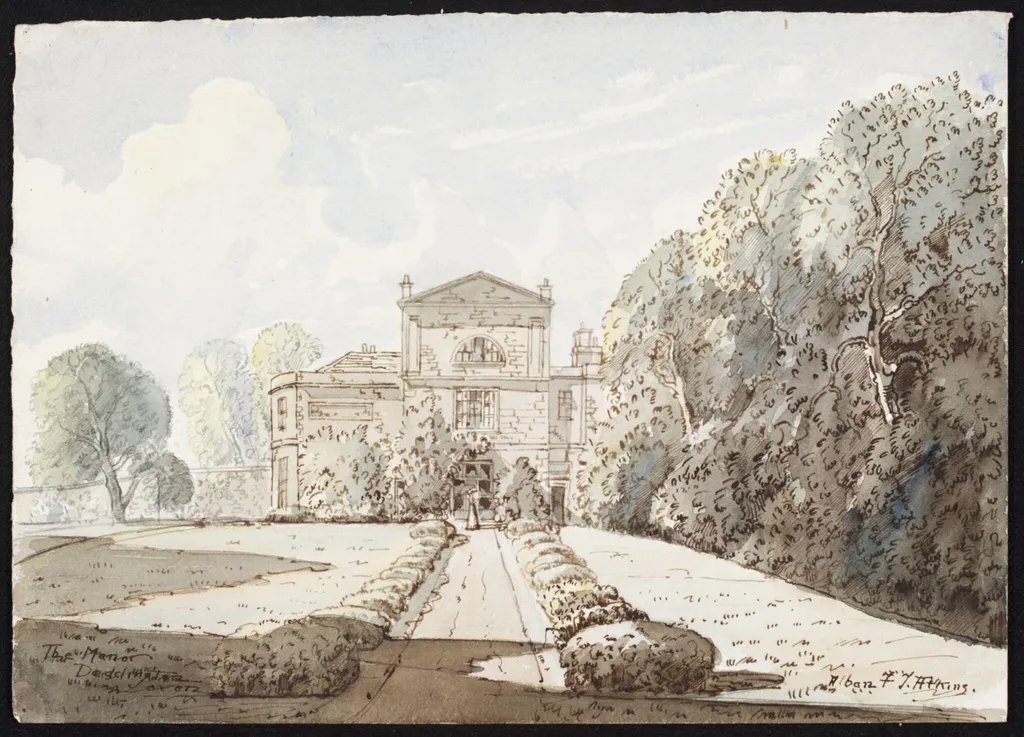
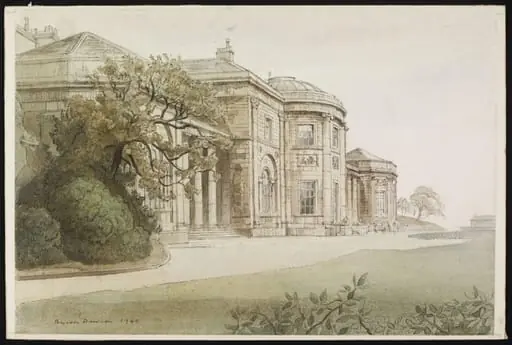
The Manor, Deddington is a watercolor work on paper by the Regionalist artist Atkins. It dates from 1940 and is held in the collection of the Victoria and Albert Museum.
About this work
Overview
The watercolour titled The Manor, Deddington was executed in 1940 by the artist Atkins. It records a formal garden approach to a neoclassical stone manor, rendered in a subdued palette that emphasizes the tranquil atmosphere of the scene.
Subject & Meaning
The composition centers on a symmetrical garden path that draws the eye toward the manor’s central façade, where a large window dominates. Surrounding trees and shrubbery frame the house, suggesting an orderly, rural setting that underscores the continuity of England’s built heritage.
Technique & Style
Atkins employed transparent watercolour washes, allowing delicate tonal variations to convey the stone texture and foliage. The soft edges and muted hues create a calm visual effect, characteristic of the Recording Britain aesthetic that favored modest, documentary realism over dramatic flourish.
History & Provenance
The work was produced as part of the Recording Britain initiative, a wartime effort funded by the Pilgrim Trust and coordinated by Sir Kenneth Clark. The project aimed to capture images of the nation’s landscapes and architecture before they might be altered or lost during World War II.
Context
Created during a period of heightened concern for cultural preservation, the painting reflects broader governmental attempts to document rural and architectural subjects amid the threat of bomb damage and social upheaval. It serves as a visual record of pre‑war English countryside life.
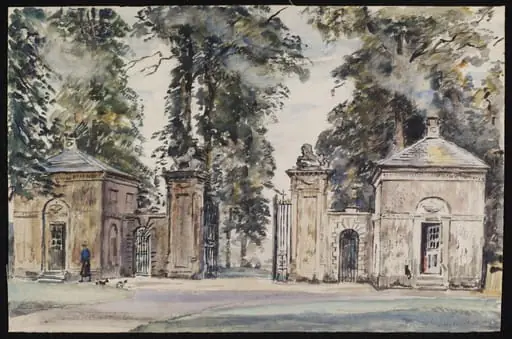
Artist & collection
Artist
Anna Atkins turned their hand to quiet watercolours of Cotswold buildings in the 1940s.

 Heaton Hall, Manchester
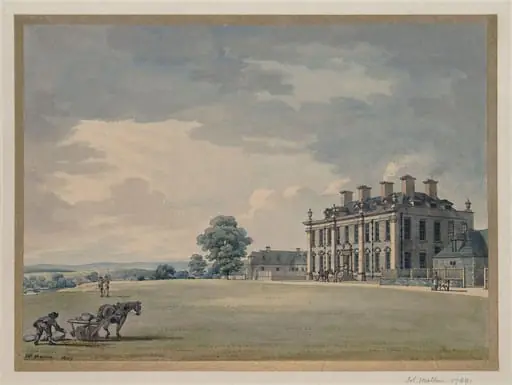 A Country Mansion
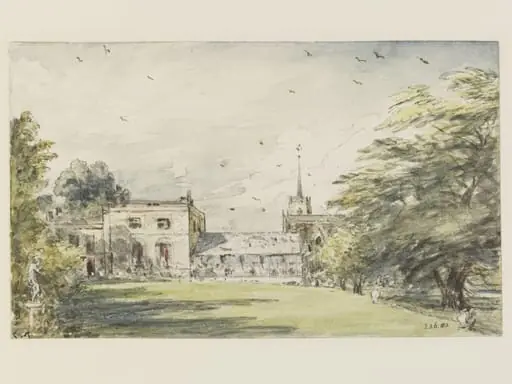 Pitt Place, Epsom, the house of Mr. Digby Neave
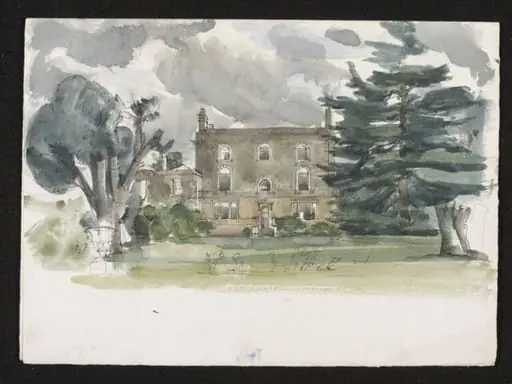 View of large stone house with lawn in front and large trees on either side
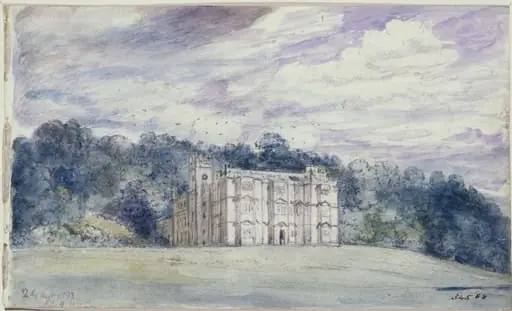 Englefield House, Berkshire
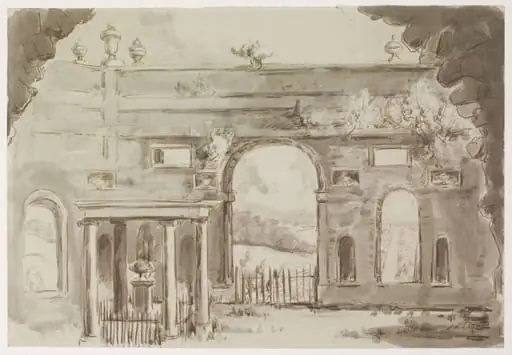 Dashwood Mausoleum West Wycombe, with road to High Wycombe
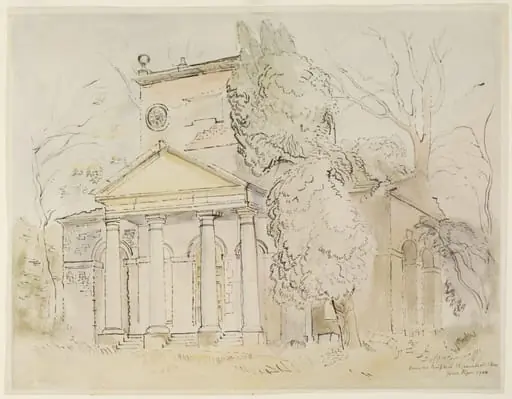 The Ruined Temple of Friendship in the Grounds at Stowe
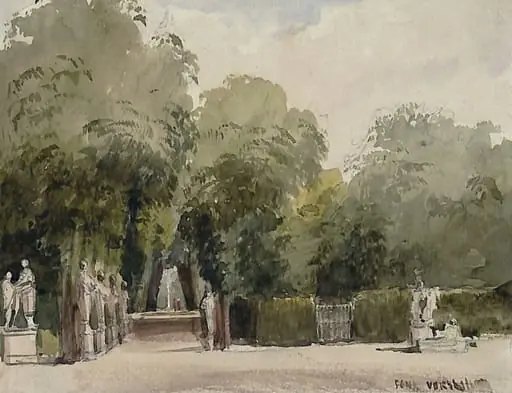 In the Gardens, Versailles
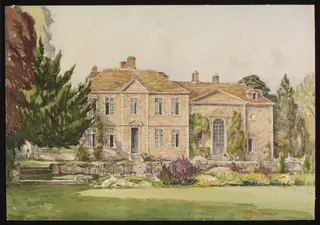 Heale House, Woodford
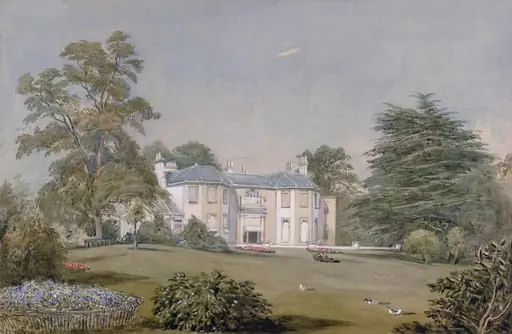 Bohun Lodge, New Barnet
- Entrance to Ramsbury Manor
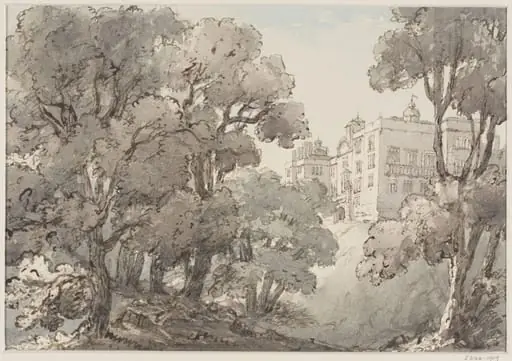 Beaudesert Park, near Lichfield