Artwork
Fontainebleau: Frontispiece
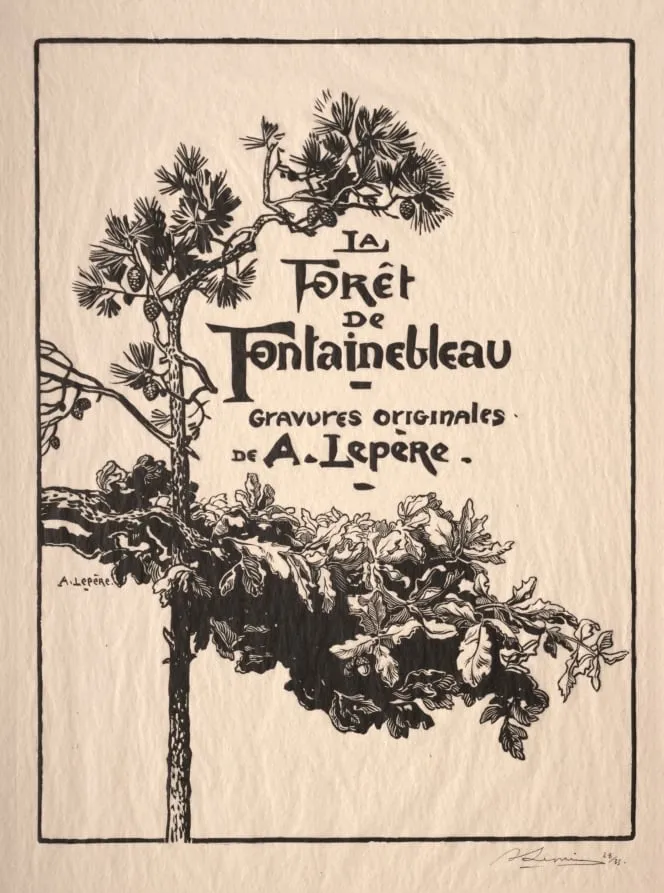
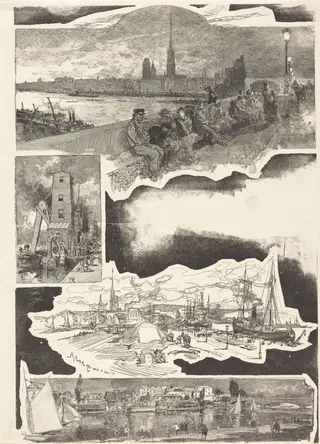
Fontainebleau: Frontispiece is a print by the Impressionist artist Auguste Louis Lepère. It dates from 1887 and is held in the collection of the Cleveland Museum of Art.
- Accession no.
- 1921.1366
- Credit line
- Gift of Leonard C. Hanna Jr.
About this work
Overview
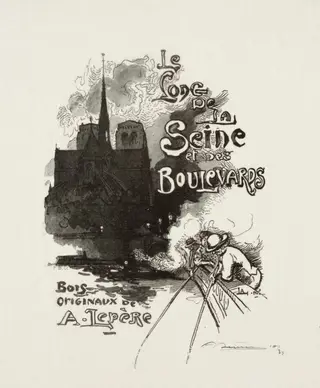
Fontainebleau: Frontispiece is a late 19th-century print by Auguste Louis Lepère, a key figure in the European revival of wood engraving. Created circa 1887, the piece is now held in the collection of the Cleveland Museum of Art.
Subject & Meaning
The print depicts a bifurcated natural motif: a tree branch with pine needles and berries on one side, and a cluster of leaves on the other. The central text, 'La Torêt de Fontainebleau', references the Fontainebleau region, a renowned artistic locale in France.
Technique & Style
Characterized by sharp, detailed lines reminiscent of etching, the work showcases Lepère's mastery of fine-line engraving. The composition's simplicity and naturalistic rendering align with late 19th-century French artistic tendencies.
History & Provenance
Created around 1887, the print's history prior to its acquisition by the Cleveland Museum of Art is not detailed here. Its design suggests a potential use as a frontispiece for a publication related to Fontainebleau.
Context
Fontainebleau was a popular destination for artists during the period, attracting those drawn to naturalistic subjects. Lepère's work reflects this appeal, combining technical skill with the region's inspirational landscape.
Legacy
As part of the Cleveland Museum of Art's collection, Fontainebleau: Frontispiece contributes to the institution's holdings of late 19th-century European prints, illustrating the revival of wood engraving during this time.
Artist & collection

Artist
Louis-Auguste Lepère (30 November 1849 – 20 November 1918) was a French painter and etcher. Lepère is also considered a leader in the creative revival of wood engraving in Europe.