Artwork
Frontispiece de Rouen Illustré
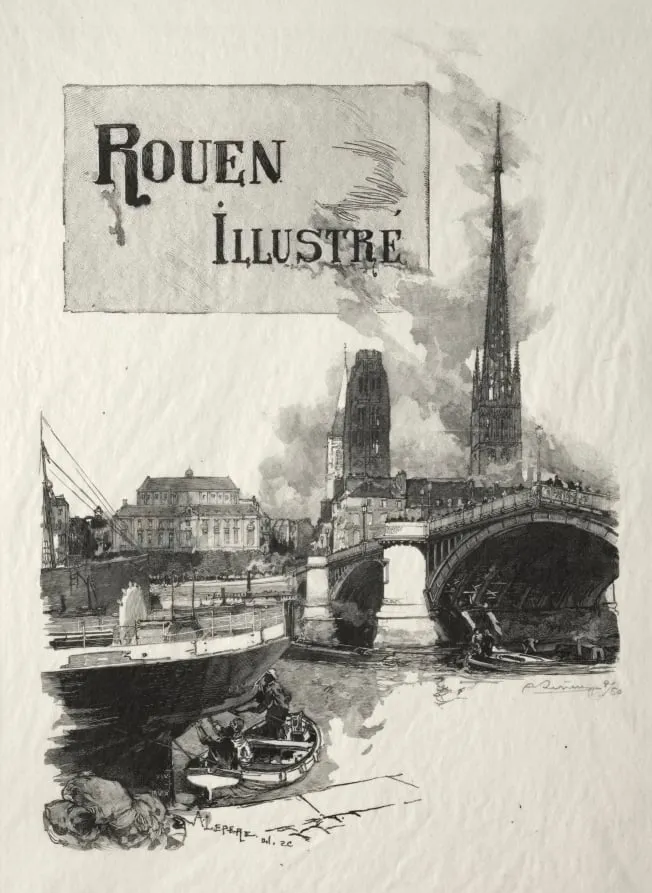
Frontispiece de Rouen Illustré is a print by the Impressionist artist Auguste Louis Lepère. It dates from 1896 and is held in the collection of the Cleveland Museum of Art.
- Accession no.
- 1921.1400
- Credit line
- Gift of Leonard C. Hanna Jr.
About this work
Overview
Created in 1896 by Auguste Louis Lepère, this wood engraving served as the frontispiece for the illustrated publication Rouen Illustré.
Created in 1896 by Auguste Louis Lepère, this wood engraving served as the frontispiece for the illustrated publication Rouen Illustré. Lepère, known for his revival of wood engraving as a fine art medium in late 19th-century Europe, used the technique to render urban scenes with precision and atmospheric nuance. The work was produced for a regional illustrated journal, blending documentary intent with artistic expression.
Subject & Meaning
The scene depicts the Norman city of Rouen along the Seine, capturing its architectural rhythm: a flat-roofed structure on the left, a central arched bridge with moored boats, and a towering church spire on the right. Smoke rising behind the church suggests daily life and industry. The title, Rouen Illustré, signals the city’s cultural identity, positioning the image as both a visual guide and a quiet celebration of its urban fabric.
Technique & Style
Lepère employed fine, agile lines carved into wood to suggest light, movement, and texture. The sketchlike quality of the engraving avoids heavy shading, instead using varied line density to imply depth and atmosphere. This approach echoes the immediacy of Impressionist drawing, translating fleeting observations into a durable print medium, and reflects Lepère’s commitment to elevating wood engraving beyond mere illustration.
History & Provenance
The print was produced as part of a series for the illustrated journal Rouen Illustré, likely distributed to local audiences and collectors. It entered the collection of the Cleveland Museum of Art, where it remains as a representative example of Lepère’s contribution to the revival of wood engraving. Its preservation underscores its significance in the history of printmaking during the fin de siècle.
Context
In the 1890s, French artists and publishers sought to renew interest in handcrafted printmaking amid rising industrial reproduction. Lepère’s work aligned with broader efforts to treat wood engraving as a legitimate art form, distinct from commercial illustration. His focus on everyday urban landscapes mirrored contemporary interests in regional identity and the aesthetic value of ordinary scenes.
Legacy
Lepère’s prints, including this one, helped reestablish wood engraving as a medium for artistic expression in Europe. His integration of observational detail and expressive line work influenced later printmakers who valued the intimacy and craftsmanship of hand-carved images. Though not widely known today, his contributions remain a quiet milestone in the history of modern printmaking.
Artist & collection

Artist
Louis-Auguste Lepère (30 November 1849 – 20 November 1918) was a French painter and etcher. Lepère is also considered a leader in the creative revival of wood engraving in Europe.

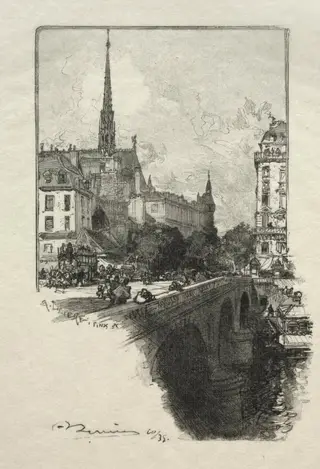 Le Pont St. Michel
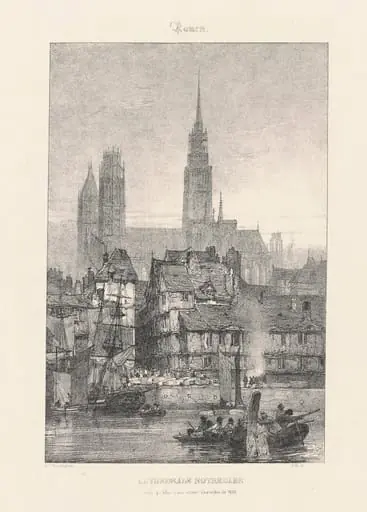 Cathedral Notre-Dame
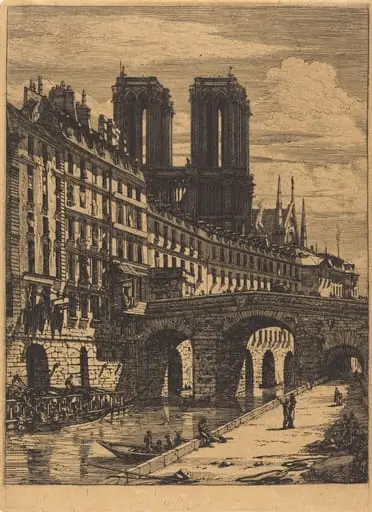 Le Petit Pont, Paris
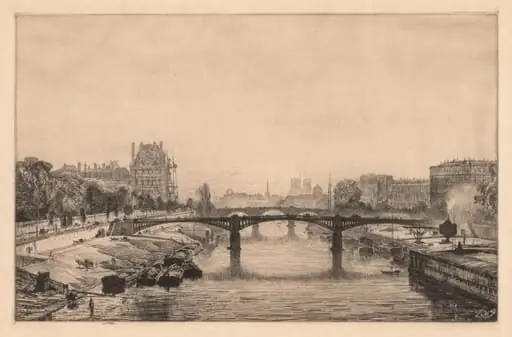 Paris, View from the Concorde Bridge
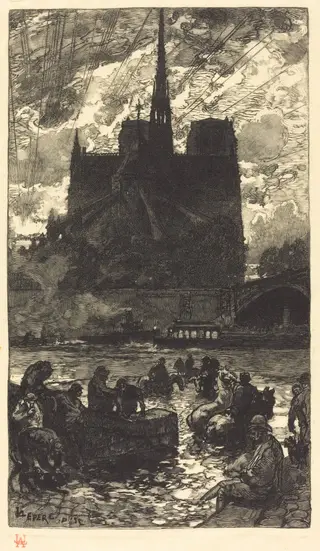 Watering-place behind Notre-Dame (L'abreuvoirderriere Notre-Dame)
 A Selection of Twenty of the Most Picturesque Views in Paris: View of Pont de la Tournelle & Notre Dame taken from the Arsenal
![[Large Steamer Ship at Dock, Paris], by Auguste Louis Lepère](https://artifactworldgallery.com/img/auguste-louis-lepere--large-steamer-ship-at-dock-paris--ed31099e42153820-w320.webp) [Large Steamer Ship at Dock, Paris]
[Large Steamer Ship at Dock, Paris]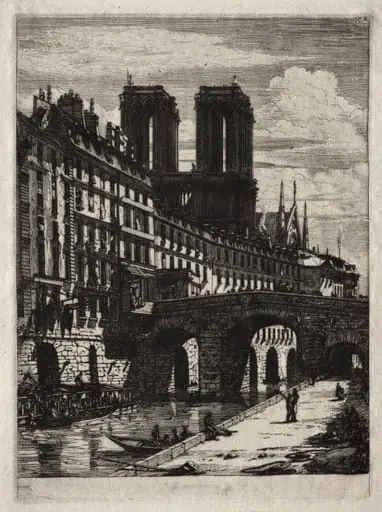 Etchings of Paris: Le Petit Pont
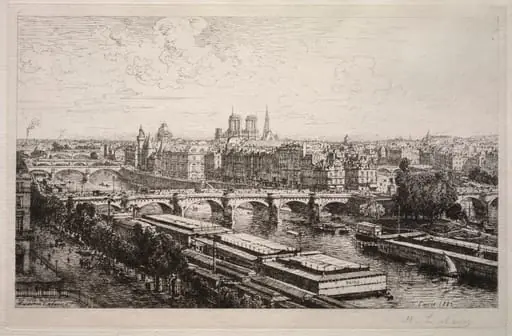 View from the Louvre
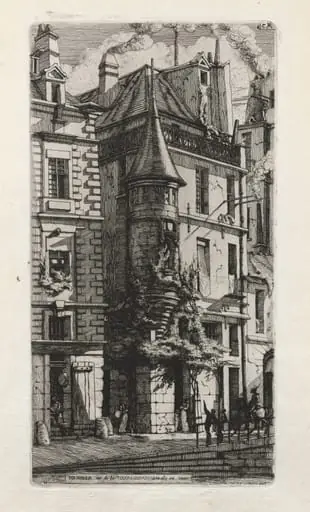 House with a Turret, rue de la Tixéranderie, Paris