Artwork
Holy Trinity Church and the new Allotments, Clapham Common, London
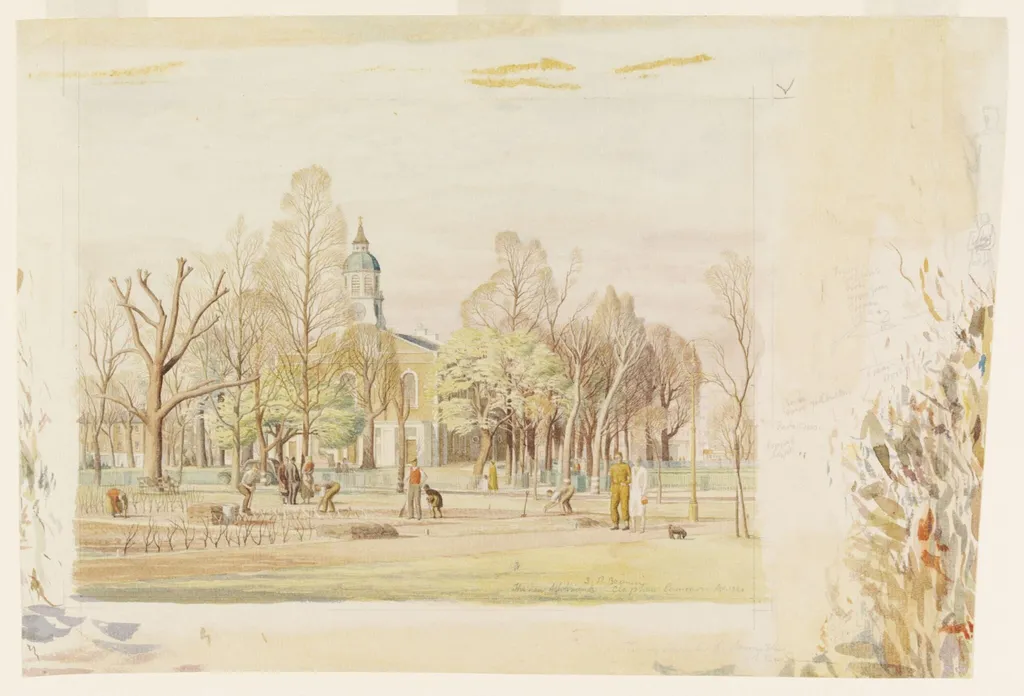
Holy Trinity Church and the new Allotments, Clapham Common, London is a watercolor work on paper by the Social Realist artist Stanley Roy Badmin. It dates from 1940 and is held in the collection of the Victoria and Albert Museum.
About this work
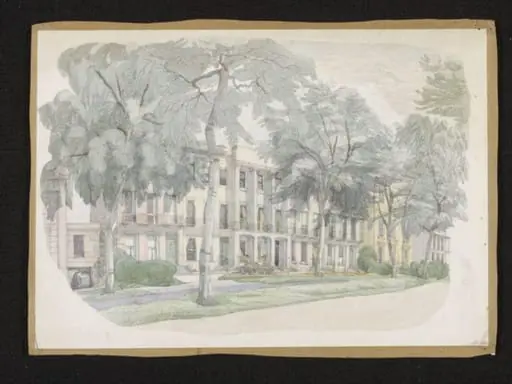
Stanley Roy Badmin painted this watercolour in April 1940. It shows Holy Trinity Church near Clapham Common in London. Small vegetable plots fill the common land.
During World War II, Britain needed more food. The government pushed “Dig for Victory.” People turned parks and lawns into allotments to grow vegetables.
Look up the Victoria and Albert Museum to see more works by Badmin.
Overview
Stanley Roy Badmin’s watercolour, executed in April 1940, captures Holy Trinity Church set against the expanse of Clapham Common in London. The composition is dominated by a series of modest vegetable plots that occupy the green space surrounding the church, illustrating the transformation of public land into productive allotments during the early months of the Second World War.
Subject & Meaning
The painting records a specific wartime landscape where communal gardening replaced ornamental lawns. By foregrounding the modest plots against the church’s architecture, Badmin highlights the collective effort to secure food supplies, reflecting the broader social shift toward self‑reliance and communal responsibility that defined the home front.
Technique & Style
Rendered in transparent watercolor, the work employs a restrained palette of muted greens, browns, and stone tones. Badmin’s loose brushwork suggests the texture of cultivated soil and foliage, while the crisp linear rendering of the church’s façade provides a structural counterpoint, balancing natural and built environments.
History & Provenance
Created in the first year of Britain’s wartime “Dig for Victory” campaign, the piece was later acquired by the Victoria and Albert Museum, where it remains part of the museum’s collection of British watercolours. The work is documented as part of Badmin’s series documenting wartime London.
Context
At the outbreak of World War II, the British government encouraged citizens to convert gardens, parks, and common lands into allotments to boost domestic food production. The depiction of Clapham Common illustrates how public spaces were repurposed for vegetable cultivation, a visual testament to the national mobilization of civilian resources.
Artist & collection
Artist
Stanley Roy Badmin painted detailed English landscapes and townscapes in watercolour during the early 1940s.

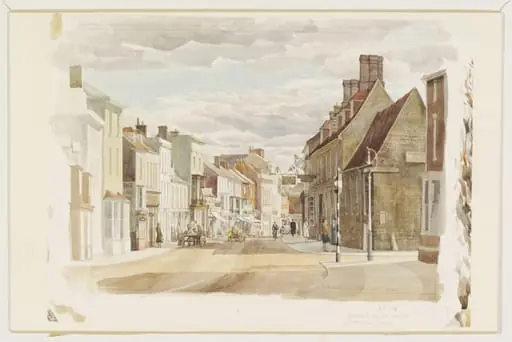 Towcester High Street from the Pomfret Arms Corner, Northamptonshire
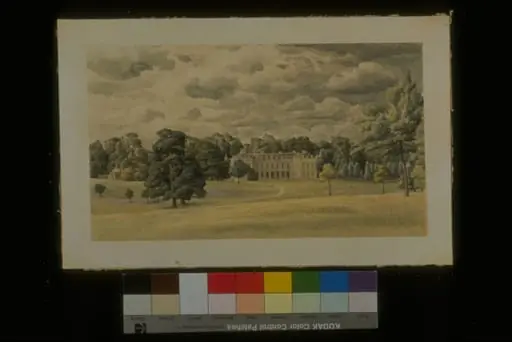 Boughton House, near Kettering
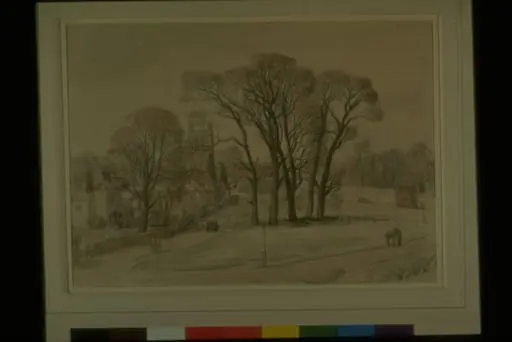 Long Melford Green on a Frosty Morning, Suffolk
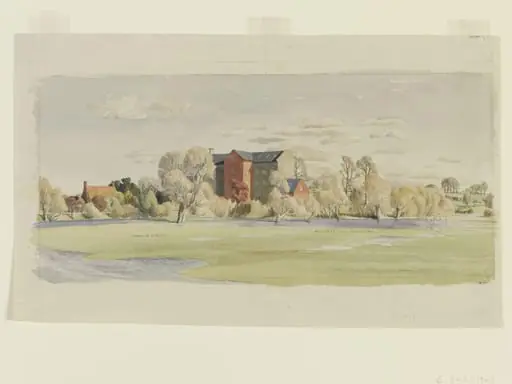 Flooded Meadows at Olney, Buckinghamshire
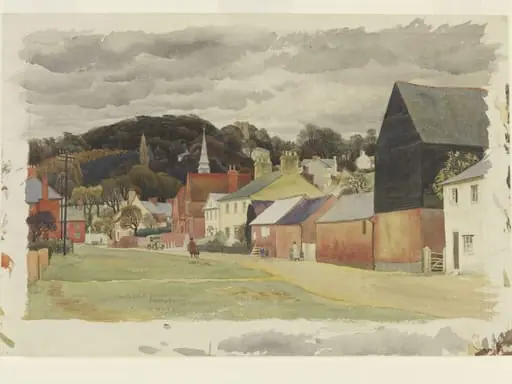 Bow Brickhill, Bletchley, Buckinghamshire
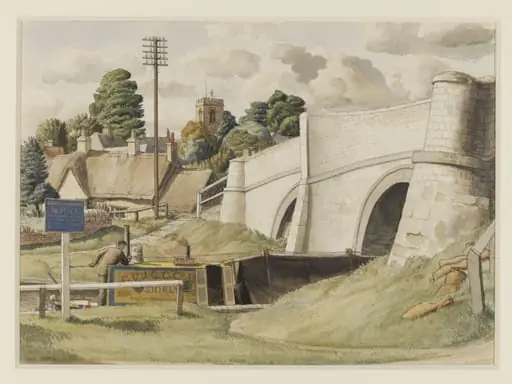 Stoke Bruerne, Northamptonshire
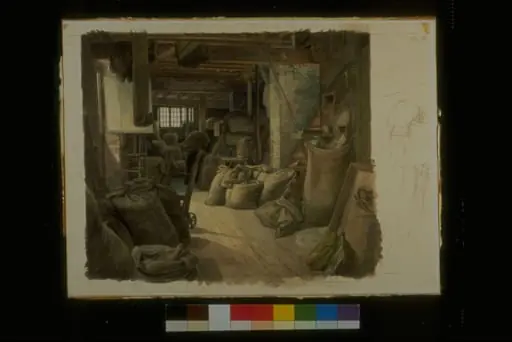 Chegworth Mill (Ground Floor), Harrietsham, near Maidstone, Kent
![Chatsworth [recto], by David Cox](https://artifactworldgallery.com/img/david-cox--chatsworth-recto--3f4d97adb21a8333-w320.webp)